
Reviewed · HISTORICAL TOURS
From Salvador: Quilombo Heritage Daytrip with Lunch
Old Bahia comes alive beyond Salvador. This day trip links the colonial towns of Santo Amaro and Cachoeira with a visit to Quilombo Kaonge, a traditional Quilombola community where you learn how manioc flour and palm oil are made. I like the small-group format and the chance to speak with a community elder, and I also value the route’s mix of public markets, farms, food, and Afro-Brazilian heritage.
The main caution is value. At $170 per person, the tour is not cheap, and one recent booking described the Quilombo activities as a few basic demonstrations rather than a full hands-on workshop. Your guide can make a big difference. Wilson earned especially warm praise for his humor and clear explanations, so confirm who will lead your departure if that matters to you.
In This Review
- Key points to know before you book
- Why the Bahia Recôncavo matters
- Santo Amaro: public market and old sugar-town streets
- The road through sugar cane, manioc, and tobacco farms
- Meeting the Quilombola community at Kaonge
- Making manioc flour and palm oil
- Lunch with regional food
- Cachoeira and the Paraguaçu River crossing
- What $170 gets you
- The guide can shape the entire day
- Who should book this day trip?
- FAQ
- How long does the Quilombo Heritage Daytrip last?
- Where does the tour begin?
- Is transportation included?
- What is the price per person?
- Is lunch included?
- Can I request a vegetarian meal?
- What languages are available for the guided tour?
- Is the tour wheelchair accessible?
- How many people are in the group?
- Can I cancel for a full refund?
- Should you book the Quilombo Heritage Daytrip?
Key points to know before you book
- Quilombo Kaonge is the heart of the day: You meet an elder of the community and learn about daily life, local wisdom, and traditional food production.
- Manioc flour is made in front of you: The visit includes explanations and practical participation in producing this staple Brazilian food.
- Santo Amaro adds useful historical context: A public fair and old secular houses show how sugar, enslaved labor, and regional trade shaped the Recôncavo.
- Cachoeira closes the route with colonial scenery: You cross the Paraguaçu River on an English-built bridge dating from 1830 and visit the Danneman cigar factory.
- The group is intentionally small: The activity is advertised for a maximum of four participants in one section, though another description says up to six. Confirm the exact group size before paying.
- Lunch is included, drinks are not: A vegetarian meal is available if you request it when booking.
Why the Bahia Recôncavo matters
The Recôncavo is the broad area around the Bay of All Saints, and it carries a history that is central to understanding Bahia. Portuguese colonial rule, sugar plantations, enslaved African labor, and later struggles for Brazilian independence all shaped the towns and communities here.
This tour is useful because it does not treat that past as a museum display. You see it in the streets of Santo Amaro, in the farms along the road, in the food served at lunch, and in the Quilombola community’s continuing traditions.
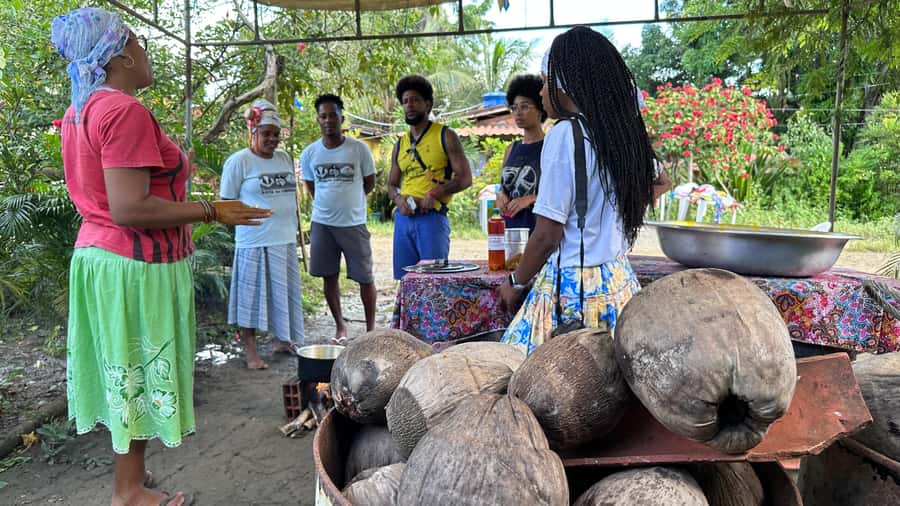
A Quilombo is a community formed by descendants of Africans who resisted slavery and built independent settlements. Quilombo Kaonge gives the day a human scale. Instead of only hearing broad historical facts, you have time to speak with one of the community’s elders, known as a griô. That conversation is likely to be one of the most meaningful parts of the visit, though the exact depth of the exchange will depend on timing, translation, and the guide.
The activity offers guiding in English, Spanish, and Portuguese. That matters here. The value of a cultural visit depends heavily on how well the guide explains what you are seeing and helps you ask respectful questions.
More History Tours in Salvador & Bahia
- Salvador Historic Walking Tour – Pelourinho
★ 4.8 · 62 reviews - Historic City Tour in Salvador
★ 3.6 · 17 reviews - Historical African oriented City Tour
★ 5.0 · 52 reviews
Santo Amaro: public market and old sugar-town streets
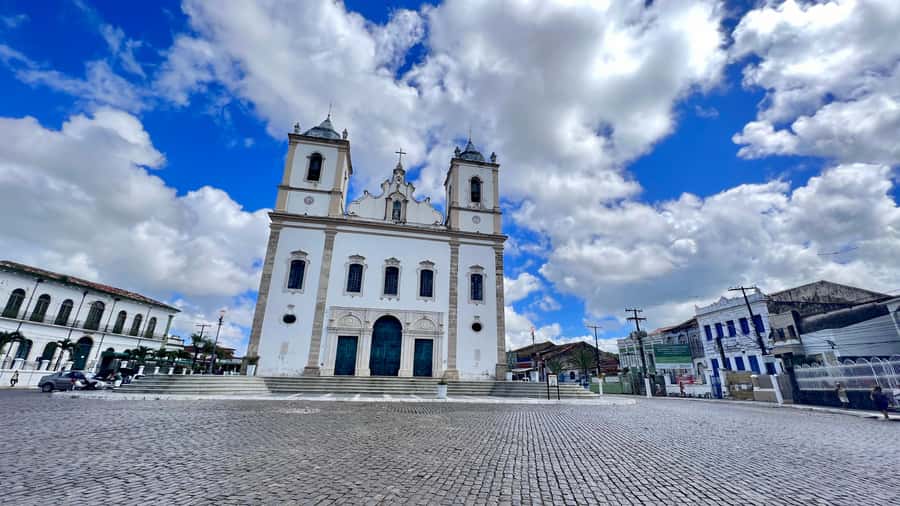
Your hotel pickup in Salvador begins a full eight-hour day. The first main stop is Praça da Purificação in Santo Amaro, a city whose economy was once driven largely by sugar cane plantations and enslaved labor.
You have about 30 minutes for a guided visit and sightseeing. The square gives you a starting point for the town’s colonial character, while the public fair provides a more ordinary view of local life. I like this kind of opening because it gets you away from Salvador’s main visitor routes without asking you to spend the whole morning in a formal museum.
The fair is a place to watch everyday commerce. You might see regional food, farm products, and the social rhythm of a market town. The old secular houses around the square help you picture the town’s earlier role in the sugar economy.
The stop is brief, so keep your expectations in check. You will not have hours to explore Santo Amaro in detail. Think of it as a useful introduction to the Recôncavo, not a complete town tour.
The road through sugar cane, manioc, and tobacco farms
After Santo Amaro, the route continues through rural areas associated with sugar cane, manioc, and tobacco. These crops are not random scenery. They explain how people in the region worked, traded, and fed their families over generations.
The road journey also helps connect the history to the present. The Recôncavo is not only a collection of colonial buildings. It is a working area where agriculture remains part of the story.
You should expect transportation between stops rather than a long independent walk. Hotel pickup and drop-off are included, which makes the day easier than arranging separate transport to Santo Amaro, Kaonge, and Cachoeira.
Because the whole activity lasts eight hours, the pace is fairly full. Wear smart-casual clothing that is comfortable for walking and practical for a rural visit. The supplied information does not specify the exact amount of outdoor walking, so ask the provider if you need a detailed route plan, even though the tour is listed as wheelchair accessible.
Meeting the Quilombola community at Kaonge
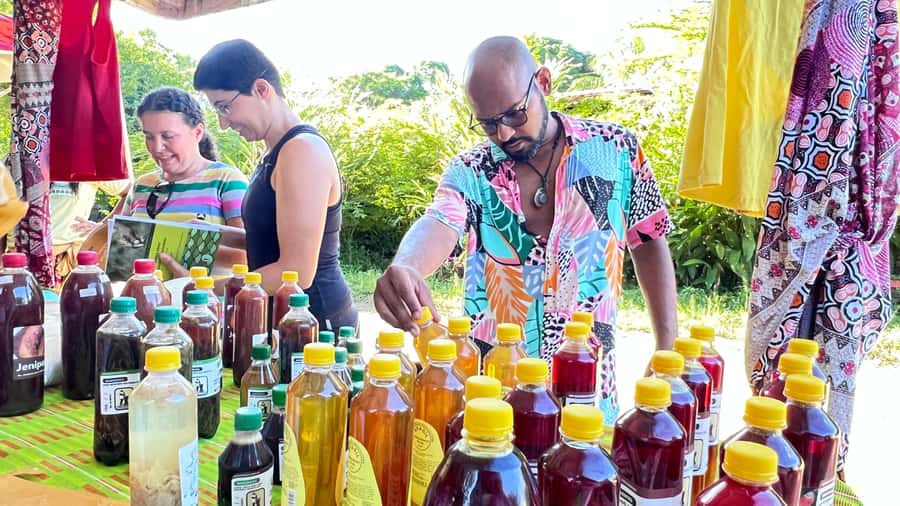
Quilombo Kaonge is the tour’s defining stop. Here, the purpose is not simply to photograph a rural settlement. You are introduced to a living community and given a look at its daily practices, food, and heritage.
The scheduled visit includes time with a griô, or elder, followed by lunch and hands-on work connected with local production. The elder’s role matters. In many communities, history is passed through spoken memory, family knowledge, and personal experience rather than only through books. A good guide helps turn that conversation into context without taking over.
I would approach this visit with curiosity and restraint. Ask about the community’s traditions, food, work, and history. Listen carefully. The best part of the stop is likely to be the exchange itself, not the number of activities you can check off.
The visit is also a chance to see Afro-Brazilian heritage as something active and ongoing. Music, belief, food, work, and family memory all connect here. The tour description points to the community’s wisdom and tastes, but it does not promise a performance or a large cultural program, so do not book it expecting a staged show.
Same patch of Brazil, a completely different sort of day:
- From Salvador: Schooner Tour to Frades Islands and Itaparica
★ 3.9 · 98 reviews - Afro-Brazilian Roots Private City Tour in Salvador
★ 4.7 · 88 reviews - Salvador de Bahia African Culture Tour
★ 4.5 · 60 reviews - Salvador: Praia Do Forte and Guarajuba Beach Day Trip
★ 4.1 · 56 reviews
Making manioc flour and palm oil
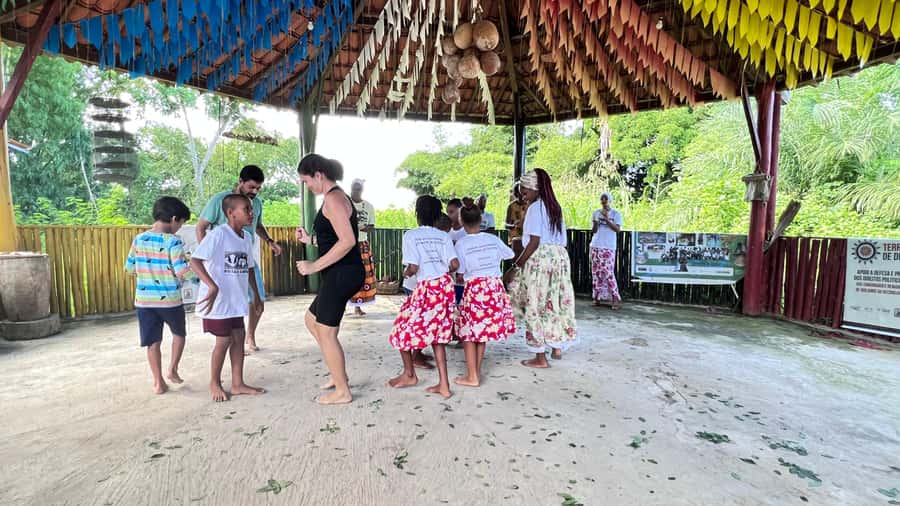
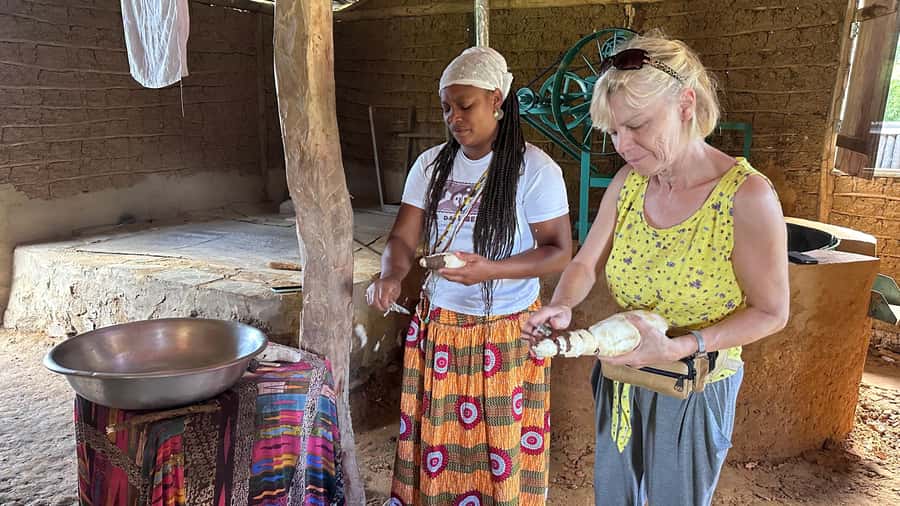
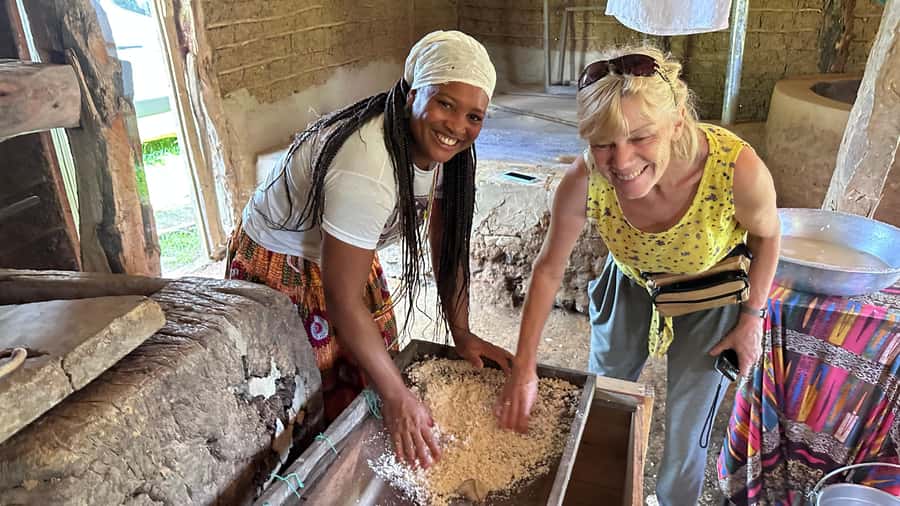
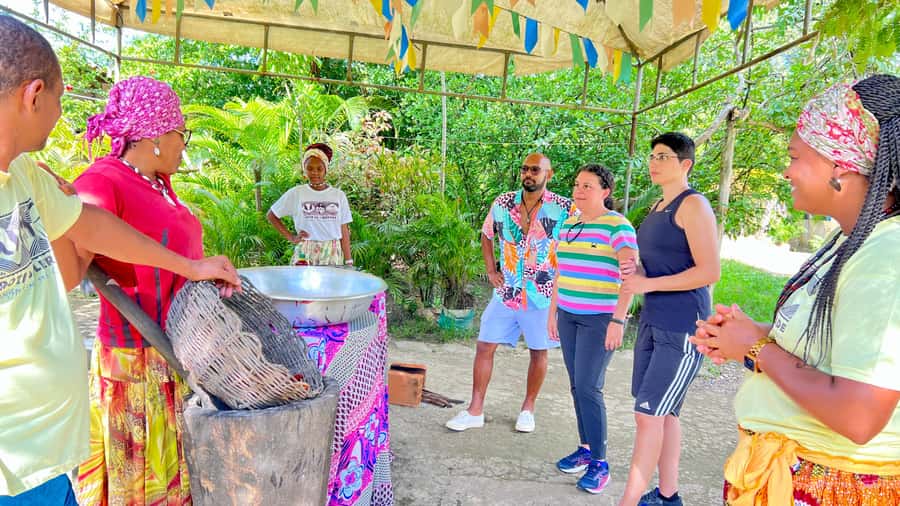
The practical portion of the visit centers on manioc flour and palm oil. Manioc, also called cassava, is a staple across Brazil. Learning how it becomes flour gives you a better sense of the labor behind a food that may otherwise appear as a simple side dish.
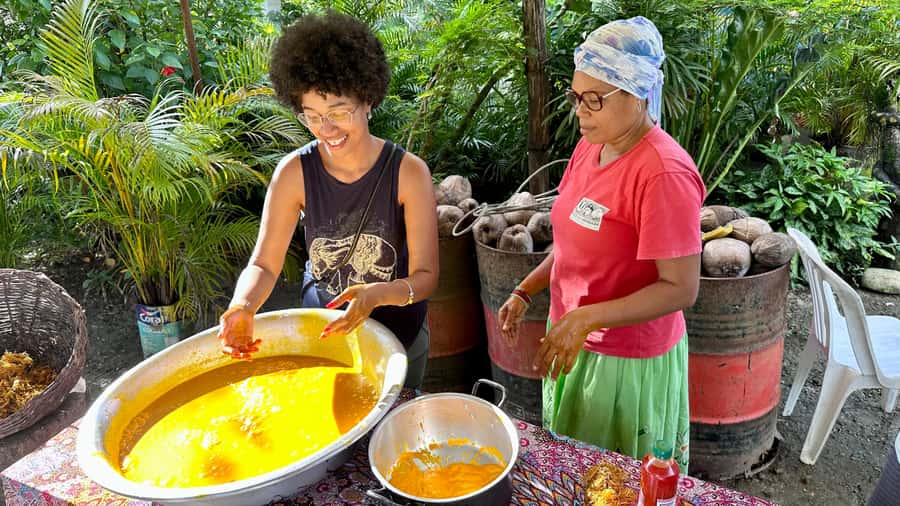
You are invited to put your hands to work and learn the process of making flour. The wording suggests participation, but one recent booking found the demonstrations fairly basic. That is the key point for judging the tour: you are getting an introduction to traditional production, not necessarily a long cooking class or a full workday alongside the community.
The palm oil activity adds another local food tradition to the visit. It broadens the experience beyond a single crop and connects lunch with the work that produces regional ingredients.
This is where expectations matter most. If you enjoy learning through small practical tasks and conversation, you may find the session worthwhile. If you want several hours of detailed instruction, specialist equipment, or a large number of activities, the program may feel thin for the price.
The guide’s role is important again. Wilson received particularly strong praise for being fun and well informed. A lively guide can make a simple demonstration much more engaging by explaining why the process matters and how it fits into community life.
Lunch with regional food
Lunch is included, and regional food is part of the Quilombo visit. This is a useful feature because the meal gives you a direct taste of the area rather than leaving you to find food between rural stops.
A vegetarian option is available, but you must request it at booking. Drinks are not included, so plan to pay separately for those. The supplied details do not identify the exact menu, and menus can vary, so you should not assume a particular dish.
The meal also follows naturally from the manioc and palm oil activities. You have just seen how local ingredients are produced, then you eat regional food connected to that agricultural tradition. That link gives the lunch more meaning than a standard restaurant stop.
Still, lunch alone does not make the price worthwhile. Consider it one part of a cultural visit that also includes guiding, transport, the elder’s conversation, and the two colonial towns.
Cachoeira and the Paraguaçu River crossing
In the afternoon, you continue to Cachoeira, described as the most important city in the Recôncavo. This colonial town offers a different view of the region from Santo Amaro.
The route crosses the Paraguaçu River on a bridge built by the English in 1830. That detail gives the crossing real interest. The bridge reflects the outside trade and engineering connections that reached the Recôncavo during the colonial and imperial periods.
You then visit the Danneman cigar factory before returning to Salvador. Tobacco was one of the important crops along the route, so the factory visit helps tie the day’s rural scenery to regional production.
The Cachoeira portion is not described as a long independent exploration. It is part of the afternoon route, with the bridge and cigar factory serving as the main points of interest. If you want several hours to wander Cachoeira’s streets, churches, and riverside areas, you may need a separate visit.
That said, the town is a strong closing stop. After the community visit and rural food experience, Cachoeira brings you back to the larger colonial story of the Recôncavo.
What $170 gets you
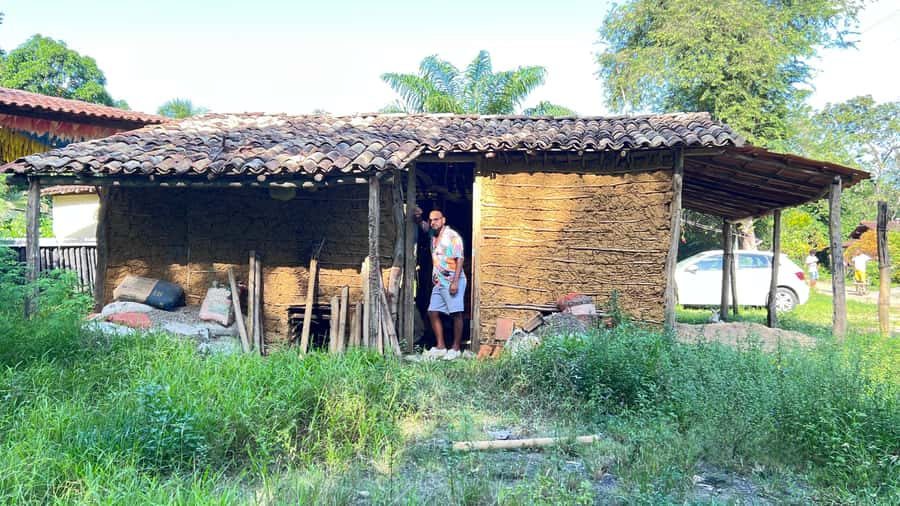
The price is $170 per person. That includes transportation, hotel pickup and drop-off, an accredited guide, lunch, and a small-group format.
For a private car, an eight-hour regional route, and a guide working with only a few people, the price may be reasonable. You are also paying for access and organization. Reaching Kaonge, Santo Amaro, and Cachoeira independently would take planning, and the cultural visit is not simply a public attraction with a standard entrance ticket.
The value becomes less convincing if you judge the tour mainly by the number of activities. One recent booking gave it three out of five and felt that the Quilombo portion offered only a few basic demonstrations for the cost. That is a fair warning, especially for anyone expecting a full workshop.
The strongest reasons to pay are the small group, the local elder, the guide, and the combination of places. The weakest reason is the hands-on production session by itself.
There is also a small inconsistency in the group information. The highlights describe a maximum of six people, while the activity details say the group is limited to four participants. Ask the provider to confirm the actual maximum for your date. A four-person group feels much more personal than a six-person one, especially during conversation with the elder.
The guide can shape the entire day
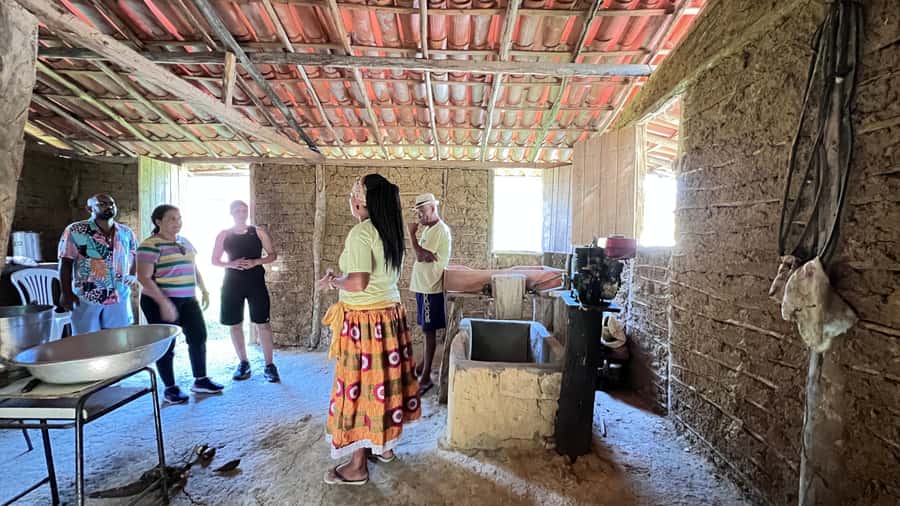
Guide quality matters more than usual on this route. You are moving through difficult history, local agriculture, food traditions, and living community culture. A guide who simply points out buildings will leave much of the value on the table.
Wilson received especially high praise for being fun and offering interesting information. That is useful practical evidence for you, though guide assignments can change. If you are booking because of a specific guide, ask if Wilson is available rather than assuming he will lead every departure.
English, Spanish, and Portuguese guiding are offered. Choose the language in which you can ask detailed questions comfortably. The conversation at Kaonge, in particular, benefits from clear translation and enough time to listen.
The tour received an overall rating of 3.4 from three published ratings, so the feedback is limited and mixed. The most consistent positive point is the guide. The main complaint concerns the amount of activity at the Quilombo compared with the price.
Who should book this day trip?
I would recommend it most strongly to you if you want to connect Salvador with Bahia’s Afro-Brazilian heritage and rural traditions in one organized day. It suits travelers who value conversation, food, and context more than a packed list of attractions.
It is also a good match if you prefer a small group and want hotel pickup. The route covers several places that are not easy to combine without transport.
You may want to skip it if your priority is a long, highly interactive workshop. The manioc and palm oil activities may be introductory. You may also find the cost high if you are mainly interested in seeing Cachoeira or Santo Amaro, since neither receives a full-day exploration.
Wear smart-casual clothes, request a vegetarian meal in advance if needed, and bring money for drinks. Confirm the group size, guide, and exact balance of demonstration versus participation before you book.
FAQ
How long does the Quilombo Heritage Daytrip last?
The tour lasts eight hours, including transportation from Salvador and the return to your hotel.
Where does the tour begin?
Pickup is provided from your hotel lobby in Salvador.
Is transportation included?
Yes. Transportation and hotel pickup and drop-off are included in the price.
What is the price per person?
The listed price is $170 per person.
Is lunch included?
Yes. Lunch and regional food are included. Drinks are not included.
Can I request a vegetarian meal?
Yes. A vegetarian option is available, but you should request it when booking.
What languages are available for the guided tour?
The tour offers live guiding in English, Spanish, and Portuguese.
Is the tour wheelchair accessible?
Yes. The activity is listed as wheelchair accessible.
How many people are in the group?
The activity details state that the group is limited to four participants, while another description gives a maximum of six. Confirm the exact group size with the provider before booking.
Can I cancel for a full refund?
Yes. You can cancel up to 24 hours in advance for a full refund.
Should you book the Quilombo Heritage Daytrip?
Book it if you want a guided introduction to the Recôncavo that puts people and food beside colonial history. The elder’s conversation, the small group, the manioc flour lesson, and the route through Santo Amaro, Kaonge, and Cachoeira give the day a clear purpose.
Do not book it expecting a large cultural production or an intensive cooking course. At $170, the experience depends on the guide and on how much you value access to the community. Confirm the group size and ask how hands-on the Kaonge activities will be. If those answers suit you, this is a thoughtful way to see a side of Bahia that is easy to miss from Salvador.
Newest reviews from around Salvador Brazil
- Salvador: Schooner Cruise with Pickup and Itaparica Stop★ 3.8 · 5 reviews
- Salvador: 3-Hour Percussion Class★ 4.9 · 10 reviews
- Salvador: Traditional Drumming and Percussion Workshop★ 4.4 · 10 reviews
- Salvador by Night: Cultural Show and Dinner.★ 4.4 · 17 reviews
- Salvador: Cultural Treasure – Samba de Roda.★ 4.9 · 51 reviews
- PROMO Salvador: Interactive Art and Culture Private Tour★ 5.0 · 2 reviews
- Salvador: Curated Nightlife Exp. in the Heart of the City★ 5.0 · 2 reviews
- Salvador: Capoeira Class at Mestre Bimba’s 1st Ever School.★ 4.9 · 34 reviews
Historical Tours, compared.

Private Walking and Cultural Tour Rocinha-Rio de Janeiro
Read our review →
Discover Rio Little Africa: A Cultural and Historical Journey
Read our review →

Scenic Train ride to historical cities of Morretes and Antonina
Read our review →
Browse the lists this tour appears in