
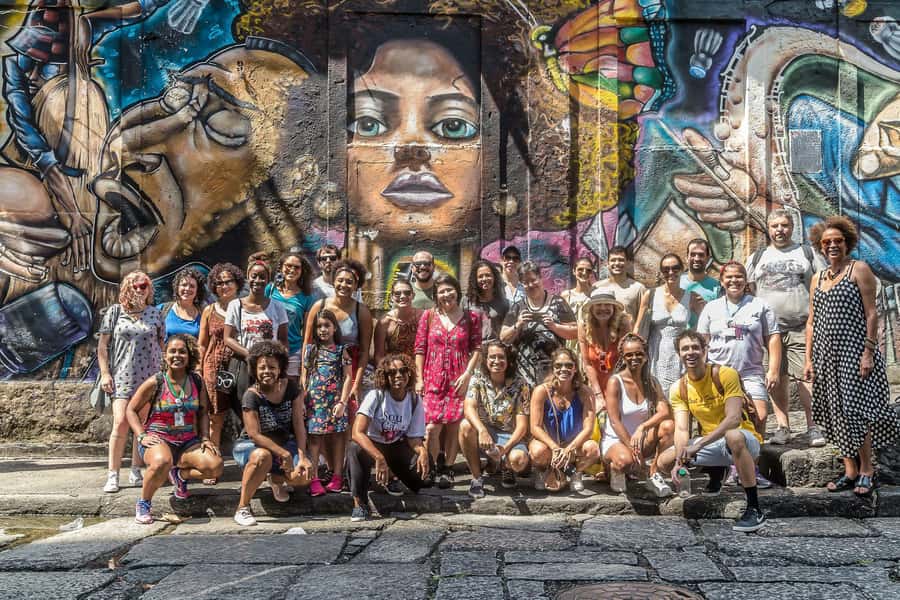
Reviewed · HISTORICAL TOURS
Rio de Janeiro: Little Africa Heritage Walking Tour
Rio’s past is written in its streets. This 150-minute walk connects Brazil’s colonial period, the legacy of slavery, Afro-Brazilian food, dance, music, and the port sites that shaped modern Rio. I like the way the tour gives you historical context before asking you to interpret the monuments, streets, and murals around you.
I also like the rooftop view from the Rio Art Museum and the stop at Pedra do Sal, widely regarded as the birthplace of samba. The main consideration is the heat: you spend about two and a half hours outdoors, and the tour runs rain or shine.
In This Review
- Key points before you book
- Why Little Africa matters in Rio
- The Rio Art Museum rooftop and Mauá Square
- Morro da Conceição and the first walk
- Largo de São Francisco da Prainha and Afro-Brazilian food
- Pedra do Sal, where samba found its roots
- The Hanging Garden of Valongo
- Cais do Valongo and the weight of the final stop
- Guide quality and the human side of the tour
- Is $40 good value for 150 minutes?
- Heat, rain, timing, and what to bring
- Who should book this Little Africa walk?
- Should you book it?
- FAQ
- Where does the Little Africa Heritage Walking Tour start?
- How long does the tour last?
- What places does the tour visit?
- Is the tour offered in English?
- Is hotel pickup included?
- What should I bring?
- Can I cancel the tour?
Key points before you book
- A serious history lesson with a human voice: The tour explains Brazil’s colonial period and the lasting effects of slavery before moving into present-day racial questions.
- The route covers Rio’s port district: You visit Morro da Conceição, Largo de São Francisco da Prainha, Pedra do Sal, the Hanging Garden of Valongo, and Cais do Valongo.
- The rooftop stop adds a welcome pause: From the Rio Art Museum, you look across Mauá Square and Guanabara Bay while setting the scene for the walk.
- Guides bring different strengths: Luana, Nathalia, Ryane, Larissa, Marina, Eddie, Raquel, Natalia, and others have been praised for passion, clear English, personal warmth, and thoughtful answers.
- The tour costs $40 per person: For a focused history walk with an English-speaking guide, that is fair value, especially if Rio’s African heritage is a main reason for your visit.
- Bring water and sun protection: Comfortable shoes, sunscreen, water, and light clothing matter here. Children under five cannot join.
Why Little Africa matters in Rio
The port neighborhoods became known as Little Africa around the turn of the 20th century. After Brazil ended the slave trade, freed people remained in the area, working and building communities. The result is a part of Rio where African culture is not a side note. It is central to the story of the city.
The tour begins at the Museu de Arte do Rio, usually called the Rio Art Museum, in front of the building. That starting point is useful because you do not begin with a random monument and a list of dates. Instead, the guide first explains Brazil during the colonial period, giving you a framework for understanding how forced migration, slavery, freedom, labor, and race shaped the port district.
That opening is especially valuable if this is your first visit to Brazil. The tour deals with difficult subjects, including slavery, structural racism, sexism, and the way Afro-Brazilian contributions have often received less attention than they deserve. Several guides have been praised for handling these issues with care, humor, and directness.
I would not treat this as a light sightseeing walk. It can be moving and, at times, upsetting. That is part of its value, but you should arrive ready to listen and think rather than simply collect photographs.
More History Tours in Rio de Janeiro
- Rio de Janeiro Historical Center Walking Tour
★ 4.5 · 336 reviews - Private Walking and Cultural Tour Rocinha-Rio de Janeiro
★ 5.0 · 239 reviews - Discover Rio Little Africa: A Cultural and Historical Journey
★ 5.0 · 238 reviews
The Rio Art Museum rooftop and Mauá Square
The first major pause comes at the Rio Art Museum, where you get time to take in the view of Mauá Square and Guanabara Bay from the rooftop. The break is listed as about 10 minutes, though the broader introduction to the tour is part of the opening experience.
This viewpoint helps you understand the port region geographically. You are looking over a part of Rio tied to commerce, migration, labor, and the movement of people. The bay view is attractive, but the guide’s explanation gives it more meaning than a quick photo stop would.
It is also a practical moment to settle into the walk. Use the pause to drink water, apply sunscreen, and make sure your shoes are comfortable. Once the group leaves the museum area, much of the experience takes place outside, with stops that last about 20 minutes each.
Morro da Conceição and the first walk
From the museum, the route moves toward Morro da Conceição. The guided walk here takes about 20 minutes. This section begins shifting your attention from the broad story of colonial Brazil to the streets and communities of the port area.
The benefit of having a guide here is clear. Without context, you might walk through this part of Rio and see only buildings, pavement, and everyday city life. With a guide, the area becomes part of a much longer story about people who remained in Rio after emancipation and helped shape its culture.
The pace appears designed for explanation rather than exercise. Still, this is a walking tour, not a seated lecture. You will be outside for the full duration, and the route includes several stops. The supplied information does not state the amount of elevation or the exact surface conditions, so comfortable shoes are the sensible choice.
Guides have made a strong impression here and throughout the walk. Luana has been praised for warmth and care, while Marina has been described as a trained historian and tourism graduate. Eddie has received particular praise for connecting the local story to the wider African diaspora. Your guide will vary, but the experience depends heavily on who leads your departure.
Largo de São Francisco da Prainha and Afro-Brazilian food
The next stop is Largo de São Francisco da Prainha, where the focus turns to African influence on Brazilian gastronomy. This is one of the tour’s most approachable sections because food gives you a direct way to connect history with daily life.
The discussion is not simply about what to eat. It helps explain how African traditions became part of Brazilian culture and how food can carry memory across generations. If you have already eaten your way through Rio, this stop gives you a better lens for understanding familiar ingredients and dishes.
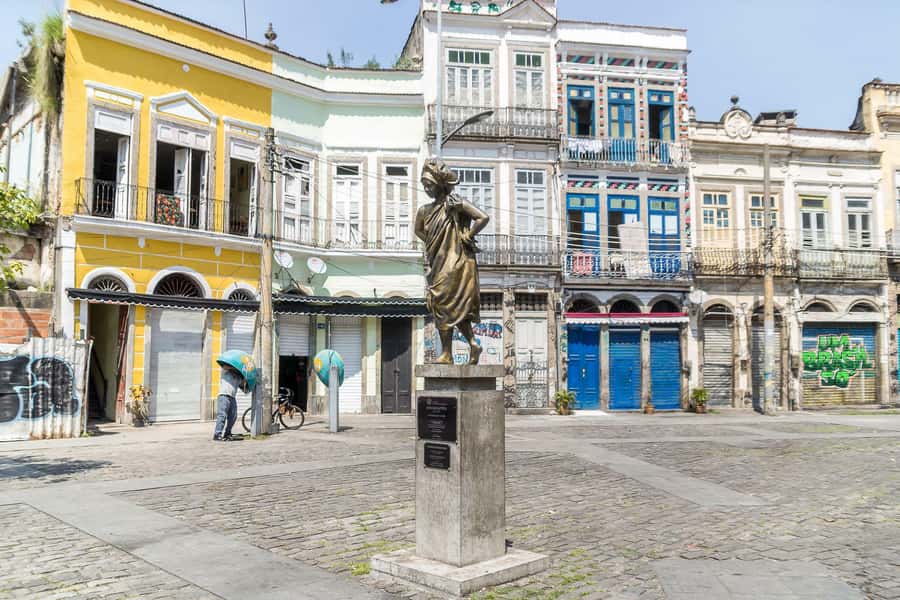
The square also gives the route some visual and social character. A statue honoring Mercedes Baptista is located here. Baptista was a pioneer of Afro dance in Brazil and the first Black dancer at Rio’s Municipal Theater. Her story adds another important thread to the tour: African influence in Brazil is present not only in music and food, but also in formal dance and the arts.
This is a good place to ask questions. Guides such as Nathalia and Larissa have been praised for making the walk feel like a conversation instead of a one-way speech. Some people have also received suggestions for places to eat after the tour, and a few have continued on for lunch together. Lunch is not included, so treat any meal afterward as an optional extra.
More Walking Tours in Rio de Janeiro
- Rio de Janeiro: Rocinha Favela Walking Tour with Local Guide
★ 4.8 · 3,052 reviews - Rio De Janeiro: Half-Day Rocinha Favela Walking Tour
★ 4.7 · 2,272 reviews - 3 Hour Rocinha Favela Walking Tour with a Local Guide
★ 5.0 · 833 reviews - Favela Tour Rio de Janeiro – Vidigal Walking Tour by Russo Guide
★ 5.0 · 377 reviews
Pedra do Sal, where samba found its roots
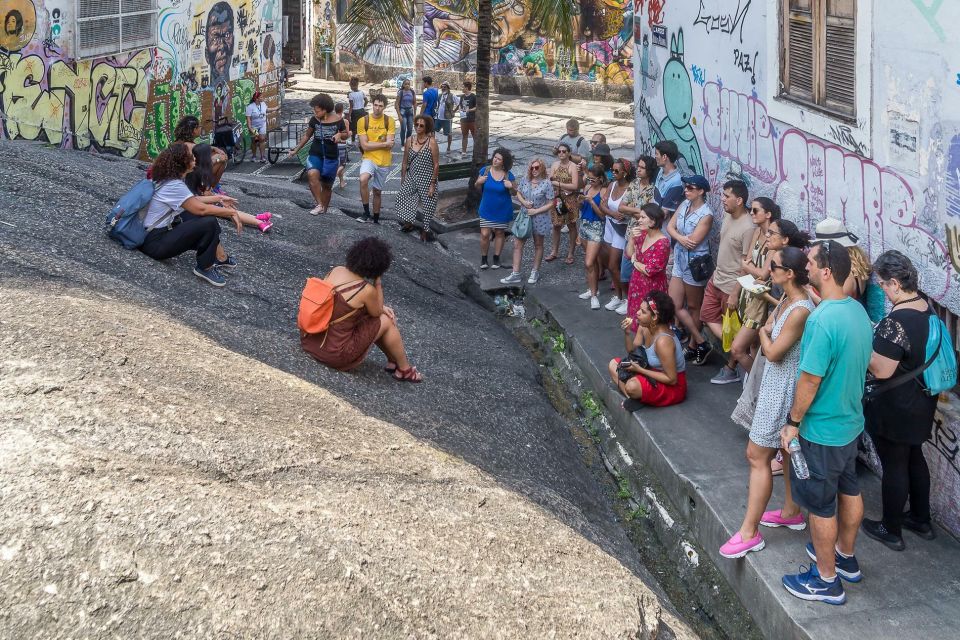
Pedra do Sal is the emotional center of the walk for many people. It is considered the place where samba was born, and it is also described as the oldest continuously inhabited Black neighborhood in Brazil.
The site links music to community. Samba is often presented to visitors as entertainment, but Pedra do Sal lets you consider the people and traditions behind it. The stop is not just a chance to pose beside a famous place. Your guide explains why the location matters and how Afro-Brazilian culture helped shape Rio’s identity.
This may be the point where the tour feels most connected to the Rio you hear about in music, dance, and carnival. At the same time, the guide keeps the story grounded in the harder realities that came before those cultural expressions. That balance is important. You get celebration, but not a cleaned-up version of the past.
Ryane has been praised for making the story engaging and for maintaining a good pace. Larissa has been noted for using questions to encourage reflection, while Natalia has been praised for balancing humor with serious discussion. Those qualities matter at Pedra do Sal, where a simple explanation of samba would miss much of the place’s meaning.
The Hanging Garden of Valongo
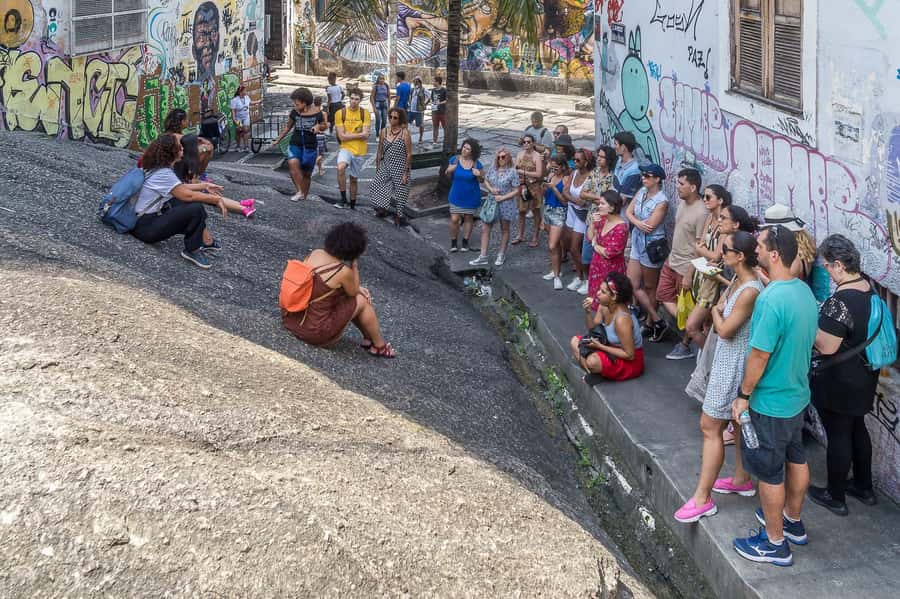
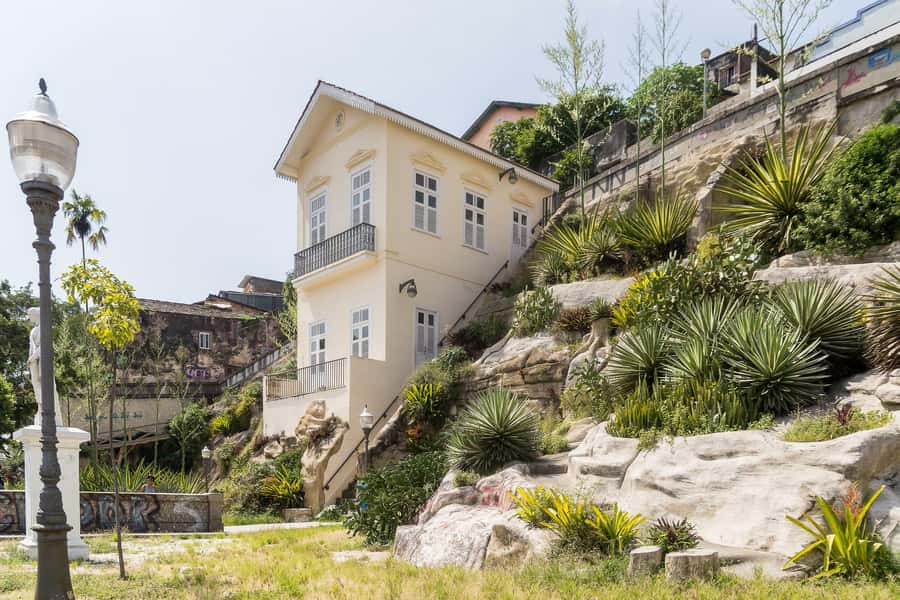
The route then reaches the Jardim Suspenso do Valongo, or Hanging Garden of Valongo. This stop offers a different mood from Pedra do Sal. The garden is tied to the Valongo area and gives the guide another setting in which to explain the port district’s past.
The change of scene helps break up the walk. You are not standing in one place listening to a long lecture. Instead, the tour moves through several locations, each connected to a particular part of Afro-Brazilian life and Brazilian history.
This is also where the tour’s use of physical places becomes especially useful. The history is not kept inside a museum display. You are walking through the district itself, with the guide pointing out details that would be easy to miss alone. One guide, Nathalia, has been praised for showing less obvious spots and using current examples to connect past events with life today.
Cais do Valongo and the weight of the final stop
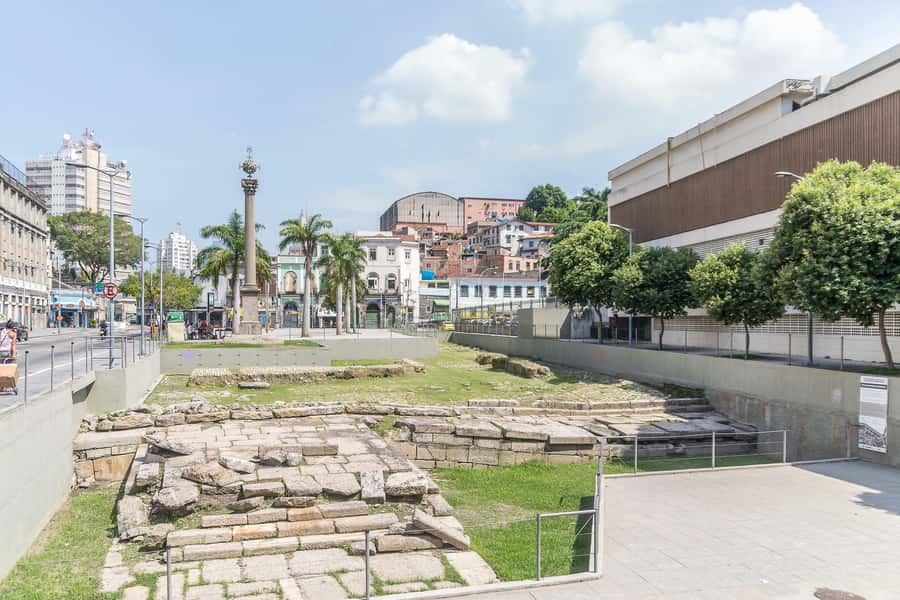
The final visit is Cais do Valongo. This is a serious closing point because the port was connected to the arrival and sale of enslaved Africans in Brazil. The tour places this site after the earlier discussions of colonial history, emancipation, community, food, dance, and samba.
That order matters. You are not asked to view Valongo as an isolated historical fact. By this stage, you have learned about the people and culture connected to the area, so the site carries a human and cultural weight beyond its physical remains.
The subject can be painful. Several guides have been praised for explaining the horrors of slavery clearly while remaining respectful and approachable. If you prefer your sightseeing to stay cheerful, this may not be the right activity. If you want a fuller understanding of Brazil, skipping difficult history would leave a major gap.
The stated route ends with a return to the Museu de Arte do Rio. Confirm the exact end point with your guide on the day, since the walk includes the Valongo area before returning to the museum zone.
Guide quality and the human side of the tour
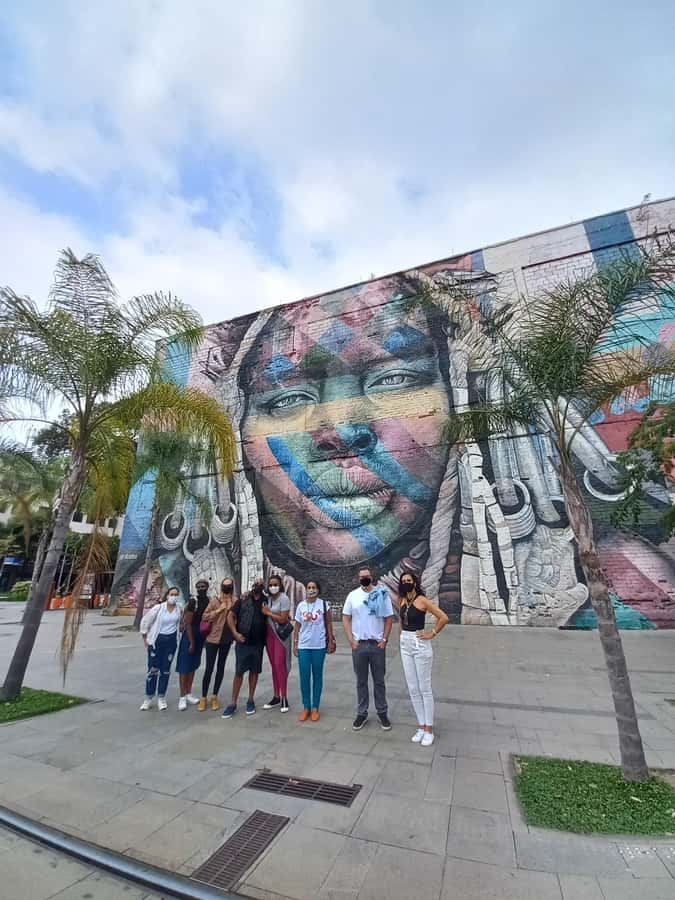
The guide is the biggest variable in any walking tour, and here the available experiences point to a strong standard. Luana, Nathalia, Ryane, Larissa, Marina, Eddie, Raquel, Natalia, Mariana, Razel, and others have been praised for energy, clear explanations, patience, and genuine care.
Some guides bring personal connections to the subject. Marina has been described as a Carioca with family experiences connected to the area. Eddie has been praised for his love of his community and family. Nathalia has been noted for answering difficult questions with sensitivity and for offering food suggestions after the walk.
That personal element is important. The tour is about communities, identity, and memory, so a guide who can explain the facts while treating the subject as lived culture makes a real difference. You may get a different style depending on the departure, but the consistently warm response to the guides is one of the experience’s strongest points.
English is offered, and the activity information says this departure is only in English. Portuguese-speaking guides may be available in other arrangements, but you should not assume a bilingual tour unless it is confirmed when booking.
Is $40 good value for 150 minutes?
At $40 per person, this is not the cheapest way to spend a morning or afternoon in Rio. You could walk around parts of the port district on your own for little or no cost. The question is what you would understand without someone explaining the locations.
For this tour, you are paying for a focused route, an English-speaking guide, historical context, and access to details that are easy to overlook. The rooftop view, statue of Mercedes Baptista, Pedra do Sal, Hanging Garden of Valongo, and Cais do Valongo give the walk a clear structure rather than leaving you to wander.
I consider the price fair if African heritage and Brazilian history are important to you. It is less compelling if you only want scenic views or a general introduction to Rio. The tour does not include hotel pickup, drop-off, food, or drinks, so budget separately for transport and any meal afterward.
The option to reserve now and pay later adds flexibility. You can also cancel up to 24 hours before the activity for a full refund, which is helpful when Rio plans change. Those policies do not make the tour better on the ground, but they reduce the risk of booking it early.
Heat, rain, timing, and what to bring
The tour lasts 150 minutes, or two and a half hours. That is long enough to cover the main sites without taking up your entire day, but it is also long enough for sun and humidity to become tiring.
Bring:
- Comfortable walking shoes
- Water
- Sunscreen
- Comfortable, light clothing
The tour runs rain or shine. A past departure continued during heavy rain, so bring rain protection if the forecast looks uncertain. A wet-weather walk may change your comfort level, even if the guide continues with the same route.
Arrive five minutes before the start time in front of the Rio Art Museum. The guide can wait only 15 minutes for late arrivals. Since hotel pickup is not included, allow extra time for your own transport to the museum.
Children under five are not permitted. The tour information does not list other age or mobility rules, so ask the operator directly if you have specific concerns about the walking route.
Who should book this Little Africa walk?
I would recommend it to first-time visitors who want more than Rio’s postcard attractions. It is also a strong choice if you care about the African diaspora, samba, Brazilian food, dance, racial history, or the way communities shape a city.
The tour suits curious adults and older children who can handle serious historical subjects. It may be less suitable for very young children, people who dislike outdoor walking, or anyone seeking a relaxed sightseeing loop with little explanation.
I would schedule it early in your Rio stay if possible. The opening discussion can help you understand later visits to museums, samba venues, markets, and other parts of Brazil. It may even inspire a wider interest in Bahia, as it did for one participant.
Should you book it?
Book this tour if you want to understand Rio through its African heritage, not just photograph its famous views. The route is compact, the subject is important, and the best guides turn difficult material into a clear, personal conversation.
Skip it if you want air-conditioning, shopping, or a gentle stroll with no serious history. For everyone else, $40 is a reasonable price for two and a half hours that can change how you see the port district, samba, and Brazil itself.
FAQ
Where does the Little Africa Heritage Walking Tour start?
The tour starts in front of the Museu de Arte do Rio, also called the Rio Art Museum.
How long does the tour last?
The tour lasts 150 minutes, or two and a half hours.
What places does the tour visit?
The route includes Morro da Conceição, Largo de São Francisco da Prainha, Pedra do Sal, the Hanging Garden of Valongo, and Cais do Valongo. It also includes a rooftop view from the Rio Art Museum.
Is the tour offered in English?
Yes. This activity is offered in English, with a live English-speaking guide.
Is hotel pickup included?
No. You must make your own way to the meeting point, and hotel pickup and drop-off are not included.
What should I bring?
Bring comfortable shoes, sunscreen, water, and comfortable clothing. The tour takes place outdoors and runs rain or shine.
Can I cancel the tour?
Yes. You can cancel up to 24 hours before the activity for a full refund. You can also reserve now and pay later.
Newest reviews from around Rio De Janeiro
- PRIVATE TOUR – Christ the Redeemer and Sugar Loaf★ 4.5 · 9 reviews
- Christ Statue and Sugarloaf Private Tour with a Photographer★ 5.0 · 9 reviews
- Cidade do Samba Behind-the-Scenes Carnival Tour in Rio de Janeiro★ 4.0 · 5 reviews
- Christ the Redeemer Trail x Lage Park★ 5.0 · 7 reviews
- Christ the Redeemer and City Tour★ 5.0 · 20 reviews
- Christ the Redeemer Adventure★ 5.0 · 12 reviews
- Private Tour of Christ the Redeemer in Rio de Janeiro★ 5.0 · 2 reviews
- Christ the Redeemer, Selaron Steps and Santa Teresa Half-day Tour★ 4.5 · 15 reviews
Historical Tours, compared.

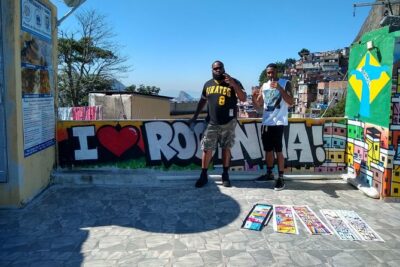
Private Walking and Cultural Tour Rocinha-Rio de Janeiro
Read our review →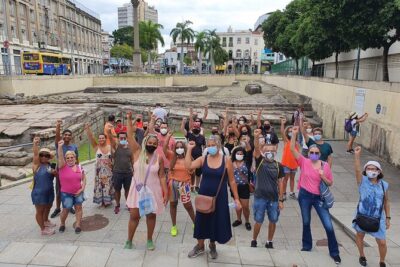
Discover Rio Little Africa: A Cultural and Historical Journey
Read our review →

Scenic Train ride to historical cities of Morretes and Antonina
Read our review →
Rio Gastronomy: Culture & History Through The Art Of Food – Walking Group Tour
Read our review →Browse the lists this tour appears in