
Reviewed · HISTORICAL TOURS
Rio Gastronomy: Culture & History Through The Art Of Food – Walking Group Tour
Rio tastes better on foot. This six-hour food and culture tour links Copacabana, downtown, Santa Teresa, and São Bento through local snacks, drinks, art, and landmarks. I like the way it uses food to explain daily life, and I especially like the small maximum of 15 people, which leaves room for questions and personal adjustments.
I also like the range: you may taste açaí, coxinha, pão de queijo, codfish snacks, tropical juices, mate, and guaraná while seeing the Selarón Steps, Confeitaria Colombo, and the Real Gabinete Português de Leitura. The main consideration is the $193 price, which is fair only if you value the guide, transport, entrance fees, and broad city coverage as much as the food itself.
In This Review
- Key points at a glance
- Why this is more than a food crawl
- Copacabana: a fruit-forward start
- Adega Pérola and Rio’s bar-food tradition
- The metro ride into central Rio
- Confeitaria Colombo and the old center
- Santa Teresa: the day’s richest mix of food and art
- São Bento and the view across the water
- Real Gabinete Português de Leitura
- Rio Sul Shopping Center and changing plans
- What you actually eat
- Is $193 a fair price?
- Group size, guides, and pace
- Who should book it?
- Should you book Rio Gastronomy?
- FAQ
- Where does the tour start?
- Where does the tour end?
- How long does the experience last?
- How many people can join the tour?
- Are the food tastings included?
- Are beer and other drinks included?
- Is the tour suitable for vegetarians?
- Can I cancel for a full refund?
Key points at a glance

- Copacabana begins with local breakfast-style tastes: Açaí, soursop juice, a steak, cheese, and pineapple sandwich, and custard apple juice set the tone.
- Adega Pérola brings seafood and bar snacks: Expect octopus, goat cheese, codfish pearls, codfish cakes, coconut cocktail, mate, and natural guaraná.
- The tour is also a city walk: You move from the beach to downtown and Santa Teresa, with metro travel and other transport built into the day.
- Santa Teresa supplies the strongest mix of food and street culture: Cheese bread, pastries, beer from Complexo do Alemão, local shops, graffiti, an artist’s studio, and the Selarón Steps all appear here.
- The guide makes or breaks the experience: Camila, Eva, and Sergio have been praised for clear English, local insight, flexibility, safety awareness, and good pacing.
- Come ready to walk and eat slowly: The day can cover four or five miles on foot, with tasting breaks spread through roughly six hours.
Why this is more than a food crawl
Many food tours keep you close to one market or neighborhood. This one treats Rio as a city told through its eating habits. You begin beside Copacabana Beach, ride the metro toward central Rio, continue through historic streets, then reach Santa Teresa for food, art, and views.
That range gives the day real value. You are not simply checking off Brazilian dishes. You are learning where people eat, how snacks fit into everyday life, and why certain cafés, bars, and sweets matter to the city.
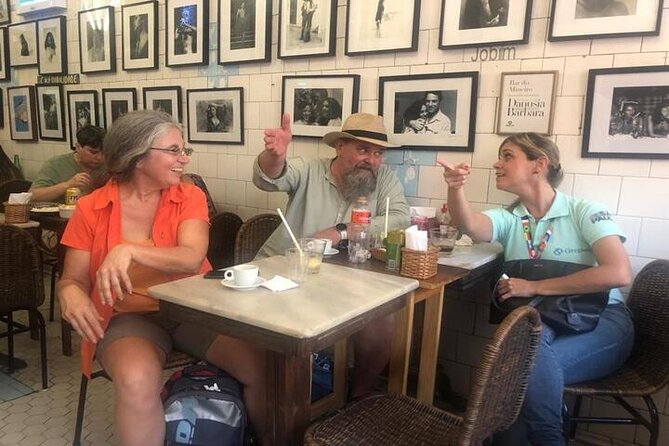
The guide is central to that experience. Camila has received particular praise for explaining the reason behind each stop, adjusting the day for weather and food preferences, and keeping an eye on busy crossings and phones. Sergio has been praised for showing the interiors of buildings that tour buses usually pass, while Eva is described as patient and well informed.
The company communicates through WhatsApp before the tour, including the meeting details and a photo of the guide. That small touch matters in a city where finding the correct hotel entrance can waste the first half-hour of a day.
More Food Tours in Rio de Janeiro
- Rio: Pub Crawl in Lapa with Cachaça Tasting and Live Samba
★ 4.7 · 881 reviews - Sunset Boat Tour with Beer, Water, Soda and Snacks included
★ 5.0 · 227 reviews - 3-Hour Tasting Session in Rio with 33 Foods Brazilians Love
★ 5.0 · 220 reviews
Copacabana: a fruit-forward start
Meet at 10:45 a.m. at the JW Marriott on Avenida Atlântica. The first tastes include authentic açaí and soursop juice, served in Copacabana.
Açaí is familiar to many visitors, but the setting and local context help you understand it as part of Brazilian food culture rather than just a fashionable fruit bowl. Soursop brings a different taste, creamy and tropical, and gives the opening stop a distinctly Brazilian feel.
The next stop is Parada de Copa, where you try a steak, cheese, and pineapple sandwich. It is a useful early lesson in the tour’s approach: simple food, familiar ingredients, and a local combination that may not appear on a standard sightseeing schedule.
You then visit a juice house for custard apple juice. The stop is short, about 10 minutes, but the succession of fruit drinks gives Copacabana a clear identity before the tour shifts toward savory snacks and historic sites.
The first three tastings take about 35 minutes in total. You will want breakfast to be light, but not absent. The food arrives in stages, so you are unlikely to face one giant meal at the beginning.
Adega Pérola and Rio’s bar-food tradition
Adega Pérola adds a different side of Carioca eating. Here you can sample octopus, goat cheese, codfish pearls, and codfish cakes, along with a coconut cocktail.
You may also try natural guaraná and mate. Guaraná is a Brazilian soft drink ingredient with a sweet, distinctive taste, while mate is a familiar refreshment in Rio. Together, they show how drinks can be as important to local habits as food.
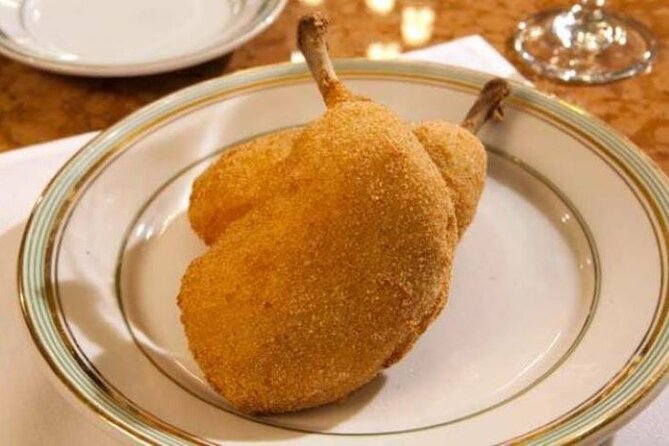
This is one of the tour’s more unusual tasting stops. Pão de queijo and coxinha are better known internationally, but octopus and codfish preparations give you a broader sense of what appears at a traditional bar.
The stop itself is listed at about 10 minutes, so do not expect a long restaurant meal. It is a sampling session, not a leisurely lunch. That is a strength if you want variety, though anyone expecting full portions at every address may find the price harder to justify.
The metro ride into central Rio
The move from Copacabana to downtown is part of the experience. You take the metro, and the ride helps connect Rio’s beach-facing image with its older central districts.
Transport is included, along with taxi fees for the trip to Morro Dona Marta and entrance fees. The precise order of the central stops can shift, so you should think of the day as a guided route rather than a rigid sequence.
That flexibility has proved useful in hot weather. Camila has arranged rides between some stops when conditions made walking less comfortable, and guides may adjust the route for closures, weather, or something you have already seen. This is one reason a small group matters.
The day is not a pure walking tour, despite the title. You may use the metro and taxis as well as your feet. Expect plenty of movement, but also expect the guide to manage the transitions.
More History Tours in Rio de Janeiro
- Rio de Janeiro Historical Center Walking Tour
★ 4.5 · 336 reviews - Private Walking and Cultural Tour Rocinha-Rio de Janeiro
★ 5.0 · 239 reviews - Discover Rio Little Africa: A Cultural and Historical Journey
★ 5.0 · 238 reviews - Rio de Janeiro: Historic Rio and Santa Teresa Half-Day Tour
★ 4.4 · 228 reviews
Confeitaria Colombo and the old center
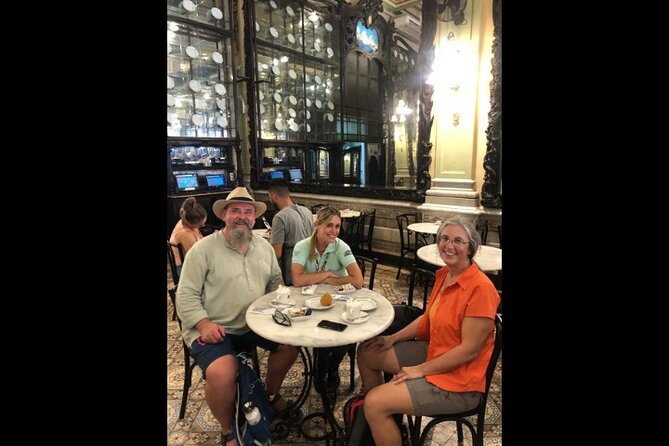
Confeitaria Colombo offers a change of pace. The historic confectionery is one of central Rio’s best-known interiors, with an old-world atmosphere that makes it more than a place to grab a sweet.
You visit the confectionery and explore the Cinelândia area, a central district tied to Rio’s public life and grand architecture. The stop is listed at around 30 minutes, enough to look around and taste something without turning the outing into a formal restaurant lunch.
The food balance is worth noting. The tour includes many savory items, but there are also sweets and fruit-based drinks. One person specifically wished for fewer sweets and more savory options. If you prefer salty food, tell the guide early. The guides have shown flexibility with vegetarian preferences and extra items that catch your eye.
That flexibility is a meaningful benefit. A fixed menu can leave a vegetarian with little more than bread and fruit. Here, the guide has adjusted tastings and extended a stop when a suitable item was available.
Santa Teresa: the day’s richest mix of food and art
Santa Teresa is where the tour becomes a full neighborhood experience. You may taste cheese bread, açaí, cheese pastries, and beer from Complexo do Alemão, a famous favela in Rio.
You also have time for shops selling typical Rio products, the Selarón Steps, local graffiti, and a featured artist’s studio. The tour description says the artist has appeared in the American magazine Our Planet. You should treat this part as a meeting with local creative life rather than a polished museum visit.
The graffiti portion includes watching artists work with iron and taking in a view toward Sugarloaf Mountain. That combination of working art and city scenery gives Santa Teresa a stronger sense of place than a quick photo stop.
The total Santa Teresa segment is about 90 minutes, making it one of the longest portions of the day. It is also the section most likely to reward curiosity. Look beyond the famous steps. The shops, walls, studios, and food stops explain why this neighborhood feels different from the beach districts.
You may encounter hills, stairs, and uneven walking surfaces. One account of a similar day with Sergio covered four to five miles over six hours, so comfortable shoes are sensible. The experience is manageable for most people, but it is not designed for someone seeking a seated tasting menu.
São Bento and the view across the water
If time allows, the route includes São Bento Monastery. The monastery is known for baroque and rococo architecture, and its interior provides another sharp contrast with Copacabana’s open beachfront and Santa Teresa’s street art.
The final monastery visit takes about 20 minutes. From there, you can see the Museum of Tomorrow. The view helps place the old monastery within modern Rio, where colonial, imperial, contemporary, and everyday city life sit close together.
Because the wording says if time allows, you should not treat São Bento as guaranteed. Traffic, weather, closures, and the pace of earlier tastings can affect the final route. The guide’s judgment matters here, and the day may feel better when the group avoids rushing through every stop.
Real Gabinete Português de Leitura
The Real Gabinete Português de Leitura is one of the most striking places on the route. This Portuguese reading room is known for its grand interior and is widely regarded as one of the world’s beautiful libraries.
For me, this is an important part of the tour’s value. A food outing that includes a library, monastery, historic confectionery, beach, and street art gives you a wider picture of Rio than a list of snacks alone.
The visit is scheduled for about 30 minutes. Take time to look upward and around the room rather than treating it as a quick entrance. The building is one of those central Rio sights that can be easy to miss if you stay only in the beach neighborhoods.
The route description places the library more than once, which suggests that the exact sequence can vary. Do not worry if your day does not follow every stop in the printed order. The important point is that the library is part of the planned central Rio experience, subject to timing.
Rio Sul Shopping Center and changing plans
The route also includes Rio Sul Shopping Center, described as the largest shopping center in Latin America. It is on the way back toward the Real Gabinete Português de Leitura and may serve as a practical transition point.
Compared with the library, monastery, and Santa Teresa, a shopping center may feel less distinctive. Still, it gives you a look at modern commercial Rio and can provide a useful break from the heat and walking.
The broad route has several moving parts. Metro travel, taxis, restaurant timing, weather, and opening hours can all affect the order. One useful tip is to avoid Monday if you want the best chance of seeing museums and restaurants open. The day may still operate, but some cultural stops can be limited.
What you actually eat
The food list is broad, but portions are tasting portions rather than full meals. Depending on the route and availability, you may try:
- Açaí, soursop juice, custard apple juice, mate, and natural guaraná
- A steak, cheese, and pineapple sandwich
- Octopus, goat cheese, codfish pearls, and codfish cakes
- Pão de queijo, coxinha, cheese pastries, and other confectionery items
- A coconut cocktail and beer from Complexo do Alemão
The pacing is one of the best features. Food arrives at intervals while the guide explains the area between bites. You are less likely to become uncomfortably full than on a tour that serves five heavy plates in a row.
Still, preferences matter. The tour is suitable for vegetarians according to the experience described, and the guides have paid close attention to individual needs. You should mention allergies, restrictions, and strong dislikes before the first tasting so the guide can plan sensibly.
Draft beer and beers are not included, despite the mention of local beer in Santa Teresa. All tastings and samples are included, but extra alcoholic drinks can raise the final cost.
Is $193 a fair price?
At $193 per person, this is not a budget food walk. The price covers all tastings and samples, entrance fees, taxi fees to Morro Dona Marta, taxes, and a professional bilingual guide.
The value comes from the combination of services. You get roughly six hours, several neighborhoods, public transport, some private transport, cultural entrances, and a guide who handles the route and explanations. If you tried to arrange the same range alone, you would need to research addresses, work out transport, manage payment, and fit opening hours together.
The price is less attractive if your main goal is simply to eat as much as possible. One person found the experience overpriced and wanted a larger variety of samples. I understand that view. For $193, you should expect the historical and cultural touring to matter as much as the food.
The recommendation rate is 98 percent, with a 4.9 rating from 164 ratings. Those figures suggest a strong experience overall, but they do not erase the practical question of what you want from a food tour. Pay for this if you want a guided introduction to Rio, not just a cheap lunch.
Group size, guides, and pace
The maximum group size is 15. That is small enough for questions and conversation, though the actual group may be much smaller. Some outings have had only a guide and two guests, while another had six people.
The guide names most often associated with the strongest praise are Camila, Sergio, and Eva. Camila has been praised for fluent English, safety reminders, weather adjustments, and care with vegetarian requests. Sergio has been praised for his energy, local insight, and ability to explain buildings and neighborhoods beyond the usual sightseeing route. Eva is described as patient and attentive.
You cannot assume a particular guide will be assigned, so booking with a preferred guide is not guaranteed by the information provided. What you can reasonably expect is a bilingual professional who manages the food, route, transport, and cultural explanations.
The start time is 10:45 a.m., and the activity ends back at the meeting point. Because you may walk for several hours, keep your phone close, follow the guide at crossings, and wear shoes suited to stairs and city streets.
Who should book it?
I would choose this tour for a first visit to Rio, especially if you want help getting oriented early in your stay. Food gives you an easy way into the city, and the route introduces major districts without forcing you to plan several separate excursions.
It also suits couples, families with older children or young adults, solo visitors, and mixed groups with different food interests. The small group and guide flexibility are helpful when one person wants history, another wants street art, and another mainly wants to eat.
I would think twice if you dislike walking, want large restaurant portions, or prefer a slow day in one neighborhood. The tour covers a lot of ground, and the final stops can depend on time. It is active, social, and varied rather than relaxed and predictable.
Free cancellation is available up to 24 hours before the start time. Poor weather or failure to reach the minimum group size can also lead to a new date, another experience, or a full refund.
Should you book Rio Gastronomy?
Book it if you want food plus a city introduction. The best part is not one single snack. It is the way a sandwich, a codfish cake, a library, a metro ride, a monastery, and a graffiti wall fit into one guided day.
I would book near the beginning of a Rio visit, avoid Monday when possible, and arrive hungry but not starving. Tell the guide about dietary needs, bring comfortable shoes, and allow yourself to enjoy the detours. If you want only the biggest possible quantity of food for your money, choose a restaurant-focused tour instead. If you want to understand how Rio eats, moves, and makes its culture visible, this is a strong choice.
FAQ
Where does the tour start?
It starts at 10:45 a.m. at the JW Marriott Hotel Rio de Janeiro, at Av. Atlântica, 2600, Copacabana.
Where does the tour end?
The activity ends back at the meeting point.
How long does the experience last?
The tour lasts approximately six hours.
How many people can join the tour?
The maximum group size is 15 people. Some departures may be much smaller.
Are the food tastings included?
Yes. All listed tastings and samples are included in the price.
Are beer and other drinks included?
Draft beer and beers are not included. Other listed tastings and drinks, including the specified samples, are included.
Is the tour suitable for vegetarians?
The tour can accommodate vegetarians, and the guide has adjusted food choices for vegetarian participants. Tell the guide about your preferences in advance.
Can I cancel for a full refund?
Yes. You can cancel at least 24 hours before the start time for a full refund. Cancellations or changes made less than 24 hours before the start are not accepted for a refund.
More Walking Tours in Rio de Janeiro
- Rio de Janeiro: Rocinha Favela Walking Tour with Local Guide
★ 4.8 · 3,052 reviews - Rio De Janeiro: Half-Day Rocinha Favela Walking Tour
★ 4.7 · 2,272 reviews - 3 Hour Rocinha Favela Walking Tour with a Local Guide
★ 5.0 · 833 reviews - Favela Tour Rio de Janeiro – Vidigal Walking Tour by Russo Guide
★ 5.0 · 377 reviews
Newest reviews from around Rio de Janeiro
- PRIVATE TOUR – Christ the Redeemer and Sugar Loaf★ 4.5 · 9 reviews
- Christ Statue and Sugarloaf Private Tour with a Photographer★ 5.0 · 9 reviews
- Cidade do Samba Behind-the-Scenes Carnival Tour in Rio de Janeiro★ 4.0 · 5 reviews
- Christ the Redeemer Trail x Lage Park★ 5.0 · 7 reviews
- Christ the Redeemer and City Tour★ 5.0 · 20 reviews
- Christ the Redeemer, Selaron Steps and Santa Teresa Half-day Tour★ 4.5 · 15 reviews
- Christ the Redeemer Adventure★ 5.0 · 12 reviews
- Private Tour of Christ the Redeemer in Rio de Janeiro★ 5.0 · 2 reviews
Historical Tours, compared.


Private Walking and Cultural Tour Rocinha-Rio de Janeiro
Read our review →
Discover Rio Little Africa: A Cultural and Historical Journey
Read our review →

Scenic Train ride to historical cities of Morretes and Antonina
Read our review →
Browse the lists this tour appears in