

Reviewed · FAVELA TOURS
Rio De Janeiro: Half-Day Rocinha Favela Walking Tour
Rio looks different from Rocinha. This three-hour walking tour offers a careful way to see Rio’s largest favela, hear about daily life from local guides, and look past the one-dimensional picture often painted by films and headlines. I like the small-group walking format, which feels more respectful than being driven through streets in a vehicle, and I like the chance to meet people connected to the community.
The guides are the heart of the experience. Wellington, Alberto, Daniel, Martin, Juan, and others have earned especially warm praise for their personal stories, humor, English skills, and calm care for the group. The tour also supports the favela financially, which gives the $35 price more purpose than a simple sightseeing outing. The main drawback is physical: steep stairs, narrow alleys, and uneven walking make this a poor fit for anyone with knee, mobility, or recent surgery concerns.
In This Review
- Key Points Before You Book
- Why Rocinha Gives You a Different Rio
- Meeting at Copacabana Palace at 1:25 PM
- Walking Into Rocinha With a Local Guide
- The Rooftop View and the Contrast Below
- Capoeira, Samba, and Local Culture
- Safety Without Pretending Risk Does Not Exist
- How Much Walking Should You Expect?
- Is $35 Good Value?
- Which Guide Might You Get?
- Who Should Book This Walking Tour?
- FAQ
- How long is the Rocinha walking tour?
- How much does the tour cost?
- Where does the tour meet?
- What time should I meet the guide?
- Is hotel pickup included?
- Which languages are available?
- Are food and drinks included?
- Is the tour suitable for someone with mobility problems?
- Can I cancel the booking?
- Should You Book the Rocinha Walk?
Key Points Before You Book

- Local guides shape the experience: Guides such as Wellington, Alberto, Daniel, and Martin explain Rocinha through personal experience, not just rehearsed facts.
- Walking keeps the visit human: You pass through streets and alleys on foot in a small group instead of viewing the community from a jeep.
- The Novo Visual viewpoint is a highlight: Rooftop and hillside views show the sharp contrast between Rocinha and Rio’s wealthy coastal neighborhoods.
- Capoeira adds culture and participation: A visit to a capoeira school may include a demonstration, music, instruments, and samba.
- Expect demanding terrain: Narrow passages, stairs, and steep sections require steady footing and comfortable shoes.
- Some extras cost more: Food and drinks are not included, and one account notes a required viewpoint fee, suggested capoeira donation, and an optional drone video costing about R$200.
Why Rocinha Gives You a Different Rio
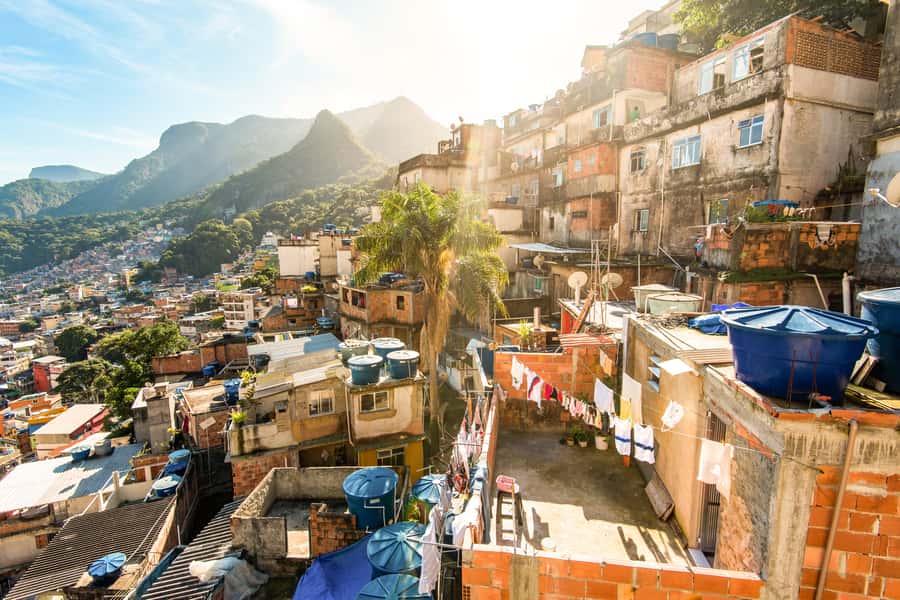
Many first-time visitors know Rio through Copacabana Beach, Sugarloaf Mountain, Christ the Redeemer, and postcard views. Those places matter, but they do not explain how most of the city’s neighborhoods work. Rocinha adds a human and social side to Rio that you will not get from the usual sightseeing circuit.
Rocinha is described as the largest favela in Rio and the biggest in South America. That label can make the place sound like a curiosity, which is exactly why the way you visit matters. This tour is built around walking, conversation, and local interpretation rather than treating homes and residents as scenery.
Your guide explains the favela’s origins, social structure, economic pressures, and everyday routines. The aim is not to pretend that life here is easy, or to hide the difficult subjects. It is to replace a simple stereotype with a fuller picture of people working, raising families, running businesses, practicing music, and building community.
I appreciate that distinction. You are not being asked to view Rocinha as either a dangerous no-go zone or a colorful tourist attraction without problems. You get a chance to understand both the hardship and the energy of the neighborhood.
More Walking Tours in Rio de Janeiro
- Rio de Janeiro: Rocinha Favela Walking Tour with Local Guide
★ 4.8 · 3,052 reviews - 3 Hour Rocinha Favela Walking Tour with a Local Guide
★ 5.0 · 833 reviews - Favela Tour Rio de Janeiro – Vidigal Walking Tour by Russo Guide
★ 5.0 · 377 reviews
Meeting at Copacabana Palace at 1:25 PM
The tour begins at 1:25 PM in front of the Belmond Copacabana Palace Hotel at Avenida Atlantica 1702. Look for the statue of journalist Ibrahim Sued beside the main entrance, on the same sidewalk. Waiting by the statue is more precise than simply being told to meet at the hotel, so use that detail to avoid a last-minute scramble.
Hotel pickup is not included. You need to reach Copacabana Palace on your own and arrive ready to leave at the stated time. Build in a little margin, especially if you are coming from another part of Rio.
The afternoon timing works well for many visitors. You can spend the morning at the beach or one of Rio’s major sights, then take the tour after lunch. Since the activity lasts about three hours, you should finish with enough evening left for dinner or another short outing.
The guides speak English, Portuguese, and Spanish. English-language ability receives particularly strong praise for Wellington and several other guides, but guide assignments can vary. If you need detailed explanations in a specific language, confirm availability when booking.
Walking Into Rocinha With a Local Guide
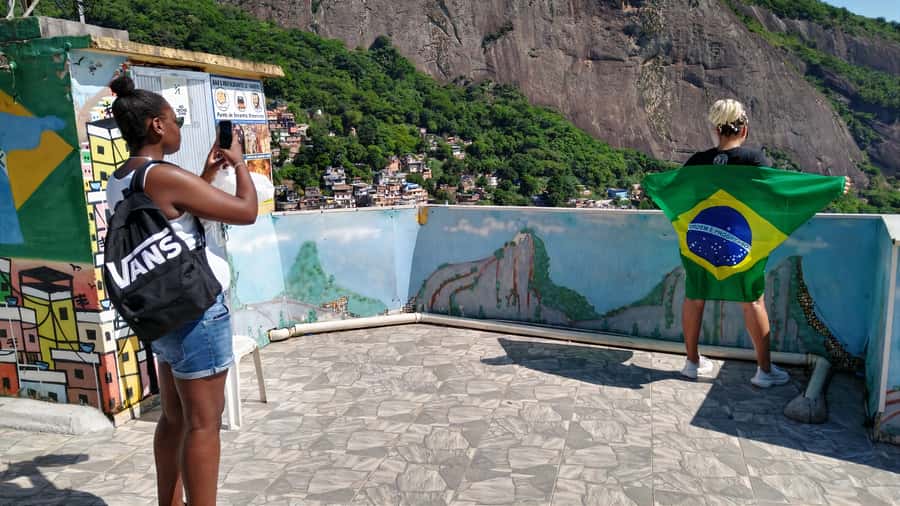
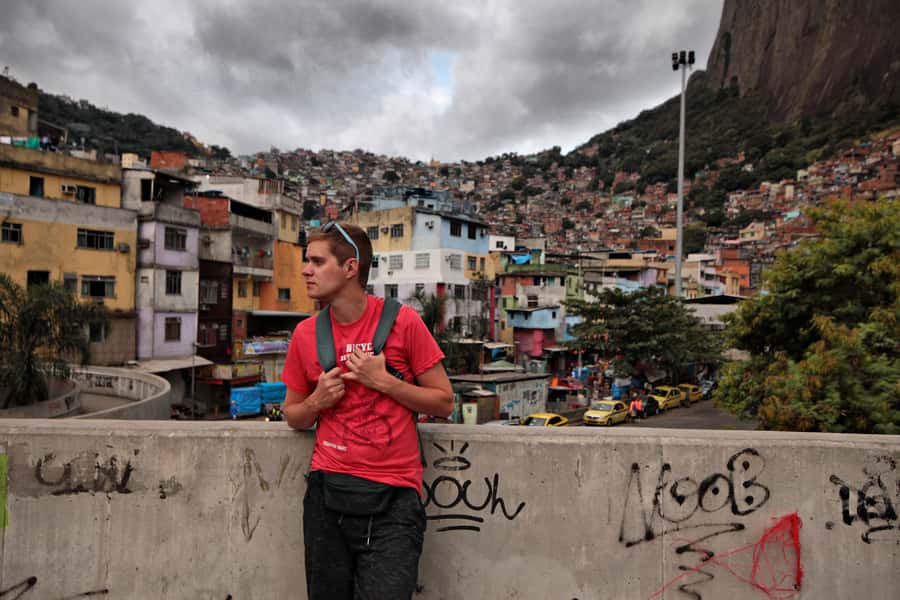
The key choice here is to walk. Vehicle tours can cover more ground, but they can also leave you feeling like you are looking at a neighborhood through glass. On foot, you notice the narrow routes, stairways, homes, shops, people, and views at a slower pace.
That does not make the visit intrusive by itself. Your behavior still matters. Keep your group together, follow the guide’s instructions, ask before photographing people, and remember that this is someone’s home rather than an outdoor museum. Bring a camera if you like, but use it with care.
The guides help set the tone. Alberto, for example, is described as someone who grew up in Rocinha and has lived there for more than six decades. Other praised guides, including Wellington and Daniel, also offer personal connections to the area. That local perspective can make the difference between hearing general facts and understanding how those facts affect real families.
You may hear about the challenges of housing, money, public services, safety, and the relationship between the favela and the rest of Rio. You may also hear humor and personal memories. That mix is important. Rocinha is not defined by one issue.
The Rooftop View and the Contrast Below
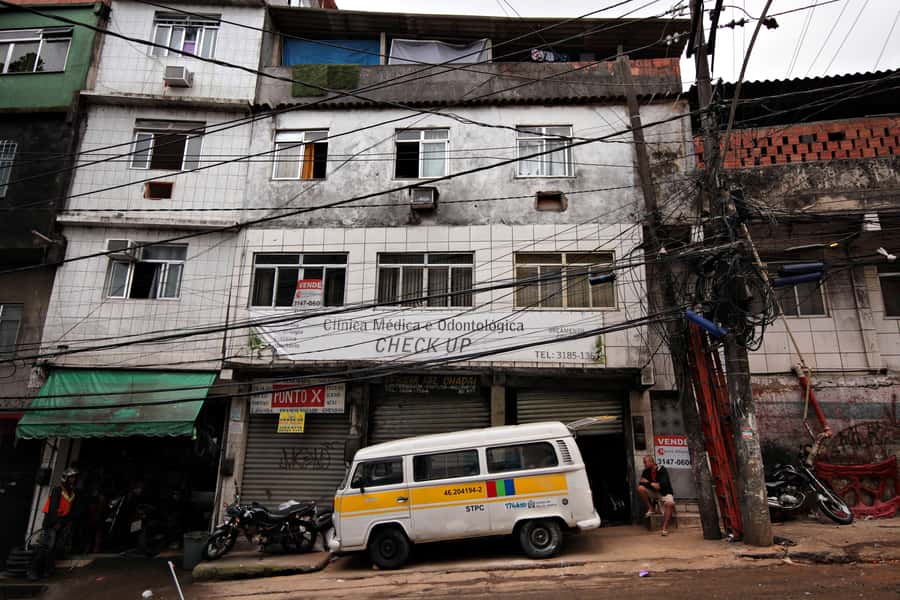
One of the strongest parts of the outing is the high viewpoint. Novo Visual Rocinha is mentioned as a place for broad views across the favela and toward Rio’s coastal districts. From above, you can see how closely packed the buildings are and how dramatically Rocinha sits beside more affluent neighborhoods.
The view is more than a photo stop. It helps you understand the geography of inequality in Rio. A short distance can separate very different housing conditions and incomes, while the ocean and mountains remain shared by everyone.
A rooftop bar may also form part of the visit. You can buy a drink there, including a caipirinha, and take in the view. Food and drinks are not included in the $35 price, so carry extra Brazilian reais if you want to stop for refreshments.
One useful cost detail comes from the tour experience: the viewpoint may involve a required fee. That means the advertised price is not necessarily your total spending for the afternoon. Ask the guide or operator what the current charge is, and keep small cash available.
An optional drone video has also been offered at the rooftop for around R$200. It is not part of the tour price, and you do not need it for a good experience. Treat it as an optional souvenir, not a hidden requirement.
Other favela walks led by people who live there:
- Favela Tours
★ 5.0 · 660 reviews - Rio de Janeiro: Favela Santa Marta Top Tour with Local Guide
★ 4.9 · 488 reviews - Favela Tour in Rio de Janeiro
★ 4.5 · 483 reviews - Favela Santa Marta Tour
★ 5.0 · 330 reviews
Capoeira, Samba, and Local Culture
The capoeira stop gives the walking tour a welcome change of pace. You may visit a local capoeira school and watch a demonstration by children or community performers. Some sessions include music, instruments, and a chance to try a few rhythms or movements.
Capoeira is not simply a show for visitors. It combines movement, music, discipline, and social history. The setting also lets you see a community project at work, particularly when young people are involved.
A capoeira session led by Tiane has received special praise for its energy and for the way it connects the activity to local children. One account also describes samba and instrument playing as part of the visit. These elements may vary by day, so you should not book expecting a fixed theatrical performance with a guaranteed cast.
There may be a suggested donation for the capoeira school. That is separate from the tour fee, and it is worth budgeting for if you want to support the people providing this part of the experience.
I like this section because it avoids turning Rocinha into a collection of problems. Music, dance, and sport are not decorative extras. They show how residents create identity, teach younger people, and keep local traditions active.
Safety Without Pretending Risk Does Not Exist

Safety is the biggest question for many people. This tour is designed to let you visit with local guides and in a controlled group, and many participants report feeling well cared for throughout the walk. Wellington, Daniel, Alberto, Martin, and other guides are praised for their calm manner and ability to explain where you are going.
That is reassuring, but no tour can remove every risk from a large urban area. You should still follow instructions, avoid wandering away, keep valuables discreet, and do not assume that a guided visit means you can ignore normal Rio precautions.
The local connection matters. A guide who lives in or grew up in Rocinha can make introductions, understand local etiquette, and adjust the route or conversation to current conditions. That local respect is one reason this format feels more responsible than a vehicle tour that simply circles through.
The tour also addresses the fear created by sensational headlines and movies such as City of God. It does not ask you to forget the serious challenges associated with favelas. Instead, it shows why a neighborhood cannot be understood only through crime stories.
How Much Walking Should You Expect?
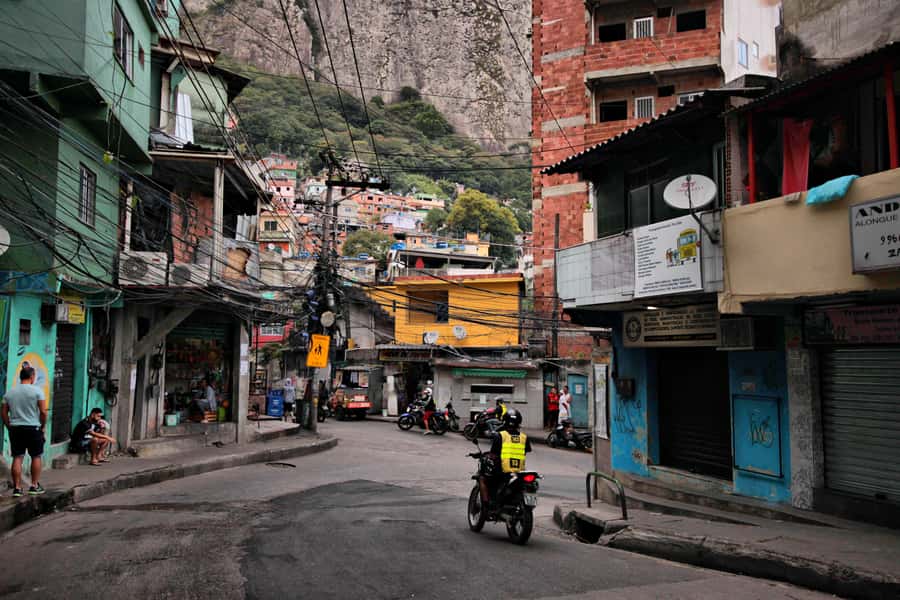
This is a proper walking tour, not a short stroll between bus stops. Expect narrow alleys, steep sections, stairs going up and down, and uneven surfaces. Several people describe the stairs as demanding but worthwhile, while others praise the chance to see back streets and high viewpoints on foot.
Wear shoes with a firm grip. Comfortable clothing matters too, especially in Rio’s warm weather. Bring water, since refreshments are not included, and keep your hands free where possible.
The operator says the activity is not suitable for wheelchair users or people with mobility impairments. It is also not recommended for people with knee problems, recent surgery, or other conditions that make stairs difficult.
The age and weight guidance is not fully consistent. The information lists restrictions for people over 70 and over 75, and also gives weight limits of 130 kilograms and 140 kilograms. If any of those limits apply to you, confirm the current rule before paying.
Is $35 Good Value?
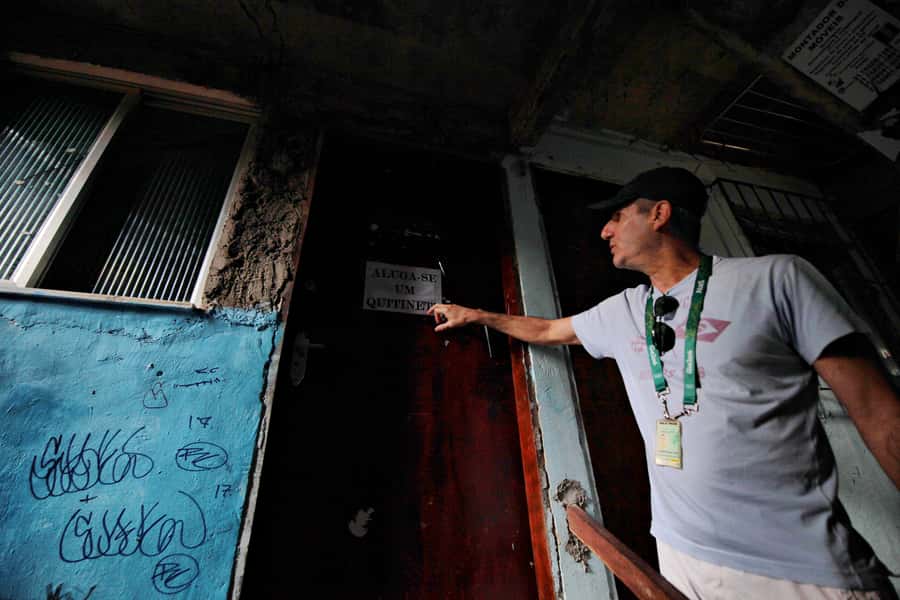
At $35 per person, this is reasonably priced for a three-hour guided walk in one of Rio’s most complex neighborhoods. You are paying for a local guide, interpretation in your chosen language, community access, and a monetary contribution to the favela.
The value is strongest if you want context rather than a quick photo stop. A beach day will give you relaxation, but this tour gives you a better sense of how Rio’s social divisions, local culture, and daily life fit together.
Budget a little beyond the advertised cost. Drinks, food, the viewpoint charge, any suggested donation for capoeira, and optional items such as the drone video can add to the afternoon. None of those extras is needed to understand Rocinha, but they can be useful ways to support local businesses and projects.
The tour is also a good value for solo visitors who want a structured introduction. You do not need to arrange a local contact or figure out an appropriate route yourself. The guide provides the setting and the explanations.
Which Guide Might You Get?

Guide assignments can change, but several names appear repeatedly in strong accounts of the experience. Wellington is praised for clear English, humor, energy, and a strong sense of safety. Daniel is noted for personal stories and a warm introduction to the community.
Alberto brings the perspective of someone raised in Rocinha and living there for more than 60 years. Martin is described as especially good at explaining the politics and daily realities of favela life, often with humor.
Juan is praised for enthusiasm and for encouraging people to try local food. Roberto is described as witty and well informed. These personal styles suggest that the experience can feel different depending on who leads it.
One useful point is that a guide’s personality may matter as much as the route. If you want a more personal conversation, explain that when booking, though a particular guide cannot be guaranteed from the information available.
Who Should Book This Walking Tour?
I would recommend it to adults and older teenagers who want to understand Rio beyond famous sights. It suits curious people who are comfortable asking respectful questions, walking through crowded passages, and hearing about poverty and social pressure without expecting a polished sightseeing show.
It is especially useful if you have worried about the ethics of visiting a favela. The walking format, local guides, small groups, and community contribution offer a more considerate approach than simply driving around to photograph homes.
You should think twice if you dislike stairs, need a fully accessible route, or want a relaxed afternoon with no extra spending. This is also not the right outing if you expect a fixed performance, guaranteed rooftop drinks, or a dramatic adventure.
FAQ
How long is the Rocinha walking tour?
The tour lasts three hours.
How much does the tour cost?
The listed price is $35 per person.
Where does the tour meet?
Meet in front of the Belmond Copacabana Palace Hotel at Avenida Atlantica 1702 in Copacabana. Wait beside the Ibrahim Sued statue near the main entrance.
What time should I meet the guide?
The stated meeting time is 1:25 PM.
Is hotel pickup included?
No. Hotel pickup is not included, so you need to reach the Copacabana meeting point yourself.
Which languages are available?
The live guide service is available in English, Portuguese, and Spanish.
Are food and drinks included?
No. Food and drinks are not included. You may have the chance to buy refreshments at a rooftop bar.
Is the tour suitable for someone with mobility problems?
No. The walk includes narrow alleys and stairs and is not recommended for wheelchair users, people with mobility impairments, knee problems, or recent surgery.
Can I cancel the booking?
You can cancel up to 24 hours in advance for a full refund. A reserve now and pay later option is also available.
Should You Book the Rocinha Walk?
Yes, if you want a respectful, local-led look at a part of Rio that most standard sightseeing skips. The best reasons to go are the guides’ personal connections, the rooftop views, and the capoeira visit, with Wellington, Alberto, Daniel, and Martin among the names associated with especially strong guiding.
Book with realistic expectations. This is not a sanitized cultural show, and it is not a risk-free shortcut into a difficult neighborhood. It is a physical walk through a living community, with extra costs possible and etiquette required.
For $35, it offers useful context, human contact, and a more complete picture of Rio. Wear good shoes, bring water, keep your camera respectful, and leave room in your afternoon for the guide’s stories.
Newest reviews from around Rio De Janeiro
- Cidade do Samba Behind-the-Scenes Carnival Tour in Rio de Janeiro★ 4.0 · 5 reviews
- PRIVATE TOUR – Christ the Redeemer and Sugar Loaf★ 4.5 · 9 reviews
- Christ Statue and Sugarloaf Private Tour with a Photographer★ 5.0 · 9 reviews
- Christ the Redeemer Trail x Lage Park★ 5.0 · 7 reviews
- Christ the Redeemer and City Tour★ 5.0 · 20 reviews
- Christ the Redeemer, Selaron Steps and Santa Teresa Half-day Tour★ 4.5 · 15 reviews
- Christ the Redeemer Adventure★ 5.0 · 12 reviews
- Private Tour of Christ the Redeemer in Rio de Janeiro★ 5.0 · 2 reviews
Favela Tours, compared.


3 Hour Rocinha Favela Walking Tour with a Local Guide
Read our review →

Favela Tour Rio de Janeiro – Vidigal Walking Tour by Russo Guide
Read our review →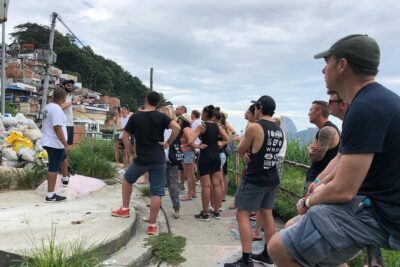

Private Walking and Cultural Tour Rocinha-Rio de Janeiro
Read our review →Browse the lists this tour appears in