
Reviewed · 3-HOUR EXPERIENCES
Salvador: 3-Hour Percussion Class
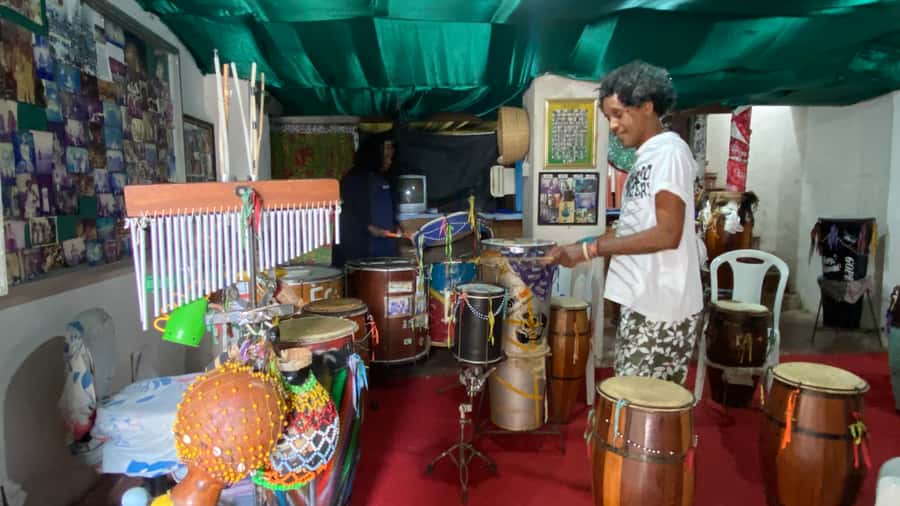
Feel the beat before you leave Bahia. This Salvador percussion class gives you a direct, hands-on way to meet the musical culture of northeastern Brazil, with local instruction, several drums, and a small group capped at six people. I especially like the chance to play rather than simply watch, and the help from a guide who can translate between English, Spanish, and Portuguese.
I also like the cultural setting. Percussion here connects with samba de roda, Candomblé ceremonies, samba-reggae, and other musical traditions shaped by African influences. The main caution is the timing: the advertised three hours includes transportation, and several people received about 90 minutes of actual class time. At $90 per person, that matters.
In This Review
- Key points before you book
- Why Bahia percussion matters
- Hotel pickup and the ride to the class
- Meeting the local musicians
- Playing samba-reggae and samba
- What the class feels like in practice
- The value of a $90 Salvador experience
- Who should take this class
- Language, group size, and comfort
- Booking and cancellation details
- Should you book the Salvador percussion class?
- FAQ
- How long does the Salvador percussion class last?
- What rhythm will I learn?
- Who teaches the percussion class?
- Is the class suitable for beginners?
- Can experienced percussion players take part?
- How many people can join the class?
- What languages are available?
- Is hotel transportation included?
- Are food and drinks included?
- Is the activity wheelchair accessible?
- What is the cancellation policy?
- Can I reserve now and pay later?
Key points before you book
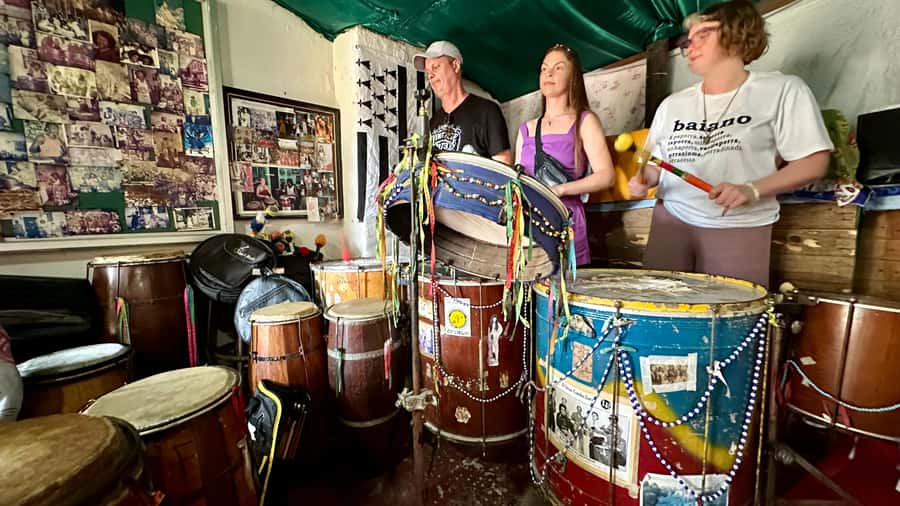
- Samba-reggae is the star rhythm: You learn about the Bahia sound that helped make local percussion famous around the world and fascinated Michael Jackson.
- Maestro Macambira teaches with patience: His friendly approach suits beginners, while people who already play can try several instruments and rhythms.
- The class is truly hands-on: You do not just watch a demonstration. You play drums, follow patterns, and join a group jam.
- Small groups make a difference: With no more than six participants, you should receive more attention than in a large music workshop.
- Plan for less class time than the title suggests: Transportation is included in the three-hour booking, and actual instruction may last about 1.5 to 1.75 hours.
- Hotel pickup keeps the morning simple: Your guide collects you from your hotel lobby and handles the included transport.
Why Bahia percussion matters
In Salvador, percussion is not just stage entertainment. It can accompany celebration, ceremony, dance, and everyday social life. The drums provide the pulse, but they also bring people together and give a performance its emotional force.
This class offers a useful introduction to that world without asking you to commit to a full concert, a formal music course, or a long cultural tour. You get a short lesson in how Brazilian rhythms are built, then put your hands to work.
The focus reaches beyond one style. You should hear about samba, samba-reggae, and musical ideas connected to African traditions in Brazil. The program also points toward the range of Brazilian music, including jazz. That range matters because it keeps the class from becoming a simple lesson in repeating one beat.
I would choose this experience if you want a cultural activity that is active and social. If you prefer to sit back and take photographs, a live music performance may serve you better.
A few more Salvador Brazil days to weigh up
- Salvador: Capoeira Class at Mestre Bimba’s 1st Ever School.
★ 4.9 · 34 reviews - Salvador: CAPOEIRA CLASS – CULTURAL
★ 4.6 · 13 reviews - Salvador: Traditional Drumming and Percussion Workshop
★ 4.4 · 10 reviews
Hotel pickup and the ride to the class
The experience begins with pickup in your hotel lobby. That is a useful perk in Salvador, especially if you are still learning the city or prefer not to arrange your own transport to an unfamiliar music venue.
The guide is part of the experience, not just a driver. English, Spanish, and Portuguese are offered, and the guide may translate the instructor’s demonstrations as the lesson moves along. One English-speaking participant specifically valued having the guide explain what the instructor was showing.
You should pay attention to the timing when booking. The activity is sold as three hours, but that total includes the ride to and from the class. Several accounts put the actual lesson at about 90 minutes, while another described roughly 1 hour and 45 minutes in total. The exact split may vary, but you should not assume that three full hours are spent playing instruments.
That shorter class can be a plus if you have a busy Salvador schedule. It is long enough to learn basic patterns without turning into a tiring music lesson. At the same time, the $90 price feels less generous if you expect a full three-hour workshop.
Meeting the local musicians
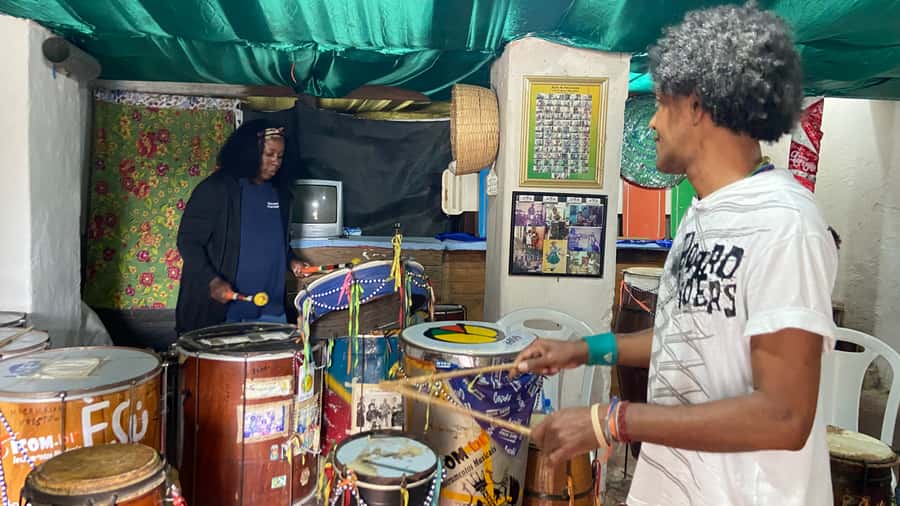
The heart of the outing is the workshop with local percussionists. Maestro Macambira is singled out for his patient and welcoming manner, including with people who have very different levels of musical ability.
You might be a complete beginner who has never held a Brazilian drum. You might also already enjoy percussion and want to try instruments and rhythms from Bahia. The format appears to accommodate both. One person who loves percussion appreciated playing multiple instruments, while another described an enjoyable one-on-one session.
That personal attention is one of the strongest reasons to consider the class. A group limited to six people leaves room for correction, questions, and repeated attempts. If you are shy about making mistakes, the small setting should feel less exposed than a large public workshop.
The class is not presented as formal conservatory training. You should expect an accessible introduction, not advanced musical theory or complex arrangements. One participant felt that the beats remained quite simple and that not many instruments were used. That is an important warning for experienced drummers who want technical instruction.
Playing samba-reggae and samba
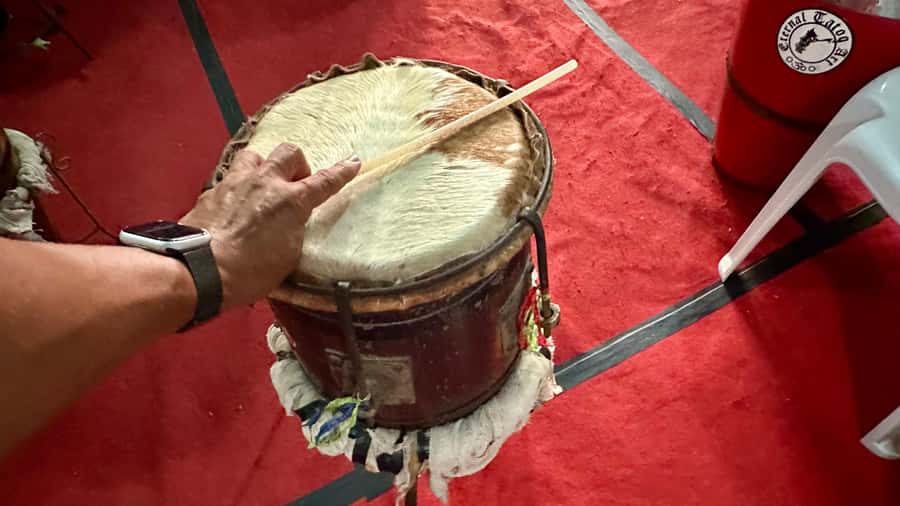
The class introduces you to samba-reggae, one of Bahia’s best-known rhythms. It is a strong choice for a first lesson because the style has a clear pulse and a powerful group sound. You can hear how separate drum parts work together instead of treating percussion as one repeated noise.
Samba receives attention too. The lesson helps place it within Brazil’s wider musical culture, while showing how local traditions connect to African musical influences. The reference to Michael Jackson gives you an easy cultural link: samba-reggae reached an international audience and helped draw attention to Salvador’s distinctive sound.
The most enjoyable part should be the shared playing. You learn a pattern, repeat it, and then add it to what the instructor and other participants are doing. Even simple beats can feel surprisingly satisfying when several people hold them together.
The class may also touch on other sounds, with the stated range running from samba-reggae to jazz. Do not expect a complete survey of Brazilian music in one short session. Think of that range as context that shows how flexible percussion can be.
Same patch of Brazil, a completely different sort of day:
- From Salvador: Schooner Tour to Frades Islands and Itaparica
★ 3.9 · 98 reviews - Afro-Brazilian Roots Private City Tour in Salvador
★ 4.7 · 88 reviews - Salvador Historic Walking Tour – Pelourinho
★ 4.8 · 62 reviews - Salvador de Bahia African Culture Tour
★ 4.5 · 60 reviews
What the class feels like in practice
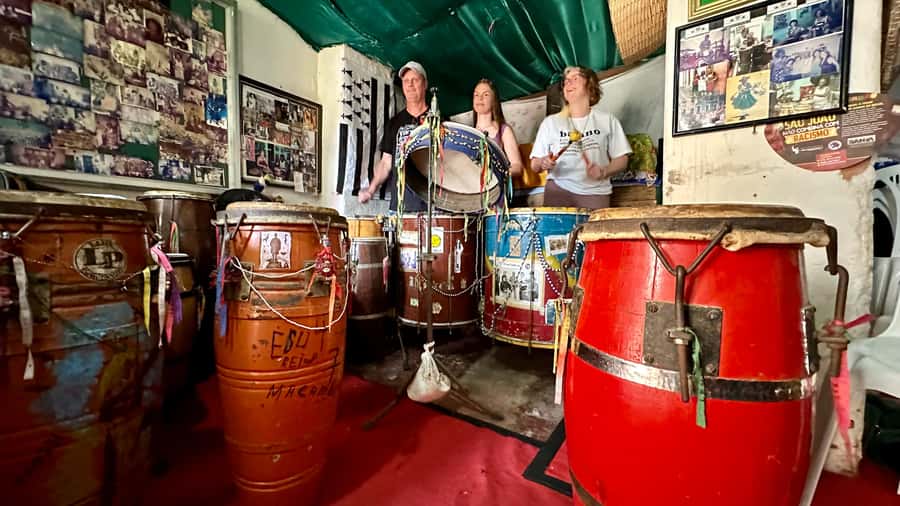
The available details suggest a clear sequence: pickup, transport, introduction to local musical culture, demonstration, guided practice, and a final group jam. The strongest moments come when you stop watching and begin contributing to the sound.
A guide may translate while Maestro Macambira demonstrates. That makes the class workable for English and Spanish speakers, though translation can add a little time between instruction and practice. Portuguese speakers may find the communication more direct.
You should get the chance to play different drums, rather than spend the full lesson with one instrument. The exact selection is not specified, so I would not book this expecting a particular drum or a long catalogue of instruments. The experience is more about rhythm and shared music than about equipment.
The final jam is likely to be the part you remember. People of different ages and skill levels can take part, and one booking was described as a successful experience across three generations. That says a lot about the class’s broad appeal.
Still, keep expectations in check. The lesson may stay with simple beats, particularly if the group includes complete beginners. That is good for keeping everyone together, but less satisfying if you want difficult rhythms or a detailed technical lesson.
The value of a $90 Salvador experience
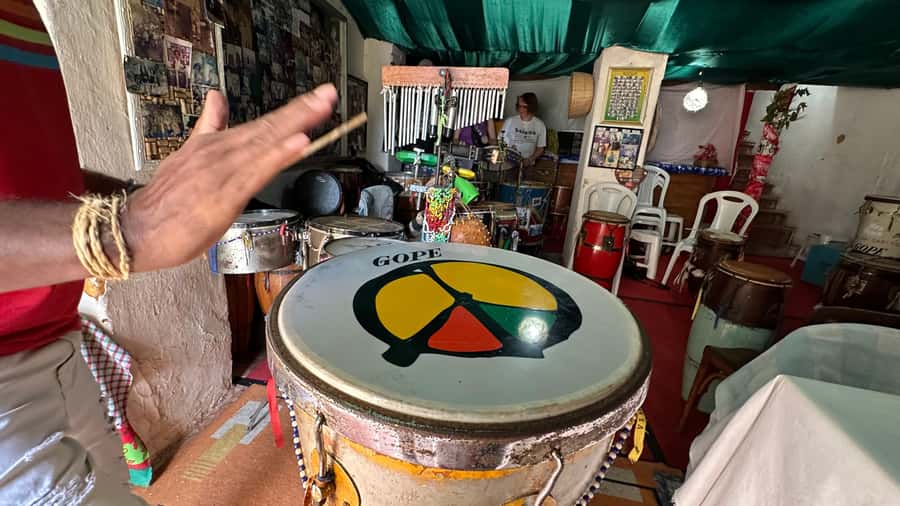
At $90 per person, the class sits in the midrange for a private-feeling cultural activity. The fee covers hotel pickup and drop-off, entrance fees, a professional guide, translation support where needed, and the workshop itself.
The value depends on how you judge the experience. If you want convenience, local contact, and a small class without organizing transportation, the package is easier to justify. You are paying for access and guidance, not just for time with a drum.
If you calculate the cost against 90 minutes of instruction, the price is harder to defend. Several participants praised the quality of the encounter but still felt it was too short for the advertised three-hour duration. One person called it overpriced because the total experience lasted about 1 hour and 45 minutes and included few instruments.
I would book at this price if the musical connection is a priority and you value a private or small-group setting. I would skip it if you are mainly looking for the longest possible workshop or the lowest cost per hour.
Food and drinks are not included, so plan to eat separately. No meal is part of the class, and the activity is best treated as a cultural lesson rather than a food-and-music outing.
Who should take this class
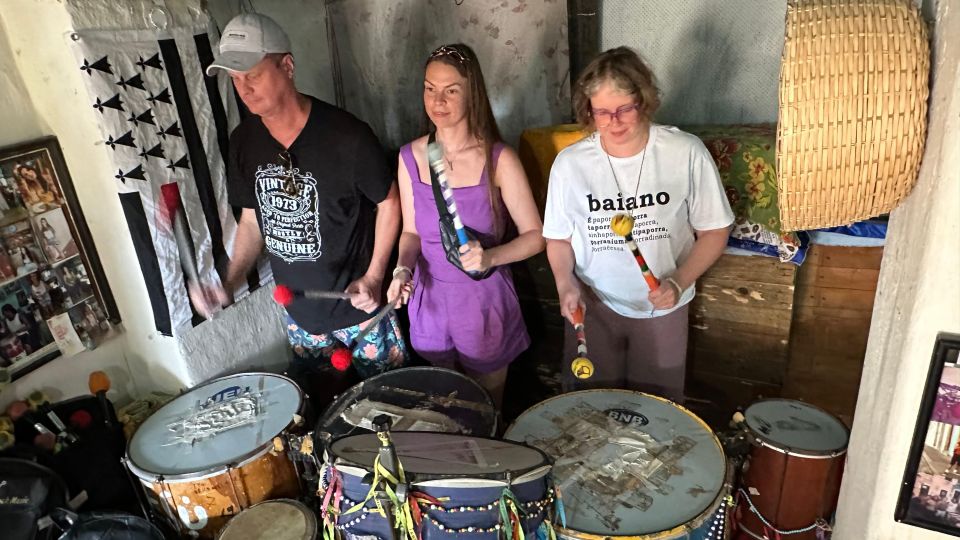
This is a good match for several kinds of visitors:
- First-time percussion players: The patient instruction and simple rhythms should make it easy to participate.
- People who already play drums: You can try several instruments and gain a local perspective, though the basic level may feel limited.
- Families and mixed-age groups: The format has worked for a group spanning three generations.
- Music fans: You get a closer look at samba, samba-reggae, and Afro-Brazilian musical traditions than a standard sightseeing stop would offer.
- Visitors with a short schedule: The compact format leaves room for other Salvador plans, especially if you confirm the transport timing.
- Solo visitors: The small group gives you a social activity without the scale of a large tour.
I would be more cautious if you use a wheelchair, since the activity cannot accommodate wheelchairs. You should also ask for clarification about the expected lesson length if the difference between 90 minutes and three hours affects your decision.
Language, group size, and comfort
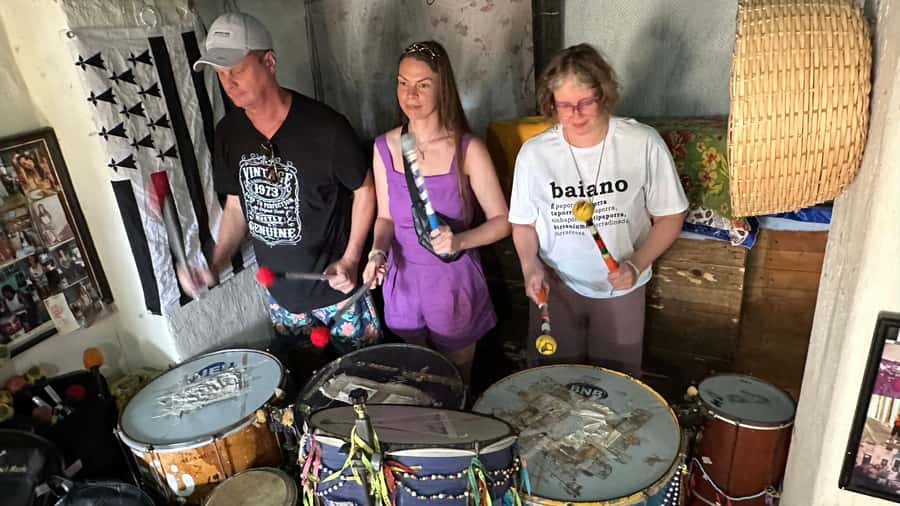
The class is available in English, Spanish, and Portuguese. The guide’s translation can be especially useful because percussion instruction depends on quick demonstrations, hand movements, and repeated patterns.
A maximum of six participants is a real advantage. You should have a better chance to handle instruments, ask questions, and receive corrections than you would in a large class. The one-on-one format reported by one participant suggests that the actual group may sometimes be smaller than the limit.
Small groups also make it easier to keep the lesson friendly. People can laugh at missed beats, try again, and build a short piece of music together without the pressure of performing for a large audience.
The class is not wheelchair accessible. The supplied details do not specify other mobility conditions, venue facilities, or the exact instruments used, so you should ask the provider if you need those details before booking.
Booking and cancellation details
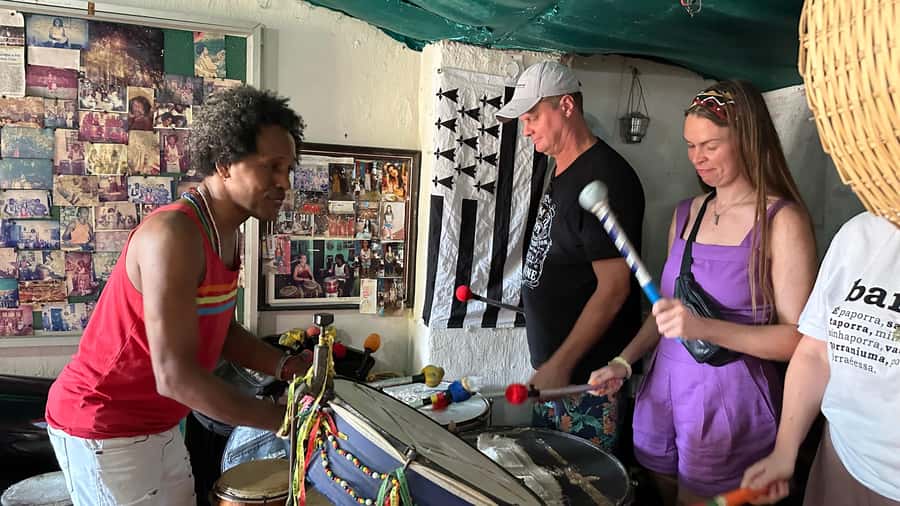
The provider is Your Tour Brazil. Pickup is from your hotel lobby, and the activity lasts three hours according to the booking format, with starting times depending on availability.
You can cancel up to 24 hours in advance for a full refund. A reserve-now, pay-later option is also available, which helps if you are still arranging your Salvador schedule.
Because timing is the main point of concern, I would use the booking message to confirm three things: the expected pickup time, the approximate travel time, and the amount of hands-on instruction. This does not remove the appeal of the class, but it helps you judge the $90 fee fairly.
Should you book the Salvador percussion class?
Book it if you want an intimate, musical encounter with Bahia and would rather make the rhythm than simply watch it. The strongest points are the friendly teaching style of Maestro Macambira, the guide’s translation, the chance to play several drums, and the final group jam.
Think twice if you expect three full hours of instruction, advanced percussion work, or a wide range of instruments. The actual class may be closer to 90 minutes, and simple beats are part of the format.
For a music-loving visitor, family group, or curious beginner, this can be one of Salvador’s more personal cultural activities. Go in knowing that you are buying a short, guided introduction with transport included, not a full-length drum course.
FAQ
How long does the Salvador percussion class last?
The activity is scheduled for three hours, including transportation. The actual percussion lesson may last about 90 minutes to 1 hour and 45 minutes.
What rhythm will I learn?
The class introduces samba-reggae and samba, with context about the wider range of Brazilian music, including jazz.
Who teaches the percussion class?
The class is taught by local percussionists, including Maestro Macambira, who is described as patient and friendly.
Is the class suitable for beginners?
Yes. The teaching approach is designed to accommodate different ability levels, including people with no previous percussion experience.
Can experienced percussion players take part?
Yes. People with percussion experience can play multiple instruments and learn different rhythms, though the beats may remain fairly simple.
How many people can join the class?
The small group is limited to a maximum of six participants. Some sessions may be smaller, including one reported one-on-one class.
What languages are available?
The tour offers English, Spanish, and Portuguese. A guide may translate the instructor’s demonstrations.
Is hotel transportation included?
Yes. Pickup and drop-off at your hotel are included, with pickup from the hotel lobby.
Are food and drinks included?
No. Food and drinks are not included in the price.
Is the activity wheelchair accessible?
No. The activity cannot accommodate wheelchairs.
What is the cancellation policy?
You can cancel up to 24 hours before the activity for a full refund.
Can I reserve now and pay later?
Yes. A reserve-now, pay-later option is available to keep your plans flexible.
Newest reviews from around Salvador Brazil
- Salvador: Schooner Cruise with Pickup and Itaparica Stop★ 3.8 · 5 reviews
- Salvador by Night: Cultural Show and Dinner.★ 4.4 · 17 reviews
- Salvador: Traditional Drumming and Percussion Workshop★ 4.4 · 10 reviews
- Salvador: Cultural Treasure – Samba de Roda.★ 4.9 · 51 reviews
- PROMO Salvador: Interactive Art and Culture Private Tour★ 5.0 · 2 reviews
- Salvador: Curated Nightlife Exp. in the Heart of the City★ 5.0 · 2 reviews
- Salvador: Capoeira Class at Mestre Bimba’s 1st Ever School.★ 4.9 · 34 reviews
- Salvador: Caipirinha Masterclass with Unlimited Drinks★ 4.2 · 4 reviews
3-Hour Experiences, compared.

3 Hour Rocinha Favela Walking Tour with a Local Guide
Read our review →
3-Hour Tasting Session in Rio with 33 Foods Brazilians Love
Read our review →
3H CITY TOUR (pick up / delivery within Sao Paulo city limits)
Read our review →
3-Hour Brazilian Cooking Class in Rio de Janeiro
Read our review →
3-hour Small Group Buzios Peninsula Open Air Trolley Tour
Read our review →
3-Hour Brazilian Drinks & Appetizers Hands-On Class in Rio
Read our review →
Browse the lists this tour appears in