
Reviewed · WORKSHOPS
Salvador: CAPOEIRA CLASS – CULTURAL
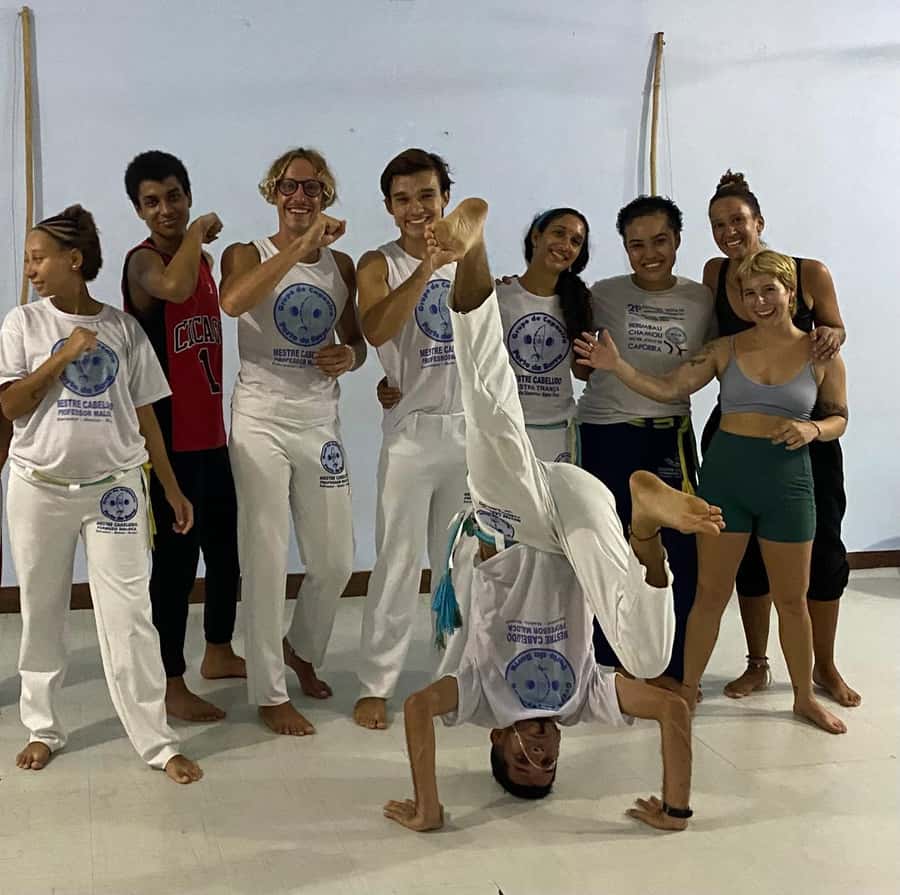
Capoeira turns exercise into a cultural lesson. This 90-minute class in Salvador combines kicks, spins, music, songs, and group practice, giving you a useful introduction to an art form shaped by resistance, community, and personal expression. I like that you do not simply watch a demonstration. You take part, move your body, and learn some of the meaning behind the movements.
I also like the small group of up to eight people and the price of $17 per person. That makes personal attention more likely and keeps the activity affordable. The main point to consider is that instruction is in Portuguese only. That should not stop you, since one participant completed the class without speaking Portuguese, but you will need to learn by watching closely and following physical demonstrations.
In This Review
- Key Points Before You Book
- Meeting at Hostel Nomads at 7:30 PM
- The First Fifteen Minutes: Warming Up Your Body
- Learning Kicks, Spins, and Capoeira’s Flow
- Portuguese Instruction and Learning Without Fluency
- Capoeira’s History, Resistance, and Personal Expression
- Music, Instruments, and Songs
- A Small Group of Eight Makes a Difference
- What the $17 Price Really Buys
- Who Will Enjoy This Class Most?
- Practical Tips for a Better Session
- Should You Book the Salvador Capoeira Class?
- FAQ
- When is the Salvador capoeira class held?
- How long does the class last?
- How much does the class cost?
- Where is the meeting point?
- What language does the instructor speak?
- How large is the group?
- What is included in the price?
Key Points Before You Book
- Capoeira happens at 7:30 PM on Mondays and Wednesdays, making it a useful evening activity in Salvador.
- The class lasts 90 minutes, with warm-ups, basic movements, physical conditioning, music, and cultural context.
- Instruction is in Portuguese, so expect to learn through demonstration, repetition, and simple visual cues.
- Groups are limited to eight people, which should give you more room to move and more contact with the instructor.
- Music is part of the lesson, and you may play instruments and learn traditional songs as well as physical techniques.
- The $17 price includes water, workout equipment, and the capoeira instructor, not just access to a practice space.
Meeting at Hostel Nomads at 7:30 PM
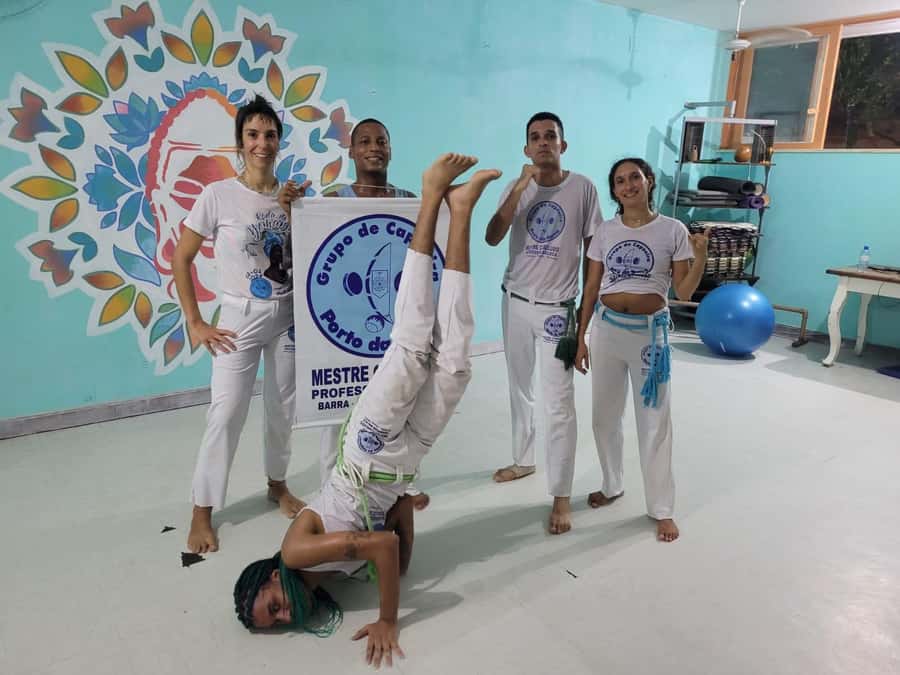
Your meeting point is Hostel Nomads, and the class begins at 7:30 PM. Since the activity takes place in the evening, it can fit neatly into a day spent exploring Salvador without taking away your morning or afternoon.
I would arrive with enough time to find the hostel and settle in. The supplied information does not give a separate arrival time, so you should confirm the exact meeting instructions when booking. The class is scheduled every Monday and Wednesday, which gives you some flexibility if you are spending several days in the city.
The timing also shapes the mood. Capoeira is not presented as a quiet museum lesson. It is an active evening session with rhythm, movement, and group energy. If you have already spent the day walking, the warm-up may feel welcome, though the physical work can still be demanding.
A few more Salvador Brazil days to weigh up
- Salvador: Capoeira Class at Mestre Bimba’s 1st Ever School.
★ 4.9 · 34 reviews - Salvador: 3-Hour Percussion Class
★ 4.9 · 10 reviews - Salvador: Traditional Drumming and Percussion Workshop
★ 4.4 · 10 reviews
The First Fifteen Minutes: Warming Up Your Body
The session begins with a lively warm-up focused on agility, flexibility, and coordination. These are not filler exercises. They prepare you for capoeira’s unusual combination of flowing footwork, kicks, turns, and balance.
You can expect to work through movements that ask your arms and legs to cooperate in new ways. Capoeira does not look like a standard gym workout, and the warm-up helps you adjust to its shifting rhythm. You may need to bend, step, turn, and react quickly rather than simply repeat a straight set of exercises.
I like this opening because it serves two purposes. It gets your body ready, and it introduces the idea that capoeira is about control as much as strength. You are not just trying to hit hard or move fast. You are learning to stay aware of your balance and the person or space around you.
The class is described as suitable for a small group, but the information does not specify a fitness level or a separate beginner track. If you are completely new to physical activity, approach the warm-up at your own pace. The instructor can demonstrate the movements, but you remain responsible for judging your limits.
Learning Kicks, Spins, and Capoeira’s Flow
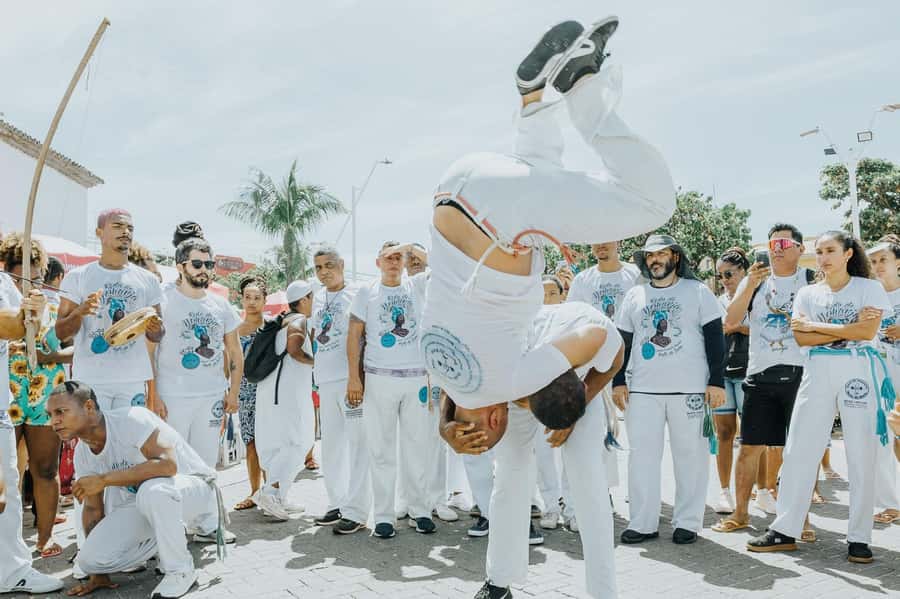
After the warm-up, the instructor guides you through sequences of kicks, spins, and acrobatic movements. The focus is on technique and expression, so this is not simply a matter of copying a list of martial arts actions.
You will likely spend time learning basic positions and transitions before attempting more complex movement. That structure matters. Capoeira can look effortless when performed by an experienced practitioner, but the balance and timing behind it take practice.
The class description presents capoeira as both fight and dance. That contrast is central to the experience. Movements have a martial quality, but they also carry rhythm and style. You are learning how to move with another person rather than treating the session as a contest of force.
The physical work is described as intensive by one participant, while still being fun and approachable. That is a useful warning. Ninety minutes is long enough to give you a real workout, especially if you take part fully. Wear comfortable clothing that allows your legs and shoulders to move freely, though the supplied information does not specify a dress code or footwear requirement.
The instructor is described as a master in capoeira and as attentive, professional, and good at explaining. That praise matters for beginners. A strong teacher can make unfamiliar movements easier to understand, especially when you are also working in Portuguese.
Portuguese Instruction and Learning Without Fluency
The only stated class language is Portuguese. You should take this seriously when deciding if the activity suits you, but do not assume a language barrier makes the lesson impossible.
Capoeira relies heavily on demonstration. You can watch the instructor perform a movement, copy the shape, and improve through repetition. The physical nature of the lesson may make it easier to follow than a history talk delivered only in Portuguese.
A participant specifically noted that the class worked well even without speaking a word of Portuguese. That suggests the instructor uses clear physical examples and can guide beginners through the basic sequence without requiring full language fluency.
Still, you should expect to miss some verbal detail. The cultural and historical explanation may be easier to follow if you know a little Portuguese or attend with someone who can translate. You can also ask the instructor to repeat a movement or show it more slowly. A friendly attitude will take you a long way.
I would not book this class if you need detailed English instruction or a fully translated lecture. I would book it if you are comfortable learning by watching, copying, and joining in.
Same patch of Brazil, a completely different sort of day:
- From Salvador: Schooner Tour to Frades Islands and Itaparica
★ 3.9 · 98 reviews - Afro-Brazilian Roots Private City Tour in Salvador
★ 4.7 · 88 reviews - Salvador Historic Walking Tour – Pelourinho
★ 4.8 · 62 reviews - Salvador de Bahia African Culture Tour
★ 4.5 · 60 reviews
Capoeira’s History, Resistance, and Personal Expression
The instructor does more than lead exercise. Each session connects the movements to capoeira’s roots in resistance and empowerment, as well as its place in contemporary urban culture.
That context gives the physical work more weight. A kick is not only a kick, and a song is not only background music. The class presents capoeira as a way of carrying memory, identity, and community through movement.
The supplied details do not provide a full historical lecture or name specific historical figures, so you should not expect a detailed academic seminar. Instead, cultural context is blended into the practical class. You learn some of the art’s meaning while your body is learning how it works.
This is one of the strongest reasons to choose the activity over a standard workout. You leave with more than tired muscles. You gain a small window into a Brazilian tradition through its rhythm, physical vocabulary, and group setting.
Music, Instruments, and Songs
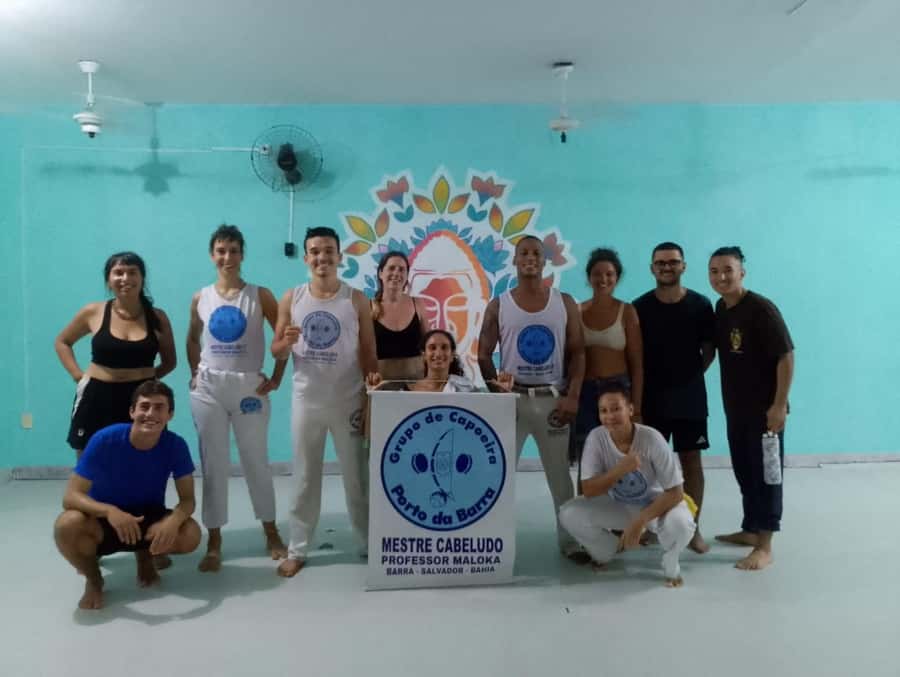
Capoeira is closely tied to sound, and the class includes more than movement. One participant specifically noted the chance to play instruments and learn songs during the 90-minute session.
This changes the pace of the class. You may move from physical drills to a musical exercise, then return to the group practice. The instruments help explain how capoeira functions as a shared cultural activity rather than a solo martial arts routine.
You do not need to be a musician to take part. The point is participation, not performance. If you are shy about singing, the small group may feel less intimidating than a large class, though the information does not identify the instruments or provide a detailed music schedule.
I especially like this feature for people who want a broader cultural experience. Many short activities offer a demonstration and a photo. Here, you can touch the tools of the tradition, hear its songs, and understand why rhythm matters to the movement.
A Small Group of Eight Makes a Difference
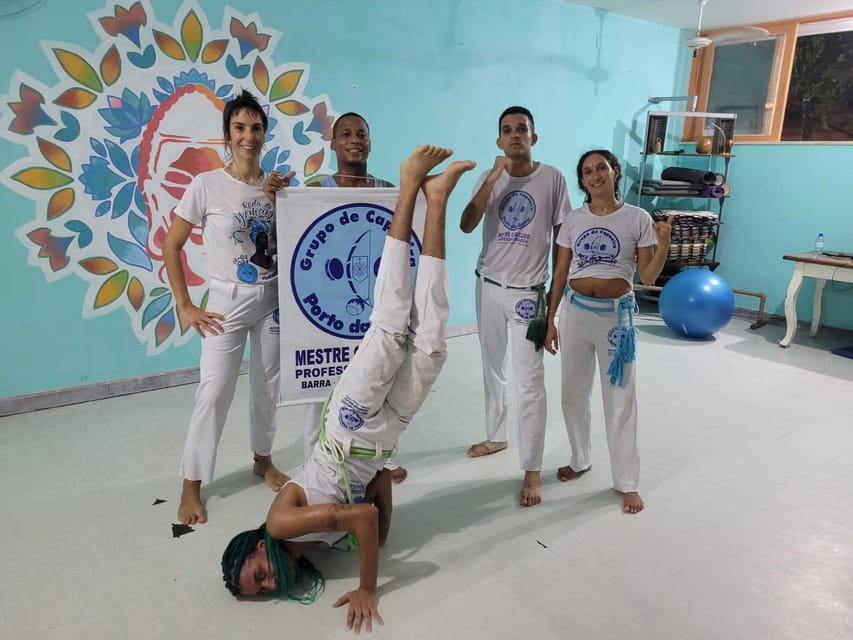
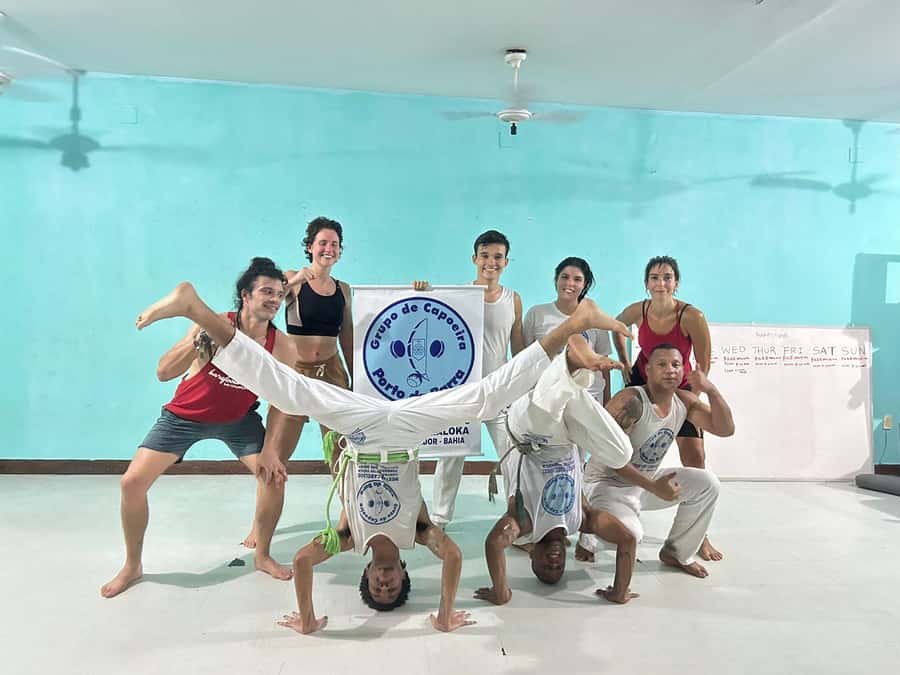
The group is limited to eight participants. For a physical class, that is a useful number. You should have enough space to practice, and the instructor has a better chance of noticing when someone needs a movement repeated or adjusted.
A smaller group can also make it easier to join the communal side of capoeira. You are not hidden in a crowd. You take turns, watch other people learn, and become part of the class rhythm.
The tradeoff is that availability may be limited, especially since the activity runs only twice a week. You will want to check the schedule for your dates rather than assume a last-minute place will be available.
The class is offered through hakatrip, and the instructor is described as a master in capoeira. The strongest praise centers on the teacher’s attention, professionalism, and ability to share energy. That is important here because the teacher sets the tone for both the workout and the cultural side of the session.
What the $17 Price Really Buys
At $17 per person, this is an inexpensive way to add an active cultural experience to your time in Salvador. The fee includes the capoeira class, a master capoeira instructor, workout tools, and water.
The value is strongest if you want to participate rather than watch. You receive 90 minutes of guided movement and cultural instruction, plus a chance to work with instruments and songs. A basic exercise class might cost a similar amount, but it would not necessarily connect the workout to Brazilian tradition.
The price is also reasonable for a small group. With no more than eight participants, the cost is not simply paying for entry into a large public session. You are paying for instruction and a more personal introduction.
There are limits. The activity does not include transportation, a meal, or a broader sightseeing program. The experience is focused tightly on capoeira. That is good if you want a concentrated lesson, but less useful if you are searching for a general Salvador tour.
Who Will Enjoy This Class Most?
I would recommend this class to several kinds of visitors:
- First-time capoeira students who want a clear introduction rather than an advanced training session.
- Active visitors who enjoy learning through movement and do not mind a workout.
- Culture-focused visitors who want music, songs, history, and community included in the activity.
- Solo visitors and couples who like small-group experiences.
- People staying near the meeting point who want a simple evening plan.
- Portuguese speakers, who can follow every explanation more easily.
You do not need to arrive as an athlete. The class teaches basic movements and welcomes beginners according to the supplied descriptions. But you should be ready to move for 90 minutes and try unfamiliar positions.
I would be more cautious about booking if you have an injury, need English-language instruction, or dislike group participation. The activity is physical and the instructor speaks Portuguese. Those are not minor details.
Practical Tips for a Better Session
Wear clothes that let you stretch, kick, and turn without restriction. The activity includes physical conditioning and acrobatics, so comfort matters more than looking ready for a night out.
Bring a relaxed attitude. You may not perform every movement correctly on the first try, and that is normal for a beginner. Watch the instructor carefully, start slowly, and let the rhythm develop.
If you do not speak Portuguese, learn a few simple words before you arrive, such as left, right, stop, again, and slowly. The class can still work through demonstration, but a few words may help you respond faster.
Keep the evening free of a tight appointment immediately afterward. The class lasts 90 minutes, and the schedule begins at 7:30 PM. Since no end time beyond the stated duration is provided, allow a little extra time before arranging a late dinner or another activity.
The booking terms are useful if your plans may change. You can cancel up to 24 hours ahead for a full refund, and you can reserve now while paying later. Check current availability for the specific Monday or Wednesday you want.
Should You Book the Salvador Capoeira Class?
Book it if you want an affordable, active way to connect with Brazilian culture. The best parts are the attentive instruction, small group, mixture of movement and music, and the chance to learn songs and play instruments instead of only watching a performance.
The class is especially appealing if you are curious about capoeira but have never tried it. Ninety minutes is enough to learn basic ideas without committing to a long course, and $17 keeps the risk low.
Skip it if you need English instruction, cannot take part in physical exercise, or want a broad city tour. For everyone else, this looks like a friendly and practical introduction to capoeira, with enough cultural context to make the workout meaningful.
FAQ
When is the Salvador capoeira class held?
Classes are held every Monday and Wednesday at 7:30 PM.
How long does the class last?
The capoeira class lasts 90 minutes.
How much does the class cost?
The price is $17 per person.
Where is the meeting point?
The meeting point is Hostel Nomads.
What language does the instructor speak?
The instructor teaches in Portuguese.
How large is the group?
The class is limited to eight participants.
What is included in the price?
The price includes the capoeira class, a master capoeira instructor, workout tools, and water.
Newest reviews from around Salvador Brazil
- Salvador: Schooner Cruise with Pickup and Itaparica Stop★ 3.8 · 5 reviews
- Salvador: 3-Hour Percussion Class★ 4.9 · 10 reviews
- Salvador by Night: Cultural Show and Dinner.★ 4.4 · 17 reviews
- Salvador: Traditional Drumming and Percussion Workshop★ 4.4 · 10 reviews
- Salvador: Cultural Treasure – Samba de Roda.★ 4.9 · 51 reviews
- PROMO Salvador: Interactive Art and Culture Private Tour★ 5.0 · 2 reviews
- Salvador: Curated Nightlife Exp. in the Heart of the City★ 5.0 · 2 reviews
- Salvador: Capoeira Class at Mestre Bimba’s 1st Ever School.★ 4.9 · 34 reviews
Workshops, compared.
Cooking class in Salvador, an authentic dinning experience
Read our review →
Brazilian BBQ Class in Rio (3.5h): 10 Recipes & Bottomless Drinks
Read our review →
Browse the lists this tour appears in