
Reviewed · WORKSHOPS
Salvador: Traditional Drumming and Percussion Workshop
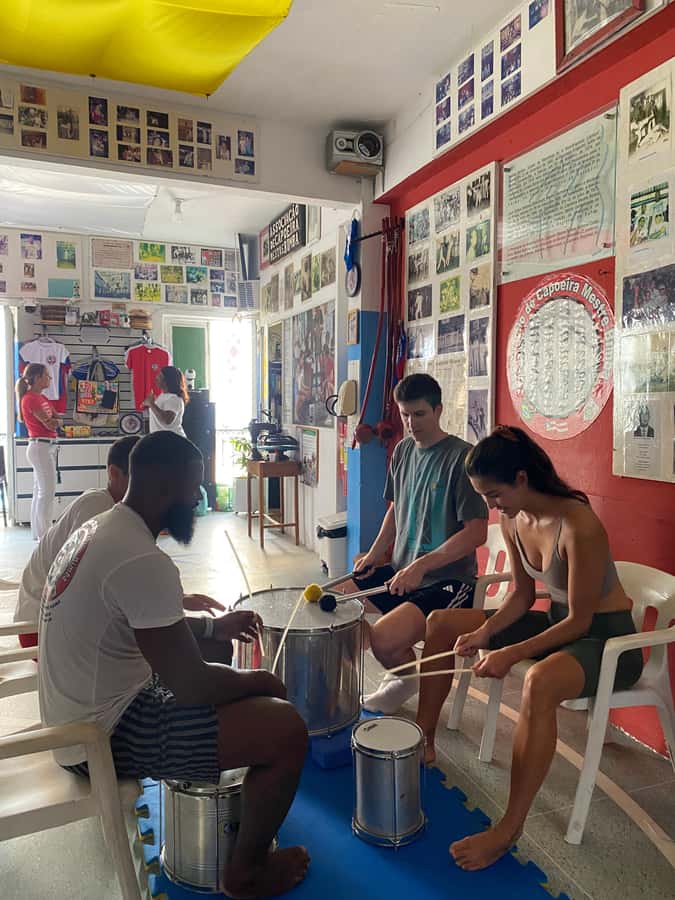
Feel Salvador through your hands. This one-hour class at Mestre Bimba’s First Ever School connects you with Afro-Brazilian rhythms through direct, hands-on practice. I like the passionate teaching and the chance to learn inside a place tied to cultural resistance, and I also like that complete beginners are welcome. The main caution is language consistency: the class is offered in Portuguese and English, but one booking resulted in an instructor who could not speak English.
The price is $43 per person, which is fair if you want more than a sightseeing stop in Pelourinho. You get an instructor, instruments, cultural background, and a small group limited to 10 people. At only one hour, it is a focused introduction rather than a full music course.
In This Review
- Key points to know before you book
- Why this short class matters in Salvador
- Arriving at the school in Largo do Terreiro de Jesus
- The first minutes: history before the rhythm
- Learning the instruments and basic technique
- A one-hour format that keeps the activity focused
- Small-group teaching and the chance for personal help
- Language: an important point for English speakers
- What the $43 price includes
- Planning the class around your Salvador day
- Who will enjoy this most
- My verdict on Mestre Bimba’s drumming workshop
- FAQ
- Do I need musical experience to join the workshop?
- Where does the drumming workshop meet?
- Is hotel pickup included?
- What languages are offered?
- How long does the activity last?
- Can I cancel for a refund?
Key points to know before you book
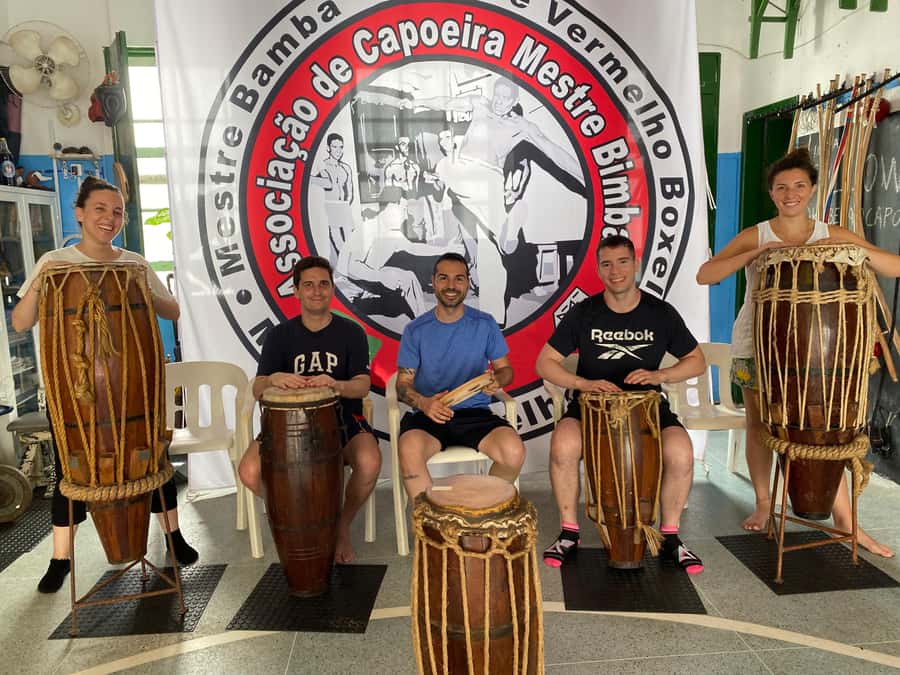
- A lesson inside Mestre Bimba’s first school: You meet at Associação de Capoeira Mestre Bimba, a place linked to the preservation of Afro-Brazilian arts.
- No musical experience required: The class begins at a beginner level, so you do not need to read music or know Brazilian rhythms.
- Hands-on percussion practice: You learn beats, posture, hand movements, and different ways to play percussion instruments.
- A small class of up to 10 people: The size should allow for personal correction and questions, with the possibility of more individual instruction.
- A strong cultural setting in Pelourinho: The meeting point is near Ó Paí Ó Restaurante and São Domingos Gusmão Church in Largo do Terreiro de Jesus.
- English is advertised, but confirm if it matters: Portuguese and English are listed, yet an English-speaking participant reported that the instructor spoke only Portuguese.
Why this short class matters in Salvador
Salvador’s music is not just background noise for a street scene. Its rhythms carry links to African traditions, religious practice, community life, capoeira, samba, and resistance. This workshop gives you a way to understand that music from the inside, with your own hands on an instrument.
The setting adds weight. The class takes place at Associação de Capoeira Mestre Bimba, identified as Mestre Bimba’s first school. The school is presented as a Quilombo of resistance and resilience, a place where cultural practices survived pressure and official hostility.
During the late 19th century, capoeira, samba, and drumming were viewed with suspicion and were often criminalized. Knowing that background changes the tone of a simple drumming lesson. You are not only copying a beat. You are taking part in a small act of cultural continuity.
That does not mean the hour becomes a lecture. The experience is designed to be active and fun. You listen, watch, try the movements, and repeat them. The historical context helps explain why these rhythms matter, but the main work happens through practice.
A few more Salvador Brazil days to weigh up
- Salvador: Capoeira Class at Mestre Bimba’s 1st Ever School.
★ 4.9 · 34 reviews - Salvador: CAPOEIRA CLASS – CULTURAL
★ 4.6 · 13 reviews - Salvador: 3-Hour Percussion Class
★ 4.9 · 10 reviews
Arriving at the school in Largo do Terreiro de Jesus
You make your own way to the meeting point at Associação de Capoeira Mestre Bimba. There is no hotel pickup or drop-off, so you need to plan your route before the start time.
The school is in or near Pelourinho, Salvador’s historic center, with useful nearby markers including Ó Paí Ó Restaurante and São Domingos Gusmão Church in Largo do Terreiro de Jesus. Those landmarks matter because a clear reference point is often easier to find than a street address in an old city center.
Give yourself enough time to locate the entrance. The class lasts only one hour, so arriving late takes a noticeable bite out of the experience. I would pair the workshop with time in Pelourinho rather than treat it as a stand-alone trip across Salvador.
The location is one of the best practical features. You can visit the area’s churches, squares, and colorful streets before or after class. One participant used the convenient Pelourinho location to combine the lesson with afternoon sightseeing during Carnaval. That pairing makes good sense, though Carnaval crowds may affect how quickly you move around the area.
The first minutes: history before the rhythm
The class introduces Afro-Brazilian culture through music, but you should expect some explanation before the playing begins. The school’s story provides the frame for the lesson, particularly the survival of capoeira, samba, and drumming after these practices faced discrimination and legal pressure.
This part is valuable because rhythm can be easy to consume without understanding. A quick explanation of the instruments and their cultural role gives you a better ear for the sounds you hear elsewhere in Bahia.
The instructors are described as professional and passionate about sharing their heritage. That personal connection is important here. A generic music lesson could teach you a pattern. This class aims to connect the pattern with the people and traditions behind it.
The balance appears to favor participation over classroom instruction. You are not signing up for a long seminar on Brazilian cultural history. You are getting enough context to make the practical work more meaningful.
Learning the instruments and basic technique
The main portion of the hour is a hands-on percussion lesson. You learn beats, movements, and ways to play, with no prior experience expected.
Expect the instructor to show you a pattern, demonstrate the correct motion, and have you try it. You may need several attempts before your hands cooperate. That is normal. The pace is intended for beginners, and one especially positive account described patient corrections to hand positions and posture.
Those small corrections can make a big difference. Percussion is not only about hitting an instrument at the right moment. How you hold it, where you strike, and how your body moves all affect the sound. A good teacher prevents you from building bad habits in the first ten minutes.
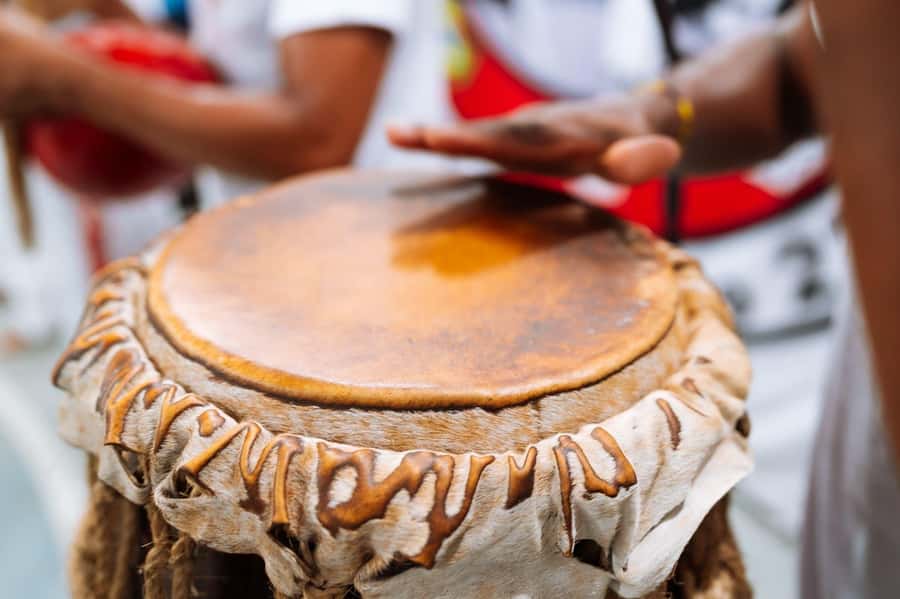
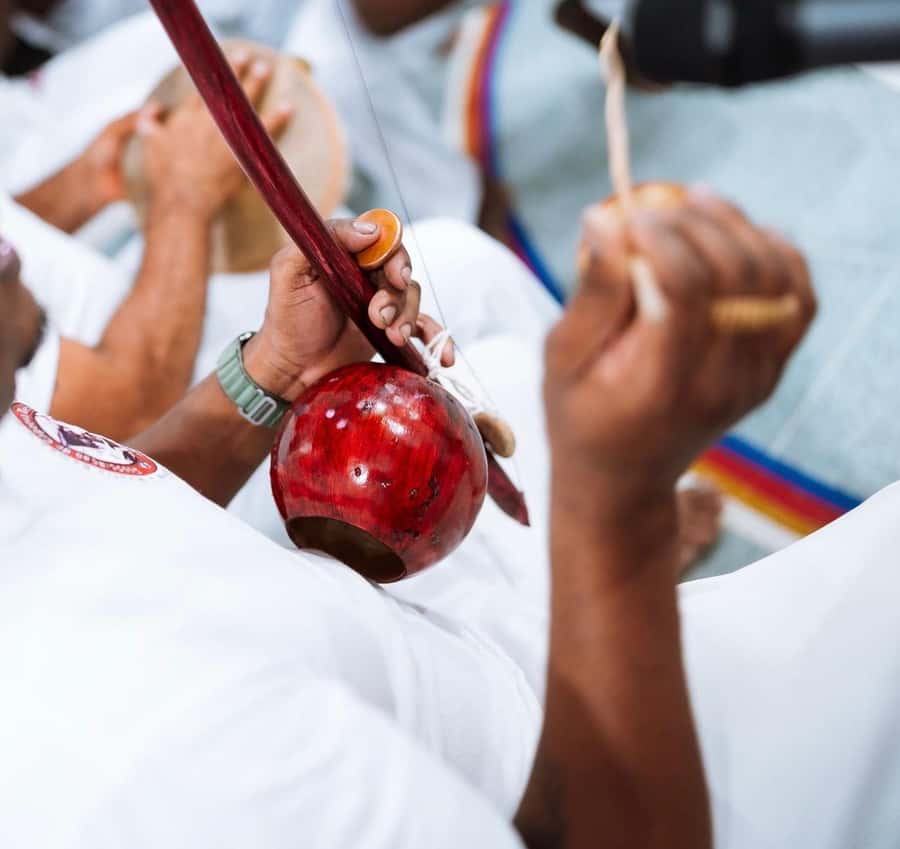
You also get exposure to different instruments and more than one rhythmic approach. One participant received instruction on Brazilian capoeira percussion instruments and tried several types of percussion, not just a single drum. That variety gives the class more interest and helps you see how the parts of a musical group fit together.
Do not expect to leave as a skilled percussionist. One hour is enough to learn a few basic ideas, feel some patterns, and gain confidence. It is not enough for advanced technique or a complete study of capoeira music.
Same patch of Brazil, a completely different sort of day:
- From Salvador: Schooner Tour to Frades Islands and Itaparica
★ 3.9 · 98 reviews - Afro-Brazilian Roots Private City Tour in Salvador
★ 4.7 · 88 reviews - Salvador Historic Walking Tour – Pelourinho
★ 4.8 · 62 reviews - Salvador de Bahia African Culture Tour
★ 4.5 · 60 reviews
A one-hour format that keeps the activity focused
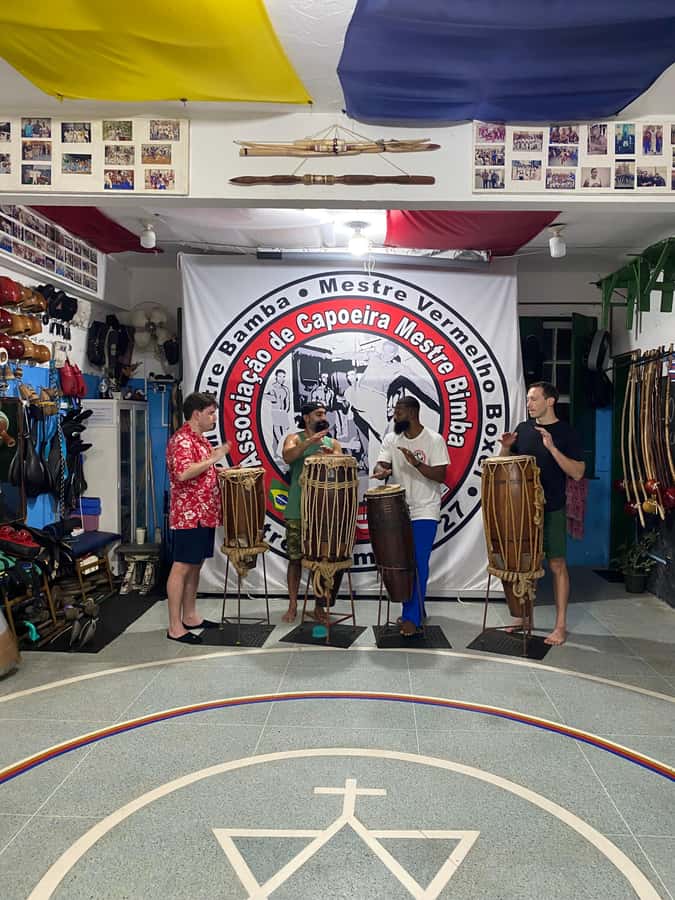
The short duration is both a benefit and a limit. One hour works well for a packed Salvador schedule, especially if you want to add a cultural activity between visits to Pelourinho’s churches and squares.
It is also long enough to make the lesson feel real. You have time to listen, try the movements, receive correction, and repeat the rhythms. A participant who had one-to-one instruction with Yasmin found the hour thoughtful and attentive, with time for history, technique, and several instruments.
At the same time, the clock matters. If the group reaches the instruments slowly or spends a lot of time on introductions, practice time becomes shorter. The available information does not promise a fixed sequence of activities, so your exact balance of history and playing may depend on the instructor and group.
One hour was considered sufficient by a participant who wanted an introduction rather than an intensive course. I agree with that assessment for most sightseers. If you already play percussion or want serious capoeira music training, you may find the session too brief.
Small-group teaching and the chance for personal help
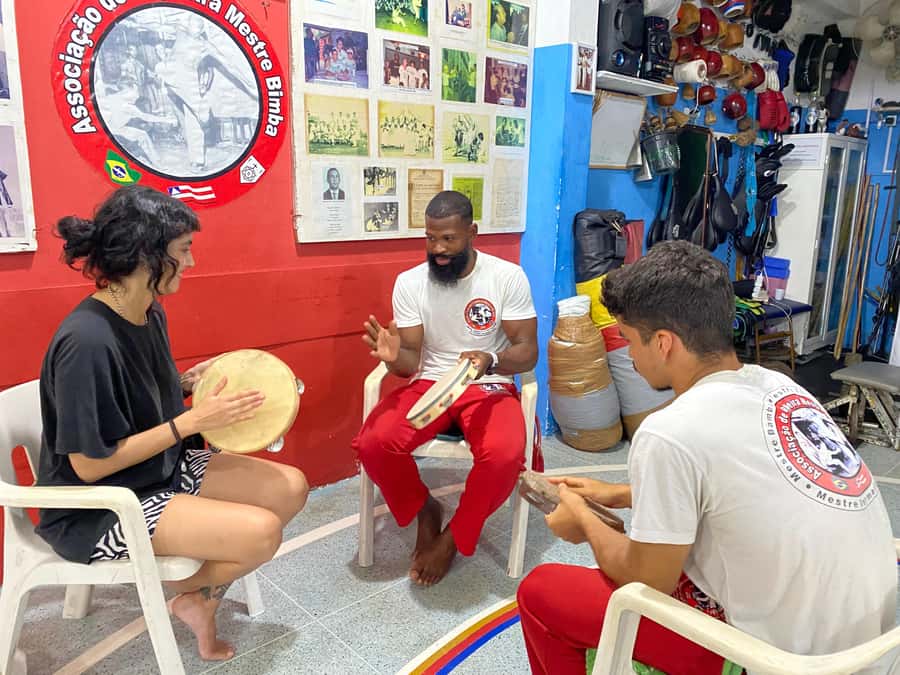
The maximum group size is 10 people. That is small enough to make individual guidance possible, though the amount of personal attention depends on how many people attend your session.
A smaller group also helps with the practical side of percussion. You can hear the instructor’s count, watch the hand movements, and ask for a demonstration again. You are less likely to disappear in a large performance-style class.
The strongest teaching account came from a one-to-one session with Yasmin. Her student praised her patience, kindness, clear corrections, and explanations of the instruments’ cultural role. If Yasmin leads your class, you may receive especially direct coaching, but instructor assignments are not guaranteed.
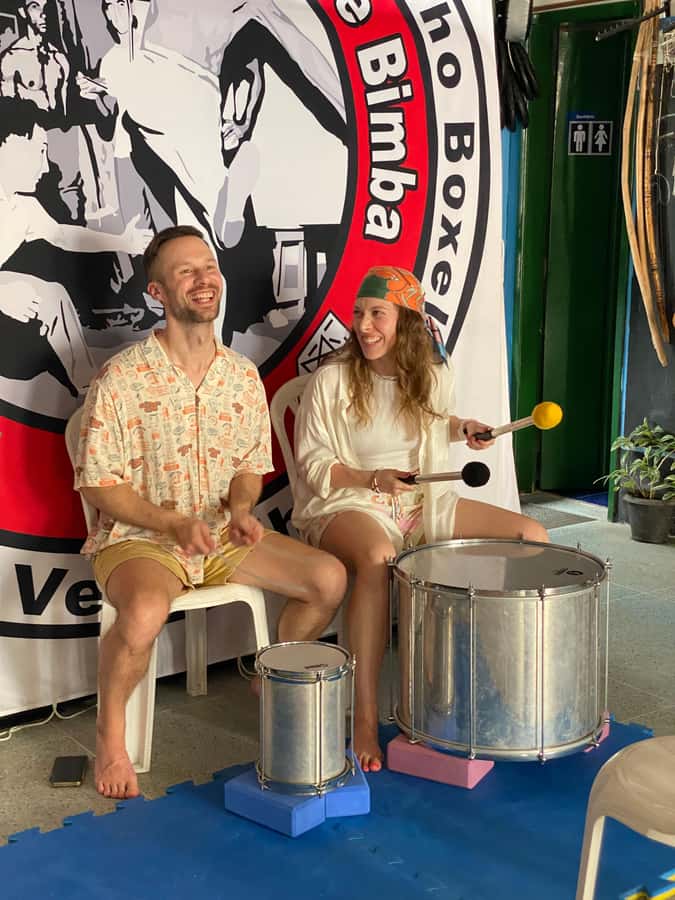
The class is a good match for people who worry that they have no musical ability. The point is not to perform perfectly. You are there to try, make mistakes, and gradually catch the beat. The beginner-friendly approach removes much of the pressure.
Language: an important point for English speakers
Portuguese and English are listed as the available languages, and the instructor language is advertised the same way. That makes the experience accessible to many international visitors, at least in principle.
There is one clear caution. An English-speaking participant from Austria booked an English class but found that the teacher could not speak English. The class itself was still described as enjoyable, but the language mismatch reduced the value of the explanations.
This matters more here than it would on a simple sightseeing walk. You need to understand posture, hand position, rhythm counts, and cultural background. You might still follow a demonstration without much language, but you will miss part of the experience if you cannot ask questions or understand the historical explanation.
If English instruction is essential for you, confirm the language with the provider before arrival. If you speak Portuguese, you have the more dependable option. If you do not, bring patience and pay close attention to demonstrations, but do not assume the advertised language will always be available in practice.
What the $43 price includes
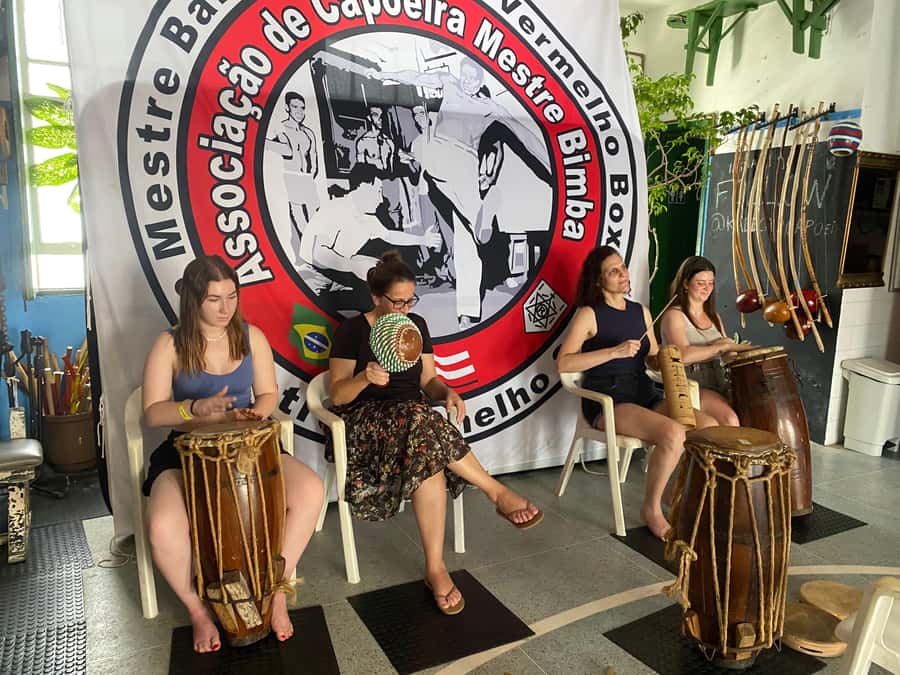
At $43 per person, this is not the cheapest way to spend an hour in Salvador. You are paying for a taught cultural activity, not for an open public performance or a casual introduction from a street musician.
The price includes the drumming workshop and instructor. It does not include meals, beverages, hotel pickup, or hotel drop-off. Since the class is in Pelourinho, the lack of transport is less of a burden if you are already sightseeing in the historic center.
The value depends on what you want from your Salvador visit. I think the price is reasonable if you want:
- A structured activity rather than passive sightseeing
- Direct contact with Afro-Brazilian musical traditions
- An instructor who can correct your technique
- A class that fits into a busy day
- A cultural experience in a historically important setting
The value is weaker if you only want to hear music or if you expect a long, advanced workshop. You will be paying for context and participation, not for a polished concert or an extended training session.
The school setting also adds something that a hotel activity would not. Your money supports an organization connected with preserving traditions that were once pushed aside or punished. That cultural purpose is part of the cost, even though it is not a separate line item.
Planning the class around your Salvador day
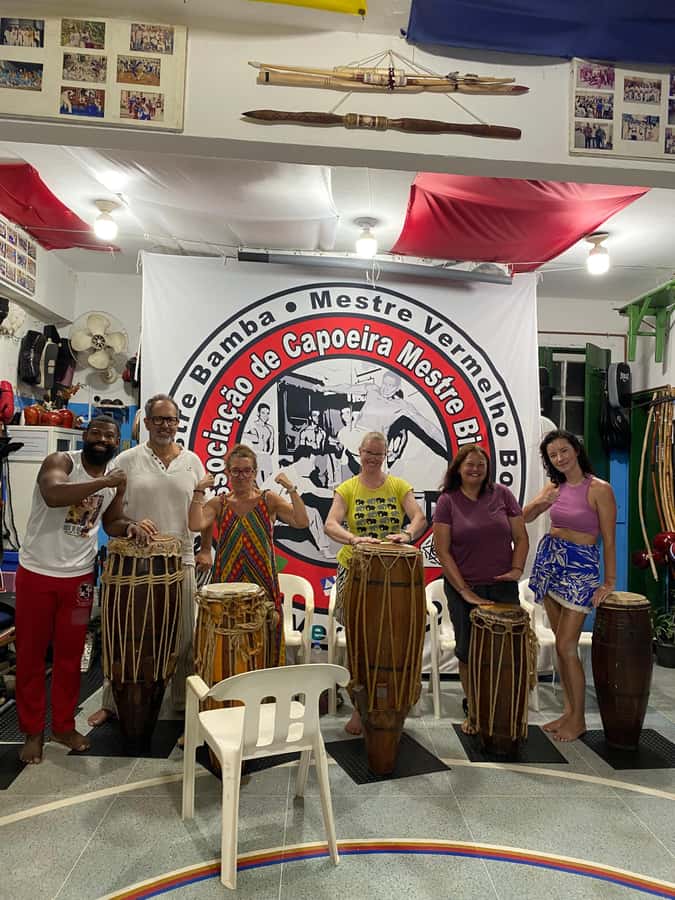
The workshop is easiest to fit into a day focused on central Salvador. Meet at the school, take the one-hour class, then continue exploring Largo do Terreiro de Jesus and Pelourinho.
Use Ó Paí Ó Restaurante or São Domingos Gusmão Church as nearby orientation points. You do not need to schedule food as part of the activity, since meals and drinks are not included. That gives you freedom to choose a restaurant before or after class.
During Carnaval, allow extra time to reach the area. The central location can be an advantage because it puts you near the action, but large celebrations can make streets slower and meeting points harder to identify.
You should also check starting times before booking. The activity lasts one hour, but the available session times can vary. Free cancellation is available up to 24 hours in advance for a full refund, and you can reserve now while paying later. Those terms help if your Salvador schedule is still shifting.
Who will enjoy this most
I would recommend this class to first-time visitors who want a cultural activity with real participation. It is especially good for people who are curious about capoeira and Afro-Brazilian music but do not know where to begin.
Families and mixed-ability groups may also appreciate the beginner format, provided everyone can take part in a one-hour music lesson. The available information does not provide specific accessibility details, so you should ask the provider directly if you have mobility, hearing, or other access needs.
The class suits solo visitors, couples, and small groups. A solo participant may benefit from the chance to receive close instruction, while friends can enjoy the comic relief that comes when nobody quite catches the rhythm at first.
I would be less enthusiastic for an experienced drummer seeking advanced training. The workshop is built around introduction, practice, and cultural understanding. It does not promise a long technical progression.
My verdict on Mestre Bimba’s drumming workshop
You should book this if you want to understand Salvador through participation rather than observation. The combination of a meaningful setting, hands-on instruction, beginner-friendly teaching, and a central location gives the hour more substance than its short length suggests.
The main reservation is the language issue. English speakers should confirm that an English-speaking instructor will be available, especially if the cultural explanation is a major reason for booking.
For $43, I see this as a worthwhile add-on to a Pelourinho day. You will not become a capoeira percussion expert in 60 minutes, but you can learn a few rhythms, try several instruments, understand why these practices carry such weight, and leave with a better ear for Salvador’s music. If that sounds like your kind of afternoon, reserve a spot. If you only want a performance, spend the money elsewhere.
FAQ
Do I need musical experience to join the workshop?
No. The class is designed for beginners, and no previous music experience is required.
Where does the drumming workshop meet?
You meet at Associação de Capoeira Mestre Bimba. Nearby landmarks include Ó Paí Ó Restaurante and São Domingos Gusmão Church in Largo do Terreiro de Jesus.
Is hotel pickup included?
No. The activity does not provide hotel pickup or drop-off, so you must make your own way to the meeting point.
What languages are offered?
Portuguese and English are listed as the available languages. If you need English instruction, confirm this before arrival because one participant booked English but found that the instructor did not speak it.
How long does the activity last?
The workshop lasts one hour. You can check available starting times when selecting a date.
Can I cancel for a refund?
Yes. You can cancel up to 24 hours in advance for a full refund. You can also reserve now and pay later to keep your plans flexible.
Newest reviews from around Salvador Brazil
- Salvador: Schooner Cruise with Pickup and Itaparica Stop★ 3.8 · 5 reviews
- Salvador: 3-Hour Percussion Class★ 4.9 · 10 reviews
- Salvador by Night: Cultural Show and Dinner.★ 4.4 · 17 reviews
- Salvador: Cultural Treasure – Samba de Roda.★ 4.9 · 51 reviews
- PROMO Salvador: Interactive Art and Culture Private Tour★ 5.0 · 2 reviews
- Salvador: Curated Nightlife Exp. in the Heart of the City★ 5.0 · 2 reviews
- Salvador: Capoeira Class at Mestre Bimba’s 1st Ever School.★ 4.9 · 34 reviews
- Salvador: Caipirinha Masterclass with Unlimited Drinks★ 4.2 · 4 reviews
Workshops, compared.
Cooking class in Salvador, an authentic dinning experience
Read our review →
Brazilian BBQ Class in Rio (3.5h): 10 Recipes & Bottomless Drinks
Read our review →
Browse the lists this tour appears in