
Reviewed · 3-HOUR EXPERIENCES
3-Hour Private Tour of Salvador Capital Afro-Brazilian
Salvador tells Brazil’s African story in plain sight. This private walking tour connects the city’s churches, museums, music, food, religion, and resistance movements, giving you a focused introduction to Afro-Brazilian culture in the historic center. I especially like the stops at Casa do Benin and the Afro-Brazilian Museum, where the story moves beyond old buildings and into art, slavery, identity, faith, and daily life. I also like that you get your own guide, rather than being folded into a large group.
The main consideration is value. At $56.10 per person, this is not the cheapest way to walk around Pelourinho, especially if you already study African diaspora history. The tour lasts about two to three hours, and several stops are short. Still, a strong guide can make the price worthwhile, particularly if you are new to Salvador or want a clear historical thread through the old city.
In This Review
- Key Things to Know Before You Book
- Starting at Terreiro de Jesus at 2 p.m.
- Casa do Benin and the Atlantic Connection
- Olodum and the Meaning of Carnival
- São Francisco, Brotherhood, Samba, and Capoeira
- Casa de Angola and Cultural Ties
- The Afro-Brazilian Museum’s Bigger Story
- The Rosary Church and Black Brotherhoods
- Finishing Near Pelourinho and the Hydraulic Elevator
- What the Private Format Adds
- Is $56.10 Per Person a Fair Price?
- Who Should Book This Walking Tour?
- Should You Book It?
- FAQ
- Where does the tour begin?
- Where does the tour end?
- How long does the tour last?
- Is this a private tour?
- Is bottled water included?
- Can I cancel for a full refund?
Key Things to Know Before You Book
- Meet at 2 p.m. at Salvador Cathedral: The tour begins at Largo Terreiro de Jesus in the historic upper city.
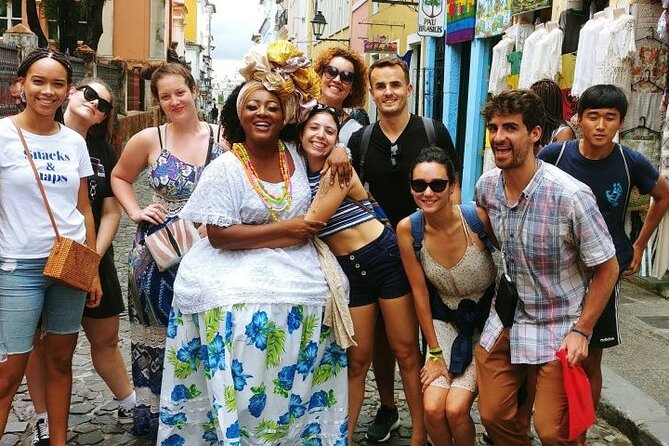
- Private format: Only your group takes part, so you can ask questions and request a slower pace or short breaks.
- Seven culturally important stops: The route includes Terreiro de Jesus, Casa do Benin, Olodum, São Francisco, Casa de Angola, the Afro-Brazilian Museum, and the Church of Our Lady of the Rosary of the Black People.
- A guide makes the difference: Adilson earned praise for patience, timing, and useful restaurant advice. Eduardo was singled out for explaining both Salvador and Brazil’s colonial past.
- Walking requires moderate fitness: You will move through the historic center and finish near Pelourinho, with an elevator ride connected to Salvador’s upper and lower city mentioned along the way.
- Bring water: Bottled water is not included, and the tour runs in the afternoon.
Starting at Terreiro de Jesus at 2 p.m.
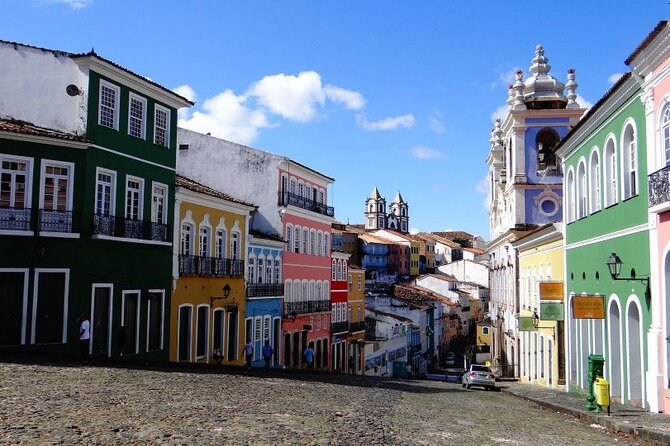
You meet in front of the Cathedral Basilica of San Salvador at 2 p.m. This puts you right in Terreiro de Jesus, one of the key public squares in Salvador’s upper city. The opening ten minutes focus on Portuguese colonization and the role of Jesuit missions in shaping this part of Bahia.
That short introduction matters because the rest of the tour pushes against a simple colonial story. You begin with the institutions that helped build the city, then move toward the African people and communities whose work, beliefs, music, and resistance shaped Salvador just as strongly.
The square is a useful place to get your bearings. You are not starting in an isolated museum, but in a working part of the historic center, close to churches, colonial buildings, and the streets of Pelourinho. The admission ticket is included for this stop.
I would use the opening to tell your guide what you already know. If you have studied slavery, colonial Brazil, or African diaspora history, say so early. One person found the tour too expensive partly because the material felt familiar. A private guide can adjust the conversation, but only if you make your interests clear.
A few more Salvador da Bahia days to weigh up
- Round trip transfer, Salvador, Bahia, Brazil
★ 5.0 · 228 reviews - Salvador City Tour – Discover Brazil’s First Capital En, It, Es
★ 5.0 · 217 reviews - Cooking class in Salvador, an authentic dinning experience
★ 5.0 · 132 reviews
Casa do Benin and the Atlantic Connection
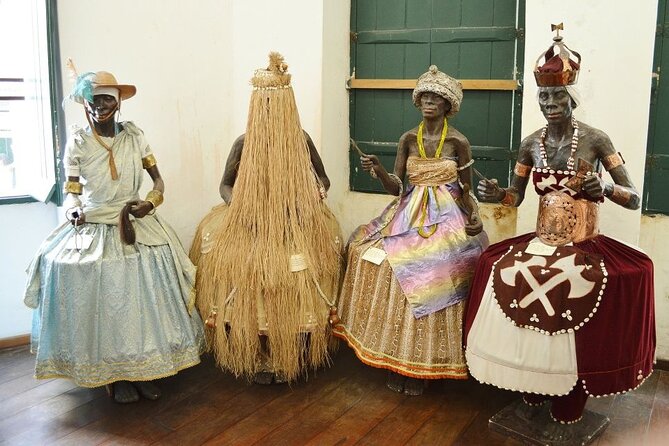
Casa do Benin receives about 25 minutes, with admission included. Its collection contains roughly 200 objects from the Gulf of Benin, gathered by French photographer Pierre Verger during his work in Africa. Other objects connected to Afro-diasporic culture were donated by artists and institutions.
This is one of the strongest parts of the route because it helps you see Bahia and West Africa as connected places, not separate subjects. The museum’s purpose is tied to the movement of people, culture, ideas, and objects across the Atlantic. You can look at the collection as a way to understand how African traditions continued and changed in Brazil.
Twenty-five minutes is enough for a guided introduction, but not enough for a slow museum visit. If you like to read every label, you may want more time than the scheduled stop allows. The private format gives you a better chance to ask about a particular object or theme instead of simply following a fixed group explanation.
I like this stop because it keeps the tour from becoming a parade of churches. Salvador’s African identity is not only found in dance, worship, or Carnival. It is also present in objects, photography, museum work, and the continuing relationship between Bahia and the Gulf of Benin.
Olodum and the Meaning of Carnival
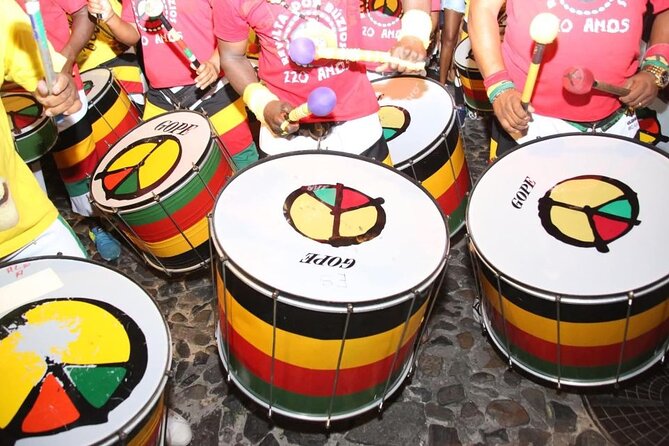
The stop at Olodum lasts about 20 minutes and has no admission charge. You visit the Olodum School, an Afro-descendant cultural and educational center, and discuss the role of Carnival in Salvador.
This gives the tour a useful change of pace. After colonial history and museum collections, you turn to an organization tied to education, music, public celebration, and Afro-Brazilian identity. Carnival here is not treated as mere entertainment. It becomes a way to talk about visibility, community, rhythm, and the place of Black culture in public life.
You should expect a short introduction rather than a full performance or workshop. The available details do not promise live music, a parade, or a chance to join a rehearsal. The value is in understanding why Olodum matters and how Carnival can carry a social message as well as a beat.
This is also a stop where a private guide can help you connect the subject to the streets around you. Ask how music, dance, and public festivals fit into Salvador’s wider cultural life. You may find this portion especially appealing if music is your main reason for choosing an Afro-Brazilian tour.
São Francisco, Brotherhood, Samba, and Capoeira
At Igreja e Convento de São Francisco, the tour spends about 15 minutes and does not charge a separate admission fee. The discussion turns to a nineteenth-century male organization formed to help Salvador’s Black community in its fight for liberation.
The stop also introduces samba and capoeira, two major parts of African cultural influence in Brazil. The description promises an explanation of the dances and their rhythms, not a formal class. You may hear how movement and music carry memory, identity, and resistance.
Fifteen minutes is brief, so this is more of a guided context stop than a full church visit. If the interior is a major priority for you, check how much time your guide plans to spend inside. The route includes the church and convent, but the stated schedule does not give you a long period for independent viewing.
Even so, the location adds an important layer. Religious buildings in Salvador can look like symbols of Portuguese Catholic power, yet Black brotherhoods and African traditions also found ways to organize, worship, preserve dignity, and build community within that system. That tension is worth hearing about on site, rather than only reading about it later.
Same patch of Brazil, a completely different sort of day:
- Tour to the Frades Islands and Itaparica, from Salvador – Ba
★ 4.0 · 130 reviews - Transfer Salvador Airport / Hotel Litoral Norte
★ 5.0 · 111 reviews - Private City Tour in Salvador
★ 5.0 · 110 reviews - Tour Praia do Forte and Guarajuba, Leaving Salvador-Bahia.
★ 4.5 · 97 reviews
Casa de Angola and Cultural Ties
Casa de Angola occupies one of Salvador’s eighteenth-century colonial mansions and receives about 25 minutes, with admission included. The center was founded on November 5, 1999, to maintain and strengthen cultural ties between Brazil and Angola.
This visit expands the tour beyond the Gulf of Benin. The African influence on Brazil appears in language, food, music, behavior, and religious practice, and Casa de Angola gives those links a specific national connection. You are looking at the relationship between Brazil and an African country through a cultural center located in an old Salvador building.
That setting is part of the point. A colonial mansion now serves as a place for African cultural connections, which gives the stop a useful sense of contrast. The tour does not present African culture as something locked in the past. It also shows institutions working to keep those relationships active in the present.
The stop is likely to work best for you if you want more than a general statement that Brazil has African influences. Ask your guide to explain which parts of Brazilian life are connected to Angola and which connections reach farther across West and Central Africa. The exact amount of display time is limited to about 25 minutes, but the subject deserves your questions.
The Afro-Brazilian Museum’s Bigger Story
The Afro-Brazilian Museum is the longest scheduled visit, at about 40 minutes, and admission is included. This is the tour’s broadest museum stop, covering Black identity, Africa as the birthplace of humanity, the trafficking of enslaved people, Black resistance, quilombos, and revolts.
You also learn about contributions to cuisine, religion, popular festivals, sports, and music. The musical range includes samba, semba, maracatu, and other forms. For many people, this will be the most useful stop because it pulls separate subjects into one clear picture.
I appreciate the way this museum moves from suffering to survival and creation. The story of enslavement is essential, but it is not the only story. Resistance, religious practice, food traditions, music, and community life show how African peoples shaped Brazil despite violent attempts to control and erase them.
Forty minutes gives your guide enough time to explain the main themes without turning the visit into a rushed glance. It is still not a full museum study session. If you want to examine every work closely, you will need to accept that the tour offers an overview.
This stop also gives you a chance to test the quality of your guide. Adilson was praised for explaining difficult points patiently and checking when something was unclear. Eduardo received strong praise for connecting Salvador’s past with Brazil’s wider colonial story. Those skills matter here, where a list of dates and objects would miss the human meaning.
The Rosary Church and Black Brotherhoods
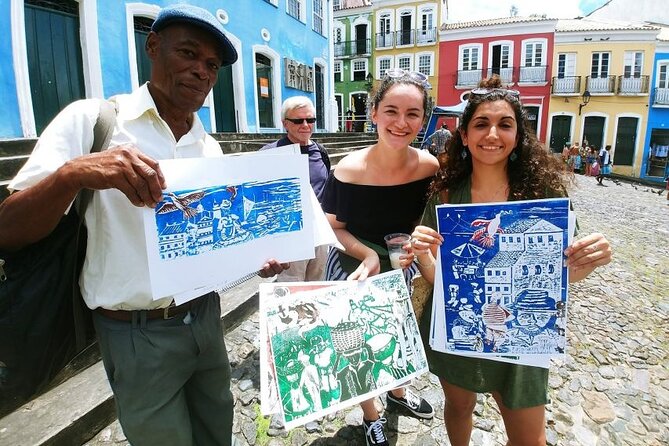
The Church of Our Lady of the Rosary of the Black People receives about 20 minutes, with no admission fee listed for the stop. Its central story is the Brotherhood of Our Lady of the Rosary of the Black People, a Catholic association with an African identity that has continued for more than three centuries.
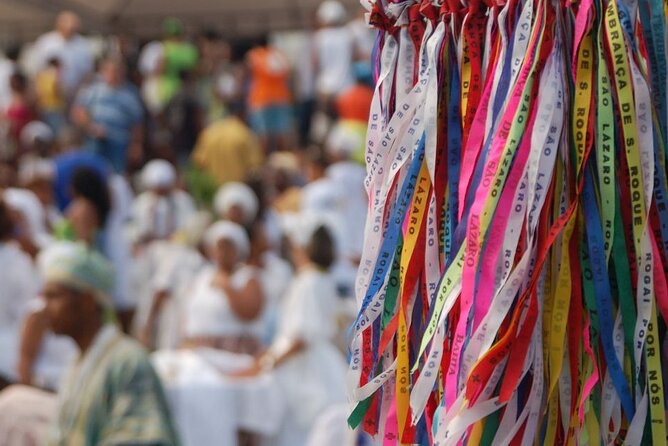
This is a powerful example of how Black communities created space for worship, organization, and mutual support inside a Catholic society. The church is connected to the Venerable Third Order of the Rosary of Our Lady at the Gates of Mount Carmel, described as a Roman Catholic apostolic brotherhood with an African character.
The point is not simply that the church is old. Its importance comes from continuity. A brotherhood that has maintained African characteristics across centuries shows how culture can survive through institutions, rituals, and community ties.
Twenty minutes gives you time for the main explanation and a look around, but the schedule remains tight. If religious art is your main interest, ask whether your guide can give you a little more attention here. If your priority is the wider social story, the stop works well as a final example of organization and endurance.
Finishing Near Pelourinho and the Hydraulic Elevator
The tour ends at Largo do Pelourinho. The route also mentions the Conceição Hydraulic Elevator, known in the past as Parafuso. It opened in 1873, was 63 meters tall, and connected Bairro do Comércio in the lower city with Cidade Alta in about 20 seconds when there is no line.
The elevator is especially interesting because it is not only a sightseeing feature. It is used as everyday public transportation by people who live in Salvador. That makes it a useful reminder that the historic center is not a preserved stage set. It remains part of city life.
Queues can change the timing. On festival days in the area, the elevator can be heavily used, so you should not assume the 20-second ride means a 20-second total stop. The tour information does not provide a separate duration or clearly state whether an elevator fare is included, so ask your guide if this matters to your plans.
Ending in Pelourinho is convenient for continuing your afternoon in the historic center. It also means you finish among many of the streets and buildings associated with Salvador’s colonial past and Afro-Brazilian public life. Wear shoes suitable for walking and be ready for a route that requires moderate physical fitness.
What the Private Format Adds
This is a private activity, so only your group participates. That is the main reason to consider the price. You are not sharing the guide’s attention with a busload of people, and you can ask for clarification when a subject gets complicated.
A private tour can also be useful if your group has mixed interests. One person may want more time on religion, another on music, and another on slavery and resistance. The tour still has a planned route, but the guide can respond to your questions in a way a large group often cannot.
Adilson’s strengths, based on the feedback provided, include punctuality, patience, and a habit of asking when you need a break. He also suggested a good place for lunch. Eduardo was praised for his clear explanations of Salvador, Brazil’s colonial past, and Afro-Brazilian culture.
The guide is therefore central to the value. The museums and churches are important, but you could visit buildings without understanding how they connect. A good guide supplies the links between Portuguese colonization, African cultural survival, Black organization, Carnival, religion, and modern cultural institutions.
Is $56.10 Per Person a Fair Price?
At $56.10 per person, the tour costs more than a casual walk through Pelourinho. Your price includes the guide and admission to Casa do Benin, Casa de Angola, and the Afro-Brazilian Museum. It does not include bottled water.
For a first visit to Salvador, I think the cost can make sense. You receive a private guide, a planned route, several admissions, and a focused explanation of Afro-Brazilian culture in one afternoon. The value is strongest if you want context and do not know which museums or churches deserve your limited time.
The calculation changes if you already have a strong background in African diaspora studies. One person rated the guide highly but felt the tour should have cost about half as much because the material was familiar. That is fair criticism. You are paying for a private format and a guide’s time, not just for new facts.
Group discounts may be available, which can improve the per-person price for a larger party. The tour is also booked, on average, about 21 days ahead, so plan early if your dates are fixed.
Who Should Book This Walking Tour?
I would choose this tour if you want a structured introduction to Salvador’s African heritage and prefer asking questions as you go. It suits first-time visitors, history students, people interested in music and religion, and anyone who wants more than a quick photo stop in Pelourinho.
It is also a good match for a small private group that values flexibility. You can tell the guide if you need breaks, ask for explanations in your selected language, and focus your questions on the themes that matter most to you.
I would hesitate if you have already studied the subject in depth and mainly want a long, quiet museum visit. The route covers a lot in two to three hours, and several stops are only 15 to 25 minutes. You may find the pace too quick or the material too familiar for the price.
Book with the weather in mind. The tour requires good weather, and a cancellation caused by poor conditions offers either another date or a full refund. You can cancel for a full refund up to 24 hours before the start time, but cancellations within 24 hours are not refunded.
Should You Book It?
Book this tour if you want the pieces of Salvador’s Afro-Brazilian story put together by a private guide. The strongest reasons are the range of stops, the museum admissions, and the chance to ask questions about subjects that can be reduced to clichés on a shorter city walk.
I would give preference to this tour if Adilson or Eduardo is available, since both received especially strong praise for clear explanations and a warm, helpful manner. Bring water, wear comfortable shoes, and tell the guide how much background you already have.
If $56.10 feels high, compare the price with what you would pay for separate admissions and a private guide. If you are new to the subject, the value is easier to see. If you are already an expert, choose it only if personal attention and a well-planned route matter more to you than discovering unfamiliar facts.
FAQ
Where does the tour begin?
The tour begins at 2 p.m. in front of the Cathedral Basilica of San Salvador at Largo Terreiro de Jesus, s/n, Salvador, Bahia.
Where does the tour end?
The tour ends at Largo do Pelourinho in the Pelourinho area of Salvador.
How long does the tour last?
The experience lasts approximately two to three hours.
Is this a private tour?
Yes. Only your group participates in the activity.
Is bottled water included?
No. Bottled water is not included, so you should bring your own.
Can I cancel for a full refund?
Yes. You can cancel at least 24 hours before the local start time for a full refund. Cancellations or changes made less than 24 hours before the start time are not refunded or accepted.
Newest reviews from around Salvador da Bahia
- Transfer North-Ba Coast and Salvador Airport★ 5.0 · 25 reviews
- Curated Nightlife Experience in the Heart of the City★ 3.5 · 5 reviews
- One-Way Private Transfer to Boipeba Island★ 5.0 · 21 reviews
- Transfer Costa do Sauipe – Private★ 5.0 · 2 reviews
- Ilhas Maravilhas Frades and Itaparica Full Day Tour, Salvador, Bahia, Brazil★ 3.5 · 13 reviews
- Salvador de Bahia: Private Round-Trip Airport–Hotel Transfer★ 4.5 · 25 reviews
- Transfer Salvador to Barra Grande Round Trip★ 5.0 · 3 reviews
- Hotel Vila Galé Mares – Transfers In / Out★ 5.0 · 29 reviews
3-Hour Experiences, compared.

3 Hour Rocinha Favela Walking Tour with a Local Guide
Read our review →
3-Hour Tasting Session in Rio with 33 Foods Brazilians Love
Read our review →
3H CITY TOUR (pick up / delivery within Sao Paulo city limits)
Read our review →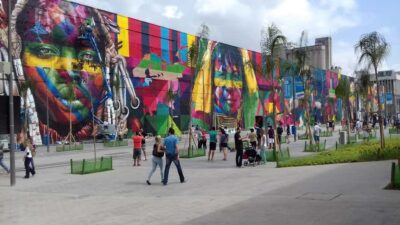
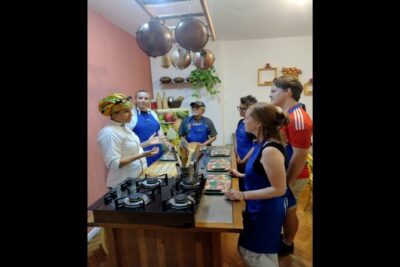
3-Hour Brazilian Cooking Class in Rio de Janeiro
Read our review →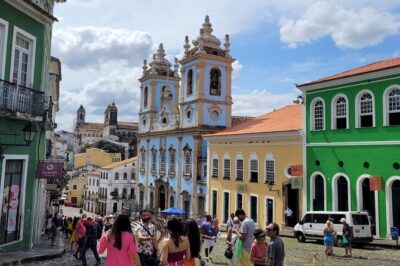
Exclusive & Private Walking Tour in Pelourinho Salvador 3 hours
Read our review →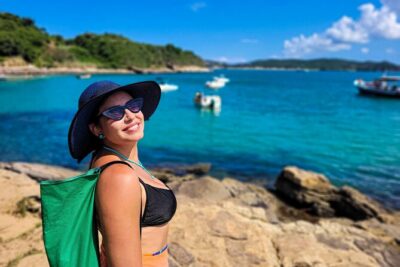
3-hour Small Group Buzios Peninsula Open Air Trolley Tour
Read our review →
Rio de Janeiro 3-hour tour of the Rocinha Favela with local guide
Read our review →Browse the lists this tour appears in