
Reviewed · CITY TOURS
Salvador City Tour – Discover Brazil’s First Capital En, It, Es
Salvador tells Brazil’s story in bold colors. This private six-hour tour connects the city’s oceanfront landmarks, Afro-Brazilian traditions, churches, markets, and colonial center without making you sort out Salvador’s complicated geography on your own. I especially like the private air-conditioned transport and the chance to visit São Joaquim Market, a place where daily Bahian life feels more genuine than a polished sightseeing stop.
I also like the strong focus on Salvador’s African, Catholic, and Indigenous influences, along with the flexible guiding style praised by people who toured with João, Samuel, and a guide known as Juan or John. The main consideration is time: this is a packed route, and some stops are short. At $176.57 per person, the value is strongest for couples, families, or small groups that want a private guide and door-to-door transport rather than a slow, do-it-yourself day.
In This Review
- Key points to know before booking
- Why a private tour helps in Salvador
- Farol da Barra begins with sea and history
- Dique do Tororó and Arena Fonte Nova show modern Bahia
- São Joaquim Market offers the most direct cultural contact
- Bonfim church blends Catholic devotion and African tradition
- Elevator Lacerda links Salvador’s two levels
- Pelourinho deserves the long three-hour pause
- The historic squares and Palácio Rio Branco add political context
- The Cathedral Basilica brings baroque grandeur
- Sister Dulce offers a personal side of Bahian faith
- What the $176.57 price really covers
- Who should book this Salvador tour?
- Should you book the Salvador City Tour?
- FAQ
- What time does the tour start?
- How long does the Salvador city tour last?
- Is this a private tour?
- Where can the tour pick me up and return me?
- Are parking and tolls included?
- Are museum and church entrance fees included?
- Is lunch included?
- Can I cancel for a full refund?
Key points to know before booking
- São Joaquim Market brings everyday Bahia into the tour: Expect fruit, seafood, spices, dendê oil, crafts, and Candomblé-related items in a working market setting.
- Pelourinho receives the most time: Three hours here includes lunch, colonial streets, major squares, historic buildings, and the Cathedral Basilica.
- The private format helps with Salvador’s geography: You move between the Upper and Lower Town, the coast, Bonfim, and the historic center without arranging several rides.
- Guides are a major strength: João, Samuel, and Juan or John are praised for clear English, local knowledge, flexibility, and photography help.
- Some admission costs are extra: Lighthouse, Elevator Lacerda, and cathedral or church entrances are not included.
- The route shows several sides of Salvador: You get sea views, football culture, Afro-Brazilian spirituality, Catholic devotion, colonial architecture, and modern city life.
Why a private tour helps in Salvador
Salvador is not a city that reveals itself through one central square. The upper historic city sits above the lower port area, the Bay of All Saints curves around the coast, and important sites are spread across different neighborhoods. This tour solves that problem with pickup and return at your hotel or cruise port, plus parking and tolls included.
The vehicle is private and air-conditioned, so only your group participates. That matters in a warm city where you may want a quiet ride between stops. It also gives you a guide who can adjust the pace, answer questions, take photos, or spend more time on the subjects that interest you.
The tour begins at 9:00 a.m. and lasts about six hours. That sounds generous, but the route covers a lot. You should think of it as a well-organized introduction rather than a slow study of every site. You will see many major places, with the longest stay in Pelourinho.
The guides are central to the experience. João is praised for his passion for Salvador’s past and for taking people to places they might not find alone. Samuel is described as flexible and good at explaining the city’s culture. Juan, also called John, is noted for excellent English and for making a solo visitor feel comfortable. Those details matter if you speak little Portuguese or want more than a driver who points out buildings.
More City Tours in Salvador & Bahia
- Private City Tour in Salvador
★ 5.0 · 110 reviews - Historical African oriented City Tour
★ 5.0 · 52 reviews - Full-Day Historic Private City Tour of Salvador with Lunch
★ 5.0 · 50 reviews
Farol da Barra begins with sea and history
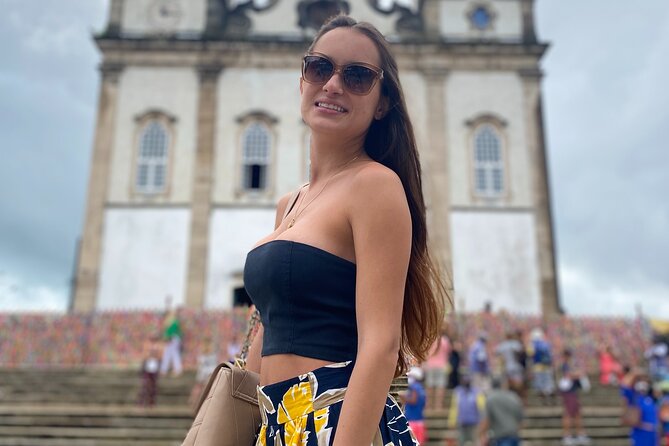
Farol da Barra is an easy opening chapter for Salvador. The lighthouse sits where the Atlantic meets the Bay of All Saints, giving you an immediate sense of the city’s position between open sea and sheltered bay. The 17th-century structure once guided ships into the bay and now houses the Nautical Museum of Bahia.
You have about 30 minutes here. That is enough for the setting, photographs, and a short explanation, but not necessarily enough for a long museum visit. Admission is not included, so confirm the current entrance arrangement if you want to go inside.
The best part is the view. The lighthouse gives you a wide sweep of water and coastline, and the sea breeze makes this a pleasant first stop. Sunset is especially attractive here, but this tour starts in the morning, so you should not expect the golden evening light described in many accounts of the site.
Dique do Tororó and Arena Fonte Nova show modern Bahia
The route continues to Dique do Tororó, one of Salvador’s few natural bodies of water. Gardens surround the lake, while large sculptures honor the Orixás, deities connected with Afro-Brazilian religion. These figures are not decorative filler. They point to the African foundations of Bahian culture and the way spiritual traditions remain visible in public life.
The lake also gives you skyline views and a calmer pause after the coast. It is a useful place to ask your guide about Candomblé and the Orixás, especially if you want cultural context rather than a quick photograph.
Nearby Arena Fonte Nova adds a modern note. The stadium was first built in 1951 and later rebuilt for the 2014 FIFA World Cup. It hosts football matches, concerts, and other events. You may not enter the arena, but the stop helps explain Salvador’s love of sport and music.
Together, Dique do Tororó and Fonte Nova balance the older parts of the day. One presents spiritual symbols and public art, while the other reflects contemporary entertainment and local football energy.
São Joaquim Market offers the most direct cultural contact
São Joaquim Market may be the most rewarding stop for anyone who wants to see Salvador beyond its grand façades. It lies between the Bay of All Saints and the lower city, with narrow lanes filled with produce, seafood, crafts, spices, and religious objects.
You have about 30 minutes here, and the market is free to enter. That is a short visit for a place with so much to see, so stay focused. Let your guide point out what matters, and avoid trying to inspect every stall.
The market is also a place to connect food with culture. You might encounter tropical fruit such as umbu, cajá, and seriguela, along with the smell of dendê oil and local seasonings. Religious items connected with Candomblé sit beside ordinary household goods. That combination is precisely what makes São Joaquim worthwhile. It is not arranged only for sightseeing. It is part of the city’s daily trade.
A guide adds real value here. Without explanation, you may see colorful objects without understanding their purpose. With the right context, the market becomes a window into Bahia’s foodways, faith, and African heritage.
The short duration is the main weakness. If the market is your priority, ask your guide at the start whether the timing can be adjusted. The private format may allow some flexibility, but no specific change is guaranteed.
A few more Salvador da Bahia days to weigh up
- Round trip transfer, Salvador, Bahia, Brazil
★ 5.0 · 228 reviews - Cooking class in Salvador, an authentic dinning experience
★ 5.0 · 132 reviews - Tour to the Frades Islands and Itaparica, from Salvador – Ba
★ 4.0 · 130 reviews - Transfer Salvador Airport / Hotel Litoral Norte
★ 5.0 · 111 reviews
Bonfim church blends Catholic devotion and African tradition
The Basilica do Senhor do Bonfim is one of Salvador’s best-known religious sites. It is famous for the colored ribbons tied to its gates, where people make wishes and give thanks. The practice has become a familiar symbol of Bahia, but the church itself deserves attention beyond the ribbons.
The basilica shows how Catholic devotion and Afro-Brazilian beliefs exist side by side in Salvador. Your guide can help explain that blend, which is one of the central themes of the city. The hilltop position also opens views toward the bay, giving you a scenic pause after the market.
You spend about 30 minutes here, and admission is free. Dress and behave respectfully, since this remains an active place of worship. The stop works best if you take time to notice the atmosphere rather than treating the church as another quick photo point.
Elevator Lacerda links Salvador’s two levels
The Elevator Lacerda is a brief stop with a big geographic payoff. Built in 1873, it connects the Upper and Lower Town and was the first public elevator used for urban transportation. In Salvador, this is not merely an architectural curiosity. It is a practical link between two parts of the city separated by a steep escarpment.
You have about 10 minutes here, and the ride or entrance fee is not included. This is the shortest stop, so expect a quick experience rather than a detailed visit. From the upper level, you can look over the Bay of All Saints and toward the Mercado Modelo below.
The elevator helps you understand Salvador physically. After seeing it, the city’s division between hilltop colonial streets and lower waterfront commerce makes much more sense. It is also one of the tour’s best photo stops, even if the visit itself is brief.
Pelourinho deserves the long three-hour pause
Pelourinho is the heart of the tour and the place where the schedule finally slows down. Its cobblestone streets, painted colonial buildings, churches, music, and street life create a strong sense of place. This is Salvador’s UNESCO World Heritage center, but its importance is not limited to architecture.
The area was once a center of colonial life and is also tied to Brazil’s painful history of slavery and racial exploitation. Today, music, art, religion, food, and local traditions shape the streets. A good guide can help you hold both sides of that story: the beauty of the buildings and the difficult history behind them.
Three hours gives you time to walk, take photographs, visit important sites, and stop for lunch. That lunch is not just a break in the schedule. It is your chance to try Bahian food in its proper setting.
Look for dishes such as moqueca, a seafood stew made with coconut milk and palm oil, or shrimp bobó. The tour price does not state that lunch is included, so plan to pay for your own meal. Ask your guide for help if you want to understand the menu or choose a local specialty.
Pelourinho can feel energetic and crowded at times, and the cobblestones require sensible footwear. The long stop may be too much for someone who prefers a quick overview, but it is a strength for anyone who wants time to absorb Salvador’s music, architecture, and food.
The historic squares and Palácio Rio Branco add political context
Within the Pelourinho area, the route includes Praça da Sé and Praça Tomé de Souza. These squares help organize Salvador’s story around government, religion, and public life.
Praça da Sé opens views over the city and sea, with monuments connected to Salvador’s founders. Praça Tomé de Souza is framed by major civic buildings, including City Hall and Palácio Rio Branco. You also learn about Thomé de Souza, who ruled Brazil from the palace during Salvador’s early period as the country’s first capital.
This is a good point to pause and look around. The squares are not only attractive backdrops. They show how colonial power was displayed through churches, government buildings, and elevated public spaces.
The palace itself is mentioned as part of the route, but the available details do not confirm an interior visit or admission arrangement. Ask your guide what can be entered during your tour.
The Cathedral Basilica brings baroque grandeur
The Cathedral Basilica of Salvador sits in Pelourinho and offers one of the day’s strongest architectural interiors. Jesuits built it in the 17th century, and the church features marble altars, gilded woodwork, sacred art, high ceilings, and pipe organs.
Admission is not included, so carry room in your budget for church and museum entrances. The tour description also notes that entrance fees to museums and churches are generally separate.
Thirty minutes is enough to appreciate the main details if the cathedral is open. Look up, not just ahead. The decoration and scale are easy to miss if you move through too quickly. Your guide’s explanation can also connect the church to the larger story of Portuguese colonial rule and Catholic influence.
This stop is especially useful for visitors who want art and architecture, not only outdoor sightseeing. It also gives you a quieter contrast to the streets outside.
Sister Dulce offers a personal side of Bahian faith
The Sister Dulce memorial tells a more intimate religious story. Dedicated to Saint Dulce of the Poor, Brazil’s first female saint of the modern era, it presents her life through personal belongings, photographs, and her humble living quarters.
You have about 30 minutes, with free admission. The focus is charity and service to sick and poor people, so the visit feels different from the grand basilica. Instead of ornate interiors and colonial power, you see how faith was expressed through daily work and care.
For many people, this is one of the most moving stops. It gives the tour a human scale and shows that Salvador’s religious identity is not limited to historic churches or public rituals.
What the $176.57 price really covers
At $176.57 per person, this is not the cheapest way to see Salvador. The price makes more sense when you consider what is included: private participation, hotel or cruise port pickup and return, an air-conditioned vehicle, parking, and tolls.
You are paying for convenience and interpretation. The route crosses several parts of the city, and arranging all these stops independently would require several transport decisions. A private guide also gives you the chance to ask about African and multicultural influences, local food, Catholic traditions, and the city’s past as Brazil’s first capital.
The price does not include church, museum, or Elevator Lacerda admission. Lunch in Pelourinho is also not identified as included. Add those costs before deciding, especially if you want to enter the Nautical Museum or several churches.
For a solo visitor, the price may feel high. For a small group splitting the cost, the private format can offer good value. It is also a practical choice for cruise passengers who want a planned return to the port.
Who should book this Salvador tour?
I would choose this tour if you have one day in Salvador and want a broad introduction with strong cultural context. It suits first-time visitors, cruise passengers, families, couples, and anyone who prefers a private guide to a large bus group.
It is particularly useful if you speak little Portuguese. One guide is praised for excellent English, and the personal format lets you ask questions without competing with a large group.
You should also consider it if Salvador’s African heritage matters to you. São Joaquim Market, Dique do Tororó, Bonfim, and Pelourinho give that subject real space rather than treating it as a footnote.
I would hesitate if you want long museum visits, an unhurried market exploration, or a full day focused only on churches. The route covers many places, and several visits last 30 minutes or less.
Confirmation arrives when you book, service animals are allowed, and the tour is near public transportation. Most people can participate. Free cancellation is available up to 24 hours before the 9:00 a.m. start, while later cancellations or changes are not accepted.
Should you book the Salvador City Tour?
Book it if you want Salvador explained as a whole: sea and stadium, market and church, African traditions and colonial power, food and faith. The best reasons are the private transport, the strong guide-led interpretation, and the three-hour stay in Pelourinho.
Before booking, confirm which entrances you want and set aside money for them. If you can, tell the guide that São Joaquim Market or the Cathedral Basilica is a priority. That small conversation may help shape the day.
This is a fast-moving introduction, not a specialist tour. For most first visits, that is exactly its strength. You finish with a clear sense of Salvador’s geography, culture, and character, plus a safe ride back to your hotel or cruise port.
FAQ
What time does the tour start?
The tour starts at 9:00 a.m.
How long does the Salvador city tour last?
The experience lasts approximately six hours.
Is this a private tour?
Yes. Only your group participates in the activity.
Where can the tour pick me up and return me?
Pickup and return are available at the combined meeting location, including your hotel or cruise port as described for the service.
Are parking and tolls included?
Yes. Parking and tolls are included.
Are museum and church entrance fees included?
No. Entrances to museums and churches are not included. The Elevator Lacerda and Farol da Barra also list admission as not included.
Is lunch included?
Lunch takes place in Pelourinho, but the tour information does not state that the meal is included in the price.
Can I cancel for a full refund?
Yes, if you cancel at least 24 hours before the experience starts. Cancellations made less than 24 hours before the start time are not refunded, and changes within that period are not accepted.
Newest reviews from around Salvador da Bahia
- Salvador Walking Tour Through Pelourinho★ 5.0 · 35 reviews
- Paradise Morro de São Paulo Island Tour from Salvador★ 4.0 · 29 reviews
- Full City Tour Historic and Panoramic★ 5.0 · 24 reviews
- Full-Day Historic Private City Tour of Salvador with Lunch★ 5.0 · 50 reviews
- Historical African oriented City Tour★ 5.0 · 52 reviews
- Private Airport Transfer to Salvador★ 5.0 · 30 reviews
- Private Transfer Salvador Airport★ 5.0 · 32 reviews
- Private Walking Tour of Salvador Pelourinho★ 5.0 · 70 reviews
City Tours, compared.
Rio’s City Tour – Tickets for Christ, Sugar Loaf & Lunch included
Read our review →
Full Day: Christ Redeemer, Sugarloaf, City Tour & Barbecue Lunch
Read our review →
São Paulo’s Full Day City Tour: Main City Sights in 7 Hours – (Shared Group)
Read our review →
Christ the Redeemer & Sugarloaf: Rio City Tour with Lunch
Read our review →
Floripa City Tour by Bus – Whole Island – The Most Complete City Tour
Read our review →
Main City Sights in 7 Hours – Shared Group Tour
Read our review →
Carnival Backstage Tour at Samba City with Cocktail
Read our review →Browse the lists this tour appears in