
Reviewed · HISTORICAL TOURS
Full-Day Historic Private City Tour of Salvador with Lunch
Salvador tells its story in layers. This eight-hour private tour links forts, churches, markets, colonial streets, Afro-Brazilian culture, and sweeping bay views in one busy day. You ride in an air-conditioned vehicle, have a professional guide, and stop for lunch at a local restaurant.
I like the mix of major sights and small local details, especially the tile painter’s studio and the ice cream stop at Sorveteria da Ribeira. I also like having hotel or port pickup and a private guide who can adjust the pace. The main drawback is the packed schedule: you cover a lot of ground, and Pelourinho involves substantial walking on cobbled streets.
In This Review
- Key points to know before booking
- Why this private Salvador tour works well
- Starting by the bay at Santo Antonio da Barra
- A small studio visit and the faith of Bonfim
- Dique do Tororó and the symbols of Bahia
- Mercado Modelo, useful for souvenirs and atmosphere
- Two hours in Pelourinho’s cobbled old city
- Palacio Rio Branco and Bahian photography
- Lunch and a taste of everyday Bahia
- Sorveteria da Ribeira and the little extras
- Cathedral Basilica, Lacerda Elevator, and São Francisco
- Is $170 per person good value?
- Who should book this day in Salvador?
- Should you book the Salvador historic city tour?
- FAQ
- How long does the Salvador city tour last?
- What is included in the tour price?
- Is the tour private?
- How much does the tour cost?
- Is lunch included?
- Are entrance tickets included?
- How much do the optional ice cream and coconut water cost?
- Is the tour suitable for people with physical limitations?
- What is the cancellation policy?
Key points to know before booking
- A private day with 13 listed stops: You see Salvador’s headline sights without sharing the vehicle with a large group, though the day moves quickly.
- Pelourinho gets two hours: This is enough for a useful introduction to the old city, but not enough for a slow, unhurried exploration of every church and square.
- Lunch is included: Drinks are not, and any optional food stops, such as ice cream or coconut water, cost extra.
- Afro-Brazilian culture is central: Bonfim Church, the orixá statues at Dique do Tororó, and the Candomblé background add meaning beyond pretty buildings.
- Some entrances are extra or uncertain: The Santo Antonio da Barra Fort costs R$12 to enter, while Palacio Rio Branco may not be open.
- The tour earns strong marks for personal service: Guide Andre is praised for kindness and flexibility, while Marcos is noted for excellent English and detailed knowledge of Salvador.
Why this private Salvador tour works well
Salvador can feel spread out. The old center, waterfront forts, lower-city market, churches, and Bonfim district are not all within easy walking distance of one another. This tour solves that problem with a vehicle and a planned route, letting you see the city’s broad outline in one day.
The private format matters here. You are not tied to the pace of a large bus group, and the guide can spend more time on subjects that interest you. One guide, Andre, received particular praise for being kind and flexible with a traveler who had physical issues. That is useful in Salvador, where the day includes cobblestones, steps, and long stretches on foot.
You should know what kind of day this is. It is not a slow architectural tour with long pauses at every church. It is an ambitious first look, with short photo stops, museum visits, shopping time, lunch, and a two-hour walk through Pelourinho. If you want to see as much of Salvador as possible in a single day, the pace makes sense. If you prefer lingering, you may find it hurried.
More City Tours in Salvador & Bahia
- Salvador City Tour – Discover Brazil’s First Capital En, It, Es
★ 5.0 · 217 reviews - Private City Tour in Salvador
★ 5.0 · 110 reviews - Historical African oriented City Tour
★ 5.0 · 52 reviews
Starting by the bay at Santo Antonio da Barra
The route begins near the first beach associated with the Portuguese colonizers’ arrival in Salvador. The main stop is Santo Antonio da Barra Fort and the Nautic Museum of Bahia, a good place to get your first sense of the city’s position along the water.
You have about 20 minutes to walk around with your guide and take photographs. The fort itself is not included in the tour price. If you want to enter, admission is listed as R$12 per person, paid separately.
That distinction is worth noting. The stop still works from the outside, especially if you want a quick introduction to Salvador’s coastal defenses and a photo by the fort. But if museums and military architecture are high on your list, budget the extra entrance fee and make sure the available time suits you.
The route also includes brief drive-by views of other colonial buildings, including a silver art museum in a colonial structure and a museum focused on wood and paintings. One independence monument is also a photo stop from the vehicle, not a full drop-off and walking visit. These quick glimpses help you orient yourself, but they are not full museum visits.
A small studio visit and the faith of Bonfim
At R. Augusto de Mendonça, 15, you stop at Atelier Casa de Prentice, a local tile painter’s studio. The visit lasts about 15 minutes and admission is free.
This is one of the more appealing details of the day. Big churches and forts show Salvador’s public story, while a working studio gives you a look at a local craft tradition in progress. It is brief, but it breaks up the usual procession of monuments and souvenir shops.
Next comes Basilica Do Senhor Do Bonfim, one of Salvador’s most important religious sites. You have about 30 minutes to look around and hear about the meeting of Catholic devotion and African religious beliefs in Bahia.
That cultural connection is one reason this stop matters. Bonfim is not simply a church with an attractive façade. It helps explain how local faith developed through contact between Portuguese Catholic traditions and African communities. The tour also brings this subject back later at Dique do Tororó, so Candomblé and the orixás become part of the day’s larger story.
One caution: the amount of interpretation depends on your guide. Some guides have made Candomblé a major theme, which can be fascinating if you want cultural context. If your interest lies more in architecture, art, or political history, tell your guide early so the conversation is not too one-sided.
Dique do Tororó and the symbols of Bahia
Dique de Tororó is a 20-minute stop with views of large sculptures representing African orixás. You also see the football stadium from outside.
The sculptures give you a clear visual link to the religious and cultural traditions discussed at Bonfim. This is a short stop, but it adds an important Salvador perspective that a standard colonial sightseeing route might miss.
Do not expect a full stadium visit or a long walk around the water. The point is to see the orixá figures, hear their meaning, and take in another part of the city from the vehicle route. For a first-day overview, that is a fair use of time.
More History Tours in Salvador & Bahia
- Full City Tour Historic and Panoramic
★ 5.0 · 24 reviews - Salvador Historic Walking Tour – Pelourinho
★ 4.8 · 62 reviews - Historic City Tour in Salvador
★ 3.6 · 17 reviews - From Salvador: Quilombo Heritage Daytrip with Lunch
★ 3.4 · 3 reviews
Mercado Modelo, useful for souvenirs and atmosphere
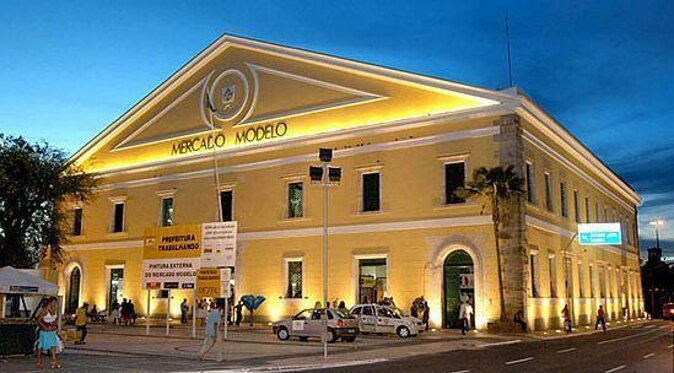
Mercado Modelo receives about 45 minutes. Admission is free, and the focus is local crafts and souvenir shopping.
This is the most commercial stop of the day. You may find it useful if you want gifts, Bahian handicrafts, or a quick look at a traditional market setting. You also have a chance to browse without the pressure of fitting shopping into the walking tour later.
Still, one piece of feedback suggests using this time differently, perhaps for another cultural site. I understand that view. If you do not plan to shop, 45 minutes here may feel long compared with the short time given to some museums and monuments.
The best approach is simple: tell your guide how much shopping you want. In a private tour, you have more room to adjust the balance. If you want souvenirs, this is convenient. If you would rather see another church or spend longer in the old center, ask whether the schedule permits a change.
Two hours in Pelourinho’s cobbled old city
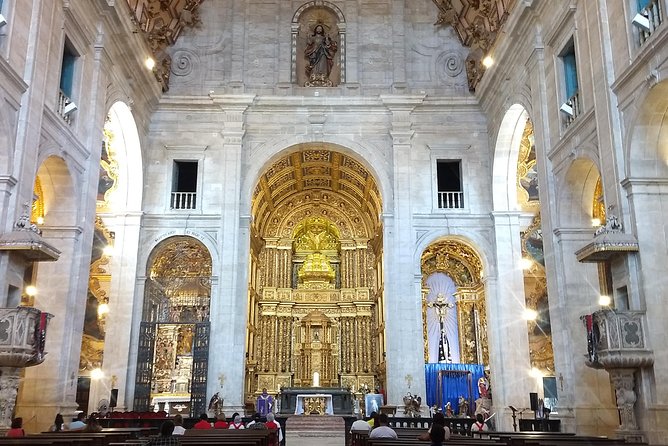
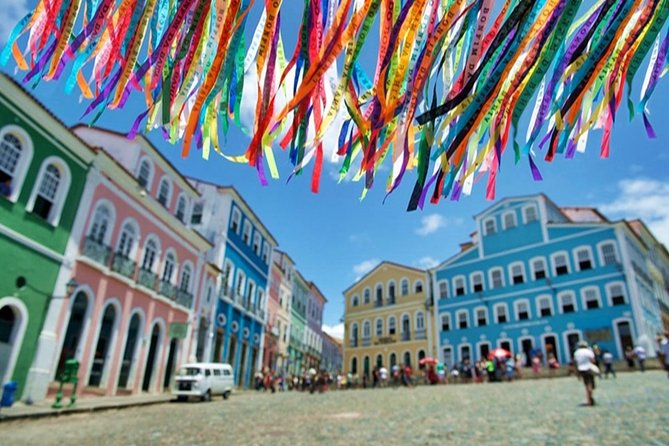
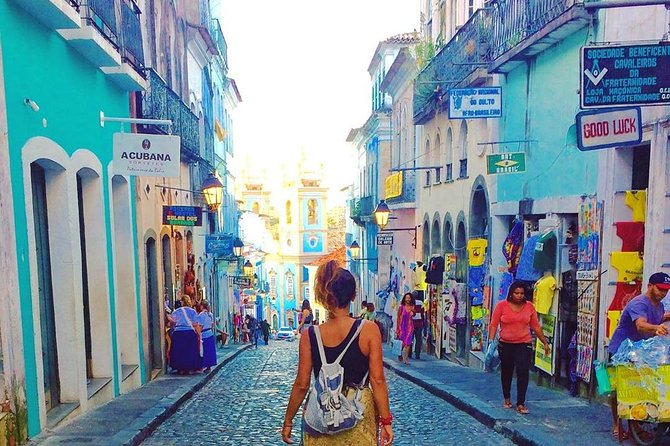
Pelourinho is the heart of the walking portion, with about two hours among five squares and colonial buildings. This is where Salvador’s visual character comes into focus: painted façades, steep or uneven streets, stone paving, churches, and grand public spaces.
The guide’s explanation is important here. Without context, the area can become a string of colorful buildings and photo stops. With a good guide, you can connect the squares, colonial power, slavery, religion, music, and the city’s Afro-Brazilian identity.
You should wear comfortable shoes. The day includes plenty of walking, and Pelourinho’s cobbled streets can be tiring. One account described the entire tour as a bit of a race because there are so many stops, with the old city requiring especially much walking.
The two-hour block is generous compared with the other stops, but it is still an introduction rather than a complete study of the district. One guide, Marcos, was praised for excellent English and strong knowledge of Salvador, though he was also faulted for leaving people to wander on their own inside the San Francisco Convent and around the main square. That is practical advice: if you want detailed commentary at a particular church or square, ask for it directly instead of assuming the guide will explain every feature.
Palacio Rio Branco and Bahian photography
Palacio Rio Branco is an optional 15-minute stop. Its architecture is a draw, and the building now serves as a memorial connected with the state governors and the democratic republican period.
The important limitation is opening time. The building does not follow a reliably regular schedule, so entry cannot be guaranteed. Think of this as an outside viewing stop with a possible interior visit, not a promised museum admission.
The tour also includes about 10 minutes at Espaço Pierre Verger da Fotografia Baiana. The focus is photography of the Afro-Bahian diaspora. This is another compact cultural stop, and its subject gives the day a useful shift from colonial architecture toward people, identity, and representation.
Ten minutes is not enough to study a major photography collection in depth. Still, it can provide a meaningful introduction, especially if your guide explains Pierre Verger’s connection to Bahia and the African diaspora.
Lunch and a taste of everyday Bahia
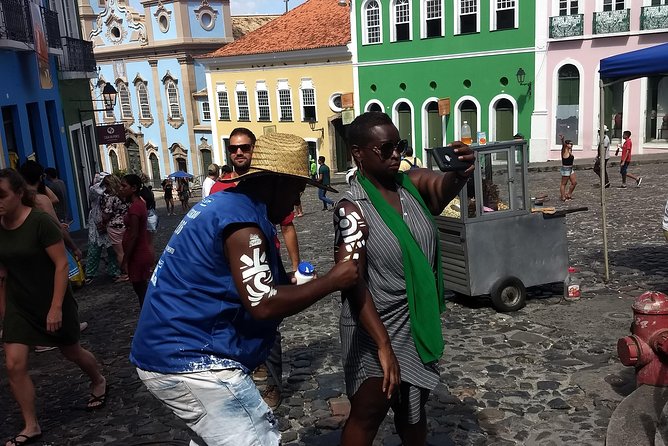
Lunch is included at a local restaurant, but the supplied details do not name the restaurant or specify a set menu. That means you should see the meal as a welcome part of the day rather than booking solely for a particular dish.
The value is practical as well as culinary. An eight-hour tour with walking, heat, churches, markets, and vehicle transfers needs a proper break. A local restaurant also gives you a chance to taste Bahian specialties in a more grounded setting than a quick snack stop.
Drinks are not included. Keep some Brazilian reais available for beverages and for the optional treats later in the day. The tour price covers lunch, but not every item you may order with it.
Sorveteria da Ribeira and the little extras
Sorveteria da Ribeira provides a 20-minute stop for ice cream made since 1931. One scoop with one flavor costs R$10.
This is a small but enjoyable pause after the heavier historical and religious sites. It gives you a taste of a local institution without turning the tour into a food tour. If you are sensitive to a busy schedule, this is also the sort of stop you may want to keep short.
Later, at Forte de Nossa Senhora de Monte Serrat, you get views across Salvador and time to walk around the outside for photographs. The fort is closed because it belongs to the Army, so there is no interior visit. Coconut water is available for about R$5 per person, paid separately.
The fort’s outside setting makes this a worthwhile view stop. Just set your expectations correctly: you are seeing the building from around it, not touring its rooms.
Cathedral Basilica, Lacerda Elevator, and São Francisco
The Cathedral Basilica of Salvador receives about 30 minutes, with admission included. The focus is Jesuit ecclesiastical art, including an interior considered among the finest examples of its kind in South America.
This is one of the day’s strongest art stops. The time is short, but a guide can point out details that you might miss on your own. Look up and around rather than treating the cathedral as a quick photo backdrop.
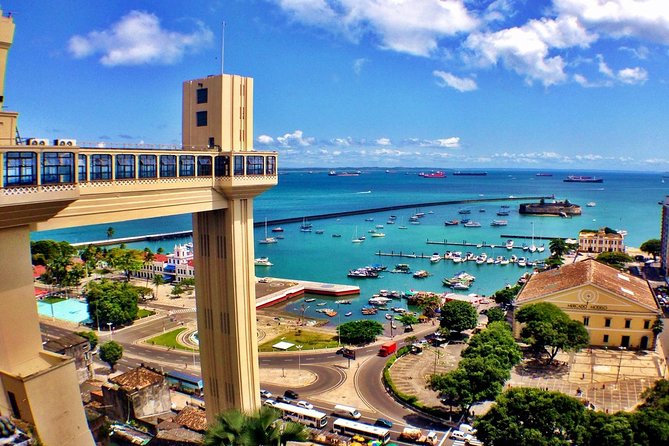
The Lacerda Elevator is another included admission, with about 15 minutes set aside to ride it. This connects Salvador’s upper and lower city and gives you a direct experience of one of the city’s best-known pieces of public infrastructure.
Finally, Igreja e Convento de São Francisco gets about 30 minutes, and admission is included. The attraction is the combination of Portuguese tiles and extensive gold-leaf decoration. It is an ornate finish to a day already full of churches.
Here again, the guide’s role makes a difference. The building can be visually overwhelming, and a few pointed explanations help you understand what you are seeing. Since one guide was criticized for leaving people to explore independently, ask for a guided look at the details you care about, especially the tile panels and gilded interior.
Is $170 per person good value?
At $170 per person, this is not the cheapest way to see Salvador. It is also not a simple transport service. The price includes a professional guide, private air-conditioned transportation, hotel or port pickup and drop-off, lunch, and admission to the Cathedral Basilica, Lacerda Elevator, and São Francisco Church.
You still pay separately for the Santo Antonio da Barra Fort, drinks, ice cream, and coconut water. Palacio Rio Branco may not open for entry, and the Monte Serrat fort is not entered.
For two or more people who value comfort and a private pace, the price can be reasonable. You avoid arranging several taxis, solving the geography of Salvador yourself, and working out how to connect the upper city, lower city, Bonfim, the forts, and Pelourinho in one day.
The strongest value comes from the guide. Past feedback praises friendly service, flexibility, excellent English from Marcos, and French fluency from another guide. The quality can vary in how much commentary you receive at each site, so make your interests clear at the start.
The minimum booking is two people, and the maximum group size is 15, though a private booking should feel more personal than a standard shared excursion. Confirmation arrives at booking, and free cancellation is available until 24 hours before the start time. Changes or cancellations inside that 24-hour window are not accepted for a refund.
Who should book this day in Salvador?
I would choose this tour if you have one full day in Salvador and want a broad introduction rather than a narrow theme. It suits couples, friends, and solo visitors who prefer a guide and private vehicle, especially if they want hotel or port pickup.
It also suits anyone interested in the meeting of Portuguese, Catholic, African, and Afro-Brazilian traditions. Bonfim, Dique do Tororó, Pelourinho, Pierre Verger’s photography, and the churches give you several ways into that story.
You should think twice if you dislike full schedules, shopping stops, or guided sightseeing that moves from place to place. The day involves plenty of walking, and the old city can be tiring. People with physical concerns should tell the provider in advance and discuss the pace, though the experience is listed as suitable for most people and one guide has been praised for adapting to mobility needs.
Should you book the Salvador historic city tour?
Book it if you want to see Salvador’s major historic areas, churches, forts, market, and cultural landmarks in one organized day. The private vehicle, included lunch, hotel or port pickup, and personal guide make the $170 price easier to justify, particularly for a small group.
I would not book it expecting every museum to receive a long visit or every church to come with a full guided explanation. Ask for the subjects you care about, confirm what you want to enter, and keep reais ready for the extra fees.
For a first look at Salvador, this is a strong choice. It gives you the city’s big picture, plus a few memorable local touches: painted tiles, orixá figures, Bahian ice cream, gold-covered church interiors, and the ride in the Lacerda Elevator.
FAQ
How long does the Salvador city tour last?
The tour lasts approximately eight hours.
What is included in the tour price?
The price includes lunch, a professional guide, hotel or port pickup and drop-off, and an air-conditioned vehicle.
Is the tour private?
Yes. The experience is described as a private tour, with a maximum capacity of 15 people.
How much does the tour cost?
The listed price is $170 per person.
Is lunch included?
Yes, lunch at a local restaurant is included. Drinks are not included.
Are entrance tickets included?
Admission is included for the Cathedral Basilica of Salvador, Lacerda Elevator, and Igreja e Convento de São Francisco. The Santo Antonio da Barra Fort costs R$12 per person if you choose to enter. Palacio Rio Branco entry is optional and cannot be guaranteed because its opening schedule is irregular. Forte de Nossa Senhora de Monte Serrat is viewed from outside and is not entered.
How much do the optional ice cream and coconut water cost?
One scoop with one flavor at Sorveteria da Ribeira costs R$10. Coconut water at Forte de Nossa Senhora de Monte Serrat costs R$5 per person.
Is the tour suitable for people with physical limitations?
The tour is listed as suitable for most people, but it includes considerable walking, particularly in Pelourinho on cobbled streets. One guide has been praised for being flexible with a person who had physical issues, so discuss your needs before booking.
What is the cancellation policy?
You can cancel at least 24 hours before the local start time for a full refund. Cancellations or changes made less than 24 hours before the start time are not accepted for a refund.
Newest reviews from around Salvador da Bahia
- Salvador Walking Tour Through Pelourinho★ 5.0 · 35 reviews
- Paradise Morro de São Paulo Island Tour from Salvador★ 4.0 · 29 reviews
- Full City Tour Historic and Panoramic★ 5.0 · 24 reviews
- Historical African oriented City Tour★ 5.0 · 52 reviews
- Private Transfer Salvador Airport★ 5.0 · 32 reviews
- Private Airport Transfer to Salvador★ 5.0 · 30 reviews
- Private Walking Tour of Salvador Pelourinho★ 5.0 · 70 reviews
- 4h Cooking Class in Salvador with 9 Recipes & Bottomless Drinks★ 5.0 · 73 reviews
Historical Tours, compared.

Private Walking and Cultural Tour Rocinha-Rio de Janeiro
Read our review →
Discover Rio Little Africa: A Cultural and Historical Journey
Read our review →

Scenic Train ride to historical cities of Morretes and Antonina
Read our review →
Browse the lists this tour appears in