
Reviewed · MUSEUMS
Salvador African Heritage Private City Tour Including Afro Museum
Salvador’s African story begins on its streets. This four-hour private tour links the old city, Afro-Brazilian culture, colonial landmarks, and several key viewpoints, giving you a fast but thoughtful introduction to Bahia. I like the private format, which lets the guide adjust the pace and answer your questions, and I like the way the route connects places rather than treating them as isolated sights.
I also like the focus on Salvador’s African identity, from the orixá figures at Dique de Tororó to the Church of Our Lady of the Rosary of the Black People. The main caution is important: museum access can change, and the Afro-Brazilian Museum and Benin House may not both be open when you visit.
In This Review
- Four details to know before booking
- Why this route matters in Salvador
- Santo Antônio da Barra Fort and the Bahia Nautical Museum
- Dique de Tororó and the orixá figures
- Lower City views, Lacerda Elevator, and Mercado Modelo
- Walking through Pelourinho’s cobblestone streets
- Church of Our Lady of the Rosary of the Black People
- Benin House and the Gulf of Benin collection
- The Afro-Brazilian Museum: the tour’s biggest question mark
- Guide quality and the private format
- Timing, cost, and what is included
- Who should book this Salvador tour?
- FAQ
- How long does the Salvador African Heritage Private City Tour last?
- Is this a private tour?
- Does the tour include hotel pickup and drop-off?
- Is the Afro-Brazilian Museum always open during the tour?
- Is admission to Santo Antônio da Barra Fort included?
- Does the tour ride the Lacerda Elevator?
- Can I cancel for a full refund?
- Should you book it?
Four details to know before booking
- The tour lasts about four hours, with hotel pickup and drop-off included.
- Your group has a private guide and vehicle, so the visit can be adjusted to your interests.
- Pelourinho is explored on foot, over cobblestone streets and through one of Salvador’s most important historic districts.
- The Afro-Brazilian Museum is visited when open, but museum closures have caused disappointment.
- The Santo Antônio da Barra Fort costs extra, with admission listed at R$12 per person.
- The tour costs $110 per person, which is strongest value for visitors who want cultural context, not just quick photo stops.
Why this route matters in Salvador
Salvador is often presented through churches, colorful façades, and ocean views. Those sights are worth seeing, but they tell only part of the city’s story. This tour focuses on the African presence that shaped Bahia’s music, religion, food, art, and daily life.
That focus gives the route more purpose than a standard city drive. You are not simply passing the market, elevator, fort, and old churches. You are being shown how Portuguese colonization, the slave trade, African religions, and Afro-Brazilian culture overlap in the same small area.
The tour begins near the first beach associated with the arrival of the Portuguese colonizers. That detail places Salvador within Brazil’s colonial story from the outset. It also gives you a useful frame for the rest of the morning or afternoon: the city grew around the sea, trade, forced migration, faith, and cultural exchange.
At $110 per person, the cost is not low for a four-hour outing. Still, it includes transport, a local guide, hotel pickup and drop-off, and the benefit of having the entire service reserved for your group. I see the price as fair if your main goal is explanation and personal attention. It is less attractive if you only want a quick sightseeing loop.
More City Tours in Salvador & Bahia
- Salvador City Tour – Discover Brazil’s First Capital En, It, Es
★ 5.0 · 217 reviews - Private City Tour in Salvador
★ 5.0 · 110 reviews - Historical African oriented City Tour
★ 5.0 · 52 reviews
Santo Antônio da Barra Fort and the Bahia Nautical Museum
The first named stop is Santo Antônio da Barra Fort, also associated with the Nautical Museum of Bahia. You get roughly 20 minutes here, mostly for a walking visit and photographs with your guide.
The location is especially useful for orientation. It connects Salvador’s coastal setting with its defensive and maritime past, and it provides a strong opening image for the tour. If you like monuments with a sea view, this should be one of the more rewarding short stops.
Admission inside the fort is not included. The listed price is R$12 per person, so bring Brazilian reais if you decide to enter. The scheduled stop is brief, which means you should ask your guide at the start whether entering the fort fits the day’s timing.
That short time is also the first sign of the tour’s character. You will see many places, but you will not receive a long museum visit at every stop. I would choose this tour for a broad introduction, then return independently to any site that deserves more time.
Dique de Tororó and the orixá figures
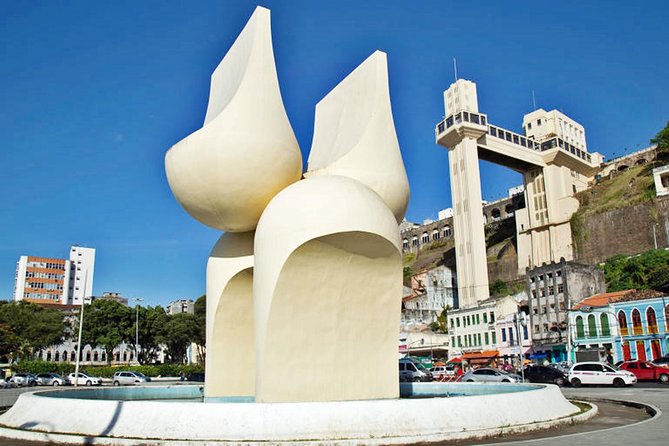
At Dique de Tororó, the focus shifts from colonial fortification to Afro-Brazilian spiritual culture. Large images of orixás appear in the water, creating one of the route’s most distinctive visual moments.
You can also see the football stadium from outside. That may sound like a minor detail, but it helps show how religious symbolism, public space, and modern Salvador share the same city. The stop lasts about 20 minutes and does not require an entrance ticket.
This is a good place to listen closely. The figures are not simply decoration. They point toward Candomblé and the continuing presence of African-derived religious traditions in Bahia. The tour becomes more meaningful when your guide explains those connections instead of giving you only the names of the sculptures.
One guide praised in the supplied feedback was Wilson Badaró, described as intelligent, approachable, and exceptionally strong in English. Other guides, including Jorge Hage, received similar praise for explaining African culture and adding extra time. Guide quality can vary by assignment, but the strongest part of this experience appears to be the human explanation at places like Dique de Tororó.
Lower City views, Lacerda Elevator, and Mercado Modelo
The route passes through Cidade Baixa, or the Lower City, where several places connect with Salvador’s African and colonial past. The former slave market is part of that difficult story, and seeing the area with a guide can help you understand how commerce and forced migration shaped the city.
You also pass in front of Mercado Modelo. This central market sells handicrafts and souvenirs associated with Salvador, but the tour does not include an interior visit. You can stop for photographs outside, yet you should not expect time to browse stalls or shop.
The same applies to the Lacerda Elevator. You see the world’s first urban elevator from below, but this tour does not take you up in it or include a visit to the Upper City by elevator. That distinction matters because many people assume a Salvador city tour automatically includes a ride.
If riding the elevator, entering Mercado Modelo, or exploring the Upper City is high on your list, ask before booking. Another city tour may cover those attractions more fully. This experience uses them as part of a wider cultural route, not as its main subject.
More History Tours in Salvador & Bahia
- Full-Day Historic Private City Tour of Salvador with Lunch
★ 5.0 · 50 reviews - Full City Tour Historic and Panoramic
★ 5.0 · 24 reviews - Private Historical Tour 5 hours
★ 4.5 · 19 reviews - Quilombo Afro Heritage Tour
★ 5.0 · 10 reviews
Walking through Pelourinho’s cobblestone streets
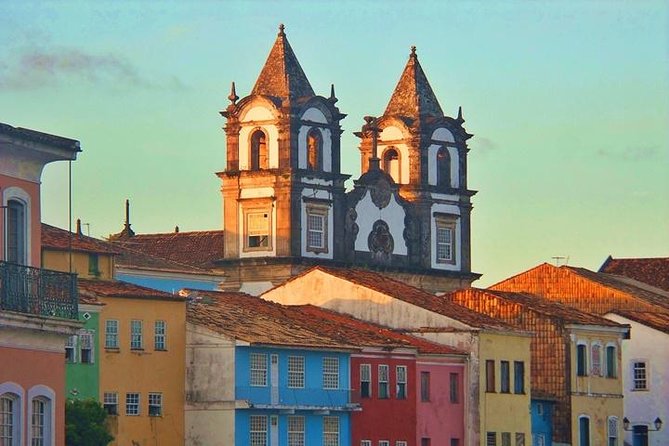
The walking portion through Pelourinho is the heart of the experience. This UNESCO World Heritage Site is known for its steep cobblestone streets, old buildings, churches, and strong links to Brazil’s colonial past.
A guide adds real value here because the streets can look like a collection of pretty façades if you do not know what happened behind them. You receive context about Salvador’s development and the African presence that remains central to Bahia’s identity.
Allow for uneven walking. The supplied information says most people can participate, but the route does involve cobblestones and a walking tour. Comfortable shoes are a sensible choice, and anyone concerned about hills or footing should discuss the pace with the guide.
The feedback about the guides is unusually consistent. One guide adapted the visit to personal interests, spoke excellent English, and even recommended a restaurant where the group later shared lunch. Another guide spoke French throughout the tour for a mother and daughter and extended the time to show additional places.
Those details suggest that the private arrangement can make a difference. You are not locked into a fixed group conversation. If you want more time on religion, architecture, colonial politics, or daily life, say so early.
Church of Our Lady of the Rosary of the Black People
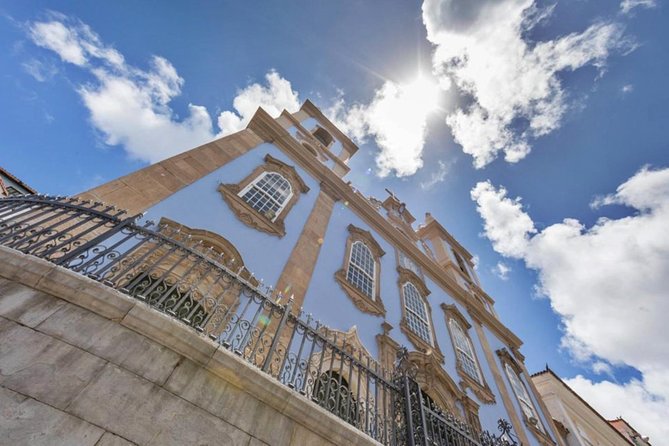
This church is one of the tour’s most important stops. It was built with strong links to enslaved and African-descended people, and its worship still reflects a blend of Catholic and African cultural elements.
The scheduled visit lasts about 20 minutes and is free to enter. The church’s Tuesday Catholic mass incorporates singing, dancing, and other elements associated with African culture, including the sound of atabaques. The tour may not coincide with that service, but the detail helps explain why this is more than another ornate church stop.
Behind the church is an old slave cemetery. That difficult setting makes the visit especially powerful, since the building, worship, and burial ground all point to the lives and beliefs of people who shaped Salvador under harsh conditions.
One especially moving account described the church as a place that stayed in the visitor’s mind long afterward. That reaction makes sense. The stop asks you to consider how religious traditions survived, changed, and found room within a colonial Catholic society.
Because this is an active religious site, listen to your guide about respectful behavior. The short visit works best when you pause to understand the place rather than treating it only as a photography stop.
Benin House and the Gulf of Benin collection
Benin House holds about 200 pieces from the Gulf of Benin. French photographer Pierre Verger collected them during expeditions in Africa, and the collection helps connect Salvador with the West African regions that influenced Bahia.
This is a valuable stop for anyone interested in objects, artistic traditions, and the links between Brazil and Africa. It gives physical form to a connection that can otherwise remain abstract during a city tour.
The planned visit is about 20 minutes and is listed as free. That is enough time for an introduction, though not an extended museum study. If you want to examine every object or read all available material, you may need a separate visit.
The serious practical issue is opening status. Benin House has been closed at times, as has the Afro-Brazilian Museum. You should confirm both locations before the day of your tour, particularly if museums are the main reason you are paying for this experience.
The Afro-Brazilian Museum: the tour’s biggest question mark
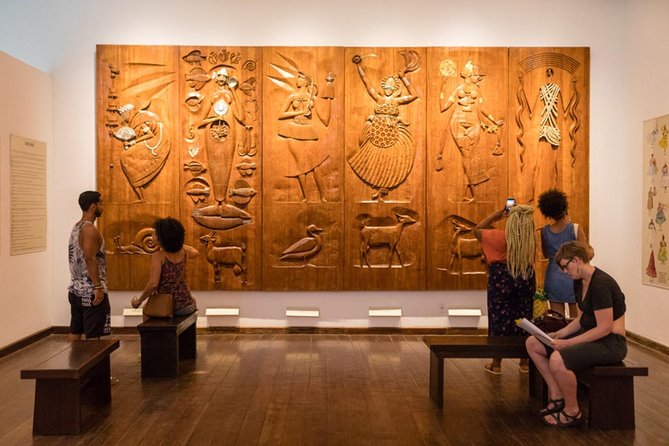
The Afro-Brazilian Museum is scheduled for about 30 minutes, with admission included when it is open. In theory, it is the clearest match for the tour’s subject and one of the main reasons to choose this route.
In practice, closure information has caused a major problem. One booking experience involved learning only after pickup that the museum had been closed for months. Benin House was also closed, and the planned museum visits were replaced with an unwanted market stop. The customer felt the tour had repeated sights seen elsewhere and requested a partial refund.
The provider disputed that account, saying the replacement and an Afro fair had been explained and that a full refund had been offered before the tour. That conflicting account is precisely why you should confirm the operating status and proposed replacement before committing.
Ask three direct questions:
- Is the Afro-Brazilian Museum open on my exact date?
- Is Benin House open, too?
- If either is closed, what specific site will replace it?
Get the answer in writing if possible. If the museums are essential to your plans, do not assume the phrase visited when open guarantees admission. The tour can still be worthwhile without them, but its focus changes from museum study to churches, streets, viewpoints, and outdoor cultural sites.
Guide quality and the private format
The most praised part of this experience is the guide. Several accounts describe guides who explained Salvador clearly, answered questions, spoke strong English, and adjusted the route to personal interests.
Jorge Hage was praised for strong knowledge of African history and culture, speaking French for a mother and daughter, and extending the tour beyond its scheduled time. Wilson Badaró was praised for combining intelligence with an easy, accessible manner. Another guide helped arrange a good lunch and joined the conversation.
I would not treat those individual names as a guarantee that you will receive the same guide. I would treat them as a sign of what to request: a guide comfortable discussing Candomblé, slavery, Afro-Brazilian culture, and the city’s colonial past.
The private format is especially useful if you have limited time or strong interests. It also helps if your group includes people who prefer different languages. The experience includes a local guide, but the supplied information does not promise a particular language for every booking, so confirm that point when needed.
Timing, cost, and what is included
The tour takes about four hours and is available in the morning or afternoon. Hotel pickup and drop-off are included, along with the guide and listed entrance fee for the Afro-Brazilian Museum when it is open.
Food and drinks are not included. One guide recommended lunch during an extended visit, but you should budget separately if you want a meal. The fort entrance is also extra at R$12 per person.
The $110 per-person price makes the most sense for a small group that values a private car and guide. Split among several people, it can compare well with arranging separate transport and hiring help for the historic center. For one person, the price is harder to justify unless the cultural focus and door-to-door service are especially important.
Free cancellation is available up to 24 hours before the start time. Inside that window, the payment is not refunded and changes are not accepted. That policy matters here because museum closures can affect the tour’s value, so check the sites before the deadline passes.
Who should book this Salvador tour?
I would recommend it to you if you want a compact introduction to Salvador’s African heritage, prefer a private setting, and value a guide who can explain what you are seeing. It suits first-time visitors who want Pelourinho but also want more than churches and colorful streets.
It is also a good fit for people interested in Candomblé, African-Brazilian connections, colonial history, and cultural identity. The Church of the Rosary of the Black People and Dique de Tororó are strong reasons to choose this route.
I would be cautious if your main goals are riding the Lacerda Elevator, shopping inside Mercado Modelo, spending hours in museums, or visiting every major Upper City sight. Those activities are not fully included.
I would also avoid booking without checking museum hours if the Afro-Brazilian Museum and Benin House are the central reason for your visit. The outdoor route remains worthwhile, but you deserve to know exactly what you are buying.
FAQ
How long does the Salvador African Heritage Private City Tour last?
The tour lasts approximately four hours.
Is this a private tour?
Yes. Only your group participates, with a private guide and personalized service.
Does the tour include hotel pickup and drop-off?
Yes. Hotel pickup and drop-off are included.
Is the Afro-Brazilian Museum always open during the tour?
No. The museum is visited when it is open. Museum closures have occurred, so confirm its status before the tour date.
Is admission to Santo Antônio da Barra Fort included?
No. Entrance to the fort is not included. The listed admission price is R$12 per person.
Does the tour ride the Lacerda Elevator?
No. The itinerary views the elevator from below and does not include riding it or visiting the Upper City by elevator.
Can I cancel for a full refund?
Yes, if you cancel at least 24 hours before the experience starts. Cancellations within 24 hours are not refunded.
Should you book it?
Book this tour if you want Salvador explained through its African cultural roots, and if a private guide matters more to you than a long list of interior visits. The strongest elements are the Pelourinho walk, the Church of Our Lady of the Rosary of the Black People, Dique de Tororó, and the chance to shape the conversation around your interests.
Before paying, confirm the opening status of both museums and ask what happens if they are closed. With that check completed, the tour offers a useful, focused half-day introduction to Salvador. Without it, you risk paying $110 for a route that may omit the very museums you wanted to see.
More Museum Tours in Salvador da Bahia
- Ticket MAI – Museum of Indigenous Art – Curitiba
★ 5.0 · 385 reviews - Combo: Platform Entrance, Abusado Adventure, Ferro Passar Museum
★ 3.5 · 314 reviews - Platform Entrance, Including Iron Museum
★ 3.5 · 226 reviews - Petrópolis Day Trip from Rio de Janeiro including Imperial Museum and Crystal Palace
★ 4.0 · 101 reviews
Newest reviews from around Salvador da Bahia
- Transfer North-Ba Coast and Salvador Airport★ 5.0 · 25 reviews
- Curated Nightlife Experience in the Heart of the City★ 3.5 · 5 reviews
- One-Way Private Transfer to Boipeba Island★ 5.0 · 21 reviews
- Transfer Costa do Sauipe – Private★ 5.0 · 2 reviews
- Ilhas Maravilhas Frades and Itaparica Full Day Tour, Salvador, Bahia, Brazil★ 3.5 · 13 reviews
- Salvador de Bahia: Private Round-Trip Airport–Hotel Transfer★ 4.5 · 25 reviews
- Transfer Salvador to Barra Grande Round Trip★ 5.0 · 3 reviews
- Hotel Vila Galé Mares – Transfers In / Out★ 5.0 · 29 reviews
Museums, compared.
Ticket MAI – Museum of Indigenous Art – Curitiba
Read our review →
Combo: Platform Entrance, Abusado Adventure, Ferro Passar Museum
Read our review →
Petrópolis Day Trip from Rio de Janeiro including Imperial Museum and Crystal Palace
Read our review →
Museum of Tomorrow, AquaRio & Olympic Boulevard in Rio de Janeiro
Read our review →
7-Hour Shared Group Santos Tour : Mont Serrat, Coffee Museum and Sightseeing
Read our review →
Olympic Boulevard, Museum of Tomorrow & Historical Rio
Read our review →
Olympic Boulevard, AquaRio and Museum of Tomorrow Tour
Read our review →Browse the lists this tour appears in