
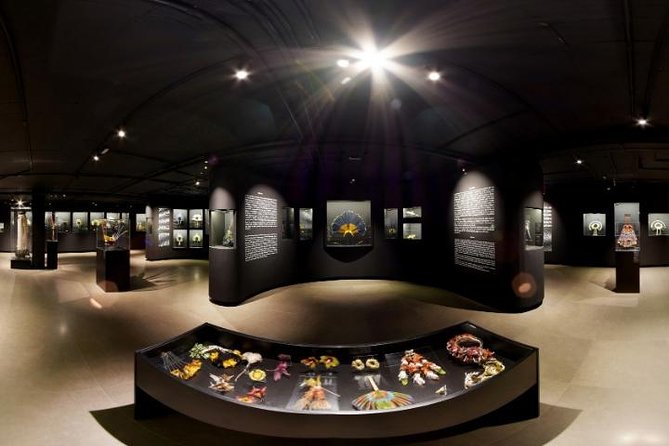
Reviewed · MUSEUMS
Ticket MAI – Museum of Indigenous Art – Curitiba
Curitiba’s Indigenous story is waiting indoors. At the MAI Museum of Indigenous Art, I like the carefully arranged collection and the way the visit reaches beyond display cases with sounds, aromas, and tastes connected to Brazilian Indigenous life. I also like the modest price: about $6.40 per person for an experience that can fill roughly 90 minutes.
The main thing to watch is the guidance. The museum provides written explanations, wall text, object credits, and QR codes, but a live Portuguese-speaking guide is not automatically guaranteed. If that matters to you, arrange a guided visit with the museum before arriving.
In This Review
- Key points to know before visiting
- Why MAI is worth your time in Curitiba
- Entering the collection across three floors
- Feather art, masks, and objects with a purpose
- A sensory visit with sound, aroma, and taste
- Videos and written interpretation instead of an automatic live guide
- The value of 90 minutes and a $6.40 ticket
- Weekday timing and practical planning
- One unpleasant report and how to handle it
- Who will enjoy MAI most?
- Booking, cancellation, and the best way to prepare
- Should you book the MAI Museum of Indigenous Art?
- FAQ
- Where is the MAI Museum of Indigenous Art located?
- How much does admission cost?
- How long does a visit take?
- What are the museum’s opening hours?
- What types of objects are displayed?
- Does the visit include sensory elements?
- Is a live guide included?
- Can I cancel for a full refund?
Key points to know before visiting
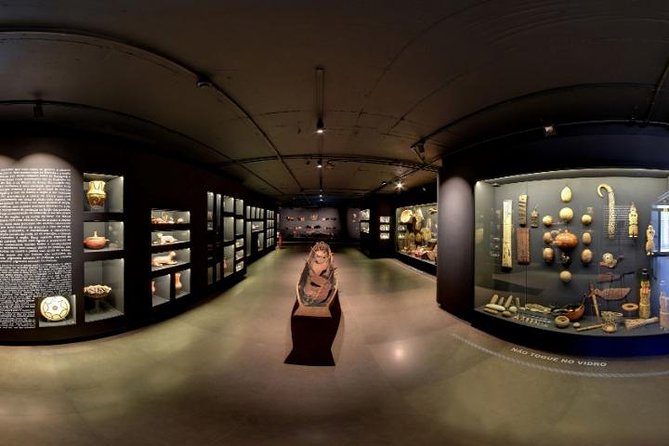
- Three floors of Indigenous art: Allow around 90 minutes to see the museum’s rooms, videos, objects, and displays without rushing.
- More than visual exhibits: Sounds, aromas, and palates add sensory elements to the presentation of Brazilian Indigenous culture.
- Eight collection themes: Look for feather art, ceramics, basketry, musical instruments, ritual masks, benches, adornments, and utility objects.
- Written interpretation is central: Wall texts, printed explanations, object credits, and QR codes provide the main help unless you arrange a guide.
- Weekday opening only: The stated hours are Monday through Friday, 10:00 a.m. to 5:30 p.m.
- Good value at $6.40: The low admission makes this an easy cultural stop during a day in Curitiba.
Why MAI is worth your time in Curitiba
Curitiba has plenty of polished urban attractions, but MAI offers something different. It focuses on the Indigenous cultures that form part of Brazil’s identity, presenting objects not simply as decorative pieces but as items connected to daily life, ceremony, music, clothing, and practical work.
That distinction matters. A feather ornament, a woven basket, or a carved bench can look beautiful on its own. At MAI, you are encouraged to consider how an object was made, how it was used, and what it reveals about the community that produced it.
I especially like that the museum does not limit the experience to sight. The presentation includes sounds, aromas, and tastes associated with the Brazilian Indigenous universe. The available information does not list every sensory element or explain exactly where each one appears, so you should expect a general sensory component rather than a fixed performance or meal.
The museum is also a useful choice if you have only a short window in Curitiba. A visit takes about one hour and 30 minutes, making it long enough to feel worthwhile but short enough to fit around other city plans.
More Museum Tours in Curitiba:
- Combo: Platform Entrance, Abusado Adventure, Ferro Passar Museum
★ 3.5 · 314 reviews - Platform Entrance, Including Iron Museum
★ 3.5 · 226 reviews - Petrópolis Day Trip from Rio de Janeiro including Imperial Museum and Crystal Palace
★ 4.0 · 101 reviews
Entering the collection across three floors
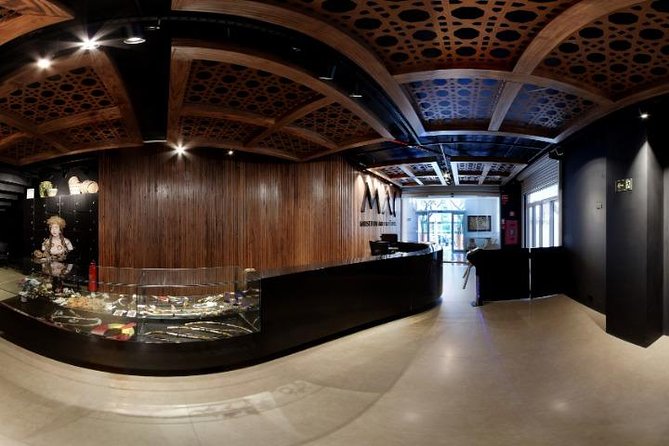
The museum occupies three floors, according to the available visitor information. That gives the visit a sense of movement, with different rooms and displays rather than one single hall packed with objects.
You may find the first rooms easiest to appreciate at a slow pace. Start by reading the basic wall explanations, then look more closely at the pieces that catch your eye. The museum identifies objects with credits and provides QR codes for added information, so you can decide how much detail you want instead of reading every panel.
The collection is divided into clear themes:
- Feather art
- Ceramics
- Basketry
- Musical instruments
- Ritual masks
- Benches
- Adornments
- Utility objects
This organization helps you compare form and function. Adornments and featherwork may draw your attention first because of their color and texture. Utility objects offer a useful counterpoint, showing how design can grow from everyday needs rather than from decoration alone.
The benches are another interesting category. They are easy to overlook in an art museum because furniture often appears secondary. Here, they help show how a practical object can also carry distinctive visual choices and cultural meaning.
Feather art, masks, and objects with a purpose
Featherwork is one of the collection’s likely visual highlights. Its appeal is immediate, but it is worth taking a second look at the construction and arrangement of the feathers rather than treating the pieces as simple ornaments.
Ritual masks invite a different response. A mask can be striking, even unsettling, but the display’s value comes from recognizing that it may relate to ceremony and identity rather than theater in the modern Western sense. The museum’s written material and QR codes are important here, since the objects need context.
Ceramics and basketry provide a quieter lesson in skill. These pieces can show how local materials, patterns, and useful forms come together. If you enjoy seeing how traditional techniques connect to ordinary life, you may find these sections more rewarding than the most dramatic displays.
The utility objects deserve your attention too. They help keep the museum from presenting Indigenous culture as something distant or frozen in the past. Daily work, storage, travel, music, clothing, and ceremony all appear through the collection’s categories.
A sensory visit with sound, aroma, and taste
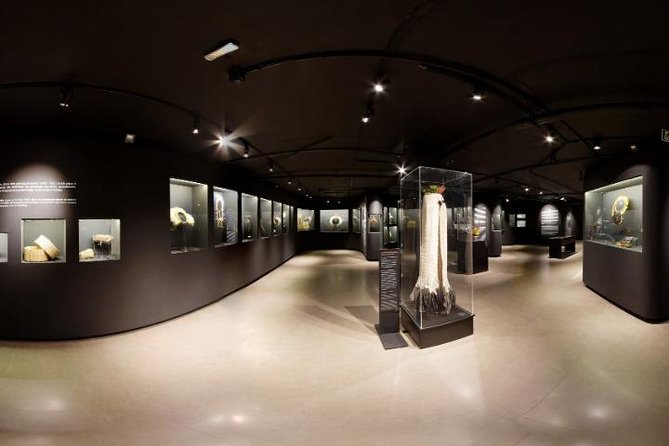
The sensory approach is one of MAI’s most unusual features. Along with the objects, the museum introduces sounds, aromas, and palates connected with Brazilian Indigenous culture.
This can make the visit feel more immediate. You are not only looking at a basket or a musical instrument. You are being asked to think about the world around its use, including sound and smell. That helps turn a collection visit into a broader cultural experience.
At the same time, you should keep your expectations in check. The available details do not specify a tasting menu, a live music session, or a formal demonstration. The reference to palates suggests contact with taste, but it does not define the format or amount offered.
For that reason, I would treat the sensory elements as an added feature, not the sole reason to book. The collection and interpretation remain the foundation of the visit.
A few more Curitiba days to weigh up
- Bar-hopping and Food Tour in Curitiba
★ 5.0 · 295 reviews - Scenic Train ride to historical cities of Morretes and Antonina
★ 4.0 · 188 reviews - Full-day tour in Curitiba
★ 5.0 · 50 reviews - Morretes: Full Day Colonial Town Tour from Curitiba
★ 4.4 · 36 reviews
Videos and written interpretation instead of an automatic live guide
A visit to MAI can work well for independent visitors. Text is printed on the walls, pieces carry credits, and QR codes provide extra information. One visitor also described rooms with videos about the displayed pieces, adding a visual layer to the written material.
This setup gives you control. You can move quickly through familiar subjects and spend longer with displays that interest you. It also means you should not assume that admission includes a person walking through the museum with you in Portuguese.
The museum’s coordinator, Samantha Donner, explained that the standard offering includes written guides, wall texts, object credits, and QR codes. Live guides may be available when arranged in advance. That is a useful distinction, especially if your booking confirmation suggests a guided visit.
If you want a spoken explanation, contact the Museu de Arte Indígena de Curitiba before your visit and ask what can be scheduled. This is particularly important for Portuguese speakers who expected a live explanation, or for anyone who wants more background than a self-guided route provides.
The value of 90 minutes and a $6.40 ticket
At about $6.40 per person, MAI is an inexpensive cultural stop. The price looks especially good if you use the full 90 minutes and take time with the collection rather than making a quick circuit.
I would not judge the value by the number of objects alone. The sensory elements, three-floor layout, videos, written information, and range of collection themes give the admission more substance than a simple display of artifacts.
The low price also makes the museum easy to combine with other Curitiba plans. You do not need to reserve an entire day or spend heavily on a major attraction. If you are curious about Brazilian Indigenous culture, this is a sensible use of a small part of your budget.
The best value comes when you arrive ready to read and look closely. If you prefer a fully narrated tour with a guide explaining every room, the standard ticket may feel less complete unless you arrange that service separately.
Weekday timing and practical planning
The stated opening hours are Monday through Friday, from 10:00 a.m. to 5:30 p.m. No weekend hours are provided, so I would not plan a Saturday or Sunday visit without confirming directly with the museum.
A morning arrival gives you plenty of time to see the displays before the afternoon closing time. An early afternoon visit can also work, but leave enough room for the three floors and the videos. A 90-minute visit fits comfortably within the published hours, though you should allow extra time if you read the QR material or stop often.
The museum is near public transportation, which helps if you are moving around Curitiba without a car. The exact transit route is not included in the available information, so check your route on the day of your visit.
Service animals are allowed, and most people can participate. The museum is therefore suitable for a broad range of visitors, but the information provided does not describe every physical access feature. If you need specific accessibility arrangements, ask the museum before booking.
One unpleasant report and how to handle it
Most of the available feedback is strongly positive, with a 5 out of 5 rating and recommendation from 99 percent of visitors. One five-star response called the experience wonderful, surprising, beautiful, intense, and connected to Brazil’s Indigenous origins. Another praised the pleasant space, the concise presentation, the three floors, and the rooms with videos.
There is also one serious complaint that you should not ignore. A visitor expected a Portuguese-speaking guide but found no live guide, then reported dirty bathrooms and a mold-like odor.
The museum apologized for the bathroom condition and said it was not normal. It also explained that what may have seemed like mold could have been the smell of preservation products used to care for the collection. The museum described its holdings as a living collection requiring careful maintenance.
You should read this as a practical warning rather than a reason to dismiss the museum. Conditions can change, and the complaint appears to be an exception within a very high overall rating. Still, confirm the guide arrangement and contact the museum if cleanliness or odor is a major concern for you.
Who will enjoy MAI most?
I would recommend MAI to you if you want a compact cultural visit with a clear focus. It suits people who enjoy objects, crafts, ritual art, and the connection between art and everyday life.
It is also a good choice for visitors who want to understand Brazil beyond the familiar colonial, European, and modern urban stories. The museum places Indigenous culture at the center, not as a footnote.
Families may appreciate the sensory features and videos, though the available information does not describe children’s programming. Art students, museum fans, and anyone interested in material culture should find plenty to examine.
You may want to skip it if you strongly prefer live narration and have no interest in reading wall text or using QR codes. The museum can provide a satisfying independent visit, but its standard format is not clearly a guided tour with a person leading you from room to room.
Booking, cancellation, and the best way to prepare
Confirmation is received at the time of booking. The experience is booked about 20 days in advance on average, which suggests that planning ahead is sensible, especially if your Curitiba schedule is fixed.
You can cancel for a full refund up to 24 hours before the start time. Cancellations made less than 24 hours before the visit are not refunded, and changes inside that same 24-hour period are not accepted. The cut-off follows local time in Curitiba.
Before you go, I would take three simple steps:
- Check that your chosen date falls on a published weekday opening.
- Confirm whether you have a self-guided visit or a live guide.
- Allow the full 90 minutes so the three floors do not become a hurried checklist.
Should you book the MAI Museum of Indigenous Art?
Yes, if you want an affordable and thoughtful cultural stop in Curitiba. The combination of featherwork, ceramics, basketry, masks, instruments, adornments, utility objects, videos, sounds, aromas, and tastes gives the visit more range than its low ticket price suggests.
I would book it for the collection and cultural focus, not solely for the promise of a live guide or a formal tasting. Confirm those details first if they are important to you. With that expectation set correctly, MAI offers a useful look at Indigenous Brazil in a visit that fits neatly into a Curitiba day.
FAQ
Where is the MAI Museum of Indigenous Art located?
The museum is in Curitiba, Brazil.
How much does admission cost?
The listed price is about $6.40 per person.
How long does a visit take?
The visit lasts approximately one hour and 30 minutes.
What are the museum’s opening hours?
The stated hours are Monday through Friday, from 10:00 a.m. to 5:30 p.m.
What types of objects are displayed?
The collection includes feather art, ceramics, basketry, musical instruments, ritual masks, benches, adornments, and utility objects.
Does the visit include sensory elements?
Yes. The museum presents sounds, aromas, and palates connected with the Brazilian Indigenous universe.
Is a live guide included?
A live guide is not automatically guaranteed. The museum provides written explanations, wall texts, object credits, and QR codes. A guided visit may be arranged in advance.
Can I cancel for a full refund?
Yes. You can cancel at least 24 hours before the experience begins for a full refund. Cancellations or changes made less than 24 hours before the start time are not accepted for a refund.
Newest reviews from around Curitiba
- Tour to the State Park of Vila Velha★ 5.0 · 2 reviews
- Private Cycling Tour to Morretes – via Estrada da Graciosa / including transfer from Curitiba★ 5.0 · 2 reviews
- Interparks Cycling Tour Curitiba for small groups★ 4.0 · 10 reviews
- Piece of Holland Full-Day Tour in the Interior of Paraná★ 5.0 · 5 reviews
- Full-day tour in Curitiba★ 5.0 · 50 reviews
- Half Day Curitiba Sightseeing Tour★ 4.5 · 6 reviews
- Full Day Tour to Vila Velha and Buraco do Padre★ 5.0 · 12 reviews
- Curitiba Tour by Night with Dinner★ 3.5 · 8 reviews
Museums, compared.

Combo: Platform Entrance, Abusado Adventure, Ferro Passar Museum
Read our review →
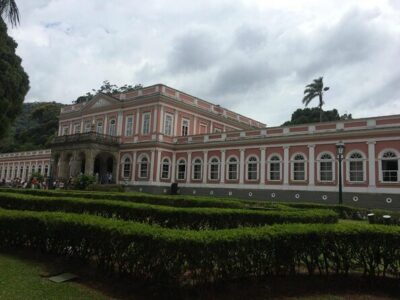
Petrópolis Day Trip from Rio de Janeiro including Imperial Museum and Crystal Palace
Read our review →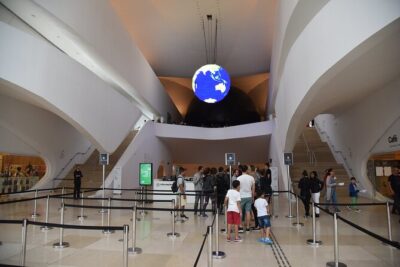
Museum of Tomorrow, AquaRio & Olympic Boulevard in Rio de Janeiro
Read our review →
7-Hour Shared Group Santos Tour : Mont Serrat, Coffee Museum and Sightseeing
Read our review →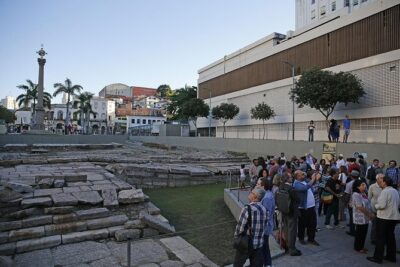
Olympic Boulevard, Museum of Tomorrow & Historical Rio
Read our review →
Olympic Boulevard, AquaRio and Museum of Tomorrow Tour
Read our review →
Olympic Boulevard, Museum of Tomorrow & History Tour
Read our review →Browse the lists this tour appears in