
Reviewed · MUSEUMS
Olympic Boulevard, Museum of Tomorrow & Historical Rio
Rio has more than beaches. This four-hour tour takes you from Little Africa and Olympic Boulevard to the Museum of Tomorrow and old colonial squares. I like the hotel pickup from South and West Zone hotels, which removes a tricky transport decision, and I like the mix of indoor exhibits, church art, waterfront walking, and historic streets. You get a useful first look at central Rio without giving up a full day.
The main catch is simple: you will walk a lot. The tour also uses a shared van, so hotel pickups can take time, and one person reported a late cancellation when the minimum group size was not met. Confeitaria Colombo is closed on Sundays, too, so check your date before booking.
In This Review
- Key points to know before booking
- What this Rio half-day tour is really designed to do
- From Cais do Valongo to the Etnias mural
- Walking through Porto Maravilha and Mauá Square
- Ninety minutes inside the Museum of Tomorrow
- São Bento Monastery and Rio’s church traditions
- The Olympic cauldron and the old colonial lanes
- Praça Quinze and the story of old Rio
- A final stop at Confeitaria Colombo
- Pickup, group size, and the real pace of the morning
- Is $72 a fair price?
- Who should book this downtown Rio route?
- My booking verdict
- FAQ
- How long does the tour last?
- Where does hotel pickup operate?
- Is transportation included?
- What is the maximum group size?
- Is admission to the Museum of Tomorrow included?
- Is admission to São Bento Monastery included?
- Is food at Confeitaria Colombo included?
- Is Confeitaria Colombo open every day on this tour?
- Can I cancel for a full refund?
Key points to know before booking
- Little Africa and Olympic Boulevard in one morning: You see Cais do Valongo, the Etnias mural, Porto Maravilha, and the 2016 Olympic cauldron.
- The Museum of Tomorrow gets 90 minutes: Admission is included, and the interactive displays appeal especially to families and teenagers.
- The old city comes on foot: São Bento Monastery, Praça Quinze, Paço Imperial, colonial lanes, and Candelária Church form the historical core.
- Confeitaria Colombo adds a tasty finish: You can go inside, look around, and buy food or drinks, but the bill is extra.
- Hotel transport is included from selected areas: Pickup covers Copacabana, Ipanema, Leblon, Leme, and Barra da Tijuca hotels.
- A small group is possible, but not guaranteed: The van holds up to 19 people, and shared pickups may make the morning longer.
What this Rio half-day tour is really designed to do
At $72 per person, this is not simply a ride past downtown landmarks. You are paying for transport, a guide, entry to the Museum of Tomorrow and São Bento Monastery, and a planned route through several parts of Rio that can be awkward to connect on your own.
I see the tour as an orientation to central Rio rather than a deep visit to every stop. Some places receive only a few minutes. That is enough for a photo and a clear explanation, but not enough for a slow inspection or long shopping stop.
The route works well if your time is tight, if you are staying in the South Zone, or if you want help understanding how Rio’s colonial center connects with its newer port district. It also gives you a useful break from the Copacabana circuit. The city’s beaches are famous, but the port and center explain much more about Rio’s past and its recent attempt to remake part of the waterfront.
The tour starts at 9:00 a.m. and lasts about four hours. The usual transport is a comfortable air-conditioned van with a maximum capacity of 19 people. Since pickup is shared, the actual morning can feel shorter or longer depending on how many hotels are on the route.
More History Tours in Rio de Janeiro
- Rio de Janeiro Historical Center Walking Tour
★ 4.5 · 336 reviews - Private Walking and Cultural Tour Rocinha-Rio de Janeiro
★ 5.0 · 239 reviews - Discover Rio Little Africa: A Cultural and Historical Journey
★ 5.0 · 238 reviews
From Cais do Valongo to the Etnias mural
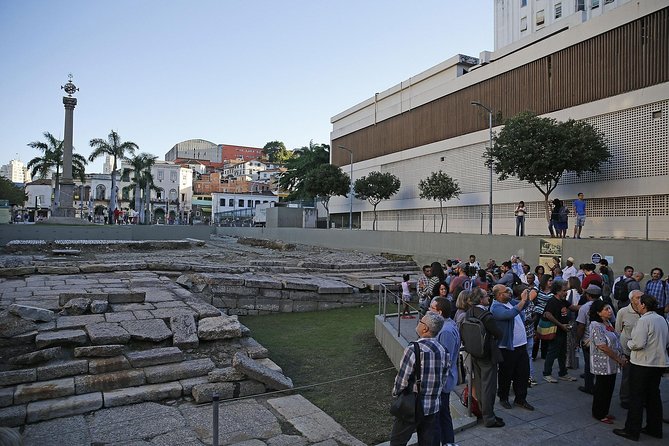
Your first major stop is Cais do Valongo, where you walk by with live commentary. This site gives the morning serious historical weight. It connects Rio’s port area with the history of the Atlantic slave trade and the African communities that shaped the city.
You spend about 15 minutes here, so expect an introduction rather than a long guided visit. That brief pause still matters. Without it, Porto Maravilha can look like a polished waterfront redevelopment project. Cais do Valongo helps you read the area as a place marked by painful and important chapters in Brazil’s past.
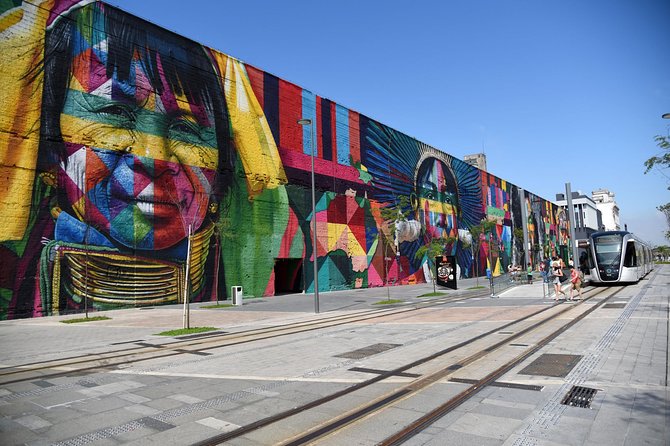
Next comes Painel Etnias, the huge outdoor mural created for Rio’s Olympic period. You have around 10 minutes for photographs. It is a quick stop, but the scale and bold faces make it one of the easiest places on the route to remember.
I would not book this tour expecting an extended art walk through the port district. You get a good sample of the public art and redevelopment, then move on. That suits a short city tour, but art lovers may want extra time in Porto Maravilha later.
Walking through Porto Maravilha and Mauá Square
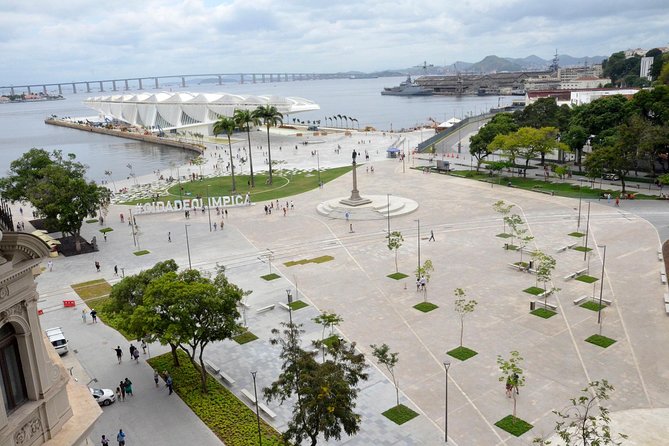
Porto Maravilha is the revitalized port zone, now lined with cultural attractions, open public areas, and art. The tour takes you through the district on foot, giving you a chance to see how the area changed around the 2016 Olympics.
Mauá Square receives a quick five-minute visit. That sounds short, and it is. Think of it as a pause to take in the setting and hear how the square was renewed, not as a full sightseeing stop.
The value here comes from the contrast. In one part of the morning, you are considering Cais do Valongo and the port’s older story. Soon after, you are looking at a modern public space built to draw people back to the waterfront. That change gives the tour a wider frame than a standard old-town walk.
You will also stroll along Orla Conde, the waterfront promenade. The route allows time to relax, look across the water, and see the city from a different angle. The promenade can be pleasant after the van ride, but remember that this is still walking time, not a seated sightseeing cruise.
Ninety minutes inside the Museum of Tomorrow
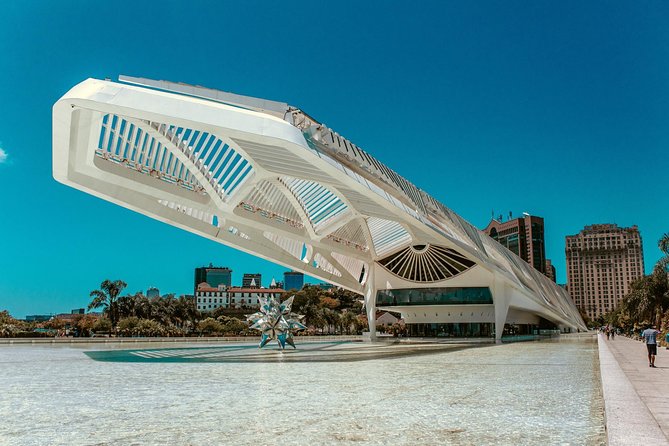
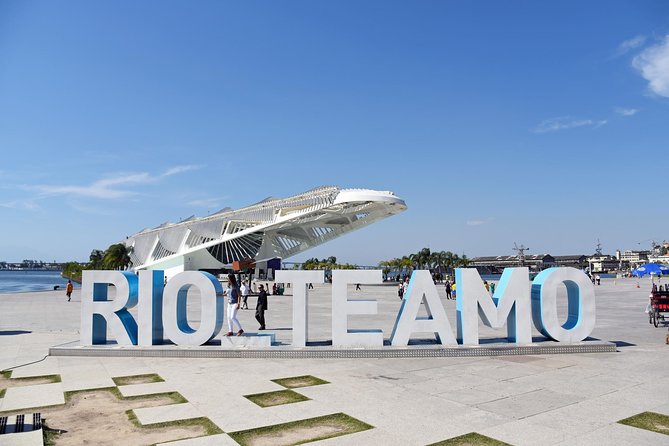
The Museum of Tomorrow is the centerpiece of the tour. You spend about 90 minutes inside, and admission is included in the $72 price.
The museum is an interactive space focused on the future, science, human choices, and the planet. The displays are designed to involve you rather than simply place objects behind glass. That format works well for families, and teenagers in particular may find it more engaging than a traditional museum.
I like the amount of time allowed here. One hour and 30 minutes gives you room to explore without turning the whole tour into a museum visit. A shorter stop would feel rushed, especially since the building itself is part of the appeal.
Still, this is the most subjective part of the morning. Some people find the museum excellent and say it is a must-see in Rio. Others feel the admission is not worth the time or would rather have used the stop for food and shopping. If interactive science museums do not interest you, the tour’s value drops because this is the longest single stop.
The building is also a striking piece of modern Rio. Even if every display does not hold your attention, you get a clear look at the city’s newer cultural identity. That balance between future-facing design and older downtown landmarks is one of the tour’s best ideas.
More Museum Tours in Rio de Janeiro
- Petrópolis Day Trip from Rio de Janeiro including Imperial Museum and Crystal Palace
★ 4.0 · 101 reviews - Museum of Tomorrow, AquaRio & Olympic Boulevard in Rio de Janeiro
★ 4.5 · 69 reviews - Rio: Olympic Boulevard, AquaRio and Museum of Tomorrow Tour
★ 4.5 · 54 reviews - Rio: Olympic Boulevard, Museum of Tomorrow & History Tour
★ 4.1 · 47 reviews
São Bento Monastery and Rio’s church traditions
After the port district, you visit Mosteiro de São Bento for about 15 minutes. This is an internal visit, and admission is included.
The short stop introduces you to one of Rio’s major religious and artistic buildings. Fifteen minutes is enough to enter, look at the interior, and hear the basic story from your guide. It is not enough for a quiet, detailed study of every decorative feature, so keep your expectations in line with the schedule.
The tour also passes Candelária Church, one of Brazil’s best-known churches and an important 19th-century artistic work. You pass by rather than make a full interior visit. That distinction matters if church architecture is your main reason for booking. You get context and a view from outside, but São Bento is the church that receives the planned interior stop.
I appreciate this part of the route because it moves beyond Rio’s postcard image. The city is not only beaches, mountains, and nightlife. These churches show the wealth, faith, craft, and colonial influence that shaped the center.
The Olympic cauldron and the old colonial lanes
At Pira Olímpica, you stop for about one minute to see the cauldron from the 2016 Summer Olympics. This is a photo stop, not a full Olympic venue visit.
One past participant expected to see more of the Olympic site and felt disappointed. That is a useful warning. The tour includes Olympic Boulevard, public art, the cauldron, and the port renewal, but it does not offer a broad tour of Olympic facilities.
From there, the walking portion turns toward older Rio. You pass through the lanes of Travessa do Comércio, where preserved colonial details give the center a different feel from the newer port district.
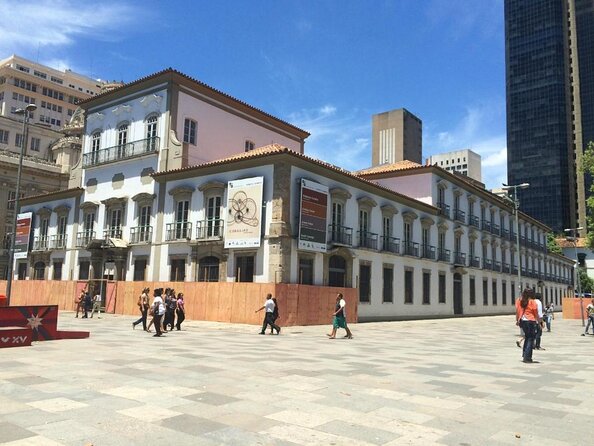
The route also takes in the architectural remains connected with the former Telles de Menezes family residence. This area links Praça XV with Travessa do Comércio, and your guide explains how these surviving structures fit into the city’s growth.
You continue through the historic center, seeing the Master Valentim Fountain, also called the Colonial Fountain. Designed by Valentim da Fonseca e Silva during the colonial period, it gives you a small but concrete example of the public works and artistic traditions of old Rio.
You also pass Paço Imperial, an 18th-century colonial building once used as a residence for governors. It now operates as a cultural center. Again, this is an exterior pass rather than a long interior visit, but the guide’s explanation helps you understand why the building matters.
Praça Quinze and the story of old Rio
Praça Quinze de Novembro receives about 15 minutes with live commentary. This is one of the places where the route’s many threads come together: colonial government, port activity, churches, public squares, and the changing shape of central Rio.
The stop is short, but the surrounding walk gives you more context than a quick van ride would. You can connect the square with the fountain, Paço Imperial, the old lanes, and the wider historic center.
The walking pace is an important part of the experience. One guide, Carlos, was praised for making the route enjoyable and taking regular breaks for different fitness levels. Another guide, Newton, was described as clear and well informed. Alexia, Gabriella, and Sandra also received warm praise for being helpful, friendly, and good at explaining the city.
Those individual guide reports point to a real strength: the quality of the morning depends heavily on who leads it. A good guide can turn brief stops into a coherent story. The multilingual service is offered in English, Spanish, and Portuguese, but the exact guide and language arrangement may vary.
A final stop at Confeitaria Colombo
The tour ends with an internal visit to Confeitaria Colombo, one of Rio’s best-known historic pastry shops. You have about 20 minutes, with a little extra time if you choose to eat.
Food and drinks are not included, so bring money if you want to sample something. The stop works even if you only want to see the grand old interior, but the chance to order a sweet or savory pastry makes it a pleasant finish.
This is one place where the schedule can feel tight. Twenty minutes is enough for a quick bite, not a leisurely meal. If you care more about eating than completing the historic route, you may wish you had longer.
I like ending here because it gives the morning a human scale. After museums, monuments, churches, and public squares, you can sit down with a pastry and think over what you have seen. One direct tip from past experience is worth repeating: wear comfortable shoes, and do not treat this as a mostly van-based excursion.
Pickup, group size, and the real pace of the morning
Roundtrip pickup is offered from main hotels in Copacabana, Ipanema, Leblon, Leme, and Barra da Tijuca. You need to contact the operator and arrange the pickup from your hotel or a nearby location. Check both your booking confirmation and the supplier’s message, since one booking had confusion over whether pickup was at the listed hotel or another hotel.
The air-conditioned van is useful in Rio’s heat, especially before and after the walking sections. The maximum group size is 19, though some departures may be much smaller. One booking had only two couples, which made the route move quickly. Another group felt that collecting people from several hotels took valuable time.
The tour runs rain or shine. That is fine for the van and museum, but the port promenade and old-town streets are less comfortable in heavy rain. Guides have adjusted the plan during wet weather, and Sandra was praised for leading well despite a downpour. Even so, pack light rain protection and wear shoes that can handle several hours on foot.
Children four and younger go free if they do not occupy a seat. Children must be with an adult, and adult pricing applies to other participants. Most people can take part, and service animals are allowed, but the supplied information does not give a detailed accessibility plan for every street or building.
Is $72 a fair price?
I think the price is reasonable if you use the included transport and museum entry. You would otherwise need to arrange a taxi or rideshare to central Rio, coordinate several historic stops, buy Museum of Tomorrow admission, and find your own way back to your hotel.
The value is strongest for first-time visitors, people staying in Copacabana or Ipanema, and anyone with only a few days in Rio. You get a guide, a planned route, two included admissions, and an easy return to your hotel.
The value is weaker if you are already comfortable navigating downtown or want long visits at each site. The tour gives you a broad introduction, not a slow museum day. Food at Confeitaria Colombo costs extra, and the shared pickup can reduce the time available for sightseeing.
The experience has a 4.7 rating from 66 ratings, with 91 percent recommending it. That matches the pattern I see in the feedback: strong marks for guides, the city’s history, the Museum of Tomorrow, and the convenience of hotel transport, with reservations about walking, shared pickups, the short Olympic stop, and the occasional cancellation issue.
Who should book this downtown Rio route?
I would choose it if you want a guided first look at central Rio and prefer not to solve local transport on your own. It is especially useful after arriving in the city, when you may still be learning how the beach districts, port, and historic center fit together.
Families with older children and teenagers may like the Museum of Tomorrow. Couples and friends who enjoy walking, architecture, and food will get a good mix of stops. The route also suits anyone who wants a half-day activity rather than a full-day commitment.
I would think twice if you dislike walking, want a long meal, or expect a detailed Olympic tour. You should also avoid Sunday if Confeitaria Colombo is a priority, since it is closed that day.
Free cancellation is available up to 24 hours before the start time. The tour requires a minimum number of participants, so a cancellation by the operator can result in another date or a full refund. Because one late cancellation caused a serious problem for a person leaving Rio that night, I would not schedule this as your only possible activity on the final few hours of your trip.
My booking verdict
Book this tour if you want history, modern culture, and easy transport in one well-packed morning. Its best feature is the range: Cais do Valongo, Olympic Boulevard, the Museum of Tomorrow, São Bento, colonial Rio, and Confeitaria Colombo all appear in a single route.
Skip it if you want depth at every stop or if your main goal is to explore Olympic facilities. For most first visits, though, $72 is a fair trade for structure, guide commentary, included admissions, and a useful introduction to the downtown areas many beach-based itineraries miss.
FAQ
How long does the tour last?
The tour lasts approximately four hours and starts at 9:00 a.m.
Where does hotel pickup operate?
Roundtrip pickup is available from main hotels in Copacabana, Ipanema, Leblon, Leme, and Barra da Tijuca. You should arrange the exact pickup point when confirming your reservation.
Is transportation included?
Yes. The tour uses a comfortable, air-conditioned van for roundtrip transportation from the listed hotel areas.
What is the maximum group size?
The maximum group size is 19 people.
Is admission to the Museum of Tomorrow included?
Yes. The tour includes an internal, interactive visit lasting about 90 minutes.
Is admission to São Bento Monastery included?
Yes. Admission is included for the internal visit, which lasts about 15 minutes.
Is food at Confeitaria Colombo included?
No. Food and drinks are available for purchase, and the tour provides a little extra time if you choose to eat.
Is Confeitaria Colombo open every day on this tour?
No. Confeitaria Colombo is closed on Sundays.
Can I cancel for a full refund?
Yes, if you cancel at least 24 hours before the experience start time. Cancellations or changes made less than 24 hours before the start time are not refunded or accepted.
Newest reviews from around Rio de Janeiro
- PRIVATE TOUR – Christ the Redeemer and Sugar Loaf★ 4.5 · 9 reviews
- Christ Statue and Sugarloaf Private Tour with a Photographer★ 5.0 · 9 reviews
- Cidade do Samba Behind-the-Scenes Carnival Tour in Rio de Janeiro★ 4.0 · 5 reviews
- Christ the Redeemer Trail x Lage Park★ 5.0 · 7 reviews
- Christ the Redeemer and City Tour★ 5.0 · 20 reviews
- Christ the Redeemer, Selaron Steps and Santa Teresa Half-day Tour★ 4.5 · 15 reviews
- Christ the Redeemer Adventure★ 5.0 · 12 reviews
- Private Tour of Christ the Redeemer in Rio de Janeiro★ 5.0 · 2 reviews
Museums, compared.
Ticket MAI – Museum of Indigenous Art – Curitiba
Read our review →
Combo: Platform Entrance, Abusado Adventure, Ferro Passar Museum
Read our review →
Petrópolis Day Trip from Rio de Janeiro including Imperial Museum and Crystal Palace
Read our review →
Museum of Tomorrow, AquaRio & Olympic Boulevard in Rio de Janeiro
Read our review →
7-Hour Shared Group Santos Tour : Mont Serrat, Coffee Museum and Sightseeing
Read our review →
Olympic Boulevard, AquaRio and Museum of Tomorrow Tour
Read our review →
Olympic Boulevard, Museum of Tomorrow & History Tour
Read our review →Browse the lists this tour appears in