
Reviewed · MUSEUMS
Rio: Olympic Boulevard, Museum of Tomorrow & History Tour
Rio’s past and future meet in four hours. This tour links Valongo Wharf and the Kobra mural with the Museum of Tomorrow, then adds colonial churches, imperial history, and one of Rio’s grandest cafés. I like the unusual route, which shows a side of Rio often missed by beach-focused sightseeing, and I like that the museum ticket and South Zone transfers are included. The main caution is uneven guide and transport handling, so confirm your pickup and stay alert at the end of the tour.
The experience costs $67 and runs for about four hours. That is a fair price if you want several downtown sights explained in English, Spanish, or Portuguese without arranging taxis and museum admission yourself. It is less appealing if you prefer a slow museum visit, a full meal at Confeitaria Colombo, or a tour with no chance of schedule confusion.
In This Review
- Key points to know before booking
- Why this downtown route is worth your time
- Valongo Wharf and the African roots of Rio
- Eduardo Kobra’s five-color Olympic Boulevard mural
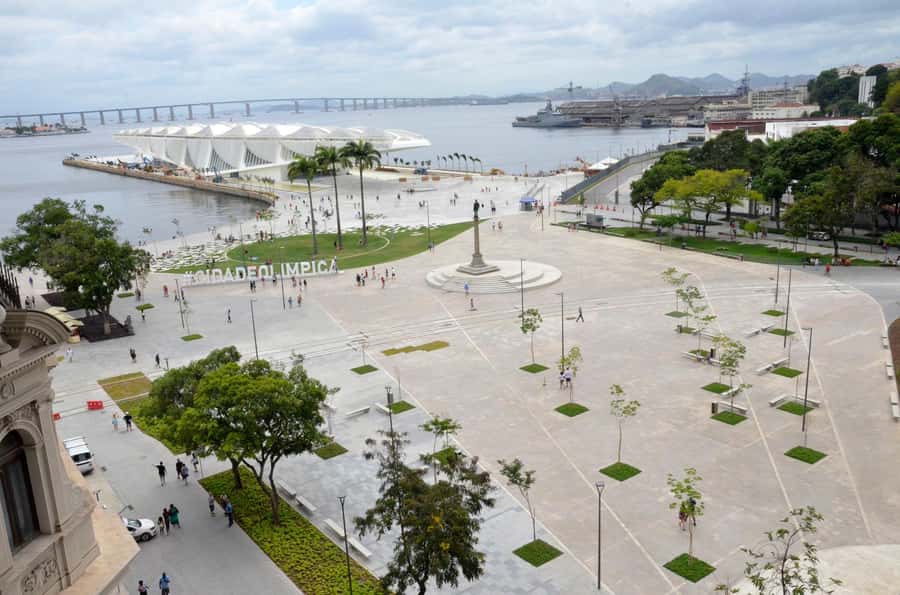
- The Museum of Tomorrow and Rio’s forward-looking side
- Saint Benedict Monastery’s golden surprise
- The Olympic Cauldron and Praça XV
- Confeitaria Colombo: a graceful finish, with one extra cost
- Guides, group size, and the practical weak spot
- Is $67 a fair price for four hours?
- Who should book this Rio history and museum tour?
- Final decision: book it for range, not complete depth
- FAQ
- How long does the tour last?
- Where is hotel pickup available?
- What time does hotel pickup take place?
- Is admission to the Museum of Tomorrow included?
- Is food included at Confeitaria Colombo?
- Can I visit Confeitaria Colombo on a Sunday?
- What languages are offered?
Key points to know before booking
- Valongo Wharf reveals a difficult part of Brazil’s past: You learn about the African influence on Brazil at a UNESCO World Heritage site tied to the history of the transatlantic slave trade.
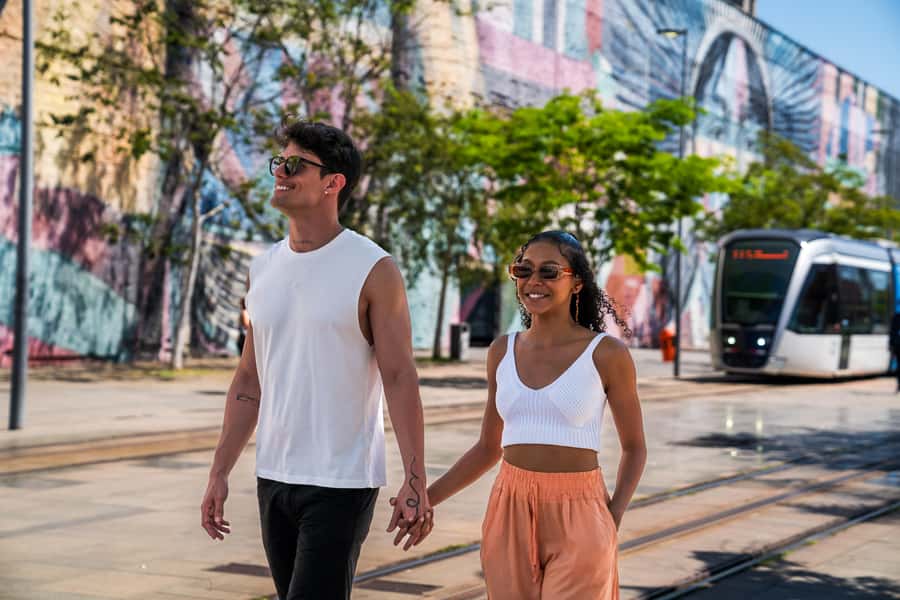
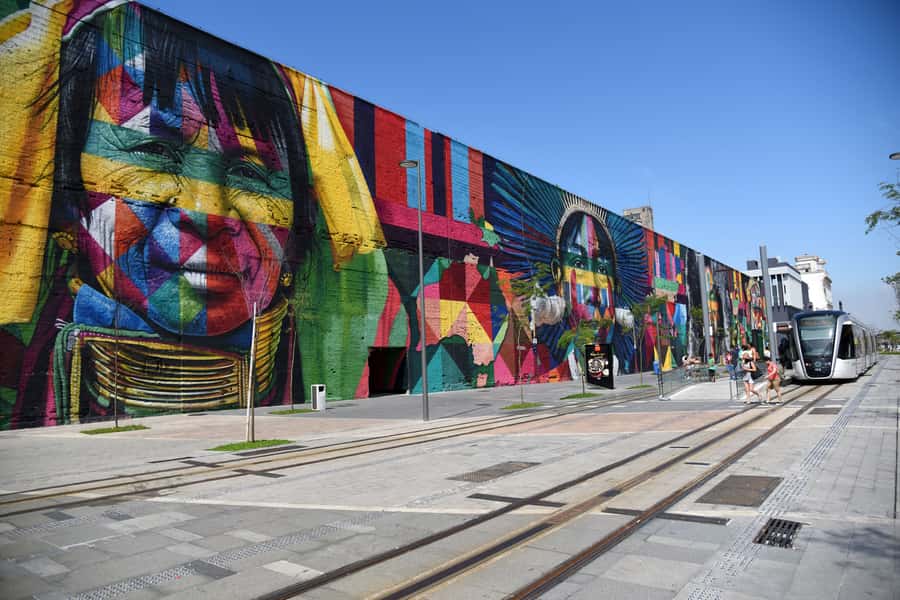
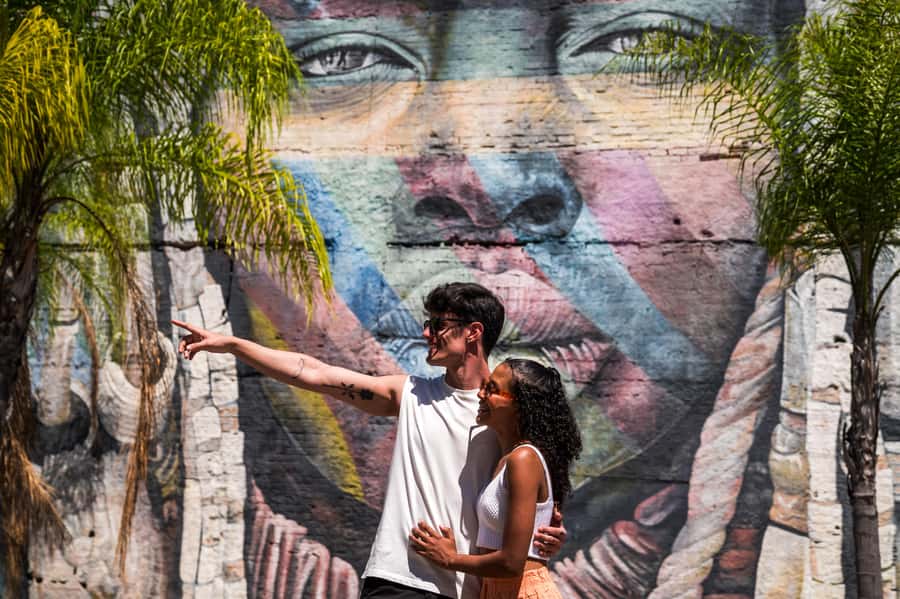
- Eduardo Kobra’s mural makes a superb photo stop: The huge work presents five ethnic groups in bright geometric color along the Olympic Boulevard.
- The Museum of Tomorrow is the tour’s modern centerpiece: Its striking structure houses exhibitions about science, the planet, and possible futures.
- Saint Benedict Monastery delivers a dramatic change of mood: A plain exterior gives way to an ornate Baroque interior filled with gold decoration.
- Confeitaria Colombo is a finale with old-Rio style: Its stained glass, mirrors, and imported tiles create one of the city’s most memorable café interiors.
- The guide matters greatly: Emma, Emanuella, and Pedro received especially warm praise for friendliness and clear history talks, while poor navigation and rushed transfers caused serious problems on some departures.
Why this downtown route is worth your time
Rio is easy to reduce to beaches, mountains, and postcard views. Those are essential, but they do not explain how Brazil became the country you see today. This tour shifts the focus to central Rio, where African heritage, Portuguese colonial power, modern art, science, and the Olympic legacy sit within one compact route.
You begin with hotel pickup in the South Zone, covering Copacabana, Leme, Ipanema, and Leblon. A comfortable air-conditioned van carries up to 19 people, though the vehicle may also serve more than one tour. That detail matters. The transport is convenient, but you should listen carefully to instructions about your own group and return journey.
The tour operates in rain or shine, and you should wear proper walking shoes. There is a moderate amount of walking, with outdoor stops, streets, plazas, and museum time all mixed together. This is not a strenuous hike, but it is not a sit-down bus tour either.
More History Tours in Rio de Janeiro
- Rio de Janeiro Historical Center Walking Tour
★ 4.5 · 336 reviews - Private Walking and Cultural Tour Rocinha-Rio de Janeiro
★ 5.0 · 239 reviews - Discover Rio Little Africa: A Cultural and Historical Journey
★ 5.0 · 238 reviews
Valongo Wharf and the African roots of Rio
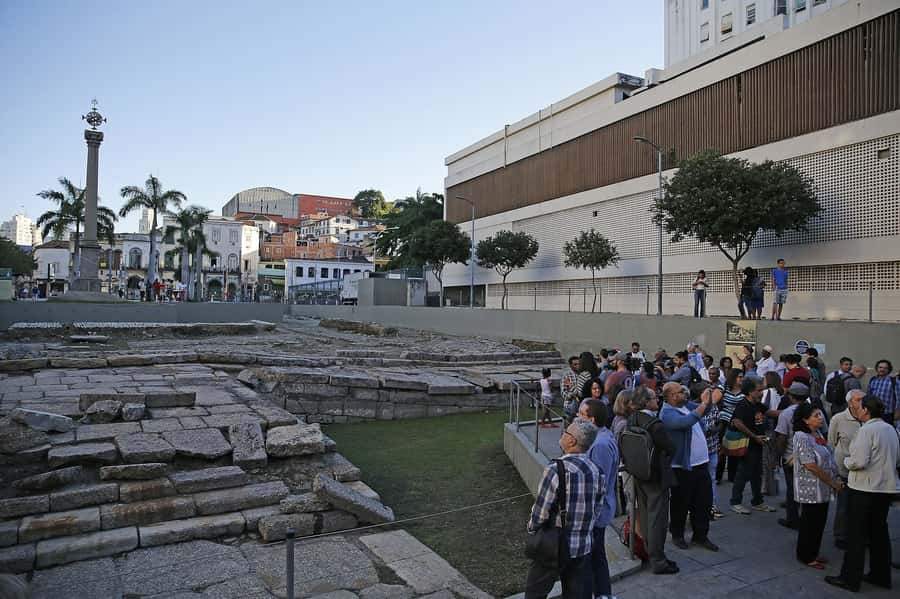
Valongo Wharf is the most serious stop on the route. It is not simply another old waterfront site. The area is connected to the arrival and sale of enslaved Africans, making it an important place for understanding the African influence on Brazilian culture and society.
A guide can make this stop far more meaningful than a quick photograph. You will hear how the waterfront fits into Brazil’s past and why the site received UNESCO World Heritage status. The subject is painful, but skipping it would leave a major gap in any attempt to understand Rio.
Give yourself time to listen here. The site itself may appear modest compared with Rio’s grand churches and modern architecture. Its importance comes from what happened at this place and from the way the guide connects it to Brazil’s wider story.
This is also where guide quality matters most. Pedro was praised for explaining Brazilian history clearly, while Emanuella was singled out for discussing the country’s past and architecture in detail. A strong guide turns a bare archaeological site into a moment of real understanding.
Eduardo Kobra’s five-color Olympic Boulevard mural
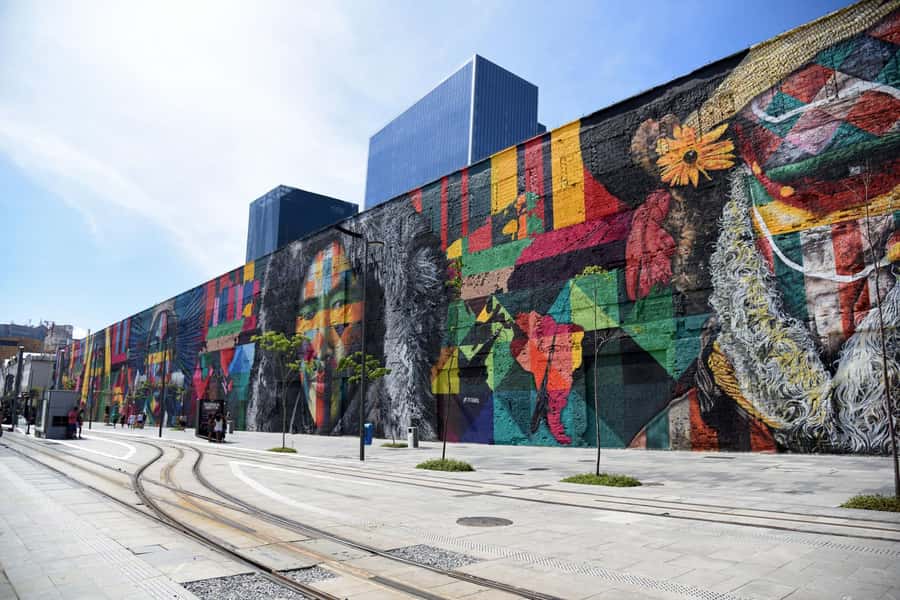
From Valongo Wharf, the route moves toward Eduardo Kobra’s enormous mural. The work portrays five ethnic groups against a colorful geometric background, and its size makes it hard to appreciate in a single glance.
The mural is one of the tour’s most cheerful stops. You will have time for photographs, but do not treat it as only a backdrop. The work connects public art, Rio’s Olympic redevelopment, and a visual celebration of human variety.
The Olympic Boulevard walk gives the outing a useful change of pace. After the sober history of Valongo Wharf, the mural feels bright and open. You move through a public space shaped by the 2016 Games, with the art providing a clear reason to slow down.
If photography matters to you, this stop is one of the strongest parts of the day. The geometric colors read well in pictures, and the huge scale gives you several ways to frame the scene. The guide can also add context that you would miss by seeing the mural alone.
The Museum of Tomorrow and Rio’s forward-looking side
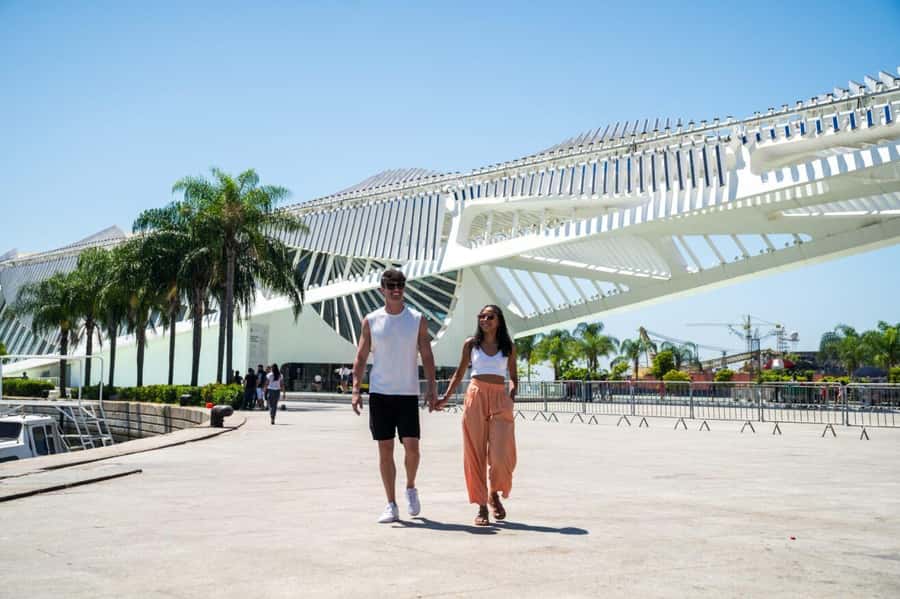
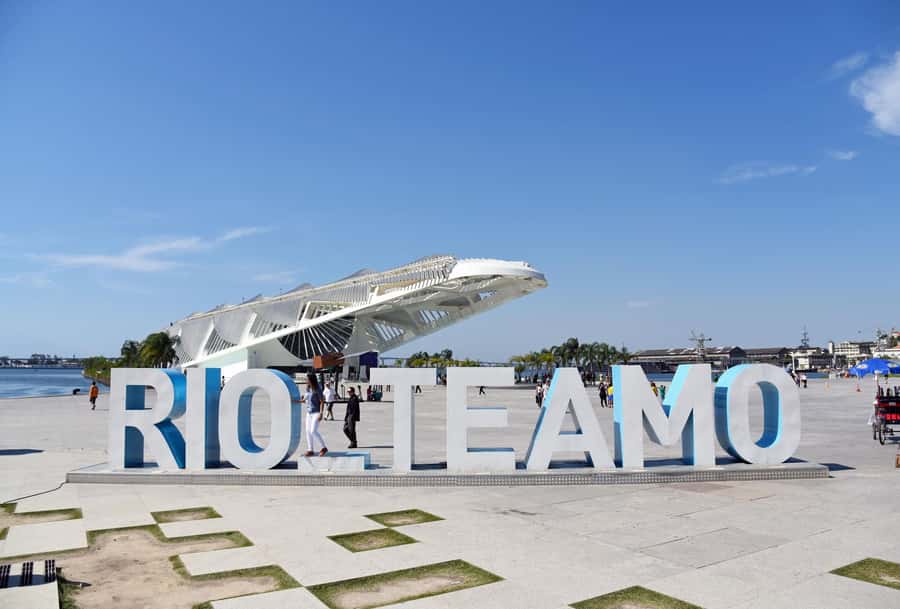
The Museum of Tomorrow is the tour’s major ticketed attraction. Its futuristic building is designed to make you think about science, the planet, and the choices that may shape human life in the future.
The museum is not a traditional collection of old objects. It focuses on questions and possibilities, so it works best if you enjoy interactive, idea-driven exhibits. The building itself is part of the experience, with a modern form that contrasts sharply with Rio’s churches and imperial buildings later in the route.
Admission is included in the $67 price, which improves the value. You are not paying for a downtown walk and then adding a museum ticket on top. The museum visit also gives you a chance to explore at your own pace, an advantage noted by Elliot, who especially liked having flexibility inside the building.
Still, four hours must cover several stops. Your museum time may feel limited if you read every panel or want to see every section carefully. If the Museum of Tomorrow is your main reason for booking, check the start time and ask how much time is planned inside. If you want a broad introduction to downtown Rio, the balance is more suitable.
More Museum Tours in Rio de Janeiro
- Petrópolis Day Trip from Rio de Janeiro including Imperial Museum and Crystal Palace
★ 4.0 · 101 reviews - Museum of Tomorrow, AquaRio & Olympic Boulevard in Rio de Janeiro
★ 4.5 · 69 reviews - Olympic Boulevard, Museum of Tomorrow & Historical Rio
★ 4.5 · 66 reviews - Rio: Olympic Boulevard, AquaRio and Museum of Tomorrow Tour
★ 4.5 · 54 reviews
Saint Benedict Monastery’s golden surprise
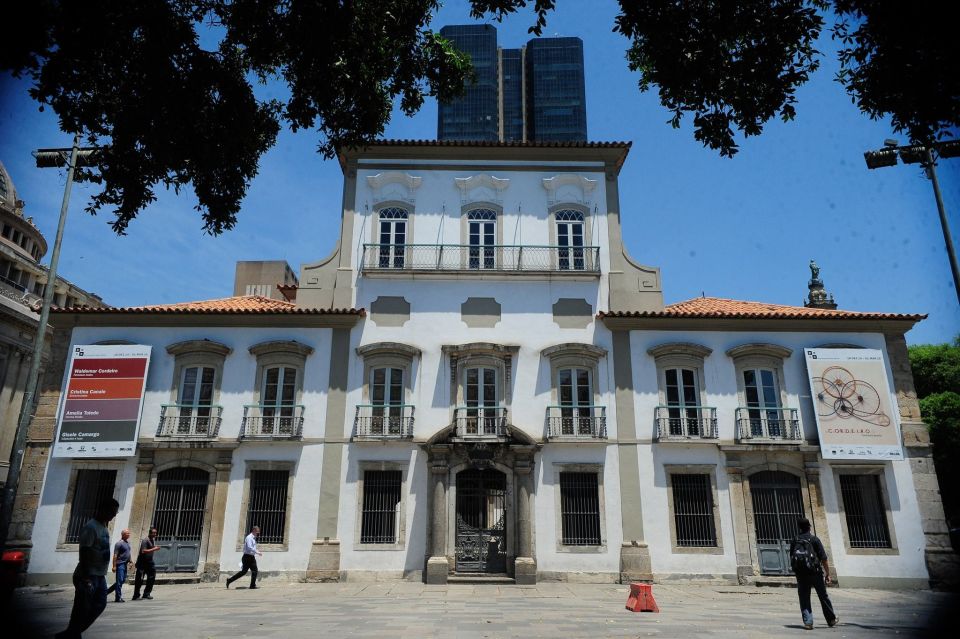
The visit to the Monastery of Saint Benedict creates the route’s most striking visual contrast. The façade is simple, but the interior is covered with golden Baroque decoration.
That change is the point. You approach a restrained exterior and then enter a much more ornate space. It shows how religious buildings could express wealth and power through craftsmanship, decoration, and controlled theatrical effect.
This stop also slows the tour after the open Olympic Boulevard and modern museum. You are no longer looking at public art or futuristic design. Instead, you are considering the religious and colonial forces that helped shape Rio.
The visit is brief within a four-hour schedule, so listen closely while the guide explains what you are seeing. Even if you are not devoted to church architecture, the contrast between outside and inside is memorable.
The Olympic Cauldron and Praça XV
Before reaching the older streets of central Rio, you will see the Olympic Cauldron created by American artist Anthony Howe. Its reflective, kinetic sphere structure recalls the 2016 Games and gives the route another link to the Olympic Boulevard.
This is a short stop, but it helps tie the modern section together. The Kobra mural represents the public art side of the Olympics, while the cauldron recalls the ceremony and spectacle. Together, they show how Rio reused its central waterfront as a place for culture and public gathering.
At Praça XV, the story turns toward imperial Brazil. You will see one of the former headquarters of the Brazilian empire and hear about important events connected with the square. This part of the route is useful because it places political history in a real urban setting rather than presenting it as a list of dates.
The plaza also provides a natural transition to Rio’s older streets. You can expect more architectural context here, especially if you have a guide who enjoys explaining buildings and national history. Pedro’s strong focus on Brazil’s past would suit this section particularly well.
Confeitaria Colombo: a graceful finish, with one extra cost
Confeitaria Colombo is the final stop and one of the tour’s most attractive interiors. Huge stained-glass panels, mirrors, and tiles imported from France, Portugal, and Belgium give the café its art nouveau character.
The setting recalls the café’s early twentieth-century importance, when it was one of Rio’s prestigious meeting places. You do not need to be a food specialist to appreciate the room. The architecture is the main event.
You can buy a traditional Brazilian snack or dessert here. Possibilities include coxinha de frango, a savory chicken snack, and brigadeiro, a sweet chocolate confection. Food and drinks are not included, so bring room in your budget if you want to sit down and sample something.
Confeitaria Colombo is closed on Sundays. That is not a small detail. If the café is important to you, choose another day. The tour may still operate on Sunday, but this final stop will not offer the same experience.
Guides, group size, and the practical weak spot
The maximum group size is 19 people, small enough for a guide to speak to the group without using a microphone in every setting. It is not a private tour, though, and the experience will feel more personal or more hurried depending on the guide and the size of the departure.
The strongest guide feedback centers on friendliness and history. Emma was praised for being warm and flexible, Emanuella for explaining Brazilian history and buildings, and Pedro for his dedication and informative commentary. Those qualities matter on a route where the meaning of each stop is more important than simply checking it off.
There have also been serious service problems. One departure involved a guide losing the route between stops and then rushing the group. Another ended with the vehicle leaving before two people were properly on board, followed by an hour-long wait for an Uber arranged by the company.
You can reduce the risk by confirming the pickup time directly with the provider, asking which vehicle and group you belong to, and checking the return instructions before leaving the final stop. Do not assume that everyone in the van is on the same tour. The vehicle may carry people booked on different excursions.
The pickup window for South Zone hotels is generally between 8:10 and 8:55 AM, but your exact time must be confirmed. If you stay in a hostel or bed-and-breakfast, you will be assigned a nearby hotel for pickup and drop-off. This is convenient, but it means you may need to walk to that hotel before the tour begins.
Is $67 a fair price for four hours?
For $67, you receive hotel pickup and drop-off in the South Zone, an air-conditioned van, a professional guide, taxes and fees, and admission to the Museum of Tomorrow. You also get a carefully connected route through several downtown areas that would take more planning to arrange alone.
The price is strongest for first-time visitors who want orientation. You see modern architecture, public art, African-Brazilian history, imperial Rio, Baroque decoration, and a historic café in one half-day. The guide’s commentary adds value that a taxi-based sightseeing plan would not provide.
The value is weaker if you already know downtown Rio and want long visits at only one or two sites. Food costs extra, Confeitaria Colombo is not available on Sundays, and the museum time may not satisfy someone who wants a full afternoon there.
The cancellation terms are traveler-friendly: you can cancel up to 24 hours before departure for a full refund, and you can reserve without paying immediately. The tour needs a minimum number of participants, so a cancellation for low demand is possible, with another date or a full refund offered.
Who should book this Rio history and museum tour?
I would recommend it to you if you are staying in Copacabana, Ipanema, Leblon, or Leme and want an efficient introduction to central Rio. It suits adults, families with older children, and anyone who wants more than beaches and scenic overlooks.
It is especially useful for people interested in architecture, public art, Brazilian history, and the social forces that shaped the country. The route has enough variety to keep a four-hour outing moving.
Children under five go free if they do not occupy a seat, but children must be accompanied by an adult. Unaccompanied minors are not allowed. Families should also consider the walking and the serious subject matter at Valongo Wharf.
I would hesitate to recommend it if you dislike group tours, need a guaranteed leisurely museum visit, or expect flawless door-to-door handling. The guide can make the tour excellent, but the mixed reports about navigation and the final transfer mean you should stay organized.
Final decision: book it for range, not complete depth
Book this tour if you want to connect many sides of Rio in one morning: Valongo Wharf’s difficult past, Kobra’s public art, the Museum of Tomorrow’s questions about the future, Saint Benedict’s gold, imperial Praça XV, and Confeitaria Colombo’s old-world café style.
Skip it if you want to spend most of the day at the museum or prefer exploring downtown independently. For the right visitor, $67 is a sensible way to cover a lot of ground, especially with admission and South Zone transport included. Just confirm pickup, wear comfortable shoes, choose a non-Sunday date for Colombo, and keep track of your group when the tour ends.
FAQ
How long does the tour last?
The tour lasts four hours, including transportation, guided walking, sightseeing stops, and the Museum of Tomorrow visit.
Where is hotel pickup available?
Pickup and drop-off are available from hotels in Copacabana, Ipanema, Leblon, and Leme. If you stay in a hostel or bed-and-breakfast, you will be directed to the nearest hotel pickup point.
What time does hotel pickup take place?
Pickup generally takes place between 8:10 AM and 8:55 AM. You should contact the provider to confirm the exact time for your hotel.
Is admission to the Museum of Tomorrow included?
Yes. The Museum of Tomorrow ticket is included in the tour price.
Is food included at Confeitaria Colombo?
No. Food and drinks are available for purchase at the café but are not included in the tour price.
Can I visit Confeitaria Colombo on a Sunday?
No. Confeitaria Colombo is closed on Sundays, so the café stop will not be available on that day.
What languages are offered?
Live tour commentary is available in English, Spanish, and Portuguese.
Newest reviews from around Rio De Janeiro
- PRIVATE TOUR – Christ the Redeemer and Sugar Loaf★ 4.5 · 9 reviews
- Christ Statue and Sugarloaf Private Tour with a Photographer★ 5.0 · 9 reviews
- Cidade do Samba Behind-the-Scenes Carnival Tour in Rio de Janeiro★ 4.0 · 5 reviews
- Christ the Redeemer Trail x Lage Park★ 5.0 · 7 reviews
- Christ the Redeemer and City Tour★ 5.0 · 20 reviews
- Christ the Redeemer, Selaron Steps and Santa Teresa Half-day Tour★ 4.5 · 15 reviews
- Christ the Redeemer Adventure★ 5.0 · 12 reviews
- Private Tour of Christ the Redeemer in Rio de Janeiro★ 5.0 · 2 reviews
Museums, compared.
Ticket MAI – Museum of Indigenous Art – Curitiba
Read our review →
Combo: Platform Entrance, Abusado Adventure, Ferro Passar Museum
Read our review →
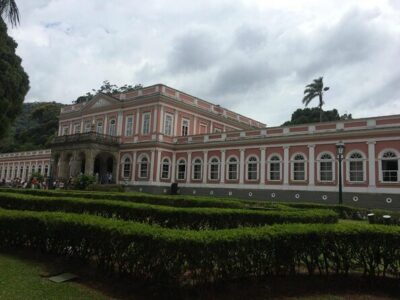
Petrópolis Day Trip from Rio de Janeiro including Imperial Museum and Crystal Palace
Read our review →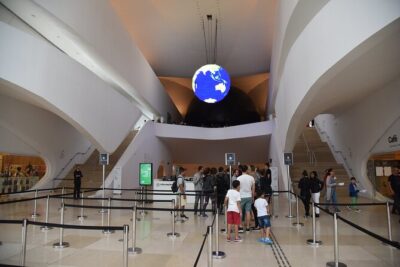
Museum of Tomorrow, AquaRio & Olympic Boulevard in Rio de Janeiro
Read our review →
7-Hour Shared Group Santos Tour : Mont Serrat, Coffee Museum and Sightseeing
Read our review →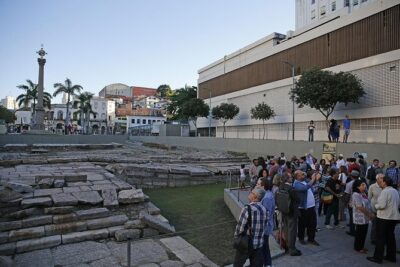
Olympic Boulevard, Museum of Tomorrow & Historical Rio
Read our review →
Olympic Boulevard, AquaRio and Museum of Tomorrow Tour
Read our review →Browse the lists this tour appears in