
Reviewed · HISTORICAL TOURS
Historical African oriented City Tour
Salvador’s African story is everywhere. This private, five to six-hour tour links a historic Black church, Afro-Brazilian religion, Orixá art, and the colonial streets of Pelourinho in one well-paced day. I especially like the African focus and the chance to learn how Salvador’s past connects with its present. I also like having an air-conditioned vehicle, lunch, and a private guide included. The main caution is that the Afro Brasileiro Museum may close with little warning because it is controlled by the Federal University of Bahia.
You pay $190 per person, so this is not a budget sightseeing ride. Still, the private format, transportation, guide, admissions, and lunch make the price easier to justify, especially if you want context rather than a quick look at Salvador’s prettiest buildings. Guides including Josuel, Kayuri, Andres, and Vagner have been praised for their warmth, energy, and ability to keep children interested.
In This Review
- Key points to know before booking
- Why this Salvador tour feels different
- Starting with the Church of Our Lady of the Rosary of the Black People
- The Afro Brasileiro Museum and a note about opening dates
- Orixá sculptures at Dique de Tororó
- Taking the Lacerda Elevator into Salvador’s upper city
- Two hours through Pelourinho
- What the guides add to the experience
- What the $190 price includes
- Who should book this tour
- Booking, timing, and practical details
- Should you book the Historical African-Oriented City Tour?
- FAQ
- Where does the Historical African-Oriented City Tour take place?
- What time does the tour start?
- How long does the tour last?
- Is this a private tour?
- What is included in the price?
- Are alcoholic beverages included?
- Is the Afro Brasileiro Museum always open during the tour?
- Is lunch included?
- Are baby seats available?
- Can I cancel for a full refund?
Key points to know before booking
- The tour centers African and Afro-Brazilian heritage, not just Salvador’s colonial architecture.
- Pelourinho receives about two hours, making it the main walking portion of the day.
- Josuel, Kayuri, Andres, and Vagner have each been praised for clear explanations, friendliness, and personal attention.
- Lunch is included, but alcoholic beverages cost extra.
- The private format lets your group set the pace, which helps families and those who prefer a calmer visit.
- Museum access can change, particularly around holidays, so ask about opening plans before your date.
Why this Salvador tour feels different
Many city tours in Salvador focus on churches, colorful facades, and photo stops. This one uses those places to explain the city’s African roots. That difference matters. You are not simply ticking off landmarks. You are being asked to look at who built them, which traditions survived, and how African culture shaped Bahia.
The tour also connects several parts of Salvador that can feel separate if you visit on your own. You begin with a historic church in the lower streets, pause at an Afro-Brazilian museum, see the Orixá sculptures at Dique de Tororó, then move to the Lacerda Elevator and the upper city. From there, you walk through Pelourinho.
I like that progression. It gives you a broad picture before asking you to spend two hours on foot. The vehicle handles the longer transfers, while the walking section is saved for the district where close-up views and street-level stories matter most.
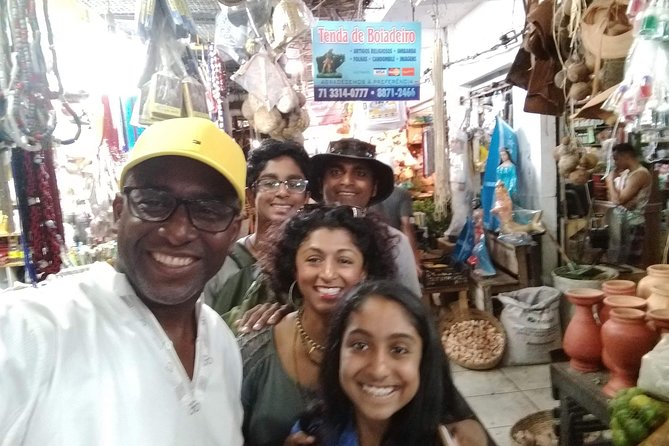
The tour is private, so only your group takes part. That gives the guide room to answer questions, adjust the walking pace, and explain things in a way that suits your interests. Josuel has been praised for connecting Salvador’s history with its current reality. Vagner has been praised for his calm pace and strong understanding of Afro-Brazilian religions. For a subject that can be reduced to a few shallow facts, that personal attention is valuable.
More City Tours in Salvador & Bahia
- Salvador City Tour – Discover Brazil’s First Capital En, It, Es
★ 5.0 · 217 reviews - Private City Tour in Salvador
★ 5.0 · 110 reviews - Full-Day Historic Private City Tour of Salvador with Lunch
★ 5.0 · 50 reviews
Starting with the Church of Our Lady of the Rosary of the Black People
The first stop is the Church of Our Lady of the Rosary of the Black People, with about 30 minutes inside. This church is important because it was built by enslaved people and for Black worshippers. That fact gives the tour a serious beginning.
You can expect the guide to explain why the church matters within Salvador’s African and Afro-Brazilian story. The visit is short, but it sets up ideas that return throughout the day: religious identity, forced labor, community, and the ways African traditions continued under harsh conditions.
The church is not treated as a pretty stop detached from history. Its meaning comes from the people who created and used it. I find that especially useful for first-time visitors, since the building becomes more than another colonial-era sight.
Thirty minutes is enough for an introduction, but not a long architectural study. If you want extended time inside the church, you may find this stop brief. The benefit is that the tour does not spend the whole morning in one place. You get the essential context and then move on to the wider story.
The Afro Brasileiro Museum and a note about opening dates
The next stop is the Afro Brasileiro Museum, also planned for about 30 minutes. The focus here is the history of Afro-Brazilian religion. That makes it a natural follow-up to the church, since you have already begun thinking about religious life, African heritage, and the survival of cultural traditions in Bahia.
This is a brief museum visit rather than an all-day museum program. You should expect a focused explanation from the guide, with enough time to connect what you see to Salvador’s wider culture. If religious history interests you, this may be one of the most useful stops on the route.
There is one practical concern. The museum is controlled by the Federal University of Bahia, and its opening schedule may not always be clear ahead of time. A holiday closure has caused disappointment before, even though the rest of the tour remained worthwhile.
I would contact the operator before booking or shortly before the tour to ask whether the museum is expected to be open. Do not assume that a booking automatically guarantees entry on every date. The tour provider has acknowledged this problem and has worked to give better advance notice.
Orixá sculptures at Dique de Tororó
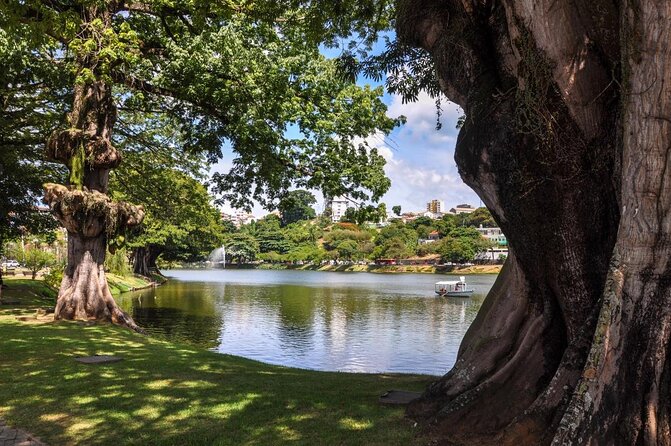
At Dique de Tororó, you get about 20 minutes for photographs and an explanation of the Orixá sculptures created by Bahian artist Tati Moreno. This is a quick stop, but it adds a strong visual element to the day.
The sculptures give you a way to see Afro-Brazilian religious ideas in a public setting. Rather than discussing the subject only inside a church or museum, the guide points out large artistic figures beside the water and explains their place in Bahia’s cultural life.
Do not expect a long walk around the site. The stop is designed for photos and interpretation. That short format works well after the museum because it changes the setting and keeps the schedule moving.
If you enjoy visual storytelling, this may be one of the most memorable pauses. The artwork gives children and first-time visitors something immediate to look at while the guide supplies the meaning behind it.
More History Tours in Salvador & Bahia
- Full City Tour Historic and Panoramic
★ 5.0 · 24 reviews - Salvador Historic Walking Tour – Pelourinho
★ 4.8 · 62 reviews - Historic City Tour in Salvador
★ 3.6 · 17 reviews - From Salvador: Quilombo Heritage Daytrip with Lunch
★ 3.4 · 3 reviews
Taking the Lacerda Elevator into Salvador’s upper city
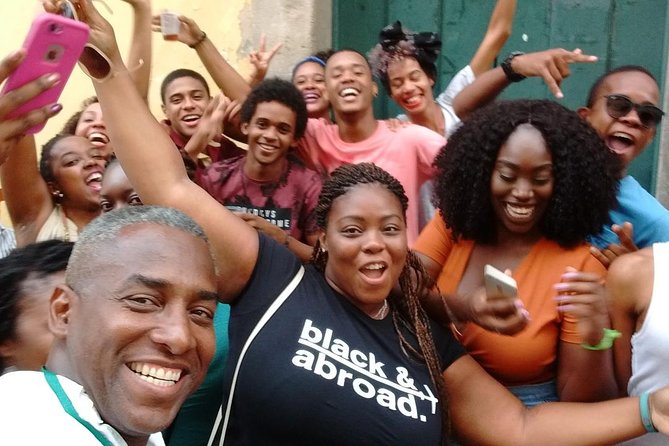
The Lacerda Elevator is the starting point for the walking portion. The listed visit is about 15 minutes, so the elevator functions mainly as a transition between Salvador’s lower and upper cities.
This is a useful design choice. You do not have to spend your energy walking every connecting route before reaching Pelourinho. Instead, the vehicle-based portion brings you to the elevator, and the tour then shifts into a slower, street-level visit.
The change in elevation is also part of Salvador’s character. The city is often understood through its upper and lower sections, and the guide can explain how those areas relate to one another. One guide, Josuel, was specifically praised for explaining the history of both cities and linking it to modern Salvador.
The elevator stop is short, so it is not meant to be a full architectural visit. Think of it as the doorway to the main walking experience.
Two hours through Pelourinho
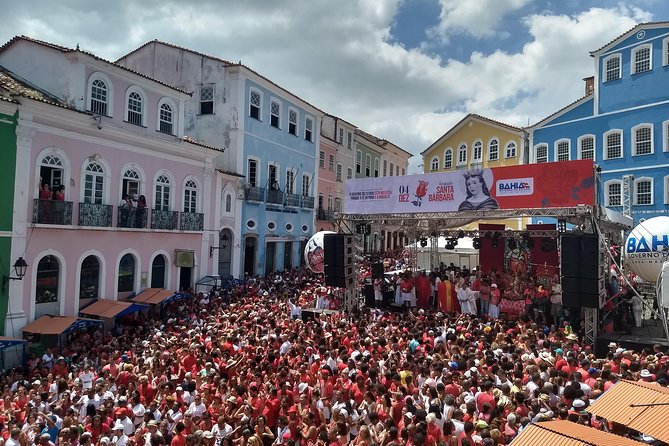
Pelourinho receives about two hours, making it the heart of the tour. You walk through Salvador’s colonial district while the guide explains the buildings, streets, and African connections that give the area its meaning.
This is where the private format helps most. A group tour can rush through a district like Pelourinho, stopping only for the standard photo. With your own guide, you can ask why a place matters, pause when a story catches your attention, and move at a pace that works for your group.
The guide’s role is especially important here. The streets are visually appealing, but the real value comes from understanding what you are seeing. Andres has been praised for bringing places to life with vivid descriptions and for seeming to know people throughout Salvador. Josuel has been praised for keeping children involved while explaining the city’s African heritage.
You should wear comfortable shoes. Two hours of walking is not extreme, but the tour’s earlier stops and transfers mean you will have already been out for part of the morning. The schedule is described as calm and well paced, yet your own comfort still depends on your group’s energy and mobility.
Pelourinho is also where you may receive practical suggestions about restaurants and local events. One group was taken to a local restaurant near the end of the tour to try Bahian food. Lunch is included, but the exact restaurant and meal details are not specified, so ask the operator if you have dietary concerns or want to know what is planned.
What the guides add to the experience
The strongest part of this tour is the guide. The stops matter, but the historical links between them are what turn a half-day outing into a useful introduction to Salvador.
Josuel appears repeatedly in the strongest praise. He has been described as energetic, generous with his time, and open to questions, including questions that wander beyond the standard route. He also helped one family’s children stay engaged during the history explanations.
Kayuri has been praised alongside Josuel for creating an outstanding experience. Andres has been praised for vivid storytelling and a strong command of Salvador’s sights. Vagner has been described as polite, friendly, punctual, and particularly strong when discussing Afro-Brazilian religions.
You may not be able to select a specific guide, but you can ask whether Josuel, Kayuri, Andres, or Vagner is available. That request cannot be guaranteed from the information provided, but it is worth asking if the quality of interpretation is your main reason for booking.
The tour has a 4.9 rating from 52 reviews, with 98 percent of customers recommending it. Those numbers suggest a reliable experience, but I would still judge it by your interests. If you want a light overview with little historical discussion, the subject matter may feel more serious than expected. If you want to understand Salvador beyond its appearance, the guide-led approach is a major advantage.
What the $190 price includes
At $190 per person, the cost is easiest to understand as a private guided day rather than a simple collection of admission tickets. You receive an air-conditioned vehicle, lunch, and admission to the listed stops. The tour lasts about five to six hours, and only your group participates.
That can be good value for a couple, family, or small group that wants comfort and direct attention. The vehicle matters in Salvador because the itinerary links different parts of the city. You avoid arranging separate transport between the church, museum, Dique de Tororó, and the Lacerda Elevator.
Lunch also saves you from losing time choosing a restaurant during a tightly scheduled half-day. One group specifically valued the chance to try local Bahian food. Alcoholic drinks are not included, so budget extra if you plan to order them.
The price is less attractive if you are traveling alone or mainly want to see Pelourinho. In that case, a less expensive group walk may suit you better. But if you care about African and Afro-Brazilian history, want a private vehicle, and value a guide who answers questions, the added cost has a clear purpose.
Who should book this tour
I would recommend this experience to you if Salvador’s African heritage is a central reason for your visit. It is also a good choice for families, since the private setting lets the guide adjust explanations and keep younger participants involved.
It suits people who want both driving and walking. You see several areas in one morning without spending the entire time on foot, then receive a substantial two-hour introduction to Pelourinho.
You may want another type of tour if you prefer a broad list of attractions with little discussion of religion, slavery, and cultural identity. This is not a shallow photo circuit. Its purpose is to explain Salvador through an African-oriented lens.
The tour can also work well early in your stay. Guides have offered restaurant and event suggestions, and their explanations may help you understand later visits to churches, museums, or cultural sites.
Booking, timing, and practical details
The start time is 9:00 a.m., and the full experience lasts approximately five to six hours. It is commonly reserved about 15 days in advance, so I would not leave it until the last minute if your Salvador schedule is fixed.
Confirmation is provided at booking. Service animals are allowed, and most people can participate. Baby seats are available only when requested in advance, so families with infants should make that request before the tour date.
Free cancellation is available until 24 hours before the local start time for a full refund. Cancellations or changes made inside that 24-hour window are not accepted for a refund.
The museum is the one detail I would verify most carefully. Ask about holiday closures and the current opening plan, especially if that stop is a major reason you are booking. Even if the museum is unavailable, the church, Orixá sculptures, elevator, Pelourinho, lunch, and guide commentary still form a substantial day.
Should you book the Historical African-Oriented City Tour?
Book it if you want Salvador explained, not simply photographed. The private vehicle, included lunch, two hours in Pelourinho, and strong guides such as Josuel and Vagner make this a useful first look at the city’s African and Afro-Brazilian identity.
I would hesitate only if $190 per person stretches your budget, you dislike historical or religious discussion, or the museum is essential and cannot confirm its opening. For most people interested in Bahia’s culture, the tour offers a thoughtful route, a comfortable pace, and the kind of personal explanation that is difficult to get from a guidebook alone.
FAQ
Where does the Historical African-Oriented City Tour take place?
The tour takes place in Salvador da Bahia, Brazil. It includes stops in areas connected with the upper and lower cities, as well as Pelourinho.
What time does the tour start?
The tour starts at 9:00 a.m.
How long does the tour last?
The experience lasts approximately five to six hours.
Is this a private tour?
Yes. Only your group participates in the activity.
What is included in the price?
The price includes an air-conditioned vehicle, lunch, and admission to the listed stops.
Are alcoholic beverages included?
No. Alcoholic beverages are not included.
Is the Afro Brasileiro Museum always open during the tour?
The museum’s opening schedule can change because it is controlled by the Federal University of Bahia. You should ask about its status before your tour, especially around holidays.
Is lunch included?
Yes. Lunch is included in the tour price.
Are baby seats available?
Baby seats are available only if requested in advance.
Can I cancel for a full refund?
Yes. You can cancel at least 24 hours before the local start time for a full refund. Changes or cancellations made less than 24 hours before the start time are not accepted for a refund.
Newest reviews from around Salvador da Bahia
- Salvador Walking Tour Through Pelourinho★ 5.0 · 35 reviews
- Paradise Morro de São Paulo Island Tour from Salvador★ 4.0 · 29 reviews
- Full City Tour Historic and Panoramic★ 5.0 · 24 reviews
- Full-Day Historic Private City Tour of Salvador with Lunch★ 5.0 · 50 reviews
- Private Airport Transfer to Salvador★ 5.0 · 30 reviews
- Private Transfer Salvador Airport★ 5.0 · 32 reviews
- Private Walking Tour of Salvador Pelourinho★ 5.0 · 70 reviews
- 4h Cooking Class in Salvador with 9 Recipes & Bottomless Drinks★ 5.0 · 73 reviews
Historical Tours, compared.
Private Walking and Cultural Tour Rocinha-Rio de Janeiro
Read our review →
Discover Rio Little Africa: A Cultural and Historical Journey
Read our review →

Scenic Train ride to historical cities of Morretes and Antonina
Read our review →
Browse the lists this tour appears in