
Reviewed · SAMBA & CARNIVAL SHOWS
Rio: Carnival Backstage Tour at Samba City with Cocktail
Carnival begins long before the drums. This lively backstage visit takes you into the City of Samba, where Rio’s parade costumes, floats, props, and grand plans take shape. I like the close look at the work behind the spectacle, and I like that the tour turns you from a spectator into a participant with costume try-ons and a short samba class. The main drawback is practical: the warehouse complex can be hard to find, especially if you arrive without following the meeting instructions closely.
This is a fun, compact way to prepare for a night at the Sambadrome. Guides such as Sol, Ton, Lea, and Jaquel have been praised for their warmth and energy, though the quality of the presentation can vary slightly. At about $27 per person, the tour offers strong value, but it is best suited to people who enjoy an interactive introduction rather than a quiet museum visit.
In This Review
- Key points to know before booking
- Starting at the City of Samba
- Why Grande Rio makes this more than a costume display
- The Carnival story behind the spectacle
- Getting close to floats, props, and costume design
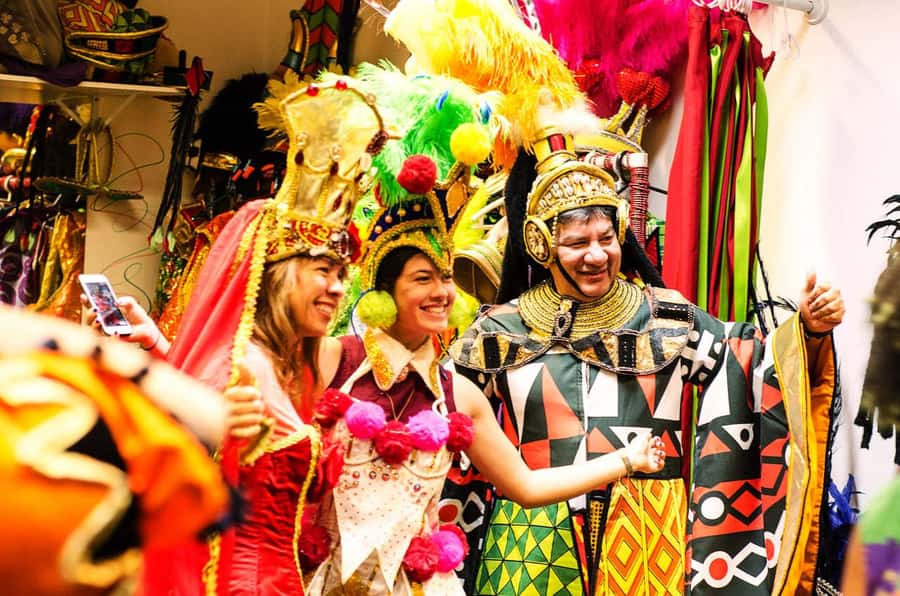
- Trying on the parade costumes
- Learning samba steps with a professional dancer
- Ending with a caipirinha
- How long the visit takes and what $27 buys you
- Who will enjoy this Carnival experience most
- Practical advice for a smoother visit
- Should you book the Samba City tour?
- FAQ
- Where does the Rio Carnival backstage tour meet?
- How do I find the tour staff?
- How can I reach the City of Samba by public transportation?
- Is transportation included?
- How long does the tour last?
- What languages are available?
- Can I try on Carnival costumes?
- Is photography allowed inside?
- Is a drink included?
Key points to know before booking
- You enter Grande Rio’s Carnival workshop: See where a recent Carnival champion prepares floats, costumes, and parade pieces.
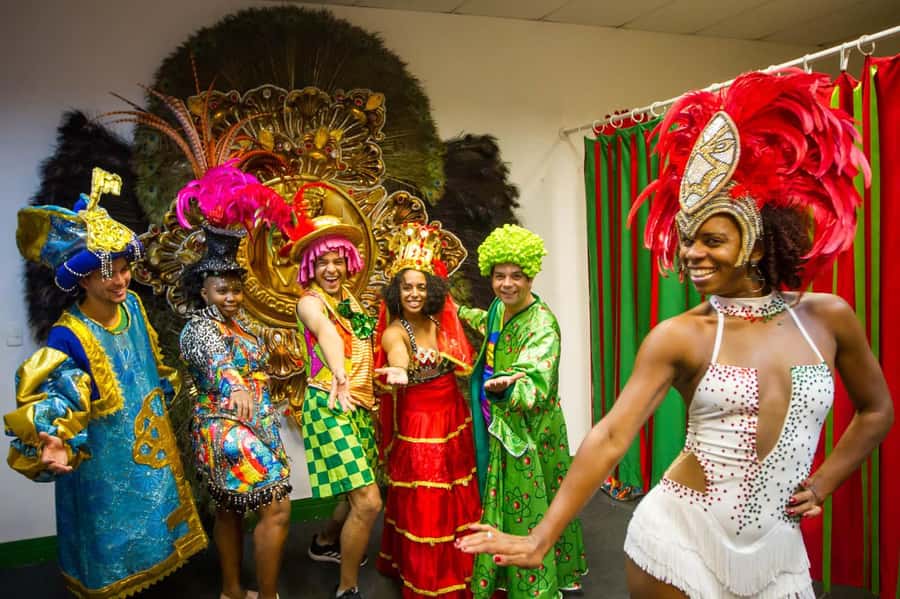
- You can try on authentic parade costumes: The dress-up section is one of the most popular parts, and it makes the scale of Carnival easier to understand.
- A professional dancer leads a samba workshop: You will learn a few basic moves and join in, so expect participation rather than a formal dance recital.
- The story explains the competition: Your guide covers samba-school traditions, parade planning, judging, and the work that begins soon after Carnival ends.
- A caipirinha finishes the visit: Water and an alcoholic drink are included, with a nonalcoholic version available according to tour information.
- Finding the entrance takes planning: The City of Samba is a warehouse complex in the port district, near AquaRio and the Rio Star Ferris wheel.
Starting at the City of Samba
Your meeting point is the main entrance to the City of Samba on Binário do Porto Avenue. This is not a polished tourist entrance with a large, obvious tour desk. It is a broad complex of light-brown warehouses in Rio’s port district, about 200 meters from AquaRio.
Look for the Carnaval Experience team in colorful shirts. Staff may be in the square or near the Grande Rio warehouse. That small detail matters. Several people have had trouble finding the meeting point, even though the entrance is easy once you know what to look for.
If you arrive by VLT tram, get off at the Cidade do Samba station. By car, taxi, Uber, Waze, or Google Maps, search for Carnaval Experience or Cidade do Samba main entrance. Paid street parking is available at 60 Rivadávia Corrêa, but public transport or a ride service is likely less stressful.
The location works well as part of a port-area outing. You can combine the tour with AquaRio, the Rio Star, or the Museum of Tomorrow. Just allow time to get oriented before the scheduled start, since the complex is larger and less self-explanatory than the address might suggest.
More City Tours in Rio de Janeiro
- Rio’s City Tour – Tickets for Christ, Sugar Loaf & Lunch included
★ 5.0 · 4,389 reviews - Full Day: Christ Redeemer, Sugarloaf, City Tour & Barbecue Lunch
★ 4.5 · 3,142 reviews - A Day in Rio – City Tour
★ 4.5 · 1,128 reviews
Why Grande Rio makes this more than a costume display
The visit takes place at the factory of Grande Rio, the samba school that won the 2022 Rio Carnival championship. That gives the tour a working setting and a useful connection to the competition itself.
Rio’s samba schools are not simply dance clubs. They create a full parade entry around a theme, with music, choreography, costumes, floats, visual effects, and thousands of participants. The final parade is judged, so every detail has a purpose. The tour explains how that huge production is planned and why a samba school spends the year preparing for a performance that lasts only a short time.
You will see the preparation areas and get an idea of the labor behind the parade. The tour information says the factory handles more than 3,000 costumes. You may see floats and decorative pieces from recent Carnival seasons, along with the spaces used to prepare new material.
The exact amount of active construction you see can depend on the time of year. A visit close to Carnival may offer a stronger sense of urgency, with costumes and floats nearing completion. At other times, the focus may be more on completed pieces, past designs, and the explanation from your guide. One useful point from the feedback is that seeing costumes already finished is not always the same as watching artisans make them. If hands-on production is your main goal, keep your expectations realistic.
The Carnival story behind the spectacle
The first guided section explains the history of samba and Rio Carnival. This is important because the parade can seem like pure noise and glitter if you do not know what you are watching.
Your guide connects the costumes and floats to the samba-school system, the annual themes, and the competition between schools. You learn that planning begins almost immediately after the previous Carnival ends. That helps explain why so much material is already in progress long before parade week.
The best guides bring the subject to life with personal enthusiasm. Sol was praised for creating a happy atmosphere, while Ton and Lea were singled out for making the information entertaining. An Argentinian guide was also praised for her charm and strong presentation. Your experience will depend partly on who leads your group, but the tour is offered with live guides in English, Portuguese, French, Spanish, German, Hebrew, and Italian.
This is a small-group experience when that option is available. A smaller group gives you more room to ask questions and more time during the costume portion. Still, not every guide will invite the same amount of discussion. If you are curious about parade rules, design choices, or the work process, ask directly rather than waiting for a long question period.
Getting close to floats, props, and costume design
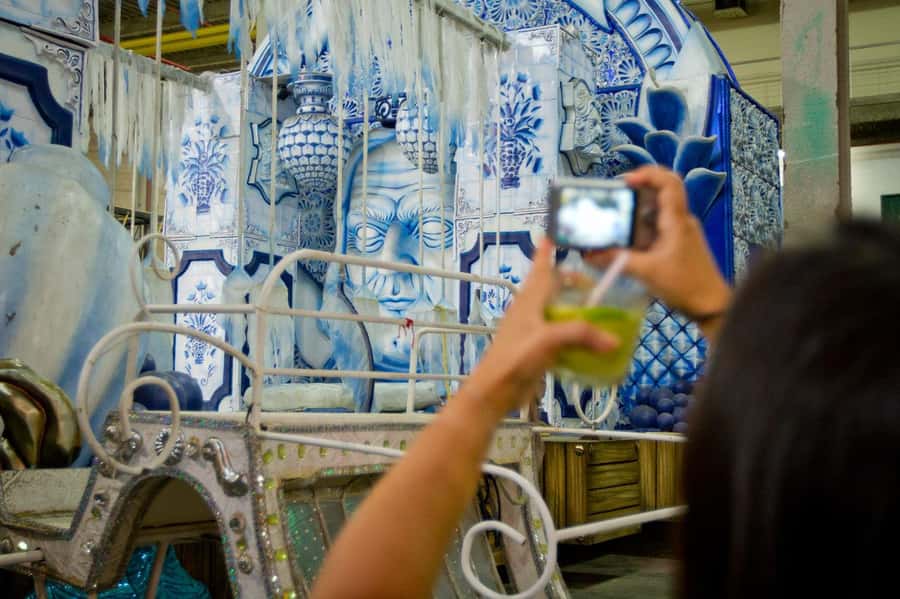
The float section is where the size of Carnival becomes clear. On television, a float flashes past in a cloud of lights, feathers, music, and dancers. At the workshop, you can look at the construction and decoration from much closer range.
Your guide explains the design process and the practical work needed to move these giant pieces into the parade. You also get a better sense of how a theme becomes a complete visual program. The result is not just one impressive float. It is a long sequence of connected images, costumes, music, and movement.
Several people have especially valued visiting shortly before Carnival, when the preparation is intense. A visit one week before the parade can show how much work is still being completed under pressure. A visit outside the season still works because the displays and explanations reveal the scale of the operation, but the atmosphere may feel less like a working countdown.
Photography inside is restricted, so do not assume you can take pictures throughout the factory. The costume try-on includes an opportunity for photographs when permitted, but follow the guide’s instructions. This rule protects the production work and, at times, may also protect the secrecy around a school’s upcoming theme or design.
Other samba nights worth staying up for:
- Rio de Janeiro: Beginner Samba Lesson in Ipanema
★ 4.9 · 1,071 reviews - Rio: Pub Crawl in Lapa with Cachaça Tasting and Live Samba
★ 4.7 · 881 reviews - Hop-ON Hop-OFF Sightseeing Bus in Rio de Janeiro – Rio Samba Bus
★ 3.5 · 457 reviews - Santa Teresa, Lapa, and Cinelândia with Tram Ride and Selarón Steps
★ 4.5 · 274 reviews
Trying on the parade costumes
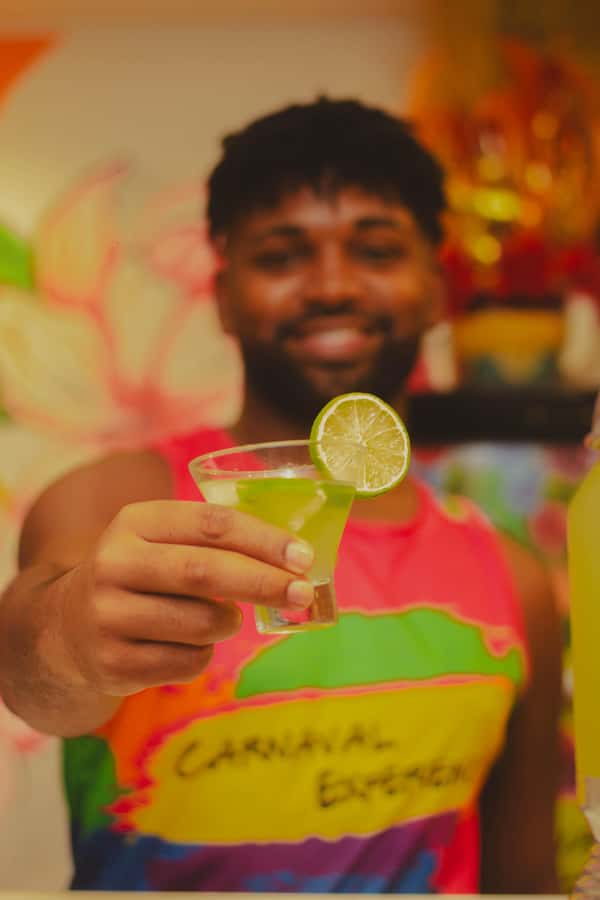
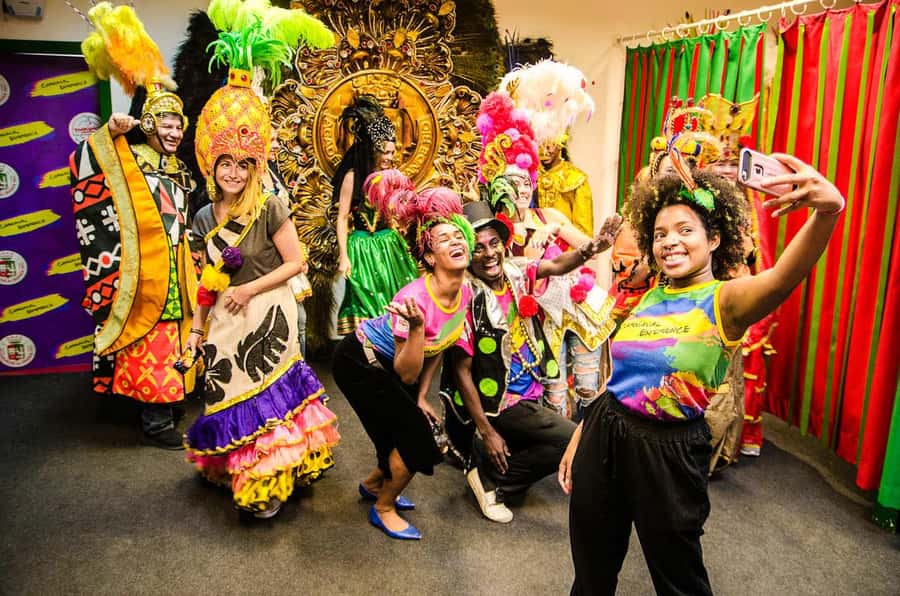
The costume session is the tour’s most playful feature. You can put on selected Carnival costumes and pose for pictures, transforming a behind-the-scenes lesson into a personal memory.
These are not ordinary party outfits. Parade costumes are designed to be seen from a distance, under bright lights, while the wearer moves with a large group. They are colorful, flamboyant, and often much more elaborate than a visitor expects. Trying one on gives you a practical sense of the materials, decoration, and visual effect.
It also makes the labor easier to appreciate. A single costume may look like a small piece of the show, but thousands of them must be planned, assembled, fitted, transported, and coordinated with the parade theme. You begin to see why the production runs year-round.
The session is suitable for adults and children who enjoy dressing up, though the tour is not presented as a child-only activity. If you dislike group participation or posing for photos, this section may feel a little performative. For most people, that is the point. Carnival is not a shy event.
Keep the photography rule in mind. You may be allowed to take pictures in specific areas, but indoor photography is not generally permitted. Ask before using your phone, and listen for instructions about where costume photos are allowed.
Learning samba steps with a professional dancer
The dance section adds movement to what could otherwise be a mostly visual tour. A professional samba dancer demonstrates basic Carnival moves and encourages the group to try them.
You do not need dance experience. The point is not to master a routine or perform at professional level. It is to feel the rhythm, understand the body movement, and see how much energy is required from people who dance through a full parade.
Some sessions include a surprise performance, which can be more impressive than the short lesson itself. The combination of a demonstration and a simple class works well because you first see the skill involved, then attempt a few steps yourself.
The activity is social and lighthearted. You may feel slightly awkward for the first minute, especially if you expected a standard guided tour. That awkwardness usually becomes part of the fun. Wear clothing that lets you move comfortably, and choose sensible shoes for a walking tour followed by dancing.
One small point is worth clearing up: the experience is about samba, not salsa. The tour description and feedback occasionally use the wrong term, but Rio Carnival is built around samba culture.
Ending with a caipirinha
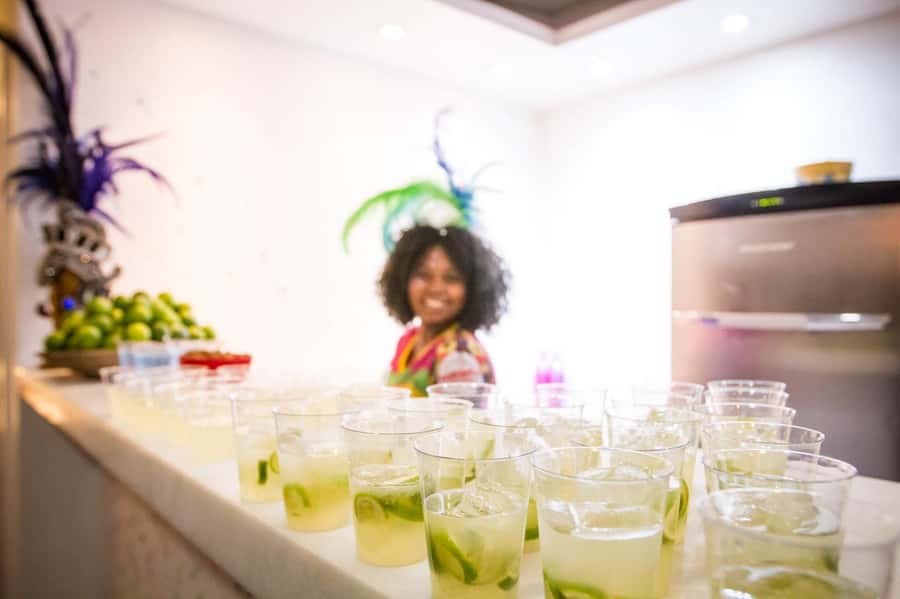
The tour finishes with a caipirinha, Brazil’s well-known cocktail made with cachaça, lime, sugar, and ice. Water is also included.
This closing drink is more than a free extra. It gives the group a relaxed moment to chat after the dance session and provides a fitting Brazilian finish. The drink has been well received, and a nonalcoholic option is available according to the tour information, making the final stop suitable for people who do not drink alcohol.
Because the tour includes an alcoholic beverage, pace yourself if you have more sightseeing planned afterward. Rio’s port district has plenty to do, so you can easily continue to the nearby attractions, but the cocktail is still part of an active afternoon rather than a long bar stop.
How long the visit takes and what $27 buys you
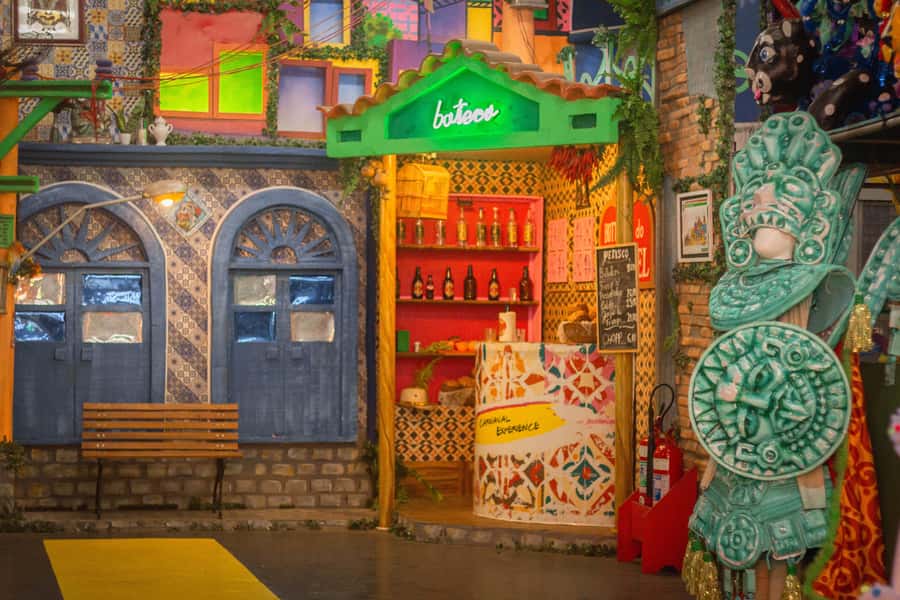
The advertised duration is 90 to 150 minutes. That range is wide enough to reflect group size, guide style, questions, costume changes, and the dance portion.
At the short end, think of it as a brisk introduction. At the longer end, you have time for a fuller explanation, costume photos, dancing, and the drink without feeling rushed. Check the available start times when booking and avoid placing a tight appointment immediately afterward.
At roughly $27, the value is strong. The ticket includes the Carnival experience, walking tour, bilingual guide, water, alcoholic beverage, and backstage access. You are paying for a guided visit into a working samba-school setting, not simply entrance to a display room.
The tour is especially good value if you plan to attend a parade at the Sambadrome. Seeing the production process first gives you more to watch during the parade. You may notice how costumes work in groups, how floats support a theme, and why the timing and organization matter.
The value is less clear if you want to watch a long live parade rehearsal or see every costume being sewn. That is not guaranteed. The tour focuses on interpretation, factory access, costume interaction, samba, and a drink.
Who will enjoy this Carnival experience most
I would recommend it to first-time Rio visitors who want context before attending Carnival. It also suits people who love design, performance, costume, photography, or large-scale event production.
Families can enjoy the colorful displays and costume session, while older children and teenagers may especially like the dance class. Couples and solo visitors should also find it easy to join in, since the activities are designed for group participation.
It is a good choice outside Carnival season too. The parade may be months away, but the workshop, displays, and explanations still show how much planning goes into the event. If you are visiting during the weeks before Carnival, the atmosphere may feel more urgent and the production areas more active.
I would hesitate to recommend it to someone who wants a quiet, formal museum tour. You will walk, dress up, dance, and take part in a guided group experience. The tone is cheerful and outgoing, which fits the subject but may not suit every personality.
Practical advice for a smoother visit
Arrive early enough to identify the colorful-shirted staff. Use Carnaval Experience or Cidade do Samba main entrance in your navigation app, rather than relying only on the name Grande Rio.
Bring water-friendly common sense, though water is included. Wear comfortable shoes because the experience includes walking, and choose clothes that allow movement during the samba lesson.
Do not bring a drone, and do not smoke indoors. Keep your camera and phone ready for permitted areas, but do not take indoor pictures unless the guide says it is allowed.
If you want pickup, arrange it in advance. The optional driver arrives 15 minutes before the scheduled pickup time, and you should wait at the hotel lobby entrance. Provide the exact meeting point to the operator by phone, WhatsApp, or email before the day of the tour.
The activity is non-refundable, so check your date and meeting details carefully. Since transport is not included in the standard price, add the cost of the VLT, taxi, Uber, or optional pickup when comparing the total price.
Should you book the Samba City tour?
Book it if you want to understand what makes Rio Carnival such a demanding production, not just admire the feathers and drums from the stands. The strongest parts are the Grande Rio workshop, the costume try-on, the professional samba demonstration, and the clear sense that planning begins almost as soon as the last parade ends.
I would book it before a Sambadrome night if possible. The tour gives you useful eyes for the parade and adds a personal connection to the costumes and floats. At $27, it is also an easy addition to a Rio itinerary.
Skip it only if you dislike interactive activities, have very little time in the port district, or expect to watch artisans building every costume in real time. For everyone else, this is a cheerful, informative, fairly priced way to meet the people and planning behind Brazil’s biggest show.
FAQ
Where does the Rio Carnival backstage tour meet?
It meets at the main entrance of the City of Samba on Binário do Porto Avenue in Rio’s port region. The entrance is about 200 meters from AquaRio, near the Rio Star Ferris wheel and the Cidade do Samba VLT station.
How do I find the tour staff?
Look for the Carnaval Experience team in colorful shirts. Staff may be in the square or in front of the Grande Rio warehouse.
How can I reach the City of Samba by public transportation?
Take the VLT tram to the Cidade do Samba station. From there, use the main entrance as the meeting point.
Is transportation included?
Transportation is not included in the standard tour. Optional pickup is available if arranged in advance with the activity provider.
How long does the tour last?
The tour lasts approximately 90 to 150 minutes. Available starting times can vary, so check the schedule when booking.
What languages are available?
Live guides are available in French, Portuguese, English, Spanish, German, Hebrew, and Italian. The experience also includes a bilingual guide.
Can I try on Carnival costumes?
Yes. You can try on selected authentic parade costumes and take photos when photography is permitted by the tour staff.
Is photography allowed inside?
Indoor photography is not generally allowed. Follow the guide’s instructions, especially during the costume session and in production areas.
Is a drink included?
Yes. The tour includes water and a caipirinha. A nonalcoholic version is available according to the tour information.
Newest reviews from around Rio De Janeiro
- Christ Statue and Sugarloaf Private Tour with a Photographer★ 5.0 · 9 reviews
- Cidade do Samba Behind-the-Scenes Carnival Tour in Rio de Janeiro★ 4.0 · 5 reviews
- PRIVATE TOUR – Christ the Redeemer and Sugar Loaf★ 4.5 · 9 reviews
- Christ the Redeemer Trail x Lage Park★ 5.0 · 7 reviews
- Christ the Redeemer and City Tour★ 5.0 · 20 reviews
- Christ the Redeemer, Selaron Steps and Santa Teresa Half-day Tour★ 4.5 · 15 reviews
- Christ the Redeemer Adventure★ 5.0 · 12 reviews
- Private Tour of Christ the Redeemer in Rio de Janeiro★ 5.0 · 2 reviews
Samba & Carnival Shows, compared.

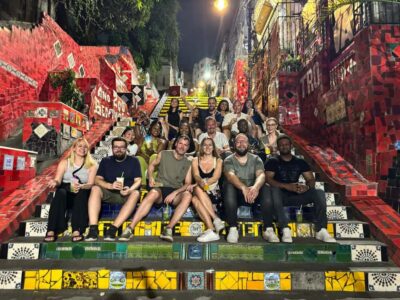
Pub Crawl in Lapa with Cachaça Tasting and Live Samba
Read our review →
Hop-ON Hop-OFF Sightseeing Bus in Rio de Janeiro – Rio Samba Bus
Read our review →
Santa Teresa, Lapa, and Cinelândia with Tram Ride and Selarón Steps
Read our review →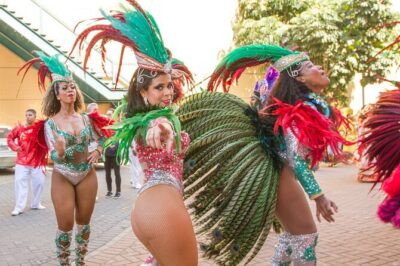
Carnaval Experience: Backstage Tour at Samba City with Cocktail
Read our review →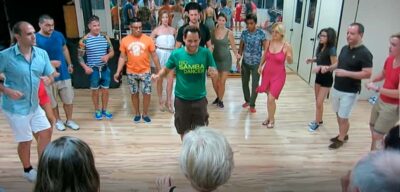


Ginga Tropical – Brazilian Samba and Folklore Show
Read our review →Browse the lists this tour appears in