
Reviewed · WALKING TOURS
Salvador: Walking Tour Through Pelourinho
Salvador’s old center packs centuries into a few streets. I like the small group of seven or fewer, which gives the guide room to answer questions, and I like the clear route from Praça Castro Alves to Pelourinho’s churches, monuments, and lookout points. Guide Adriano is often praised for his warm manner, fluent English, local insight, and useful advice on food and nightlife. The main drawback is the tight 90-minute schedule: you see many important places, but most stops are exterior visits rather than long interior tours.
This is a strong introduction to Salvador’s historic center, especially if you want the city’s past explained rather than simply photographed. You should be ready for sun, uneven streets, and steady walking. The tour is not suitable for wheelchair users or people with mobility impairments, and entrance fees, food, drinks, and hotel transport are not included.
In This Review
- Key points to know before you book
- Starting at Praça Castro Alves above the bay
- Rua Chile and Salvador’s first street
- Pau da Bandeira street and the first bay photographs
- Praça Thomé de Souza and the Lacerda Elevator
- Museu da Misericórdia and Praça da Sé
- Terreiro de Jesus and Brazil’s first Faculty of Medicine
- Largo do Cruzeiro de São Francisco and Igreja de Ouro
- Olodum, Ladeira do Pelô, and Black Salvador
- What Adriano adds to the experience
- Is $80 good value for 90 minutes?
- Practical advice for the walk
- Who should book this Pelourinho walk?
- FAQ
- How long is the Salvador Pelourinho walking tour?
- What language is the tour conducted in?
- How large is the group?
- Where does the tour meet?
- Is hotel pickup included?
- Are food, drinks, or attraction entrance fees included?
- What should I bring?
- Is the tour suitable for wheelchair users?
Key points to know before you book
- A compact route through Salvador’s historic heart: Walk from Praça Castro Alves through Rua Chile, Praça Thomé de Souza, Praça da Sé, Terreiro de Jesus, and Largo do Cruzeiro de São Francisco.
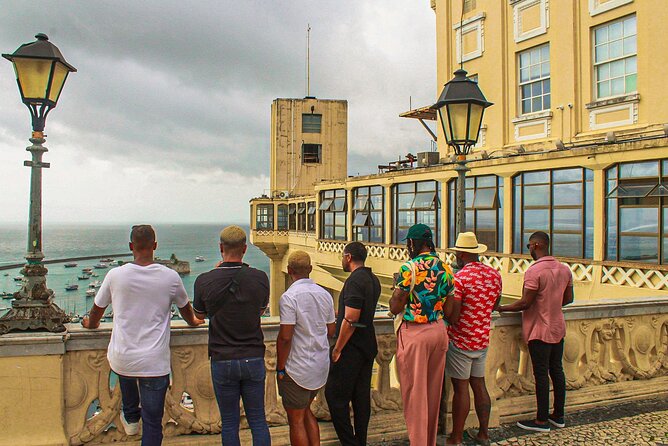
- A small English-language group: The group is limited to seven participants, making it easier to hear the guide and ask personal questions.
- Big views without a long climb: Praça Castro Alves and Pau da Bandeira street offer broad views across Baía de Todos os Santos and its islands.
- Important Afro-Brazilian history: The route includes Zumbi dos Palmares, the church associated with Black Salvador, the Brotherhood of Black Men, and Olodum’s house.
- A guide who adds practical value: Adriano is praised for explaining difficult parts of Salvador’s past clearly and for suggesting places to eat, drink, and explore afterward.
- Simple but demanding logistics: Meet at Praça Castro Alves, bring water and sun protection, and expect no hotel pickup or included admission tickets.
Starting at Praça Castro Alves above the bay
The tour begins at Praça Castro Alves, where you meet the guide by looking for someone holding a credential. This is a sensible starting point. The square gives you an immediate view of Baía de Todos os Santos and its islands, so you begin with Salvador’s geography before moving into its streets.
That opening view also helps explain the city’s two-level layout. Salvador’s Cidade Alta, or Upper City, contains much of the historic center, while Cidade Baixa, or Lower City, lies closer to the water. The Lacerda Elevator later connects these two areas, and seeing the bay from above makes that arrangement easier to understand.
I like the way this first stop gives the tour a clear sense of place. You are not dropped into a maze of old streets with no context. Instead, you first see the waterfront, the upper city, and the wide sweep of the bay.
The square is also a practical meeting point for a short tour. Since hotel pickup is not included, you need to make your own way there. Arrive with enough time to find the guide and identify the credential without rushing.
More Walking Tours in Salvador & Bahia
- Salvador Historic Walking Tour – Pelourinho
★ 4.8 · 62 reviews - Salvador, Bahia: A amazing Walking Tour!
★ 5.0 · 14 reviews - Private Walking Tour of Salvador Pelourinho
★ 5.0 · 70 reviews
Rua Chile and Salvador’s first street
From Praça Castro Alves, you continue along Rua Chile, described on the tour as the first street in Brazil. The point is not simply to walk down an old road. This part of the route introduces the historic center as a place shaped by government, trade, religion, and daily life.
The guide explains what you are seeing as you move, rather than saving every fact for one long speech. That matters on a walking tour. You can connect the buildings and squares to the city’s past while standing in the places where those events unfolded.
The pace is one of the tour’s strengths. The route covers a lot, but the guide aims to give enough explanation without turning the walk into a classroom lecture. Several visitors specifically praised Adriano for keeping the pace comfortable, speaking clearly, and answering questions without losing the group.
You should still expect a purposeful walk. Ninety minutes is short for this much ground, so the tour is best viewed as an orientation. It gives you a map in your head and helps you decide which places deserve a longer visit later.
Pau da Bandeira street and the first bay photographs
A photo stop at Pau da Bandeira street adds another view over the bay. This is a good moment to pause and take pictures, but it also reinforces one of Salvador’s visual themes: the old city is built around dramatic changes in height.
The stop is brief, so have your camera ready. You will want to bring comfortable shoes, a hat, sunscreen, and water. Light clothing is also recommended because much of the route is outdoors and the conditions can change.
I appreciate that the tour includes more than famous buildings. Lookout points help you understand why Salvador’s historic center feels so distinct. The city’s architecture, hills, and water are closely linked, and the views make that connection plain.
Praça Thomé de Souza and the Lacerda Elevator
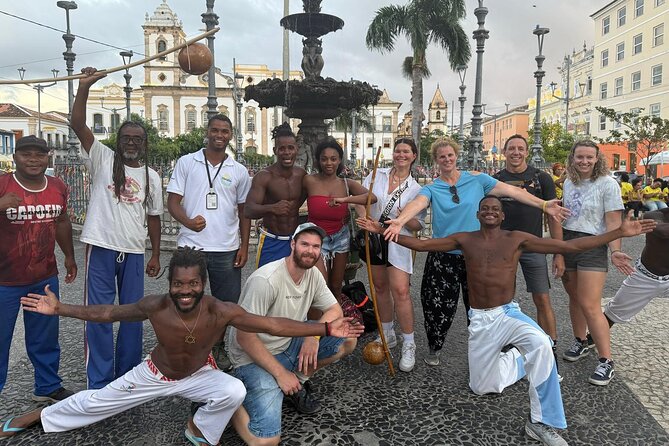
The next major stop is Praça Thomé de Souza, named for Brazil’s first General Governor. Here, the tour introduces two important pieces of Salvador’s public history: the Palácio do Primeiro Governo and the Lacerda Elevator.
The Palácio do Primeiro Governo was used as Brazil’s first prison. That detail gives the square a sharper edge. Government buildings and grand civic spaces can look polished today, but their earlier uses often reveal a more complicated story about power and punishment.
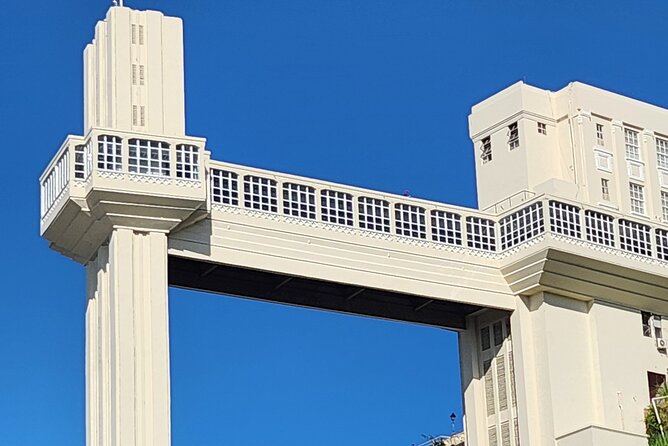
The Lacerda Elevator connects Cidade Alta and Cidade Baixa. It is one of Salvador’s best-known landmarks, and the tour lets you understand its function rather than treating it as a stand-alone photo backdrop. The elevator represents the practical link between the upper historic center and the lower part of the city.
No elevator ride is listed as part of the tour, and entrance fees are not included. The route is focused on seeing and explaining the landmark. If riding it is important to you, ask the guide for current advice during the walk, then plan it separately.
Same patch of Brazil, a completely different sort of day:
- From Salvador: Schooner Tour to Frades Islands and Itaparica
★ 3.9 · 98 reviews - Afro-Brazilian Roots Private City Tour in Salvador
★ 4.7 · 88 reviews - Salvador de Bahia African Culture Tour
★ 4.5 · 60 reviews - Salvador: Praia Do Forte and Guarajuba Beach Day Trip
★ 4.1 · 56 reviews
Museu da Misericórdia and Praça da Sé
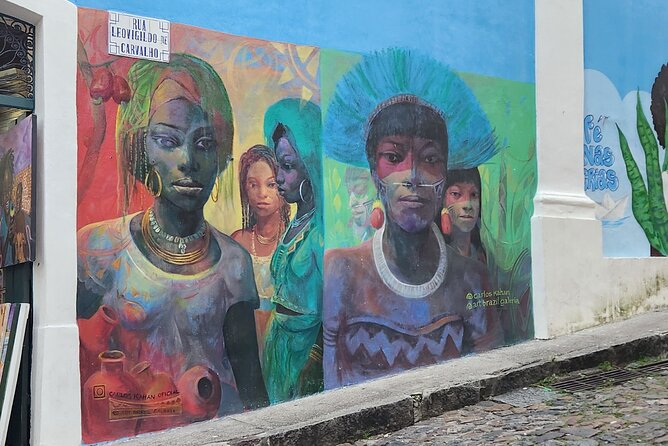
Continuing along Rua Chile, you pass the Museu da Misericórdia before reaching Praça da Sé. The museum is part of the visual story of the old center, but the tour does not include admission. You should think of this section as a guided introduction to the area rather than a museum visit.
Praça da Sé brings together several stops with different layers of meaning. The Monument to the Fallen Cross was erected in protest against the demolition of Igreja da Sé. That detail makes the monument more than an attractive feature in the square. It points to conflicts over what a city preserves, what it removes, and how public memory is shaped.
The guide also stops at the statue of the first Bishop of Brazil and explains his tragic end. This is the sort of detail that can be easy to miss if you walk through the square alone. A statue may take only seconds to photograph, but its story can change how you read the space.
Another stop is the statue of Zumbi dos Palmares, a leader of resistance against slavery. Including Zumbi places the history of resistance alongside the history of colonial government and religious authority. That balance is important. Salvador’s past is not only a story of grand churches and official buildings.
Terreiro de Jesus and Brazil’s first Faculty of Medicine
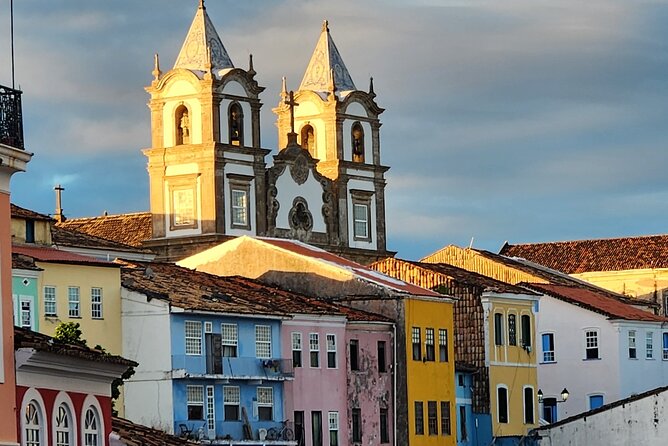
Leaving Praça da Sé, the group walks to Largo Terreiro de Jesus. The square is surrounded by churches and contains the first Faculty of Medicine in Brazil.
This section is valuable for showing how education and religion shaped the old city. You get several kinds of history in a short distance: public administration, Catholic institutions, medicine, slavery, resistance, and urban change.
The tour does not promise extended interior visits. That is worth keeping in mind if you want to study church art or museum collections in detail. You will see the main sites, hear why they matter, and receive a useful framework for returning on your own.
For a first visit, that trade-off works well. I would rather have a guide explain several connected places than spend the whole 90 minutes inside one building. If you already know Pelourinho and want a slow architectural study, this tour may feel too brisk.
Largo do Cruzeiro de São Francisco and Igreja de Ouro
The route continues to Largo do Cruzeiro de São Francisco, where the Igreja de Ouro makes a powerful impression. The nickname refers to the church’s lavish gold decoration, and the stop gives you a chance to appreciate the religious art and wealth associated with Salvador’s historic churches.
The church is one of the visual highlights of the walk, but admission is not included. The information provided does not promise an interior visit, so check with the guide if you want to go inside during or after the tour. Bring money separately for any entry fee, since attraction tickets are your responsibility.
The surrounding square matters too. It shows how churches, open public spaces, and narrow streets fit together in the old center. This is a good place to slow down for a moment, look above street level, and notice how much decoration is concentrated in a small area.
The guide’s role is especially useful here. Without context, gold-covered churches can seem like a quick spectacle. With an explanation of who built them, why they were decorated, and how they fit into Salvador’s past, the sight carries more weight.
Olodum, Ladeira do Pelô, and Black Salvador
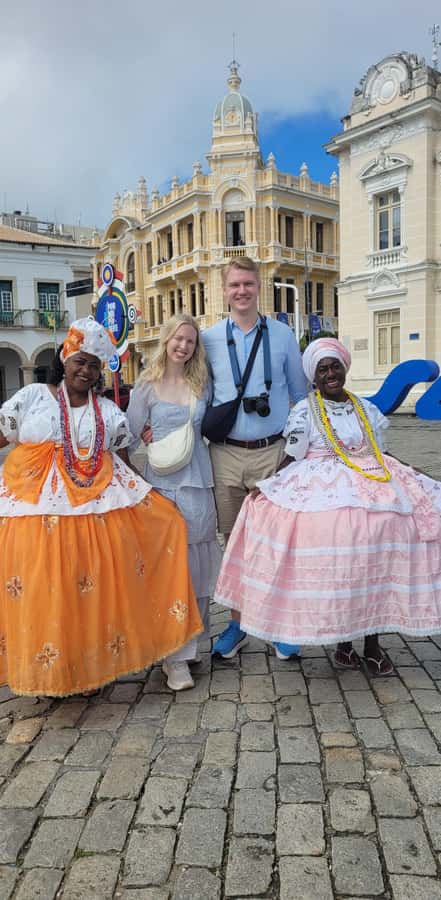
The final stretch brings you past Olodum’s house and along the famous Ladeira do Pelô. Michael Jackson filmed the music video for They Don’t Care About Us here, making the street familiar to many people who have never visited Salvador.
The music connection is useful, but it is not the whole story. The area also connects to Salvador’s Afro-Brazilian identity, music, public life, and struggles over representation. The route includes the church of Black people and the Brotherhood of Black Men in Brazil, giving you a chance to consider how Black communities created and maintained their own religious and social institutions.
This is one of the tour’s most important qualities. It does not present Pelourinho as a colorful backdrop only. It includes slavery, resistance, Black leadership, brotherhoods, and contemporary cultural organizations. Guide Adriano is especially praised for addressing difficult parts of Salvador’s past directly while keeping the explanations clear and approachable.
Olodum adds a modern cultural note to a route otherwise filled with older buildings. The combination helps you see Pelourinho as a living district, not just a preserved historic quarter.
The walk ends after this sequence of major sights. Since the tour does not include transportation back to your hotel, plan your next move in advance. The guide can also be a useful source of suggestions for nearby food, bars, and additional places to see.
What Adriano adds to the experience
The strongest pattern in the feedback is the quality of the guide. Adriano is repeatedly described as friendly, patient, inclusive, and passionate about Salvador. His English is praised as fluent and easy to hear, which is important when the group is standing near busy streets or open squares.
He also adapts to the people in front of him. If you ask about architecture, culture, food, nightlife, or the city’s harder history, he appears willing to shift the explanation toward your interests. One useful feature is the practical advice he gives for the rest of your stay, including suggestions about where to eat, where to go for drinks, and what to avoid.
That personal attention is easier in a group limited to seven. A larger tour might offer the same route, but it would be harder to ask questions or receive advice tailored to your plans.
The tour’s best quality is not simply the number of monuments. It is the connection between them. Adriano’s explanations help link official history with local culture and personal stories, giving the walk a more human feel.
Is $80 good value for 90 minutes?
At $80 per person, this is not a cheap city orientation. The price pays for a guided English-language walk, a small group, and local interpretation. It does not include hotel pickup, food, drinks, or entry to attractions.
I see the value mainly in the guide and the compact route. If you are new to Salvador, the tour can save you time by showing you the key streets and squares in a logical order. It also gives you useful information for planning the next few days.
The price is harder to justify if you only want photographs or if you are happy to read about each site independently. You will cover many places quickly, and the 90-minute duration leaves little room for long stops inside churches or museums.
I would consider it good value for a first morning or early visit to Pelourinho, especially if you want an introduction in English and prefer a small group. To get more from the price, use the tour as a starting point, then return to the places that interest you most.
Practical advice for the walk
Wear shoes that can handle steady walking and old city streets. The tour description specifically warns about comfort, sun, hydration, and changing weather, so take those points seriously.
Bring:
- Comfortable walking shoes
- A sun hat
- Sunscreen
- Water
- A camera
- Light clothing suited to warm conditions
Smoking is not allowed during the activity. You should also be comfortable walking without mobility assistance, since the tour is not suitable for wheelchair users or people with mobility impairments.
The meeting point is Praça Castro Alves. Look for the guide holding a credential. Since there is no hotel pickup, allow time to reach the square before the scheduled start.
The tour is offered in English and uses a small group limited to seven participants. You can cancel up to 24 hours in advance for a full refund, and reserve now while paying later, which helps if your Salvador plans are still shifting.
Who should book this Pelourinho walk?
I would recommend this tour if you want a clear first look at Salvador’s historic center, prefer learning through stories, and value the chance to ask questions. It is also a good fit if you want practical local suggestions after the walk.
You will get the most from it if you are interested in Brazil’s colonial past, Afro-Brazilian culture, religious buildings, public monuments, and the connection between old history and modern Salvador.
I would hesitate if you need step-free access, dislike walking in the sun, or want extensive time inside museums and churches. The route is full, and 90 minutes passes quickly.
For most first-time visitors who want a friendly English-language introduction, I would book it. The views are memorable, the route covers the essential historic center, and Adriano’s personal explanations appear to be the main reason this short walk makes such a strong impression.
FAQ
How long is the Salvador Pelourinho walking tour?
The tour lasts 90 minutes.
What language is the tour conducted in?
The live tour guide speaks English.
How large is the group?
The group is limited to seven participants.
Where does the tour meet?
You meet the guide at Praça Castro Alves. The guide will be standing there with a credential.
Is hotel pickup included?
No. Hotel pickup and drop-off are not included.
Are food, drinks, or attraction entrance fees included?
No. Food, drinks, and entrance fees are not included in the tour price.
What should I bring?
Bring comfortable walking shoes, a sun hat, sunscreen, water, and a camera. Light clothing is also recommended.
Is the tour suitable for wheelchair users?
No. The activity is not suitable for wheelchair users or people with mobility impairments.
Newest reviews from around Salvador Brazil
- Salvador: Schooner Cruise with Pickup and Itaparica Stop★ 3.8 · 5 reviews
- Salvador: 3-Hour Percussion Class★ 4.9 · 10 reviews
- Salvador by Night: Cultural Show and Dinner.★ 4.4 · 17 reviews
- Salvador: Traditional Drumming and Percussion Workshop★ 4.4 · 10 reviews
- Salvador: Cultural Treasure – Samba de Roda.★ 4.9 · 51 reviews
- PROMO Salvador: Interactive Art and Culture Private Tour★ 5.0 · 2 reviews
- Salvador: Curated Nightlife Exp. in the Heart of the City★ 5.0 · 2 reviews
- Salvador: Capoeira Class at Mestre Bimba’s 1st Ever School.★ 4.9 · 34 reviews
Walking Tours, compared.

3 Hour Rocinha Favela Walking Tour with a Local Guide
Read our review →
Favela Tour Rio de Janeiro – Vidigal Walking Tour by Russo Guide
Read our review →
Private Walking and Cultural Tour Rocinha-Rio de Janeiro
Read our review →
Browse the lists this tour appears in