
Reviewed · WALKING TOURS
Salvador, Bahia: A amazing Walking Tour!
Salvador reveals itself on foot. This three-hour private walk brings together colonial streets, Afro-Brazilian culture, music, churches, and local drinks in a compact introduction to Bahia’s capital. I especially like the one-to-one format, which lets you set the pace and ask questions freely. I also like that the guide does more than point at buildings, with attention to Salvador’s social story and cultural life.
The main consideration is the cost: $141 per person is a serious price for a three-hour walk. It makes the most sense if you value a private guide, need language flexibility, and want a focused first look at the Historic Center rather than a low-cost group outing.
In This Review
- Key points at a glance
- Starting beside Elevador Lacerda
- Rua Chile and Salvador’s colonial center
- Cathedral Basilica of Salvador
- A taste of Bahia at O Cravinho
- Pelourinho, music, and public culture
- Walking toward Santo Antonio Além do Carmo
- What the private format changes
- What is included, and what you still pay for
- Sun, walking, and practical comfort
- Who will get the most from this tour?
- Should you book the Salvador walking tour?
- FAQ
- How long does the Salvador walking tour last?
- Where does the tour begin and end?
- Is the tour private?
- Which languages are available?
- Are tickets included?
- Are local drinks included?
Key points at a glance

- A private route through Salvador’s Historic Center: You walk from Elevador Lacerda through Rua Chile, the Cathedral area, Pelourinho, and Santo Antonio Além do Carmo.
- Strong attention to Afro-Brazilian culture: The route includes Nossa Senhora do Rosário dos Pretos Church, Pelourinho, Olodum references, and stories connected with Bahia’s cultural life.
- Multilingual guiding: Tours are available in Dutch, French, English, Portuguese, Spanish, German, and Italian.
- Two important admissions included: Your price covers the Elevador Lacerda and Cathedral Basilica, plus a tasting of local alcoholic and non-alcoholic drinks.
- Several cultural stops are optional extras: Museums and other cultural spaces are not included, so bring extra money if you want to enter them.
- A highly personal experience: Past praise has focused on guides such as Gustavo and Wanderley, especially their language skills, humor, and ability to explain Salvador beyond its famous façades.
Starting beside Elevador Lacerda
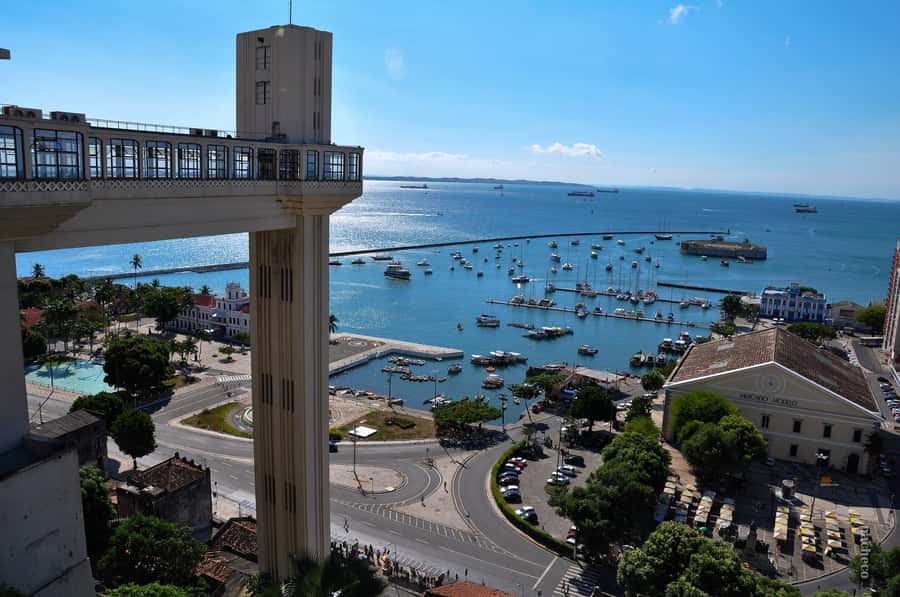
The tour begins at Elevador Lacerda, one of Salvador’s most recognizable sights. This is a useful meeting point because the elevator links the lower and upper parts of the city and puts you right beside the Historic Center.
Your guide handles the included elevator ticket, so you do not need to arrange that separately. The visit and sightseeing time here total about an hour in the supplied schedule, though exact pacing can vary. You can expect an introduction to Salvador’s layout, its colonial past, and the role of the upper city in the story of Brazil.
I like beginning here because it gives you an immediate sense of place. You are not starting in an anonymous hotel lobby or spending the first part of the tour on transport. You begin with one of Salvador’s defining landmarks and then continue on foot.
The elevator itself is not the main reason to book the tour. Its value is that it connects the city’s geography with the rest of the walk. Your guide can explain what you are seeing before the route moves into the narrower streets above.
More Walking Tours in Salvador & Bahia
- Salvador Historic Walking Tour – Pelourinho
★ 4.8 · 62 reviews - Salvador: Walking Tour Through Pelourinho
★ 5.0 · 49 reviews - Private Walking Tour of Salvador Pelourinho
★ 5.0 · 70 reviews
Rua Chile and Salvador’s colonial center
From Elevador Lacerda, the walk continues toward Rua Chile, described as the first street in Brazil. The street is lined with historic buildings, including the Rio Branco Palace, and gives the guide a natural place to explain Salvador during the period of Colonial Brazil.
This part of the route is best for travelers who enjoy buildings with a political and civic story. The Rio Branco Palace is not just another attractive façade. It connects the walk with government and the early roots of the city.
The streets around the Historic Center are narrow, and the colorful mansions give the area much of its visual appeal. I would keep your camera ready, but try not to reduce this section to photographs alone. The guide’s explanation is what gives the buildings meaning.
The schedule includes short walks and visits before the longer stops. That suggests a steady route with frequent pauses, rather than one long lecture in a single square. For you, the benefit is variety. The drawback is that three hours goes quickly, especially if you want to spend time inside every cultural site.
Cathedral Basilica of Salvador
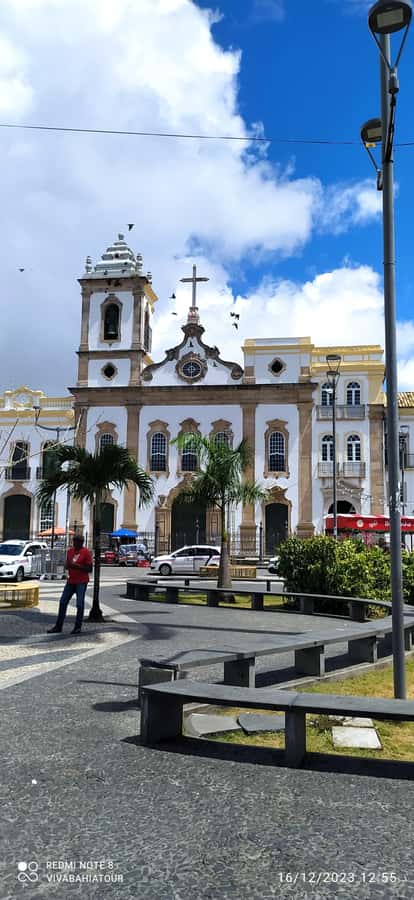
The Cathedral Basilica receives about 30 minutes, including guided time. Admission is included, which is helpful because this is one of the tour’s main interior visits.
The cathedral gives you a change of scale after the narrow streets and civic buildings. Your guide can place it within Salvador’s religious and colonial story, while pointing out details that are easy to miss if you walk through alone.
I appreciate that the tour does not treat churches as quick photo stops. The planned half-hour allows time to look around and hear an explanation without making the entire walk about religious architecture.
Still, you should know the limit. The tour includes the Cathedral Basilica ticket, but tickets to cultural spaces and museums are not included. If a museum or cultural center catches your attention, you will pay separately and may need to choose between entering it and keeping the route on schedule.
A taste of Bahia at O Cravinho
The stop at O Cravinho lasts about 20 minutes and includes local drink tasting. Both alcoholic and non-alcoholic options are covered, making this a useful pause for people who do not drink alcohol.
O Cravinho is described as a famous and traditional Bahian pub. The visit adds a small but welcome piece of everyday culture to a route otherwise centered on landmarks, churches, and museums. You get a chance to taste something local instead of simply hearing about it.
I like this kind of stop because food and drink often explain a place as clearly as monuments do. It also breaks up the walking. After several historic sites, a short pause at a local bar can make the afternoon feel less like a checklist.
The timing is brief, so do not expect a full meal or a long bar visit. Think of it as a tasting and cultural stop. If you want more time at O Cravinho, you would need to return independently.
Same patch of Brazil, a completely different sort of day:
- From Salvador: Schooner Tour to Frades Islands and Itaparica
★ 3.9 · 98 reviews - Afro-Brazilian Roots Private City Tour in Salvador
★ 4.7 · 88 reviews - Salvador de Bahia African Culture Tour
★ 4.5 · 60 reviews - Salvador: Praia Do Forte and Guarajuba Beach Day Trip
★ 4.1 · 56 reviews
Pelourinho, music, and public culture
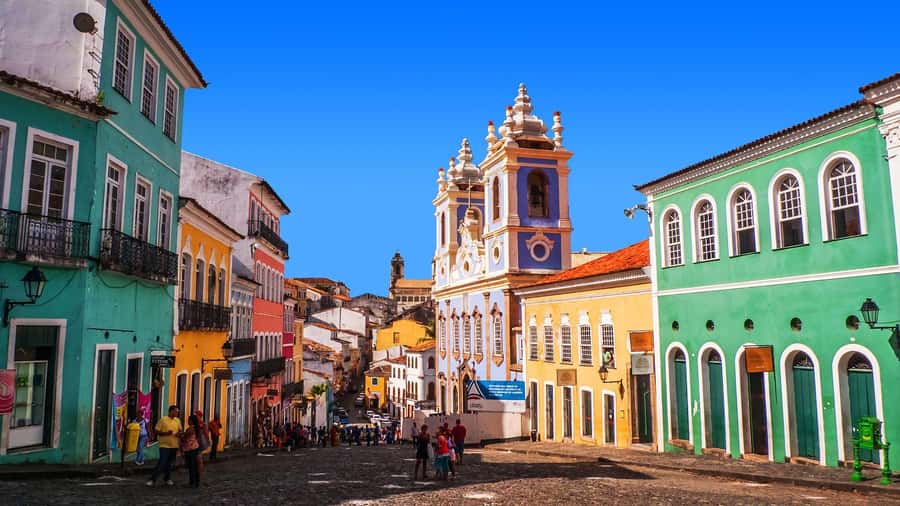
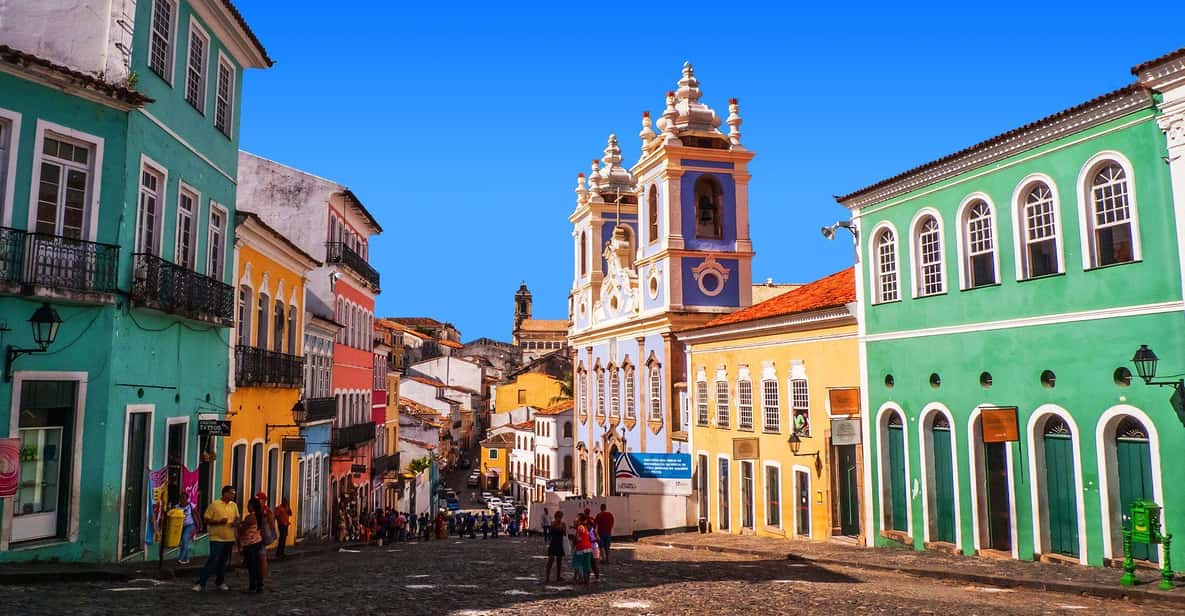
Pelourinho receives about 40 minutes, making it the longest single stop on the route. This is the heart of the walk, with music, colorful buildings, churches, and cultural spaces packed into a small area.
The tour connects Pelourinho with major figures and groups linked with Salvador’s public image. Michael Jackson visited the area, Paul Simon drew on Brazilian music for his work, and Olodum is celebrated as one of the world’s major percussion groups. These references help show why Pelourinho is more than a historic district preserved for photographs.
You may also hear about places such as the Nossa Senhora do Rosário dos Pretos Church, the Jorge Amado Foundation, and Casa do Carnaval. Some are part of the walk or viewed from outside, while cultural-space and museum tickets are not included. Ask your guide which interiors are planned on your chosen departure.
This is where the guide’s personality matters most. Gustavo received especially strong praise for making the city feel alive through stories, local recommendations, cafés, neighborhoods, and small corners away from the main sights. Wanderley was praised for speaking several languages and explaining Afro-Brazilian history with confidence and care.
Those details matter because Pelourinho can be visually impressive but historically complex. A good guide helps you understand the people, music, and social forces behind the color. You are not just being shown a pretty street.
Walking toward Santo Antonio Além do Carmo
After Pelourinho, the route continues on foot toward Santo Antonio Além do Carmo, with about 30 minutes allocated to the walk and visit. This extends the experience beyond the most photographed section of the Historic Center.
The route is useful for you if you want more than the standard Pelourinho circuit. It adds another neighborhood to your view of Salvador and gives the guide room to discuss the city’s changing streets and daily rhythms.
Because the whole experience lasts only three hours, the time here is likely focused rather than exhaustive. You will not see every corner of the district. You will get a guided introduction, then return to Elevador Lacerda.
That return to the starting point is practical. You finish at a known central landmark instead of being left somewhere unfamiliar. The exact end time depends on the guide’s pace, the group’s questions, and how long you spend at each stop.
What the private format changes

A private group is the tour’s biggest advantage. You are not sharing the guide’s attention with a large crowd, so you can ask about colonial buildings, Afro-Brazilian history, local drinks, music, or places you may want to visit later.
The language list is unusually broad: Dutch, French, English, Portuguese, Spanish, German, and Italian. That is valuable in a city where the historical context can be difficult to follow if you are relying only on signs or a guidebook.
Several guides have been singled out by name for different strengths. Gustavo is praised for warmth, humor, local recommendations, and explaining how Brazilian society connects with the sights. Wanderley is praised for his language ability and strong command of Afro-Brazilian history. The experience may depend partly on which guide is assigned, but the format gives you a better chance to shape the conversation.
Private service also means a higher price. At $141 per person, the tour is not aimed at budget sightseeing. If two or more people share the cost, you receive a personal guide, included tickets, and a drink tasting. If you are traveling alone, the price is harder to justify unless language support or expert context is especially important to you.
What is included, and what you still pay for
The package includes:
- A private multilingual guide
- Tickets for Elevador Lacerda
- Admission to the Cathedral Basilica
- A tasting of local alcoholic and non-alcoholic drinks
Tickets for cultural spaces and museums are not included. This is worth remembering before you start, since the route mentions several places that may tempt you to go inside.
I see the inclusions as sensible rather than lavish. The elevator and cathedral are central to the route, and the drink tasting adds a local touch. The price is mainly paying for the private guiding service, not a long list of admissions.
If you want to keep spending under control, treat the included walk as the main experience and decide during the tour whether an additional museum visit is worth the separate fee. Your guide can help you choose based on your interests.
Sun, walking, and practical comfort
Bring sunglasses, a sun hat, and sunscreen. This is an outdoor walk in Salvador, with time spent moving between sites rather than sitting in an air-conditioned vehicle.
Wear comfortable shoes. The route includes narrow streets, short walks, and multiple stops across the Historic Center. The tour is not suitable for people with motion sickness, which is worth noting even though this is a walking experience. The reason is not explained, so you should ask the provider if you have a specific concern.
The accessibility information needs clarification. The activity is marked wheelchair accessible, but it is also marked not suitable for people with mobility impairments. Those statements do not fully agree. If you use a wheelchair, walk with difficulty, or need step-free access, contact VivaBahiaTour before paying and ask exactly which parts of the route are accessible.
The private format can help with pace, but it cannot automatically change the streets or entrances. That is an important distinction.
Who will get the most from this tour?
I would recommend this experience to you if you want a guided first look at Salvador and care about context as much as photographs. It works especially well for people who want colonial architecture, churches, Afro-Brazilian history, music, and local drinks in one compact outing.
It is also a good fit if you need a guide in a language other than Portuguese. The available languages cover much of Europe, along with English and Spanish.
You may want a different plan if you prefer to explore slowly, spend an hour in each museum, or keep the cost low. The three-hour schedule gives you a strong overview, but it does not leave room for long independent visits inside every cultural site.
I would also think twice if heat or walking is a major problem. Sun protection is essential, and the route is built around walking through the Historic Center.
Should you book the Salvador walking tour?
Book it if you want a private, well-explained introduction to Salvador, especially if you value a multilingual guide and a clear connection between architecture, Afro-Brazilian culture, music, and daily life.
The $141 price is reasonable for a private experience with included elevator and cathedral tickets, but it is not a bargain tour. Ask about the assigned guide, museum stops, and accessibility before booking. If you do, this walk can give you a useful foundation for exploring Pelourinho and the surrounding Historic Center on your own afterward.
Free cancellation is available up to 24 hours before the tour, and you can reserve now and pay later. Those policies help if your plans are still changing, but the real booking decision comes down to one question: do you want a personal guide to explain Salvador, or would you rather see the same area independently at a lower cost?
FAQ
How long does the Salvador walking tour last?
The tour lasts three hours. Starting times depend on availability.
Where does the tour begin and end?
The tour begins at Elevador Lacerda and returns there at the end.
Is the tour private?
Yes. It is offered as a private group experience.
Which languages are available?
The live guide may speak Dutch, French, English, Portuguese, Spanish, German, or Italian.
Are tickets included?
Tickets for Elevador Lacerda and the Cathedral Basilica are included. Tickets for cultural spaces and museums are not included.
Are local drinks included?
Yes. The tour includes a tasting of local alcoholic and non-alcoholic drinks at O Cravinho.
Newest reviews from around Salvador Brazil
- Salvador: Schooner Cruise with Pickup and Itaparica Stop★ 3.8 · 5 reviews
- Salvador: 3-Hour Percussion Class★ 4.9 · 10 reviews
- Salvador by Night: Cultural Show and Dinner.★ 4.4 · 17 reviews
- Salvador: Traditional Drumming and Percussion Workshop★ 4.4 · 10 reviews
- Salvador: Cultural Treasure – Samba de Roda.★ 4.9 · 51 reviews
- PROMO Salvador: Interactive Art and Culture Private Tour★ 5.0 · 2 reviews
- Salvador: Curated Nightlife Exp. in the Heart of the City★ 5.0 · 2 reviews
- Salvador: Capoeira Class at Mestre Bimba’s 1st Ever School.★ 4.9 · 34 reviews
Walking Tours, compared.



3 Hour Rocinha Favela Walking Tour with a Local Guide
Read our review →
Favela Tour Rio de Janeiro – Vidigal Walking Tour by Russo Guide
Read our review →
Private Walking and Cultural Tour Rocinha-Rio de Janeiro
Read our review →
Browse the lists this tour appears in