
Reviewed · CITY TOURS
Salvador: Anthropological City Tour with Lunch IN 6 HOURS
Salvador’s African roots come alive beyond Pelourinho. I like the small group of four, which makes serious questions and personal discussion possible, and I like the homemade feijoada served in a Black neighborhood. The main consideration is pace: six hours covers a great deal, so several stops are brief rather than leisurely.
This is a cultural tour, not a standard sightseeing loop. It connects Salvador’s colonial center with African religious traditions, working-class districts, a major market, and places tied to the forced arrival of Africans. Guides such as Mônia, D. Maria, and Fernando have earned especially warm praise for their explanations and care. Confirm that the itinerary still suits you if you need wheelchair access, since the tour is not wheelchair accessible.
In This Review
- Key points to know before you book
- Why this six-hour route matters
- Starting in Salvador’s historic heart
- Dique do Tororó and Salvador’s public symbols
- São Joaquim Market, where food tells part of the story
- From the old port to the story of forced arrival
- Candomblé at Ilê Iyá Axé Nassô Oká
- Rio Vermelho and the Queen of the Sea
- Feijoada in Garcia, with a family tradition
- What the guide adds to the day
- Timing, comfort, and practical limits
- Who will get the most from this experience
- Should you book this Salvador tour?
- FAQ
- How long does the Salvador Anthropological City Tour last?
- Is hotel pickup included?
- What languages are available?
- Is lunch included?
- Can I request vegetarian food?
- Is the tour wheelchair accessible?
Key points to know before you book
- A four-person limit: You get a more personal outing than on a large coach tour, with room for questions and conversation.
- Afro-Brazilian culture at the center: The route links Pelourinho, the Afro-Brazilian Museum, Candomblé, the slave trade, and the worship of Yemanjá.
- São Joaquim Market: This huge open market connects present-day Salvador with traditions tied to enslaved Africans who founded it in the 19th century.
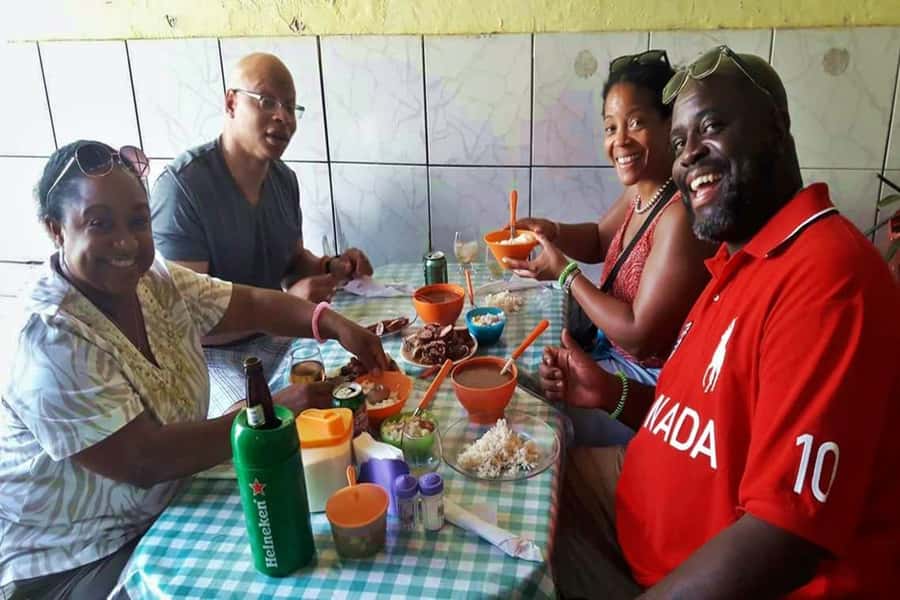
- Lunch in Garcia: A family with more than 50 years of tradition serves homemade feijoada in a Black community.
- Dique do Tororó and Rio Vermelho: You see two important public places connected to Salvador’s religious and cultural life.
- Five guide languages: The tour is offered in English, Spanish, French, Italian, and Portuguese.
Why this six-hour route matters
Salvador is often introduced through its colorful colonial buildings and steep streets in Pelourinho. That is worthwhile, but it can leave you with only part of the city’s story. This tour places African heritage at the center, then shows how that heritage continues in food, markets, religious practice, family life, and public celebrations.
I like that the route does not treat Afro-Brazilian culture as a museum subject alone. You visit a museum, but you also go to a market, a Candomblé terreiro, a fishermen’s community, and a family lunch. Those settings give you different ways to understand Salvador.
The experience costs $150 per person. That is not a low-cost city tour, but the price includes hotel pickup and drop-off, entrance fees, lunch, a driver, and a professional guide. With a maximum of four participants, the cost can be fair for someone who wants a focused cultural day without arranging several taxis or separate admissions.
You should still consider what matters most to you. If you want long shopping time, a slow museum visit, or an easygoing food tour, this route may feel packed. If you have only a day or two in Salvador and want help making sense of the city’s African foundations, the concentration of stops is a strong point.
More City Tours in Salvador & Bahia
- Afro-Brazilian Roots Private City Tour in Salvador
★ 4.7 · 88 reviews - Historic City Tour in Salvador
★ 3.6 · 17 reviews - Salvador: Curated Nightlife Exp. in the Heart of the City
★ 5.0 · 2 reviews
Starting in Salvador’s historic heart
Pickup is at your hotel lobby in Salvador. From there, the tour includes several photo stops and guided visits, with transportation connecting places that would be awkward to combine on foot.
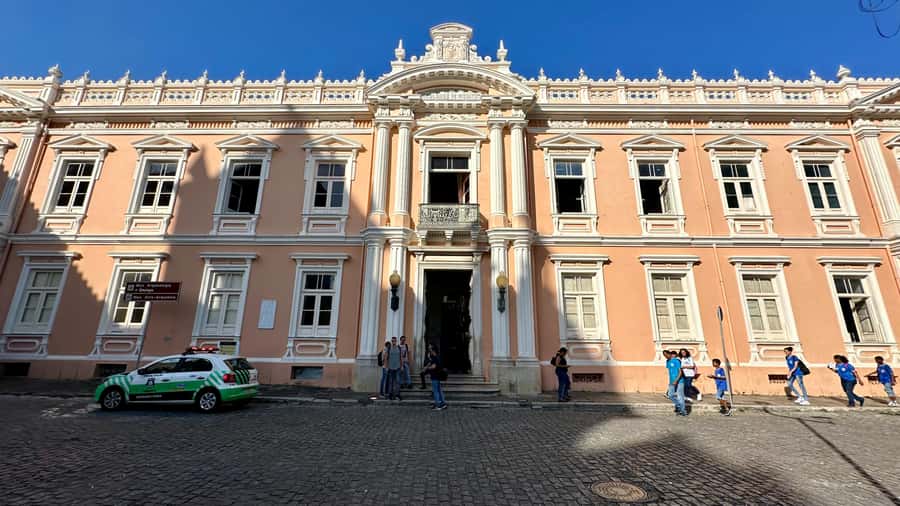
Pelourinho is the obvious first lesson in Salvador’s history. This UNESCO World Heritage area is known for its colonial architecture and its place in the city’s public life. Here, the Afro-Brazilian Museum adds an important layer by presenting the history and cultural contributions of Black people in Brazil.
The museum is more than a quick photo stop. It gives your guide a place to explain how African traditions survived forced displacement and enslavement. The supplied schedule allows about an hour for the Pelourinho visit, though the broader description places some of this experience at the beginning of the day. The exact order may vary, so ask your guide how the route will run that morning.
Pelourinho can be busy and visually powerful. The tradeoff is that it is also the part of Salvador most familiar to first-time visitors. The tour becomes more distinctive once it leaves the historic center and heads toward the railway suburbs.
Dique do Tororó and Salvador’s public symbols
Dique do Tororó receives about 20 minutes in the listed schedule. That is enough for a photo stop and a short explanation, not a full park visit.
The site is important because it connects public space with Afro-Brazilian religious imagery. The route uses it as one piece of a larger story, showing you how cultural symbols appear in everyday Salvador rather than only behind museum doors.
You should keep your expectations realistic here. Twenty minutes does not allow for an extended walk or a long period of quiet observation. Think of Dique do Tororó as a short visual pause, with the guide supplying the context that makes the stop worthwhile.
São Joaquim Market, where food tells part of the story
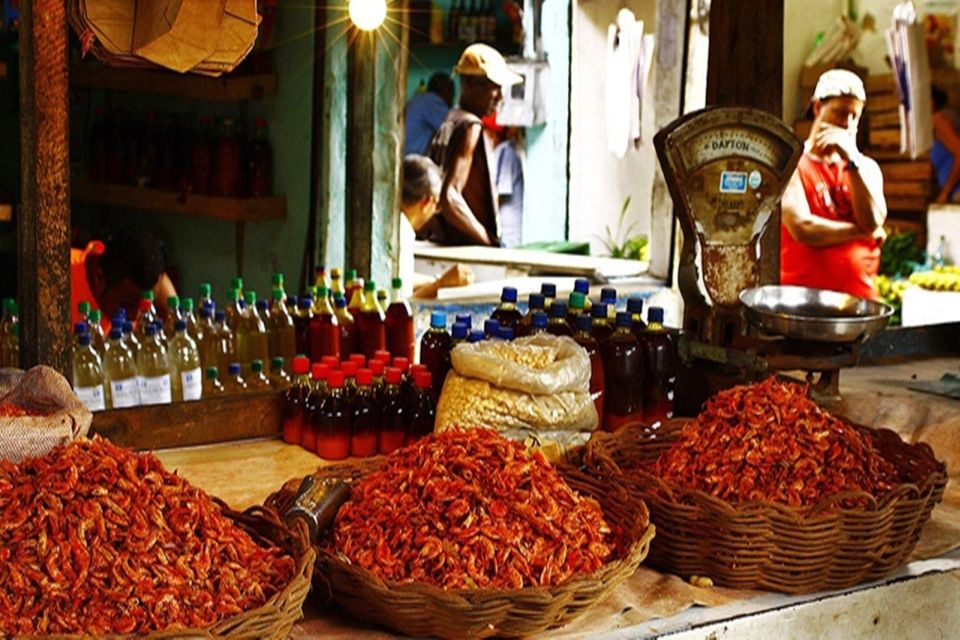
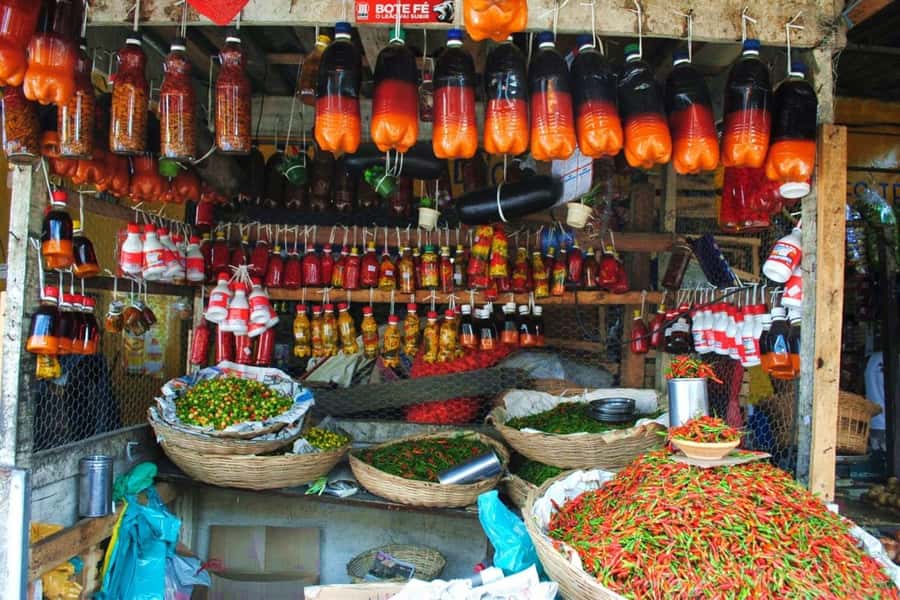
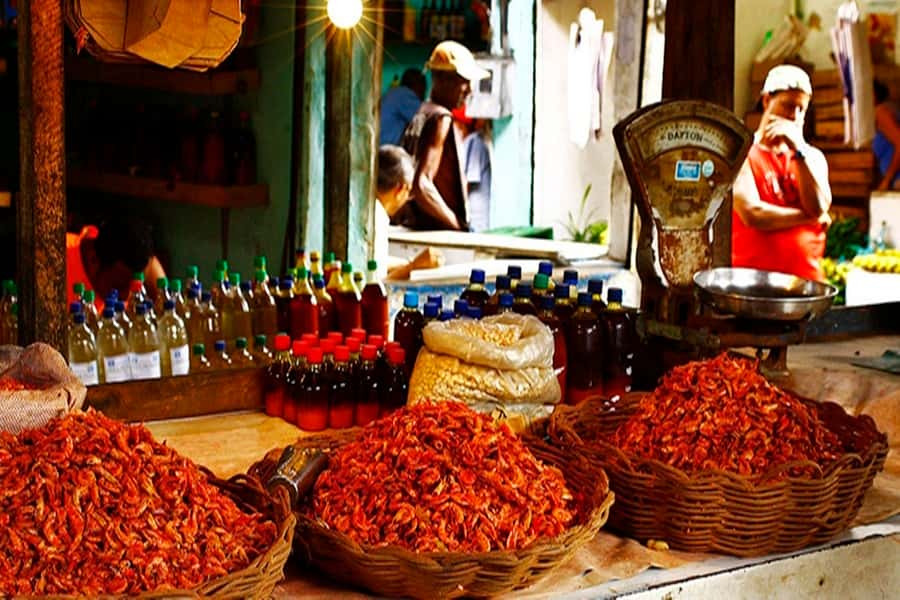
São Joaquim Market is one of the most useful stops for understanding ordinary commerce in Salvador. It is the city’s largest open market and has been recognized as part of Brazil’s intangible heritage.
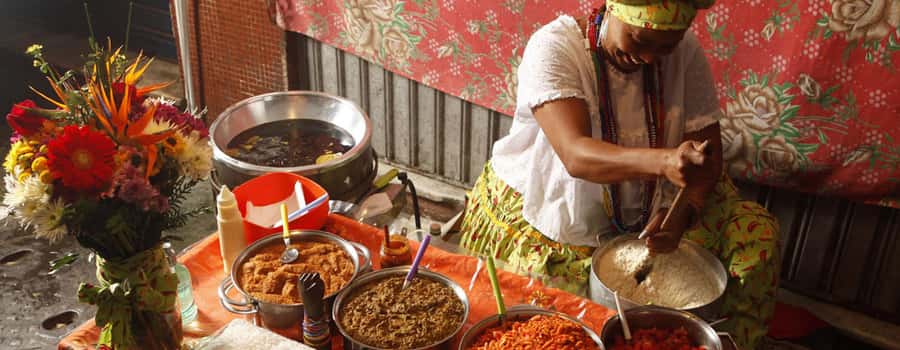
The market was founded by enslaved Africans in the 19th century. That fact gives the visit weight, but the market is not only a historical marker. It is also a place where food, household goods, religious items, and local trade meet. You get a look at the living practices that support Salvador’s kitchens and ceremonies.
I would save your strongest questions for this stop. Ask your guide about ingredients you do not recognize, the connection between market goods and Candomblé practice, and how the market fits into modern Salvador. The tour description does not promise a dedicated shopping period, so do not count on having time for an extended buying session.
The route allows several guided photo and visit blocks of roughly 30 and 40 minutes. Since the supplied itinerary does not identify every stop by name, the precise time at São Joaquim may depend on traffic and the day’s order. A small group helps here because you can ask to pause briefly without holding up a busload of people.
A few more Salvador Brazil days to weigh up
- From Salvador: Schooner Tour to Frades Islands and Itaparica
★ 3.9 · 98 reviews - Salvador Historic Walking Tour – Pelourinho
★ 4.8 · 62 reviews - Salvador de Bahia African Culture Tour
★ 4.5 · 60 reviews - Salvador: Praia Do Forte and Guarajuba Beach Day Trip
★ 4.1 · 56 reviews
From the old port to the story of forced arrival
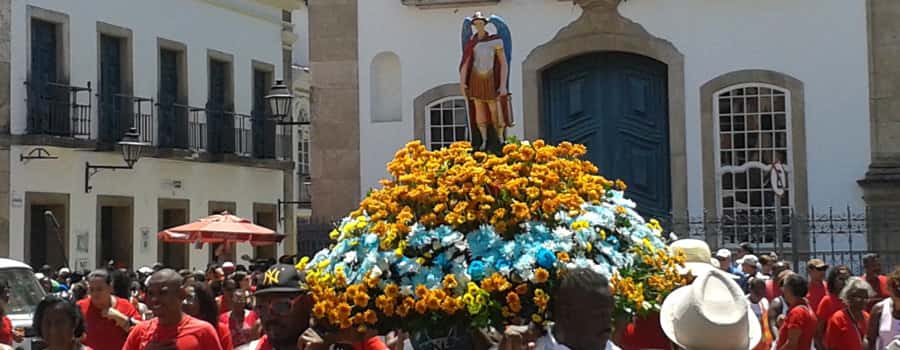
The tour also visits the old port where Africans were brought to Salvador and a former slave market. This is one of the most difficult parts of the route, and it should be approached with care.
The value is not in treating the site as a dramatic backdrop. It is in understanding the physical point where people were stripped of freedom, separated from their homes, and forced into Brazil’s colonial economy. Your guide’s explanation matters greatly here, since the significance of the place can be missed if you only pass through quickly.
This stop also helps connect the city’s past with the communities and religious practices you see later. The route is asking you to follow a difficult chain: forced arrival, survival, cultural preservation, and the continued public presence of African traditions.
Candomblé at Ilê Iyá Axé Nassô Oká
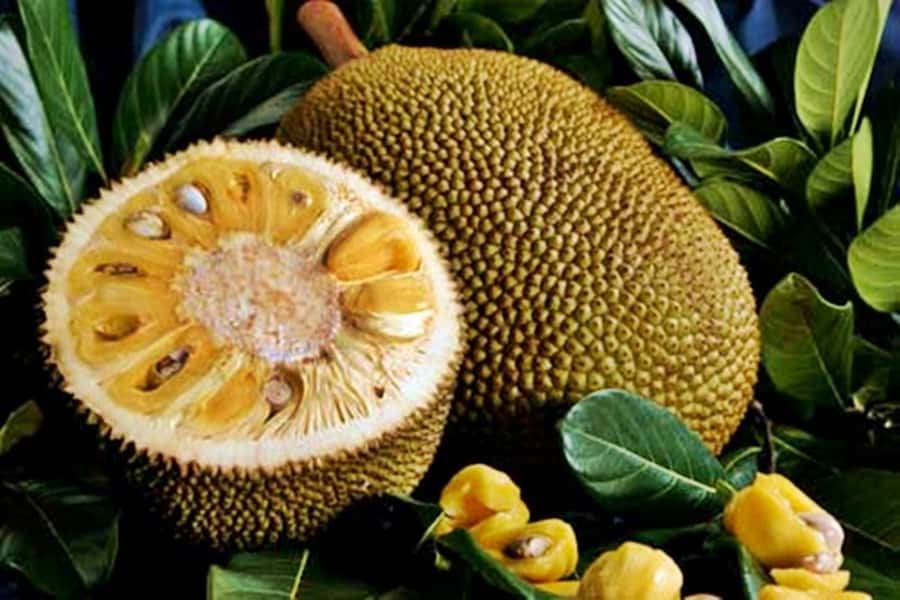
One of the most distinctive visits is to Ilê Iyá Axé Nassô Oká, described as the first Candomblé terreiro of Yoruba origin founded in the New World. The terreiro is grounded in matriarchal tradition, an important detail that gives the visit a clear social and religious focus.
Candomblé is not an optional side note in this tour. It is central to the way the experience explains Bahia. You learn about religious traditions that people preserved through centuries of pressure and discrimination, and you see how those traditions remain connected to community life.
This is a place where respectful behavior matters. Listen closely, follow your guide’s instructions, and avoid assuming that a religious site functions like a normal tourist attraction. The description does not promise a ceremony or specific ritual, so you should expect interpretation and a visit rather than a guaranteed religious event.
A good guide can make this stop accessible without flattening its meaning. D. Maria was praised for answering many questions with detailed explanations about Bahia, spirituality, world history, and cultural expression. Mônia was also singled out for combining strong historical knowledge with a friendly manner. If either guide is assigned to your group, you can expect the conversation to be a major part of the day.
Rio Vermelho and the Queen of the Sea
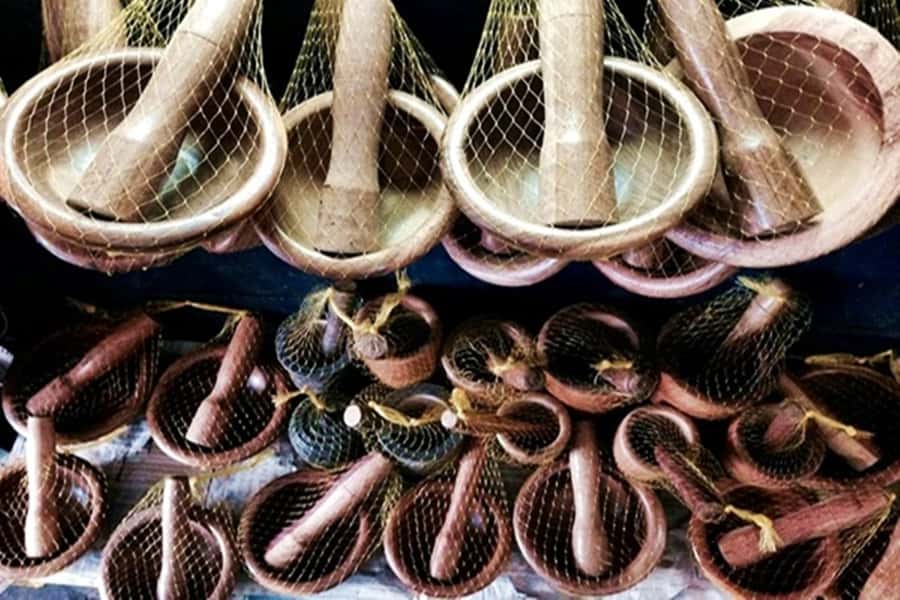
The route continues to the Queen of the Sea House near Rio Vermelho, a beachside fishermen’s community. Here, an altar honors Yemanjá, the African orixá associated with the sea.
The setting shows how belief can be woven into a neighborhood rather than kept apart in a formal institution. The fishermen’s community built the altar in reverence to Yemanjá, giving the stop a direct link to local work, the sea, and religious devotion.
February 2 is the major annual celebration for Yemanjá. The ceremony draws more than 400,000 people, making it one of the largest events offered in honor of an African orixá. Your six-hour visit will not reproduce that festival, of course, but it gives you the setting and background needed to understand why the date matters.
Rio Vermelho is also a useful change of mood after the more painful historical stops. The visit is still cultural and interpretive, but the beachside location and neighborhood setting make the subject feel part of present-day life.
Feijoada in Garcia, with a family tradition
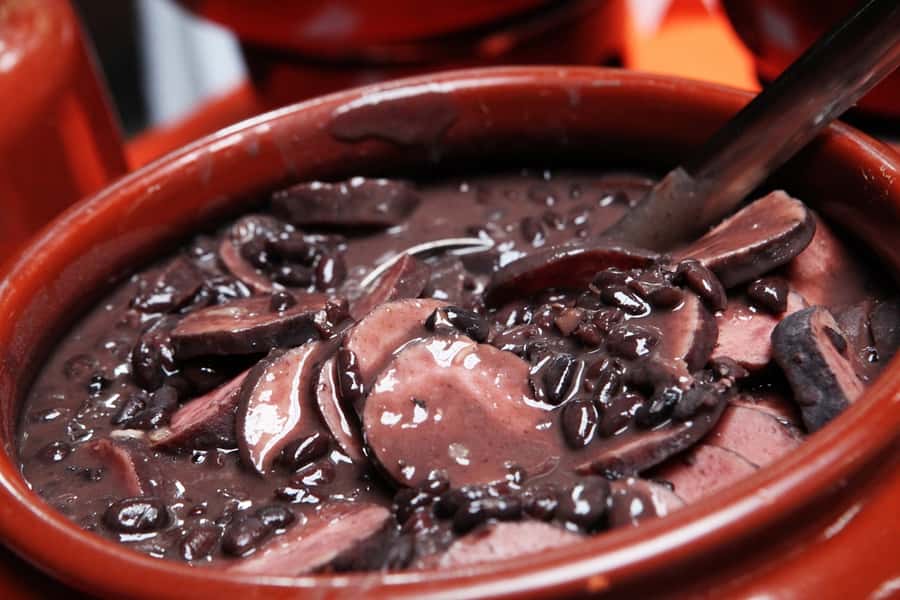
Lunch is one of the clearest reasons to choose this tour instead of a standard city circuit. You may eat in a Black community in the Garcia neighborhood, with a family whose food tradition extends over 50 years.
The featured dish is feijoada, a homemade bean stew and one of Brazil’s best-known comfort foods. Drinks are not included, so bring money for those. A vegetarian option is available, but you need to request it when booking, along with any other dietary requirements.
This meal is valuable because it is tied to a family and neighborhood rather than presented as a generic restaurant stop. One especially useful detail from the feedback is how strongly the local lunch was appreciated as something a visitor would be unlikely to arrange alone. That is exactly the point: food becomes a way to meet Salvador through hospitality and tradition.
Lunch takes about one hour in the listed schedule. That gives you enough time to eat and talk, but not necessarily to linger for half an afternoon. If you have allergies or strict dietary needs, tell the operator early and repeat the information to the guide.
What the guide adds to the day
The route covers serious subjects, and the guide can make the difference between a connected story and a string of stops. The most praised qualities are warmth, historical range, and a willingness to answer questions.
Mônia was described as a friendly guide whose broad understanding helped explain the city, its people, and its cultural expressions. D. Maria received particularly strong praise for detailed answers about Bahia, spirituality, and world history. Fernando was associated with the local lunch experience, which suggests that the personal connections around the meal are part of the tour’s appeal.
The tour is available in English, Spanish, French, Italian, and Portuguese. That is useful for a subject with many names, beliefs, and historical layers. Still, language availability can depend on the date and guide assignment, so select your preferred language carefully when booking.
With only four participants, you can shape the conversation more than you could on a large group outing. I would prepare a few questions in advance, especially about Candomblé, the role of women in the terreiro tradition, African influences on Bahian food, and the February 2 celebration of Yemanjá.
Timing, comfort, and practical limits
Six hours sounds generous, but Salvador has a lot of ground to cover. The schedule includes hotel pickup and drop-off, several photo stops, guided visits, transportation between districts, one hour for lunch, and about an hour in Pelourinho. Traffic and the pace of discussion can affect how long you spend at individual locations.
The tour is not wheelchair accessible. You should also expect a day built around moving between different urban areas rather than staying in one compact district. Comfortable clothing and shoes are sensible, though the supplied information does not specify a dress code.
Free cancellation is available up to 24 hours before departure, and you can reserve while paying later. That flexibility helps if your Salvador plans are still shifting. Confirmation is provided at booking, and hotel pickup is included from your lobby.
Who will get the most from this experience
I would choose this tour if you want Salvador explained through African heritage, religion, food, and community life. It is especially useful if you have limited time and want more than the usual colonial-center visit.
It suits curious first-time visitors, people interested in Brazil’s African diaspora, and anyone who prefers a guide-led cultural experience to independent sightseeing. The small group is also a good fit if you like asking questions or want a quieter alternative to a large excursion.
I would hesitate if your main goal is shopping, beach time, or a relaxed meal with no schedule. The subject matter can be emotionally demanding, and the route moves quickly. It is also not suitable for wheelchair users.
Should you book this Salvador tour?
Book it if you want to understand how African traditions continue in Salvador’s markets, homes, religious centers, food, and public celebrations. The strongest parts are the family lunch, the Candomblé visit, São Joaquim Market, and the chance to discuss difficult history with a guide in a very small group.
At $150, the value comes from access and interpretation rather than from the number of attractions alone. You receive transport, admissions, lunch, and a multilingual guide, but the real benefit is having these disconnected parts of Salvador explained as one story.
If you want a polished overview of the city’s Afro-Brazilian identity in six hours, I would book it. Just confirm your language, request vegetarian food or other dietary needs in advance, and go in ready for a full, serious day rather than a casual sightseeing ride.
FAQ
How long does the Salvador Anthropological City Tour last?
The tour lasts six hours, including hotel pickup and drop-off, guided visits, photo stops, transportation, and lunch.
Is hotel pickup included?
Yes. Pickup and drop-off are included, with pickup from your hotel lobby in Salvador.
What languages are available?
The tour is offered in Spanish, English, French, Italian, and Portuguese.
Is lunch included?
Yes. Lunch is included and features homemade feijoada in the Garcia neighborhood. Drinks are not included.
Can I request vegetarian food?
Yes. A vegetarian option is available, but you should request it when booking. You should also report any other dietary requirements in advance.
Is the tour wheelchair accessible?
No. The experience is not wheelchair accessible and is not suitable for wheelchair users.
Newest reviews from around Salvador Brazil
- Salvador: Schooner Cruise with Pickup and Itaparica Stop★ 3.8 · 5 reviews
- Salvador: 3-Hour Percussion Class★ 4.9 · 10 reviews
- Salvador by Night: Cultural Show and Dinner.★ 4.4 · 17 reviews
- Salvador: Traditional Drumming and Percussion Workshop★ 4.4 · 10 reviews
- Salvador: Cultural Treasure – Samba de Roda.★ 4.9 · 51 reviews
- PROMO Salvador: Interactive Art and Culture Private Tour★ 5.0 · 2 reviews
- Salvador: Curated Nightlife Exp. in the Heart of the City★ 5.0 · 2 reviews
- Salvador: Capoeira Class at Mestre Bimba’s 1st Ever School.★ 4.9 · 34 reviews
City Tours, compared.
Rio’s City Tour – Tickets for Christ, Sugar Loaf & Lunch included
Read our review →
Full Day: Christ Redeemer, Sugarloaf, City Tour & Barbecue Lunch
Read our review →
São Paulo’s Full Day City Tour: Main City Sights in 7 Hours – (Shared Group)
Read our review →

Christ the Redeemer & Sugarloaf: Rio City Tour with Lunch
Read our review →
Floripa City Tour by Bus – Whole Island – The Most Complete City Tour
Read our review →
Main City Sights in 7 Hours – Shared Group Tour
Read our review →
Carnival Backstage Tour at Samba City with Cocktail
Read our review →Browse the lists this tour appears in