
Reviewed · WALKING TOURS
São Paulo Highlights Walking Tour with a Guide
São Paulo’s center tells Brazil’s story in stone. This three-hour walk links the city’s founding site, grand churches, early skyscrapers, cultural halls, and public squares with a guide who can explain what you are seeing. I like the compact route through historic central São Paulo and the chance to ask questions as you go. I also like the choice of private or small-group touring, which can make a busy city center easier to understand.
The main trade-off is that this is a city walk, not a series of full museum visits. Monument entry is not included, public transport costs extra, and the nine stops are paced at about 20 minutes each. Wear comfortable shoes, and confirm which paid interiors or tickets you want before setting out.
In This Review
- Key points at a glance
- Why this three-hour walk works in São Paulo
- Starting at Pateo do Collegio
- Sé Cathedral and the city’s religious center
- Martinelli Building and São Paulo’s first skyscraper
- Farol Santander for a 360-degree view
- The CCBB stop needs a quick confirmation
- São Bento Monastery and a quieter pause
- Vale do Anhangabaú and public life
- Theatro Municipal and the 1922 Week of Modern Art
- Matarazzo Building and City Hall
- What the guide adds to the walk
- Price, group size, and what you receive
- Who should book this São Paulo walk?
- Should you book it?
- FAQ
- How long does the São Paulo Highlights Walking Tour last?
- Where does the tour start?
- Is the tour private or shared?
- Which languages are offered?
- Are attraction entrance tickets included?
- Are food, drinks, and public transport included?
- Can I cancel for a full refund?
Key points at a glance
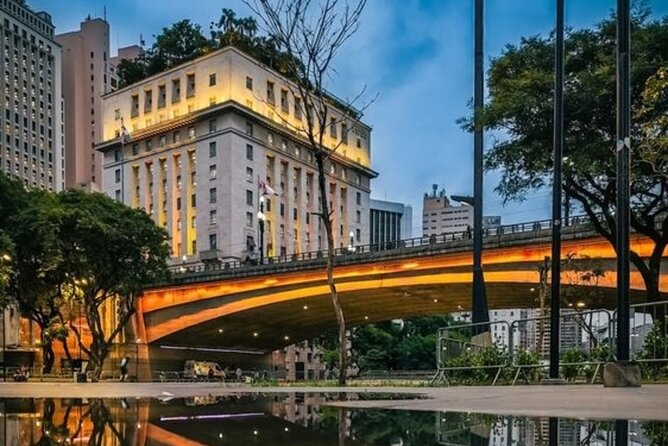
- Nine central landmarks in about three hours: The route covers Pateo do Collegio, Sé Cathedral, Martinelli Building, Farol Santander, CCBB, São Bento Monastery, Vale do Anhangabaú, Theatro Municipal, and the Matarazzo Building.
- A guide adds the city’s backstory: Roberto is praised for his command of São Paulo and Brazil, while Faical is noted for his humor, hospitality, and helpful suggestions for the rest of your visit.
- The walk focuses on exteriors and orientation: You see important buildings and public places, but entry to monuments and museums is extra.
- Farol Santander adds a high-up view: Its 360-degree outlook gives you a useful sense of São Paulo’s vast scale, if the visit and ticket are arranged.
- A good first-day activity: The route introduces the historic core and can help you decide which sites deserve a longer return visit.
- Price is reasonable for a private experience: At $39.95 per person, the value depends on group size and whether you want explanation more than included admissions.
Why this three-hour walk works in São Paulo
São Paulo can feel hard to read at first. Its center combines colonial foundations, grand religious buildings, early twentieth-century commercial towers, modern arts institutions, and broad public spaces. A map shows you where things are, but it does not explain why they matter. This is where a guide earns the fee.
The route is arranged as a connected walk rather than a single attraction. You move from the city’s Jesuit beginnings to the political and cultural life of the modern center. That gives the tour a clear shape, even though each stop gets only about 20 minutes.
I would treat this as an introduction, not a complete study of São Paulo. You will get a useful framework for the center, a number of good photo stops, and answers to questions that are easy to miss when walking alone. You will not have time for long museum visits or a slow look at every interior.
The tour is offered in English, with guides also available in Spanish, French, and Italian. It can be private or arranged for a small group. The group option requires at least two participants, while a private booking lets your party keep the pace and ask for some customization.
More Walking Tours in São Paulo
- Sao Paulo: Downtown-Center History Walking Tour – in English
★ 5.0 · 91 reviews - Sao Paulo: Downtown-Center Walking Tour | 2 Hours – English
★ 4.9 · 84 reviews - Ecological walk in sao paulo
★ 5.0 · 61 reviews
Starting at Pateo do Collegio
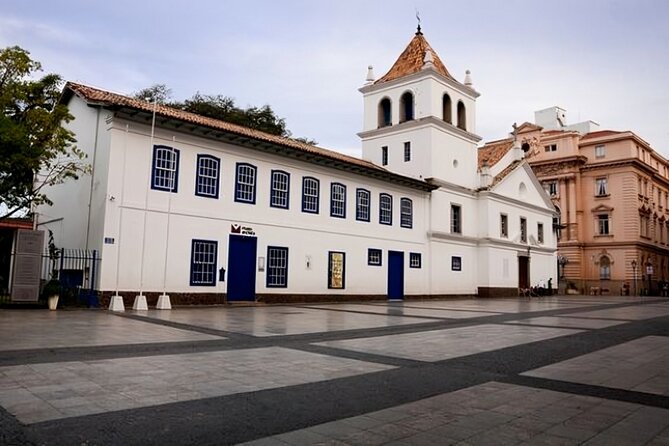
Pateo do Collegio is the right place to begin. This is the site where Jesuits founded São Paulo in 1554, so it gives the tour its first clear link to the city’s earliest days. The guide explains the Jesuit mission and how the settlement began to grow.
You have about 20 minutes here, and admission to the listed stop is free. That short visit is enough to establish the basic story, but not enough for a detailed museum session. If the origins of São Paulo are a major interest, ask your guide how much time will be spent inside and what is available on the day.
Starting here also helps you understand the difference between São Paulo’s old core and the huge modern city surrounding it. The point is not simply to photograph an old building. It is to see how a small religious settlement became one of Brazil’s largest cities.
Sé Cathedral and the city’s religious center
From Pateo do Collegio, the route continues to Catedral da Sé de São Paulo. The cathedral’s medieval European design makes it one of the center’s most imposing sights, and its position at the heart of the city makes it an easy landmark for getting your bearings.
The scheduled stop lasts about 20 minutes, with no admission charge listed. That gives you time to admire the scale and hear about the cathedral’s place in São Paulo, but you should not expect a long guided examination of every chapel or architectural detail.
This is one of the stops where a guide helps you look past the obvious grandeur. You can ask about the building’s role in city life and how it fits into the older center. Keep your expectations clear: the experience is primarily a guided city walk, not a specialist cathedral tour.
Martinelli Building and São Paulo’s first skyscraper
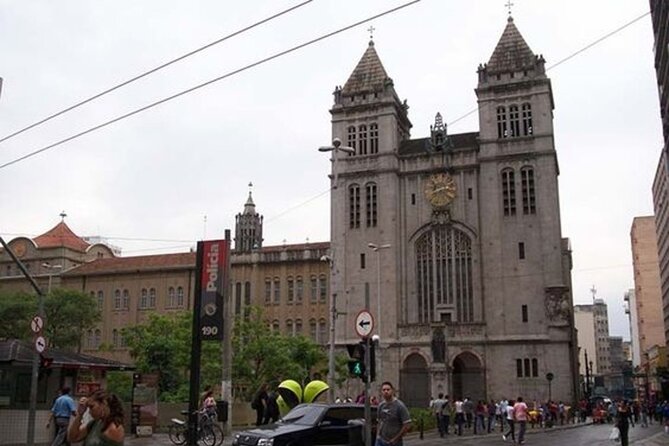
The Edifício Martinelli brings the story forward to the early twentieth century. Completed in 1929, it is described as the first skyscraper in Latin America and a sign of São Paulo’s rapid urban expansion.
That claim gives this stop real weight. The building is not just an old tower among newer ones. It represents a period when São Paulo was changing its scale and ambitions, moving from a historic center toward a commercial city filled with taller structures.
You have roughly 20 minutes here. The tour helps you place the building in the city’s development, though entry is not included. If you want to go inside, ask about ticket arrangements before the tour, since the provider offers help booking tickets for desired visits but does not include monument or museum admission in the tour price.
Same patch of Brazil, a completely different sort of day:
- Skydive Tandem – São Paulo – Brazil
★ 5.0 · 1,840 reviews - São Paulo’s Full Day City Tour: Main City Sights in 7 Hours – (Shared Group)
★ 5.0 · 1,691 reviews - 5-hour Private Tour Of São Paulo With Its Main Sights – Optional Airport Pickup
★ 5.0 · 643 reviews - São Paulo: Main City Sights in 7 Hours – Shared Group Tour
★ 4.9 · 587 reviews
Farol Santander for a 360-degree view
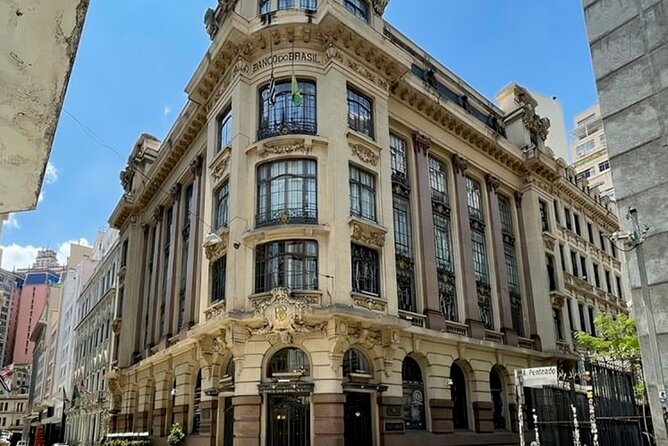
Farol Santander shifts the focus from street level to the skyline. The building offers 360-degree views of São Paulo, along with cultural exhibitions and events. This is a welcome change after several historic structures because you can look outward and understand the city’s enormous scale.
The view is likely to be one of the tour’s strongest visual moments, but it is also one of the places where ticket planning matters. Admission is not included, and the tour description says the team can help book tickets for visits you want. Confirm whether access to the viewpoint is part of your chosen plan.
The scheduled 20 minutes is brief for a building that combines exhibitions with a lookout. You may need to choose between taking in the view and spending time with the cultural displays. I would prioritize the panorama on a first visit, then return later if a particular exhibition interests you.
The CCBB stop needs a quick confirmation
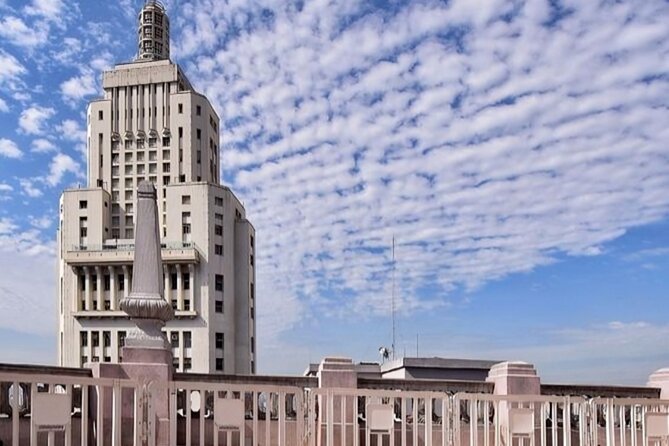
The route includes Centro Cultural Banco do Brasil, usually known as CCBB. The information provided describes a neoclassical building from 1901 with cinema, theater, and exhibitions. It is presented as a place where older architecture meets current cultural programming.
There is one practical point to check before booking: the stop is labeled CCBB Rio de Janeiro, even though the tour takes place in São Paulo. That may be a naming error in the tour details, but you should confirm the exact São Paulo location with Guydeez before the walk.
The stop is allocated about 20 minutes, and entry to museums or cultural sites is not included. That makes it more of a guided exterior and orientation stop unless you arrange a ticket and have enough time. If you care about a specific film, performance, or exhibition, ask about it in advance rather than assuming it is part of the walk.
São Bento Monastery and a quieter pause
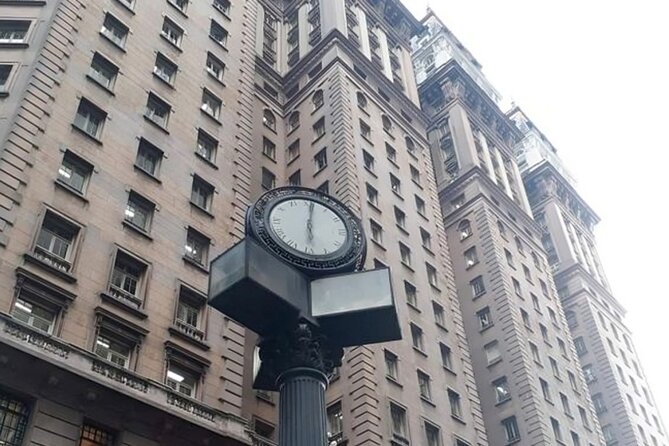
Mosteiro de São Bento offers a calmer stretch of the route. The Benedictine monastery is known for Gregorian chants and monastic products such as breads and jams made from old recipes.
This stop adds a human, sensory detail to the architecture. Instead of only looking at façades and public institutions, you hear about a living religious community and its traditions. The monastery’s products may interest you as a small food souvenir, though no food or drink is included in the tour.
Again, plan on about 20 minutes. If hearing Gregorian chant is important to you, ask the guide about timing, because a short daytime visit does not guarantee a service or musical performance. The walk can introduce the monastery, but it cannot promise a full religious or musical program.
Vale do Anhangabaú and public life
Vale do Anhangabaú is more than an open urban space. It has been a gathering point for cultural and political demonstrations, including the significant VOTING NOW movement calling for direct elections during Brazil’s military regime.
This is where the tour connects architecture with civic life. A square or valley in the middle of the city can look like an ordinary passageway until you know what happened there. The guide’s explanation gives the place political meaning without requiring you to visit a separate history museum.
The stop lasts about 20 minutes. Much depends on the guide’s storytelling, so this is a good place to ask questions about the movement and São Paulo’s role in Brazil’s political life. The walk provides context, but it is not presented as a full modern Brazilian history course.
Theatro Municipal and the 1922 Week of Modern Art
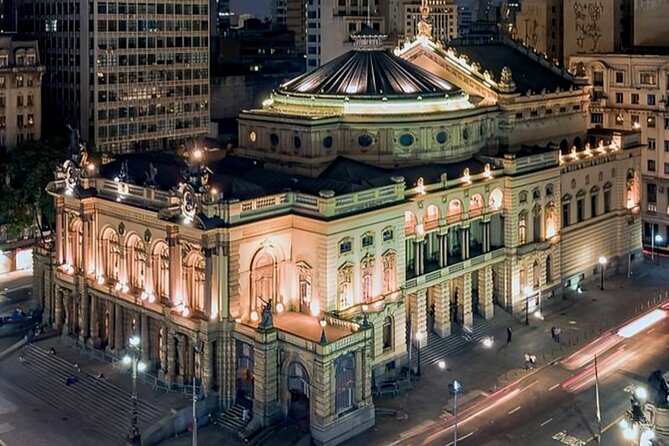
Theatro Municipal is one of São Paulo’s great cultural landmarks. Its architecture deserves attention, but the theater also matters because it hosted the 1922 Week of Modern Art, an event linked to major changes in Brazilian artistic expression.
That pairing makes the stop especially useful. You see a grand theater, then learn how it became connected to a moment when artists and writers challenged older cultural ideas. The tour gives you a reason to look at the building as part of Brazil’s creative story, not simply as a pretty façade.
About 20 minutes is enough for an introduction and photographs. It is not enough for a performance or a detailed backstage visit. Admission is not included, so check ahead if you want to enter beyond the outdoor portion.
Matarazzo Building and City Hall
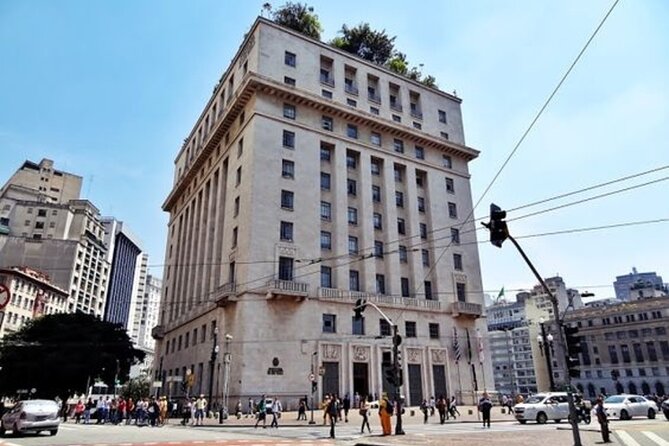
The final listed landmark is the Matarazzo Building, now São Paulo City Hall. Its design is attributed to Mussolini’s preferred architect, and the structure reflects the industrial ambition and formal style of its period.
This is a fitting end to a route that has tracked São Paulo’s growth from Jesuit settlement to major urban center. The building represents government, business, and the city’s twentieth-century confidence in one imposing package.
The stop takes about 20 minutes. Since this is an active civic building, treat it mainly as a place to view and discuss from the outside unless your guide confirms access. The tour then returns to the original meeting point.
What the guide adds to the walk
The strongest reason to book is the human explanation. Roberto receives particular praise for his understanding of São Paulo and Brazil, his clear answers, and his easy sense of fun. Faical is also praised for being welcoming, humorous, and good at shaping an interesting route.
One useful detail is that Faical met one party at its hotel when finding the official meeting point proved difficult. Do not assume hotel pickup is standard, because the stated meeting point is R. Dr. Bitencourt Rodrigues, 31, in Sé. Still, this suggests it is worth contacting the provider if you are unsure about the starting place.
A guide also helps you avoid wandering between disconnected sights. One person who took the walk felt the center would have been difficult to explore alone. That is a fair point: São Paulo’s historic core rewards context, and the route includes buildings you might pass without knowing their role.
The experience is described as well paced and fun. You should still expect a real walking workout. Comfortable shoes are essential, and you should be ready for city-center walking rather than a relaxed café tour.
Price, group size, and what you receive
The listed price is $39.95 per person. For a private or small-group three-hour walk, that is a reasonable price if you value a guide’s time, local context, and a planned route through nine major sites.
The value is less obvious if you mainly want included attractions. Food, drinks, tips, public transport, and entry tickets are excluded. Most stops are free to view, but paid access to museums, monuments, or the Farol Santander viewpoint can raise the final cost.
Ask about customization before booking. The provider says the tour can be adjusted and that the team can help arrange tickets for visits you want. That is useful if you prefer more time at the cathedral, Farol Santander, or a cultural center, though the basic schedule gives each stop only about 20 minutes.
The tour has a five-star rating from seven submitted reviews, with repeated praise for the guides, organization, historical explanation, humor, and route choice. The sample is small, so I would use it as a positive signal rather than a guarantee that every tour will feel identical.
Who should book this São Paulo walk?
I would recommend it most strongly for a first visit, especially if you have only a short time in São Paulo and want an introduction to the center. It also suits you if you prefer asking questions to reading plaques or navigating a large city on your own.
History and architecture fans will get the most from the sequence of sites. The walk connects colonial beginnings, religious institutions, skyscraper growth, political gatherings, artistic change, and public administration.
It is also a good fit for families and mixed-age groups because the route changes subject often. A cathedral is followed by a tower, then a viewpoint, monastery, public square, theater, and city hall. You are less likely to spend the full three hours focused on one type of attraction.
I would be more cautious if you want extensive museum time, a food experience, or guaranteed interior access. The experience is designed to show you the city center and explain it, not provide a series of long guided visits indoors.
Should you book it?
Book this tour if you want a well-organized introduction to central São Paulo, a guide who can explain the city’s past, and the flexibility of a private or small-group format. Roberto and Faical are the named guides connected with especially positive comments, and the route covers an unusually broad range of city stories in three hours.
Before paying, confirm the CCBB location, ask which attractions can be entered, and decide if you want tickets arranged for Farol Santander or other interiors. If you are happy with a walking overview and plan to return to your favorite sites later, $39.95 is a fair buy. If you want every admission included, this is not the right product.
Free cancellation is available up to 24 hours before the start time. The stated meeting point is near public transportation, and the activity returns there at the end.
FAQ
How long does the São Paulo Highlights Walking Tour last?
The tour lasts approximately three hours.
Where does the tour start?
It starts at R. Dr. Bitencourt Rodrigues, 31, in Sé, São Paulo, and ends back at the same meeting point.
Is the tour private or shared?
Private and small-group options are available. The group option requires at least two participants, while a private activity is limited to your own group.
Which languages are offered?
The guide can be provided in English, Spanish, French, or Italian. The tour listing specifically identifies English as an offered language.
Are attraction entrance tickets included?
No. Entry to monuments and museums is not included. The provider can help book tickets for visits you want.
Are food, drinks, and public transport included?
No. Food and drinks are excluded, and you pay separately for any public transport used during the tour.
Can I cancel for a full refund?
Yes, if you cancel at least 24 hours before the experience start time. Cancellations or changes made less than 24 hours before the start time are not accepted for a refund.
Newest reviews from around Sao Paulo
- Visit to the Cerejeira Annual Party in Carmo Park★ 3.5 · 2 reviews
- REIKI – Crystal Therapy – by Venus’ Secret Spa – San Francisco★ 5.0 · 41 reviews
- Taxi from Guarulhos airport to São Paulo capital★ 5.0 · 15 reviews
- São Roque Wineries Route from São Paulo★ 4.5 · 13 reviews
- 3h Tasting Session in São Paulo with 34 Local Foods & Drinks★ 5.0 · 7 reviews
- Guided Ceremony in Brazil★ 5.0 · 2 reviews
- Taxi from Viracopos to São Paulo – CHM Transportes★ 5.0 · 2 reviews
- Transfer from São Paulo to Port of Santos★ 4.0 · 8 reviews
Walking Tours, compared.



3 Hour Rocinha Favela Walking Tour with a Local Guide
Read our review →
Favela Tour Rio de Janeiro – Vidigal Walking Tour by Russo Guide
Read our review →
Private Walking and Cultural Tour Rocinha-Rio de Janeiro
Read our review →
Browse the lists this tour appears in