
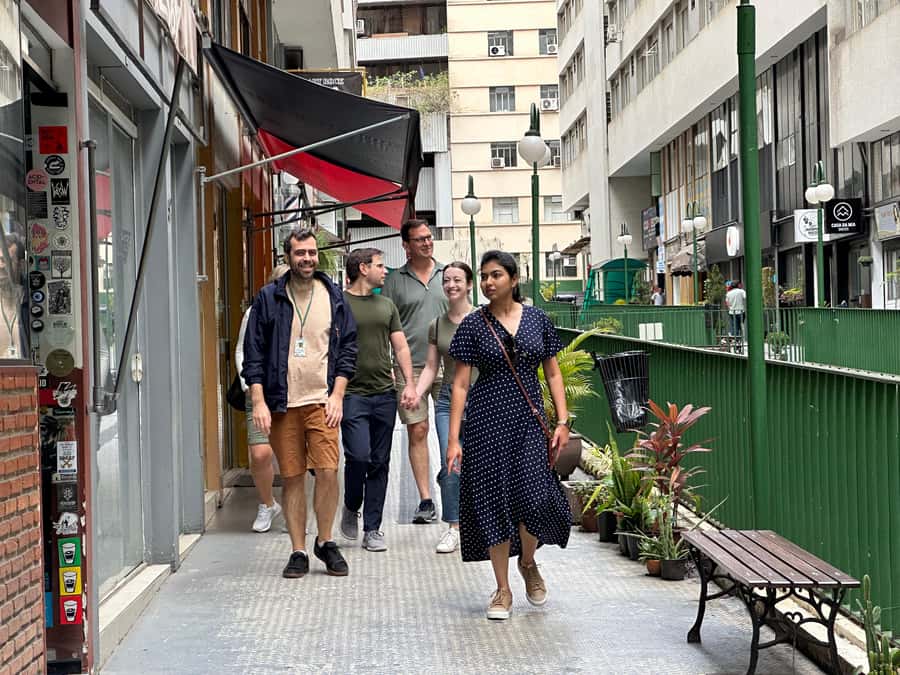
Reviewed · WALKING TOURS
Sao Paulo: Downtown-Center Walking Tour | 2 Hours – English
São Paulo’s center tells many stories in a short walk. I like the way this small-group tour links skyscrapers, churches, immigrant communities, and local life instead of treating downtown as a string of photo stops. I also like the guide’s practical advice, including vegetarian food tips and suggestions for places to explore after the tour. The main consideration is pace: two hours covers a lot, and the strict start time leaves no room for arriving late.
The route begins at Edifício Itália and ends in Liberdade, giving you a useful first look at the city rather than returning you to the starting point. Giuliano, the guide, has earned especially warm praise for explaining architecture alongside its social setting, but you should bring an umbrella and sunscreen because São Paulo weather can change quickly.
In This Review
- Key things to know before you book
- Why this two-hour walk works as a first look at São Paulo
- Edifício Itália and the first view of the city center
- Copan Building: modern São Paulo in ten minutes
- Galeria Metrópole and the city’s public life
- Galeria do Rock: music, style, and urban identity
- Municipal Theatre: a grand marker of changing fortunes
- São Francisco de Assis: a quieter church stop
- Mosteiro de São Bento and the older center
- Bank of Brazil Cultural Center: money becomes culture
- Pateo do Collegio: where the city’s story begins
- São Paulo Cathedral: a major landmark before Liberdade
- Finishing in Liberdade
- Pace, weather, and practical comfort
- Is $37 a fair price?
- Who should book this São Paulo walk?
- Should you book it?
- FAQ
- How long does the São Paulo downtown walking tour last?
- What language is the tour conducted in?
- Where does the tour start?
- Where does the tour finish?
- Is transportation included?
- Are food and drinks included?
- How large is the group?
- Can I cancel for a refund?
Key things to know before you book
- The route covers both old and new downtown: You move from twentieth-century towers and galleries to Jesuit foundations, churches, banks, and São Paulo Cathedral.
- You get a compact city orientation: In two hours, the tour connects major sights with the stories of Tupi peoples, conquerors, migrants, and immigrant communities.
- The group is limited to 10 people: That keeps questions easy and gives the guide room to adjust explanations.
- Architecture is treated as social history: Buildings are not just pretty façades. You learn why they were built and what they say about São Paulo.
- The walk ends in Liberdade: This is useful if you want to continue exploring one of São Paulo’s best-known Japanese and Asian cultural districts.
- Come ready to walk on schedule: The tour begins strictly on time, and no transport, food, or drinks are included.
Why this two-hour walk works as a first look at São Paulo
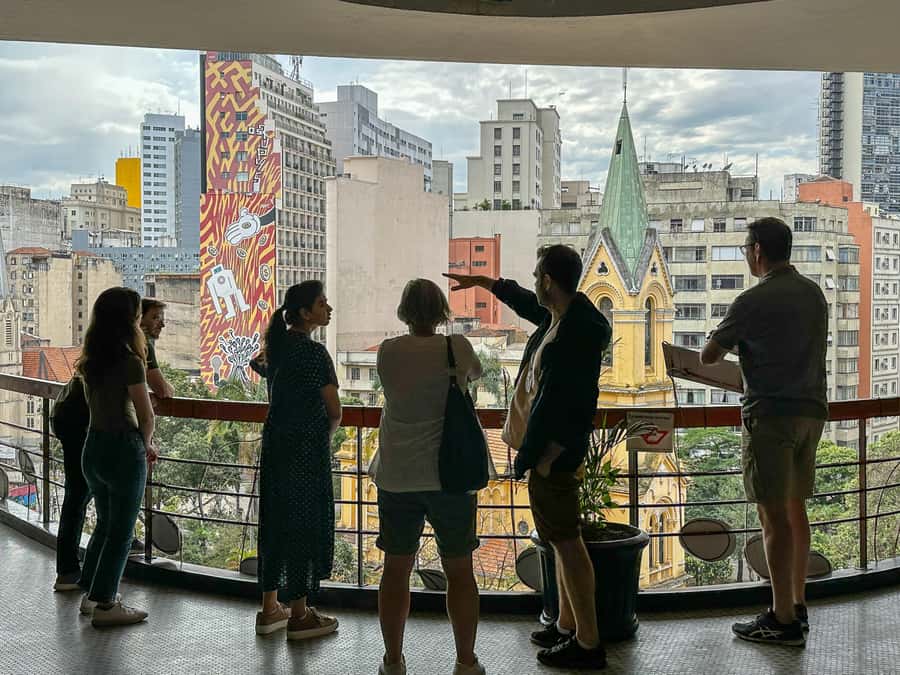
At $37 per person, this is not the cheapest way to see downtown, but the value comes from the connections between places. You could pass several of these buildings on your own and understand very little about them. A good guide turns the walk into a readable story about how São Paulo grew from a small settlement into a huge modern city.
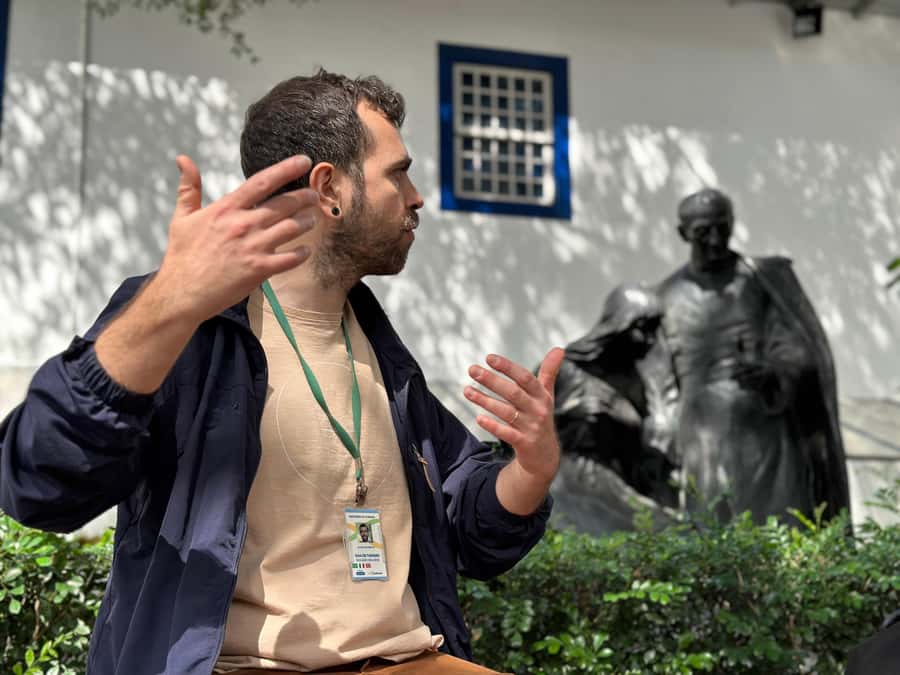
The experience is conducted in English and uses a licensed professional guide. Giuliano has been praised for handling detailed questions, explaining architectural styles, and adding current social context rather than stopping at dates and names. He has also offered useful food suggestions, including vegetarian places, which can save you time later.
The small group matters here. With no more than 10 people, you can ask about a façade, a neighborhood, or something you notice along the way without shouting across a crowd. One participant also appreciated the friendly, conversational atmosphere, where everyone could ask questions and learn together.
Still, this is a brisk introduction, not a full tour of São Paulo. Stops are often 10 to 20 minutes, and the route includes many locations. You will get context and an overview, but you should not expect long interior visits at every building.
More Walking Tours in São Paulo
- Sao Paulo: Downtown-Center History Walking Tour – in English
★ 5.0 · 91 reviews - Ecological walk in sao paulo
★ 5.0 · 61 reviews - Night Walking Tour through the Bars of São Paulo
★ 5.0 · 51 reviews
Edifício Itália and the first view of the city center
Meet at the entrance of Edifício Itália on Avenida Ipiranga, 336. This is an important practical detail: the guide waits at the entrance, and the tour starts strictly on time. Plan your route in advance, especially if you are unfamiliar with São Paulo’s center.
The opening location sets the tone. São Paulo is a city of vertical growth, and its tall buildings help explain the ambition of the modern center. The tour connects that modern city to older paths and settlements, including the Tupi nation that existed before Portuguese control.
The guide’s larger point is useful: São Paulo did not simply appear as a forest of towers. Its roads and growth followed older South American routes, colonial aims, religious work, banking, migration, and industrial expansion. You begin learning to read the city as several periods layered together.
Copan Building: modern São Paulo in ten minutes
The Copan Building is one of the route’s strongest early stops. You have about 10 minutes here, enough for an explanation of its place in the city and a look at its famous modern form.
The building helps show how São Paulo became associated with large-scale urban living and ambitious twentieth-century architecture. The guide explains not only the structure but also the social setting in which such projects appeared. That approach was one of the most praised parts of the tour: the buildings are presented as products of their time, not as isolated design objects.
For you, this is a good place to ask questions about how São Paulo changed during the last century. The stop is brief, so have your camera ready and listen closely.
Galeria Metrópole and the city’s public life
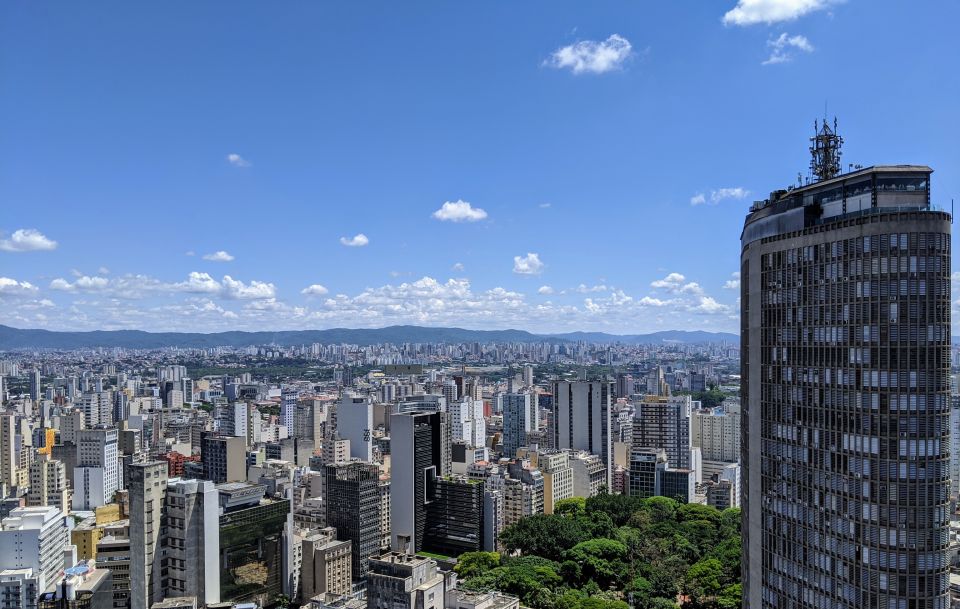
Next comes Galeria Metrópole, with about 10 minutes to look around. Galleries such as this help you see how downtown life is organized beyond grand monuments. They offer a more everyday counterpoint to the tall towers and official buildings.
The point is not simply to check off another address. You begin to see how people use the center, how commercial and social spaces fit into the city, and how São Paulo’s character comes from many communities sharing the same urban core.
Because the visit is short, the guide’s explanation is the main benefit. If you prefer long shopping time or independent browsing, you may want to return later rather than expect this stop to function as a full gallery visit.
Same patch of Brazil, a completely different sort of day:
- Skydive Tandem – São Paulo – Brazil
★ 5.0 · 1,840 reviews - São Paulo’s Full Day City Tour: Main City Sights in 7 Hours – (Shared Group)
★ 5.0 · 1,691 reviews - 5-hour Private Tour Of São Paulo With Its Main Sights – Optional Airport Pickup
★ 5.0 · 643 reviews - São Paulo: Main City Sights in 7 Hours – Shared Group Tour
★ 4.9 · 587 reviews
Galeria do Rock: music, style, and urban identity
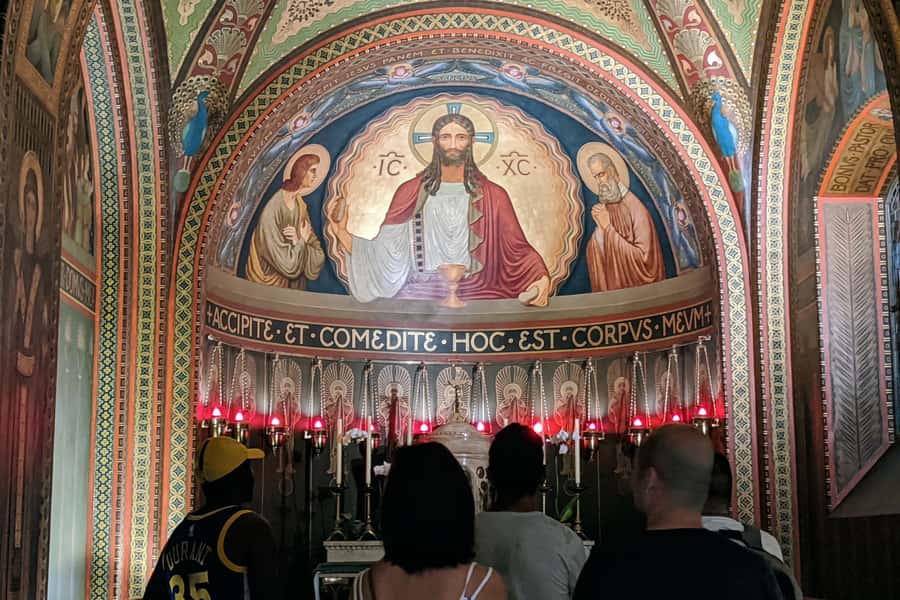
The 20-minute visit to Galeria do Rock gives the tour a change of mood. After the formal architecture of the Copan Building and the broader city setting of Galeria Metrópole, this stop brings you into a place linked with music, fashion, and youth culture.
It is a useful reminder that downtown São Paulo is not only colonial churches and office towers. The city’s identity also comes from subcultures, creative businesses, and the people who have made older buildings their own.
This is one of the longer stops, so you have more time to look around. The guide’s role is especially helpful if you want to understand why the gallery matters to São Paulo’s cultural life rather than simply wander through it.
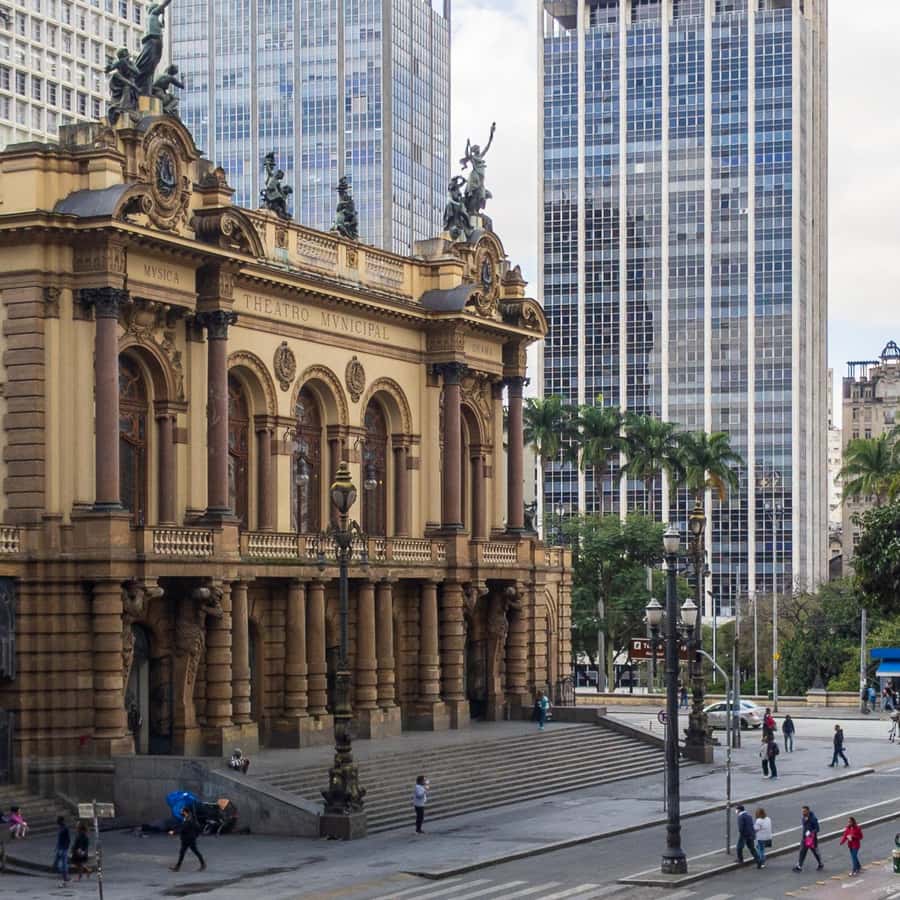
Municipal Theatre: a grand marker of changing fortunes
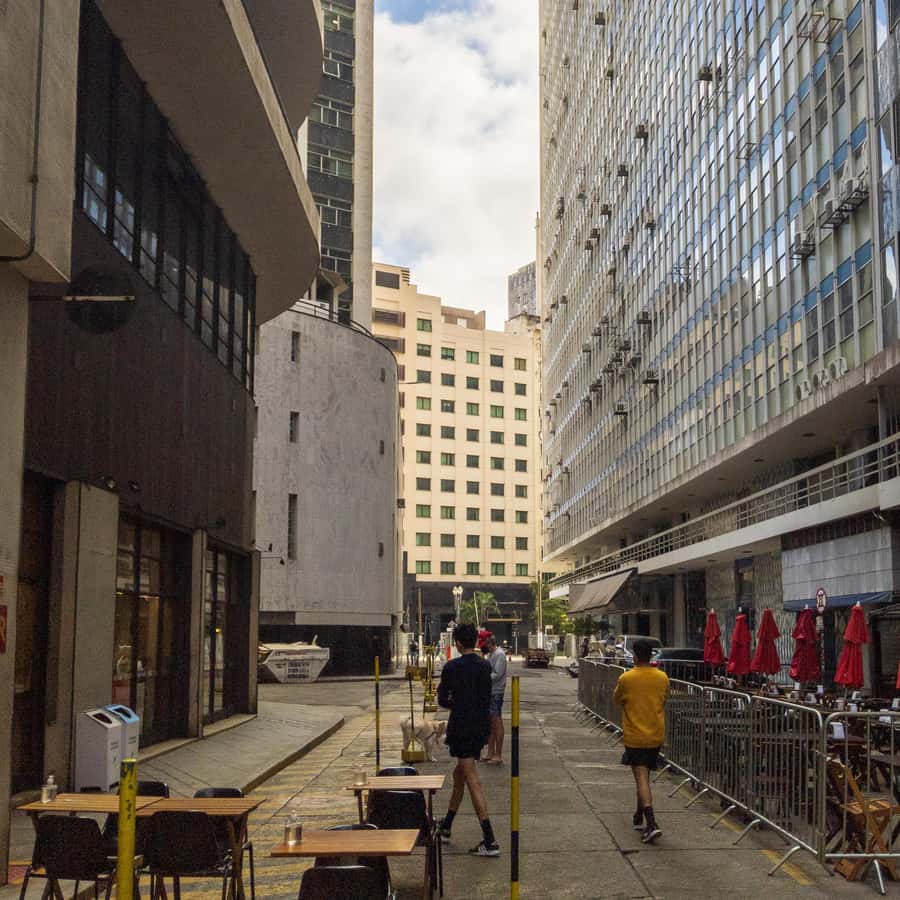
The Municipal Theatre receives about 10 minutes. Its presence brings another layer to the walk: the city’s desire to present itself as a major cultural and economic center.
Here, I would pay attention to the contrast between the theatre’s formal character and the busy streets around it. São Paulo often places grand institutions beside ordinary daily activity. That contrast is part of what makes a central walk worthwhile.
The short stop should give you a clear introduction, but it is not designed as a full performance or interior tour. If the theatre is a priority for you, ask the guide what further visit might be possible after the walk.
São Francisco de Assis: a quieter church stop
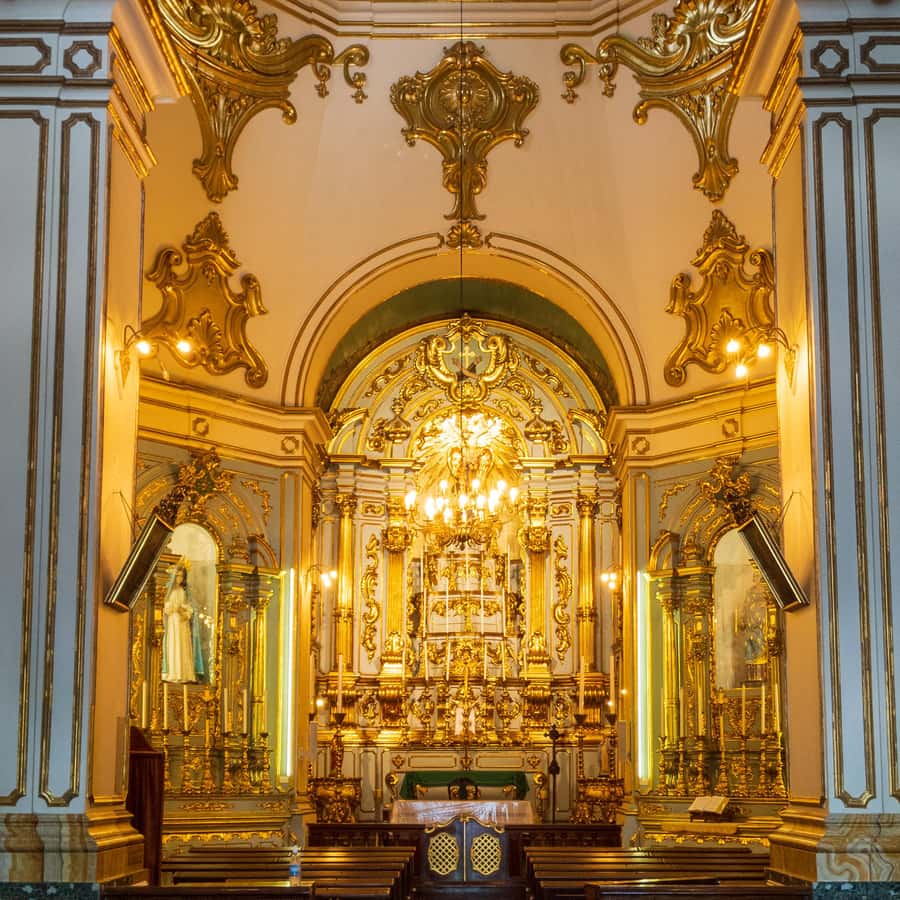
The route then moves to Paróquia São Francisco de Assis, with about 20 minutes. This longer pause gives the guide room to discuss the role of the church and the religious orders that helped shape early São Paulo.
The tour’s historical range becomes clearer here. You are not hearing only about skyscrapers and twentieth-century growth. Jesuits, conquerors, churches, migrants, and immigrants all enter the story, helping you understand why the city center contains such different architectural and cultural traces.
A church stop also changes the rhythm. After galleries and large civic buildings, it gives you a quieter place to look at details and listen. As with every stop, the exact amount of interior access can depend on conditions at the time, so think of this as a guided visit rather than a guaranteed private viewing.
Mosteiro de São Bento and the older center
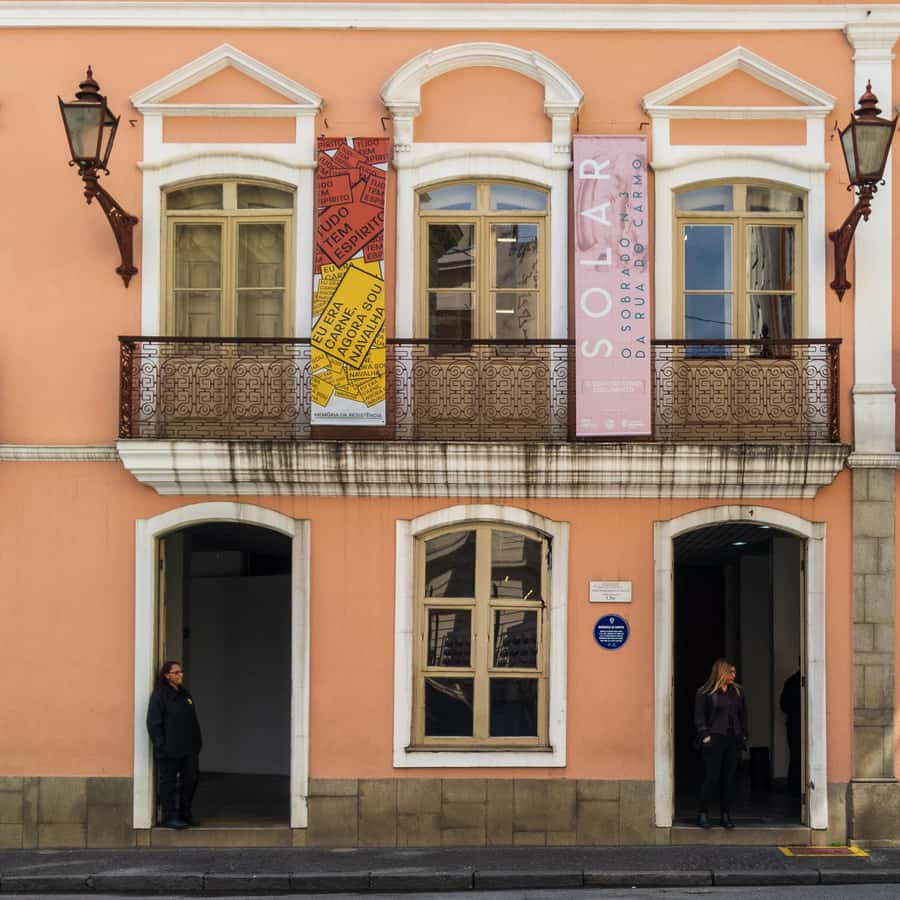
The 15-minute stop at Mosteiro de São Bento brings you further into the historic core. The monastery helps anchor the story of early religious influence and the growth of the settlement around it.
This is where the guide’s ability to connect past and present becomes most useful. You learn how old institutions remained part of a city that later filled with banks, offices, towers, and new arrivals from around the world.
The stop is short but well placed. You are not spending the whole morning in one church complex, yet you receive enough context to understand why the monastery matters in the center’s development.
Bank of Brazil Cultural Center: money becomes culture
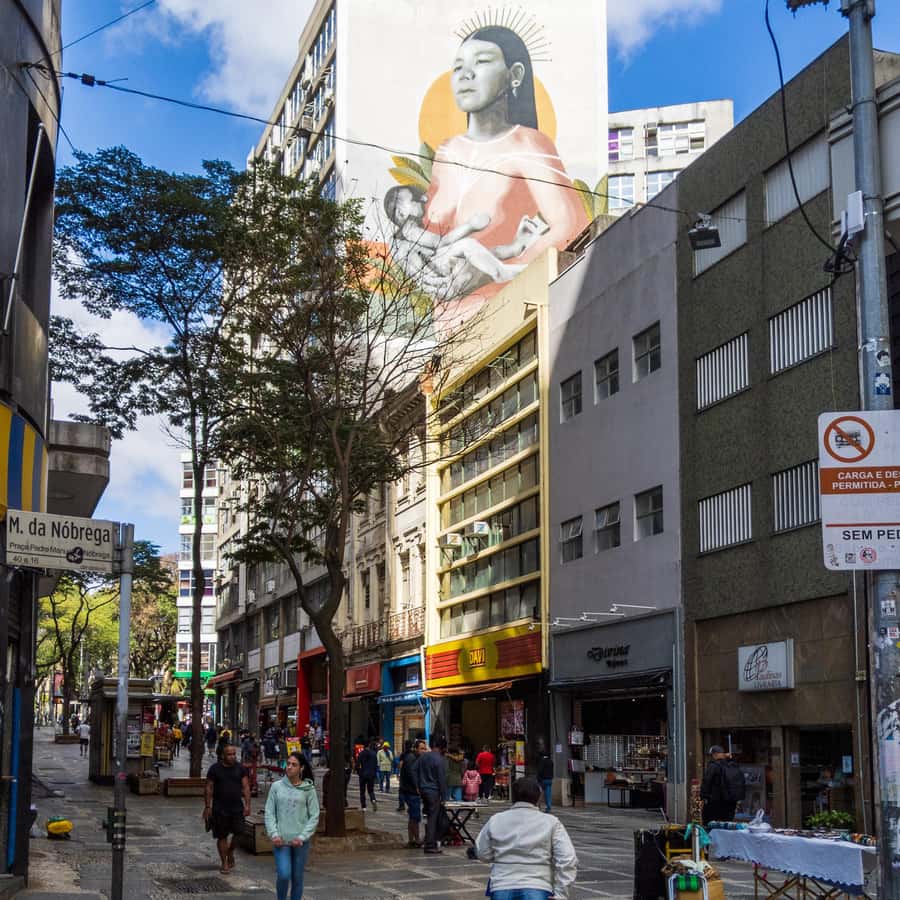
At the Bank of Brazil Cultural Center, you have about 15 minutes. This stop adds finance and public culture to the story. Banks helped shape São Paulo’s growth, while cultural centers show how historic commercial buildings can continue serving the public in new ways.
I like this part of the route because it widens the discussion. A city is built by religious institutions and governments, but also by money, migration, work, and changing public habits. The guide uses the buildings to show that process.
Again, you should expect a focused visit rather than a long exhibition period. If a particular program is running, it may be worth returning later with more time.
Pateo do Collegio: where the city’s story begins
College Pateo, or Pateo do Collegio, receives about 20 minutes and is one of the most important historical stops. The site connects directly with the early Jesuit presence and the founding story of São Paulo.
The guide also places that story beside the Tupi nation and the older routes that crossed the region. That wider framing matters. It prevents the city’s origin story from becoming a simple tale of European arrival, and it gives you a better sense of the people and paths that came before the colonial center.
This is a good place to slow down mentally, even if the tour keeps moving physically. You are looking at a site tied to the city’s earliest colonial period while surrounded by the modern center. That contrast explains much about São Paulo’s character.
São Paulo Cathedral: a major landmark before Liberdade
The final major stop is São Paulo Cathedral, with about 15 minutes. The cathedral gives you another view of the city’s religious and civic importance, and it helps close the historical portion of the walk.
By this point, the route has shown you several kinds of power: religious orders, cultural institutions, banks, commercial galleries, and modern towers. The cathedral works as a final large landmark before the walk turns toward Liberdade.
Do not expect a long cathedral visit within the two-hour schedule. The value is in the explanation and the route’s overall sequence. You leave with a framework for understanding downtown instead of a pile of disconnected facts.
Finishing in Liberdade
The tour ends at Praça da Liberdade, in the Liberdade district. This is a smart finish because it brings the story of migration and cultural exchange into sharper focus.
São Paulo is home to major Italian, Japanese, Syrian-Lebanese, and other immigrant communities. The walk does not treat these groups as a footnote. Their presence is part of the city’s identity, and ending in Liberdade gives you a natural place to continue exploring that side of São Paulo.
The endpoint also makes the tour practical. You can stop for food, continue walking, or use the district as a base for the next part of your day. Giuliano’s recommendations may help here, especially if you want vegetarian food or ideas beyond the standard sights.
Pace, weather, and practical comfort
The walking time is two hours, with no transport included. You will move through central streets and make frequent stops, so comfortable shoes are sensible. The supplied information lists the activity as wheelchair accessible but also says it is not suitable for people with mobility impairments. That is a clear inconsistency, so contact the provider before booking if you use a wheelchair or need a route with minimal walking or steps.
São Paulo’s tropical weather can change without much warning. Bring sunscreen and an umbrella, even if the morning begins bright. Rain did not prevent one group from enjoying the walk because the guide adjusted the route and found places to shelter, but weather can still affect comfort and visibility.
There are no food or drinks included, and there are no hotel pickups or drop-offs. Plan to eat before or after the tour, and remember that the endpoint is different from the meeting point.
The English-only format is important. Giuliano also speaks Spanish, Portuguese, and Italian, but this particular departure is in English. If your English is limited, a multilingual conversation may not be available during the tour.
Is $37 a fair price?
At $37, you are paying for a guided introduction, not admission to a series of paid attractions. Since the tour is built around walking and explanation, its value depends heavily on the guide.
For a first day in São Paulo, I think the price is reasonable if you want historical context, architectural interpretation, and local suggestions in a small group. The route covers a lot of ground and includes several of the center’s best-known landmarks. A private guide would cost more, while a self-guided walk would require research and would not answer your questions along the way.
The value is weaker if you prefer to enter every building, spend long periods taking photographs, or set your own pace. Two hours moves quickly, and some stops are introductions rather than extended visits.
Free cancellation up to 24 hours before the start and the option to reserve now and pay later make the booking less rigid. Still, the strict departure time means you should treat punctuality as essential.
Who should book this São Paulo walk?
I would recommend it most strongly if you are staying in São Paulo for the first few days and want a useful orientation. The route gives you ideas for later, and the guide can point you toward food and places that fit your interests.
It also suits you if architecture helps you understand a city. The tour explains how styles reflect social conditions and periods of growth, rather than asking you to admire façades without context.
A small group is a good match if you like asking questions. The limit of 10 people keeps the experience personal without the cost of a private tour.
I would hesitate if you dislike fixed schedules, have difficulty walking for two hours, or want a slow museum-style visit. You should also reconsider if you need the tour in Spanish, Portuguese, or Italian, since this departure is English only.
Should you book it?
Book this tour if you want São Paulo’s center explained clearly in a short time. The strongest features are the carefully connected route, the guide’s attention to architecture and social context, the small group, and the useful local recommendations.
Give it a miss if your main goal is independent exploring or long interior visits. For most first-time visitors who can keep pace and arrive early, $37 buys a strong introduction to a complicated city, with Liberdade waiting at the end for more exploring.
FAQ
How long does the São Paulo downtown walking tour last?
The tour lasts two hours.
What language is the tour conducted in?
The tour is conducted in English. The guide also speaks Spanish, Portuguese, and Italian, but this activity is English only.
Where does the tour start?
Meet at the entrance of Edifício Itália at Av. Ipiranga, 336.
Where does the tour finish?
The walk ends at Praça da Liberdade in the Liberdade district of São Paulo.
Is transportation included?
No. This is a walking tour, and no transportation is included or expected.
Are food and drinks included?
No. You need to arrange your own food and drinks.
How large is the group?
The group is limited to 10 participants.
Can I cancel for a refund?
Yes. You can cancel up to 24 hours in advance for a full refund. You can also reserve now and pay later.
Newest reviews from around Sao Paulo
- 5-hour tour in the main points of São Paulo.★ 5.0 · 12 reviews
- Executive Van 15 Places, GRU Airport to São Paulo Capital.★ 5.0 · 5 reviews
- (Sedan VIP Class) Transfer GRU Airport • São Paulo★ 5.0 · 6 reviews
- Private Transfer: GRU Airport to Sao Paulo City up to 15 People★ 5.0 · 12 reviews
- Private Transfer São Paulo Airport to Hotels with Quick City Tour★ 5.0 · 17 reviews
- Special tour 8 hour (walking tour + nightlife )★ 5.0 · 3 reviews
- Sao Paulo: The Coolest Urban Scenes Bike Tour★ 5.0 · 22 reviews
- São Paulo: Food, Culture & History Private Tour★ 5.0 · 6 reviews
Walking Tours, compared.

3 Hour Rocinha Favela Walking Tour with a Local Guide
Read our review →
Favela Tour Rio de Janeiro – Vidigal Walking Tour by Russo Guide
Read our review →
Private Walking and Cultural Tour Rocinha-Rio de Janeiro
Read our review →
Browse the lists this tour appears in