
Reviewed · SãO PAULO TOURS
Visit to the Cerejeira Annual Party in Carmo Park
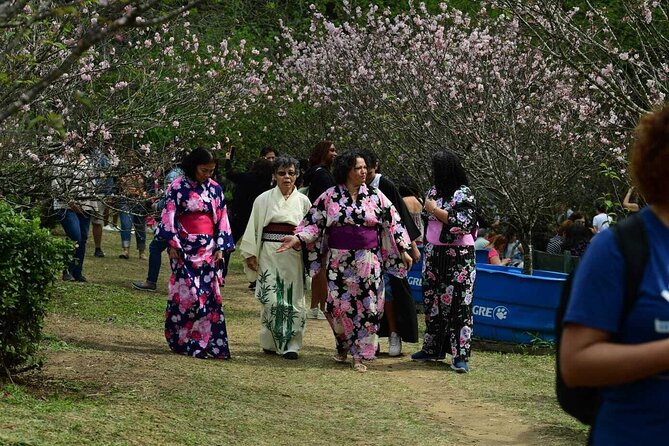
Cherry blossoms bring São Paulo a Japanese summer tradition. I like this experience for its mix of sakura viewing and Japanese food, plus live taiko drums, folk dancing, singing, and Tanabata wishes. You also get a pleasant five-hour outing in one of the city’s largest public parks.
The main drawback is comfort. The cherry-tree area is about a 10-minute walk from the park entrance, and facilities can feel basic, with limited bathrooms, seating, tables, and drinking points. The $33 price makes the most sense if you value organized transport and cultural programming, since food is extra and private transport costs another $7 per person.
In This Review
- Key things to know before you go
- Why the Cerejeira Party feels different from a normal park visit
- Beginning at Trianon-Masp at 8:00 am
- Walking through Parque do Carmo to the cherry trees
- The presentation arena: drums, dance, and community performance
- Eating through the Japanese food square
- The Planetary and Japanese cultural displays
- Tanabata wishes beneath the cherry blossoms
- What the $33 price really buys you
- Practical comfort, parking, and access
- Who will enjoy this five-hour São Paulo outing?
- Should you book the Cerejeira Annual Party?
- FAQ
- Where does the Cerejeira Annual Party take place?
- Where does the activity begin?
- What time does the activity start?
- Where does the activity end?
- How long does the experience last?
- Is lunch included?
- Is private transport included?
- What happens if the weather is poor?
Key things to know before you go
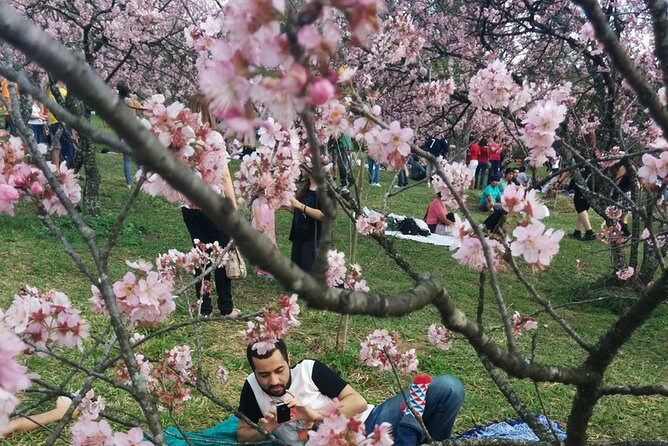
- Cherry blossoms in Parque do Carmo: See the sakura during its annual blooming period and take part in hanami, the Japanese custom of observing flowers.
- A full cultural program: Expect folk dance, community singers, dancers, parades, and taiko groups playing traditional Japanese drums.
- Japanese food square: Udon, yakisoba, temaki, tempura, sushi, gyoza, and sakura-moti are available to buy separately.
- Tanabata wish tradition: Write a wish on a tanzaku paper strip, which is burned during the closing ceremony so the wish can be carried to the stars.
- Start and finish in central São Paulo: The day begins at Trianon-Masp on Avenida Paulista at 8:00 am and returns to the same meeting point.
- Plan for a park walk: The cherry trees are not right beside the entrance, and parking can be awkward if you come by car.
Why the Cerejeira Party feels different from a normal park visit
Parque do Carmo was created by Japanese immigrants, and the annual cherry-blossom celebration keeps that connection visible. You are not simply stopping for photographs beneath a few flowering trees. You are entering a public celebration built around Japanese customs, food, music, dance, and community participation.
I like that the event is open to the public rather than designed only for paying visitors. The festival itself does not charge an entrance fee, which allows people from across São Paulo to take part. That also explains some of the rough edges. A free public celebration can offer broad access, but it may not provide the polished facilities found at a private attraction.
The party is described as the 45th Cerejeiras Festival, giving it the feel of an established annual tradition rather than a new seasonal event. The name Cerejeira refers to the cherry tree, while hanami describes the Japanese custom of looking at and appreciating the blossoms. You can make the flower viewing the main purpose of your visit, or treat it as one part of a wider cultural day.
A few more Sao Paulo days to weigh up
- Skydive Tandem – São Paulo – Brazil
★ 5.0 · 1,840 reviews - São Paulo’s Full Day City Tour: Main City Sights in 7 Hours – (Shared Group)
★ 5.0 · 1,691 reviews - 5-hour Private Tour Of São Paulo With Its Main Sights – Optional Airport Pickup
★ 5.0 · 643 reviews
Beginning at Trianon-Masp at 8:00 am
Your meeting point is Trianon-Masp on Avenida Paulista, in the Jardins area of São Paulo. The early start matters because the festival takes place in a large park and the day includes several separate areas. Beginning at 8:00 am gives you more time to see the flowers, eat, and catch performances during the roughly five-hour outing.
The activity ends back at the same meeting point. That makes the day easier to plan than a one-way park visit, especially if you are staying near Avenida Paulista or using the city’s public transport network.
The group is limited to 20 people. That is small enough to feel more manageable than a large coach party, although the event itself may be much busier than your organized group. Keep the distinction in mind: the tour group may be limited, but Parque do Carmo is a public park hosting a popular annual celebration.
The basic price is $33 per person, with GST included. Lunch is not included, and private transport is offered at an additional $7 per person. Ask yourself what you need before booking. If you want help getting from central São Paulo to the park and back, the extra transport charge may be reasonable. If you already have a car or plan to make your own way, the value depends more heavily on the cultural organization and group service.
Walking through Parque do Carmo to the cherry trees
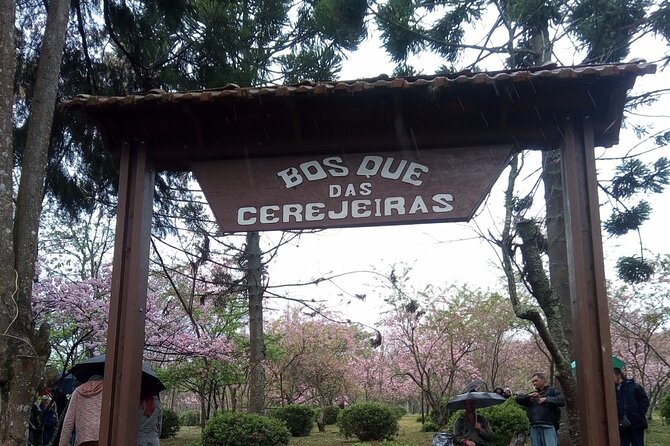
Parque do Carmo is large. The cherry-tree area is approximately a 10-minute walk from the entrance, so wear comfortable shoes and leave room for a slower walk if you want to stop for photographs. The distance is not extreme, but it becomes important when you are carrying food, dealing with crowds, or visiting with anyone who has difficulty walking.
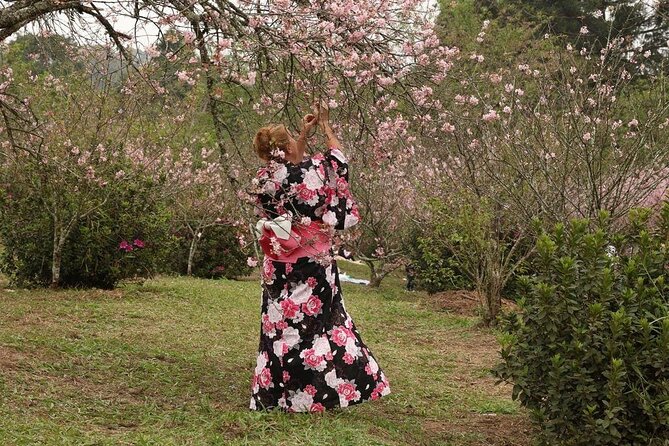
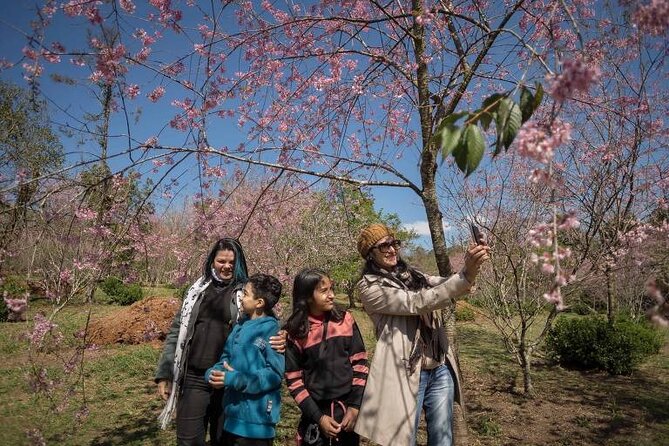
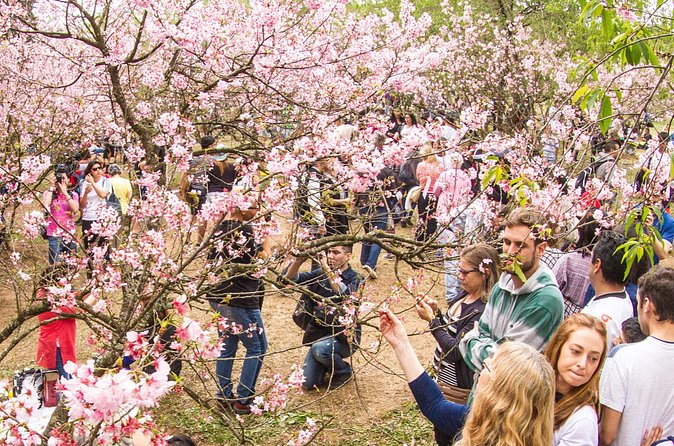
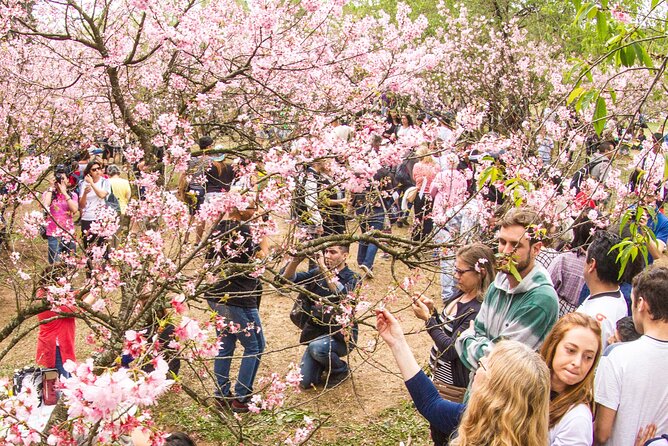
Once you reach the forested area, the blossoms become the visual focus. The timing of the festival is intended to coincide with the trees in bloom, though flowers are always subject to weather and seasonal conditions. If the blossoms are at their best, the setting gives you the classic hanami moment: sit, look upward, take pictures, and enjoy the simple pleasure of the trees.
I would treat the flower viewing as a calm pause between the louder parts of the day. Taiko drums and public performances bring energy, while the cherry-tree area offers a quieter reason to slow down. A picnic is possible in the park, but bring realistic expectations about comfort. Seating and tables may be limited, so you may need to find an available place rather than count on a dedicated picnic setup.
The park is also a practical place for photographs. The blossoms provide the main subject, while the open public setting lets you record the day without needing a formal garden ticket. If photography is your priority, arrive ready to spend time waiting for a clear view of the trees rather than rushing through the area.
The presentation arena: drums, dance, and community performance
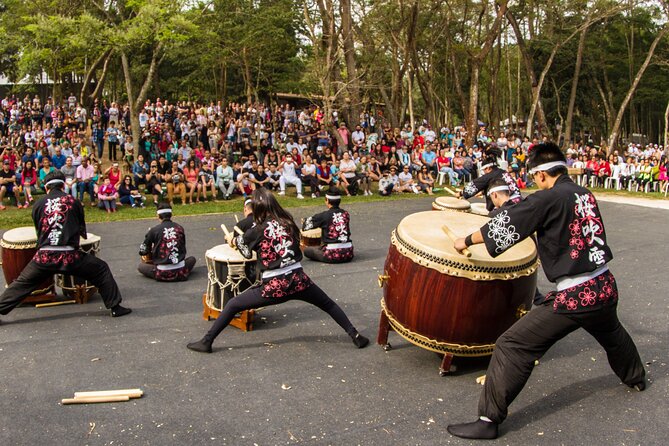
The presentation arena is the social heart of the party. The program can include folk-dance groups, community singers, dancers, parades, and taiko groups. Taiko are traditional Japanese drums, and their deep, forceful sound gives the celebration a strong sense of occasion.
I especially like the mix of professional-looking cultural forms and local community participation. The performances are not limited to one style or one stage act. You can move between music, dancing, and parade activity, seeing how Japanese customs are maintained and shared in São Paulo.
The exact schedule is not provided, so do not plan your five hours around one named performance. Instead, use the arena as a place to check what is happening when you arrive. If one act is not your style, the food square, forest, and Planetary offer other ways to spend the time.
The public nature of the festival matters here. You are watching a community event in a city park, not entering a museum exhibit about Japan. That means the program may feel informal, but it also makes the celebration more approachable. You can watch for a few minutes, stay for a full performance, or move on when the crowd becomes too much.
Same patch of Brazil, a completely different sort of day:
- São Paulo: Main City Sights in 7 Hours – Shared Group Tour
★ 4.9 · 587 reviews - 6-Hour Classic Half-Day Private Tour of São Paulo – Optional Airport Pickup
★ 5.0 · 441 reviews - São Paulo: City Highlights Guided Tour
★ 4.5 · 307 reviews - Amazing São Paulo overview in 4 or 5 hours with a private guide
★ 5.0 · 290 reviews
Eating through the Japanese food square
Food is one of the strongest reasons to include this event in your São Paulo plans. The food square offers familiar Japanese favorites and festival dishes, including udon, yakisoba, temaki, tempura, sushi, gyoza, and sakura-moti.
Lunch is not part of the $33 price, so budget separately for what you want to eat. This pay-as-you-go setup lets you choose a small snack or build a full meal from several stalls. It also means the final cost can rise quickly if you want to sample many dishes.
I like the range because it gives you several ways to approach the meal. Udon and yakisoba are filling choices. Temaki and sushi suit visitors who want seafood or rice-based dishes. Gyoza makes an easy snack, while tempura offers something crisp and shareable. Sakura-moti provides a sweet connection to the cherry-blossom theme.
Food service at a major public event can be busy, so avoid assuming you will eat instantly. If you have a fixed performance you want to see, buy food with enough time to find a place to eat. The available information does not promise seating for every diner, and limited tables have been a concern at the festival. I would be ready to eat standing up or carry food to a quieter park area.
The Planetary and Japanese cultural displays
The Planetary adds a second cultural layer to the day. It hosts cupola sessions and an exhibition of paintings related to Japanese culture. This gives you an indoor or structured activity to balance the outdoor performances and flower viewing.
The Planetary is especially useful if the weather turns less comfortable, although the activity itself requires good weather and can be canceled if conditions are poor. The available details do not specify the length or exact timing of the cupola sessions, so check the day’s program once you arrive.
The paintings provide a slower way to engage with the festival. Instead of only eating and photographing flowers, you can spend time with visual work connected to Japanese culture. I would not expect a full museum visit, but the exhibit adds substance to a party that could otherwise feel focused only on food and entertainment.
Tanabata wishes beneath the cherry blossoms
A parallel attraction is Tanabata, known as the Star Festival. You write your wish on a narrow strip of paper called a tanzaku. At the closing ceremony, the strips are burned, symbolically sending the wishes to the stars.
This is a small activity, but it gives you something personal to do rather than simply watch. You can write a private hope, a message for someone at home, or a simple wish connected to your time in Brazil. The ceremony also links the festival to a broader Japanese seasonal tradition.
Because the closing ceremony is part of the program, ask for its timing early in the day. The schedule is not supplied, and you do not want to spend the afternoon in the forest only to miss the final Tanabata moment. If you care about this tradition, make it one of your first questions after arriving.
What the $33 price really buys you
At $33 per person, this is not a simple admission ticket. The public festival itself does not charge an entrance fee, so the price needs to be judged by the organization around your visit. You receive a planned outing from Trianon-Masp, a return to the same point, GST, and access to the festival’s cultural program.
Private transport is not included and costs $7 per person. Lunch is also separate. That makes the total closer to $40 before food if you choose the transport add-on.
I see fair value here for someone who wants a ready-made cultural day from central São Paulo. You avoid having to arrange the park visit alone, and the limited group size can make the journey easier to manage. I see weaker value for someone who is comfortable navigating independently and mainly wants to see the trees, since the festival itself is free.
The price also buys context. You are not just arriving at a park during blossom season. You are being directed toward the flower area, food square, performance spaces, Planetary activities, and Tanabata tradition within one organized visit. For a first-time visitor to São Paulo, that structure can be useful.
Practical comfort, parking, and access
The public setting is both the event’s strength and its limitation. The festival welcomes people who might not be able to pay an entrance fee, but the facilities may feel basic. Bathrooms, drinking points, chairs, and tables can be limited, and the event may not offer the level of comfort found at a commercial attraction.
If you drive, parking requires thought. Street parking has attendants known locally as flanelinhas, and there are also other parking options near the park. The available information does not establish fixed parking prices or guarantee a space, so organized transport may be less stressful than driving on a busy festival day.
The activity is near public transportation, and most people can participate. Still, the walk of about 10 minutes to the cherry trees is worth considering if you have mobility concerns. The tour is not described as fully accessible, so contact the provider before booking if you need specific support.
Bring only what you are happy to carry. You may walk between the entrance, performances, food area, forest, and Planetary. Comfortable footwear will help more than stylish footwear here.
Who will enjoy this five-hour São Paulo outing?
I would recommend the Cerejeira Party to you if you enjoy local festivals, Japanese food, community performances, and seasonal flowers. Families, photographers, people interested in Japanese-Brazilian culture, and visitors looking for something outside the usual central São Paulo sights may find it a good fit.
It also suits you if you prefer a planned morning rather than working out park transport and festival locations on your own. The return to Trianon-Masp keeps the day simple.
I would hesitate if you need polished facilities, guaranteed seating, a quiet garden, or a tightly timed private tour. The event is public and popular, and comfort is not its main selling point. I would also think twice if your only goal is to see cherry blossoms, since you may be able to visit the free public festival independently.
The weather requirement matters. If poor weather cancels the activity, you will be offered another date or a full refund. You can cancel for a full refund up to 24 hours before the 8:00 am start time. Changes or cancellations inside that window are not accepted.
Should you book the Cerejeira Annual Party?
Book it if you want a cultural celebration rather than a quick flower stop. The strongest parts are the combination of sakura viewing, taiko, dance, Japanese food, and Tanabata, plus the chance to see a long-running community event in Parque do Carmo.
Skip it if you want luxury, fixed seating, or a private guide focused only on photography. For the best value, use the organized transport, arrive ready to walk, budget extra for lunch, and ask about the performance and Tanabata schedules as soon as you reach the park.
FAQ
Where does the Cerejeira Annual Party take place?
The event takes place at Parque do Carmo in São Paulo, Brazil.
Where does the activity begin?
The meeting point is Trianon-Masp on Avenida Paulista, in the Jardins area of São Paulo.
What time does the activity start?
The activity starts at 8:00 am.
Where does the activity end?
The activity ends back at the Trianon-Masp meeting point.
How long does the experience last?
The visit lasts approximately five hours.
Is lunch included?
No. Lunch is not included, and food at the festival is purchased separately.
Is private transport included?
No. Private transport is available for an additional $7 per person.
What happens if the weather is poor?
The activity requires good weather. If it is canceled because of poor weather, you will be offered another date or a full refund.
Newest reviews from around Sao Paulo
- Taxi from Guarulhos airport to São Paulo capital★ 5.0 · 15 reviews
- São Roque Wineries Route from São Paulo★ 4.5 · 13 reviews
- REIKI – Crystal Therapy – by Venus’ Secret Spa – San Francisco★ 5.0 · 41 reviews
- 3h Tasting Session in São Paulo with 34 Local Foods & Drinks★ 5.0 · 7 reviews
- Guided Ceremony in Brazil★ 5.0 · 2 reviews
- Taxi from Viracopos to São Paulo – CHM Transportes★ 5.0 · 2 reviews
- Transfer from São Paulo to Port of Santos★ 4.0 · 8 reviews
- Private Transport Guarulhos or Congonhas Airport – Premium★ 5.0 · 5 reviews
São Paulo Tours, compared.

São Paulo’s Full Day City Tour: Main City Sights in 7 Hours – (Shared Group)
Read our review →
5-hour Private Tour Of São Paulo With Its Main Sights – Optional Airport Pickup
Read our review →
Main City Sights in 7 Hours – Shared Group Tour
Read our review →
6-Hour Classic Half-Day Private Tour of São Paulo – Optional Airport Pickup
Read our review →

Amazing São Paulo overview in 4 or 5 hours with a private guide
Read our review →
Browse the lists this tour appears in