
Reviewed · WALKING TOURS
São Paulo: Downtown Walking Tour with Farol Santander Entry
São Paulo’s old center rewards curious walkers. This three-hour private tour links the city’s founding site, grand churches, financial landmarks, and Farol Santander, giving you a fast but useful introduction to Brazil’s largest city. I like the clear route through the historic core, and I like that the guide connects São Paulo’s growth to coffee, immigration, and business. The main drawback is the pace: you cover many stops in three hours, so most visits are brief rather than leisurely.
I also like the included entry to Farol Santander’s observation deck, which gives the walking route a strong finish from above. The tour is a good choice if you want an organized first look at downtown São Paulo, but it may feel too compressed if you prefer long museum visits or unhurried photography.
In This Review
- Key points at a glance
- Starting at Pátio do Colégio, São Paulo’s first chapter
- Manor of the Marchioness of Santos and Sé Cathedral
- Law, commerce, and the people who built the city
- Brazil Bank’s Cultural Center and a useful pause
- The Stock Exchange and the force of coffee
- Altino Arantes and Farol Santander views
- Martinelli, São Bento, Sampaio Moreira, and City Hall
- Ending at the Municipal Theater
- Walking conditions, timing, and comfort
- Who will get the most from this tour?
- Should you book the São Paulo downtown walking tour?
- FAQ
- How long does the São Paulo downtown walking tour last?
- Where does the tour meet?
- Is entry to Farol Santander included?
- Which languages are available?
- Is the tour wheelchair accessible?
- What should I bring?
Key points at a glance
- Start at Pátio do Colégio: Begin where São Paulo’s early story is introduced, near the Sé and São Bento metro stations.
- See the city’s main historic core: The route includes Sé Cathedral, Sé Square, São Francisco Law School, City Hall, and the Municipal Theater.
- Follow the coffee money: Your guide explains how coffee helped drive São Paulo’s economic expansion.
- Meet the city’s many communities: The tour connects different groups to the growth and character of São Paulo.
- Reach Farol Santander: Finish the central portion with city views from the Altino Arantes building.
- Private and multilingual: The tour is available in English, Spanish, or Portuguese and is wheelchair accessible.
Starting at Pátio do Colégio, São Paulo’s first chapter
The tour begins at Pátio do Colégio, at Praça Pátio do Colégio, 2, in the Centro Histórico. This is a practical meeting point because it is within walking distance of both Sé and São Bento metro stations. If you are using public transport, allow a little extra time to find the square and locate your guide.
Pátio do Colégio gives the walk a proper beginning. Instead of starting with a random landmark, you receive background about the area and the city’s early development. That opening matters because downtown São Paulo can seem like a jumble of churches, office towers, plazas, and traffic until someone explains how the pieces fit together.
The guide sets up the larger story: São Paulo grew from a small settlement into the biggest city in the Southern Hemisphere. You will hear how coffee helped fund economic progress and how different communities contributed to the city’s expansion. Those themes give the rest of the walk more meaning. A church is not just a church, and an old commercial building is not just a façade.
More Walking Tours in São Paulo
- Sao Paulo: Downtown-Center History Walking Tour – in English
★ 5.0 · 91 reviews - Sao Paulo: Downtown-Center Walking Tour | 2 Hours – English
★ 4.9 · 84 reviews - Ecological walk in sao paulo
★ 5.0 · 61 reviews
Manor of the Marchioness of Santos and Sé Cathedral
From Pátio do Colégio, the route continues to the Manor of the Marchioness of Santos. The stop adds a personal and political thread to the walk, balancing the broader story of institutions, trade, and finance. Your guide provides the context, while you get a chance to see one of the historic center’s notable buildings up close.
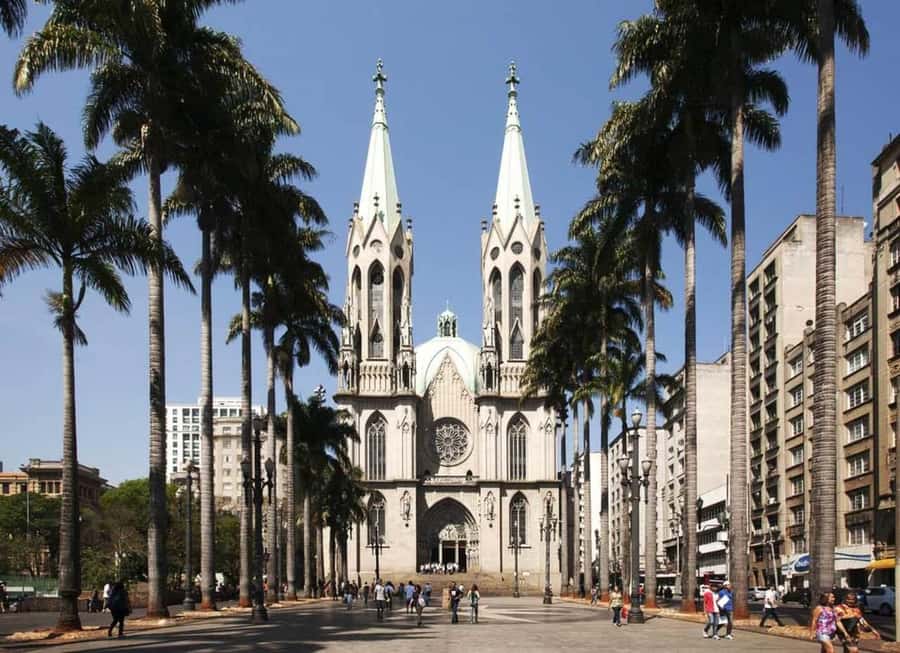
Next comes Sé Cathedral, one of the tour’s major visual stops. The cathedral and its setting at Sé Square give you a sense of the scale and importance of central São Paulo. The square is also one of the places where the city’s layers come together: religious life, public space, transport links, and the daily movement of a huge capital.
I would keep your camera ready here, but do not expect a long, quiet visit. This is a walking tour built to connect several sites. You will have time to admire the architecture and hear the explanation, but the schedule is designed to keep moving.
Law, commerce, and the people who built the city
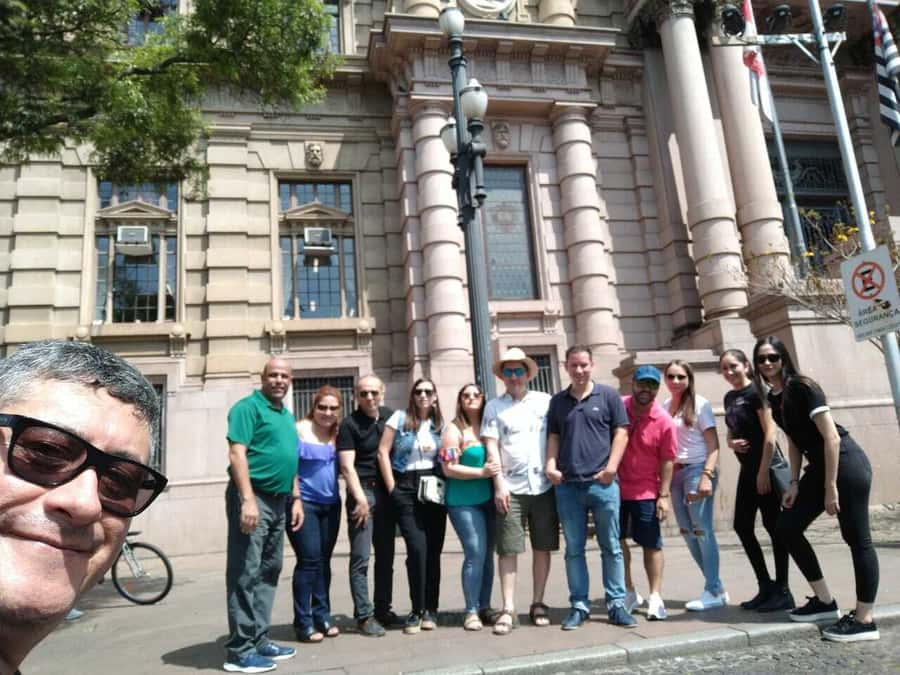
The route then passes the Largo São Francisco Law School and FECAP, the Fundação Escola de Comércio Álvares Penteado. These stops shift the focus from religion and government to education, law, and commerce.
That change is useful. São Paulo’s rise was not caused by one industry alone. Coffee supplied much of the economic force, but legal training, business education, finance, and public institutions helped turn money into long-term growth. The guide’s job here is to show how those parts connect.
You will also learn about the importance of different communities to São Paulo’s development. The supplied information does not name every group or provide a full lecture outline, so the exact emphasis depends on your guide. Still, this theme is one of the tour’s best features. It keeps the story from becoming a simple account of wealthy coffee producers and grand buildings.
The stop at FECAP is especially fitting because commerce and education helped shape the modern city. You are not simply looking at old architecture. You are tracing the institutions that supported São Paulo as it grew into a major economic center.
Brazil Bank’s Cultural Center and a useful pause
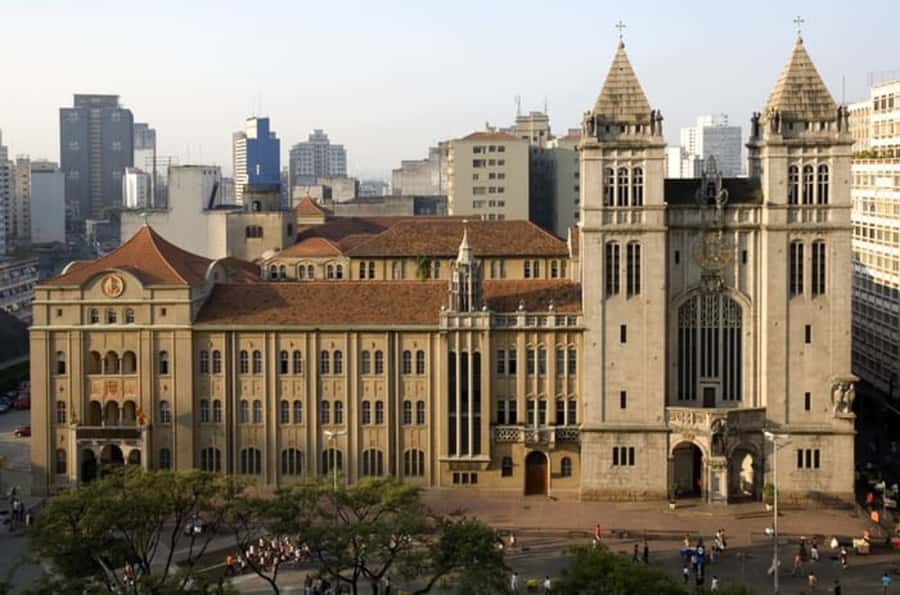
The walk continues to Brazil Bank’s Cultural Center. You make a short stop here, with time to use the toilets or get a drink before continuing.
This is a small but practical part of the itinerary. Three hours on foot in São Paulo can feel warm and demanding, especially under strong sun. Having a planned chance to pause means you do not need to wait until the final stop for basic comfort.
Meals and drinks are not included, so bring money if you want something during the break. The stop is not presented as a full cultural visit, so you should treat it as a useful pause rather than a major museum section of the tour.
The itinerary also allows moments for photographs, exploration, snacks, and a little souvenir shopping along the way. That flexibility is helpful, but it also means the exact timing can vary. If you want to photograph every façade in detail, you may need to be selective.
Same patch of Brazil, a completely different sort of day:
- Skydive Tandem – São Paulo – Brazil
★ 5.0 · 1,840 reviews - São Paulo’s Full Day City Tour: Main City Sights in 7 Hours – (Shared Group)
★ 5.0 · 1,691 reviews - 5-hour Private Tour Of São Paulo With Its Main Sights – Optional Airport Pickup
★ 5.0 · 643 reviews - São Paulo: Main City Sights in 7 Hours – Shared Group Tour
★ 4.9 · 587 reviews
The Stock Exchange and the force of coffee
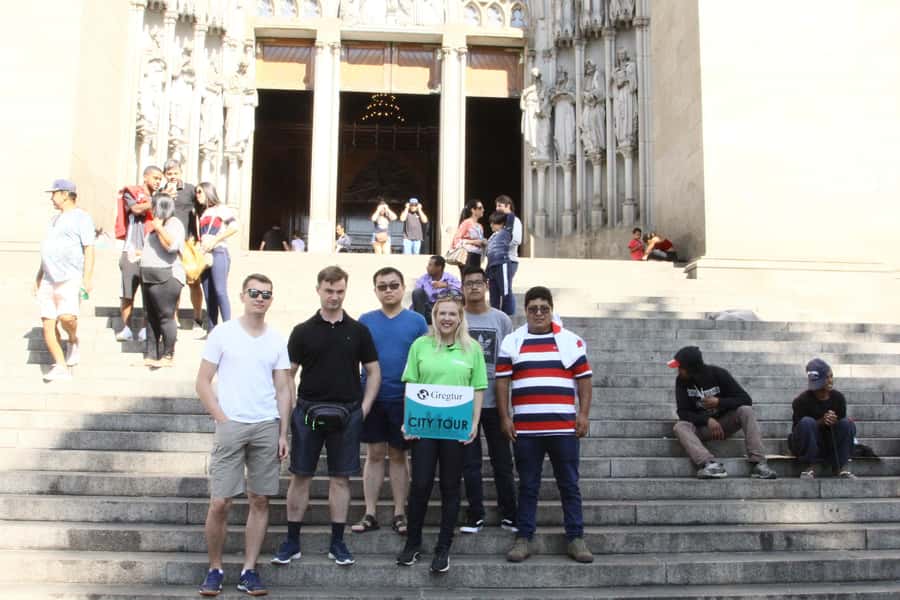
After the break, you walk toward the Stock Exchange. This is where the connection between coffee and São Paulo’s economic growth becomes especially useful.
Coffee helped create wealth, business networks, transport needs, and financial activity. The tour explains how that economic force supported São Paulo’s expansion. You will not just hear that coffee was important. You will see how the financial center and commercial buildings reflect the wealth and ambition that followed.
The Stock Exchange also helps explain why São Paulo feels different from Brazil’s older colonial centers. Its story includes colonial beginnings, but it also includes rapid commercial growth and the rise of modern finance. The contrast between old religious landmarks and business institutions gives the walk its shape.
I appreciate this part because it moves beyond sightseeing. A guide can point out a beautiful building in seconds. It takes more effort to explain why the building exists and what economic changes made it possible.
Altino Arantes and Farol Santander views
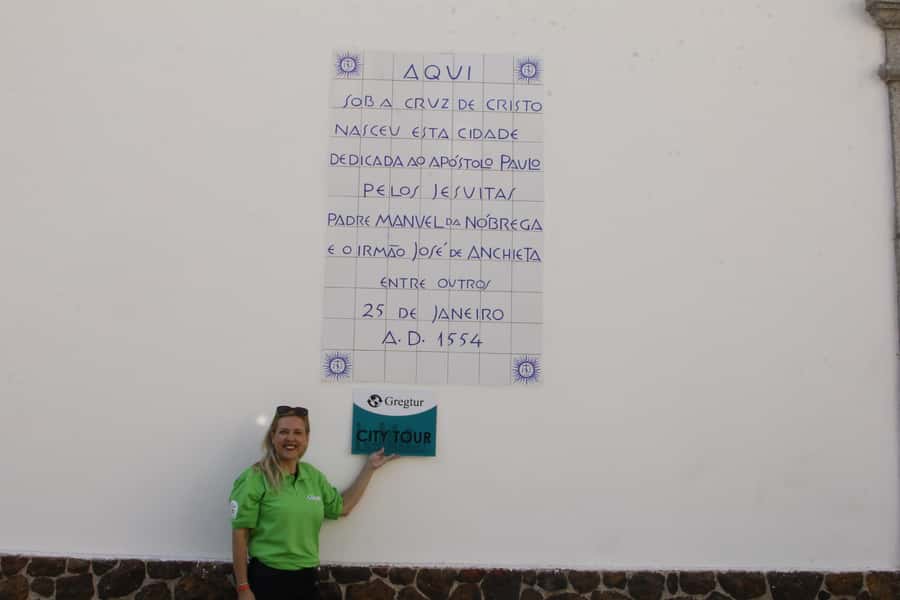
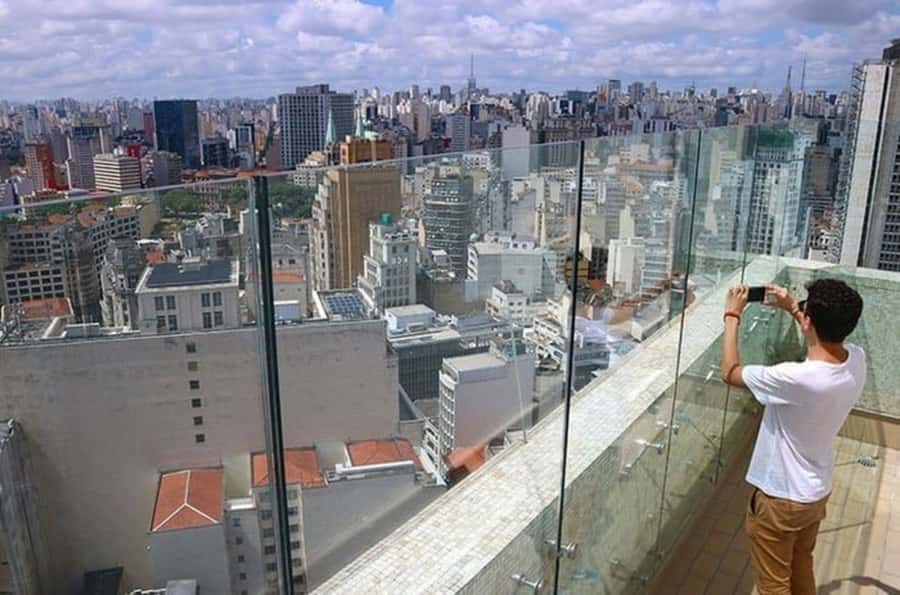
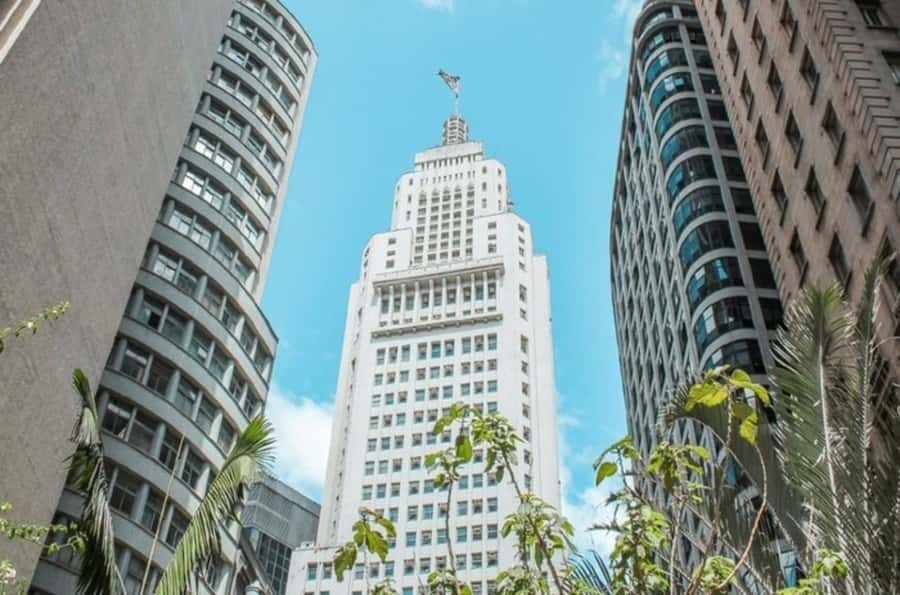
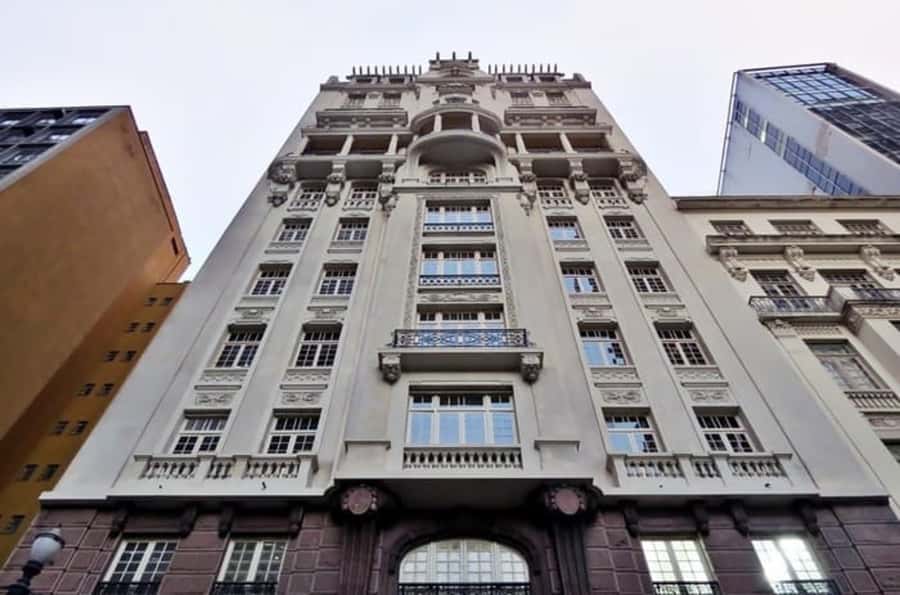
The high point of the tour is the Altino Arantes building and Farol Santander. Entry to the observation deck is included, so you receive more than an exterior look at one of downtown’s best-known towers.
From above, you can take in São Paulo’s enormous scale. The view helps explain how a settlement associated with the early history of the region became a vast city spreading far beyond the central core. It is also a welcome change after several hours of looking upward at façades from street level.
The observation deck gives the tour a clear finish in practical terms, even though the walking route continues past several more landmarks before ending at the Municipal Theater. Check the starting time when booking because the activity lasts three hours, and you will want to plan the rest of your day around the walking schedule.
Farol Santander is also one of the strongest value points in the package. At $115 per person, the tour is not a bargain walk, especially since food and drinks are extra. The price makes more sense if you want a private group, a live guide in your preferred language, and the included observation deck ticket rather than arranging several visits yourself.
Martinelli, São Bento, Sampaio Moreira, and City Hall
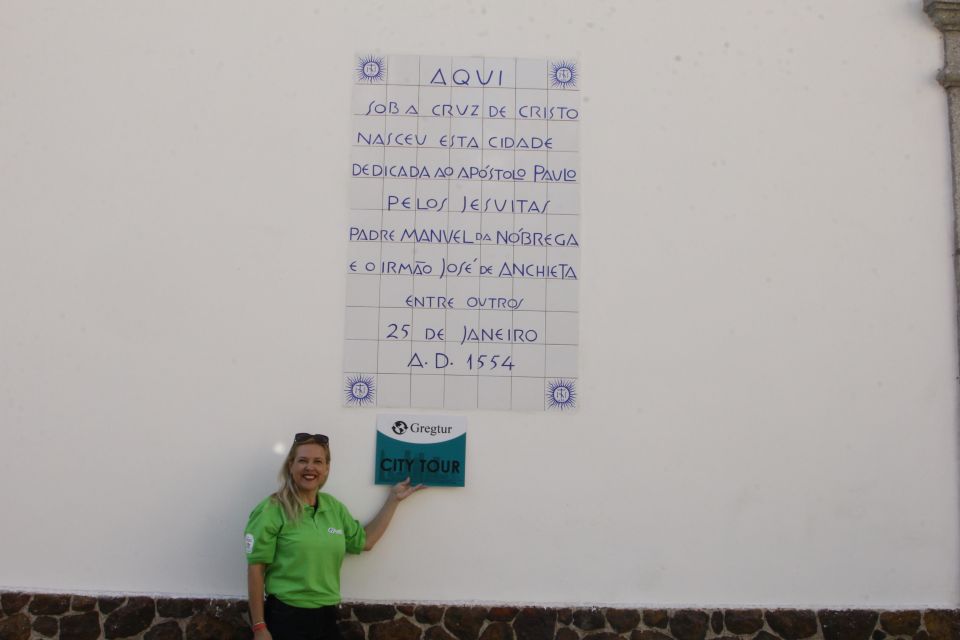
The route passes several other central landmarks: the Martinelli building, the Monastery of Saint Benedict, the Sampaio Moreira building, and City Hall.
Because these are pass-by or brief-view stops, you should think of them as part of a street-level introduction. You will see the buildings, hear why they matter, and have chances for photographs, but the three-hour format does not promise extended interior visits at every location.
The Martinelli building adds another reminder of São Paulo’s vertical growth. The Monastery of Saint Benedict brings the route back toward religious architecture and older traditions. Sampaio Moreira and City Hall broaden the civic and commercial story.
This variety is why the tour works well for a first visit to the center. In a short distance, you move among religious, educational, financial, and governmental landmarks. The downside is that the experience can feel like a sample platter. You get many flavors, but not much time with any single one.
Ending at the Municipal Theater
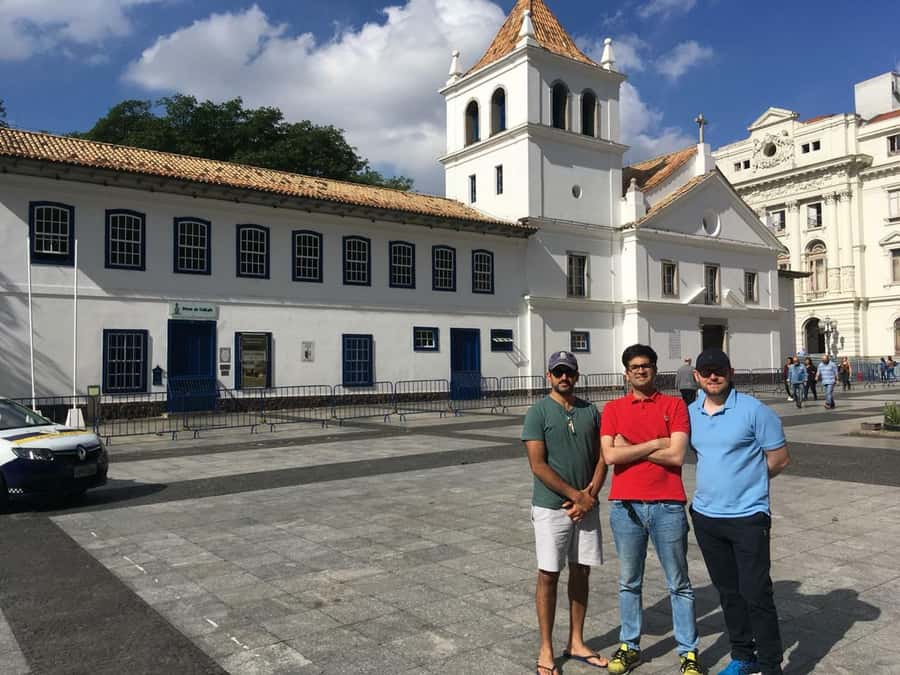
The tour finishes at the Municipal Theater, where you can admire its architecture. Ending here is a smart choice because the theater provides a strong visual conclusion after the more business-focused sections of the walk.
Its grand design gives you a final reminder that São Paulo’s economic rise also supported culture and public display. The route begins with the city’s early foundation and ends with a major civic and cultural landmark. That arc makes the tour feel more planned than a simple list of nearby sights.
You may want to continue exploring after the tour, but no additional activity is included. Since the route ends downtown, you can decide for yourself if you want to remain in the area or use public transport to reach another part of the city.
Walking conditions, timing, and comfort
This is a three-hour walking experience in all weather. Wear comfortable shoes, use sunscreen, and bring sunglasses. Those instructions are not filler. The route includes several outdoor plazas and streets, and you will be on your feet for most of the activity.
The tour is wheelchair accessible, which makes it more usable for people who need step-free access. Still, the experience covers a historic urban center, so it is sensible to confirm any particular mobility needs when arranging your booking.
A private group is another important point. You receive a more focused experience than you would on a large public walk, and you can ask questions as the route develops. The available languages are English, Spanish, and Portuguese.
The tour operates in all weather, so dress for the forecast rather than hoping conditions improve. There are planned opportunities for pictures, snacks, and small purchases, but meals and drinks remain your responsibility.
Cancellation is flexible: you can cancel up to 24 hours ahead for a full refund. You can also reserve and pay later, which helps if your São Paulo plans are still moving around.
Who will get the most from this tour?
I would choose this tour if you have only a short time in São Paulo and want to cover the central landmarks efficiently. The positive booking experience from June 2023 supports that use: the tour was rated four out of five and praised for seeing a lot of the historic center in a short time.
It also suits you if you enjoy explanations about how cities grow. The coffee economy, immigrant communities, legal institutions, commerce, and public buildings give the route more substance than a photo stop at a cathedral.
Families and private groups may like the structure and language choice. The accessible format also makes it worth considering for people who want a guided urban walk without organizing each stop independently.
I would be more cautious if you want long museum visits, interior access at every landmark, or a slow architecture-focused walk. The tour covers a lot of ground, and that is both its main strength and its main limitation.
Should you book the São Paulo downtown walking tour?
Book it if you want a compact introduction to central São Paulo with a private guide and a view from Farol Santander. The route is well suited to a first day in the city because it connects the founding site, cathedral, law school, financial center, historic buildings, and Municipal Theater in one organized outing.
At $115 per person, the value depends on your group and priorities. The cost is easier to justify if you value private guiding, need English, Spanish, or Portuguese support, and would otherwise pay separately for the observation deck. If you mainly want a cheap stroll through downtown, the price will feel high.
My practical advice is to wear proper walking shoes, bring sun protection, and leave room for short photo and refreshment stops. Choose this experience for breadth, context, and a clear introduction to São Paulo. Skip it only if you prefer to linger at fewer places and explore each one at your own pace.
FAQ
How long does the São Paulo downtown walking tour last?
The tour lasts three hours.
Where does the tour meet?
It meets at Pátio do Colégio, Praça Pátio do Colégio, 2, in São Paulo’s historic center. The meeting point is within walking distance of the Sé and São Bento metro stations.
Is entry to Farol Santander included?
Yes. Entry to Farol Santander’s observation deck is included in the tour.
Which languages are available?
The live guide is available in English, Spanish, and Portuguese.
Is the tour wheelchair accessible?
Yes, the activity is listed as wheelchair accessible.
What should I bring?
Wear comfortable walking shoes and bring sunscreen and sunglasses. The tour operates in all weather, and meals and drinks are not included.
Newest reviews from around Sao Paulo
- 5-hour tour in the main points of São Paulo.★ 5.0 · 12 reviews
- Private Transfer: GRU Airport to Sao Paulo City up to 15 People★ 5.0 · 12 reviews
- Executive Van 15 Places, GRU Airport to São Paulo Capital.★ 5.0 · 5 reviews
- (Sedan VIP Class) Transfer GRU Airport • São Paulo★ 5.0 · 6 reviews
- Private Transfer São Paulo Airport to Hotels with Quick City Tour★ 5.0 · 17 reviews
- Special tour 8 hour (walking tour + nightlife )★ 5.0 · 3 reviews
- Sao Paulo: The Coolest Urban Scenes Bike Tour★ 5.0 · 22 reviews
- São Paulo: Food, Culture & History Private Tour★ 5.0 · 6 reviews
Walking Tours, compared.

3 Hour Rocinha Favela Walking Tour with a Local Guide
Read our review →
Favela Tour Rio de Janeiro – Vidigal Walking Tour by Russo Guide
Read our review →
Private Walking and Cultural Tour Rocinha-Rio de Janeiro
Read our review →
Browse the lists this tour appears in