
Reviewed · SAMBA & CARNIVAL SHOWS
Samba-Reggae Percussion Class in Salvador
Bahia’s story is easiest to hear through a drum. I like that this three-hour percussion class lets you make the music yourself, not just watch a performance. I also like the way Maestro Macambira and guide Alex connect the rhythms to Africa, Samba de Roda, Candomblé, Carnival, and modern Brazilian music. The main drawback is the $100 price per person, especially since food and drinks are not included.
You meet inside Pelourinho, Salvador’s famous historic neighborhood, at a music studio focused on local sound and rhythm. Hotel pickup and drop-off make the outing easy, but you need at least two adults to book, and the class may feel like a large expense if you only want a brief introduction to Brazilian music.
In This Review
- Key points about Salvador’s percussion class
- What happens inside the Pelourinho music studio
- Learning samba-reggae, Samba de Roda, and Brazilian jazz
- A lesson built around participation, not performance
- Why the private format matters
- Hotel pickup makes the schedule easier
- What the class does especially well
- Possible drawbacks to consider before booking
- Who will enjoy this most
- Booking details and cancellation
- Should you book this percussion class?
- FAQ
- Where does the percussion class take place?
- How long does the experience last?
- Is hotel transportation included?
- Is this a private activity?
- Are food and drinks included?
- Can I cancel for a full refund?
Key points about Salvador’s percussion class
- Three hours of hands-on music: You spend the session learning and playing rhythms rather than simply observing a show.
- Maestro Macambira leads the class: His teaching covers both the musical traditions and the spiritual meaning connected with percussion.
- Alex adds another musical voice: Your guide also plays, helping turn the lesson into a shared jam.
- Samba-reggae is a central focus: You learn about the Bahian rhythm that reached a wide international audience through Michael Jackson.
- The setting is Pelourinho: The class takes place in a music studio inside one of Salvador’s main cultural areas.
- Private transport is included: Pickup and return to Salvador hotels are part of the package, while food and drinks are not.
What happens inside the Pelourinho music studio
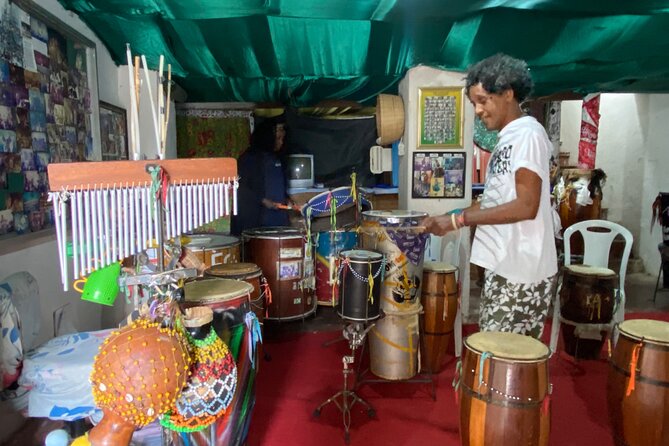
The experience takes place in Pelourinho, where the class uses a local music studio as its base. Rather than moving from sight to sight, you spend the full three hours in one place, working with sound, rhythm, and the cultural ideas behind them.
That fixed setting is a strength. You do not lose class time changing locations, and the lesson has room to develop. A short music demonstration can become a discussion, then a practice session, then a group performance. The supplied details do not identify the exact studio, its facilities, or the specific instruments used, so you should think of this as a focused workshop rather than a formal concert venue.
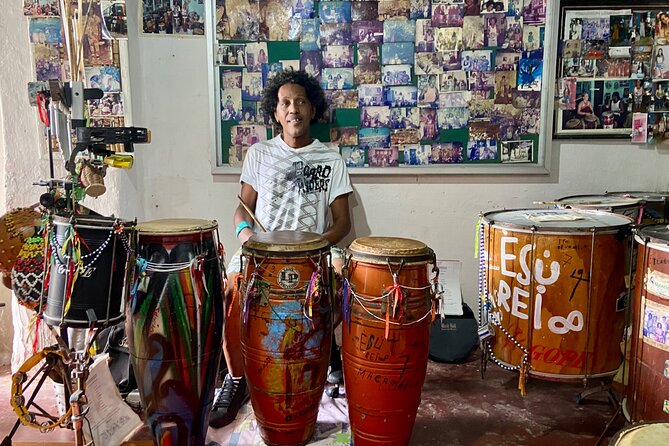
The class is taught by professional rhythm artists, including Maestro Macambira. His role goes beyond counting beats. He explains the origins of different rhythms and the spiritual ideas connected with percussion. One review describes the session as both uplifting and meditative, which gives you a useful clue about its mood: this is not only a loud Carnival-style activity.
Your guide Alex also takes part in the music. That matters because the session is not limited to a teacher speaking at the front of the room. You can expect the guide to help connect the lesson with Salvador and to join the rhythmic work himself. The result is closer to a group jam than a standard lecture.
Other samba nights worth staying up for:
- Cultural Treasure of Salvador – Samba
★ 5.0 · 38 reviews - Cultural Night Experience Capoeira, Samba and Drumming
★ 5.0 · 14 reviews - Rio de Janeiro: Beginner Samba Lesson in Ipanema
★ 4.9 · 1,071 reviews
Learning samba-reggae, Samba de Roda, and Brazilian jazz
The class introduces you to several parts of Bahia’s musical life. Samba-reggae is one of the main subjects. It is a modern Bahian rhythm that combines samba with reggae influences, and the experience links it to the broad musical culture that made Salvador’s Carnival famous.
The class also places samba-reggae alongside Samba de Roda and Brazilian jazz. These are not presented as unrelated styles. You learn how rhythm traditions from the African continent have changed as they became part of modern Brazilian music.
That historical link gives the lesson more weight. You are not only repeating a pattern for fun. You are hearing how music can carry memory, belief, community, and change. The teacher explains the different rhythms and their origins before putting them into practice, so the physical activity has a clear cultural frame.
The Michael Jackson connection is a memorable detail. Samba-reggae gained international attention when its sound helped power a performance connected with him in Bahia. You do not need to be a music expert to appreciate the point: a rhythm born from Bahia’s Afro-Brazilian culture reached a global pop audience without losing its local identity.
The references to Candomblé also deserve respectful attention. The class explains that percussion is important in Candomblé ceremonies, where music has a spiritual role. This is not simply background color for a tourism activity. You are being introduced to a living religious and cultural tradition, so listening carefully and avoiding jokes about sacred practices is part of being a good participant.
A lesson built around participation, not performance
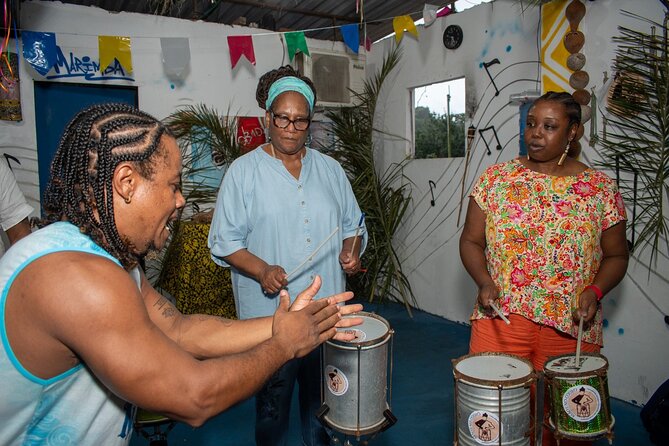
You should expect to play along. The class is designed for participation, and the teacher includes the people in the room in the musical session. A review of the experience describes learning many different rhythms and joining in with Maestro Macambira and Alex.
That format works well for several kinds of people. If you enjoy trying something with your hands, you get a direct way to connect with Salvador. If you have no musical training, the class still appears designed to bring beginners into the activity. The available information says most people can participate, but it does not promise that every physical or sensory need can be accommodated, so ask the provider if you have a particular requirement.
The pace may vary. Some of the three hours will be explanation, and some will be playing. That balance is useful because constant drumming can become tiring, while a long talk would miss the point of a percussion workshop. The teacher’s mix of instruction, history, spirituality, and practice gives the session a rounded shape.
A birthday participant used the class as a special celebration and found it memorable. You do not need a birthday to enjoy it, but the private format could suit a small celebration or a couple looking for something more personal than a standard city tour.
Why the private format matters
This is a private activity, so only your group takes part. That is a major advantage if you prefer not to perform in front of strangers. You can focus on the lesson with the people you know, and the class can feel more relaxed than a large public workshop.
The private structure also gives the session a stronger sense of occasion. You are not just joining a drop-in class for a few minutes. Your group receives a three-hour experience with a professional teacher and a guide who participates in the music.
There is a tradeoff. Private activities often cost more per person than large group classes, and this one costs $100 per person. At three hours, the listed rate works out to about $33 per hour before considering the included hotel transportation. That calculation does not make it cheap, but it helps explain the value if you want a substantial cultural activity rather than a quick lesson.
The price is easier to justify for two or more people who value privacy, transport, and instruction. It is harder to justify if your main goal is simply to hear live music, since the class is built around taking part.
A few more Salvador da Bahia days to weigh up
- Cooking class in Salvador, an authentic dinning experience
★ 5.0 · 132 reviews - 4h Cooking Class in Salvador with 9 Recipes & Bottomless Drinks
★ 5.0 · 73 reviews - Afro-Bahian Cooking Class Inside a Local Family Home
★ 4.0 · 6 reviews - Private Capoeira Class in Salvador
★ 5.0 · 4 reviews
Hotel pickup makes the schedule easier
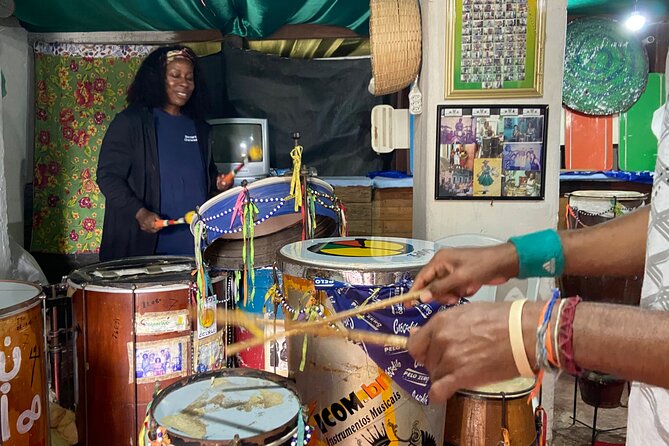
Round-trip transportation from Salvador hotels is included. This removes the need to arrange separate transport to Pelourinho and back, which is useful when you are unfamiliar with Salvador or want a simple plan for a half-day activity.
The provided details do not state the pickup window, the vehicle type, or the exact hotel coverage. Confirm those points when booking, especially if you are staying outside the usual hotel areas. The experience is also near public transportation, so you may have another way to reach the class, but the included hotel service is the simplest option when available.
Because the activity lasts about three hours, allow extra time around the lesson for pickup and return. The class itself is not a rushed stop squeezed between several attractions. It is the main event, and you should plan your day around it rather than treating it as a quick add-on.
Food and drinks are not included. Eat beforehand or plan another stop after the class. The omission is not a serious problem for a three-hour workshop, but it matters if you expect a meal as part of the cultural outing.
What the class does especially well
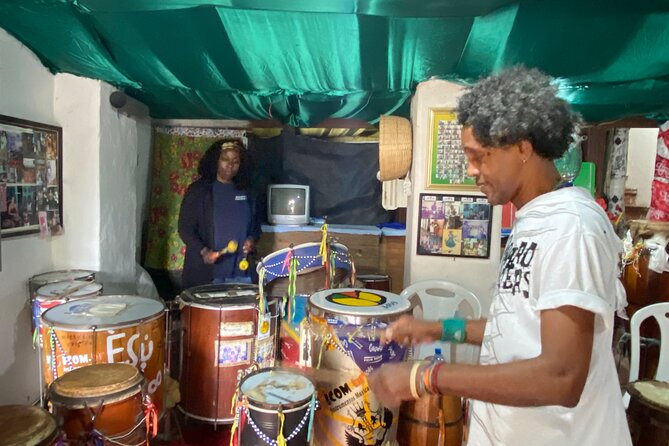
The strongest part of this experience is its combination of sound and meaning. You learn rhythms connected with Carnival, but you also hear about African roots, Samba de Roda, Brazilian jazz, and Candomblé. That range helps you understand that Bahia’s percussion is not one single beat.
I also like the human element. Maestro Macambira receives especially strong praise for his teaching, and Alex is described as both a guide and a talented musician. Their participation gives the class a warm, collaborative feel rather than making it a technical lesson led from a distance.
The class can also be surprisingly calming. Percussion is often associated with noise and celebration, but repeated rhythm requires attention. One account describes the session as meditative, and that makes sense: once you concentrate on the beat, conversation and sightseeing fade for a while.
The cultural explanations are valuable, but they should not be treated as a full academic study of Afro-Brazilian music or religion. In three hours, you receive an introduction, not a complete history. The strength is the connection between a simple activity and larger traditions.
Possible drawbacks to consider before booking
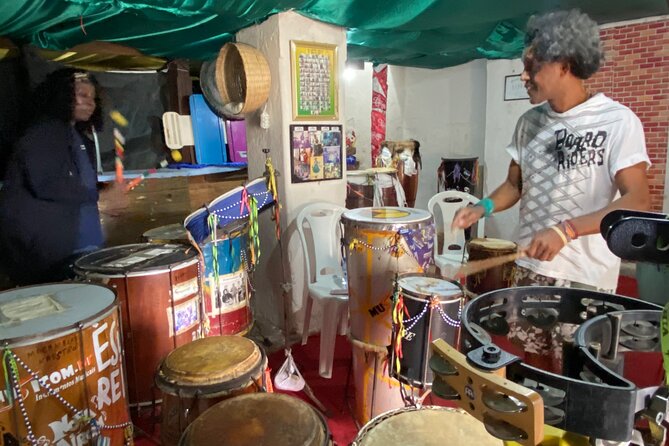
The $100 price is the clearest concern. The fee includes professional instruction, a private class, and hotel pickup and drop-off, but not food or drinks. You are paying for a focused cultural session, not a full-day tour with several attractions.
The exact class structure is not listed in detail. You are told that you will learn several rhythms and join the music, but not which instruments you will use, how many people can be in your private group, or how much of the time is spent playing. If those details affect your decision, ask before confirming.
Pelourinho is a major cultural area, but the experience itself centers on the studio. Do not book this expecting a guided walking tour of the neighborhood. You may have time to explore Pelourinho before or after, but that is not part of the described class.
Finally, the booking requires a minimum of two adults. Solo visitors cannot book this experience alone under the stated conditions. Most people can participate, but anyone with mobility, hearing, or other access concerns should check directly with the provider rather than assume the setup will meet their needs.
Who will enjoy this most
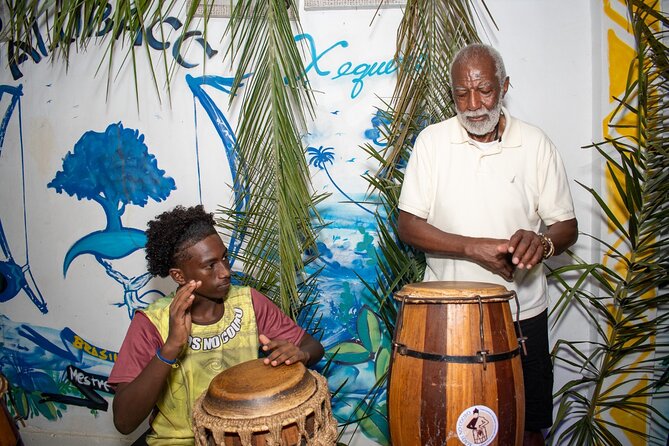
I would recommend the class to you if music is one of the ways you understand a place. You do not need to play an instrument or know Brazilian music beforehand. Curiosity matters more than skill.
It is a good fit for:
- Couples and friends who want a private activity
- First-time visitors seeking a cultural experience beyond sightseeing
- People interested in Afro-Brazilian traditions and Carnival music
- Beginners who enjoy hands-on classes
- Anyone looking for a memorable birthday or special occasion activity
- Visitors who value hotel transport and a planned three-hour program
I would be more cautious if you want a short, inexpensive activity or if you would rather watch a professional performance than participate. The lesson asks you to pay attention, try the rhythms, and take part in the group music.
Booking details and cancellation
Confirmation is provided at the time of booking, and at least two adults are required. The class is private, with only your group participating.
You can cancel for a full refund if you do so at least 24 hours before the experience begins. Cancellations made less than 24 hours before the start time are not refunded, and changes inside that period are not accepted. The cutoff uses Salvador’s local time, so check the clock carefully if you are arranging plans from another time zone.
Should you book this percussion class?
Book it if you want to hear Salvador through participation rather than simply looking at its sights. The combination of Maestro Macambira’s teaching, Alex’s musical involvement, African-rooted rhythms, and the private studio setting gives the experience real substance.
At $100 per person, it is not a bargain activity. Still, the three-hour length, private format, professional instruction, and included hotel transportation make the cost reasonable for people who want a serious introduction to Bahian percussion. I would place it high on the list for music lovers, curious beginners, and anyone marking a special occasion.
Skip it if your budget is tight, you are traveling alone, or you mainly want a short live show. For everyone else, this is a lively and thoughtful way to connect with Salvador’s music, with enough history and spiritual context to make the beats mean more after the class ends.
FAQ
Where does the percussion class take place?
The class takes place at a music studio inside the Pelourinho neighborhood of Salvador da Bahia.
How long does the experience last?
The percussion workshop lasts approximately three hours.
Is hotel transportation included?
Yes. Round-trip transportation from Salvador hotels is included.
Is this a private activity?
Yes. Only your group participates in the activity.
Are food and drinks included?
No. Food and drinks are not included in the price.
Can I cancel for a full refund?
Yes. You must cancel at least 24 hours before the experience start time to receive a full refund. Cancellations or changes made less than 24 hours before the start time are not accepted for a refund.
Newest reviews from around Salvador da Bahia
- Transfer North-Ba Coast and Salvador Airport★ 5.0 · 25 reviews
- Curated Nightlife Experience in the Heart of the City★ 3.5 · 5 reviews
- One-Way Private Transfer to Boipeba Island★ 5.0 · 21 reviews
- Transfer Costa do Sauipe – Private★ 5.0 · 2 reviews
- Ilhas Maravilhas Frades and Itaparica Full Day Tour, Salvador, Bahia, Brazil★ 3.5 · 13 reviews
- Salvador de Bahia: Private Round-Trip Airport–Hotel Transfer★ 4.5 · 25 reviews
- Transfer Salvador to Barra Grande Round Trip★ 5.0 · 3 reviews
- Hotel Vila Galé Mares – Transfers In / Out★ 5.0 · 29 reviews
Samba & Carnival Shows, compared.
Pub Crawl in Lapa with Cachaça Tasting and Live Samba
Read our review →
Carnival Backstage Tour at Samba City with Cocktail
Read our review →
Hop-ON Hop-OFF Sightseeing Bus in Rio de Janeiro – Rio Samba Bus
Read our review →
Santa Teresa, Lapa, and Cinelândia with Tram Ride and Selarón Steps
Read our review →
Carnaval Experience: Backstage Tour at Samba City with Cocktail
Read our review →
Browse the lists this tour appears in