
Reviewed · SAMBA & CARNIVAL SHOWS
Cultural Treasure of Salvador – Samba
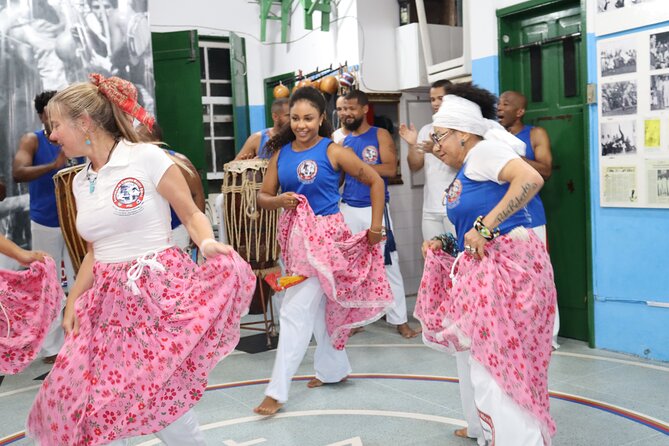
Samba begins with a story, not just a step. This Salvador class links dance and Afro-Brazilian culture at the first capoeira school in Brazil, founded by Mestre Bimba in 1937. I like the patient teaching, especially Yasmin’s clear, encouraging instruction, and I like that you learn why the movements matter, not just how to copy them. The main consideration is physical: this is a real workout, and stretching, flexible movement, and comfortable knees will help.
For $42.15, you get about an hour of instruction, cultural background, English-speaking guidance, and bottled water. You do not need a partner or prior dance experience, but the class may not feel effortless for everyone. It can be a smart addition to a day in Pelourinho, especially if you plan to attend a dance performance later.
In This Review
- Key points about the Salvador samba class
- Why this one-hour class means more than learning steps
- Entering the school founded by Mestre Bimba
- How the class builds confidence for beginners
- The physical side: fun, but not passive
- The cultural lesson behind the music
- Pairing the class with a day in Pelourinho
- Is $42.15 a fair price?
- Who will enjoy this most
- A practical way to plan your visit
- Should you book the Mestre Bimba samba class?
- FAQ
- Do I need dance experience to join the samba class?
- Do I need to bring a dance partner?
- How long does the samba experience last?
- Where does the class meet?
- Where does the activity end?
- Is bottled water included?
- What is the maximum group size?
- Can I cancel for a full refund?
Key points about the Salvador samba class
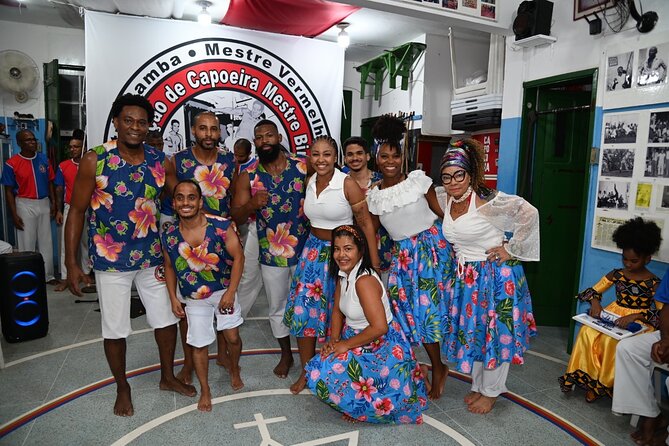
- Learn at Mestre Bimba’s capoeira school: The class takes place at the Associação de Capoeira Mestre Bimba, founded in 1937.
- No partner or dance background needed: You can join alone and start as a beginner.
- Yasmin earns high praise: Her patient pace, constructive feedback, and cultural explanations are especially helpful.
- Expect a workout: Stretching, flexibility, and strong knees make the experience easier.
- Samba comes with context: You learn how an Afro-Brazilian art moved from criminalization to national symbol.
- Convenient Pelourinho location: The class begins and ends at R. das Laranjeiras, n 01, on the first floor.
Why this one-hour class means more than learning steps
A short dance lesson can be forgettable. This one has a stronger setting and a clearer purpose. You are not simply being shown a few party moves. You are introduced to samba as part of Bahia’s Afro-Brazilian story, then asked to feel that story through movement.
Samba began in Afro-Brazilian communities in Bahia in the late 19th century. At the time, African cultural practices were often treated with suspicion. Capoeira and Candomblé were criminalized, and samba faced the same pressure. Over roughly a century, samba changed from a persecuted cultural expression into a symbol of Brazil.
That background gives the class weight without making it feel like a lecture. You get a brief account of the music, dance, and social forces behind it, then move into the physical work. The connection matters. A step feels different when you understand that it comes from a culture that had to protect its identity.
UNESCO now recognizes samba as an Intangible Cultural Heritage of Humanity. That does not mean you need formal dance training or a long academic explanation. It simply helps you see the class as an introduction to a living art, not a generic activity copied from a fitness studio.
Other samba nights worth staying up for:
- Cultural Night Experience Capoeira, Samba and Drumming
★ 5.0 · 14 reviews - Samba-Reggae Percussion Class in Salvador
★ 5.0 · 14 reviews - Rio de Janeiro: Beginner Samba Lesson in Ipanema
★ 4.9 · 1,071 reviews
Entering the school founded by Mestre Bimba
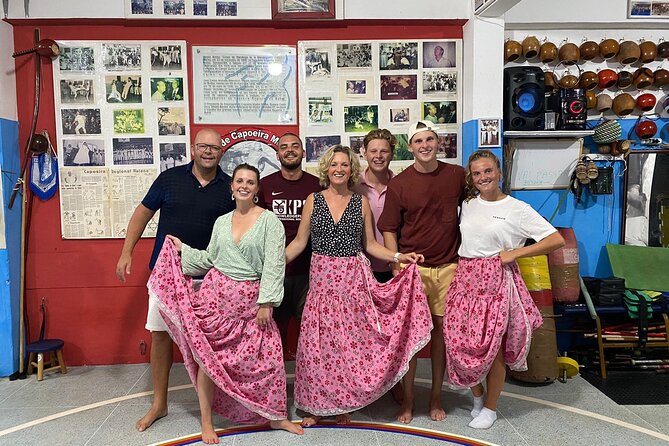
The location is one of the strongest reasons to choose this class. You meet at the Associação de Capoeira Mestre Bimba in Pelourinho, at R. das Laranjeiras, n 01, first floor. The activity returns to that same meeting point at the end, so you do not need to arrange a separate pickup or find your way to another neighborhood afterward.
Mestre Bimba founded the school in 1937 and created Capoeira Regional. The school has long been viewed as a center of resistance and cultural preservation in Salvador. That setting gives you a direct link to the traditions being discussed.
I prefer cultural classes held in places connected to the subject itself. A samba lesson in a generic room might teach the movements, but this location adds meaning before the music begins. You are learning in a space associated with capoeira, one of the other Afro-Brazilian practices that faced official suspicion and repression.
The school’s history also helps explain why samba and capoeira belong in the same conversation. They are different forms, but both carry ideas about identity, resilience, rhythm, and community. You are not expected to become a capoeira expert during this class. Still, the setting offers a useful first look at the wider cultural world around Bahian dance.
How the class builds confidence for beginners
The class is designed for people who arrive without a partner or dance experience. That removes two common worries. You do not have to bring someone with you, and you do not need to memorize steps before arriving.
Yasmin is particularly good for beginners because she builds the movements gradually. Her teaching includes repeated demonstrations, patient corrections, and constructive feedback. That matters when your feet, hips, shoulders, and arms are all being asked to work at once.
You can expect the lesson to move from basic explanation toward more connected movements. The exact sequence is not specified, so I would not promise a particular routine. What is clear is that the teaching starts at an accessible pace and helps you understand the purpose behind each movement.
One useful detail is that the instruction can include both female and male instructors. A male instructor was available during one class, which helped some participants feel more comfortable. That is a small but practical touch, especially for beginners who may feel self-conscious about learning body movement in a new setting.
You will likely make mistakes. That is part of the point. Samba is not learned by watching once and performing perfectly. A friendly teacher who gives direct feedback lets you relax, try again, and gradually find the rhythm.
The physical side: fun, but not passive
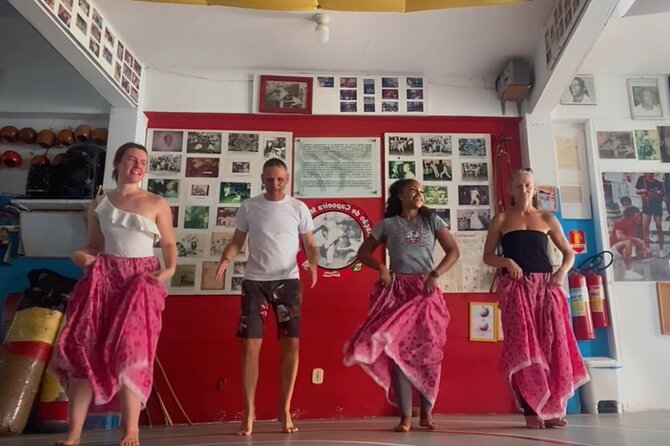
Do not treat this as a seated cultural talk with a little dancing added. You should expect to move, stretch, and work up a sweat. One class was described as a workout, and that is useful advice for planning your day.
You do not need professional flexibility, but comfortable knees and a reasonable range of movement will help. If your knees are sore, your flexibility is limited, or you are recovering from an injury, you may find some movements tiring. The class is open to most participants, but that does not mean every body will find it equally easy.
Wear clothing that lets you move. The supplied information does not set a dress code, so I would simply choose practical clothes and comfortable footwear. You will get bottled water, but it is still sensible to arrive ready for physical activity.
The one-hour length is a good compromise. It gives you enough time to learn, practice, and feel the rhythm without turning the lesson into a full-day commitment. At the same time, the short format means you should not expect mastery. Think of it as a useful first session and a way to gain confidence before enjoying samba or other Brazilian dance later.
A few more Salvador da Bahia days to weigh up
- Round trip transfer, Salvador, Bahia, Brazil
★ 5.0 · 228 reviews - Salvador City Tour – Discover Brazil’s First Capital En, It, Es
★ 5.0 · 217 reviews - Cooking class in Salvador, an authentic dinning experience
★ 5.0 · 132 reviews - Tour to the Frades Islands and Itaparica, from Salvador – Ba
★ 4.0 · 130 reviews
The cultural lesson behind the music
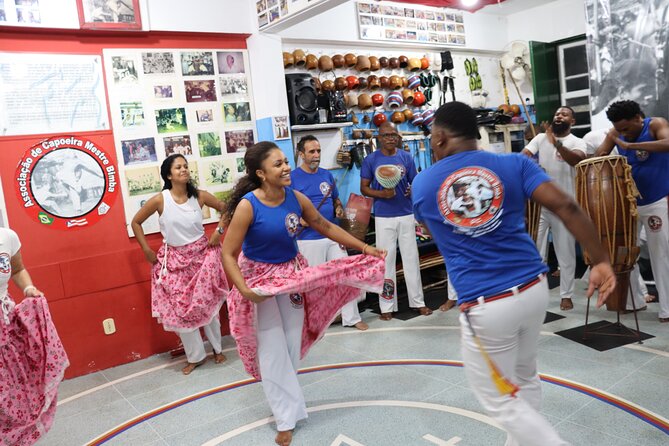
The best part of the class is the link between movement and meaning. Yasmin does not only show what to do. She explains why the movements are performed and how they fit the dance. That approach helps you understand the spirit of samba instead of treating it as a set of empty gestures.
The story of samba also gives you a sharper view of Salvador. Bahia was central to the development of Afro-Brazilian cultural forms, but those forms were not always welcomed by authorities. Learning this in a capoeira school makes the historical point more immediate.
Capoeira and Candomblé were both viewed with suspicion and criminalized, and samba faced similar treatment. Today, samba is widely associated with Brazil and has UNESCO recognition. The contrast between repression and national pride is one of the most important ideas you take away from the class.
That context can improve the rest of your time in Salvador. If you later see capoeira, hear drumming, or attend a folkloric dance show, you will have more questions and a better sense of what you are seeing. A participant used the class as preparation for the Balé Folclórico later that night, which makes good practical sense. The lesson gives you a basic vocabulary for watching performance rather than simply taking in the spectacle.
Pairing the class with a day in Pelourinho
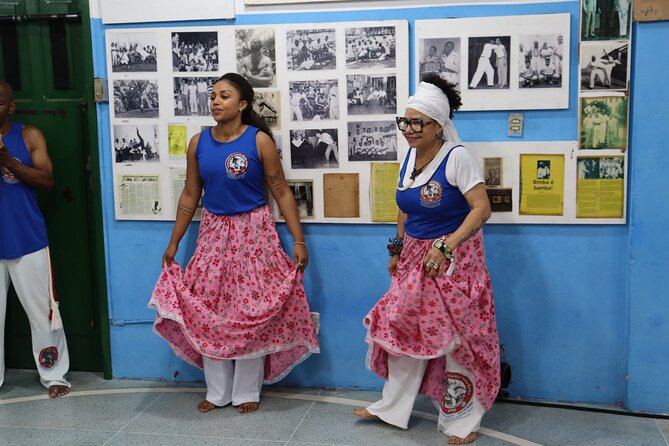
The meeting point is in Pelourinho, one of Salvador’s best-known areas for historic streets, churches, cultural venues, and local activity. Since the class begins and ends in the same place, you can fit it into a day of exploring instead of returning to your hotel between activities.
I would schedule the class alongside your plans in the area. The short duration makes it easier to place before or after sightseeing, and its central meeting point reduces the need for a separate transportation plan. The experience is near public transportation, another helpful feature if you are moving around Salvador on your own.
You may also want to leave enough time on both sides of the class to arrive calmly. The information does not specify a required early arrival period, so do not assume one. Still, dance lessons are more enjoyable when you are not rushing through unfamiliar streets or arriving breathless.
The maximum group size is 45 people. That is a fairly large possible class, so the atmosphere may vary depending on the number booked for your date. A smaller group could allow more individual attention, while a fuller session may feel more social but give you less personal space.
That group limit is worth considering if you want a quiet, highly personal lesson. If your priority is meeting people and enjoying a shared cultural activity, a larger group may be part of the fun. The strong teaching feedback suggests the instructors can keep the class welcoming, but no group lesson can promise constant one-on-one correction.
Is $42.15 a fair price?
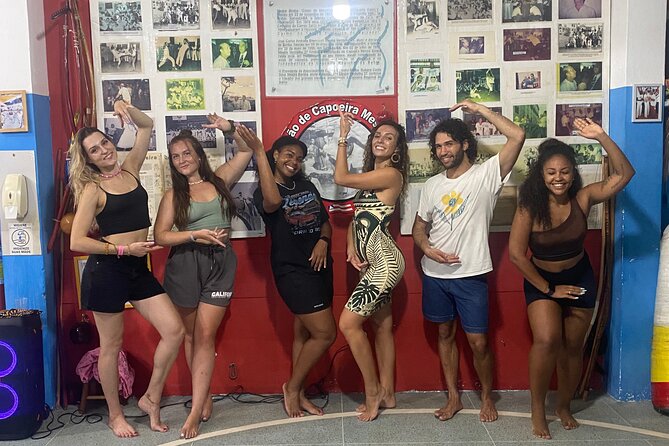
At $42.15 per person, this is not the cheapest way to spend an hour in Salvador. You are paying for more than exercise, though. The price includes instruction, cultural explanation, access to a historically important school, and bottled water.
The value is strongest if you care about context. A basic dance class could teach you a few moves for less, but it would not necessarily connect samba to Bahia’s Afro-Brazilian traditions or place you inside a school founded by Mestre Bimba.
The price also makes more sense as part of a larger day. You can combine the class with sightseeing in Pelourinho, then use what you learned at a samba or folkloric performance. One participant signed up for a capoeira lesson after enjoying the welcoming atmosphere, so this can also serve as an introduction to other classes at the school.
I would not book it only because you want a polished dance performance. This is a participatory lesson, and you will need to move. Book it because you want to try something, hear the story behind it, and accept a few awkward steps along the way.
The experience is booked about 11 days ahead on average. That does not guarantee that every date sells out, but it suggests you should reserve ahead if your Salvador schedule is tight. Free cancellation is available if you cancel at least 24 hours before the local start time. Changes or cancellations inside that window are not refunded, and a minimum number of participants is required for the class to run.
Who will enjoy this most
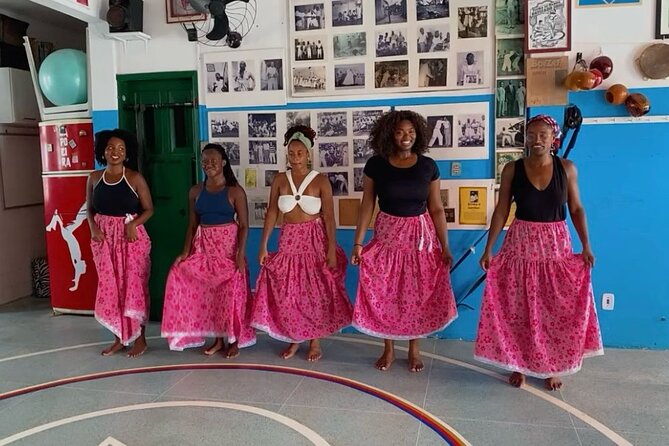
I would recommend the class to several kinds of people:
- First-time visitors to Salvador who want a cultural activity beyond sightseeing.
- Solo visitors who do not have a dance partner.
- Beginners who appreciate patient instruction and a gradual pace.
- Dance fans who want to understand the social and historical background of samba.
- People attending a performance later who want a little preparation before watching.
- Visitors curious about capoeira who may want to try another class at the same school.
You should think twice if you dislike physical participation or want a passive lecture. The class is also less suitable if your knees or flexibility make repeated movement uncomfortable. Most people can participate, and service animals are allowed, but the activity still requires you to take part physically.
English-speaking guidance is available, which helps if you do not speak Portuguese. The lesson’s cultural explanations are an important part of the experience, so clear communication adds real value.
A practical way to plan your visit
I would place this class on a day when you are already exploring Pelourinho. That keeps the experience efficient and lets you enjoy the neighborhood before or after the lesson. It also avoids wasting time crossing Salvador for a one-hour activity.
Arrive ready to move and keep your expectations realistic. You may learn several basic samba movements, but the bigger reward is gaining a feel for the rhythm and a clearer understanding of its cultural place in Brazil.
If you are nervous, remember that no partner or previous dance experience is required. Yasmin’s patient teaching style is a strong reason for beginners to feel comfortable, and the instructors’ willingness to offer constructive feedback helps take the pressure off.
Bring curiosity, not perfection. Samba is supposed to be felt as much as counted, and the class gives you a friendly place to begin.
Should you book the Mestre Bimba samba class?
Book it if you want active cultural learning in a meaningful setting. The combination of Yasmin’s teaching, the school’s connection to Mestre Bimba, and the history of samba gives this one-hour class more substance than a standard dance lesson.
Skip it if you are looking for a show, dislike exercise, or have physical limits that make stretching and dancing uncomfortable. For everyone else, $42.15 is a fair price for a compact introduction to Salvador’s music, movement, and Afro-Brazilian cultural story. Schedule it with your Pelourinho plans, leave room for a little sweat, and consider adding a capoeira class or evening performance afterward.
FAQ
Do I need dance experience to join the samba class?
No. The class is designed for beginners, and no previous dance experience is required.
Do I need to bring a dance partner?
No. You can participate without a partner.
How long does the samba experience last?
The class lasts approximately one hour.
Where does the class meet?
It begins at Associação de Capoeira Mestre Bimba, R. das Laranjeiras, n 01, first floor, Pelourinho, Salvador, Bahia, Brazil.
Where does the activity end?
The class ends back at the meeting point.
Is bottled water included?
Yes. Bottled water is included.
What is the maximum group size?
The activity has a maximum of 45 participants.
Can I cancel for a full refund?
Yes, if you cancel at least 24 hours before the local start time. Cancellations made less than 24 hours before the class are not refunded.
Newest reviews from around Salvador da Bahia
- Transfer North-Ba Coast and Salvador Airport★ 5.0 · 25 reviews
- Curated Nightlife Experience in the Heart of the City★ 3.5 · 5 reviews
- One-Way Private Transfer to Boipeba Island★ 5.0 · 21 reviews
- Ilhas Maravilhas Frades and Itaparica Full Day Tour, Salvador, Bahia, Brazil★ 3.5 · 13 reviews
- Transfer Costa do Sauipe – Private★ 5.0 · 2 reviews
- Salvador de Bahia: Private Round-Trip Airport–Hotel Transfer★ 4.5 · 25 reviews
- Transfer Salvador to Barra Grande Round Trip★ 5.0 · 3 reviews
- Hotel Vila Galé Mares – Transfers In / Out★ 5.0 · 29 reviews
Samba & Carnival Shows, compared.
Pub Crawl in Lapa with Cachaça Tasting and Live Samba
Read our review →
Carnival Backstage Tour at Samba City with Cocktail
Read our review →
Hop-ON Hop-OFF Sightseeing Bus in Rio de Janeiro – Rio Samba Bus
Read our review →
Santa Teresa, Lapa, and Cinelândia with Tram Ride and Selarón Steps
Read our review →
Carnaval Experience: Backstage Tour at Samba City with Cocktail
Read our review →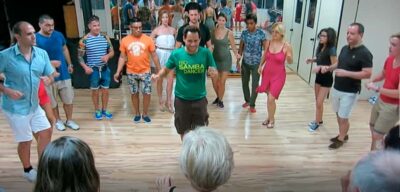

Browse the lists this tour appears in