
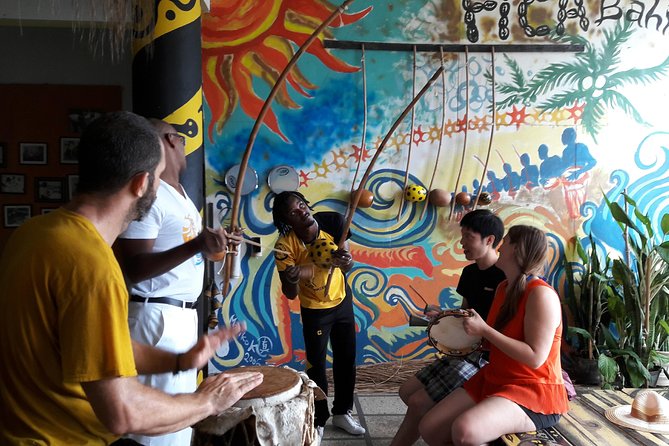
Reviewed · WORKSHOPS
Private Capoeira Class in Salvador
History comes alive through movement. I like that this three-hour experience treats capoeira as more than a workout. You learn basic moves, hear how the art grew as a form of resistance during 500 years of slavery in Brazil, and take part in music and rhythm with local students. I also like the private format and hotel pickup, which make the outing easy to arrange. The main consideration is the price: at $100 per person, with at least two people required, this is not a cheap class.
You should also expect a real cultural lesson, not a quick tourist demonstration. The class includes time with a local guide, a private workshop for beginners, and participation in a regular capoeira class. You may work with Wilson, a guide praised for translating and explaining the history, though the provider can also assign a multilingual guide.
In This Review
- What Makes This Salvador Experience Special
- Capoeira Is More Than a Martial Art
- The Three-Hour Schedule, Step by Step
- What the Private Format Really Gives You
- A Class for Beginners, Families, and Mixed Abilities
- Music, Singing, and the Human Side of the Class
- What to Pack and How to Prepare
- Who Should Book This Class?
- Booking, Cancellation, and Overall Value
- Should You Book the Private Capoeira Class?
- FAQ
- How long is the private capoeira class?
- How much does the experience cost?
- Is hotel pickup included?
- Is the class available in English?
- Do I need previous capoeira experience?
- Can I cancel for a refund?
What Makes This Salvador Experience Special
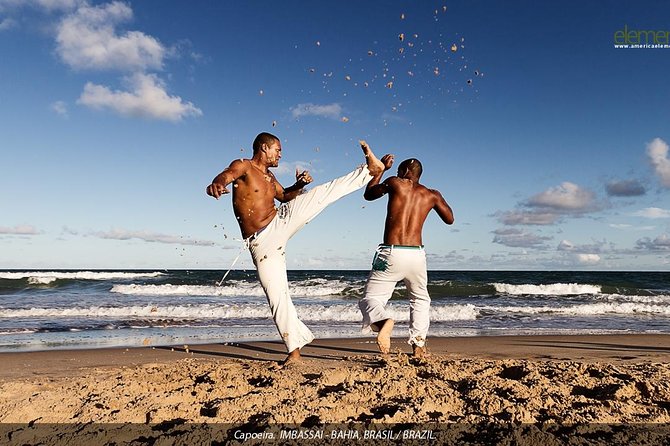
- Capoeira is taught as history and resistance: You learn why this martial art matters to Afro-Brazilian culture, not just how to copy its movements.
- A private beginner workshop comes first: Your group can learn basic techniques before joining a regular class.
- You take part in music as well as movement: Percussion and singing are part of the experience described by past participants.
- A local guide adds context: Wilson has been praised for translating and connecting the class to Salvador’s old town and wider story.
- Hotel or Airbnb pickup is included: The provider picks up throughout Salvador City, if you provide the correct address.
- The class suits many ages and skill levels: Most people can participate, but you should bring workout clothes and shoes.
Capoeira Is More Than a Martial Art
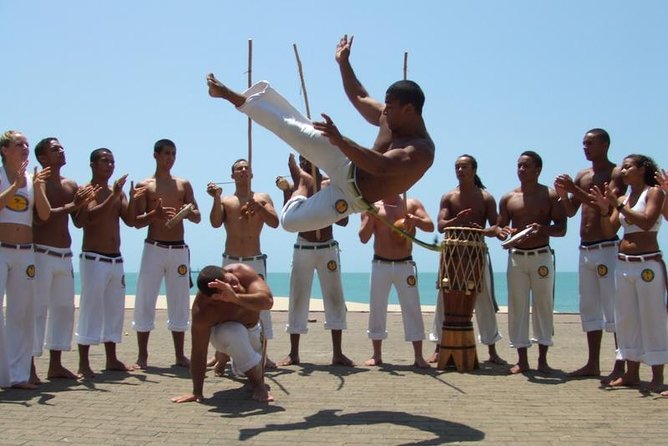
Capoeira blends self-defense, dance, music, rhythm, and social exchange. In Salvador, that combination matters because capoeira is tied closely to the lives and struggles of Afro-Brazilian communities.
This experience gives you a useful introduction to that story. Your guide explains capoeira as a practice formed by Africans and their descendants during Brazil’s long period of slavery. The art offered physical training, cultural expression, and a way to maintain identity under harsh conditions.
You are not simply told a few historical facts and then sent to exercise. The lesson connects the movements to resistance, music, and community. That link is the heart of the experience, and it gives the class more weight than an ordinary activity aimed only at entertainment.
I especially like this approach for anyone who wants to understand Bahia beyond its churches, plazas, and colonial streets. Salvador’s Afro-Brazilian culture is not a side note. It shapes the city’s music, food, faith, language, and public life. Capoeira gives you a direct way to see how those threads connect.
The historical material may be sobering. That is appropriate. You should not expect a polished performance that skips over the painful parts of Brazilian history. The experience appears designed to help you understand where capoeira came from and why it remains important.
A few more Salvador da Bahia days to weigh up
- Cooking class in Salvador, an authentic dinning experience
★ 5.0 · 132 reviews - 4h Cooking Class in Salvador with 9 Recipes & Bottomless Drinks
★ 5.0 · 73 reviews - Samba-Reggae Percussion Class in Salvador
★ 5.0 · 14 reviews
The Three-Hour Schedule, Step by Step
The outing lasts about three hours, including the class and cultural explanation. Exact timing can vary, but the plan has three clear parts: pickup and orientation, a private workshop, and time with a regular capoeira class.
Your day begins with pickup from your hotel or Airbnb address in Salvador City. The provider asks for the name of your hotel if it falls outside the area selected during booking. This is helpful if you do not want to figure out local transport before an active class.
The pickup also matters because Salvador is spread out, and you may be staying in a different part of the city from the capoeira school. Having transportation arranged keeps the experience simple. Still, make sure your accommodation details are accurate when you book. The provider specifically needs the address if you are staying in an Airbnb.
Once you meet the guide, expect an introduction to capoeira’s background. The guide may explain the art in English, and the experience can be operated by a multilingual guide. If Wilson leads your outing, you can expect translation and historical context tied to Salvador’s old town and areas beyond it.
The first active part is a private workshop for your group. This is a smart setup for beginners. You can learn basic moves without having to keep pace with experienced students right away.
You may practice body positions, simple movements, and the basic feel of capoeira. The supplied information does not specify the exact techniques taught, so do not expect a fixed list of named moves. The useful point is that you receive an introduction before entering the larger class.
After the workshop, you join a regular class with other students from the capoeira school. This is where the private experience becomes more authentic. You are not watching a staged show from the edge of the room. You get a chance to see how a real class works and take part at your own level.
That transition can also be the most demanding part. Regular students may have more experience, better rhythm, or greater physical confidence. The private introduction should help, but you should not assume you will perform every movement perfectly. Capoeira is learned through practice, and a first session may feel awkward. That is normal.
The experience also includes music. One participant described playing percussion and singing with the group, alongside learning movements. Music is not decoration here. It helps set the rhythm and creates the social structure around the physical activity.
You may leave with a better sense of why capoeira is often described through several words at once: movement, defense, music, soul, and community. That range is what makes the class memorable.
What the Private Format Really Gives You
The tour is private, meaning only your own group participates in the booked experience. A minimum of two people per booking applies, so this is not an individual one-person lesson.
A private booking gives you room to ask questions and move at a comfortable pace during the first workshop. If you are nervous about trying capoeira in front of strangers, that privacy can make the start much easier.
It does not mean you will avoid other people entirely. The plan specifically includes joining a regular capoeira school class. You get a private introduction, then a shared cultural and physical setting.
That mix is better than either option alone. A fully private class might feel controlled but less connected to daily practice at the school. Dropping a beginner straight into a regular class might feel rushed. Here, you get some preparation followed by a look at how the art is practiced in a community setting.
The group size also affects the price. At $100 per person and a minimum of two people, the starting cost is effectively $200 for the booking. For a couple or small family, the fee may be worthwhile because it covers about three hours, private attention, transportation, translation, and cultural instruction.
For a larger group, ask about group discounts before booking. The experience advertises discounts for groups, which could improve the value if several people are traveling together.
I would not choose this class if you want the least expensive way to try a few capoeira moves. Local classes or public demonstrations may cost less, though no such alternatives are included here for comparison. I would consider the fee more reasonable if you value hotel pickup, a private introduction, English support, and the historical explanation.
A Class for Beginners, Families, and Mixed Abilities
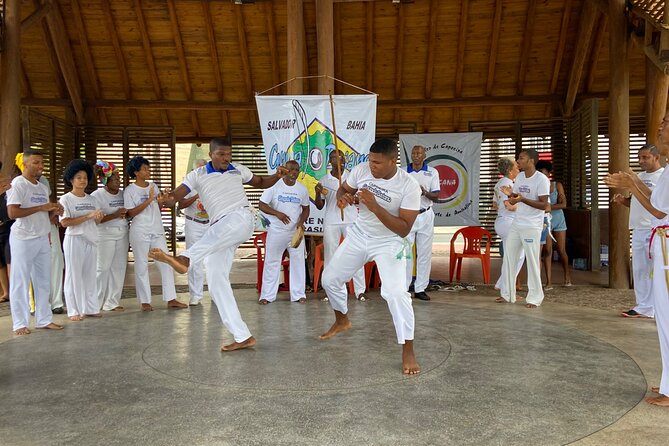
The experience is described as suitable for all ages and skill levels, and most people can participate. That makes it a practical option for families, couples, and groups with different levels of fitness.
You do not need prior capoeira experience. The private workshop gives you a starting point, and the regular class lets you see the art in practice. You can focus on learning rather than trying to look polished.
Still, capoeira involves physical movement. Bring workout gear and shoes, as one participant specifically advised. Comfortable clothing will make it easier to bend, step, and practice without distraction.
The available information does not state how strenuous the class is, nor does it provide details about accessibility, medical limitations, or modifications. If you have a condition that affects movement, contact the provider before booking. Do not assume that all exercises can be adapted.
Children and older adults may enjoy the cultural side even if they take part at a gentle level. The provider says most people can participate, but the best experience will come when everyone in your group is willing to move, listen, and try something unfamiliar.
The class can also work well for people who do not think of themselves as athletic. Capoeira is not only about speed or strength. Rhythm, attention, balance, and willingness to join in matter too.
Same patch of Brazil, a completely different sort of day:
- Round trip transfer, Salvador, Bahia, Brazil
★ 5.0 · 228 reviews - Salvador City Tour – Discover Brazil’s First Capital En, It, Es
★ 5.0 · 217 reviews - Tour to the Frades Islands and Itaparica, from Salvador – Ba
★ 4.0 · 130 reviews - Transfer Salvador Airport / Hotel Litoral Norte
★ 5.0 · 111 reviews
Music, Singing, and the Human Side of the Class
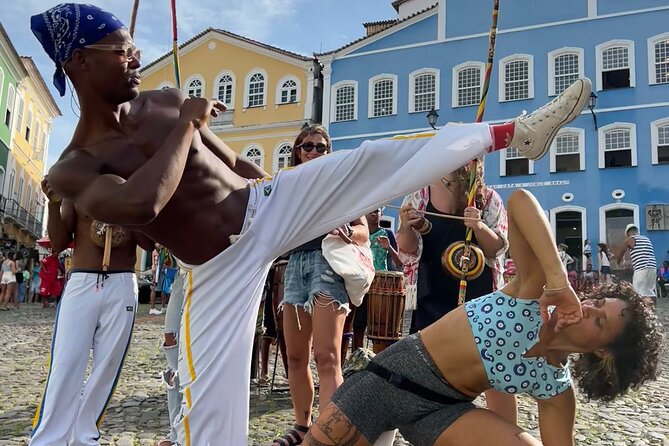
The strongest part of the experience may be its shared music. Capoeira often uses percussion and song to shape the mood and rhythm of the session. Here, you have the chance to play percussion and sing with the group, not just watch an expert perform.
That interactive element helps explain why the activity feels cultural rather than purely physical. You hear and take part in the sounds that support the movements. Even if your technique is modest, you can still contribute through rhythm and voice.
A past participant described the class as a family-strengthening experience, with the group pushing itself and growing together. That is useful advice if you are booking with relatives or friends. The activity may give your group a shared challenge, especially because nobody has to arrive as an expert.
The guide’s role also matters. Wilson was praised for helping with translation and for connecting the class to Salvador’s old town and the broader story of Brazil. If you receive similar guidance, you will gain more than instructions about where to place your feet.
Do keep your expectations grounded. You may not become a capoeira performer in three hours. The real reward is a first-hand sense of the art’s rhythm, discipline, humor, and cultural role.
What to Pack and How to Prepare
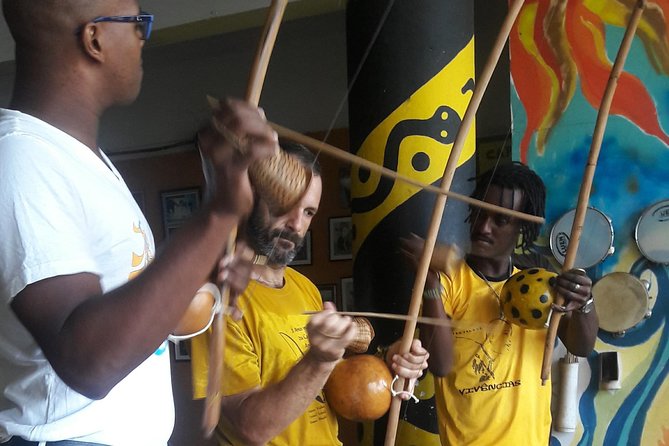
Wear workout clothes and proper shoes. This is the clearest practical advice available, and it is worth following. You will be moving during the workshop and regular class, so casual street clothes may feel restrictive.
Bring water if you normally need it during exercise. Food and drinks are not included, so plan accordingly. The information does not say whether refreshments are available at the school.
Arrive ready to listen as well as move. The history of capoeira is a central part of the experience, not filler between activities. You will get more from the class if you treat the explanation as part of the lesson.
It also helps to approach the regular class with humility. The other students may have more practice. You are there to learn, not to compete.
Since pickup is included, confirm your accommodation details at booking. Hotel pickup and drop-off apply, and Airbnb addresses can be used when supplied. Pickup is offered throughout Salvador City, but the provider asks for extra hotel information if your lodging is outside the selected area.
Who Should Book This Class?
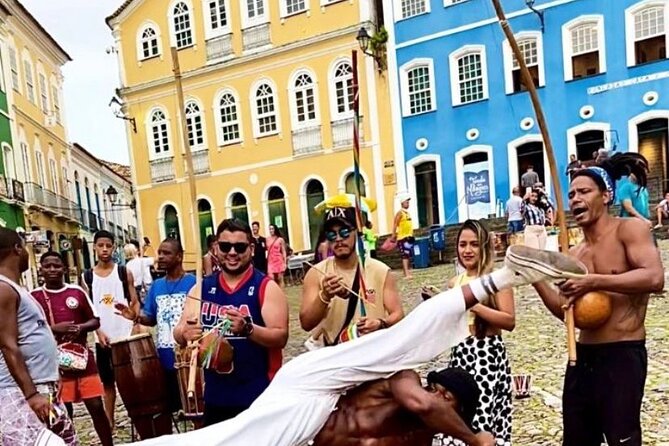
I would recommend it to you if you want a personal, active introduction to Salvador’s Afro-Brazilian culture. It is especially suitable if you prefer participating to sitting through a formal lecture or watching a performance.
It also makes sense for:
- Couples who want a private cultural activity
- Families looking for an experience that works across age groups
- Friends who enjoy music and physical challenges
- First-time visitors seeking local context
- Anyone interested in the history of resistance in Brazil
You may want to skip it if you dislike group participation, music, exercise, or uncertain physical performance. The class is welcoming to beginners, but you still need to take part.
It may not be ideal for someone looking for a quiet sightseeing tour. The class asks you to move, listen, sing, and interact. That is precisely its appeal, but it will not suit every travel style.
Booking, Cancellation, and Overall Value
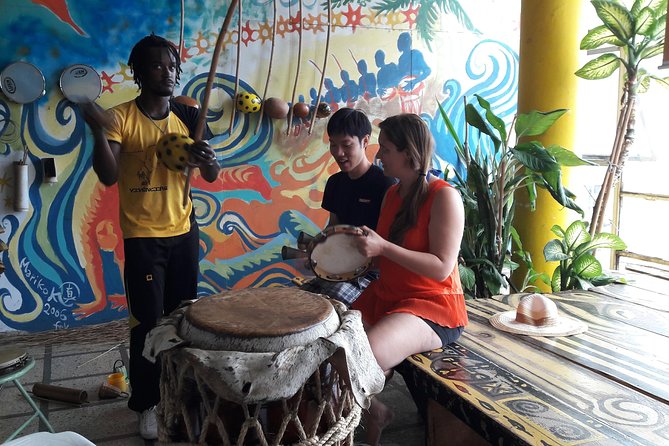
The price is $100 per person. Since at least two people must book, plan on a minimum total of $200. Group discounts may be available, so larger parties should ask about them rather than assuming the listed rate is final.
The fee includes hotel pickup and drop-off, the private workshop, the regular class, and guidance from a local instructor or multilingual guide. Food and drinks are not included.
The experience has a perfect 5 rating from four published ratings. That is a small sample, so I would not treat it as proof that every outing will be identical. Still, the praise points to consistent strengths: passionate guides, personal attention, strong historical context, and active participation.
Free cancellation is available if you cancel at least 24 hours before the start time. Cancellations within 24 hours are not refunded, and changes during that period are not accepted. The cut-off follows Salvador’s local time.
Should You Book the Private Capoeira Class?
Book this experience if you want to connect movement, music, and Afro-Brazilian history in one Salvador outing. The private workshop makes the class approachable, while the regular school session gives you contact with capoeira as a living practice.
I especially like the combination of Wilson’s translation and historical guidance, the chance to play percussion and sing, and the practical ease of hotel pickup. Just remember that you are paying for a three-hour cultural activity, not a short dance lesson.
If you bring workout clothes, keep an open attitude, and accept that your first moves may be clumsy, this can become one of the more meaningful activities in Bahia. For an active couple, family, or small group, the price may be justified by the private attention and transport. For a solo visitor, the minimum booking requirement makes this a less natural fit.
FAQ
How long is the private capoeira class?
The experience lasts approximately three hours.
How much does the experience cost?
The price is $100 per person.
Is hotel pickup included?
Yes. Hotel pickup and drop-off are included. Pickup is offered at hotels throughout Salvador City, and Airbnb addresses can also be used when provided.
Is the class available in English?
Yes. The experience is offered in English, and it may be operated by a multilingual guide.
Do I need previous capoeira experience?
No previous experience is stated as required. The class is described as suitable for all ages and skill levels, and it begins with a private workshop covering basic moves.
Can I cancel for a refund?
Yes. You can receive a full refund if you cancel at least 24 hours before the local start time. Cancellations and changes made within 24 hours are not refunded or accepted.
Newest reviews from around Salvador da Bahia
- Transfer North-Ba Coast and Salvador Airport★ 5.0 · 25 reviews
- Curated Nightlife Experience in the Heart of the City★ 3.5 · 5 reviews
- One-Way Private Transfer to Boipeba Island★ 5.0 · 21 reviews
- Transfer Costa do Sauipe – Private★ 5.0 · 2 reviews
- Ilhas Maravilhas Frades and Itaparica Full Day Tour, Salvador, Bahia, Brazil★ 3.5 · 13 reviews
- Hotel Vila Galé Mares – Transfers In / Out★ 5.0 · 29 reviews
- Salvador de Bahia: Private Round-Trip Airport–Hotel Transfer★ 4.5 · 25 reviews
- Transfer Salvador to Barra Grande Round Trip★ 5.0 · 3 reviews
Workshops, compared.

Cooking class in Salvador, an authentic dinning experience
Read our review →
Brazilian BBQ Class in Rio (3.5h): 10 Recipes & Bottomless Drinks
Read our review →
Browse the lists this tour appears in