
Reviewed · SAMBA & CARNIVAL SHOWS
Salvador: Cultural Night of Capoeira, Samba, and Drumming
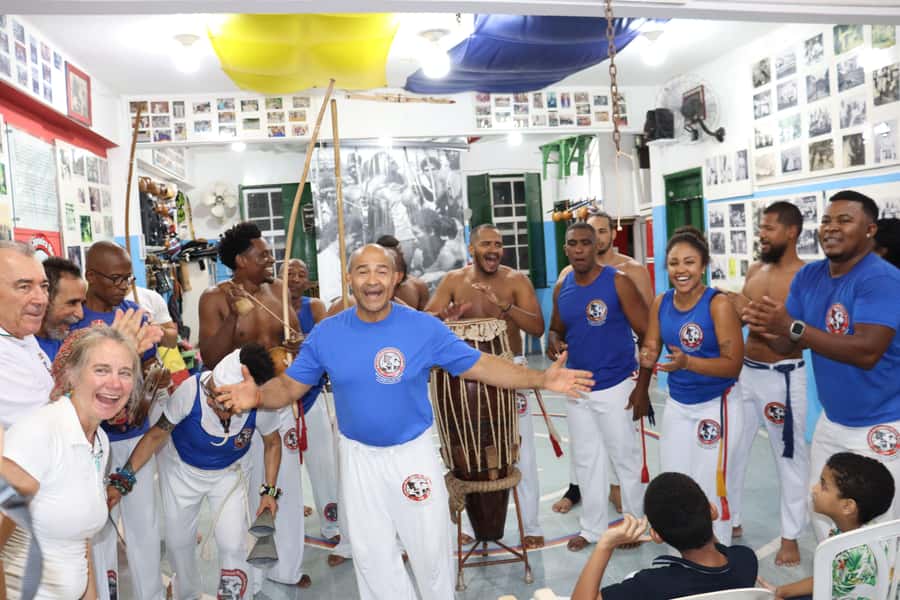
Salvador’s best stories are told through movement. This one-hour cultural night brings you to the first capoeira school in Brazil, founded by Mestre Bimba in 1937, for capoeira, samba, Maculelê, drumming, singing, and acrobatics. It feels less like a polished theater production and more like a living cultural gathering.
I like the historic setting and the fact that you see people of different ages and genders take part in capoeira. I also like the mix of music and movement: the drums, songs, samba, and fast capoeira exchanges give the evening plenty of pace. The main consideration is comfort. The room can become very hot, and the event is an organic performance rather than a tightly rehearsed show, so some sections may be stronger than others.
In This Review
- Key points to know before you book
- Why Mestre Bimba’s capoeira school matters
- What happens when the capoeira roda begins
- Samba brings a different kind of energy
- Maculelê adds sticks, rhythm, and acrobatics
- Drumming and live music hold it all together
- The honest tradeoff: authenticity over polish
- Expect a warm room and dress for movement
- Is $30 a fair price?
- Who will enjoy this cultural night most
- My practical verdict on the one-hour format
- Should you book this Salvador performance?
- FAQ
- Where does the Cultural Night take place?
- Is transportation to the venue included?
- Are there nearby landmarks to help find the meeting point?
- How long does the experience last?
- What performances are included?
- Is the performance fully rehearsed?
- What languages are available?
- What should I wear?
- Can I cancel for a full refund?
Key points to know before you book
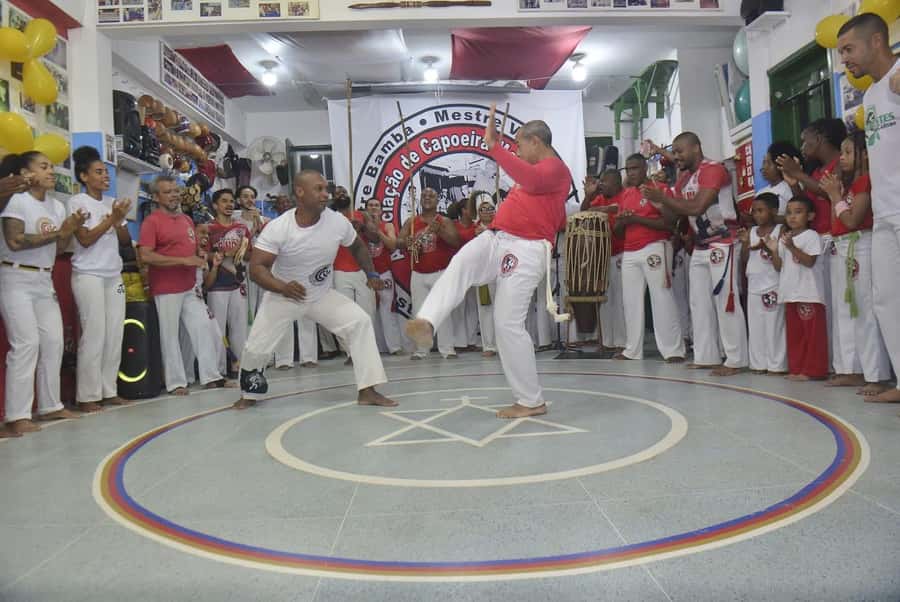
- Mestre Bimba’s school: The event takes place at the Associação de Capoeira Mestre Bimba, founded in 1937 by the creator of Capoeira Regional.
- More than capoeira: The program includes samba, Maculelê, traditional drumming, live music, and acrobatics.
- A real community atmosphere: You may see participants from young children to older adults taking part.
- Not a polished stage production: The performance reflects training and cultural practice, with spontaneous and uneven moments.
- Plan for heat: Wear light, comfortable clothing and bring water, since the room may become quite warm.
- Good short evening activity: The listed duration is one hour, while the detailed program describes a performance of about 1.5 hours, so check the current start and finish time before booking.
Why Mestre Bimba’s capoeira school matters
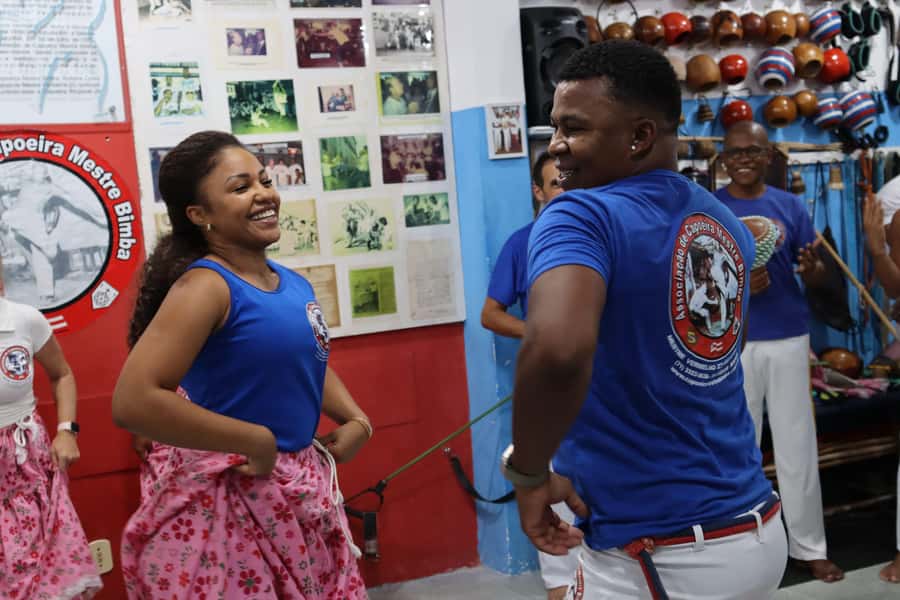
The address gives this experience its strongest reason to exist. You are not simply watching capoeira in a rented hall. You are visiting the Associação de Capoeira Mestre Bimba, the first capoeira school in Brazil, founded in 1937 by Mestre Bimba.
Mestre Bimba created Capoeira Regional, a form that helped shape modern capoeira while preserving the art’s fighting spirit, music, ritual, and acrobatic movement. The school is also tied to a larger story of cultural resistance. Capoeira developed among Afro-Brazilian communities and was once treated with suspicion and hostility. A school dedicated to teaching it gave the art a respected place in public life.
That context changes how the performance feels. The circles, songs, handclaps, and quick exchanges are not just decoration for an evening out. They belong to a tradition that has been passed from teacher to student for generations.
I would make a point of arriving at the area with enough time to find the entrance. The meeting point is the Associação itself, and there is no pickup service. Useful nearby landmarks include Ó Paí Ó Restaurante and São Domingos Gusmão Church in Largo do Terreiro de Jesus.
Other samba nights worth staying up for:
- Salvador: Cultural Treasure – Samba de Roda.
★ 4.9 · 51 reviews - Rio de Janeiro: Beginner Samba Lesson in Ipanema
★ 4.9 · 1,071 reviews - Rio: Pub Crawl in Lapa with Cachaça Tasting and Live Samba
★ 4.7 · 881 reviews
What happens when the capoeira roda begins
The evening opens with capoeira, usually the most intense part of the program. A roda is a circle formed by participants, musicians, and onlookers. Two players move inside it while the surrounding group supplies rhythm, singing, and encouragement.
The action can change quickly. One moment looks playful, with low crouches and careful footwork. The next brings a fast kick, a sudden duck, or an acrobatic roll close to the floor. Capoeira is part martial art, part dance, and part musical conversation. The best moments are not about one person defeating another. They come from timing, control, and the quick response between two players.
You may see several styles and levels of ability. A recent account described participants ranging from young people to older adults, and from many ages and genders. That variety is important. It shows capoeira as a living practice, not a stunt routine performed only by professional acrobats.
The presentation is intentionally spontaneous. Do not expect every exchange to look perfectly polished. Some sequences may be fast and impressive, while others may feel more like training. That is also the point. You are seeing a community practice with real participants, not a stage show built around identical choreography.
For me, this is the part that rewards attention. Watch the people around the circle as much as the two players in the middle. The clapping, singing, and reactions help you understand that capoeira is shared by the whole group.
Samba brings a different kind of energy
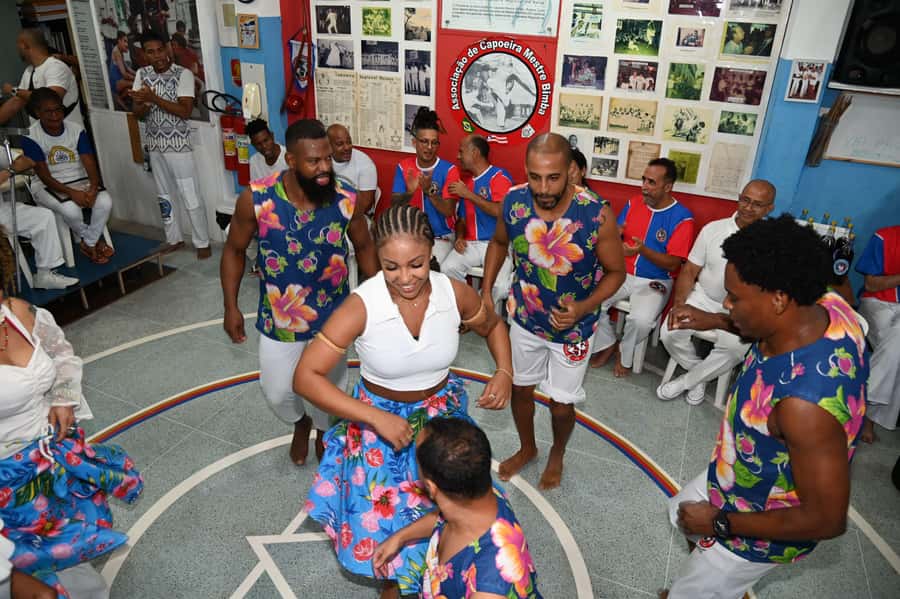
Samba changes the mood from combat-like movement to dance and celebration. The steps are lighter, the body movement is more relaxed, and the connection between music and dance becomes easier to read.
You will see both men and women take part. The dancing may feel informal and direct rather than staged for a large theater. That is a good fit for an evening built around local participation. Samba works best here as a social expression, not simply as a flashy number.
If you are unfamiliar with Brazilian dance, focus on the relationship between the feet, hips, and percussion. The music gives the dancers their structure, but the movement still leaves room for individual style. The performers do not all need to move alike for the scene to work.
The samba section also helps balance the capoeira. Capoeira asks you to follow fast changes and athletic movement. Samba gives you a chance to settle into the beat and enjoy the social side of the program.
Maculelê adds sticks, rhythm, and acrobatics
Maculelê is one of the more unusual elements of the evening. It is a traditional Brazilian performance style built around rhythmic movement and the use of sticks. The clacking of the sticks adds another layer to the drumming and gives the action a sharp, physical quality.
This section is especially useful if you want more than a standard capoeira demonstration. Maculelê brings a different visual language, with group rhythm, coordinated strikes, and athletic movement. The acrobatics can make the performance feel more theatrical, but the connection to music remains central.
You do not need prior knowledge to enjoy it. Listen for the timing between the sticks and the percussion. The sound itself helps you follow the structure, even when the movements happen quickly.
A few more Salvador Brazil days to weigh up
- Salvador by Night: Cultural Dinner and Show
★ 4.7 · 27 reviews - Salvador by Night: Cultural Show and Dinner.
★ 4.4 · 17 reviews - Salvador by Night: Pelourinho & Old Town Tour
★ 4.3 · 8 reviews - Rio de Janeiro: Sunset Sailing Tour
★ 4.8 · 994 reviews
Drumming and live music hold it all together
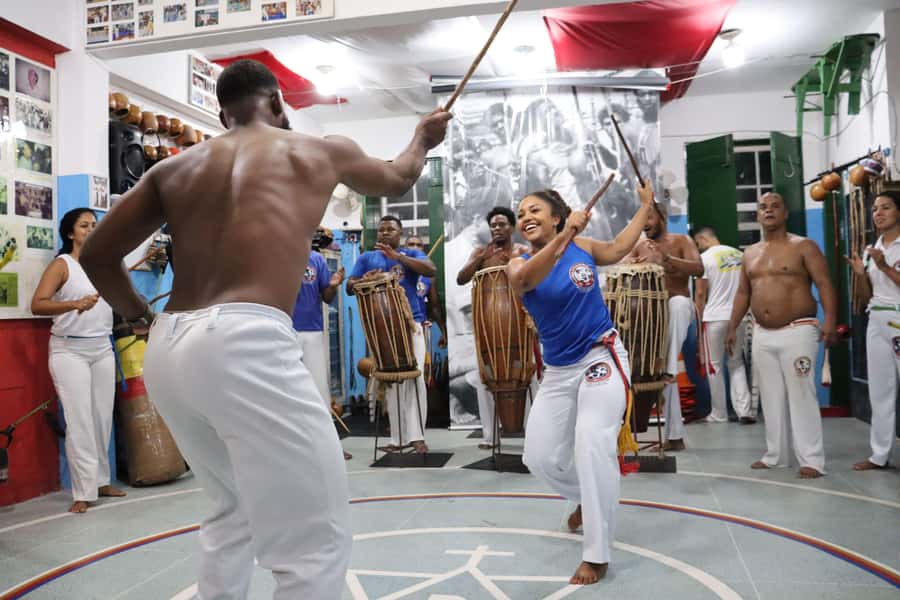
The music is not background sound. It directs the pace and mood of the evening. Traditional drumming, singing, and live instruments provide the pulse for the capoeira roda, samba, and Maculelê.
Several comments about the experience singled out the drums and singing as especially enjoyable. That makes sense because the music gives the program its strongest sense of place. Without it, the movement would be a series of athletic displays. With it, the evening becomes a cultural gathering.
Listen for how the tempo changes. Capoeira can build tension through a quicker rhythm, while samba opens the mood and invites more relaxed movement. Maculelê uses sound in a more percussive way, with the sticks adding their own beat.
The live music also helps explain why the show can feel organic. A performer may respond to the rhythm, the group, or the energy in the room instead of following a fixed sequence. That can create exciting moments, though it also means the quality may vary from one section to another.
The honest tradeoff: authenticity over polish
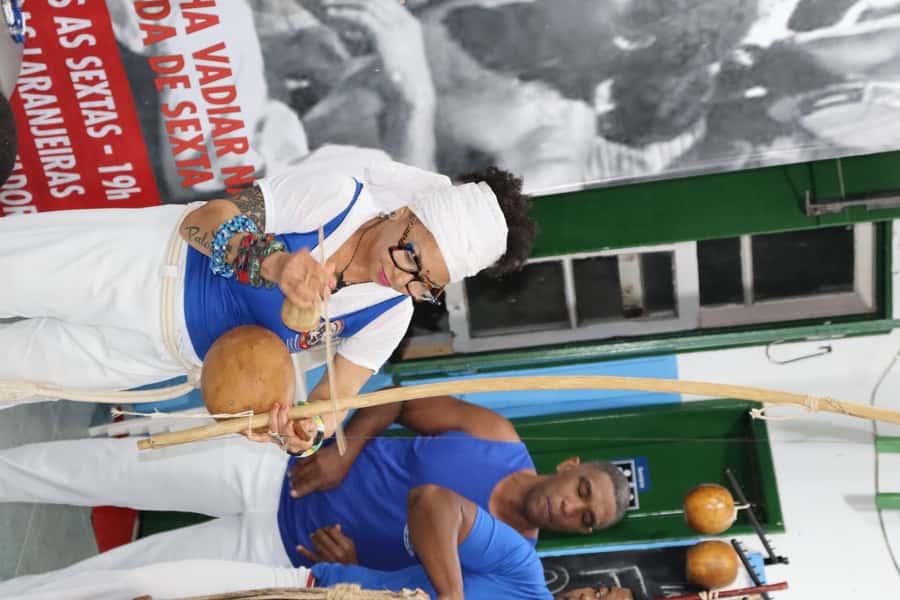
The organizers describe this as a cultural celebration rather than a tourist production with rehearsed routines. That distinction matters, and you should decide which kind of evening you want.
If you want a carefully timed show with identical choreography, dramatic lighting, and a clear beginning, middle, and end, this may feel loose. One attendee described the event as the training of association members, with performances that were real but uneven.
If you want to see capoeira in a setting connected to its own teaching tradition, the same looseness becomes a strength. You get a closer look at how the art is practiced, taught, and shared. The evening may include moments of remarkable speed and skill alongside simpler demonstrations.
I would call this an experience for curious observers, not only for people seeking a perfect photo opportunity. Watch the interaction between the musicians and performers. Notice how the group responds to each movement. Those details carry more meaning than a flawless routine.
Expect a warm room and dress for movement
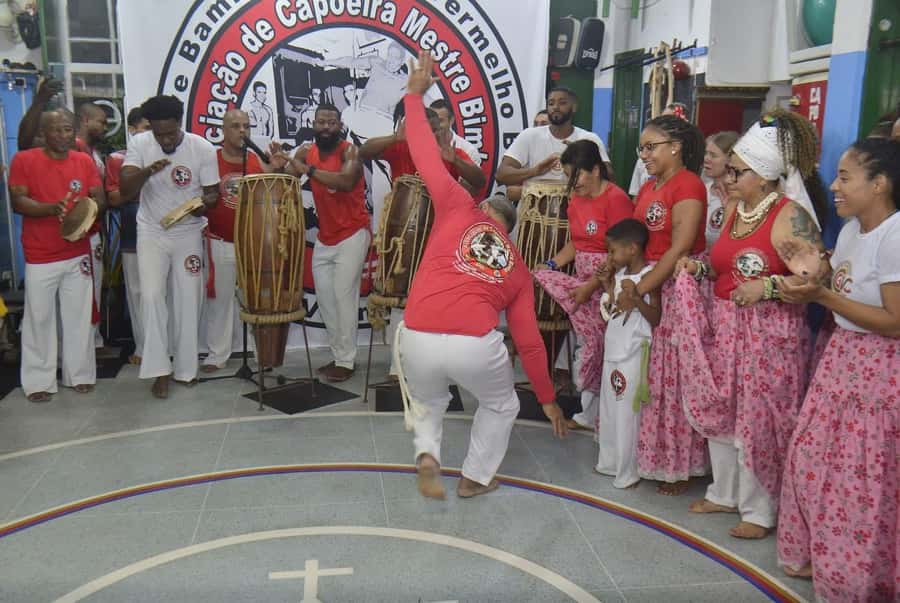
The room can become very hot. One attendee specifically advised preparing for the heat, and the combination of people, drumming, movement, and enclosed space explains why.
Wear comfortable clothes and shoes. You do not need formal evening dress, and heavy clothing will only make the room less pleasant. Bring water if permitted and avoid arriving already overheated from a long day of sightseeing.
Smoking is not allowed. The activity is not considered suitable for pregnant women or people with back problems, largely because the event includes vigorous movement and acrobatics. If you have a physical concern, use your own judgment before booking.
The exact timing deserves a quick check. The experience is advertised as one hour, while the detailed program describes the concert and dance performance as lasting 1.5 hours. Starting times can also vary. Confirm the current schedule so you do not build a tight dinner reservation or transfer around an uncertain finish.
Is $30 a fair price?
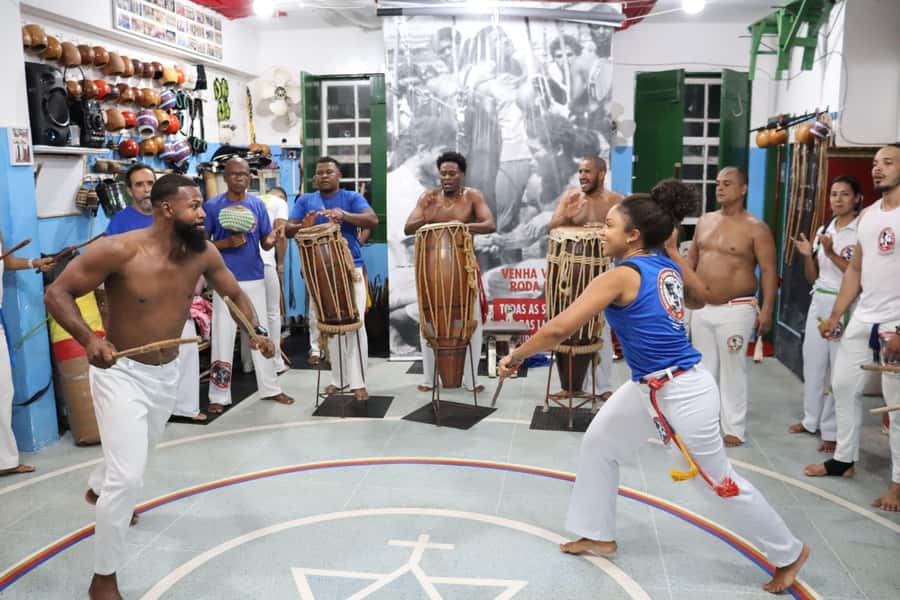
At $30 per person, the value depends on what you want from a cultural evening in Salvador. You are paying for entry to a live performance that combines several forms rather than for a long guided tour with transportation or a meal.
The price includes capoeira, samba, Maculelê, traditional drumming, live music, and acrobatics. Food, drinks, and transport are not included. Since there is no pickup service, you need to arrange your own way to the venue.
I think the price is reasonable if you value the setting and the connection to Mestre Bimba’s school. You are also getting more variety than you would from a short capoeira demonstration alone. The program moves through several traditions, so the hour can feel full even though the visit is brief.
The value is less convincing if you expect a large professional production. This is a smaller cultural event with spontaneous participation, and the quality can vary between sections. In that case, the attraction is not polish. It is the chance to see a respected capoeira institution at work.
A recent attendee also reported receiving a refreshing treat afterward. That may not be guaranteed, so do not count on it as part of the included food and drink. Plan your own meal before or after the event.
Who will enjoy this cultural night most
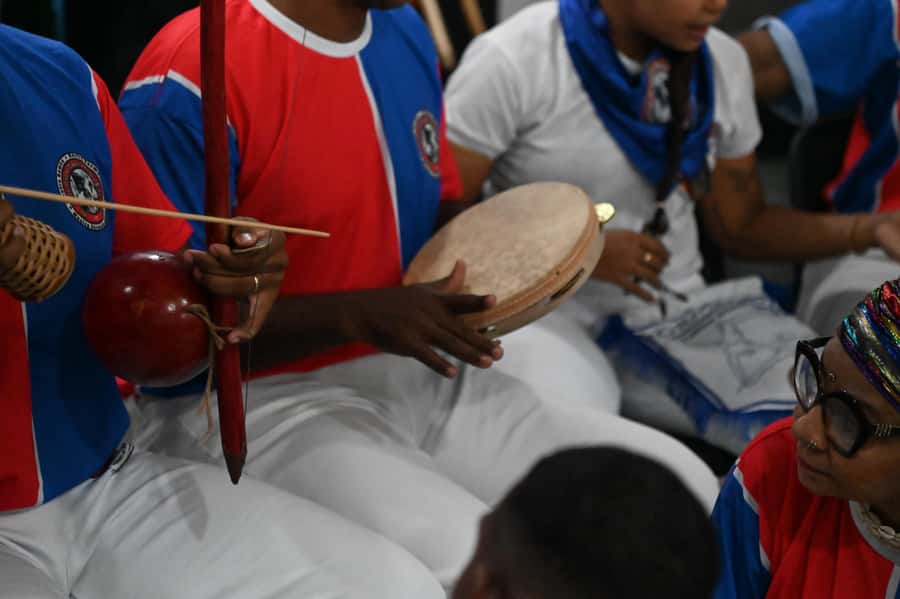
I would recommend this experience to anyone who wants a direct introduction to Afro-Brazilian performance traditions. It is especially suitable if you are spending time in Salvador and want an evening activity that connects music, movement, and local cultural practice.
It should work well for:
- First-time visitors who want more than a standard sightseeing stop
- People interested in capoeira’s history and musical structure
- Families with older children who can sit comfortably and handle a warm room
- Fans of live drumming, dance, and acrobatics
- Visitors who prefer community-based performances to polished stage shows
I would hesitate to recommend it to anyone needing cool indoor comfort, a quiet evening, or a tightly scripted production. The physical intensity may also make it a poor choice for pregnant women and people with back problems.
You do not need to know anything about capoeira before arriving. Still, reading a few lines about Mestre Bimba and Capoeira Regional will help you understand why the location matters.
My practical verdict on the one-hour format
A short performance is useful in Salvador because it fits easily into an evening. You can pair it with time in the historic center, then walk to the venue near Largo do Terreiro de Jesus.
The only caution is the uncertain duration. The headline timing says one hour, but the fuller schedule gives 1.5 hours for the concert and dance show. Allow extra time on both sides. That way, you can enjoy the final drumming and acrobatics without watching the clock.
The program also packs in many styles. Capoeira, samba, Maculelê, drumming, singing, live music, and acrobatics may not each receive equal time. Think of the evening as a compact cultural sampler rather than a full lesson in every tradition.
Should you book this Salvador performance?
Book it if you want real capoeira in a meaningful setting, live percussion, and a close look at Afro-Brazilian cultural expression. The school’s connection to Mestre Bimba gives the evening substance, while the range of music and dance keeps it lively.
Skip it if you need a polished theater show, guaranteed air conditioning, or a fixed one-hour schedule. The room may be hot, the performances can be uneven, and transportation is your responsibility.
For most culturally curious visitors, I think the setting makes the decision easy. You are not only watching people perform. You are seeing a respected capoeira community continue its work in the place where Capoeira Regional found one of its most important homes.
FAQ
Where does the Cultural Night take place?
It takes place at the Associação de Capoeira Mestre Bimba in Salvador, Brazil.
Is transportation to the venue included?
No. Pickup and transportation are not included, so you must make your own way to the Associação.
Are there nearby landmarks to help find the meeting point?
Yes. Ó Paí Ó Restaurante and São Domingos Gusmão Church in Largo do Terreiro de Jesus are listed as nearby landmarks.
How long does the experience last?
The activity is advertised as one hour. The detailed program lists the concert and dance show as lasting 1.5 hours, so check the current schedule and allow extra time.
What performances are included?
The program includes capoeira, samba, Maculelê, traditional drumming, live music, and acrobatics.
Is the performance fully rehearsed?
No. It is presented as an organic cultural celebration rather than a tourist show built around rehearsed routines. Some sections may feel more polished than others.
What languages are available?
Live guidance is available in English and Portuguese.
What should I wear?
Wear comfortable clothes and shoes. The room may become very hot, so light clothing is a practical choice.
Can I cancel for a full refund?
Yes. You can cancel up to 24 hours in advance for a full refund. You can also reserve now and pay later, according to the booking terms.
Newest reviews from around Salvador Brazil
- Salvador: Schooner Cruise with Pickup and Itaparica Stop★ 3.8 · 5 reviews
- Salvador: 3-Hour Percussion Class★ 4.9 · 10 reviews
- Salvador by Night: Cultural Show and Dinner.★ 4.4 · 17 reviews
- Salvador: Traditional Drumming and Percussion Workshop★ 4.4 · 10 reviews
- Salvador: Cultural Treasure – Samba de Roda.★ 4.9 · 51 reviews
- PROMO Salvador: Interactive Art and Culture Private Tour★ 5.0 · 2 reviews
- Salvador: Curated Nightlife Exp. in the Heart of the City★ 5.0 · 2 reviews
- Salvador: Capoeira Class at Mestre Bimba’s 1st Ever School.★ 4.9 · 34 reviews
Samba & Carnival Shows, compared.
Pub Crawl in Lapa with Cachaça Tasting and Live Samba
Read our review →
Carnival Backstage Tour at Samba City with Cocktail
Read our review →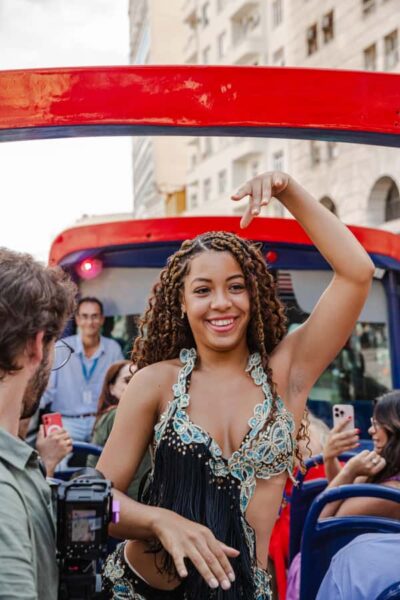
Hop-ON Hop-OFF Sightseeing Bus in Rio de Janeiro – Rio Samba Bus
Read our review →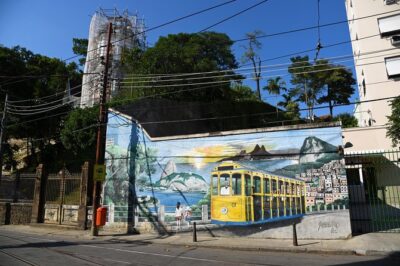
Santa Teresa, Lapa, and Cinelândia with Tram Ride and Selarón Steps
Read our review →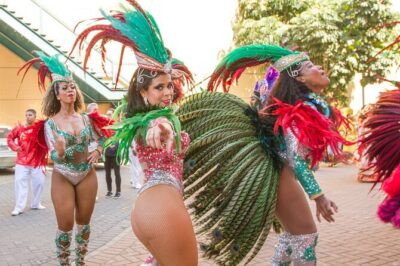
Carnaval Experience: Backstage Tour at Samba City with Cocktail
Read our review →
Browse the lists this tour appears in