
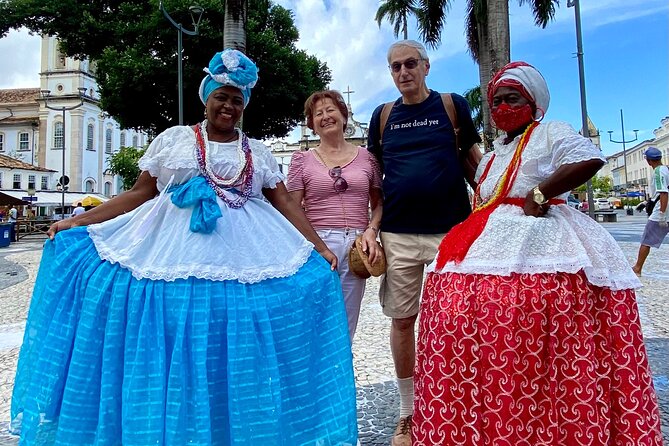
Reviewed · CITY TOURS
Private Anthropological City Tour of Salvador
Salvador’s story begins far beyond its churches. This private six-hour tour connects Afro-Brazilian history with living culture, taking you from Pelourinho’s colonial squares to São Joaquim Market, Casa do Benin, Candomblé sites, and a local family lunch. I especially like the private guide and hotel pickup, which make a full day of Salvador’s scattered cultural sights much easier to manage.
The tour also gives you more than museum displays. You visit Casa de Yemanjá, see the Orixá sculptures at Dique de Tororó, and stop at a terreiro connected with Candomblé. The main consideration is pace: the schedule covers a lot, and some stops are short. One account describes spending eight hours with the guide, so the actual day may run longer than the advertised six hours.
In This Review
- Key points about this Salvador tour
- Why this tour gives Salvador more meaning
- Pelourinho and the colonial heart of Salvador
- São Joaquim Market and the working side of Salvador
- Casa do Benin and the African connection
- Casa de Yemanjá by the Rio Vermelho shore
- Vodun Zo and the continuing role of Candomblé
- Lunch at Recanto das Tias Celia & Leda
- Dique de Tororó and the Orixá sculptures
- Six hours, private transport, and the real pace
- Who will get the most from this experience
- Is the $180 price fair?
- Should you book the private anthropological tour?
- FAQ
- How long does the tour last?
- Is hotel pickup and drop-off included?
- Is lunch included?
- Can I request vegetarian food?
- Is the tour private?
- What is the minimum booking requirement?
- Are entrance fees included?
Key points about this Salvador tour
- Afro-Brazilian focus: Learn how African traditions, forced migration, religion, food, and trade shaped Salvador.
- Private transportation: Hotel pickup and drop-off save time and keep the route simple.
- Strong guide element: Josuel, Marcos, and Mônia are specifically praised for clear explanations, flexibility, and warm conversation.
- Local lunch included: Eat typical food at Recanto das Tias Celia & Leda, with feijoada mentioned as a highlight.
- Living Candomblé culture: Casa de Yemanjá, Vodun Zo, and Dique de Tororó show how African religious traditions remain part of daily life.
- A full cultural circuit: The tour combines old-town streets, a market, museums, religious sites, public art, and a family restaurant.
Why this tour gives Salvador more meaning
Salvador can be easy to reduce to colorful colonial buildings and scenic beaches. This tour asks you to look harder. Its subject is the African community and the slave trade, but it also shows how African customs continued through religion, food, craft, music, markets, and family life.
That makes the experience different from a standard old-town walk. You still see Pelourinho, one of Salvador’s essential sights, but you also visit places that explain the people and traditions behind the city’s public image.
I like the private format here. You travel only with your own group, so you can ask direct questions and spend more time on subjects that interest you. The guides are described as flexible and willing to answer many questions. Josuel Olafemi is praised for his warmth and enthusiasm, while Marcos is described as an excellent guide during a longer day. Mônia is noted for explaining Salvador’s roots and cultural mixtures in clear English.
The tour is especially useful if you want context, not just photographs. You will hear about the city’s African heritage while seeing objects, sacred places, food, and working markets connected to that story.
More City Tours in Salvador & Bahia
- Salvador City Tour – Discover Brazil’s First Capital En, It, Es
★ 5.0 · 217 reviews - Private City Tour in Salvador
★ 5.0 · 110 reviews - Historical African oriented City Tour
★ 5.0 · 52 reviews
Pelourinho and the colonial heart of Salvador
The day begins in Pelourinho, where you walk through the old city and its five-square complex of colonial buildings. The cobbled streets and historic façades provide the visual introduction most people expect from Salvador, but the guide’s explanations are what give the area weight.
This is planned as a two-hour walking visit, the longest single stop. That matters. You have enough time to move beyond a quick photo stop and ask about the buildings, the old city, and the forces that shaped Salvador.
Pelourinho is also the part of the tour most likely to feel busy and tourist-oriented. That is not a reason to skip it. It is a reason to appreciate having a guide who can connect the polished historic center with the harder parts of Brazil’s past, including slavery and the African population that shaped Bahia.
Wear comfortable shoes. The cobbled streets make steady walking more tiring than the clock suggests, and the tour covers several more stops afterward.
São Joaquim Market and the working side of Salvador
At São Joaquim Market, you see Salvador through commerce rather than grand architecture. The fair is described as the city’s largest open market, with informal workers descended from enslaved Africans selling food, pottery, handicrafts, couscous, pots, and ritual goods.
This is one of the tour’s most useful stops because it links history to ordinary economic life. Clay items made in the Bahia Recôncavo, products used in Candomblé ceremonies, and everyday foods all appear in the same market setting.
Allow yourself to look closely. The point is not simply to buy something or pass through colorful stalls. Your guide can explain what different products mean and how the market serves local communities.
The market may feel less polished than Pelourinho. That is precisely its value, though it can be a more intense stop for anyone who prefers quiet museums and tidy streets. Keep an open mind and follow the guide’s lead. This is a place to observe respectfully, especially around religious items.
Casa do Benin and the African connection
Casa do Benin is a short museum visit of about 20 minutes, but it gives the tour an important historical frame. The museum presents African societies and the movement of people, objects, and ideas between Africa and Brazil.
The displays are intended to help you understand the historical, artistic, and ethnic links between the two places. That makes this stop more than a pause indoors. It helps explain why Salvador’s African influence is not a decorative theme added for visitors. It is part of the city’s identity.
Twenty minutes is not long, so expect an introduction rather than an exhaustive museum visit. The guide’s explanation matters here, especially if you want help connecting the objects and displays to the broader story of slavery, cultural survival, and Bahia.
Admission is included, as it is at the other paid stop on the route.
A few more Salvador da Bahia days to weigh up
- Round trip transfer, Salvador, Bahia, Brazil
★ 5.0 · 228 reviews - Cooking class in Salvador, an authentic dinning experience
★ 5.0 · 132 reviews - Tour to the Frades Islands and Itaparica, from Salvador – Ba
★ 4.0 · 130 reviews - Transfer Salvador Airport / Hotel Litoral Norte
★ 5.0 · 111 reviews
Casa de Yemanjá by the Rio Vermelho shore
The visit to Casa de Yemanjá shifts the focus from history in books to a living religious tradition. Located by the beach in Rio Vermelho, the site is connected to a fishermen’s community that created an altar honoring Yemanjá, the African divinity associated with the sea.
You spend about 15 minutes here. That is enough for a brief visit and explanation, though not enough for a long exploration. The short timing makes sense as part of a wider route, since the site works best as one piece of the tour’s story rather than a stand-alone attraction.
The setting also adds a useful contrast. Pelourinho presents colonial Salvador in stone and paint. Casa de Yemanjá shows a coastal community expressing devotion through a sacred figure tied to the ocean.
Approach the stop with respect. This is a religious place, not merely a photo backdrop. Your guide can help explain what you are seeing and how Yemanjá fits into Afro-Brazilian belief.
Vodun Zo and the continuing role of Candomblé
At Vodun Zo, you walk through a terreiro connected with the religious and cultural development of a maroon community, a historic refuge for Africans practicing Candomblé. The scheduled visit lasts about 30 minutes.
This may be the most important stop for understanding that Candomblé is a living faith rather than a museum subject. The tour places religious practice beside the history of slavery, showing how African traditions continued under harsh conditions and developed in Brazil.
The experience can vary according to what happens during the visit. One particularly memorable account describes an unplanned 30-minute conversation with a Candomblé priest who had lectured at leading universities in the United States. That kind of meeting cannot be promised, but it shows the value of having a guide who can create room for conversation.
You should not expect a performance or a staged show. The strength of this stop is its cultural setting and the chance to listen. Keep questions thoughtful and let the guide explain appropriate behavior.
Lunch at Recanto das Tias Celia & Leda
Lunch is served at Recanto das Tias Celia & Leda, a local family restaurant offering typical food. This is one of the tour’s strongest practical features because the meal is included, and it breaks up a demanding day of walking and sightseeing.
Feijoada is specifically praised, and one account also mentions pichichanga. Drinks are not included, so bring money for beverages. Vegetarian food is available if you request it when booking, and you should also provide any other dietary requirements in advance.
The family setting gives lunch a different feel from eating at a restaurant chosen only for convenience. You get a chance to experience food as part of Salvador’s cultural story. The meal also gives you time to ask your guide about what you have seen, rather than rushing from one site to the next.
Lunch is scheduled for one hour. Because the tour covers several locations, do not assume the meal will become a long, leisurely restaurant stop. Its value is in the food, setting, and conversation.
Dique de Tororó and the Orixá sculptures
The final listed stop is Dique de Tororó, a lake where large sculptures of African Orixás rise from the water. These figures give you a striking public display of Afro-Brazilian religious imagery.
The stop lasts about 20 minutes, making it a quick viewing point rather than a full visit around the lake. Still, it is a strong visual finish. After seeing sacred objects in a market and visiting religious sites, you see Orixás represented in a public urban setting.
This stop helps tie the day together. African religious traditions are shown not only inside a terreiro or at an altar, but also in a prominent civic space. Your guide’s explanation can help you recognize the figures and understand their place in Salvador’s culture.
Six hours, private transport, and the real pace
The advertised duration is approximately six hours, with hotel pickup and drop-off included. That is useful in Salvador because the stops are spread across different parts of the city. You do not need to arrange separate taxis or work out the route yourself.
The tour requires at least two adults per booking and is private, so only your group participates. That makes the $180 per-person price easier to assess. You are paying not only for admission and lunch, but also for a private driver-guide, door-to-door transport, and a route built around places that would be difficult to connect efficiently on your own.
The price is less attractive if you want only a quick city overview. Pelourinho alone can fill several hours, and a standard sightseeing tour may cost less. But if Salvador’s African heritage is your main interest, this experience combines a museum, market, religious sites, public art, and food in one day.
Plan for a flexible schedule. One account describes an eight-hour day, longer than the stated six hours. That may reflect extra conversation, traffic, or additional time at the sites. Do not book a tight evening connection or another fixed activity immediately afterward.
Who will get the most from this experience
I would choose this tour if you want Salvador explained through its African roots and you prefer conversation to a standard sightseeing script. It suits people who enjoy asking questions, visiting religious and cultural sites respectfully, and trying local food.
It is also a good choice for a first full day in Salvador. You receive an overview of the historic center, market life, Afro-Brazilian religion, local food, and public art without having to organize several separate visits.
The tour may be less suitable if you want a relaxed day with long stops. Casa de Yemanjá, Casa do Benin, and Dique de Tororó are brief visits, while the full route covers a lot of ground. The itinerary works best for someone who values range and context.
Most people can participate, according to the tour information. Still, the two-hour Pelourinho walk on cobbled streets is worth considering if walking is difficult.
Is the $180 price fair?
At $180 per person, this is a premium private experience. I see the value in the combination of hotel transportation, a dedicated guide, included entrance fees, and lunch. You also avoid spending time piecing together sites that do not sit next to one another.
The guide may be the deciding factor. Josuel is praised for answering every question and adapting the day to the group. Marcos receives similar praise, and Mônia is noted for fluent English and clear explanations of Salvador’s cultural roots. The quality of your day depends heavily on this personal connection.
The price is easiest to justify for two or more people who want a focused cultural experience. If you are comparing it with a basic walking tour, it will seem expensive. If you value private transport, a meal, and access to sites tied closely to Afro-Brazilian culture, it is a solid package.
Free cancellation is available when you cancel at least 24 hours before the start time. Changes or cancellations made later are not accepted for a refund.
Should you book the private anthropological tour?
Book it if you want to understand Salvador beyond its colonial façades. The best parts are the links between places: the market and its African-descended workers, the museum and the slave trade, the terreiro and religious survival, the family lunch and everyday culture, and the Orixá sculptures in a public lake.
I would ask for vegetarian food or other dietary needs at booking, wear shoes suited to cobblestones, and leave extra time after the tour in case the day runs long. If you prefer a slow schedule or only want the famous sights, choose something simpler. If you want an informed, personal look at Afro-Brazilian Salvador, this tour is worth serious consideration.
FAQ
How long does the tour last?
The advertised duration is approximately six hours. One account describes spending eight hours with the guide, so you should allow some flexibility.
Is hotel pickup and drop-off included?
Yes. Hotel pickup and drop-off are included in the tour.
Is lunch included?
Yes. Lunch at Recanto das Tias Celia & Leda is included. Drinks are not included.
Can I request vegetarian food?
Yes. A vegetarian option is available, but you should request it when booking. You should also provide any other dietary requirements in advance.
Is the tour private?
Yes. Only your group participates in this private tour or activity.
What is the minimum booking requirement?
A minimum of two adults is required per booking.
Are entrance fees included?
Yes. Entrance fees for the included paid attractions are covered. São Joaquim Market, Casa de Yemanjá, Vodun Zo, and Dique de Tororó are listed without an admission charge.
Newest reviews from around Salvador da Bahia
- Transfer North-Ba Coast and Salvador Airport★ 5.0 · 25 reviews
- Curated Nightlife Experience in the Heart of the City★ 3.5 · 5 reviews
- One-Way Private Transfer to Boipeba Island★ 5.0 · 21 reviews
- Transfer Costa do Sauipe – Private★ 5.0 · 2 reviews
- Ilhas Maravilhas Frades and Itaparica Full Day Tour, Salvador, Bahia, Brazil★ 3.5 · 13 reviews
- Salvador de Bahia: Private Round-Trip Airport–Hotel Transfer★ 4.5 · 25 reviews
- Transfer Salvador to Barra Grande Round Trip★ 5.0 · 3 reviews
- Hotel Vila Galé Mares – Transfers In / Out★ 5.0 · 29 reviews
City Tours, compared.
Rio’s City Tour – Tickets for Christ, Sugar Loaf & Lunch included
Read our review →
Full Day: Christ Redeemer, Sugarloaf, City Tour & Barbecue Lunch
Read our review →
São Paulo’s Full Day City Tour: Main City Sights in 7 Hours – (Shared Group)
Read our review →

Christ the Redeemer & Sugarloaf: Rio City Tour with Lunch
Read our review →
Floripa City Tour by Bus – Whole Island – The Most Complete City Tour
Read our review →
Main City Sights in 7 Hours – Shared Group Tour
Read our review →
Carnival Backstage Tour at Samba City with Cocktail
Read our review →Browse the lists this tour appears in