
Reviewed · FAVELA TOURS
Discover The Second Largest Favela Of São Paulo & Its Brilliant Artists –Private
Start with the people, not the stereotypes. This five-hour visit to Paraisópolis gives you a close look at community projects, creative work, and daily life in São Paulo’s second-largest favela. I especially like the local community monitor and the chance to meet artists such as Berbéla and Estevão, rather than simply viewing the area from a vehicle. I also like the private format, with hotel pickup and room for groups of up to 14 people.
The main consideration is the price: $268 per person is a serious outlay, especially if you are traveling alone or as a couple. The schedule also depends on the day and time, so the radio program, rugby class, or ballet class may not be running during your visit.
In This Review
- Key points about the Paraisópolis experience
- Why Paraisópolis makes a powerful half-day visit
- Starting at the Community Association Office
- A live radio show inside Paraisópolis
- Berbéla’s workshop and art made from discarded parts
- Estevão’s stone home, the Gaudí of Paraisópolis
- Narrow lanes and the Palmeirinha football field
- Luciana’s alley and the first community library
- The Paraisópolis Ballet Project and Mônica Tarragó
- Rooftop Brazilian food at Bistro Mãos de Maria
- What the private format adds
- Is $268 per person good value?
- Who should book this Paraisópolis tour?
- Should you book it?
- FAQ
- How long does the Paraisópolis tour last?
- Is hotel pickup and drop-off included?
- Is the tour private?
- How many people can the private vehicle accommodate?
- Is food included in the tour price?
- Can I cancel for a full refund?
Key points about the Paraisópolis experience
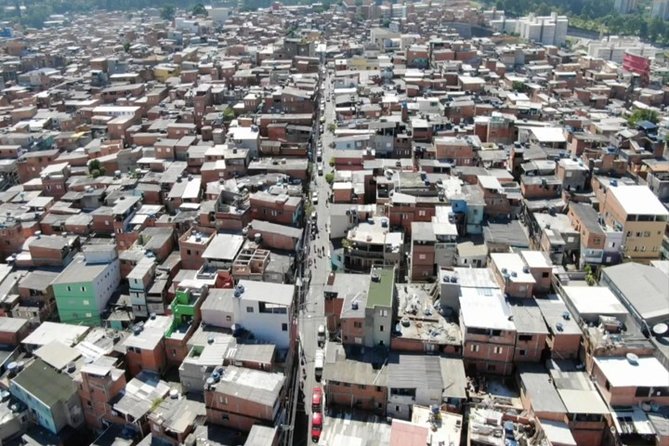
- Meet Paraisópolis through its community projects, including a radio station, library, ballet school, and sports program.
- See remarkable artwork in working spaces, including Berbéla’s sculptures made from automotive parts and discarded materials.
- Enter Estevão’s unusual stone home, filled with cups, dishes, saucers, and other everyday objects built into the house.
- Walk narrow community streets with a licensed guide and a local resident who helps explain the setting.
- Look across the sharp divide between Paraisópolis and Morumbi, from a viewpoint reached through the sculptor’s home.
- Finish with Brazilian food at Bistro Mãos de Maria, available at extra cost on the rooftop of the community association headquarters.
Why Paraisópolis makes a powerful half-day visit
Paraisópolis is not presented as a quick photo stop. The experience uses art, radio, education, sport, and local organizing to show how a large community works and how residents shape its future.
That matters because a favela is not simply a collection of narrow lanes or unfinished buildings. It is also a place where people create institutions, run projects, teach children, make art, and build businesses. I like that this tour gives those efforts a central place.
You begin at the Community Association Office, where you learn about the area’s past, the founding of the association, and its main projects. This opening helps you get your bearings before walking farther into the community.
The tour is private, and a professional licensed guide works alongside a local community monitor. That combination is important. The guide can organize the visit and explain the broader setting, while the resident provides a connection to the people and projects you are seeing.
The company running the experience is Gregtur Turismo. The tour includes transport, parking fees, taxes, and pickup and drop-off from hotels and airports within São Paulo and its greater area limits.
Other favela walks led by people who live there:
- Private Favela Tour in Sao Paulo – Artsy Paraisopolis
★ 5.0 · 8 reviews - Rio de Janeiro: Rocinha Favela Walking Tour with Local Guide
★ 4.8 · 3,052 reviews - Rio De Janeiro: Half-Day Rocinha Favela Walking Tour
★ 4.7 · 2,272 reviews
Starting at the Community Association Office

The first stop lasts about 30 minutes and takes place at the Community Association Office. You learn how the association began and what it does for the local community.
This is a sensible first stop because it frames the rest of the visit. The radio studio, library, ballet project, and sports activities are easier to understand once you know that they belong to a wider network of community work.
I would pay close attention here and ask questions. The opening presentation may be less visually dramatic than the later art stops, but it gives meaning to them. You are not just passing through to see unusual buildings. You are learning about local efforts to improve life inside Paraisópolis.
There is no separate admission charge for this or the other listed stops. Still, the tour price pays for private transport, guiding, coordination, and access to a carefully arranged local program.
A live radio show inside Paraisópolis
The next scheduled stop is the community radio studio, where you may watch a live show and meet community speakers. The visit lasts about 30 minutes.
This is one of the most interesting parts of the itinerary because radio offers a direct look at communication within the community. You are not just hearing an outside explanation of Paraisópolis. You may see residents speaking through their own local media.
The schedule can change according to the date and time of your tour. If a live show is not taking place, the experience may differ from the standard plan. I would treat the radio stop as a valuable possibility rather than a guaranteed performance.
That uncertainty is worth remembering if you are comparing this tour with a fixed museum visit. Its strength is contact with working community projects. Its trade-off is that real projects do not always operate on a visitor’s timetable.
Berbéla’s workshop and art made from discarded parts
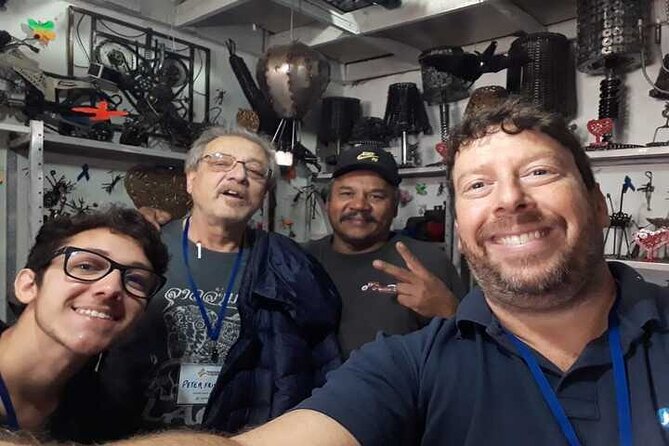
At Berbéla’s mechanical workshop, you meet a resident and artist who creates sculptures from automotive parts, metal scraps, and chemical waste.
The setting gives the art extra force. You are not viewing polished pieces in a formal gallery. You are seeing work connected to a mechanical workshop, where materials that might otherwise be thrown away become sculptures.
The visit lasts about 30 minutes. That is enough time for an introduction and a look at the pieces, though art lovers may wish the stop were longer. The appeal is not only the finished object. It is also the idea behind it: Berbéla gives new purpose to material that has already been used and discarded.
I like this stop because it avoids a narrow definition of art. You see imagination working with the materials at hand. You also meet the person behind the work, which makes the visit more personal than a quick look at public murals or street decoration.
A few more Sao Paulo days to weigh up
- Skydive Tandem – São Paulo – Brazil
★ 5.0 · 1,840 reviews - São Paulo’s Full Day City Tour: Main City Sights in 7 Hours – (Shared Group)
★ 5.0 · 1,691 reviews - 5-hour Private Tour Of São Paulo With Its Main Sights – Optional Airport Pickup
★ 5.0 · 643 reviews - São Paulo: Main City Sights in 7 Hours – Shared Group Tour
★ 4.9 · 587 reviews
Estevão’s stone home, the Gaudí of Paraisópolis
The visit to sculptor Estevão’s house is likely to be the most unusual architectural stop. He is known as the Gaudí of Paraisópolis, and the house is made from stone and decorated with common objects such as cups, saucers, and dishes.
These everyday items are part of the structure, not just loose decorations placed around a room. That gives the house a playful, handmade character. I would expect the visit to feel more like entering a personal work of art than touring a conventional home.
The tour also takes you through openings and gaps in the house to reach a viewpoint. From there, you can see the striking contrast between Paraisópolis and the upscale Morumbi neighborhood.
That view adds an important social detail without requiring a long lecture. In a short distance, you see two very different parts of São Paulo side by side. The viewpoint is memorable, but access through openings and narrow spaces may not suit everyone. The tour description says most people can participate, yet anyone who dislikes tight passages should consider this part carefully.
Narrow lanes and the Palmeirinha football field
After the art visits, you walk through the community’s narrow alleyways toward the Palmeirinha football field. Along the way, you may see a class connected with Rugby For All.
The sports project broadens the picture of community life. Paraisópolis is shown not only through its buildings and artists, but also through activities that bring students together. Rugby is an unexpected detail for many visitors, and that makes the possible class especially interesting.
Again, the schedule depends on the date and time. You may encounter a class, or the route may be adjusted. I appreciate that the itinerary allows for real community activity instead of pretending that every visit will follow a stage-managed program.
Walking is central here. The vehicle gets you to the area and between larger points when needed, but the character of the visit comes from moving through the lanes on foot. Wear comfortable shoes and expect the tour to feel more active than a standard city sightseeing drive.
Luciana’s alley and the first community library
The route continues through Luciana’s alley before reaching the BECEI Library, described as the first library created within a community.
A library may sound like a modest stop, but it carries real weight in this setting. It represents reading, study, and access to learning within the neighborhood. The tour’s pattern becomes clear here: you move from one locally created project to another, each showing a different way residents invest in their community.
This stop also keeps the experience from becoming only a tour of artists and viewpoints. Art is a major theme, but education and shared resources matter just as much.
The scheduled time is about 30 minutes. You should not expect a long literary program unless one happens to be planned for your visit. Think of it as a chance to understand the library’s role and see another side of Paraisópolis.
The Paraisópolis Ballet Project and Mônica Tarragó
The final major cultural stop is the Paraisópolis Ballet Project. You meet director and dancer Mônica Tarragó, hear about the project, watch part of a class, and meet some students.
This is a strong finish because it puts young people and performance at the center of the visit. Mônica’s role gives you a direct introduction to the project, rather than a distant explanation from a guide standing outside.
The class schedule may affect what you see. If a class is underway, you may watch part of it. If the timing does not match, the itinerary can be different.
I like the balance of this stop. Berbéla’s work is built from industrial leftovers. Estevão’s house turns household objects into architecture. The ballet project uses movement, discipline, and teaching to create opportunity. Together, the stops show several kinds of creativity.
The visit is not designed as a formal ballet performance. You are seeing a project in its working setting, which can be more revealing but less polished than a theater show.
Rooftop Brazilian food at Bistro Mãos de Maria
After the walking portion, you may want to eat at Bistro Mãos de Maria. The restaurant is on the rooftop of the community association headquarters and serves typical Brazilian food.
The meal is not included in the $268 price, so budget separately for food and drinks. The listed stop allows about 40 minutes, making it a convenient way to end the tour without adding a separate restaurant search to your day.
I would view lunch as optional rather than part of the core value. The main experience is the community visit, the artists, and the projects. Still, eating at the association headquarters can extend your time in the setting and make the end of the morning or afternoon feel less rushed.
Because the menu and timing are not specified, you should not book this expecting a particular dish or a full dining event. Ask your guide about the restaurant on the day.
What the private format adds
A private vehicle is provided for your group, with capacity for up to 14 people. For groups larger than four, a private driver operates the vehicle. For smaller groups, the guide may drive.
The private setup gives you more control than a large shared excursion. You can ask questions as you go, and the guide can explain details that fit your interests. If you are traveling with family, friends, or a small organization, the ability to keep the group together is useful.
Hotel and airport pickup and drop-off are included within São Paulo and its greater area limits. That can save time in a city where getting across town may take longer than expected.
The five-hour duration is also practical. You get a substantial look at Paraisópolis without giving up an entire day in São Paulo. On the other hand, there are many stops, each scheduled for roughly 30 minutes. The pace may feel brisk if you want long conversations at every workshop or project.
The inclusion of a local community monitor is one of the best features. The tour is not only a guide-led drive with a few stops. A resident helps escort you through the area, which supports a more direct connection with the community.
Is $268 per person good value?
At $268 per person, this is expensive for a five-hour activity. The price makes more sense if you value private transportation, hotel pickup, a licensed guide, and a local escort, or if you are sharing the experience with a larger group.
For a solo visitor or couple watching every expense, the cost may be difficult to justify. You are not paying for entrance fees, since the listed stops have free admission. You are paying for access, planning, transport, and a structured introduction to places you might not easily arrange on your own.
The strongest value comes from the range of contacts. In one half-day, you may meet community organizers, radio speakers, artists, a sculptor, a ballet director, and students involved in sport or dance.
The tour is also highly regarded, with a five-star rating and 100 percent recommendation from 21 reviews. One especially positive assessment praised the way the experience challenged prejudices about favelas and introduced visitors to friendly artists and residents. That matches the tour’s greatest strength: it encourages you to see Paraisópolis as a community of people and projects, not as a stereotype.
The activity is commonly booked about 42 days ahead. That suggests planning early, especially if you want a particular date or need airport pickup. Confirmation is provided when you book.
Who should book this Paraisópolis tour?
I would recommend it to you if you want a people-focused experience in São Paulo and are willing to pay for a private arrangement. It suits visitors interested in art, social projects, architecture, education, sport, and local culture.
It is also a good match for groups. Up to 14 people can use the private vehicle, and the fixed per-person cost may be easier to accept when the group shares the value of private transport and guiding.
You should think twice if your main goal is inexpensive sightseeing, a fast photo tour, or a predictable schedule. The radio show, rugby class, and ballet class depend on timing, and the route includes narrow streets and tight spaces at Estevão’s house.
The experience is designed for most people to participate, but the walking and the openings in the sculptor’s house are worth noting. If you have mobility concerns, ask the provider for more details before booking.
Should you book it?
Book this tour if you want São Paulo explained through its residents, artists, and community projects. The strongest moments are likely to be Berbéla’s workshop, Estevão’s imaginative home, the community radio, and the meeting with Mônica Tarragó at the ballet project.
I would skip it if $268 feels too high for a half-day or if you need every stop to run exactly as advertised. For the right visitor, though, this is a thoughtful and personal way to see Paraisópolis, with enough structure to feel comfortable and enough local contact to change the way you understand the neighborhood.
FAQ
How long does the Paraisópolis tour last?
The tour lasts approximately five hours.
Is hotel pickup and drop-off included?
Yes. Hotel and airport pickup and drop-off are included within São Paulo and its greater area limits.
Is the tour private?
Yes. Only your group participates in the private tour or activity.
How many people can the private vehicle accommodate?
The vehicle can accommodate groups of up to 14 passengers.
Is food included in the tour price?
No. Food and drinks are not included. You may choose to eat at Bistro Mãos de Maria, but the meal costs extra.
Can I cancel for a full refund?
Yes. You can cancel at least 24 hours before the experience starts for a full refund. Cancellations or changes made less than 24 hours before the start time are not accepted for a refund.
Newest reviews from around Sao Paulo
- Visit to the Cerejeira Annual Party in Carmo Park★ 3.5 · 2 reviews
- REIKI – Crystal Therapy – by Venus’ Secret Spa – San Francisco★ 5.0 · 41 reviews
- Taxi from Guarulhos airport to São Paulo capital★ 5.0 · 15 reviews
- São Roque Wineries Route from São Paulo★ 4.5 · 13 reviews
- 3h Tasting Session in São Paulo with 34 Local Foods & Drinks★ 5.0 · 7 reviews
- Guided Ceremony in Brazil★ 5.0 · 2 reviews
- Taxi from Viracopos to São Paulo – CHM Transportes★ 5.0 · 2 reviews
- Transfer from São Paulo to Port of Santos★ 4.0 · 8 reviews
Favela Tours, compared.



3 Hour Rocinha Favela Walking Tour with a Local Guide
Read our review →

Favela Tour Rio de Janeiro – Vidigal Walking Tour by Russo Guide
Read our review →
Browse the lists this tour appears in