
Reviewed · FAVELA TOURS
Afro-Brazilian Roots city Tour in Salvador with lunch at Favela
Salvador’s soul is best read through its people. This six-hour route links sacred Candomblé spaces, markets, waterfront views, and a home-cooked Bahian lunch in Gamboa. I like the personal guide format and the way the day moves beyond standard tourist sights. I also like the included hotel transport, since Salvador’s neighborhoods are spread across the city.
The main consideration is the amount of ground covered. You visit five places in roughly six hours, and the final stop takes three hours, so the museum visits described in the tour highlights may not all appear on the timed route. Confirm the exact plan before booking, especially if museums are your main reason for going.
In This Review
- Key points to know before booking
- Why this route gives you a fuller Salvador
- Starting at Casa do Rio Vermelho and Iemanjá’s House
- Tororó Dike and Salvador’s sculpted orixás
- São Joaquim Market, where history meets daily life
- Liberdade and the Candomblé terreiro
- Three hours in Gamboa, with lunch at Dona Suzana’s
- Museums and the route you should confirm
- What the $180 price includes
- Timing, fitness, and what to bring
- Who should book this experience?
- Should you book the Afro-Brazilian Roots City Tour?
- FAQ
- How long does the Afro-Brazilian Roots City Tour last?
- What is included in the price?
- Are alcoholic drinks and bottled water included?
- Do I need to bring swimwear?
- Is hotel transportation included?
- How many people can join the tour?
- What is the cancellation policy?
Key points to know before booking
- A strong focus on Afro-Brazilian culture: The route includes a Candomblé terreiro, São Joaquim Market, Iemanjá’s House, and Liberdade.
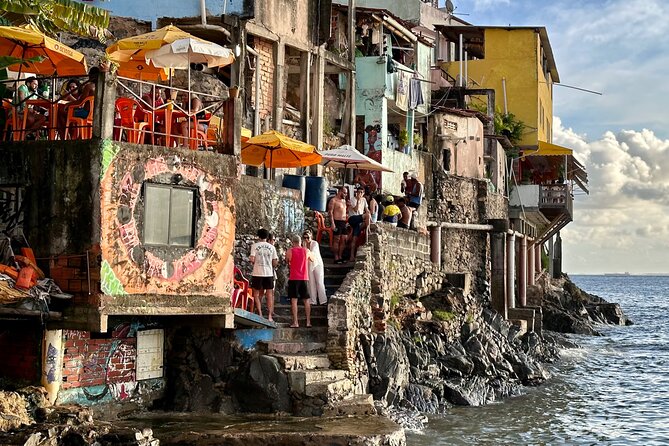
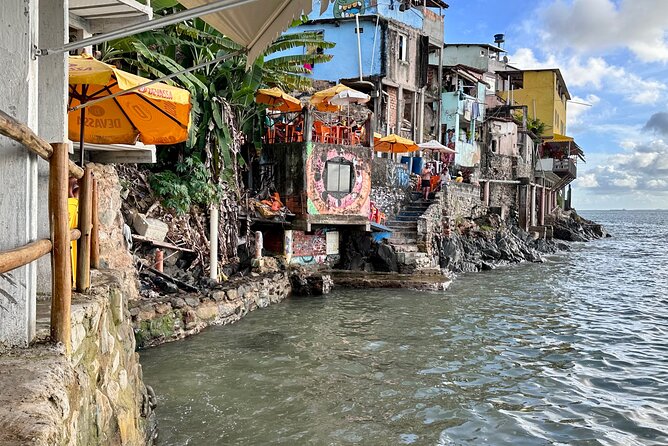
- Lunch in Gamboa favela: You eat at Dona Suzana’s, with Bahian food and views near the bay.
- A guide makes the difference: Fernando has been praised for his warmth and food suggestions, while Monia is noted for explaining religion, customs, and Salvador’s past with care.
- Swimming is part of the plan: Bring swimwear for the beach stop after lunch.
- Hotel transport is included: An air-conditioned vehicle and driver-guide are part of the price.
- The pace is active: Expect walking, market surfaces, neighborhood streets, and a moderate fitness requirement.
Why this route gives you a fuller Salvador
Salvador is not a city you understand from one postcard district. Pelourinho’s colorful façades are only one part of the story. The city’s Afro-Brazilian identity also lives in religious houses, food stalls, markets, music, family traditions, and neighborhoods shaped by African and Brazilian cultures.
This tour gives you a broad introduction in one day. You move from Iemanjá, the sea goddess, to the Tororó Dike, then into São Joaquim Market and Liberdade. The day ends with food and time by the water in Gamboa.
I especially like that the route does not treat culture as a museum piece. A visit to a Candomblé terreiro can help you understand living faith. A stop at a market shows how ingredients, religious objects, and everyday commerce connect. Lunch in Gamboa adds a social side that a standard sightseeing bus rarely provides.
The guides are a major part of the value. Fernando has earned praise for being personable, well informed, and good at choosing food stops. Monia has been singled out for her Bahian background and careful explanation of Candomblé, African connections, local customs, and Salvador’s past. If you can request a guide, asking for Monia may be worthwhile.
More City Tours in Salvador & Bahia
- Salvador City Tour – Discover Brazil’s First Capital En, It, Es
★ 5.0 · 217 reviews - Private City Tour in Salvador
★ 5.0 · 110 reviews - Historical African oriented City Tour
★ 5.0 · 52 reviews
Starting at Casa do Rio Vermelho and Iemanjá’s House
The first stop, Casa do Rio Vermelho, takes about 30 minutes. It is connected to Iemanjá, the goddess of the sea, and gives the day a clear spiritual beginning.
You can expect a calm setting with cultural meaning rather than a long museum visit. The focus is on understanding why Iemanjá matters in Bahia and how devotion to the sea appears in local life. The admission fee is included.
Thirty minutes is enough for an introduction, though not enough for a detailed study of every object or story. I would treat this as a thoughtful opening rather than the main attraction. It sets up themes that return later, especially the relationship between African traditions, Brazilian identity, and the natural world.
If you want the most from this stop, listen closely to the guide’s explanation of symbols and rituals. This is one place where context matters more than simply taking photographs.
Tororó Dike and Salvador’s sculpted orixás
The 30-minute stop at Dique de Tororó offers a change of pace. The water reflects the surrounding city, and sculptures connected to Salvador’s cultural traditions give the setting a strong visual identity.
This is a good place to pause, take photographs, and connect the city’s public spaces with its religious culture. The dike is not presented as a long walking excursion, so you should expect a short visit rather than a full circuit of the water.
The stop also helps break up the more concentrated cultural visits. After Casa do Rio Vermelho, you get open space and city views before entering São Joaquim Market. That rhythm makes sense in a six-hour tour.
I would not choose this experience solely for the dike. Its value comes from the guide’s interpretation of the sculptures and their place in Salvador’s Afro-Brazilian culture.
São Joaquim Market, where history meets daily life
The São Joaquim Market is scheduled for one hour, and it is one of the most useful stops for understanding Salvador beyond its monuments.
The market has a difficult past. During the slavery era, it was connected to the trade of enslaved Africans. That history gives the place a serious weight. At the same time, it remains a working market, with the sounds, colors, smells, and movement of ordinary commerce.
You may see foods used in Bahian cooking, objects connected to religious practice, and goods that show how African traditions remain part of daily life. The guide’s role is important here. Without explanation, a market can look like a collection of stalls. With context, it becomes a place where food, faith, memory, and survival meet.
The market is also a better setting for asking questions than a formal exhibit. You can ask about ingredients, Candomblé objects, local customs, and the effects of Salvador’s past. I like this stop because it connects history to things you can see and understand immediately.
The tradeoff is that markets are active places, and conditions may feel less polished than a museum. Wear comfortable shoes and keep your attention on your belongings. The tour requires a moderate fitness level, and an hour can pass quickly if you are curious.
Other favela walks led by people who live there:
- Rio de Janeiro: Rocinha Favela Walking Tour with Local Guide
★ 4.8 · 3,052 reviews - Rio De Janeiro: Half-Day Rocinha Favela Walking Tour
★ 4.7 · 2,272 reviews - 3 Hour Rocinha Favela Walking Tour with a Local Guide
★ 5.0 · 833 reviews - Favela Tours
★ 5.0 · 660 reviews
Liberdade and the Candomblé terreiro
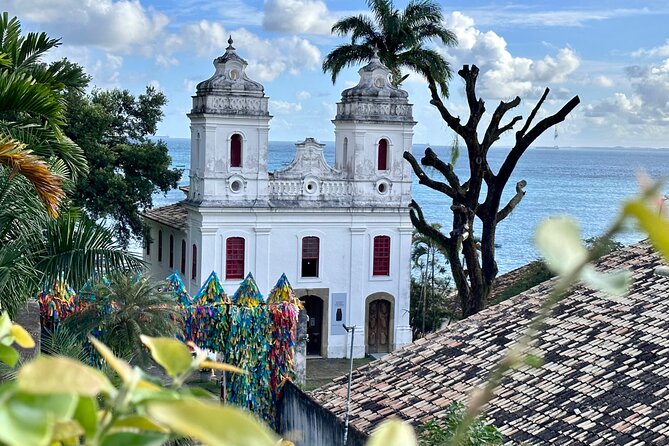
The Liberdade stop lasts about one hour and includes a visit to Terreiro of Candomblé Vodun Zo. This is likely the most meaningful part of the route for anyone interested in Afro-Brazilian religion.
Candomblé joins African religious traditions with Brazilian experience. At the terreiro, you learn about deities, ancestors, offerings, sacred symbols, and the spiritual force often described through the word axé. The setting is not simply an attraction. It is a place of worship and cultural continuity.
Approach this visit with respect. Dress and behavior should be guided by your tour leader and the people who maintain the terreiro. Ask before taking photographs, and listen rather than treating the space as a stage.
The best guides make this stop understandable without flattening it into a few simple facts. Monia’s explanations have been praised for showing how Candomblé traditions survived persecution and preserved links to Africa. That historical and spiritual context can change the way you see Salvador’s music, food, festivals, and public art.
This stop may not suit someone looking for a fast sightseeing circuit. It asks for attention and an open mind. For the right person, it can be the heart of the day.
Three hours in Gamboa, with lunch at Dona Suzana’s
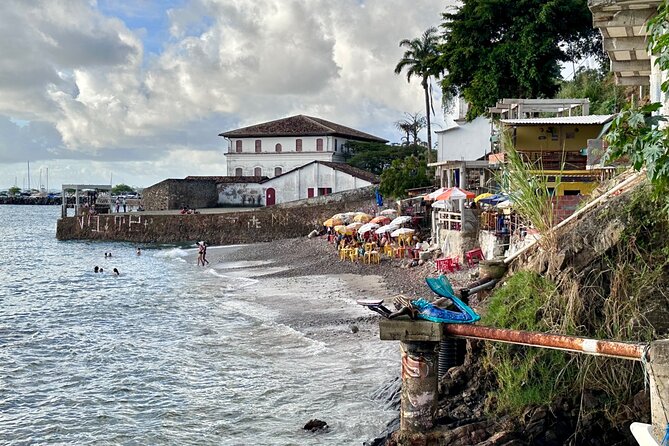
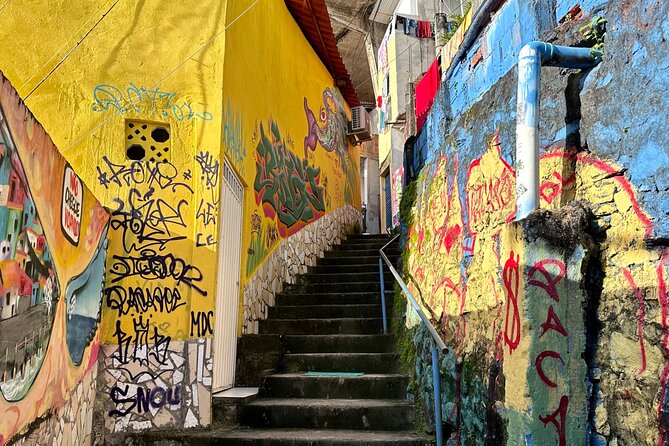
The final section takes about three hours in Rua da Conceição da Praia and Gamboa favela. This is where the tour becomes less about collecting sights and more about spending time in a local setting.
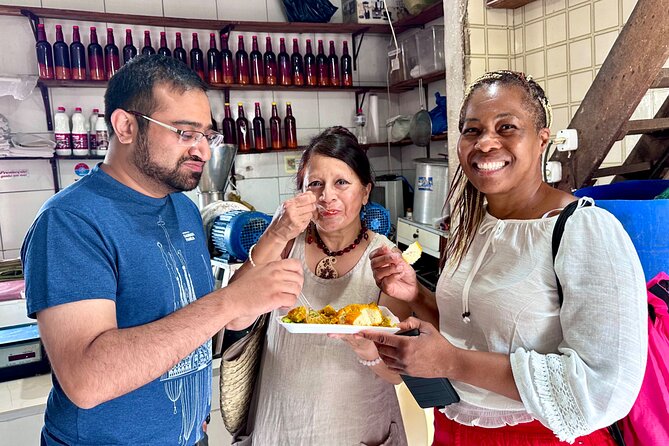
You explore the neighborhood, eat at Dona Suzana’s, and then head toward the nearby beach. The meal is included and centers on homemade Bahian cooking. Alcoholic drinks and bottled water are not included, so plan to pay separately for those if needed.
The food is a major reason to value this stop. Bahian cuisine carries African, Indigenous, and Portuguese influences, and a home-style meal gives you a more grounded taste of the region than a generic restaurant near a major sight. Fernando has received specific praise for good food choices, so the guide can shape how much you get from the meal.
The beach adds a relaxed finish. Bring swimwear, as the tour information specifically advises it, and expect the possibility of a swim in the water near the favela. This combination of neighborhood streets, lunch, bay views, and beach time gives the day a social and physical finish.
The three-hour length is both a strength and a limitation. It gives you time to eat without rushing and enjoy the waterfront. But it also means the tour is not a museum-heavy program. If you prefer several short stops and constant sightseeing, the long Gamboa visit may feel slow.
You should also be comfortable with the wording and setting. This is presented as a visit to a favela, not a polished visitor district. The appeal is direct contact with local life, but you should follow your guide’s lead and show courtesy to residents.
Museums and the route you should confirm
The tour description highlights Salvador’s Afro-Brazilian Museum, museums dedicated to Indigenous peoples, the Carlos Costa Pinto Museum, and the Museum of Sacred and Religious Art in a former Carmelite building.
Those institutions suggest a strong museum program, but the timed route provided for the experience names Casa do Rio Vermelho, Dique de Tororó, São Joaquim Market, Liberdade, and Gamboa. Since the day lasts about six hours, it may not be possible to visit every museum as well as complete the five listed stops.
This is not a small detail. If you want museums above all else, ask the operator which ones are included on your date and how the route changes. If you want a broad look at Afro-Brazilian culture through religious sites, food, neighborhoods, and public spaces, the route described here makes more sense.
A private guide may also offer some flexibility, but the published maximum is 20 people. Confirm how the private format works, since private guiding and a group cap can mean different things depending on the booking.
What the $180 price includes
At $180 per person, this is not a budget city tour. The value depends on what you want from Salvador.
The price includes a driver-guide, an air-conditioned vehicle, lunch, entrance fees, and round-trip transportation from Salvador hotels. Those inclusions matter. Hiring separate transport between Rio Vermelho, Tororó, São Joaquim, Liberdade, and Gamboa could be awkward, especially if you do not know the city.
You are also paying for interpretation. A guide who can explain Candomblé respectfully, connect the market to slavery-era history, and help you navigate food and neighborhood visits adds far more than a vehicle alone.
The cost is harder to justify if you mainly want a short highlights tour, or if you plan to visit Salvador’s museums independently. It becomes more reasonable if you value a full day with transport, lunch, a guide, and access to cultural settings that may be difficult to understand on your own.
The tour is recommended by 94 percent of its published audience and carries a 4.8 rating from 17 ratings. The strongest praise centers on guides who are warm, energetic, and clear, which is exactly the area that can make or break a culture-focused tour.
Timing, fitness, and what to bring
The experience runs for about six hours. The stated operating window is Monday through Sunday, with start times between 8:00 a.m. and 11:00 a.m. Hotel pickup is included, but you should provide accurate accommodation details when booking.
Wear comfortable clothes and shoes. You will visit a market, walk through neighborhood areas, enter a sacred religious space, and spend time near the beach. The moderate fitness requirement suggests that this is not an ideal choice if walking on uneven surfaces or moving between stops is difficult.
Pack:
- Swimwear for the Gamboa beach stop
- Sun protection
- Money for bottled water and alcoholic drinks
- A respectful attitude toward the terreiro and local residents
Service animals are allowed. Confirmation is provided at booking, and the tour accepts up to 20 people.
Free cancellation is available if you cancel at least 24 hours before the start time. Changes or cancellations made inside that window are not accepted for a refund, and the cut-off follows Salvador local time.
Who should book this experience?
I would recommend this tour to you if you want Salvador explained through Afro-Brazilian culture rather than only through architecture. It suits people who enjoy asking questions, tasting local food, visiting religious places respectfully, and seeing how history continues in daily life.
It is also a good fit if you want the convenience of hotel transportation and a guide for a geographically spread-out day. Families with older children, couples, and first-time visitors with one open day in Salvador may find the mix useful.
I would be cautious about booking it if your priority is a formal museum tour. The museum highlights and the timed route do not match perfectly, so confirm the exact stops first. I would also choose another plan if you dislike neighborhood visits, religious settings, swimming, or a schedule that ends with three hours in one area.
Should you book the Afro-Brazilian Roots City Tour?
Book it if you want a guided introduction to Salvador’s African and Brazilian roots, with Candomblé, São Joaquim Market, local food, and Gamboa all in one day. The guide’s personality and cultural care are central to the experience, so request Monia if possible, or ask for Fernando if food guidance and easy conversation matter most.
Skip it if you want a museum-only itinerary or a cheaper, self-guided day. Before paying, confirm whether the museums named in the highlights are included, how the private group is arranged, and what time your hotel pickup begins. With those points clear, the $180 price can be fair for a packed cultural day with transport, lunch, and thoughtful local context.
FAQ
How long does the Afro-Brazilian Roots City Tour last?
The tour lasts approximately six hours.
What is included in the price?
The price includes a driver-guide, an air-conditioned vehicle, lunch, all entrance fees and taxes, and round-trip transportation from Salvador hotels.
Are alcoholic drinks and bottled water included?
No. Alcoholic beverages and bottled water are not included.
Do I need to bring swimwear?
Yes. The tour information advises bringing swimming clothes because the Gamboa section includes time near a beach and the option of swimming.
Is hotel transportation included?
Yes. Round-trip transportation from Salvador hotels is included.
How many people can join the tour?
The activity has a maximum of 20 people.
What is the cancellation policy?
You can cancel at least 24 hours before the start time for a full refund. Cancellations or changes made less than 24 hours before the start time are not accepted for a refund.
Newest reviews from around Salvador da Bahia
- Transfer North-Ba Coast and Salvador Airport★ 5.0 · 25 reviews
- Curated Nightlife Experience in the Heart of the City★ 3.5 · 5 reviews
- One-Way Private Transfer to Boipeba Island★ 5.0 · 21 reviews
- Transfer Costa do Sauipe – Private★ 5.0 · 2 reviews
- Ilhas Maravilhas Frades and Itaparica Full Day Tour, Salvador, Bahia, Brazil★ 3.5 · 13 reviews
- Hotel Vila Galé Mares – Transfers In / Out★ 5.0 · 29 reviews
- Salvador de Bahia: Private Round-Trip Airport–Hotel Transfer★ 4.5 · 25 reviews
- Transfer Salvador to Barra Grande Round Trip★ 5.0 · 3 reviews
Favela Tours, compared.



3 Hour Rocinha Favela Walking Tour with a Local Guide
Read our review →

Favela Tour Rio de Janeiro – Vidigal Walking Tour by Russo Guide
Read our review →
Browse the lists this tour appears in