
Reviewed · SANTA TERESA & SELARóN STEPS TOURS
Walking tour of the bohemian neighborhoods of Santa Teresa and Lapa
Rio’s old hills hide the city’s best surprises. This 3.5-hour tour links Santa Teresa’s artists’ quarter with Lapa’s famous sights, using the yellow tram, short walks, and local guides who know the neighborhood well. I especially like the mix of transportation and walking, plus the chance to see Santa Teresa beyond the standard beach-and-Christ-the-Redeemer circuit.
The tour also earns points for its small maximum of 12 people and its strong local connection. Guides such as Edmundo, Lorena, and Ivan have been praised for their warmth, flexibility, and personal ties to Santa Teresa. The main drawback is that the schedule is fairly full, and the tram ride can be affected by conditions in the neighborhood.
In This Review
- Key points at a glance
- Why Santa Teresa and Lapa make a good pair
- The yellow tram climb to Santa Teresa
- Largo dos Guimaraes and the everyday side of Santa Teresa
- Parque das Ruinas and the best city views
- Walking to the Selarón Steps
- Arcos da Lapa and Rio’s old water system
- Cinelândia’s grand civic buildings
- The guides can shape the whole experience
- Is $72.09 a fair price?
- Practical advice before you go
- Who should book this Rio walking tour?
- FAQ
- Where does the tour start?
- What time does the tour begin?
- How long does the experience last?
- What neighborhoods does the tour visit?
- Is the Santa Teresa tram ride included?
- How many people can join the tour?
- Is the tour refundable if I cancel?
- Should you book it?
Key points at a glance
- Ride the famous yellow Santa Teresa tram: The 30-minute climb gives you a charming first look at Rio’s hilltop streets.
- Explore Largo dos Guimaraes: This is the social heart of Santa Teresa, with old houses, views, cafés, bars, and restaurants.
- See Rio from Parque das Ruinas: The former home of Laurinda Santos Lobo now offers wide views toward Centro, Lapa, Christ the Redeemer, and Botafogo.
- Walk down to the Selarón Steps: George Selarón’s colorful staircase is one of Rio’s most photographed public art sites.
- Follow Lapa’s old aqueduct: The Arcos da Lapa connect the city’s colonial past with its modern street art.
- Finish at grand Cinelândia: The square gathers Rio’s opera house, museums, library, city hall, and the historic Odeon cinema.
Why Santa Teresa and Lapa make a good pair
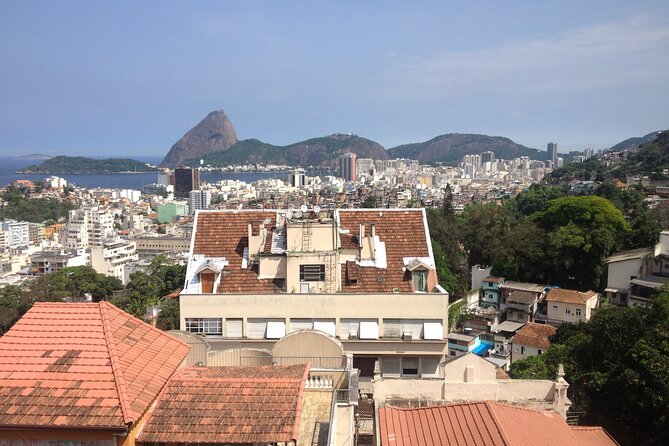
Santa Teresa and Lapa sit close together, but they feel quite different. Santa Teresa rises over the city in a maze of sloping streets, old homes, art studios, and leafy corners. Lapa sits lower, with broad streets, graffiti, music venues, and the huge white arches of its former aqueduct.
I like this pairing because you get two sides of central Rio in one morning. Santa Teresa gives you atmosphere and views. Lapa gives you public art, major buildings, and a stronger sense of the city’s urban pulse.
The tour begins at 9:00 a.m. at the Copacabana Palace, A Belmond Hotel, on Avenida Atlântica. The listed meeting point is useful if you are staying in Copacabana or nearby. Several past arrangements have included meeting at a hotel and using the Metro before reaching the tram, so confirm the exact pickup plan when you book.
The group can contain up to 12 people. That is small enough for a guide to answer questions and adjust the pace, but it is not a private tour by default. Some bookings have been just two people, while others may be larger.
More Walking Tours in Rio de Janeiro
- Rio de Janeiro: Rocinha Favela Walking Tour with Local Guide
★ 4.8 · 3,052 reviews - Rio De Janeiro: Half-Day Rocinha Favela Walking Tour
★ 4.7 · 2,272 reviews - 3 Hour Rocinha Favela Walking Tour with a Local Guide
★ 5.0 · 833 reviews
The yellow tram climb to Santa Teresa
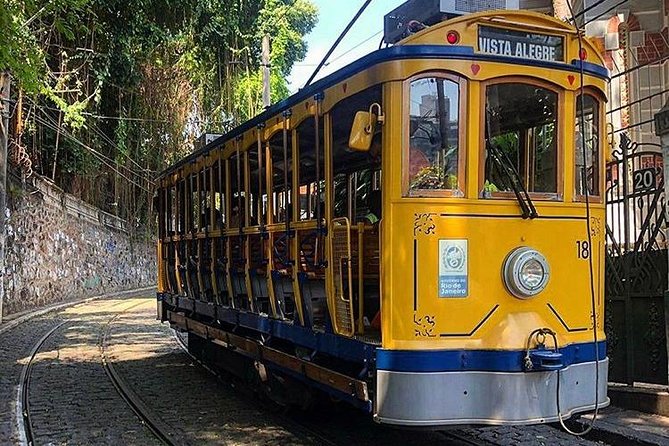
The first major experience is the Bonde, Santa Teresa’s famous yellow tram. The ride takes about 30 minutes and climbs from the tram station into the hillside district.
This is not just a practical transfer. The tram gives you a slow, open view of the changing city. You leave the dense central streets and move into Santa Teresa, where the road feels older and less formal. The ride itself helps explain why this neighborhood has kept a separate identity within Rio.
I like starting this way. You do not arrive in Santa Teresa as if it were simply another museum stop. You reach it through one of its most recognizable local symbols.
The ride may not always run exactly as planned. One guide, Lorena, adjusted the opening of the tour when a local issue interrupted tram service. That flexibility matters. You should expect the guide to make changes if conditions affect the streetcar, rather than assume every minute will follow a fixed script.
Past bookings have included Metro and tram tickets in the tour price. Since transport arrangements can vary, it is still sensible to confirm what is covered for your date.
Largo dos Guimaraes and the everyday side of Santa Teresa
The tour allows about 45 minutes around Largo dos Guimaraes, the central meeting point of Santa Teresa. This is where the neighborhood’s old architecture and present-day social life come together.
You can expect to see houses dating from the late 19th and early 20th centuries, along with restaurants, bars, and attractive city views. The appeal here is not one single monument. It is the way the streets, buildings, and local businesses create a neighborhood with a strong personality.
I would use this part of the walk to ask questions. Santa Teresa has a large artistic presence, and the best guides add meaning to details you might otherwise pass without noticing. Edmundo is himself an artist and is closely connected to people in the district. Ivan is a Santa Teresa native, which gives him a particularly direct link to the streets and local community.
That local connection is one of the tour’s biggest strengths. You are not simply pointed toward a landmark, photographed, and moved along. A good guide can explain how the neighborhood works and suggest small places that fit your interests. One past route even included a local art boutique, which may appeal to anyone looking for distinctive gifts.
The walking is not extreme, but Santa Teresa is hilly. Wear shoes that handle slopes and uneven pavement. The tour is classed as suitable for most people, yet anyone who finds hills difficult should keep the terrain in mind.
Parque das Ruinas and the best city views
The next stop is the Centro Cultural Municipal Parque das Ruinas, with about 30 minutes to explore. The site was once the home of Laurinda Santos Lobo and has been turned into a public cultural space and lookout.
The views are the reason to come. From here, you may see Centro, the Arcos da Lapa, Christ the Redeemer, and Botafogo. It is a fine place to understand Rio’s layout, with hills, dense city blocks, and distant landmarks arranged in one broad sweep.
I like this stop because it gives the tour a pause. After the tram and the streets of Largo dos Guimaraes, you get time to look outward and place the city around you. Bring your camera, but do not spend the whole stop staring at a screen. The view works best when you take a moment to connect the neighborhoods you have just visited.
The site is free to enter according to the tour details. The visit lasts about half an hour, so this is a focused viewpoint rather than a long museum visit.
Other wanders through Santa Teresa and the tiled steps:
- Rio’s Full Day: Selarón Steps, Christ & Sugarloaf – Tickets & Lunch Included
★ 5.0 · 2,724 reviews - Rio: Christ the Redeemer, Sugarloaf, Selaron & BBQ Lunch
★ 4.5 · 2,428 reviews - Rio’s Best_Corcovado, Sugar Loaf, Selaron, Cathedral and more
★ 5.0 · 864 reviews - Rio de Janeiro: Christ, Selaron Steps, and Tijuca Park Tour
★ 4.7 · 857 reviews
Walking to the Selarón Steps
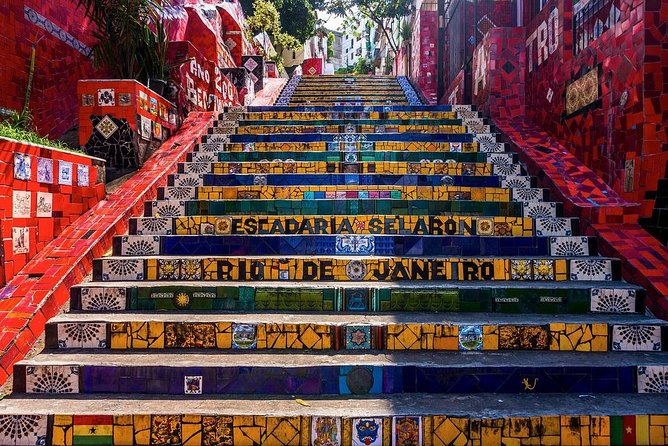
From Santa Teresa, the route heads downhill toward Lapa and stops at the Escadaria Selarón. The staircase takes about 30 minutes to visit.
Chilean artist George Selarón created the staircase over roughly 20 years, covering its steps and walls with bright, varied tiles. It is a public artwork that feels closely tied to the street around it. The scale makes it more impressive than a quick photograph suggests, and the changing tile patterns reward a slow look.
I would expect this to be one of the busiest photo stops of the morning. The tour gives you enough time to see the work, but you may need to share the space with other visitors. Follow the guide’s advice about where to stand and how long to pause, especially if the group needs to keep moving.
This stop also shows why the walking route is valuable. You are not viewing the staircase as an isolated attraction. You reach it from Santa Teresa, passing through the transition from hilltop neighborhood to central Rio. That change in setting helps the artwork make sense.
Arcos da Lapa and Rio’s old water system
The walk continues through Lapa, with about 20 minutes at the Arcos da Lapa. The huge white arches are the remains of an 18th-century aqueduct that supplied water to Rio until the end of the 19th century.
The same structure later became part of the tram route into Santa Teresa. That connection ties the first part of the morning to the last. You ride above or beside the aqueduct at the start, then see it from street level in Lapa.
I appreciate this kind of historical link because it makes the route easier to remember. The aqueduct is not just an old structure for photographs. It explains how water once reached the city and how the site later took on a new role in public transportation.
The surrounding walls are decorated with graffiti, adding a modern layer to the old stone and masonry. The stop is short, so the guide’s explanation will shape how much you get from it. If you want a long look at individual pieces of street art, this tour may feel too quick. If you want a broad introduction to Lapa, the timing works well.
Cinelândia’s grand civic buildings
The final scheduled stop is Cinelândia, with about 20 minutes for an introduction to the square and its main buildings. The sights include the Teatro Municipal, Rio’s opera house; the Museu das Belas Artes; the Câmara Municipal; the Biblioteca Nacional; and the Teatro Odeon.
Cinelândia is a good finish because it shifts the focus from hillside streets and public art to Rio’s formal civic center. The architecture here presents a more grand and institutional side of the city.
The Teatro Municipal is the visual star, while the national library, fine arts museum, city hall, and Odeon help show how much cultural life is packed into one square. The Odeon is noted as the only cinema in the square still operating, which gives the area a link to everyday city life rather than only its past.
Do not expect a full interior visit to every building. The scheduled time is for presentation and orientation. You will get the most from this stop if you listen to the guide’s overview, then return later to any museum or theater that catches your interest.
The guides can shape the whole experience
The route is appealing, but the guide may determine whether it feels like a connected story or just a list of stops. The strongest guide names associated with this experience are Edmundo, Lorena, and Ivan.
Edmundo has been praised for making visitors feel welcome in Santa Teresa, helped by his own work as an artist and his many local connections. Lorena is known for a friendly style, humor, and the ability to adapt the plan. Ivan, a Santa Teresa native, brings a personal understanding of the neighborhood and its people.
That does not mean you should insist on one specific guide. Availability can change. It does mean you should value the local perspective when choosing this tour. The route is easy to copy on a map, but the context, introductions, and small changes made along the way are what you are paying for.
Some past outings included a caipirinha, and one guide changed the plan when a participant had already seen a scheduled attraction. Those details suggest a tour that can feel personal when the group is small and the guide has room to respond.
Is $72.09 a fair price?
At $72.09 per person, this is not the cheapest way to see Santa Teresa and Lapa. The value depends on what you want from the morning.
You are paying for about three and a half hours, a guide, the tram experience, a planned route, and help connecting several sights that are spread across hills and central streets. Metro and tram tickets have been included in past bookings, which adds practical value, though I would confirm the transport details before setting out.
The price makes more sense if you want explanation, company, and an organized route. It is less attractive if you are comfortable finding the tram, Selarón Steps, Arcos da Lapa, and Cinelândia on your own. Independent visitors can reach the main sights for much less, but they will need to manage transport, timing, directions, and the story linking them together.
The average booking lead time is about 21 days. That is a useful sign that you should not leave this until the last morning of your Rio stay, especially if you want a particular date.
Practical advice before you go
The meeting time is 9:00 a.m., and the listed meeting point is the Copacabana Palace. Confirm whether the guide will meet you there or arrange a hotel pickup, since past outings have used both approaches.
Plan for a real walking morning. The route includes a tram ride, a hilltop neighborhood, a descent toward Lapa, and several stops on foot. Comfortable shoes matter more than stylish ones here.
A small group is a plus, but the maximum is 12 rather than one fixed group size. The tour is suitable for most people, and it is near public transportation. Still, Santa Teresa’s slopes and the busy public sites may be tiring for anyone with limited mobility.
The experience is non-refundable and cannot be changed after booking. If the operator cancels because the minimum number is not reached, you will be offered another date or experience, or a full refund. That strict cancellation rule makes it wise to book only when your plans are firm.
Who should book this Rio walking tour?
I would choose this tour if you are visiting Rio for the first time and want more than beaches and major postcard sights. It suits anyone interested in architecture, public art, local neighborhoods, city views, and the practical story of how Rio’s districts connect.
It is also a strong choice for visitors who feel uncertain about navigating central Rio alone. The guide, transport, and compact route remove much of the planning work.
I would hesitate if you dislike hills, need a slow pace, or want long visits inside museums and historic buildings. The schedule gives you a broad introduction, not an in-depth museum tour. I would also think twice if you have a late start planned, since the morning begins at 9:00 a.m. and the transport portion can be affected by local conditions.
FAQ
Where does the tour start?
The listed meeting point is the Copacabana Palace, A Belmond Hotel, at Av. Atlântica, 1702, Copacabana, Rio de Janeiro.
What time does the tour begin?
The tour starts at 9:00 a.m.
How long does the experience last?
The tour lasts approximately 3 hours and 30 minutes.
What neighborhoods does the tour visit?
The route visits Santa Teresa and Lapa, then continues to Cinelândia.
Is the Santa Teresa tram ride included?
The itinerary includes a 30-minute ride on the Santa Teresa tram. Past bookings have included Metro and tram tickets in the tour price, but you should confirm the transport arrangements for your date.
How many people can join the tour?
The maximum group size is 12 people.
Is the tour refundable if I cancel?
No. The experience is non-refundable and cannot be changed for any reason. If the operator cancels because the minimum number of people is not reached, you will be offered another date or experience, or a full refund.
Should you book it?
Book this tour if you want a guided introduction to Rio’s creative hilltop quarter and historic center in one well-planned morning. The tram, Parque das Ruinas views, Selarón Steps, Arcos da Lapa, and Cinelândia create a varied route, while guides such as Edmundo, Lorena, and Ivan can add the local character that a self-guided walk may miss.
The best reason to book is not simply the number of sights. It is the connection between them, from the yellow tram climbing into Santa Teresa to the old aqueduct below. If you can handle the hills and accept a firm cancellation policy, this is a personable and useful way to get your bearings in a less familiar side of Rio.
Other Samba Nights Worth Staying Up For
- Rio de Janeiro: Beginner Samba Lesson in Ipanema
★ 4.9 · 1,071 reviews - Rio: Pub Crawl in Lapa with Cachaça Tasting and Live Samba
★ 4.7 · 881 reviews - Rio: Carnival Backstage Tour at Samba City with Cocktail
★ 4.6 · 520 reviews - Hop-ON Hop-OFF Sightseeing Bus in Rio de Janeiro – Rio Samba Bus
★ 3.5 · 457 reviews
Newest reviews from around Rio de Janeiro
- PRIVATE TOUR – Christ the Redeemer and Sugar Loaf★ 4.5 · 9 reviews
- Christ Statue and Sugarloaf Private Tour with a Photographer★ 5.0 · 9 reviews
- Cidade do Samba Behind-the-Scenes Carnival Tour in Rio de Janeiro★ 4.0 · 5 reviews
- Christ the Redeemer Trail x Lage Park★ 5.0 · 7 reviews
- Christ the Redeemer and City Tour★ 5.0 · 20 reviews
- Christ the Redeemer, Selaron Steps and Santa Teresa Half-day Tour★ 4.5 · 15 reviews
- Christ the Redeemer Adventure★ 5.0 · 12 reviews
- Private Tour of Christ the Redeemer in Rio de Janeiro★ 5.0 · 2 reviews
Santa Teresa & Selarón Steps Tours, compared.

Rio’s Full Day: Selarón Steps, Christ & Sugarloaf – Tickets & Lunch Included
Read our review →
Christ the Redeemer, Sugarloaf, Selaron & BBQ Lunch
Read our review →
Rio’s Best_Corcovado, Sugar Loaf, Selaron, Cathedral and more
Read our review →

Full Day in Rio: Christ by Train, Sugarloaf, Selarón & Barbecue
Read our review →
Half-Day Tour: Christ the Redeemer, Selarón & Sunset at Sugarloaf
Read our review →

Santa Teresa, Lapa, and Cinelândia with Tram Ride and Selarón Steps
Read our review →Browse the lists this tour appears in