
Reviewed · HISTORICAL TOURS
Rio Walking & Historical Tour
Rio has more than beaches and viewpoints. This three-hour walking tour gives you a useful look at Centro, where imperial palaces, churches, theaters, libraries, and public squares tell the story of Brazil’s capital. I especially like the local carioca guide and the small group limit of 14 people, which make it easier to ask questions and keep a personal pace.
I also like the mix of major landmarks and less obvious stops, including the Paço Imperial, Candelária Church, Arco do Teles, and the old Federal Supreme Court building. The main caution is simple: this is a serious walking tour through central Rio, not a gentle sightseeing loop. You should be ready for three to four hours on your feet, and the subway ride from Copacabana may surprise you if you expect to begin sightseeing at the beach.
In This Review
- Key Points Before You Book
- Why This Tour Helps You Understand Rio
- Starting at Copacabana and Reaching Centro
- Cinelândia and Rio’s Grand Public Face
- The National Library and CCBB Rio
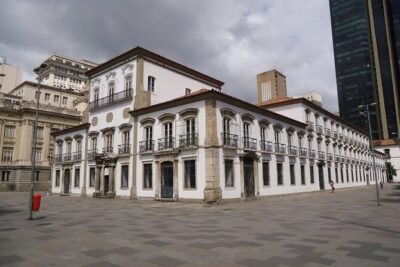
- Imperial Power at Paço Imperial
- Praça Quinze and Arco do Teles
- Candelária Church and the Franciscan Churches
- Casa França-Brasil, CCJF, and Correios
- The Old Jail, Tiradentes, and City Government
- How the Guides Shape the Experience
- Price, Pace, and Overall Value
- Who Should Book This Rio Walking Tour?
- Should You Book the Rio Walking and Historical Tour?
- FAQ
- Where does the tour begin?
- What time does the tour start?
- Where does the tour end?
- How long does the tour last?
- Is the tour offered in English?
- How many people can join the tour?
- Is transportation included?
- Are entrance fees included?
- Can I cancel for a full refund?
Key Points Before You Book
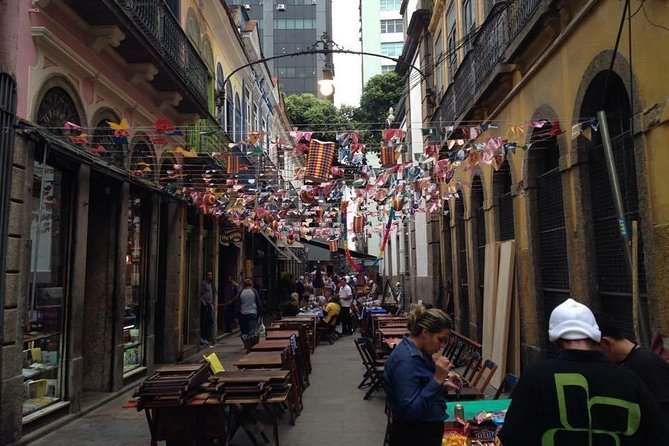
- A local guide leads the way: The tour is built around a carioca guide who explains Rio from a local point of view, not just through dates and building names.
- Centro is the real focus: You see imperial buildings, churches, cultural centers, government sites, and historic squares rather than Rio’s postcard beach scenery.
- Small groups help: The maximum is 14 people, with a minimum of two required for a booking.
- Expect serious walking: The advertised duration is about three hours, though some outings have lasted three to four hours.
- The subway is part of the plan: The tour begins at the Copacabana Palace meeting point, and the route to downtown may use Rio’s subway.
- One admission fee is separate: Entry to the Church of the Third Order of Saint Francis of Penance is not included. The other listed stops have free admission.
Why This Tour Helps You Understand Rio
Rio is often presented through Sugarloaf Mountain, Christ the Redeemer, and Copacabana Beach. Those sights matter, but they tell only part of the city’s story. This walk takes you into Centro, where colonial rule, the Portuguese royal court, Brazilian independence, religion, art, law, and public life overlap within a compact area.
I like this kind of introduction because it gives you a city framework. You see where power was exercised, where merchants worked, where prisoners were held, where books and art were collected, and where public ceremonies took place. Afterward, Rio’s modern districts make more sense.
The tone is historical and cultural. One person found the worn condition of parts of downtown sad and had expected a different first impression of Rio. That is a fair warning. Centro can feel visually rougher than Copacabana, and this tour does not soften that contrast. If you enjoy seeing how a city really works, that contrast is part of the value. If you want a sunny first morning of scenic Rio, begin with another activity.
More History Tours in Rio de Janeiro
- Rio de Janeiro Historical Center Walking Tour
★ 4.5 · 336 reviews - Private Walking and Cultural Tour Rocinha-Rio de Janeiro
★ 5.0 · 239 reviews - Discover Rio Little Africa: A Cultural and Historical Journey
★ 5.0 · 238 reviews
Starting at Copacabana and Reaching Centro
The meeting point is outside the Copacabana Palace at Avenida Atlântica 1702. The listed start time is 9:00 a.m., and the activity ends back at the meeting point.
The route may include the subway from Copacabana to downtown. This is worth knowing before you book, especially if you assumed the tour would begin with a walk along the beach. The subway is not an extra sightseeing attraction, but it places you in the same transport system used by local residents and gets you from the beach district to the historic center.
A practical tip: arrive ready to walk from the start. Wear comfortable shoes, carry water, and leave room in your schedule. The pace is described as casual, but the amount of time standing and walking remains substantial. Hot weather can make the route much harder, and the activity may be changed if conditions are poor.
Cinelândia and Rio’s Grand Public Face
One route variation has begun in Cinelândia, also called Praça Floriano Peixoto. This broad central square carries the name of Brazil’s second president and is surrounded by some of Rio’s most important civic and cultural buildings.
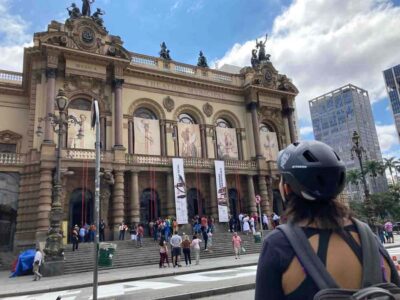
The Municipal Theater, or opera house, is one of the visual highlights. Built from 1906 to 1909, it uses an eclectic style modeled on the Paris Opera House. Even a short explanation helps you read the building: this was a period when Rio wanted to present itself as a modern capital with grand European ambitions.
The National Museum of Fine Arts is another major cultural stop connected with this area. The tour’s purpose is not to give you a long museum visit, but it places the institution within the wider story of Rio’s public culture. You may also pass the former Federal Supreme Court building, now the Federal Justice Cultural Center. Its construction began in 1905 during the major urban reforms carried out while Rio was Brazil’s federal capital.
The Cinelândia section gives you a strong sense of official Rio. The buildings are formal and oversized, designed to represent a nation and its institutions. Your guide’s explanation is important here because the architectural details alone do not tell you why these structures were built.
The National Library and CCBB Rio
The National Library is one of the tour’s most striking cultural stops. Its collection contains about nine million items, making it the largest library in Latin America and the seventh largest in the world according to the supplied information.
That fact alone makes the building worth noticing, but the library’s role goes beyond its size. It organized the first library science courses in Latin America, and its staff helped modernize library services through online databases. This is a useful reminder that Rio was not only a center of government and trade. It also played a major role in education and public knowledge.
The Centro Cultural Banco do Brasil, known as CCBB Rio, adds another layer. Its neoclassical building was linked originally to finance and business. The foundation stone was laid in 1880, based on a design by Francisco Joaquim Bethencourt da Silva, an architect connected with the Imperial House and the Society of Fine Arts.
The building now serves a cultural role, which makes it a good example of Rio’s ability to give older structures new uses. One guide-led outing included a money exhibit inside the bank building. That detail shows why a local escort can be useful: you may notice a small display or interior feature you would otherwise walk past.
More Walking Tours in Rio de Janeiro
- Rio de Janeiro: Rocinha Favela Walking Tour with Local Guide
★ 4.8 · 3,052 reviews - Rio De Janeiro: Half-Day Rocinha Favela Walking Tour
★ 4.7 · 2,272 reviews - 3 Hour Rocinha Favela Walking Tour with a Local Guide
★ 5.0 · 833 reviews - Favela Tour Rio de Janeiro – Vidigal Walking Tour by Russo Guide
★ 5.0 · 377 reviews
Imperial Power at Paço Imperial
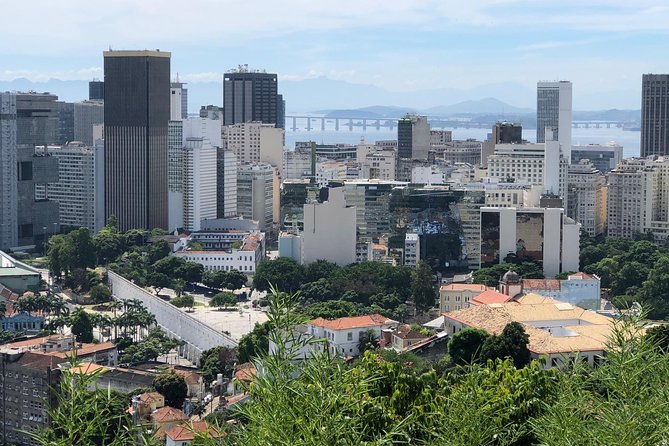
The Paço Imperial, or Imperial Palace, is one of the clearest windows into Rio’s time as a royal and imperial capital. Built in the eighteenth century, it first housed governors of colonial Brazil. From 1808, it became a royal residence for John VI of Portugal, who later also ruled Brazil.
The building was previously known as the Royal Palace of Rio de Janeiro and the Palace of the Viceroys. Those changing names reflect the city’s changing political role. Rio was not simply a colonial outpost. It became the seat of the Portuguese court and later an important center of Brazilian government.
You get about ten minutes here, with free admission. That is enough for an exterior explanation and a quick look, but not a long museum visit. If imperial history interests you, make a note of the building and consider returning independently if your schedule allows.
Praça Quinze and Arco do Teles
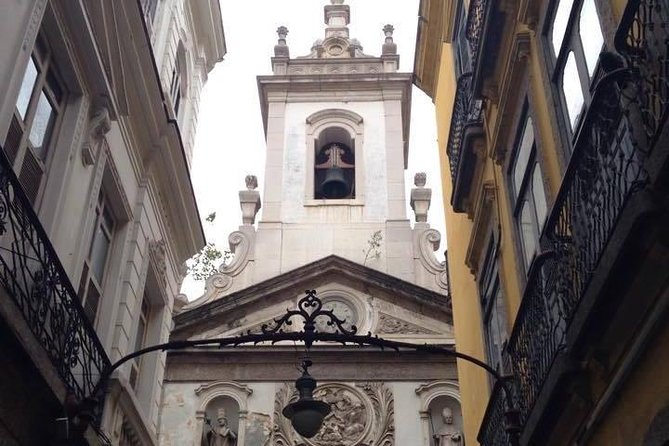
Praça Quinze de Novembro links several important parts of the old center. The square is flanked by Paço Imperial and Palácio Tiradentes, the seat of Rio de Janeiro’s Legislative Assembly. It also contains a ferry terminal serving destinations in Rio and Niterói.
This is a good stop for understanding how public power and daily transport shared the same space. The square is not only a monument zone. It remains part of the city’s working circulation.
Nearby Arco do Teles offers a smaller, more intimate view of old Rio. The arch takes its name from Antônio Telles Barreto de Menezes, who bought land in the area and built houses for merchants visiting the city. The story connects architecture with commerce and urban growth.
I like the change in scale here. Grand squares show how rulers wanted the city to appear. Arco do Teles points to the practical business of renting rooms and serving merchants. Together, the two stops make the center feel less like a collection of old buildings and more like a place shaped by people, trade, and government.
Candelária Church and the Franciscan Churches
The Church of Our Lady of Candelária is one of the walk’s important religious landmarks. Construction and decoration continued from 1775 into the late nineteenth century, so the building combines different periods and styles.
Its exterior has a Baroque facade, while the interior includes neoclassical and Neo-Renaissance elements. That mixture is not a flaw. It shows how long building projects could change as money, taste, and artistic fashion shifted.
The Convent of Saint Anthony has an even older foundation. Franciscan friars arrived in Rio in 1592 and later settled on the hill now called Morro de Santo Antônio. Construction of the convent began on June 4, 1608, after the Franciscans received permanent possession of the hill.
The Church of Saint Francis of Penance is connected to the same Franciscan setting. The Third Order established itself in Rio in 1619, first using a chapel inside the Franciscan convent church. Its own church was built, with interruptions, between 1657 and 1733.
You receive about 15 minutes at the convent and another 15 minutes at the Church of Saint Francis of Penance. Admission to the latter is not included, so bring extra money if you want to enter. The short visit means your guide’s explanation does much of the work, especially when pointing out the relationship between the convent, the hill, and the separate church.
Casa França-Brasil, CCJF, and Correios
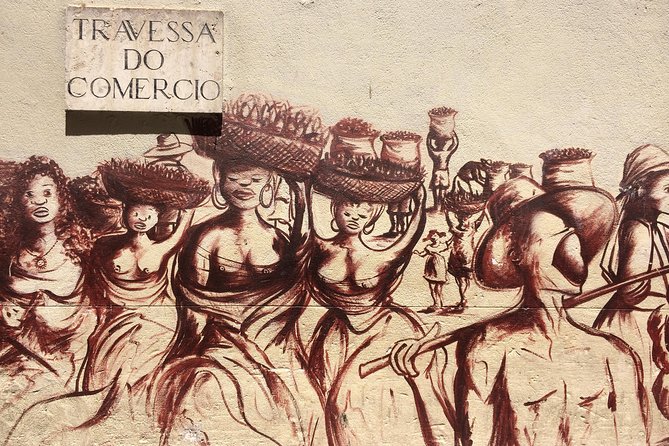
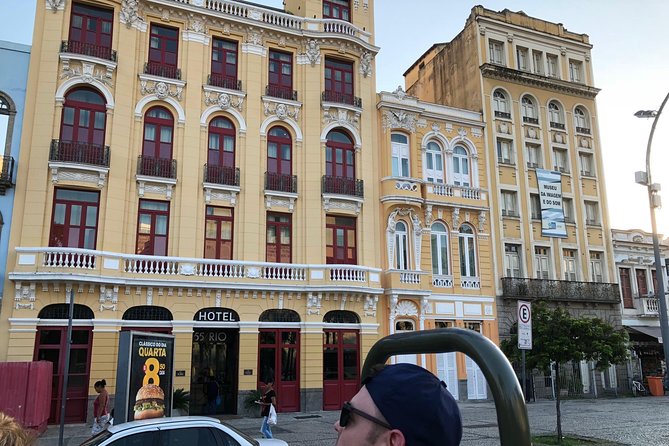
Casa França-Brasil is an imposing neoclassical building designed by Grandjean de Montigny, a member of the French Artistic Mission that arrived in 1816. João VI commissioned it in 1819 for Rio’s first Commerce Square, and it opened on May 13, 1820.
This stop connects Rio with the European artistic and administrative influences brought during the royal period. It also shows how commerce helped shape the center. The building was intended for business, not worship or government ceremony.
The Federal Justice Cultural Center occupies the former seat of the Federal Supreme Court. Designed by Adolpho Morales de Los Rios, the building began in 1905 and opened in 1909. Its eclectic architecture formed part of the city reforms under Mayor Pereira Passos.
The Correios Cultural Center offers another example of changing use. Built for a school connected with the Lloyd Brasileiro shipping company, it opened in 1922. The school was never installed, and the building instead housed administrative units and the Brazilian Post and Telegraph Company for more than five decades.
These stops may not carry the instant fame of the opera house, but they reward attention. You see how Rio’s old buildings have shifted from royal, commercial, judicial, and postal purposes into cultural spaces.
The Old Jail, Tiradentes, and City Government
The route also covers places tied to law and public administration. The first building connected with the imperial parliament was built in 1640. Its lower floor held the Old Chain, a jail for prisoners during the colonial period.
Joaquim José da Silva Xavier, known as Tiradentes, was held there before his execution on April 21, 1792. His story is central to Brazil’s independence mythology, and seeing the place where he was confined gives the political history a more physical setting.
The walk also explains Rio’s city government. The municipal administration was founded with the city in 1565, initially with only a prosecutor and a judge. The first election for the city hall took place two years later, with 12 councilors chosen for one year.
These details may sound dry in a guidebook. On foot, they become easier to connect. A square, a government building, and an old jail can show you how authority operated at street level.
How the Guides Shape the Experience
The strongest part of this tour is the guide. The supplied information names several guides who have led different outings, including Leonardo, Tauan, and Heraclito, also called Kiko. One guide, Tauan, was praised for being considerate, humorous, and well informed during a particularly hot afternoon. Another guide, Kiko, handled a meeting-point mix-up by going to a metro station to meet the group.
Those examples matter because a history walk depends on communication. You need someone who can explain a building without turning the morning into a lecture, adjust when the group needs help, and answer questions in clear English. The tour may also be operated by a multilingual guide speaking English and Spanish.
The small group cap of 14 supports that personal approach. If only a few people book, the experience may feel close to private. One outing became a private tour because no other people wanted to walk in very hot weather. Do not count on that result, but the possibility is a pleasant benefit.
Price, Pace, and Overall Value
At $40.50 per person, the tour offers a professional guide, a structured route, and access to a large number of significant sites. The listed admissions are mostly free, with the Church of Saint Francis of Penance as the stated exception.
The value is strongest if you are new to Rio and want a clear introduction to Centro without having to plan the route yourself. The guide connects distant subjects that can otherwise feel scattered: royal authority, Catholic institutions, commerce, art, law, and local government.
The value is weaker if you dislike long walks, prefer scenic attractions, or want extended time inside museums and churches. This is a survey, not a series of full visits. Several stops last about ten minutes, while the two Franciscan sites receive about 15 minutes each.
The official duration is approximately three hours, but one outing lasted four hours and another was described as three to four hours. Plan for the longer range. The route is not recommended for people with walking difficulties, though most people can participate. Children must be accompanied by an adult.
You need at least two people per booking. Free cancellation is available up to 24 hours before the start time. If poor weather causes cancellation, you are offered another date, and if the minimum number is not met, you are offered another experience or a full refund.
Who Should Book This Rio Walking Tour?
I would choose this tour early in a Rio visit if you want context before exploring on your own. It can help you recognize the difference between colonial, imperial, republican, religious, and modern cultural Rio.
You should book it if you enjoy:
- Walking through historic districts rather than only viewing famous landmarks
- Asking a local guide questions
- Seeing major churches and civic buildings from the outside and inside when possible
- Learning how Rio changed from colonial city to royal court to national capital
- Traveling in a small group
I would skip it if your main goal is beach time, panoramic views, or a relaxed first morning. I would also avoid scheduling it during the hottest part of your trip if you are sensitive to heat.
Should You Book the Rio Walking and Historical Tour?
Book it if you want the Rio that exists behind the famous postcard. For $40.50, you get a well-planned introduction to the historic center, a local English-speaking guide, and a group small enough for useful conversation.
Just set the right expectations. You will use the subway, walk for several hours, and see parts of downtown that may look worn rather than polished. That is not a reason to avoid the tour. It is the reason to choose it knowingly. If you want to understand how Rio became Rio, this is a strong first or second-day activity.
FAQ
Where does the tour begin?
The meeting point is the Copacabana Palace, A Belmond Hotel, at Avenida Atlântica 1702 in Copacabana, Rio de Janeiro.
What time does the tour start?
The listed start time is 9:00 a.m.
Where does the tour end?
The activity ends back at the meeting point.
How long does the tour last?
The planned duration is approximately three hours. Some outings have lasted three to four hours.
Is the tour offered in English?
Yes. It is offered in English. A multilingual guide speaking English and Spanish may operate the tour.
How many people can join the tour?
The maximum group size is 14 people. A minimum of two people is required per booking.
Is transportation included?
The tour is a walking experience, but the route from Copacabana to Centro may use the subway. Hotel pickup and drop-off are not included.
Are entrance fees included?
Most listed stops have free admission. Admission to the Church of Saint Francis of Penance is not included.
Can I cancel for a full refund?
Yes. You can cancel at least 24 hours before the local start time for a full refund. Cancellations or changes made less than 24 hours before the start time are not refunded or accepted.
Newest reviews from around Rio de Janeiro
- Rio de Janeiro: Zip Lining and Canopy Tree Tour★ 3.3 · 6 reviews
- Hang gliding flight in Rio de Janeiro★ 5.0 · 6 reviews
- Vidigal Favela Tour★ 4.4 · 26 reviews
- Rio de Janeiro: Attend a Vasco da Gama game with local guide★ 4.8 · 9 reviews
- Unforgettable Boat Party★ 5.0 · 3 reviews
- Parapente Rio de Janeiro★ 5.0 · 4 reviews
- Rio de Janeiro Private Tour with Cruise Terminal Pick-up★ 5.0 · 2 reviews
- Wild Waters: Rio Whitewater Rafting Adventure Tour★ 5.0 · 13 reviews
Historical Tours, compared.


Private Walking and Cultural Tour Rocinha-Rio de Janeiro
Read our review →
Discover Rio Little Africa: A Cultural and Historical Journey
Read our review →

Scenic Train ride to historical cities of Morretes and Antonina
Read our review →
Browse the lists this tour appears in