

Reviewed · HISTORICAL TOURS
Rio: Historical Walking Tour
Rio’s past is best read at street level. This four-hour outing pairs a subway ride with a guided walk through central Rio, where grand public buildings, churches, squares, and old lanes tell the story of Brazil’s former capital. I like the route because it moves beyond beach scenery, and I like the small-group format, which gives you a better chance to ask questions. The main caution is simple: you will walk for much of the morning, and the tour is not suitable for wheelchair users or people with mobility difficulties.
The route packs in a great deal, from Cinelândia and the Naval Club to the Imperial Palace, Teles Arch, and Candelária Church. Guides speak English, Spanish, or Portuguese, and past participants have given especially warm marks to Lucien, Monique, Ernani, and Mathilda for detailed commentary and a flexible approach. At $79 per person, the price makes the most sense if you want transport, entrance fees, and a guide bundled into one focused introduction to central Rio.
In This Review
- Key Things To Know Before You Go
- Why Central Rio Deserves a Morning
- From Copacabana to Cinelândia by Subway
- Cinelândia, Carioca Square, and Three Important Churches
- Confeitaria Colombo: A 1894 Landmark
- Tiradentes Palace and the Imperial Power of Praça XV
- Teles Arch and Travessa do Comercio
- Churches, Cultural Centers, and the Candelária Finish
- What $79 Includes, and What It Does Not
- The Guides Shape the Experience
- Walking Conditions and Who Should Book
- Practical Details That Matter
- Should You Book the Rio Historical Walking Tour?
- FAQ
- How long does the Rio Historical Walking Tour last?
- Where does the tour start?
- Where does the tour finish?
- Which languages are available?
- Is subway transportation included?
- Are entrance fees included?
- Is the tour suitable for wheelchair users?
Key Things To Know Before You Go
- Cinelândia starts the historical story: Begin among French-influenced buildings and major civic landmarks in central Rio.
- The subway is part of the experience: You do not simply arrive downtown by private vehicle. The tour uses Rio’s subway for the journey there and back.
- Confeitaria Colombo is a major stop: This celebrated café dates to 1894 and adds an elegant, social side to the city’s history.
- The route covers several important squares and churches: Expect Carioca Square, Praça XV, Largo da Candelaria, Santo Antônio, São Francisco da Penitência, and Candelária.
- Small groups make a difference: The guide can answer questions and, when possible, adjust the pace or focus.
- Walking ability matters: Cobblestones, several hours on foot, and the city-center route make this a poor fit for visitors with mobility limits.
Why Central Rio Deserves a Morning
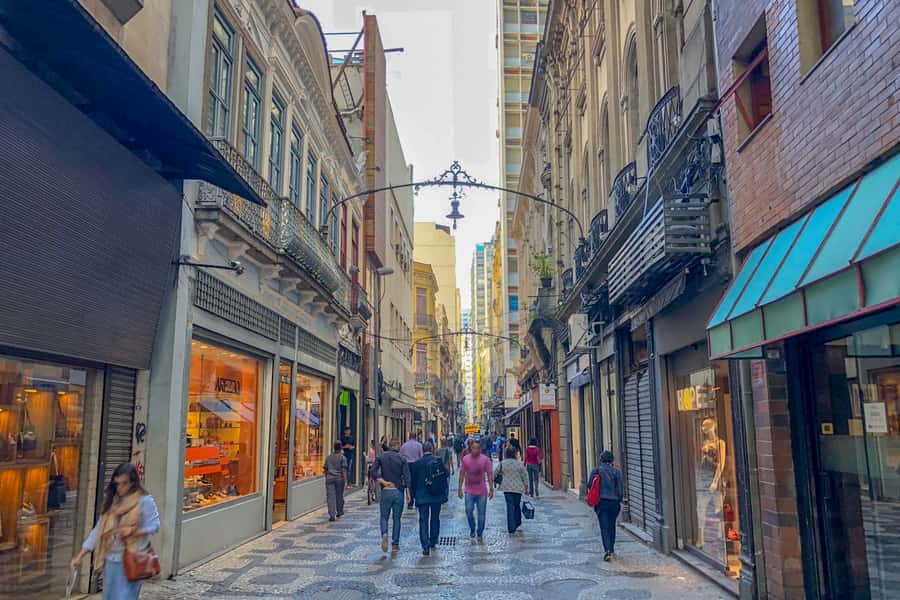
Many first visits to Rio focus on Copacabana, Ipanema, Sugarloaf Mountain, and Christ the Redeemer. Those sights matter, but they can leave you with only a partial picture of the city. Central Rio shows you the political, religious, commercial, and cultural layers that shaped Brazil’s national life.
I like this tour because it asks you to slow down and look at façades, fountains, arches, churches, and public squares. These are places you can easily pass in a car. On foot, the guide can point out details that would otherwise blend into the city center.
The tour also gives you a useful sense of scale. You begin from the Copacabana area, use the subway to reach downtown, and then continue on foot through a compact but packed section of Rio. The return trip is also by subway, so the transport is practical rather than decorative.
More History Tours in Rio de Janeiro
- Rio de Janeiro Historical Center Walking Tour
★ 4.5 · 336 reviews - Private Walking and Cultural Tour Rocinha-Rio de Janeiro
★ 5.0 · 239 reviews - Discover Rio Little Africa: A Cultural and Historical Journey
★ 5.0 · 238 reviews
From Copacabana to Cinelândia by Subway
One listed starting option is at Av. Atlântica 1702, at Copacabana Palace, A Belmond Hotel. The exact meeting point can vary with the option booked, so check your confirmation carefully before setting out.
From there, the group travels by subway toward downtown. That choice is worth noting. You get a quick look at an everyday part of Rio life, and you avoid spending the whole outing in a vehicle. The subway ride also creates a clear change in mood: the beach district gives way to the older civic core.
The first main area is Cinelândia Station, a fitting place to begin. Cinelândia is known for buildings shaped by French architectural influence, giving the opening section a formal, European feel. Your guide can help connect the architecture with Rio’s role as a former national capital.
Do not expect a single museum-style presentation. This is an outdoor walk, so the city itself supplies the exhibits. You will see buildings from the outside and visit certain interiors when they are open. That means the exact feel of the morning may vary slightly.
Cinelândia, Carioca Square, and Three Important Churches
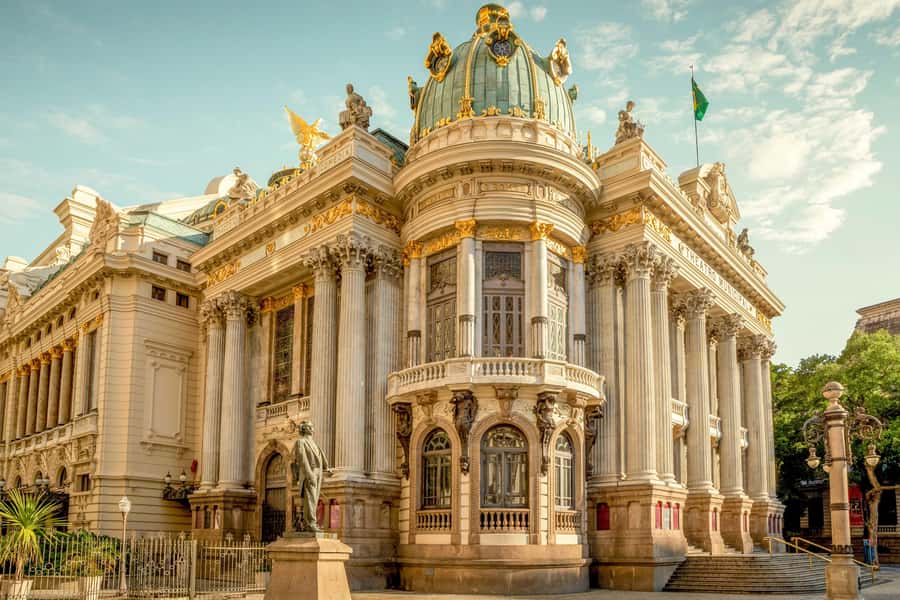
From Cinelândia, the route heads toward Carioca Square. Along the way, you pass the Naval Club, the Monastery Church of Santo Antônio, and the Ordem Terceira de São Francisco da Penitência.
This section is especially useful for visitors who want religious architecture included in a city tour. Santo Antônio and São Francisco da Penitência are not just names on a list. They help show how religious institutions shaped the older center and how much architectural variety is concentrated within a short walk.
The route is not built around one long interior visit. Instead, it gives you a sequence of buildings and viewpoints. You will want to listen closely when the guide explains what you are seeing, since the value comes from connecting the sites rather than merely photographing them.
Guides have received strong praise for answering questions and discussing more than dates. Past feedback describes detailed conversation about Brazilian history, politics, and the economy. That makes this outing a better choice for curious visitors than for anyone seeking only a quick checklist of photo stops.
Confeitaria Colombo: A 1894 Landmark
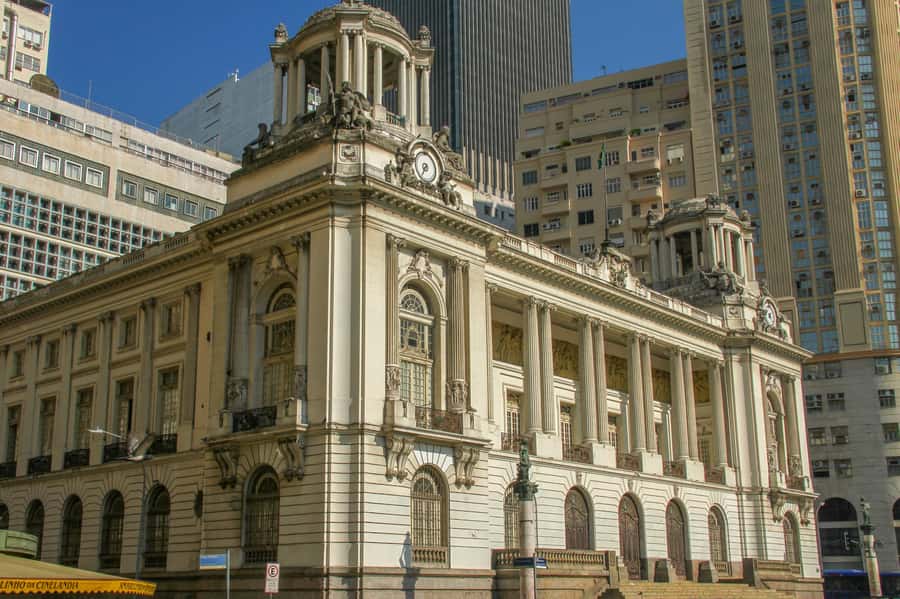
One of the most memorable stops is Confeitaria Colombo, built in 1894. The café is a fine example of how food, social life, and architecture can belong to the same historical story.
Even if you do not order anything, the building adds a different note to the tour. Churches and government buildings show official Rio. Confeitaria Colombo shows the city’s social and commercial side, with an elegant setting that has become part of Rio’s identity.
Drinks and meals are not included in the $79 price. If you want to buy something at the confectionery, plan to pay separately. The schedule is four hours, so your guide may keep the visit focused rather than treating it as a long café break.
I see this stop as one reason the tour feels more rounded than a simple monument walk. You are not only looking at state buildings. You are also seeing a historic place connected with everyday urban culture.
More Walking Tours in Rio de Janeiro
- Rio de Janeiro: Rocinha Favela Walking Tour with Local Guide
★ 4.8 · 3,052 reviews - Rio De Janeiro: Half-Day Rocinha Favela Walking Tour
★ 4.7 · 2,272 reviews - 3 Hour Rocinha Favela Walking Tour with a Local Guide
★ 5.0 · 833 reviews - Favela Tour Rio de Janeiro – Vidigal Walking Tour by Russo Guide
★ 5.0 · 377 reviews
Tiradentes Palace and the Imperial Power of Praça XV
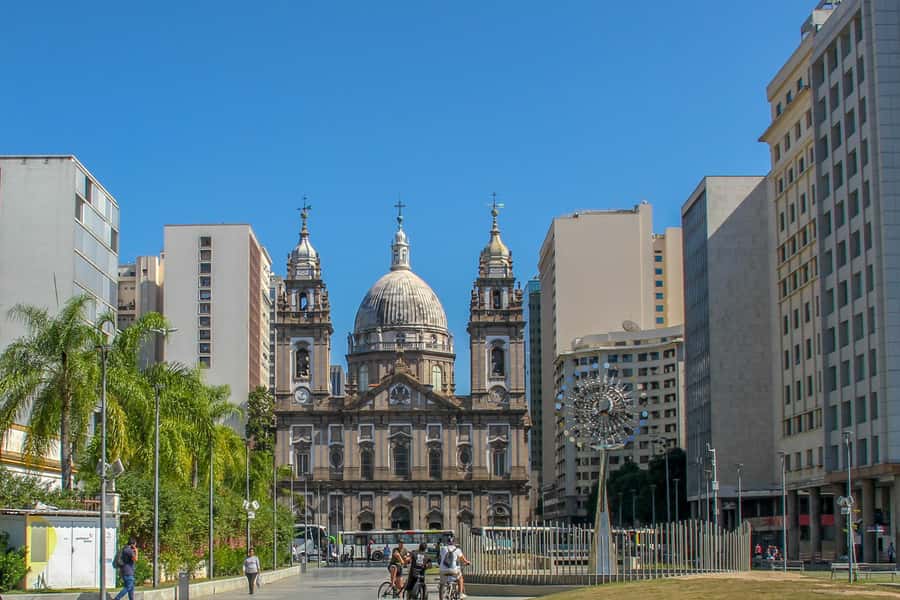
The route continues to Tiradentes Palace, identified as a state hall, and then reaches Praça XV. This is one of the strongest parts of the outing for understanding Rio’s political past.
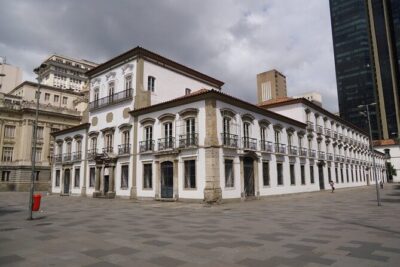
Praça XV includes the Imperial Palace, which brings the former capital’s royal and imperial associations into view. The square also contains the statue of General Osório and Mestre Valentim’s Fountain. Each stop gives the guide another chance to explain how public spaces were used and remembered.
I like the variety here. A palace, statue, and fountain may sound like separate points on a route, but together they create a picture of civic Rio. The guide’s commentary is important because the visual details alone will not explain why these sites matter.
This is also a good point to notice the ground beneath you. Central Rio includes cobble-stoned areas, and the route is a walking tour in the full sense of the term. Wear comfortable shoes and expect to remain on your feet for much of the four hours.
Teles Arch and Travessa do Comercio
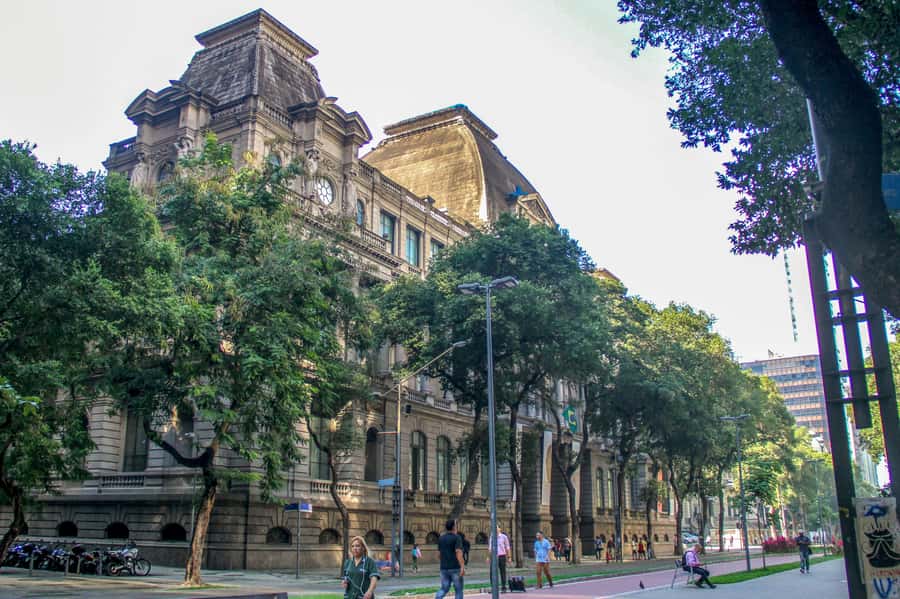
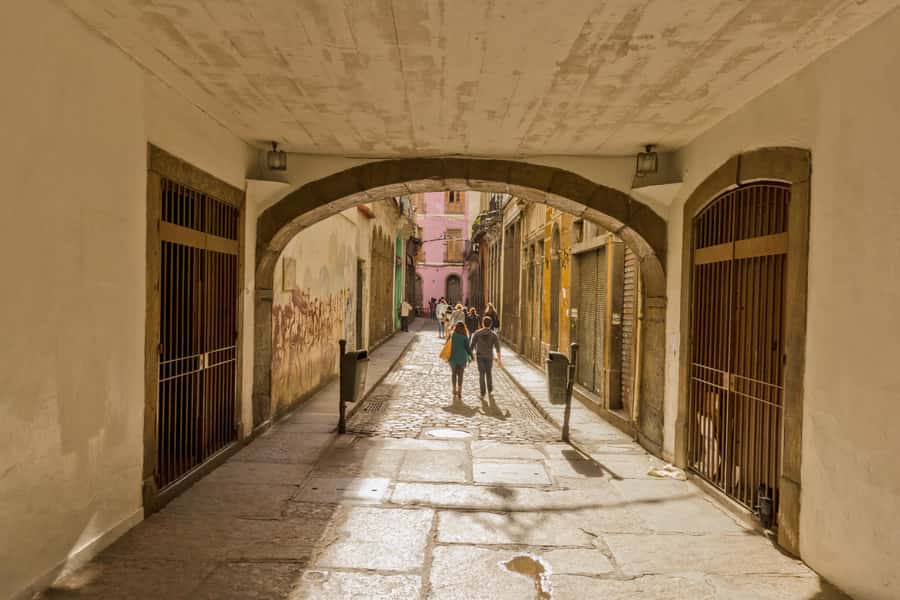
Next comes the Teles Arch, leading toward the cobble-stoned Travessa do Comercio. This change in scale is welcome. After the formal spaces of Praça XV, the narrow lane offers a more intimate look at the old center.
Travessa do Comercio is also connected with the former residence of Carmen Miranda. That detail brings popular culture into a route otherwise weighted toward churches, palaces, and government institutions.
The Carmen Miranda connection is one of the tour’s more distinctive touches. It gives you a personal association within the city’s older streets, rather than another grand façade viewed from a distance.
The drawback is that a four-hour route with this many locations cannot provide a long visit at every stop. If one building or historical figure particularly interests you, ask your guide questions as you go. The small-group setup may allow more conversation than a large coach tour.
Churches, Cultural Centers, and the Candelária Finish
The later section visits the Church of Our Lady of the Merchants, the Post Office Cultural Center, France-Brazil House, the Bank of Brazil Cultural Center, and Candelária Church. France-Brazil House, the Bank of Brazil Cultural Center, and Candelária Church are visited when open.
That qualification matters. Some interior visits depend on opening conditions, so you should not treat every listed building as guaranteed access. Even when a door is closed, the exteriors and surrounding streets remain part of the guided walk.
The cultural centers add a modern public dimension to the route. They show how older buildings and central institutions continue to support art and civic life. The Church of Our Lady of the Merchants and Candelária Church return the focus to religious architecture, giving the day a clear arc from civic power to worship and culture.
Largo da Candelaria is included in this section. Candelária Church is an especially significant visual finish to the downtown portion, though the experience depends on whether it is open during your visit.
After the walk, you return by subway and finish at Copacabana Palace, A Belmond Hotel. The listed end point is useful if you are staying in the Copacabana area, though the meeting point may differ depending on the option you select.
What $79 Includes, and What It Does Not
At $79 per person, this is not the cheapest way to see central Rio. You are paying for a guided, organized experience rather than simply using the subway and following a map.
The price includes:
- Entrance fees
- A professional guide
- Small-group participation
- Subway transportation
Meals and drinks are not included. That keeps the advertised cost clear, but you should bring money if you want refreshments at Confeitaria Colombo or elsewhere along the way.
I think the value depends on your priorities. If you already know central Rio well and prefer to explore independently, you may find the price hard to justify. If you want historical context, help with the route, and included transport, the package is more appealing.
The strongest value comes from the guide. Several past bookings specifically praised detailed cultural and historical explanations. One small-group outing included only a couple, and the guide, Mathilda, was praised for adjusting the visit around their interests and showing them special places they would not have found alone. Group size can vary, but the small-group format gives this tour more personal potential than a large sightseeing bus.
The Guides Shape the Experience
The guide is central here. The route covers enough history that a flat recital of names would quickly become tiring. The best version of this tour depends on someone who can explain why a palace, fountain, church, or cultural center deserves your attention.
Past participants have highlighted Lucien, Monique, Ernani, and Mathilda. The praise is consistent in a useful way: guides are described as prepared, pleasant, flexible, and good at answering questions.
That does not mean every guide will follow exactly the same rhythm. Language options are English, Spanish, and Portuguese, and the available guide depends on the booking. If you care about a particular language, select it carefully when reserving.
I would also arrive ready to participate. Ask about the buildings, the political history, and the changes in Rio’s role as Brazil developed. The tour seems best suited to people who enjoy conversation rather than those who want to walk silently from one attraction to the next.
Walking Conditions and Who Should Book
This is a four-hour downtown walk with subway travel at both ends. The route includes cobblestones and several locations spread across the center, so comfortable shoes are essential.
The experience is not recommended for people with walking difficulties. It is also not suitable for wheelchair users or people with mobility impairments. The information provided does not give a precise walking distance, so you should judge your ability by the duration and the number of stops rather than by a mileage figure.
I would recommend this tour to:
- First-time Rio visitors who want context beyond the beaches
- History and architecture fans
- Visitors who prefer a small group to a large coach
- People comfortable walking for four hours
- Anyone who wants to use the subway with a guide
- Visitors interested in churches, civic buildings, cultural centers, and old streets
I would be more cautious if you want lots of free time inside each building. Opening conditions affect some visits, and the route covers many sites in one morning. The tour gives you breadth and explanation, not a slow study of one museum or church.
Practical Details That Matter
The duration is four hours, and starting times depend on availability. Since the meeting point may vary by booking option, check the exact location before you leave your hotel.
The tour is offered in English, Spanish, and Portuguese. Entrance fees and subway transport are included, while food and drinks are extra.
You can reserve now and pay later, which is useful if you are still arranging your Rio schedule. Free cancellation is available up to 24 hours in advance for a full refund. These policies do not change the walking demands, so accessibility should be your first consideration, not an afterthought.
The overall rating is 4.7 from 32 ratings, a strong result. The most praised elements are the guides, the historical explanation, and the flexibility possible in a small group. Those are the parts I would use to judge the tour, rather than expecting every interior stop to be open.
Should You Book the Rio Historical Walking Tour?
Book it if you want to understand central Rio instead of seeing it only through a taxi window. The subway ride, Cinelândia architecture, Confeitaria Colombo, Praça XV, Teles Arch, Carmen Miranda connection, and Candelária area create a well-packed introduction to the city’s older center.
At $79, it is best value for visitors who want a guide and organized transport. You will pay extra for food and drinks, and some interiors depend on opening conditions. Still, the strong guide feedback and small-group design make this a solid choice for an active visitor who enjoys questions, architecture, and political history.
Skip it if you have trouble walking, need wheelchair access, or prefer a slow visit with long indoor stops. For everyone else, this is a useful way to give Rio’s center the attention it deserves.
FAQ
How long does the Rio Historical Walking Tour last?
The tour lasts four hours, including subway transportation and the guided walk through downtown Rio.
Where does the tour start?
One listed starting option is Av. Atlântica 1702, at Copacabana Palace, A Belmond Hotel. The meeting point may vary depending on the option booked.
Where does the tour finish?
The listed finish point is Copacabana Palace, A Belmond Hotel.
Which languages are available?
The live guide may lead the tour in English, Spanish, or Portuguese.
Is subway transportation included?
Yes. The tour includes subway transportation to downtown and the return journey.
Are entrance fees included?
Yes. Entrance fees are included. Drinks and meals are not included.
Is the tour suitable for wheelchair users?
No. The tour is not suitable for wheelchair users or people with mobility impairments, and it is not recommended for people with walking difficulties.
Newest reviews from around Rio De Janeiro
- PRIVATE TOUR – Christ the Redeemer and Sugar Loaf★ 4.5 · 9 reviews
- Christ Statue and Sugarloaf Private Tour with a Photographer★ 5.0 · 9 reviews
- Cidade do Samba Behind-the-Scenes Carnival Tour in Rio de Janeiro★ 4.0 · 5 reviews
- Christ the Redeemer Trail x Lage Park★ 5.0 · 7 reviews
- Christ the Redeemer and City Tour★ 5.0 · 20 reviews
- Christ the Redeemer, Selaron Steps and Santa Teresa Half-day Tour★ 4.5 · 15 reviews
- Christ the Redeemer Adventure★ 5.0 · 12 reviews
- Private Tour of Christ the Redeemer in Rio de Janeiro★ 5.0 · 2 reviews
Historical Tours, compared.


Private Walking and Cultural Tour Rocinha-Rio de Janeiro
Read our review →
Discover Rio Little Africa: A Cultural and Historical Journey
Read our review →

Scenic Train ride to historical cities of Morretes and Antonina
Read our review →
Browse the lists this tour appears in