
Reviewed · MUSEUMS
Rio de Janeiro: Flamengo Museum Ticket Entrance
Football has its own museum language. The Flamengo Museum turns that language into a lively visit, tracing Clube de Regatas do Flamengo from its 1895 beginnings as a sailing club to its rise as one of Brazil’s biggest football names. I especially like the four-floor trophy room and the careful mix of giant screens, sensory rooms, historic objects, and digital storytelling. The digital guide is also available in English, Spanish, and Portuguese, which makes the visit easier if you do not speak Portuguese.
The main consideration is simple: this ticket covers the museum, not a tour of the wider Gávea headquarters. You also need to follow firm rules about food, drinks, cameras, clothing, and personal items. If you want a club museum with a strong emotional charge, the $18 price is reasonable. If you are not interested in football or Flamengo, the experience may feel rather one-sided.
In This Review
- Key points to know before you go
- Why Flamengo’s story starts before football
- Four floors built around silverware
- Screens and sensory rooms bring key moments closer
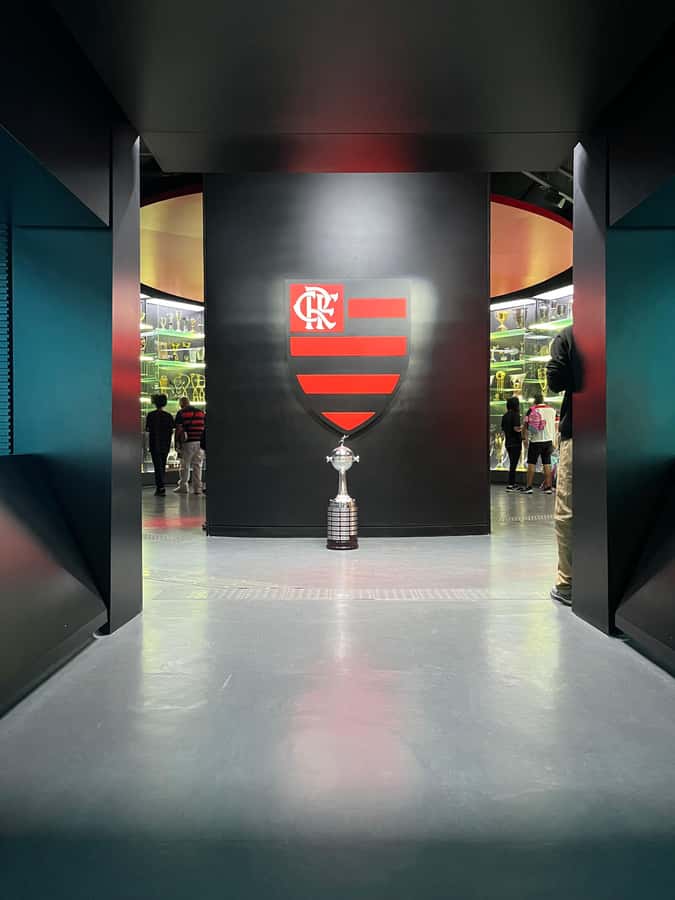
- The Rubro-Negro identity is part of the experience
- A museum designed by an international sports team
- What the digital guide adds
- Gávea location and what the ticket does not cover
- The rules are stricter than at a casual attraction
- Is $18 a fair price?
- Who will enjoy this museum most?
- Should you book the Flamengo Museum?
- FAQ
- Where is the Flamengo Museum located?
- How much does entrance to the Flamengo Museum cost?
- How long is the Flamengo Museum ticket valid?
- Which languages are available?
- Does the ticket include a tour of Gávea?
- Can I take photos or film inside the museum?
- What items and activities are not allowed?
Key points to know before you go
- Four floors of trophies: The collection gives the club’s silverware room to breathe instead of squeezing everything into one gallery.
- A story that begins in 1895: You see how Flamengo grew from a sailing club into a major football institution.
- Fourteen themed sections: Screens, sensory settings, and interactive displays put the focus on key moments and people.
- A club-wide story: Idols from several sports appear alongside football memorabilia and historic objects.
- Languages for international visitors: The digital guide works in English, Spanish, and Portuguese.
- A strict museum setting: No food, drinks, smoking, vaping, flash photography, pets, or unaccompanied minors are allowed.
Why Flamengo’s story starts before football
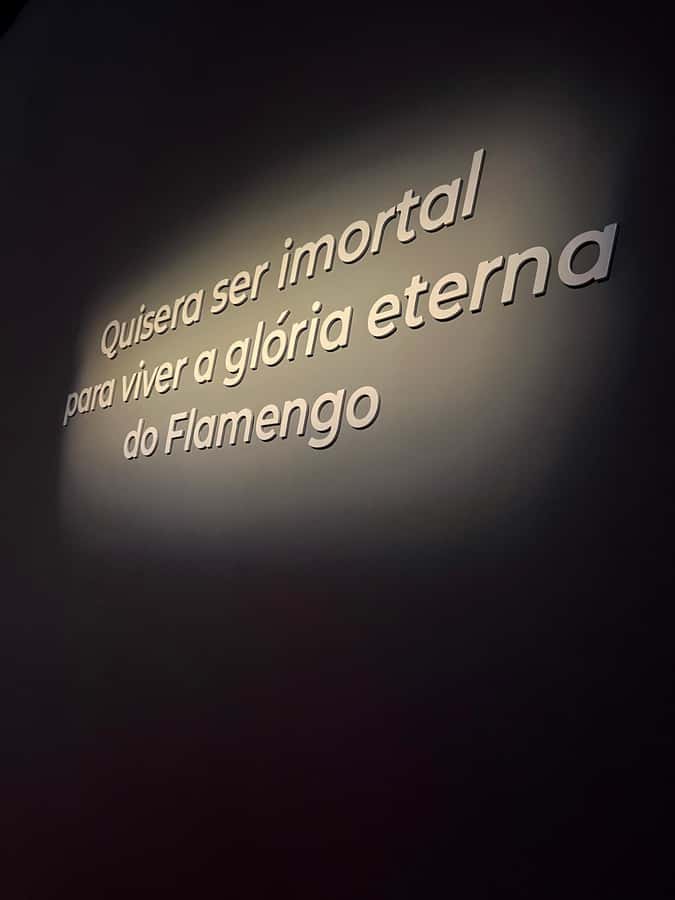
The museum is not only about match results. Its opening story reaches back to 1895, when Clube de Regatas do Flamengo was founded as a sailing club. That beginning matters because it shows you a broader version of Flamengo identity, one tied to sport, place, and club life before football became the main attraction.
I like this approach. It prevents the visit from becoming a simple wall of famous scores and player names. You get a sense of the club’s development over time, then see how football gradually became central to its public image.
The museum presents this change through fourteen themed sections. I would expect the early galleries to be useful for first-time visitors who know Flamengo mainly as a football team. They provide the context needed to understand why the club carries such strong meaning for its supporters.
You may also find references to sporting figures beyond football. The museum includes idols from several sports, along with historic objects from the club’s past. That makes the experience more useful for anyone interested in Brazilian sporting culture, not just match statistics.
More Museum Tours in Rio de Janeiro
- Petrópolis Day Trip from Rio de Janeiro including Imperial Museum and Crystal Palace
★ 4.0 · 101 reviews - Museum of Tomorrow, AquaRio & Olympic Boulevard in Rio de Janeiro
★ 4.5 · 69 reviews - Olympic Boulevard, Museum of Tomorrow & Historical Rio
★ 4.5 · 66 reviews
Four floors built around silverware
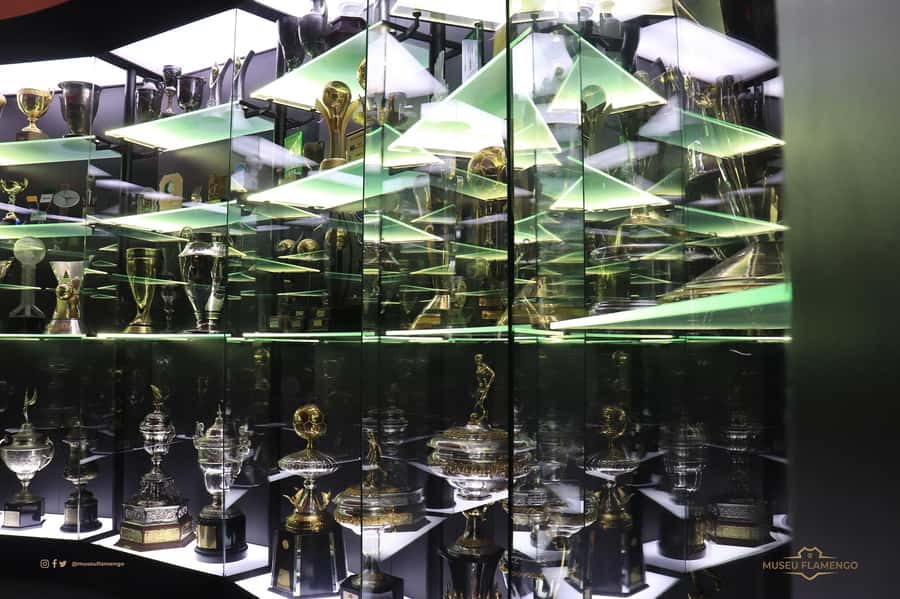
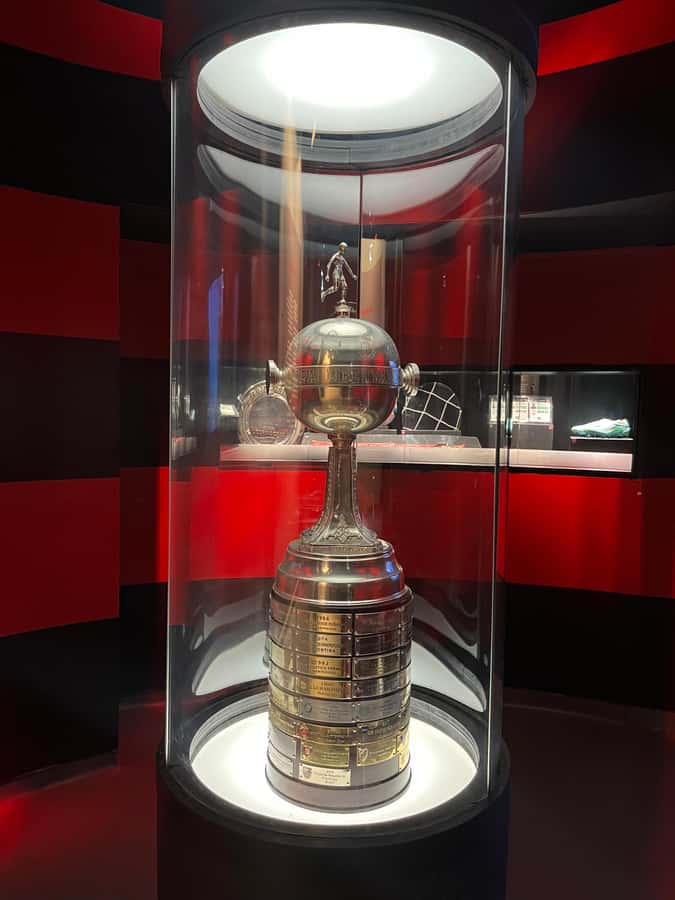
The trophy room is one of the clearest reasons to buy a ticket. It spreads across four floors, giving the club’s achievements a large physical presence. You are not simply passing one cabinet on the way to the exit. The trophies form one of the main organizing features of the visit.
For Flamengo supporters, this is likely the emotional center. The number and range of trophies help explain the club’s reputation, while the setting gives major achievements a sense of occasion. I would plan enough time to look beyond the biggest cups and notice how the collection presents the club across different eras and sports.
The four-floor layout also changes the pace of the visit. Instead of one crowded room, you move through a longer sequence of displays. That gives you time to pause, use the digital guide, and connect objects with the moments presented in the other sections.
There is one practical point to remember. The ticket is valid for one day, but no fixed visit length is given. You should check the available starting times when booking and plan your day around the museum’s entry window rather than assuming you can arrive at any hour.
Screens and sensory rooms bring key moments closer
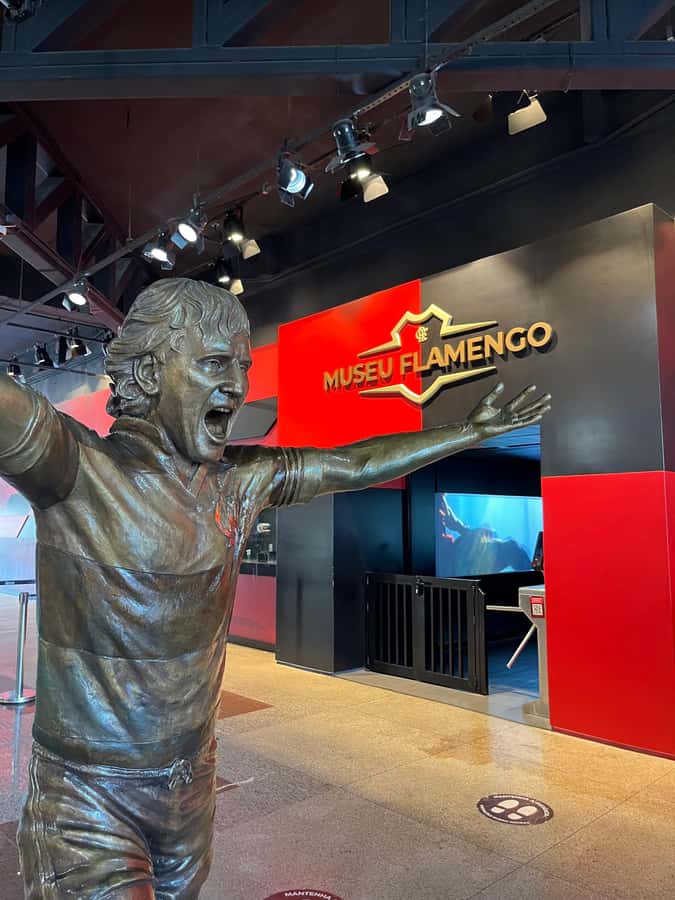
The museum uses giant screens, sensory environments, and interactive spaces to tell its story. This is not a quiet archive where you read labels from beginning to end. The design aims to make you feel part of the club’s biggest moments, even if you arrive without a personal connection to Flamengo.
I like the use of technology when it adds context rather than replacing the objects. Here, the screens and interactive features appear alongside historic pieces and the trophy collection. That combination should work well for families, younger football fans, and anyone who prefers a visual presentation.
The emotional tone is important. Flamengo is known for its huge following, and the museum is designed to communicate that feeling. You can expect a visit that celebrates the club rather than one that tries to be detached or neutral.
That is both the attraction and the limitation. If you enjoy fan culture, the enthusiasm will make the museum memorable. If you prefer a broad, critical account of Brazilian football, this is not the place to expect one. The focus is Flamengo, its achievements, its symbols, and its supporters.
The Rubro-Negro identity is part of the experience
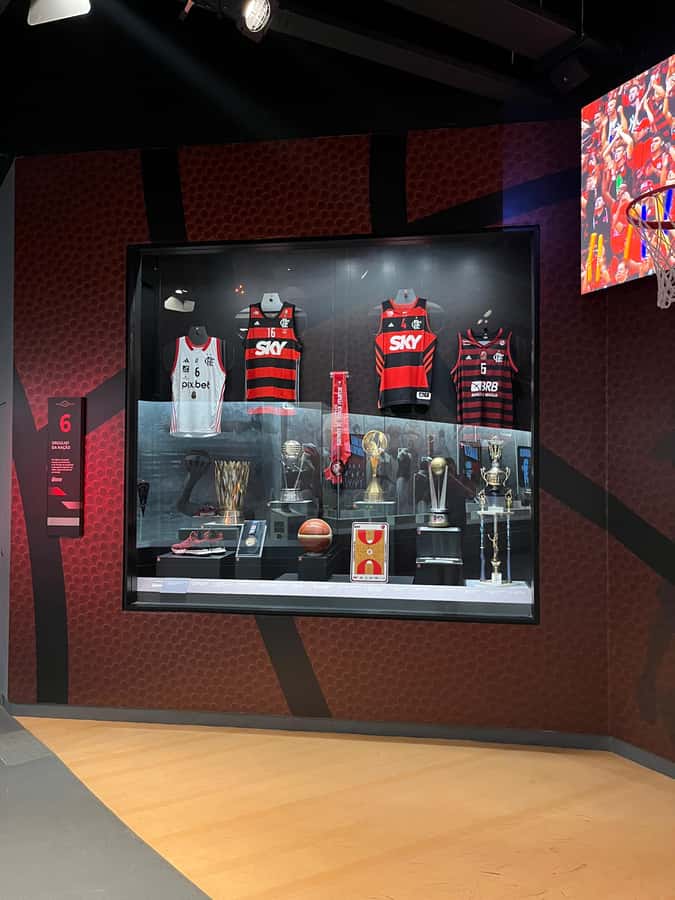
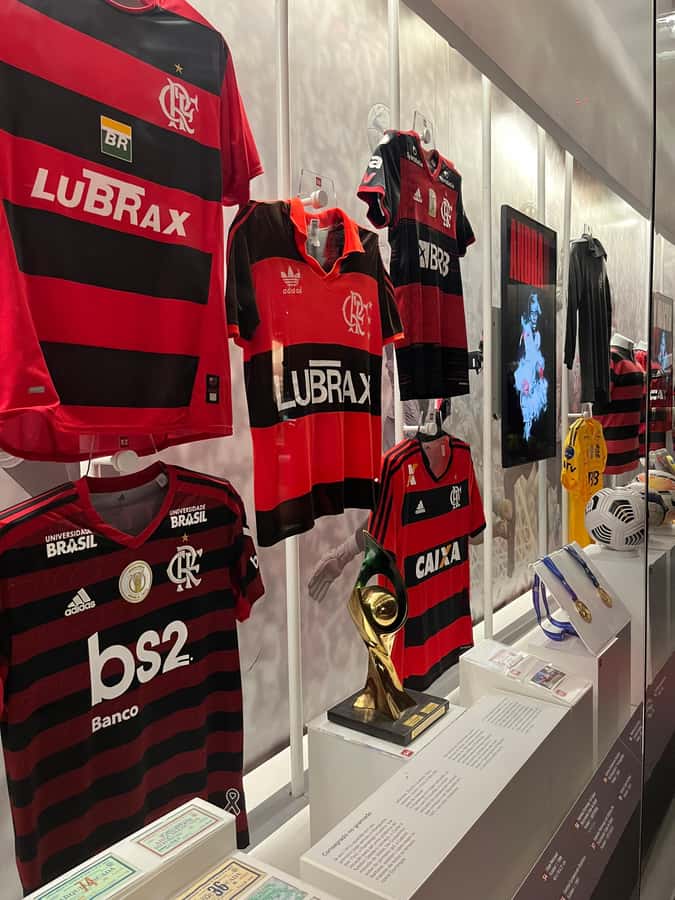
The red and black colors are more than decoration here. The museum presents Flamengo’s identity through its symbols, logos, objects, and celebrated moments. A visitor comment specifically praised the atmosphere, the Rubro-Negro experience, and the chance to buy Flamengo products.
That detail is useful because it tells you what kind of museum this is. You are entering a club space with a strong sense of belonging, not a general sports museum. The atmosphere is intended to make supporters feel recognized and connected to the team.
Another short comment praised the treatment of logos and the club’s story. I would pay attention to those visual details, especially if you are interested in sports branding. A club’s changing symbols can reveal how it presents itself across generations, and Flamengo’s collection gives that side of the story room.
The museum shop is not listed as part of the ticket, but the chance to purchase club products is part of the wider visit experience. Food and drinks are not included, and the museum does not allow them inside, so plan to eat before or after your visit.
Same patch of Brazil, a completely different sort of day:
- Rio de Janeiro: 6-Stop Highlights of Rio with Lunch
★ 4.4 · 5,157 reviews - Christ the Redeemer Entry Ticket by Corcovado Train
★ 4.4 · 4,476 reviews - Rio’s City Tour – Tickets for Christ, Sugar Loaf & Lunch included
★ 5.0 · 4,389 reviews - Full Day: Christ Redeemer, Sugarloaf, City Tour & Barbecue Lunch
★ 4.5 · 3,142 reviews
A museum designed by an international sports team
The museum was developed by the same team responsible for sports museums connected with River Plate, Boca Juniors, Juventus, and Benfica. That background helps explain the polished blend of technology, trophies, club symbols, and emotional storytelling.
For you, the practical benefit is a visit with a clear structure. The displays are not presented as a random collection of memorabilia. The fourteen themed areas are meant to guide you through Flamengo’s development and its most important moments.
Still, a polished production does not guarantee that every display will suit every visitor. Some people prefer old photographs, documents, and objects over large screens and sensory effects. Others want exactly the kind of dramatic presentation that makes a club’s big moments feel close again.
I would treat the technology as a major part of the ticket, not a small extra. If you are buying this experience only to see trophies, you may miss some of its appeal. If you enjoy a mix of objects and digital presentation, the format should give you more variety than a conventional display case museum.
What the digital guide adds
The digital guide is available in English, Spanish, and Portuguese. That is a strong advantage for international visitors, since the meaning of club symbols and historic moments can be difficult to grasp from visuals alone.
I would use the guide at your own pace rather than trying to absorb every section quickly. With fourteen themed areas and four floors of trophies, you will have plenty to look at. The guide should help you decide which displays deserve more time.
The listed instructor languages are Spanish, English, and Portuguese. However, the activity is described as a museum visit with a digital guide, not as a traditional guided tour. Do not book it expecting a personal guide to lead you around Gávea.
This language support also makes the museum a better choice for mixed groups. One person can read in English, another in Spanish, and Portuguese-speaking visitors can use the original language. That flexibility adds value to the ticket without requiring a separate language-specific booking.
Gávea location and what the ticket does not cover
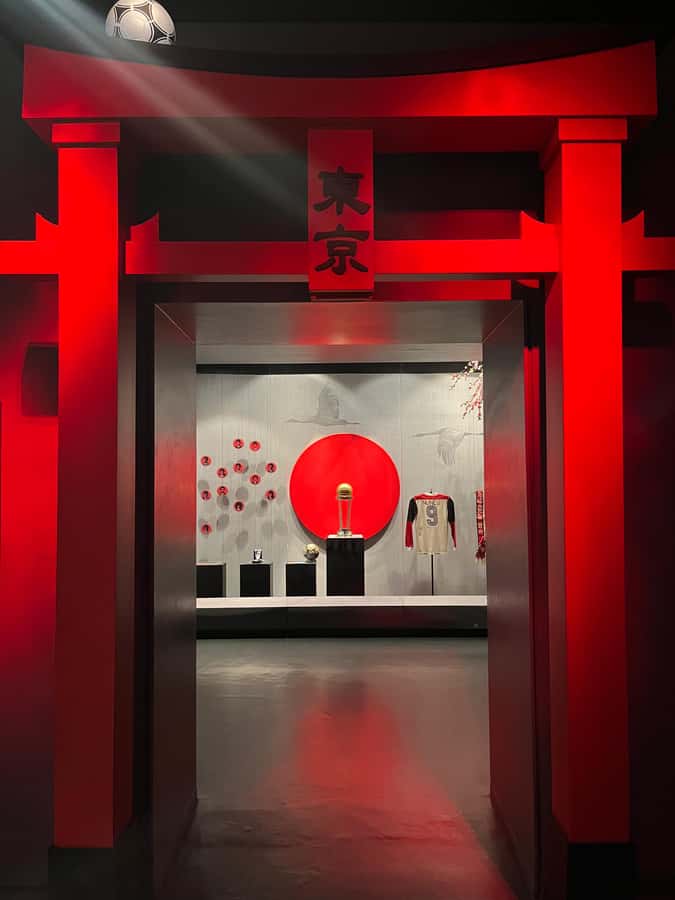
The museum is at Clube de Regatas do Flamengo’s headquarters in Gávea, in the south of Rio de Janeiro. The location connects the exhibits with the club itself, which gives the visit a sense of place that an off-site exhibition would not have.
You should set your expectations carefully. The ticket is for entrance to the Flamengo Museum. It does not include a tour of Gávea, so you should not expect a wider behind-the-scenes visit of the headquarters.
That distinction matters if you are planning the museum as part of a full club-day itinerary. The museum can be a focused stop rather than an all-access visit. Check your available starting time and leave room in your schedule for the rest of your plans in Rio.
The activity lasts one day in booking terms, but that does not mean you receive a guided, all-day program. It means the ticket is valid on the selected day. The available starting times should be checked before you reserve.
The rules are stricter than at a casual attraction
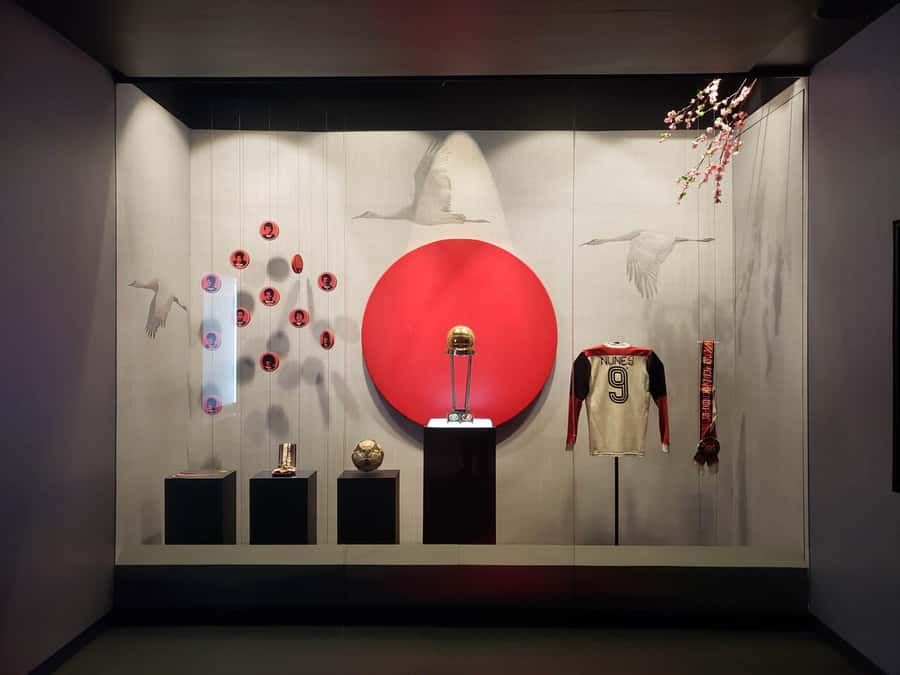
The museum has a long list of prohibited items and behaviors. You cannot bring food, drinks, alcohol, drugs, glass objects, plastic bags, weapons, sharp objects, scooters, or anything used to make a fire. Smoking and vaping are also forbidden.
Sportswear is listed as not allowed, which may surprise football fans arriving in a team shirt or athletic clothes. Since this rule is stated clearly, I would dress in ordinary casual clothing rather than assume the museum operates like a stadium.
Pets are not allowed, although assistance dogs are permitted. Unaccompanied minors are also not allowed, so families should make sure children enter with a responsible adult.
Your phone should be on airplane mode or silent. Flash photography and filming are not permitted. The safest plan is to enjoy the displays without recording them, and to follow staff instructions about any permitted photography.
These rules may feel formal, especially for a sports museum built around excitement. They protect the objects and keep the sensory rooms and presentations running properly. Still, you should know them before arriving so an everyday item does not slow down your entry.
Is $18 a fair price?
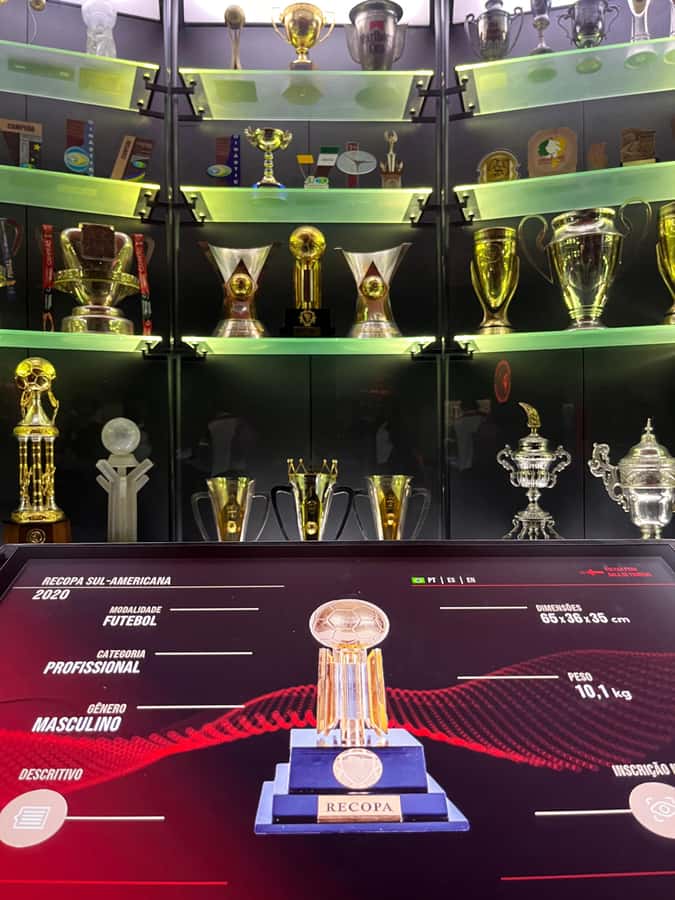
At $18 per person, the ticket is not the cheapest football stop in Rio, but it offers more than a basic trophy display. You are paying for four floors of silverware, fourteen themed sections, historic objects, digital interpretation, and technology from a team that has created major club museums abroad.
I consider the price fair for Flamengo supporters and serious football fans. The emotional value will come from seeing the club’s symbols, idols, and important moments presented in one place. The digital guide in three languages also makes the ticket more useful to international visitors.
The value is less certain if you have little interest in Flamengo. This is a focused club museum, not a general introduction to Rio or Brazilian football. You might prefer to spend the money on a broader cultural attraction if you do not recognize the club’s major figures or care about its sporting story.
The flexible booking terms help reduce the risk. You can reserve now and pay later, and cancellation is free up to 24 hours before the activity for a full refund. Check the exact conditions at booking, but that flexibility is useful when Rio plans are still shifting.
Who will enjoy this museum most?
I would recommend the Flamengo Museum first to club supporters, football fans, and people interested in how sport shapes identity in Brazil. The combination of trophies, idols, symbols, and fan-focused presentation gives those visitors plenty to connect with.
It also suits families with children who enjoy screens and interactive displays, provided the children are accompanied by an adult and follow the museum rules. The mix of large visuals and sensory rooms may hold attention better than a text-heavy museum.
International football fans should benefit from the digital guide in English and Spanish. You do not need to understand every Portuguese label to follow the main story, though the original language will be useful for Portuguese speakers.
I would be more cautious if you want an all-access stadium tour, a quiet historical archive, or a neutral account of Brazilian sport. The Gávea tour is not included, and the museum’s purpose is to celebrate Flamengo from the club’s own point of view.
Should you book the Flamengo Museum?
Book it if you want a close look at Flamengo’s story, from its 1895 sailing-club roots to its modern football identity. The four-floor trophy room, fourteen themed sections, digital guide, and strong Rubro-Negro atmosphere make this a substantial museum visit for $18.
Skip it if you are not interested in club football or if you expect a tour of the wider Gávea headquarters. For the right audience, the museum gives you a focused and highly visual look at one of Brazil’s most important sporting institutions. Just arrive prepared for the strict rules and leave the food, drinks, flash, and sportswear behind.
FAQ
Where is the Flamengo Museum located?
The museum is at the headquarters of Clube de Regatas do Flamengo in the Gávea neighborhood, in the south of Rio de Janeiro.
How much does entrance to the Flamengo Museum cost?
The listed price is $18 per person.
How long is the Flamengo Museum ticket valid?
The ticket is valid for one day. You should check the available starting times when booking.
Which languages are available?
The digital guide is available in English, Spanish, and Portuguese. The listed instructor languages are also English, Spanish, and Portuguese.
Does the ticket include a tour of Gávea?
No. The ticket includes museum entrance, but a tour of Gávea is not included.
Can I take photos or film inside the museum?
Flash photography and filming are not allowed. Your phone is requested to be on airplane mode or silent.
What items and activities are not allowed?
Food, drinks, smoking, vaping, alcohol, drugs, pets except assistance dogs, weapons, sharp objects, glass objects, plastic bags, scooters, and fire-making are not allowed. Sportswear and unaccompanied minors are also listed as not permitted.
Newest reviews from around Rio De Janeiro
- PRIVATE TOUR – Christ the Redeemer and Sugar Loaf★ 4.5 · 9 reviews
- Christ Statue and Sugarloaf Private Tour with a Photographer★ 5.0 · 9 reviews
- Cidade do Samba Behind-the-Scenes Carnival Tour in Rio de Janeiro★ 4.0 · 5 reviews
- Christ the Redeemer Trail x Lage Park★ 5.0 · 7 reviews
- Christ the Redeemer and City Tour★ 5.0 · 20 reviews
- Christ the Redeemer, Selaron Steps and Santa Teresa Half-day Tour★ 4.5 · 15 reviews
- Christ the Redeemer Adventure★ 5.0 · 12 reviews
- Private Tour of Christ the Redeemer in Rio de Janeiro★ 5.0 · 2 reviews
Museums, compared.
Ticket MAI – Museum of Indigenous Art – Curitiba
Read our review →
Combo: Platform Entrance, Abusado Adventure, Ferro Passar Museum
Read our review →
Petrópolis Day Trip from Rio de Janeiro including Imperial Museum and Crystal Palace
Read our review →
Museum of Tomorrow, AquaRio & Olympic Boulevard in Rio de Janeiro
Read our review →
7-Hour Shared Group Santos Tour : Mont Serrat, Coffee Museum and Sightseeing
Read our review →
Olympic Boulevard, Museum of Tomorrow & Historical Rio
Read our review →
Olympic Boulevard, AquaRio and Museum of Tomorrow Tour
Read our review →Browse the lists this tour appears in