
Reviewed · HISTORICAL TOURS
Rio de Janeiro: Afrobrazilian Heritage & Black History Walk
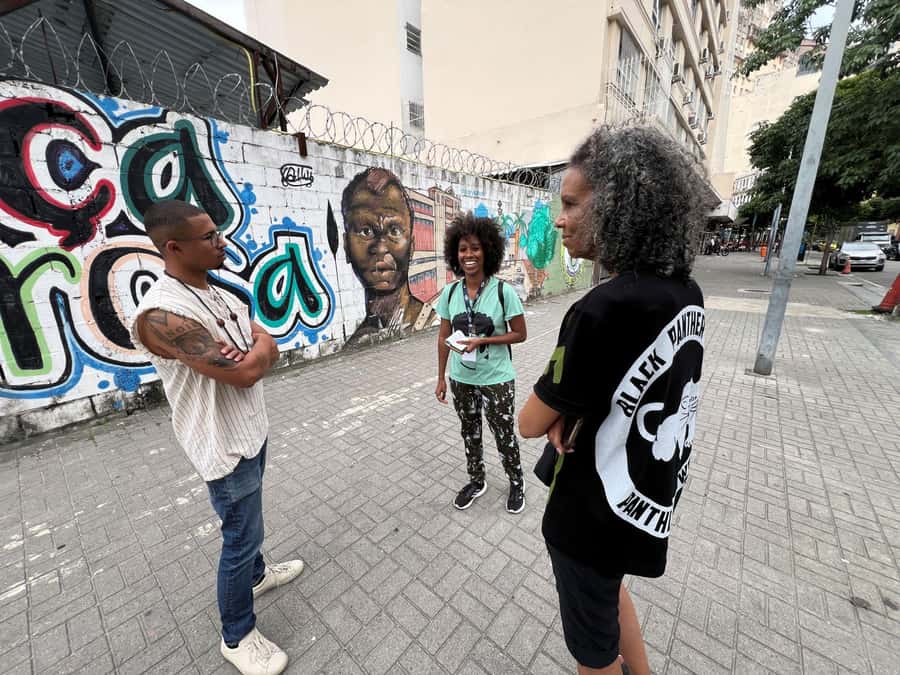
Rio’s past is written in stone and samba. This 150-minute walk connects the city’s slave-trade history with the living culture of its African descendants. I like that you visit the UNESCO-listed Valongo Wharf and Pedra do Sal rather than simply hearing a general history lecture. I also like the chance to learn from a guide of African descent, including Kelly or Jaíse, whose personal connection gives the subject care and weight.
The main consideration is that this is a serious history tour, not a light sightseeing stroll. The subject includes forced migration, human trafficking, sale, and cultural survival over more than 380 years. You will walk outdoors in sun or rain, and food, museum entry, and transport are not included.
In This Review
- Five details that shape the experience
- Why Rio’s Little Africa matters
- Starting under the trees at Praça Mauá
- Saúde and the first steps through Afro-Brazilian Rio
- Valongo Wharf and the memory of forced arrival
- Praça Mauá, murals, and public memory
- Pedra do Sal, where history starts to move
- Candomblé, umbanda, and the gods of nature
- What the $64 price buys you
- Who will get the most from this walk
- Practical advice before you go
- Should you book the Afro-Brazilian Heritage walk?
- FAQ
- Where does the tour meet?
- How long does the walk last?
- Which languages are available?
- Is the tour wheelchair accessible?
- Does the price include food or museum admission?
- What should I bring?
- Can I cancel or change my booking?
Five details that shape the experience
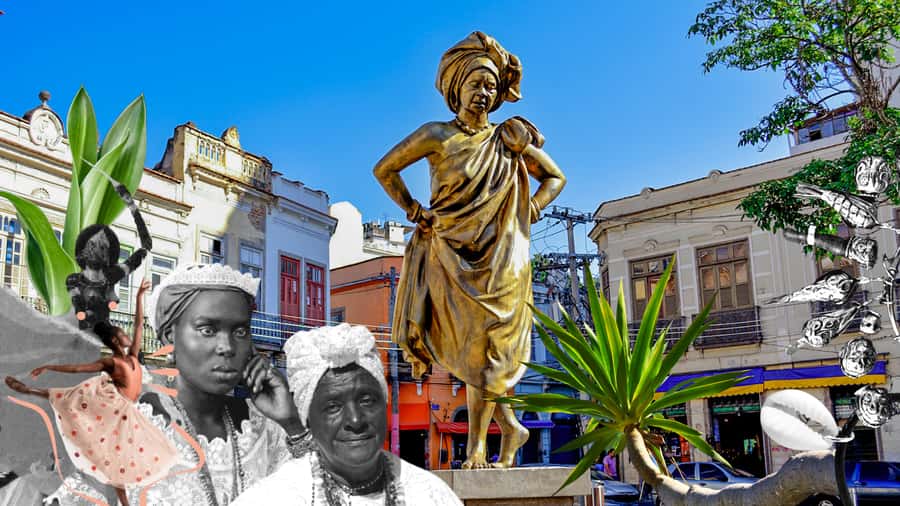
- Valongo Wharf reveals Rio’s role in the Atlantic slave trade: You visit the UNESCO World Heritage Site created to preserve the memory of the millions of Africans brought through this port.
- Pedra do Sal links history with samba: The Rock of Salt is tied to musicians, early Carnival bloco gatherings, and weekly samba rodas.
- Little Africa is treated as a living place: Largo São Francisco da Prainha, Saúde, Praça Mauá, and the surrounding streets connect the past with today’s music and art.
- The religious history goes beyond church buildings: You learn about candomblé, umbanda, orishas, nkisis, voduns, and the blending of African traditions with Christianity.
- You get local planning help: The guide can offer suggestions for music, art, museums, restaurants, and other local activities.
- The tour is practical as well as historical: It is offered in English, Spanish, and Portuguese, lasts two and a half hours, and is wheelchair accessible.
Why Rio’s Little Africa matters
Rio is often sold through beaches, viewpoints, and Carnival. Those are real parts of the city, but they do not explain how Rio became Rio. The port district around Saúde and Praça Mauá carries another story, one shaped by Africans who were forcibly brought to Brazil and by the descendants who preserved language, music, religion, food, and community under brutal conditions.
This walk gives that story a physical setting. You are not only hearing dates and names. You are moving through the streets where the trade operated, where Black communities formed, and where music traditions took root.
I especially value the link between painful history and living culture. The tour does not present Afro-Brazilian heritage as something finished or locked in a museum. It connects the slave trade to samba, Carnival, religious practice, public art, and the city’s current cultural life.
The guide’s role matters here. Kelly is described as deeply committed to researching the subject and presenting it with care. Jaíse is praised for detailed historical explanations and for making the story feel immediate. That personal delivery is a major reason to choose this experience instead of reading a short plaque at a sightseeing stop.
More History Tours in Rio de Janeiro
- Rio de Janeiro Historical Center Walking Tour
★ 4.5 · 336 reviews - Private Walking and Cultural Tour Rocinha-Rio de Janeiro
★ 5.0 · 239 reviews - Discover Rio Little Africa: A Cultural and Historical Journey
★ 5.0 · 238 reviews
Starting under the trees at Praça Mauá
The stated meeting point is under the trees in front of the Rio Art Museum, also called MAR, at Praça Mauá. This is a useful place to begin because the square sits at the edge of the port district and near several major cultural sites.
The meeting area should be easy to recognize, but I would still confirm the exact point with the guide by WhatsApp. The tour information also lists Museu de Arte do, at Rua Pedro Ernesto 32, among the starting options, so checking the starting point before the day of the walk is sensible.
Praça Mauá can feel open and exposed, so bring a hat, water, comfortable clothing, and rain gear. The tour runs rain or shine. Rio’s weather can change quickly, and there is little wisdom in trying to look stylish while getting soaked halfway through a history lesson.
The walk is wheelchair accessible, which is useful in principle, though you should confirm any personal mobility needs with the operator before booking. The route includes outdoor streets and a 15-minute guided walk through Saúde, so practical comfort still matters.
Saúde and the first steps through Afro-Brazilian Rio
The tour moves through Saúde, a district closely tied to the port and to the area often called Little Africa. This part of Rio helps explain how African communities shaped the city after arrival, even under conditions designed to strip people of family, identity, and freedom.
You can expect the guide to discuss the arrival of enslaved Africans, the sale of human beings, and the ways descendants built cultural life in and around the port. The value here is context. Without it, the later stop at Pedra do Sal might look like a pleasant photo opportunity. With it, music, gathering places, and religious traditions carry much more meaning.
This is also where the walking format works well. A bus can show you a district, but it cannot give you the same sense of distance between port sites, squares, and neighborhood landmarks. At 150 minutes, the route has enough time for explanation without turning into an all-day march.
The trade-off is pace. You are covering several important places in a short period. If you want long museum visits, detailed architectural study, or time to sit at every site, this tour will feel brisk. Its strength is the connection between stops.
Valongo Wharf and the memory of forced arrival
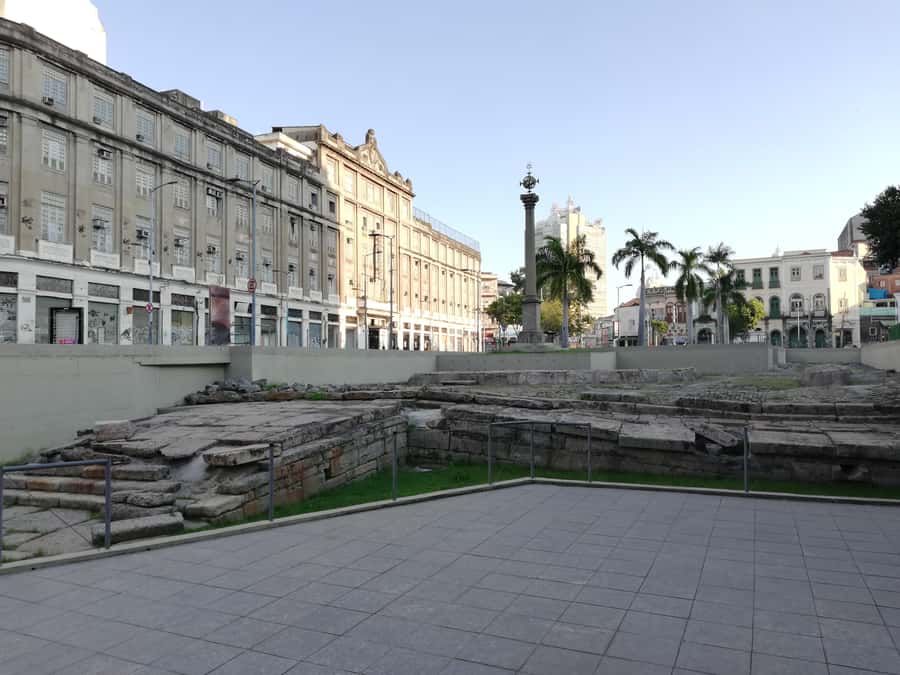
Valongo Wharf is the emotional center of the walk. It was the main landing place for enslaved Africans in Rio and became the largest slave market in the Atlantic. The site is now recognized by UNESCO for its importance in remembering the transatlantic slave trade.
The tour uses Valongo Wharf to explain the scale of the system and its human cost. Millions of Africans arrived through this port to be sold into slavery. That fact can sound abstract when read in a book. Standing at the site gives the history a fixed location in the city you are visiting.
This stop also corrects the usual tourist picture of Rio. The port is not only a backdrop for redevelopment, murals, and museums. It is a place where the city’s wealth and social order were built through violence and forced labor.
I would approach this part with patience. It is not designed as a quick photo stop, and the subject deserves attention. The best value comes from listening carefully to how the guide explains the lives of the people brought here, not just the workings of the trade.
The experience does not include entry to the Rio Art Museum or the Museum of Tomorrow. That keeps the walk focused and helps hold the price at $64, but you will need a separate ticket if you want to visit either museum.
More Walking Tours in Rio de Janeiro
- Rio de Janeiro: Rocinha Favela Walking Tour with Local Guide
★ 4.8 · 3,052 reviews - Rio De Janeiro: Half-Day Rocinha Favela Walking Tour
★ 4.7 · 2,272 reviews - 3 Hour Rocinha Favela Walking Tour with a Local Guide
★ 5.0 · 833 reviews - Favela Tour Rio de Janeiro – Vidigal Walking Tour by Russo Guide
★ 5.0 · 377 reviews
Praça Mauá, murals, and public memory
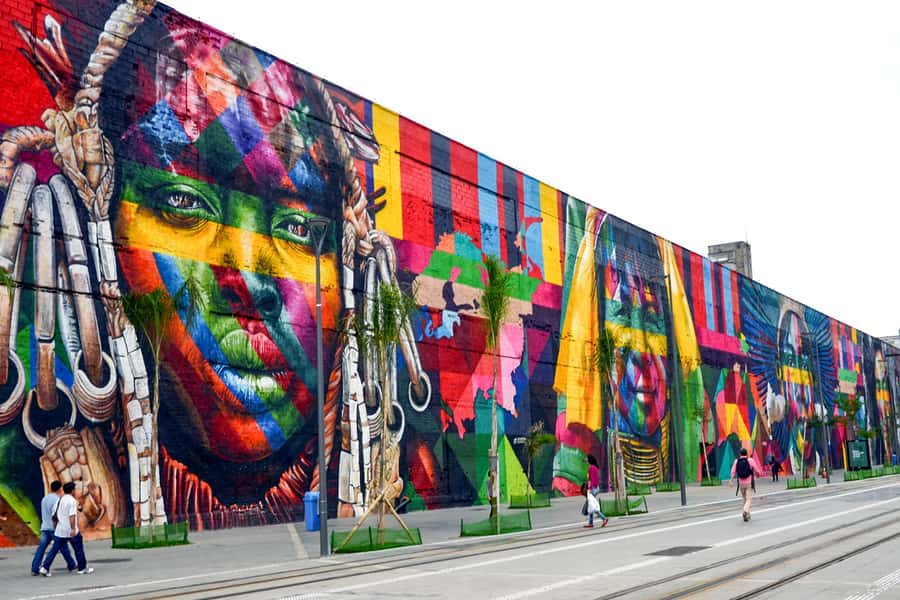
Praça Mauá is also connected with major public art. One possible finishing point is the Etnias mural by Brazilian artist Eduardo Kobra. Its large portraits of Indigenous people from around the world have become one of the port district’s most recognizable visual landmarks.
The mural adds a contemporary layer to the tour. After hearing about the forced movement of Africans and the formation of Black Rio, you see how the redeveloped port uses public art to tell stories about identity and people. The guide can help you read the artwork in relation to the district rather than treating it as a colorful background.
The mural is one reason this walk appeals to people who want history and art together. One guest specifically praised the murals and the guide’s explanation of Afro-Brazilian culture. Still, the tour is not an art-focused walk. The mural supports the wider story, but you should not expect a detailed study of Kobra’s technique or a gallery-style art lesson.
The guide can also provide tips about museums, music, restaurants, and local programming. That extra advice may be one of the most useful parts of the experience if you have several days in Rio and want to plan beyond the famous landmarks.
Pedra do Sal, where history starts to move
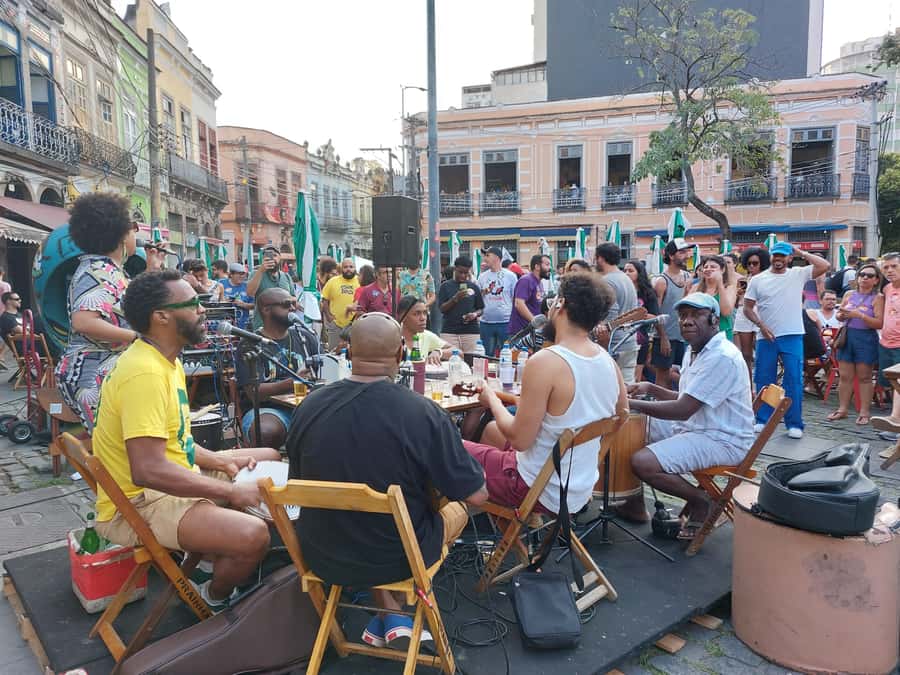
Pedra do Sal, or Rock of Salt, gives the walk a different mood. It is known as the center of Little Africa and is closely associated with the origins of samba in Rio. Musicians met here to sing and dance, and the area became a gathering place for early Carnival bloco parties and parades.
The site shows how cultural survival can become cultural creation. The people whose ancestors were brought to Brazil under force did not merely endure. They shaped sounds, gatherings, celebrations, and religious practices that became central to Brazilian identity.
The tradition continues through weekly samba rodas. A roda is an informal circle of musicians and singers, and the guide may offer advice about local programming so you can return for music at another time. A separate review describes an invitation to an authentic samba jam at a town square, which shows how the guide can connect the walk with Rio’s current music scene.
Do not assume that a live samba performance is included in every tour departure. The confirmed activity is a guided visit to Pedra do Sal, with regional food listed in the route information, while food itself is not included in the price. Ask the guide what is happening on your date if live music is important to you.
This is also where the tour may feel most rewarding for visitors who want a bridge between history and ordinary city life. You are not just hearing that samba began in a particular community. You are learning why that community mattered and how its cultural presence remains visible.
Candomblé, umbanda, and the gods of nature
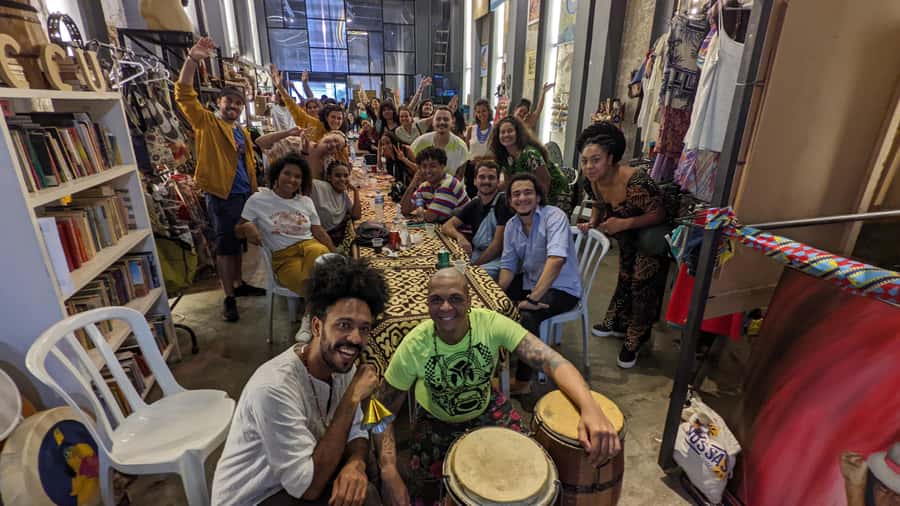
The religious portion introduces candomblé and umbanda, two important Afro-Brazilian traditions. You learn about their origins, their relationship with Christianity, and the process often described as religious syncretism.
The tour also covers ancestral gods and goddesses of nature, including orishas, nkisis, and voduns. These traditions come from different African cultural backgrounds, so it is useful that the experience treats them as more than one interchangeable belief system. The names point to distinct religious histories and ideas carried across the Atlantic and reshaped in Brazil.
This subject is valuable because Afro-Brazilian religions are often misunderstood or reduced to costume, ceremony, or superstition. A careful guide can explain how belief, ancestry, nature, music, and community fit together.
The supplied information does not promise a ceremony, visit to a religious house, or participation in a ritual. You should expect explanation, not a staged religious event. That is the respectful approach, especially for traditions with living communities and sacred practices.
The Christian connection is another important point. The tour explains how African religious traditions interacted with Christianity in Brazil. This can help you understand why images, festivals, names, and practices may carry more than one layer of meaning.
What the $64 price buys you
At $64 per person, the walk is not the cheapest way to spend two and a half hours in Rio. I think the price is fair if you want a specialist history experience led by a guide who can connect the sites and explain Afro-Brazilian culture with personal care.
You are paying for a guided route, interpretation at several important locations, and local advice you may not get from a standard downtown tour. The UNESCO site alone is worth seeing, but its meaning is easy to miss without context. Pedra do Sal also gains much more value when you understand its links to samba, Carnival, and Little Africa.
The cost does not cover meals, museum admission, or transfers. Regional food is associated with the Pedra do Sal portion, but you should budget separately for anything you eat. You will also need to reach the meeting point yourself and arrange your own way back unless you finish at one of the listed drop-off points.
The listed end points include Cais do Valongo, Etnias at the Kobra mural, and Largo São Francisco da Prainha. These are useful places to continue exploring the port district, though they are not a substitute for private transport.
Free cancellation up to 24 hours before the start and the option to reserve now and pay later reduce the risk of booking. Private groups can also request another date, normally with at least 24 hours’ notice, though transfer fees may apply depending on vehicle availability.
Who will get the most from this walk
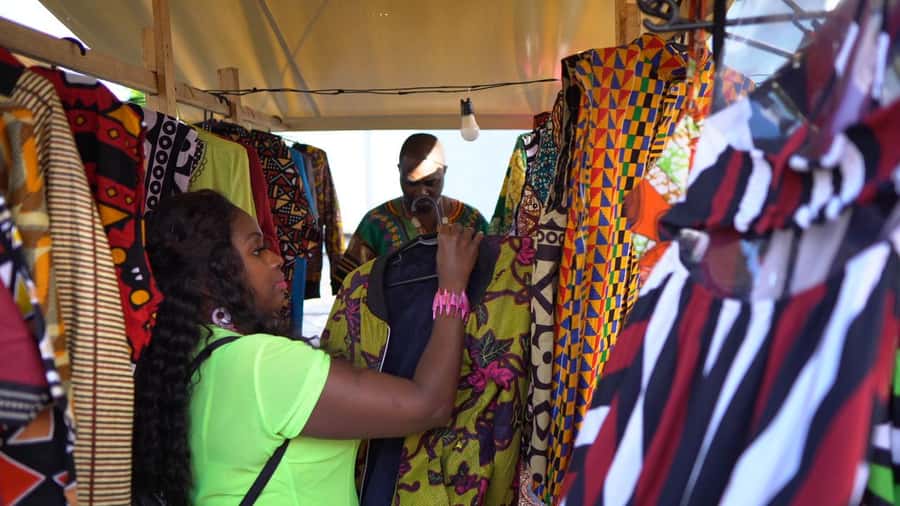
I would choose this experience if you want:
- A serious introduction to Black history in Rio
- A guide-led visit to Valongo Wharf
- A clear explanation of samba’s connection to Pedra do Sal
- More context for candomblé, umbanda, and African religious traditions in Brazil
- A walking route through the port district rather than a bus tour
- Suggestions for music, museums, restaurants, and local cultural activities
It suits first-time visitors who want to understand more than Rio’s postcard views. It also works well for repeat visitors who have already seen the major sights and want a more focused look at the city.
I would be more cautious if your main goal is food, shopping, nightlife, or a relaxed sightseeing walk. The subject is heavy, the route is outdoors, and the tour does not include a meal or museum admission.
The language choice is useful, with English, Spanish, and Portuguese available. One French-speaking participant wanted more French support, so French should not be assumed simply because the booking platform may display information in French.
Practical advice before you go
Wear shoes and clothes suited to walking. Carry a reusable water bottle and a hat, and bring rain protection even if the forecast looks friendly. The tour runs in all weather.
Keep the guide’s WhatsApp contact available for faster communication. It is also sensible to have your travel insurance number and trip operation details handy, as requested by the guide. Travel insurance is not mandatory for this walk, but the operator recommends it for outdoor activities.
Pets are not allowed, except for assistance dogs. Food is not included, so bring money for regional food or plan to eat afterward. The tour is wheelchair accessible, but a direct conversation about the route is still worthwhile if you have specific access requirements.
Allow some flexibility after the walk. The guide may point you toward a samba gathering, museum, restaurant, or music event that fits your schedule. That local advice is more useful when you have not packed your day too tightly.
Should you book the Afro-Brazilian Heritage walk?
I would book it if Rio’s Black history, music, and religious culture are central to your trip. The combination of Valongo Wharf, Little Africa, Pedra do Sal, public art, and a guide such as Kelly or Jaíse gives the walk a clear purpose and strong human focus.
The best reason to go is not simply to collect another landmark. It is to understand how forced migration shaped Rio and how African descendants turned survival into culture that still defines the city.
Skip it if you want a short, cheerful overview of Rio or a tour built around food and entertainment. But if you are willing to give serious history two and a half hours, $64 buys a thoughtful route through places that many visitors pass without understanding.
FAQ
Where does the tour meet?
The stated meeting point is under the trees in front of the Rio Art Museum, or MAR, at Praça Mauá. Another starting location listed is Museu de Arte do at Rua Pedro Ernesto 32, so confirm the exact meeting point before the tour.
How long does the walk last?
The experience lasts 150 minutes, or two and a half hours.
Which languages are available?
The live guide is available in English, Spanish, and Portuguese.
Is the tour wheelchair accessible?
Yes, the activity is listed as wheelchair accessible.
Does the price include food or museum admission?
No. Food, transfers, and entrance to the Museum of Tomorrow and Rio Art Museum are not included.
What should I bring?
Bring a reusable water bottle, comfortable clothes, a hat, and rain gear. The tour operates rain or shine.
Can I cancel or change my booking?
You can cancel up to 24 hours in advance for a full refund. Private groups may request another date with usual 24-hour notice, though transfer fees can apply depending on vehicle availability.
Newest reviews from around Rio De Janeiro
- PRIVATE TOUR – Christ the Redeemer and Sugar Loaf★ 4.5 · 9 reviews
- Christ Statue and Sugarloaf Private Tour with a Photographer★ 5.0 · 9 reviews
- Cidade do Samba Behind-the-Scenes Carnival Tour in Rio de Janeiro★ 4.0 · 5 reviews
- Christ the Redeemer Trail x Lage Park★ 5.0 · 7 reviews
- Christ the Redeemer and City Tour★ 5.0 · 20 reviews
- Christ the Redeemer, Selaron Steps and Santa Teresa Half-day Tour★ 4.5 · 15 reviews
- Christ the Redeemer Adventure★ 5.0 · 12 reviews
- Private Tour of Christ the Redeemer in Rio de Janeiro★ 5.0 · 2 reviews
Historical Tours, compared.

Private Walking and Cultural Tour Rocinha-Rio de Janeiro
Read our review →
Discover Rio Little Africa: A Cultural and Historical Journey
Read our review →

Scenic Train ride to historical cities of Morretes and Antonina
Read our review →
Browse the lists this tour appears in