
Reviewed · MUSEUMS
Official Ticket: Oceanographic Museum Univali – Piçarras – SC
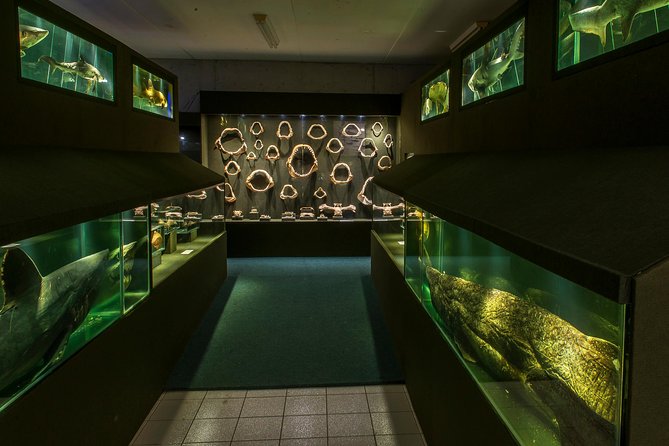
Sea life takes center stage here. The Univali Oceanographic Museum in Piçarras offers a focused look at Brazilian marine life through more than 1,400 specimens, live aquariums, fossils, skeletons, and preserved animals. I especially like the seven themed wings and the chance to see unusual material, including a great white shark jaw, deep-sea fish, sea turtles, penguins, and a full-scale blue whale panel outside.
I also like that this is not just a room of dusty cases. The aquariums add movement, and the sensory experience with marine animals gives children and adults a more direct way to connect with the subject. The main drawback is that some displays have limited explanations, the lighting can be quite dark, and the afternoon opening hours are not very flexible.
In This Review
- Key Points Before You Go
- Why Piçarras Has More Than Beaches
- Starting in the Blue Wing: Fossils, Voyages, and Ocean Science
- Red Wing: Shells, Coral, Crustaceans, and Living Invertebrates
- Green Wing: Sharks, Rays, Teeth, and Reproduction
- Brown Wing: Fish From Coastal Waters to the Abyss
- Gray Wing: Brazil’s Five Marine Turtle Species
- Beige Wing: Penguins and the Wandering Albatross
- Black Wing: Whaling, Dolphins, and Marine Mammals
- The Ocean Giants Panel Outside the Museum
- The Sensory Experience and Family Appeal
- What Could Be Better
- Timing, Price, and Who Will Enjoy It Most
- Should You Book the Univali Oceanographic Museum?
- FAQ
- Where is the Univali Oceanographic Museum located?
- How much does admission cost?
- How long does the museum visit take?
- What are the opening hours?
- Is the museum open on Mondays?
- What does admission include?
- Is the educational package included?
- Does the museum have live animals?
- Are service animals allowed?
- Can most people participate?
- What is the cancellation policy?
Key Points Before You Go
- More than 1,400 pieces: The collection covers fossils, shells, fish, reptiles, seabirds, mammals, and marine invertebrates.
- Seven color-coded wings: Each section has a clear subject, from the origin of life to whales and dolphins.
- Rare specimens: Look for the only great white shark jaw displayed in Brazil and fish from depths beyond 2,000 meters.
- Live aquariums: Several wings pair preserved specimens with living animals from related groups.
- Touch-based activity: The marine animal sensory experience is a strong choice for families and curious adults.
- Plan for 60 to 90 minutes: The museum is open Tuesday through Sunday, from 2:00 PM to 5:30 PM.
Why Piçarras Has More Than Beaches
Piçarras is a coastal city in Santa Catarina, and the museum gives you a useful change of pace from the usual beach day. You can see the sea outside, then spend an hour looking closely at the creatures and geological forces beneath its surface.
I like the museum because it connects broad subjects with real objects. A fossil can introduce a geological age. A shell can show how a mollusk protected itself. A jaw can explain how a shark fed. This approach gives the visit a sense of order, even when the collection itself is large.
The museum is not presented as a quick novelty stop. Its seven wings create a route through marine science, from the beginning of life to modern ocean exploration and the largest animals ever recorded. You can move through at your own pace, but the subjects are arranged well enough to give the visit a natural flow.
The listed price is $15.68 per person. That is fair if you take time with the displays and use the live aquariums and sensory activity. If you rush through in 30 minutes, the cost feels less convincing. Give yourself the full hour, and preferably closer to 90 minutes if you are reading labels or visiting with children.
More Museum Tours in Brazil:
- Ticket MAI – Museum of Indigenous Art – Curitiba
★ 5.0 · 385 reviews - Combo: Platform Entrance, Abusado Adventure, Ferro Passar Museum
★ 3.5 · 314 reviews - Platform Entrance, Including Iron Museum
★ 3.5 · 226 reviews
Starting in the Blue Wing: Fossils, Voyages, and Ocean Science
The Blue Wing sets the tone. It begins with the history of life, using fossils from different geological ages to show how marine life changed over time. This is a helpful opening because it places today’s animals in a much longer story.
You also get a look at the way earlier civilizations understood the sea. Historical pieces connect human fascination with oceans to navigation and the great voyages of discovery. This adds a human side to a collection that might otherwise feel strictly scientific.
The final part of the wing moves toward modern oceanography and current technologies used to explore the sea. I like this progression from fossil evidence to advanced exploration. It reminds you that much of the ocean is still difficult to study, even with modern equipment.
The Blue Wing may appeal most to adults and older children who enjoy context. Younger children may be more interested once the live animals appear in the later sections.
Red Wing: Shells, Coral, Crustaceans, and Living Invertebrates
The Red Wing focuses on marine invertebrates, a group that includes some of the most varied shapes in the museum. Calcareous skeletons from sponges and corals appear near aquariums containing living examples of related animals.
This pairing is one of the museum’s better ideas. A preserved structure shows form and texture, while the aquarium shows movement and behavior. You get a clearer sense that a shell or coral skeleton was once part of a living system.
Mollusks receive plenty of attention through shells and specimens, including a preserved giant squid. The scale of a giant squid is difficult to grasp from a picture alone, so this is the sort of display worth stopping for.
Echinoderms are represented by sea stars, sea urchins, and sea cucumbers. The wing then moves to crustaceans, including shrimp, crabs, lobsters, and related animals. The range is broad, and it is a good section for children who enjoy spotting differences between creatures.
One practical note: not every specimen has equally helpful written information. Some pieces are easy to understand from their appearance, but others would benefit from a short explanation or a photograph of the living animal.
Green Wing: Sharks, Rays, Teeth, and Reproduction
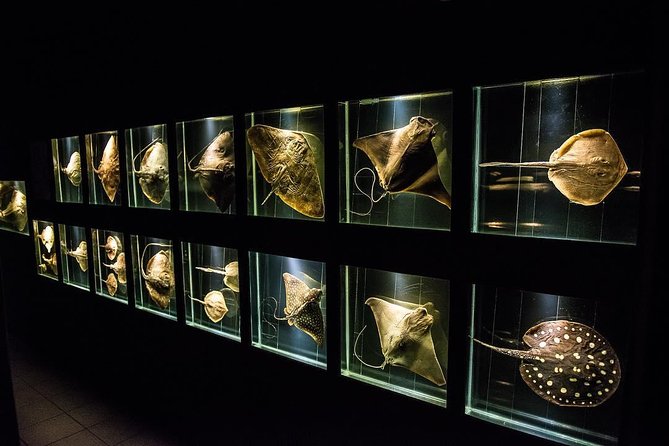
The Green Wing is likely to be one of the most memorable sections. It covers cartilaginous fish, including sharks and rays from coastal, deep-sea, and threatened species.
The main draw is the collection of teeth and jaws. The museum presents the only great white shark jaw displayed in Brazil, a striking object even if you have no special interest in marine biology. Seeing the jaw in person makes the animal’s feeding system much easier to understand than a standard wall panel would.
This wing also explains how sharks and rays reproduce. That subject matters because it shows how these animals have adapted to different marine habitats. The museum moves beyond the simple image of sharks as predators and gives you a better picture of their biology.
Four aquariums represent habitats used by these animals in the wild. The live fish provide the movement that preserved jaws and teeth cannot. I would spend extra time here if you are visiting with children, since the combination of large specimens, aquariums, and unusual body structures gives the section a strong visual pull.
Lighting can be subdued throughout the museum, and the Green Wing is no exception. That may help protect specimens and create a controlled setting, but it can make labels harder to read.
A few more Brazil days to weigh up
- Christ the Redeemer Entry Ticket by Corcovado Train
★ 4.4 · 4,476 reviews - Rio’s City Tour – Tickets for Christ, Sugar Loaf & Lunch included
★ 5.0 · 4,389 reviews - Rio de Janeiro: Sugarloaf Cable Car Official Ticket
★ 4.6 · 2,873 reviews - Rio’s Full Day: Selarón Steps, Christ & Sugarloaf – Tickets & Lunch Included
★ 5.0 · 2,724 reviews
Brown Wing: Fish From Coastal Waters to the Abyss
The Brown Wing turns to bony fish, the largest and most varied group in the museum’s collection. Displays cover major fish families and show how different bodies suit different environments.
Large examples include the tarpon, described here as a primitive coastal fish, and the oceanic swordfish. These are useful examples of how fish can occupy very different settings while sharing the same basic skeletal structure.
The aquariums add another layer, with fish from the Indian and Pacific oceans. This broadens the visit beyond southern Brazil and lets you compare forms from different parts of the world.
The rarest material in this wing comes from the deep sea. Some fish on display live in the abyssal zone more than 2,000 meters below the surface. Such animals are rarely seen in ordinary aquariums, and they help explain how extreme pressure, darkness, and limited food shape marine life.
This is another area where stronger labels would improve the visit. Some specimens are visually impressive but need more context to explain why they matter. If you are interested in the science, take time to read what is available rather than moving on after a quick glance.
Gray Wing: Brazil’s Five Marine Turtle Species
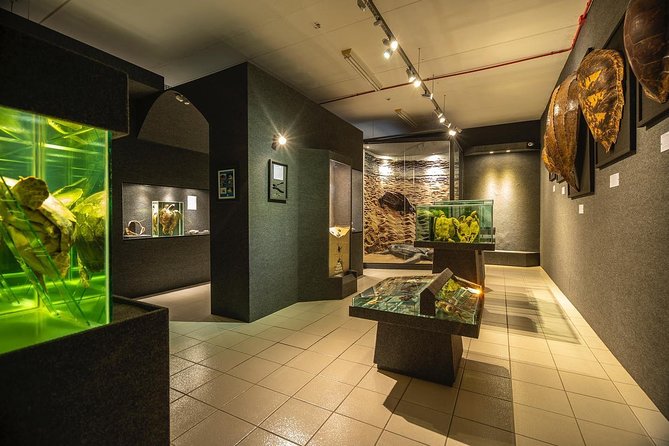
The Gray Wing is devoted to marine reptiles, with most of the collection focused on sea turtles. Brazil has five marine turtle species, and all five are presented here.
The display includes different stages of life, from small hatchlings to giant adult turtles. That scale comparison is useful because photographs often make baby and adult turtles seem like completely different animals.
The section covers biology and ecology, not just identification. You can use it to think about how turtles grow, move through the sea, and depend on different habitats during their lives.
For families, this may be one of the easiest sections to appreciate. Turtles are familiar, but the size range and physical specimens add details you may not notice at the beach or in a photograph.
The collection is described as the most complete display of its kind assembled by the museum. Even if you are not an expert, the full set of Brazilian species gives this wing a clear purpose and makes it easier to compare one turtle with another.
Beige Wing: Penguins and the Wandering Albatross
The Beige Wing covers seabirds, with all penguin species represented and their distribution across the Southern Hemisphere. That geographical focus helps correct a common mistake: penguins are not limited to Antarctica.
A diorama of an oceanic island is the key display. It features endangered wandering albatrosses, birds known for their enormous range over open water. The model gives you a sense of the remote places where seabirds breed and feed.
This wing may feel smaller than the sections devoted to fish or invertebrates, but it adds needed variety. Marine life is not only what swims below the surface. Birds depend on the ocean too, and their survival is tied to the same food chains and environmental pressures.
Again, the displays benefit from patient viewing. Some species are easy to identify, while others need more written explanation to make their importance clear.
Black Wing: Whaling, Dolphins, and Marine Mammals
The final themed wing looks at marine mammals and begins with the history of whaling and commercial exploitation in Santa Catarina. This is an important local connection. The subject can be uncomfortable, but it explains how economic activity affected the region’s marine animals.
The wing then presents dolphins and whales found in southern Brazil, along with information about their biology. This gives the section a regional focus rather than treating whales as distant creatures unrelated to the local coast.
South American fur seals and sea lions are also included. Manatees from northeastern Brazil complete the display, showing that the country’s marine mammals extend well beyond Santa Catarina.
I appreciate the decision to place the history of exploitation beside information about living species. It gives you a more honest picture of the relationship between people and the sea. The museum is not only presenting beautiful animals. It is also showing the damage caused when marine life is treated only as a commercial resource.
The Ocean Giants Panel Outside the Museum
Before or after the indoor circuit, make time for the Ocean Giants panel outside. It presents the largest marine animals from each major group at full scale.
The blue whale is the main attraction. The panel represents one measuring 33 meters long and weighing 170 tons, making it the largest animal known to have lived on Earth. A number like 33 meters is hard to picture, but a full-scale display gives it real physical meaning.
This outdoor feature works well as a final image after seeing smaller specimens inside. You move from shells and fish to animals that make even a large museum space feel small.
Its location outside also makes it easy to include in your visit without adding much time. Do not treat it as a minor sign near the entrance. It is one of the clearest ways the museum communicates the scale of marine life.
The Sensory Experience and Family Appeal
Admission includes a sensory experience with marine animals. The touch-based activity has been especially well received by families, and it can make the museum more engaging for children who might lose interest in long rows of specimens.
The activity also works for adults. Handling or closely experiencing marine material can turn abstract facts into something physical and memorable. It gives you a different way to connect with the subject than reading a label or looking through aquarium glass.
The exact format and timing of the sensory activity are not specified, so I would not plan your entire visit around one particular session. Treat it as an included part of the museum experience, not a separately timed tour.
Children who already love marine life may get the most from the museum. One young visitor was so familiar with species names that he became the family guide, which tells you something about the collection’s appeal to curious kids.
What Could Be Better
The museum’s main weakness is presentation. Several displays would be stronger with clearer explanations, more information about individual species, and photographs showing living animals when only skeletons or preserved pieces are present.
The darker lighting is another consideration. It suits an indoor collection and may protect certain materials, but it can make the museum feel gloomy and labels harder to read. If you have difficulty reading in low light, allow extra time.
Aquariums add life to the route, but some may feel less full than you expect from a major ocean museum. The strength is the variety of specimens and subjects, not the size or spectacle of every tank.
The afternoon schedule can also limit your options. The museum is open Tuesday through Sunday from 2:00 PM to 5:30 PM, so there is no Monday visit listed, and the window is shorter than a full day attraction. A 2:00 PM arrival gives you the most breathing room for a 60 to 90 minute visit.
Timing, Price, and Who Will Enjoy It Most
At $15.68 per person, the museum offers good value for a focused educational stop, particularly if you enjoy natural history or visit with children. The price feels less favorable if you expect a large, highly interactive aquarium with constant activity.
Plan on one hour for a brisk visit. Give yourself 90 minutes if you want to read labels, compare specimens, spend time at the aquariums, use the sensory experience, and see the outdoor blue whale panel without rushing.
This is a good choice for:
- Families with children interested in animals
- Anyone curious about Brazilian marine life
- People who enjoy fossils, shells, skeletons, and natural history
- Visitors seeking an indoor activity in Piçarras
- Students and adults who want a clear introduction to oceanography
It may disappoint you if you want a modern aquarium show, extensive written interpretation for every piece, or flexible opening hours. The museum is strongest as a specimen-based science collection with some live displays.
Confirmation is provided when you book. Service animals are allowed, and most people can participate. Free cancellation is available if you cancel at least 24 hours before the start time. Within 24 hours, the amount paid is not refunded, and changes are not accepted.
Should You Book the Univali Oceanographic Museum?
I would book it if you have an hour or two in Piçarras and want more than a standard beach stop. The great white shark jaw, deep-sea fish, sea turtle collection, live aquariums, and full-scale blue whale panel give the visit real substance.
Go with realistic expectations. This is not a polished theme-park attraction, and some labels and lighting need improvement. But at $15.68, it gives you a thoughtful look at Brazil’s marine world, with enough rare material to make the visit worthwhile.
FAQ
Where is the Univali Oceanographic Museum located?
The museum is in Piçarras, in Santa Catarina, southern Brazil.
How much does admission cost?
The listed price is $15.68 per person.
How long does the museum visit take?
The approximate duration is one hour to one hour and 30 minutes.
What are the opening hours?
The museum is open Tuesday through Sunday from 2:00 PM to 5:30 PM.
Is the museum open on Mondays?
Monday opening hours are not listed. The stated schedule covers Tuesday through Sunday.
What does admission include?
Admission includes access to the exhibition and the sensory experience with marine animals.
Is the educational package included?
No. The educational package is available for groups but is not included with standard admission.
Does the museum have live animals?
Yes. Live animals are displayed in aquariums throughout parts of the exhibition.
Are service animals allowed?
Yes. Service animals are allowed.
Can most people participate?
Yes. The information provided states that most people can participate.
What is the cancellation policy?
You can receive a full refund if you cancel at least 24 hours before the experience start time. Cancellations or changes made within 24 hours are not accepted for a refund.
Newest reviews from around Brazil
- Hang gliding flight in Rio de Janeiro★ 5.0 · 6 reviews
- Walking Tour of São Luís do Maranhão★ 4.4 · 14 reviews
- Rio de Janeiro: Zip Lining and Canopy Tree Tour★ 3.3 · 6 reviews
- Vidigal Favela Tour★ 4.4 · 26 reviews
- Paraty Historical City Walking Tour★ 4.1 · 8 reviews
- Rio de Janeiro: Attend a Vasco da Gama game with local guide★ 4.8 · 9 reviews
- Buzios: City Tour by Trolley with 12 Beaches and Pickup★ 4.5 · 4 reviews
- Unforgettable Boat Party★ 5.0 · 3 reviews
Museums, compared.
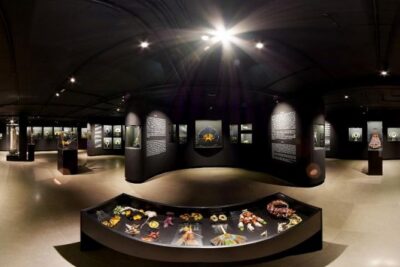
Ticket MAI – Museum of Indigenous Art – Curitiba
Read our review →
Combo: Platform Entrance, Abusado Adventure, Ferro Passar Museum
Read our review →
Petrópolis Day Trip from Rio de Janeiro including Imperial Museum and Crystal Palace
Read our review →
Museum of Tomorrow, AquaRio & Olympic Boulevard in Rio de Janeiro
Read our review →
7-Hour Shared Group Santos Tour : Mont Serrat, Coffee Museum and Sightseeing
Read our review →
Olympic Boulevard, Museum of Tomorrow & Historical Rio
Read our review →
Olympic Boulevard, AquaRio and Museum of Tomorrow Tour
Read our review →Browse the lists this tour appears in