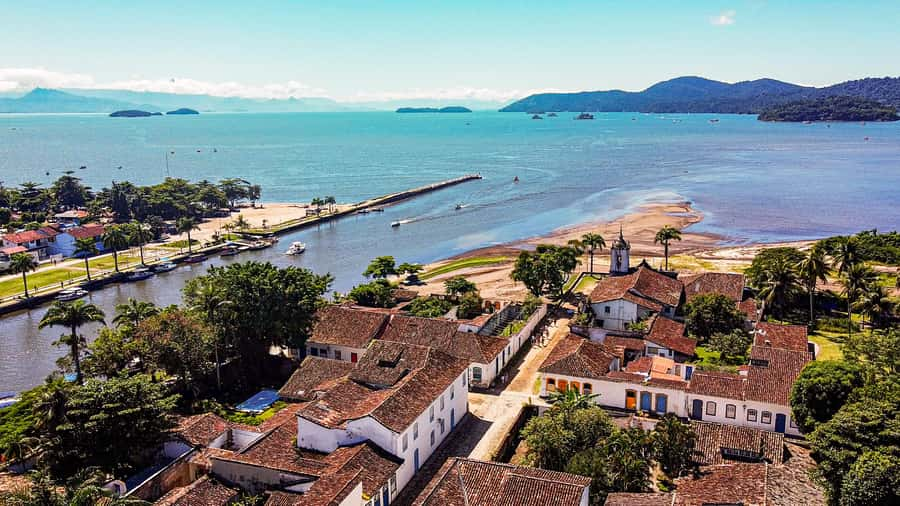
Reviewed · HISTORICAL TOURS
Paraty Historical City Walking Tour
Paraty’s old streets tell stories under your feet. This walking tour makes the town’s Portuguese-era architecture easier to read, and I especially like the chance to see several classic churches while hearing how Paraty changed from a 1600s port into a tourism center today. The optional cachaça and liqueur tasting adds a local finish rather than ending the walk with one more date and a church name.
I also like the choice between a private two-hour outing and a shorter shared tour. Guides such as Fernanda have been praised for explaining the city’s past with plenty of detail, while Dani kept the tour going during heavy rain. The main consideration is the footing: Paraty’s old streets are irregular, and the tour is not a good match for people with mobility limitations or back problems.
In This Review
- Key points to know before you book
- Why Paraty works so well on foot
- The opening walk through the Historic Center
- Four churches that explain Paraty’s past
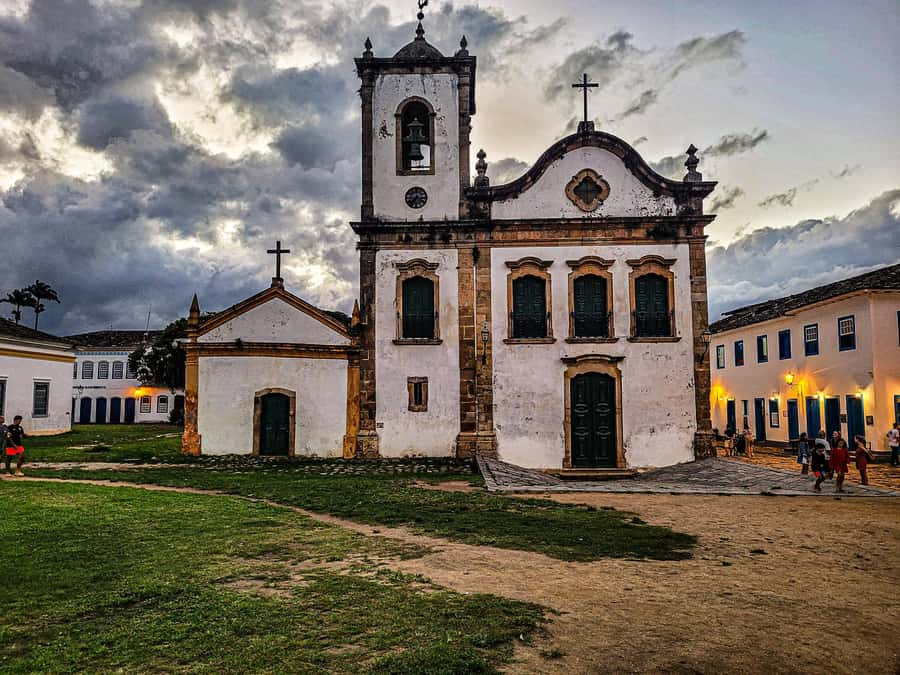
- Capela de Santa Rita
- Igreja de Nossa Senhora do Rosário e São Benedito
- Igreja Matriz Nossa Senhora do Remédios
- Capela de Nossa Senhora das Dores
- Museums and the parts that depend on timing
- From gold port to modern tourism center
- Ending at a cachaçaria
- Is $72 a fair price?
- Rain, group size, and practical comfort
- Who should book this Paraty walk?
- Should you book it?
- FAQ
- Where does the Paraty walking tour meet?
- How long does the tour last?
- What time does the shared tour depart?
- Which languages are available?
- Are church and museum admission fees included?
- Is the cachaça tasting included?
Key points to know before you book
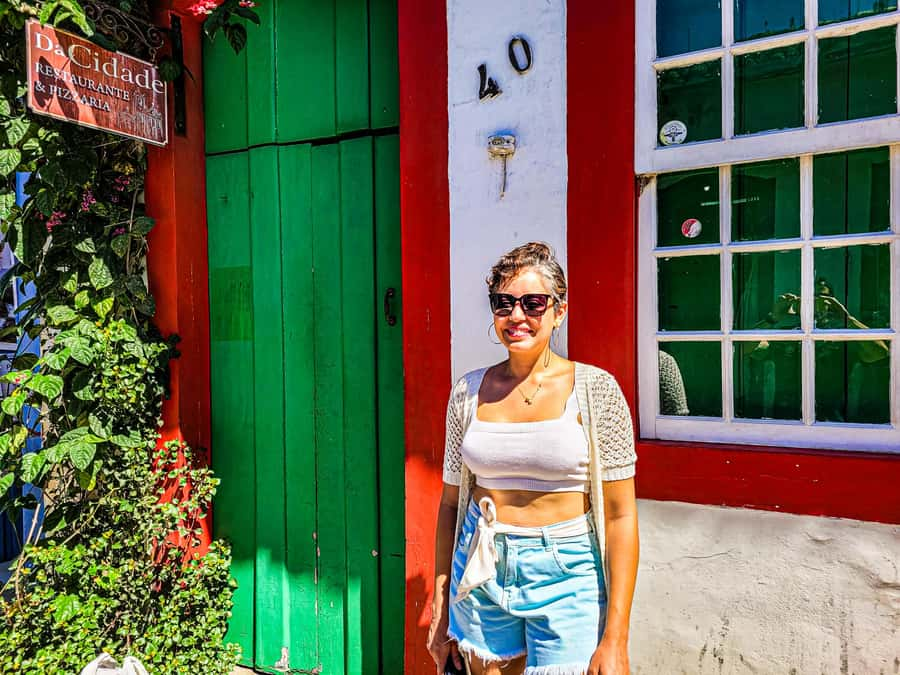
- The route crosses UNESCO-protected Paraty: You walk through a National Historic Monument and a UNESCO World Heritage site, with much of the surrounding area inside Serra da Bocaina National Park.
- Four historic churches anchor the walk: Capela de Santa Rita, Igreja de Nossa Senhora do Rosário e São Benedito, Igreja Matriz Nossa Senhora do Remédios, and Capela de Nossa Senhora das Dores may all be part of the route.
- A guide gives the town its meaning: The story runs from Portuguese settlement in 1667, through gold exports, to modern tourism.
- You can choose your language and group style: Private tours may be arranged in English or Spanish, while shared departures use a Portuguese-speaking guide.
- The final tasting is optional: You may stop at a cachaçaria in the Historic Center for cachaças and liqueurs, but drinks are not included in the tour price.
- Allow for a minimum of two people: The tour requires at least two participants, and there is no hotel pickup or drop-off.
Why Paraty works so well on foot
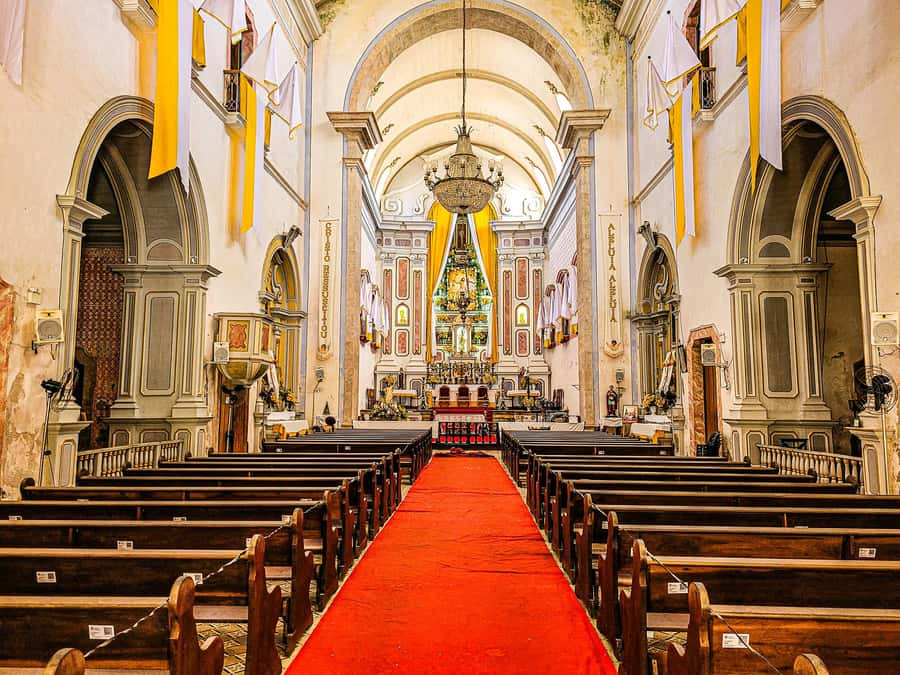
Paraty is the kind of town where walking is not just transportation. It is the main way to notice the place.
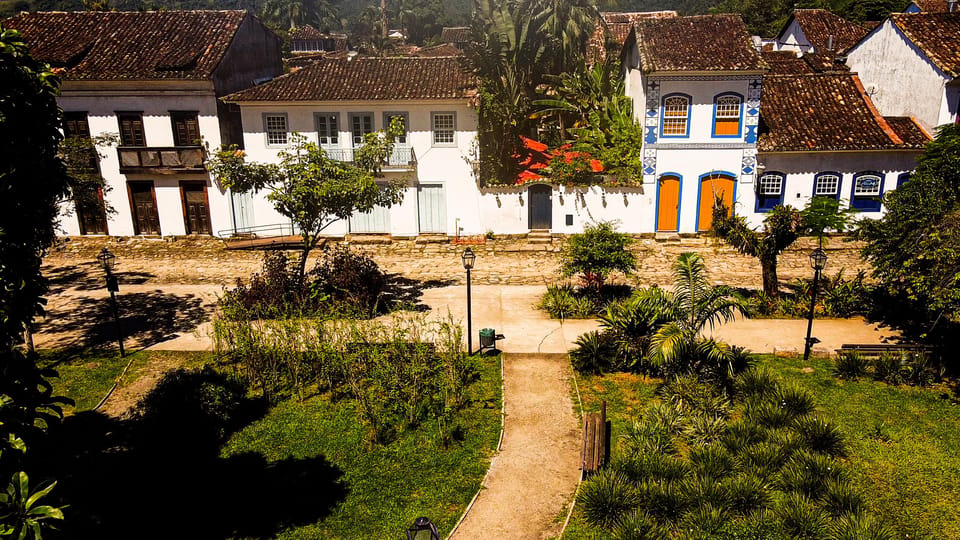
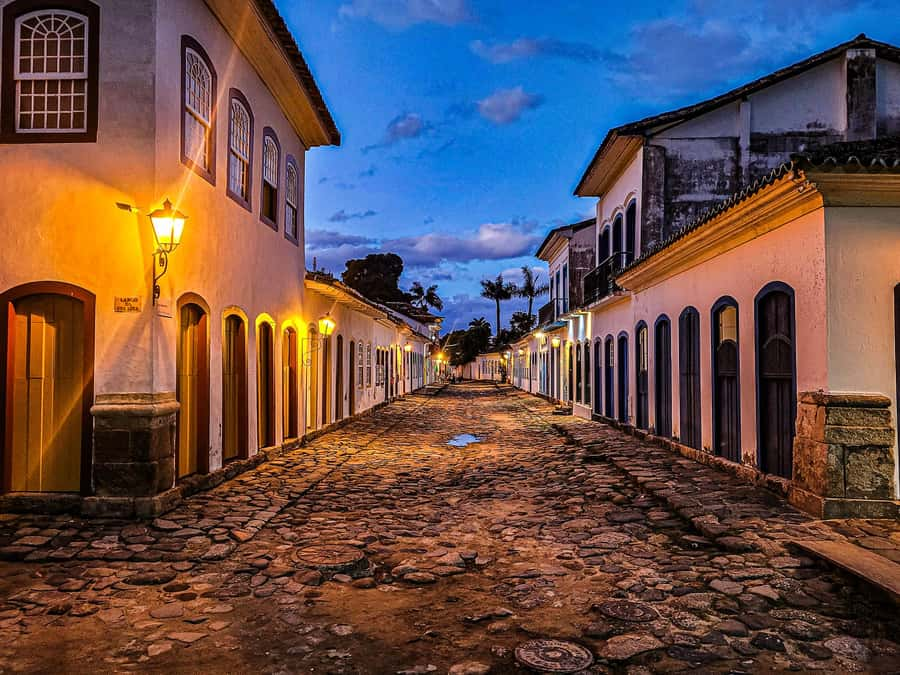
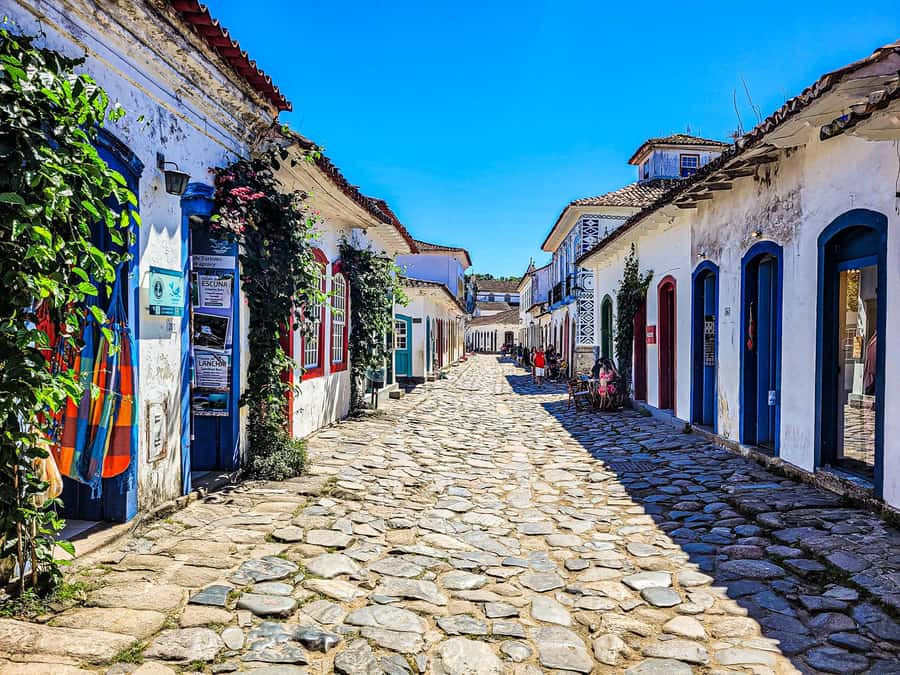
The Historic Center uses pedestrian-only streets, so your attention can stay on the painted houses, doorways, churches, and uneven stone underfoot. The old buildings have a pleasing sense of unity, but the appeal is not only visual. A good guide explains why the town grew where it did and how its fortunes changed over time.
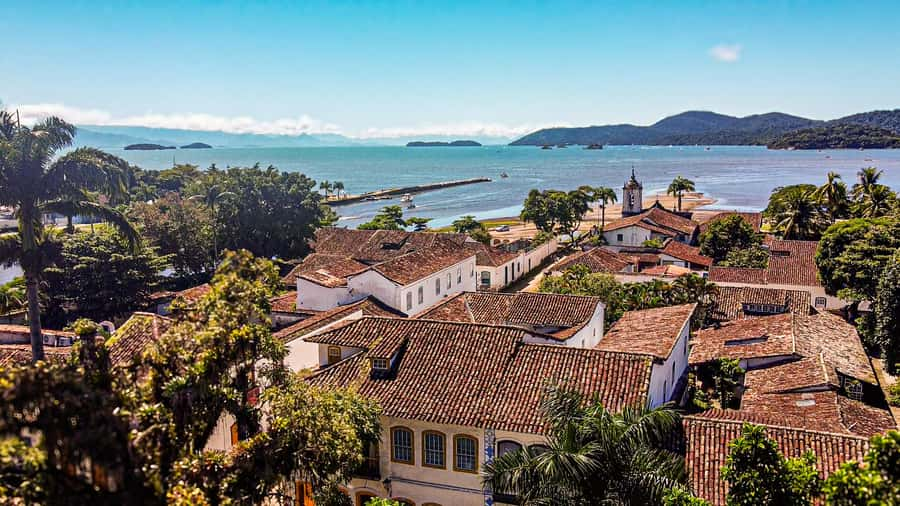
The settlement was founded by Portuguese colonizers in 1667. Its position later made it an important export port for gold. That commercial past helps explain why a small town has such formal churches and carefully built houses.
I find this sort of context useful because Paraty can otherwise look like a pretty collection of facades. The tour connects those facades to trade, religion, colonial power, and the town’s later life as a Brazilian holiday destination. You are not simply photographing a painted wall. You are learning why the wall is there.
The town also has a wider protected setting. Paraty is a Brazil National Historic Monument and a UNESCO World Heritage site, and 65 percent of the area lies within the boundaries of Serra da Bocaina National Park. This walk focuses on the historic town rather than on hiking in the park, but that protected setting helps explain why the visit feels tied to more than one street grid.
More History Tours in Paraty & Costa Verde
- Paraty: Historic Centre Walking Tour & Cachaça Tasting
★ 4.8 · 96 reviews - Private walk tour of Paraty’s historical center – BY PARATY TOURS
★ 5.0 · 49 reviews - 2-Hour Walking Tour of Historic Paraty, Brazil
★ 5.0 · 12 reviews
The opening walk through the Historic Center
The exact meeting time is confirmed after booking, and the meeting point is Av. Roberto Silveira, 479, in Centro, Paraty. Since there is no hotel transportation, you need to make your own way there.
Once the walk begins, expect a steady look at the old center rather than a long ride between sights. The shared option lasts about 90 minutes and departs at 9 a.m. or 5:30 p.m. The private option lasts two hours and can begin at a time arranged between 8 a.m. and 5 p.m.
That difference matters. A private start gives you more control over the day and more time for questions. It may also suit you better if you want explanations in English or Spanish. The shared option is shorter and is conducted in Portuguese, so it is best for Portuguese speakers or for people comfortable following a local-language tour.
You will walk on irregular streets, so wear shoes with good support. This is not the place for thin sandals or shoes chosen only for photographs. The route is not identified as suitable for people with mobility impairments, and people with back problems are advised against taking it.
The painted houses are a major part of the experience. Their colors and proportions give the old center its character, while the pedestrian setting lets you inspect details at a slow pace. I like this format because it leaves room for the small things that a vehicle-based tour would pass too quickly.
Four churches that explain Paraty’s past
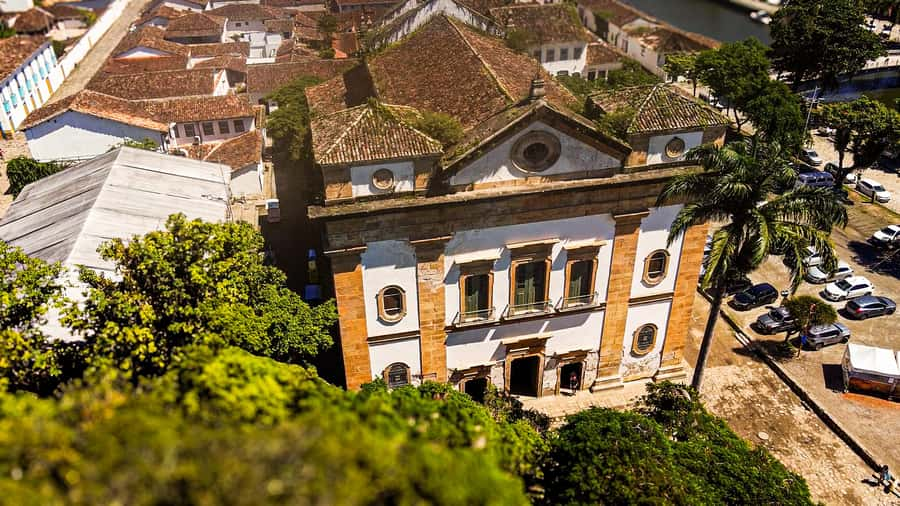
The churches give the walk a useful rhythm. Each one adds a different religious and architectural note, though actual visits depend on whether the buildings are open during your tour.
Capela de Santa Rita
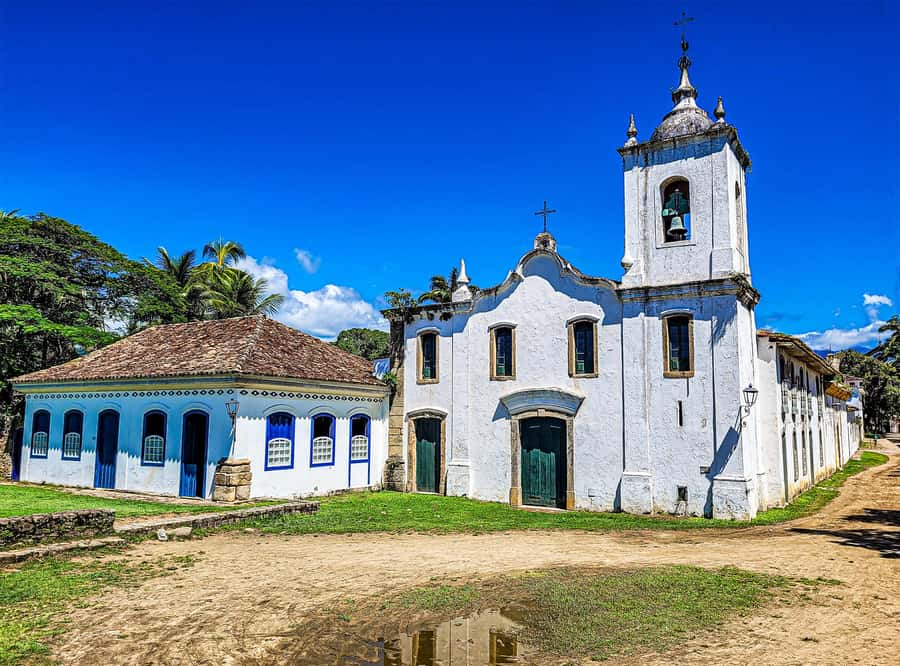
Capela de Santa Rita is one of Paraty’s best-known historic religious buildings and an important stop for understanding the town’s colonial appearance. Its baroque character fits the wider look of the Historic Center, where religion and civic life were closely linked.
The tour may take you inside if it is open. If not, you can still see the exterior and hear the guide explain its place in Paraty’s past. That limitation is worth knowing before you arrive. You should treat church interiors as a possibility, not a guarantee.
More Walking Tours in Paraty & Costa Verde
- Gold Trail Atlantic Forest Walk
★ 5.0 · 20 reviews - Paraty Historic District: Walking Tour with Cachaca Tasting
★ 3.7 · 12 reviews - Ilha Grande – Private Historical Walking Tour with Natural Pool.
★ 5.0 · 12 reviews - Ilha Grande: Private Historic Walking Tour with Natural Pool
★ 4.8 · 9 reviews
Igreja de Nossa Senhora do Rosário e São Benedito
This church brings another part of Paraty’s religious story into view. Its name connects it with Nossa Senhora do Rosário and São Benedito, and the building forms part of the town’s group of classic churches.
Here, the guide’s commentary matters more than a quick photograph. The walk is designed to explain the town’s social and historical setting, not just point out decorative details. If the church is closed, the exterior stop still works as part of the larger route.
Igreja Matriz Nossa Senhora do Remédios
The Igreja Matriz Nossa Senhora do Remédios is the main church in the Historic Center and one of the clearest reminders of Paraty’s former importance. Its presence helps you picture a town that once had a bigger role in colonial trade than its quiet streets might suggest today.
A church visit depends on opening hours. Admission fees, if any apply, are not included, so keep a little flexibility in your plans and budget.
Capela de Nossa Senhora das Dores
The Capela de Nossa Senhora das Dores rounds out the church portion of the route. Seeing several religious buildings in one walk lets you compare their scale and placement instead of treating each one as an isolated sight.
I appreciate this approach because Paraty’s story is spread across the whole center. The churches, houses, and streets work together. The guide helps you notice those connections.
Museums and the parts that depend on timing
The experience also includes Paraty museums as part of its historical focus. The supplied details do not name each museum or promise entry into every collection, so you should think of the museum portion as dependent on the route, opening hours, and any admission requirements.
That may be a small drawback if you want guaranteed indoor visits. Entrance charges and possible visitation fees are not included. Still, the flexibility allows the guide to explain the town in context rather than forcing the walk around one fixed interior stop.
If you care strongly about a particular museum or church, ask about availability when the tour is reconfirmed. The same advice applies during holidays, poor weather, or quieter operating periods. The tour does not promise that every interior will be open.
The strongest part of this format is the connection between objects and place. A museum item can show you what Paraty preserved, while the streets show you how the town was built. Used together, they make the past easier to understand.
From gold port to modern tourism center
The historical thread is one of the best reasons to book this walk. The guide covers Paraty’s foundation by Portuguese colonizers in 1667, its role as an export port for gold, and its current tourism economy.
That is a useful sequence. You start with the town’s creation, then see how trade shaped its importance, and finally consider why people come here today. The town has not simply remained frozen in the colonial period. Its present identity depends on historic preservation and tourism.
I would pay close attention during this section, especially if you already know the basic story of colonial Brazil. The value is in seeing the history attached to real streets and buildings. A guide such as Fernanda may add the smaller details that turn a standard date-filled talk into a clearer picture of daily life and changing fortunes.
The setting also makes the story easier to absorb. You are walking through the same central area that carries the town’s architectural identity, with no need to jump between distant attractions. That saves time and keeps the historical thread intact.
Ending at a cachaçaria
The walk ends with the option to visit a cachaçaria in the Historic Center for a tasting of cachaças and liqueurs. Cachaça is Brazil’s well-known sugarcane spirit, and this stop gives the tour a more local, social ending.
The tasting is optional, and food and beverages are not included in the $72 price. You should confirm what you want to sample and what it will cost before ordering. This is a small point, but it prevents confusion at the end of an otherwise clearly structured experience.
I like the idea of the tasting because it connects the tour to present-day Brazil rather than leaving you with only colonial architecture. It is also a good chance to ask the guide about local drinks and customs. If you do not drink, you can skip this part and still complete the historical walk.
Is $72 a fair price?
At $72 per person, this is not the cheapest way to stroll through Paraty. The value depends heavily on the format you choose and what you want from the visit.
For a private tour, the price can make sense if you want a flexible start between 8 a.m. and 5 p.m., a two-hour route, and an English- or Spanish-speaking guide. Private guiding also gives you more space to ask about the churches, architecture, and gold trade without matching the pace of a larger group.
The shared option is shorter at about 90 minutes and has fixed departures at 9 a.m. and 5:30 p.m. It may offer better value if you speak Portuguese and mainly want an introduction to the center. You should not book the shared option expecting an English or Spanish guide.
The price does not cover admission fees, drinks, food, or hotel transfers. Those exclusions do not make the tour poor value, but they do mean the advertised cost is not your full outing budget. Add transportation to the meeting point and any church, museum, or tasting charges you choose.
I would see the price as paying for interpretation, not just access. Paraty’s streets are free to walk, but a guide can explain what you are looking at and arrange the story in a useful order. The tour is more worthwhile for a first visit than for someone who has already studied the Historic Center in detail.
Rain, group size, and practical comfort
Weather can affect the feel of the walk. A tour that continued during heavy rain shows that the route may go ahead in difficult conditions, but you should not assume the experience will feel equally pleasant in every kind of weather.
Bring suitable footwear and plan for an outdoor walk. The irregular streets remain the biggest practical issue. Rain may also make the stones less comfortable underfoot, so take extra care and consider whether you would prefer a private start at a time with a better forecast.
The private and small-group choices are useful if you dislike crowded tours or want more direct contact with the guide. The shared option is more structured, with fixed departure times and Portuguese commentary. Since at least two people are required, solo visitors should confirm that the tour can operate for their booking.
Guide quality can shape the whole experience. Fernanda has been singled out for giving detailed explanations of the city, and Dani’s willingness to continue in strong rain shows a practical commitment to completing the route. Guide assignment is not guaranteed, so treat these names as examples rather than promises.
Cancellation is flexible if your plans remain uncertain: you can cancel up to 24 hours before departure for a full refund, and the reserve-now, pay-later option lets you hold a place without paying immediately.
Who should book this Paraty walk?
I would recommend this tour to a first-time visitor who wants a clear introduction to Paraty’s old center in under two hours. It suits you especially well if you care about architecture, church history, colonial trade, or the background behind UNESCO protection.
It is also a good fit if you want language choice. The private option offers English or Spanish, while the shared option is in Portuguese. That distinction is important enough to check before paying.
You may prefer to explore independently if you already know the town well, want to spend long periods inside museums, or dislike fixed sightseeing routes. The $72 price also requires more thought if you are traveling on a tight budget and do not need historical commentary.
The tour is not suitable for people with mobility impairments or back problems. The old stones are part of Paraty’s charm, but they are also a real physical demand. Comfortable walking shoes are essential.
Should you book it?
Book this Paraty Historical City Walking Tour if you want the town’s churches, painted houses, museums, and trade story explained in one focused outing. The private option offers the strongest value for English- or Spanish-speaking visitors, while Portuguese speakers may find the shared tour a practical introduction at a shorter length.
Skip it if you need guaranteed church interiors, included museum admission, hotel pickup, or an easy route for limited mobility. For everyone else, the combination of UNESCO streets, colonial history, a flexible private format, and an optional cachaça tasting makes this a useful first look at Paraty.
FAQ
Where does the Paraty walking tour meet?
The meeting point is Av. Roberto Silveira, 479, Centro, Paraty, Rio de Janeiro. There is no hotel pickup or drop-off.
How long does the tour last?
The private option lasts two hours. The shared option lasts about 90 minutes.
What time does the shared tour depart?
The shared tour departs at 9 a.m. and 5:30 p.m.
Which languages are available?
The tour is available in Portuguese, English, or Spanish, depending on the option selected. The private option offers English- or Spanish-speaking bilingual guides, while the shared option has a Portuguese-speaking guide.
Are church and museum admission fees included?
No. Entrance fees and possible visitation charges are not included. Churches are visited inside only if they are open during the tour.
Is the cachaça tasting included?
No. The tasting of cachaças and liqueurs at a cachaçaria is optional, and food and beverages are not included.
Newest reviews from around Paraty
- Trindade Day Trip: Nature and Sea Adventure from Paraty★ 4.6 · 5 reviews
- Waterfall Jungle Jeep Adventure and Cachaca Tour from Paraty★ 4.0 · 14 reviews
- White Water Rafting – Mambucaba River★ 5.0 · 9 reviews
- 2-Hour Walking Tour of Historic Paraty, Brazil★ 5.0 · 12 reviews
- From Paraty: Shared shuttle to São Paulo★ 4.5 · 16 reviews
- Adventure experience at Peak Sugar Bread by PARATY TOURS★ 5.0 · 26 reviews
- Trindade Fishing Village, Beach Trek and Snorkeling Tour from Paraty★ 4.5 · 12 reviews
- Regular Transfer Paraty x Rio de Janeiro and Airports★ 3.0 · 6 reviews
Historical Tours, compared.


Private Walking and Cultural Tour Rocinha-Rio de Janeiro
Read our review →
Discover Rio Little Africa: A Cultural and Historical Journey
Read our review →

Scenic Train ride to historical cities of Morretes and Antonina
Read our review →