
Reviewed · MUSEUMS
MUSA Amazonian Museum Transportation
Amazon forest, without leaving Manaus. The MUSA Amazonian Museum gives you a taste of the region’s plants, animals, research, and forest canopy across nearly 250 acres near the city center. I like the easy access and the chance to see orchids, bromeliads, birds, aquariums, and small forest creatures without arranging a full jungle expedition.
I also like the private transportation, which keeps the outing simple and flexible for your own group. The main drawback is that the 42-meter observation tower requires a fair level of fitness, and English-speaking guide availability may vary despite English being listed as an offered language.
In This Review
- Key points to know before you go
- Why MUSA makes sense in Manaus
- The ride from Manaus to the museum
- Entering the 250-acre forest grounds
- Orchids, bromeliads, water lilies, and small animals
- The 42-meter tower and the view over the canopy
- Birds and the best time for wildlife
- How the private format affects the visit
- Is $40 a fair price?
- Who will enjoy MUSA most?
- Booking details worth checking
- Should you book the MUSA transportation tour?
- FAQ
- Where does the MUSA Amazonian Museum transportation tour take place?
- How long does the experience last?
- What time does the tour start?
- Is pickup available in Manaus?
- Is the tour private?
- How many people are required to book?
- What can you see at MUSA?
- How high is the observation tower?
- Is the experience offered in English?
Key points to know before you go
- The tower reaches 42 meters: You can look over the treetops from about 135 feet above the ground, with early morning and sunset offering especially appealing light.
- MUSA is both park and research center: Trails, plant nurseries, animal displays, laboratories, and educational buildings make this more than a simple city garden.
- Private transportation is included: Pickup is offered in Manaus, with the exact place and time confirmed by WhatsApp or phone.
- The visit lasts about four hours: That gives you time for trails, exhibits, wildlife areas, and the tower without turning the day into a marathon.
- The forest experience is gentle but real: You may see frogs, turtles, caimans, orchids, birds, and water lilies, though wildlife sightings are never guaranteed.
- The price is $40 per person: For private transport and a half-day visit close to Manaus, this is fair value, especially for people who want a forest introduction without an overnight jungle stay.
Why MUSA makes sense in Manaus
Manaus can feel like two places at once. It is a large Amazonian city with busy streets, hotels, restaurants, and river traffic, yet forest begins surprisingly close to town. MUSA lets you make that change without committing to a long boat ride or a multi-day lodge stay.
The Museu da Amazônia, usually called MUSA, covers almost 250 acres. It is part natural park, part research center, part museum, and part outdoor classroom. That combination matters. You are not simply walking among attractive trees. You are seeing a place built to explain the Amazon’s plants, animals, ecosystems, and scientific work.
I would think of this outing as an introduction to the forest rather than a substitute for a remote Amazon trip. You will not get the same silence, distance, or chance for larger wildlife that you might find far from Manaus. You will get a manageable way to see forest trails and displays while keeping your base in the city.
The tour begins at about 9:00 a.m., though the pickup time and location are confirmed directly by phone or WhatsApp. The private format means only your group participates, which is useful if you want a calmer pace or need to coordinate around a hotel, ferry arrival, or shuttle stop.
More Museum Tours in Manaus:
- Manaus: MUSA and INPA Museums with Observation Tower Tour
★ 3.4 · 26 reviews - Rubber Museum from Manaus
★ 4.0 · 14 reviews - Tour at the MUSA – Museum of the Amazon in Manaus
★ 5.0 · 5 reviews
The ride from Manaus to the museum
Pickup is offered in Manaus, and the exact meeting point is arranged after booking. One useful feature is the flexibility shown by the operator when plans change. A delayed Amazon trip was accommodated by moving the visit to another time, which can be valuable in a region where transport schedules do not always behave perfectly.
The drive itself is part of the convenience. A previous outing involved pickup near a ferry or shuttle terminal, followed by a comfortable car ride with a small party. You should confirm your exact pickup point before the day of the visit, particularly if you are arriving by boat or changing hotels.
The experience requires at least two people per booking. Since it is private, you are not joining a large bus group or waiting for a crowd to finish each stop. That can make a difference on forest paths, where a quiet pace helps you notice small details such as insects, frogs, orchids, and bird calls.
The listed duration is about four hours. That is long enough for a proper look around but short enough to fit beside other Manaus plans. If your schedule includes a river excursion, theater visit, or flight, leave extra time around the stated duration rather than treating four hours as an exact door-to-door guarantee.
Entering the 250-acre forest grounds
Once inside MUSA, the setting changes quickly. The grounds contain forest trails, exhibitions, plant nurseries, a lake, aquariums, and small pavilions or buildings devoted to Amazonian species. The appeal is variety. You can move from a shaded walk to a display about snakes, then to orchids or a water feature, without needing to cover a huge distance by vehicle.
The trails provide the clearest sense of place. You walk beneath the trees and see how thick vegetation changes the light, sound, and temperature. The paths are not presented as a difficult wilderness trek. They are intended for a pleasant walk with discoveries along the way, making the outing suitable for people who want nature but not a demanding expedition.
Your guide can help explain what you are seeing, and the experience is designed around the popular teaching of science. That educational focus gives the park more depth than a quick photo stop. You may learn why certain plants matter, how animals fit into the forest system, or how the museum’s research connects with the wider Amazon Basin.
Do not expect every creature to appear on command. Small animals are easy to miss, especially on a short visit. Still, the setting gives you a genuine chance to notice details that would be invisible from a city street.
Orchids, bromeliads, water lilies, and small animals
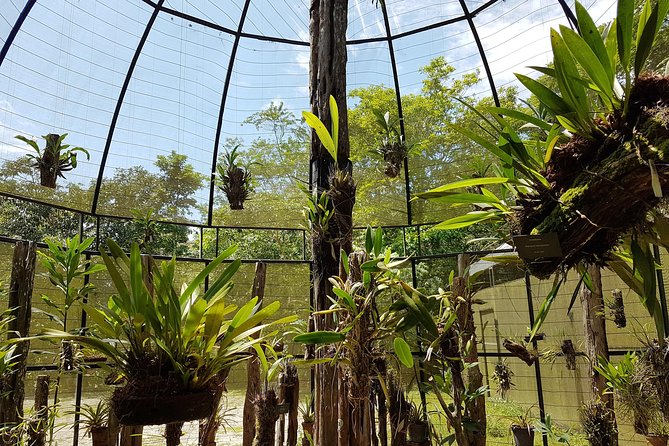
The nursery of orchids and bromeliads is one of the most appealing stops for plant lovers. These plants are strongly associated with the Amazon in many people’s minds, but seeing them in a research and educational setting gives you a better idea of their variety and care.
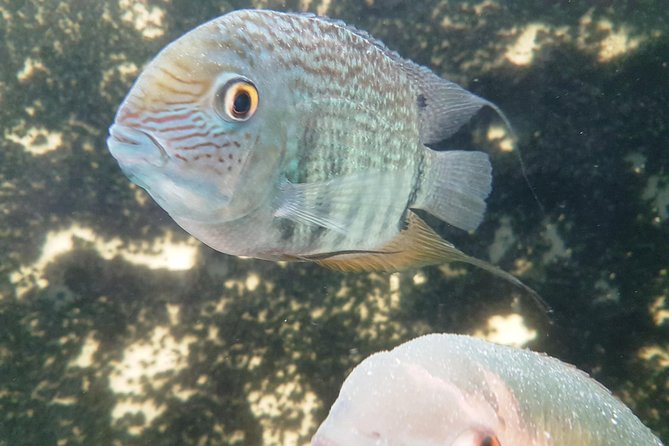
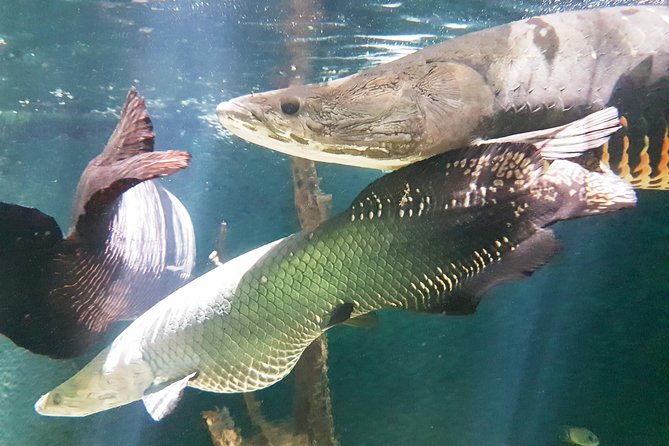
The lake and aquariums add a different side of the visit. A small caiman and a turtle have been seen around the pond, along with Victoria water lilies. Those sightings are a reminder that the museum is not only displaying objects indoors. Living plants and animals are part of the experience.
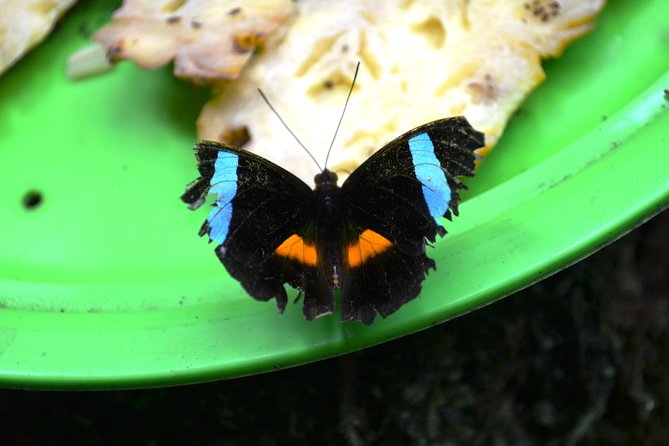
There are also experimental laboratories and displays involving snakes, insects, and butterflies. For some people, this will be the highlight. For others, snakes and spiders may be less appealing than the trails and tower. Either way, these areas show the range of life found in the region and give your guide useful material to explain.
The museum’s stated idea of living together is important here. MUSA presents the forest as a shared home for humans and nonhuman life, not merely as scenery. That message may sound lofty, but it becomes practical when you move from a plant nursery to an animal display and then onto a forest path. Each stop shows a different part of the same system.
A few more Manaus days to weigh up
- From Manaus: One-Day Amazon Jungle Experience
★ 4.8 · 408 reviews - Manaus: Full-Day Tour on the Amazon River
★ 4.2 · 362 reviews - Indian Village and Meeting of the Waters Tour
★ 4.5 · 241 reviews - A Whole Day in the Jungle
★ 5.0 · 155 reviews
The 42-meter tower and the view over the canopy
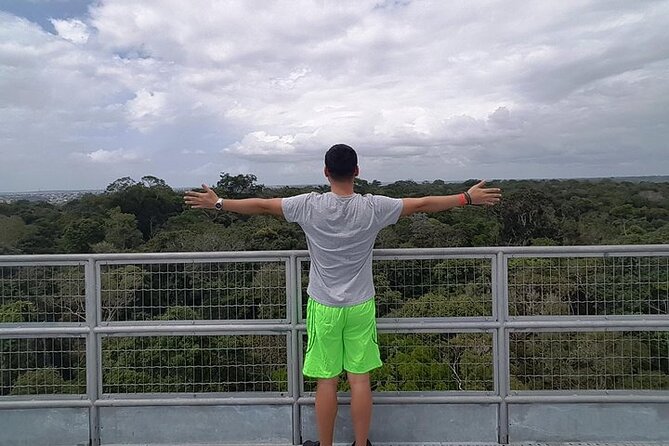
The observation tower is the outing’s big visual reward. At 42 meters, or about 135 feet, it rises above the forest canopy and gives you a broad view of the treetops. The sight is especially appealing at around six in the morning, when the light is softer and the forest may feel cooler and quieter.
The standard meeting time is 9:00 a.m., so you should confirm whether an earlier start is possible if the tower at dawn is a priority. Another account describes visiting in the afternoon to watch the sunset from the top. That suggests the tower can be attractive at different times of day, but you should not assume every booking follows the same schedule.
The climb is not a minor detail. One 79-year-old participant decided it was too demanding, while two younger people in the group made it to the top. That is useful, honest advice. If you have trouble with stairs, reduced mobility, or a fear of heights, enjoy the museum at ground level and treat the tower as optional rather than the entire purpose of the visit.
For fit visitors, the climb adds a sense of achievement without requiring a full outdoor adventure. From above, the forest becomes a broad carpet of treetops, which helps you understand the scale of the Amazon in a way that ground-level trails cannot.
Birds and the best time for wildlife
Birdwatching is possible at MUSA, though you should keep expectations reasonable. Toucans and other birds have been seen from the tower and along the grounds. The combination of forest trails, open views, and quiet areas gives you a fair chance to spot movement in the branches.
The best time depends on what you want. Early morning can provide cooler conditions and attractive light from the tower. Afternoon visits may suit you if sunset views matter more. The supplied tour details set a 9:00 a.m. start, so ask the operator before booking if your preferred time is different.
Wildlife sightings will always depend on luck, weather, and patience. MUSA is a managed site near Manaus, not a remote reserve. That is both its strength and its limit. You get comfort and access, but you should not book it expecting a guaranteed parade of animals.
I would bring patience more than a long list of species you hope to see. A frog hidden near a trail, a bird crossing the canopy, or a turtle beside the lake can make the visit memorable even if you do not see anything large.
How the private format affects the visit
Private touring is one of the strongest practical features here. Only your group participates, so the pace can be less hurried than on a large shared excursion. If you want to stop longer at the orchid nursery, spend more time with the aquariums, or skip part of the tower climb, you have a better chance of doing so.
The private format also helps families and mixed-age groups. A younger person may want to examine insects, while an older family member may prefer a slower trail walk. You can make those choices without trying to keep up with a large party.
Guide quality and language deserve a little care. The experience is offered in English, and one outing had an attentive guide who explained the site clearly. On another occasion, no English-speaking guide was available, although the group still managed to enjoy the visit. If detailed interpretation is important to you, confirm the language before the day rather than relying only on the general listing.
That small check can improve the experience greatly. MUSA has enough educational content to reward explanation, especially if you want to understand the research areas and the purpose of the displays instead of simply walking past them.
Is $40 a fair price?
At $40 per person, the value depends on what you compare it with. This is not priced like a simple admission ticket. You are paying for transportation, a private outing, guide support, and roughly four hours at a major nature and science site in Manaus.
I consider the price fair for a pair or small group that wants a convenient half-day experience. The cost is especially sensible if you are staying in the city and do not have time for a lodge, longer river trip, or full jungle program. You get forest trails and canopy views without the higher cost and time commitment of heading far into the region.
The value is less clear if you only want a quick look at plants or an unaccompanied walk. In that case, you may prefer to arrange your own visit if possible. The private transportation is the main reason to choose this tour rather than treating MUSA as a standalone stop.
The booking record suggests people often reserve around 46 days ahead. That does not mean you must book that early, but it is a useful hint for high-season planning. If you have a fixed arrival date in Manaus, arranging the visit ahead of time can reduce stress.
Who will enjoy MUSA most?
I would recommend this outing to you if you want a gentle introduction to Amazonian nature, especially when your time in Manaus is limited. It works well for first-time visitors, families, couples, small groups, and anyone who prefers a private car to a large organized transfer.
It is also a good choice for plant lovers, amateur birdwatchers, photographers, and people curious about science. The mix of trails, nurseries, aquariums, laboratories, and exhibits gives you more variety than a basic city park.
You should think twice if your main goal is a remote jungle experience with long boat rides, overnight forest sounds, or a high chance of seeing large wildlife. MUSA gives you a real forest setting, but it remains close to Manaus and is designed for education and access.
The tower may also change your decision. If the canopy view is essential and climbing is difficult for you, ask about the route and conditions before reserving. The rest of the museum can still be worthwhile, but the tower is a major part of the outing’s appeal.
Booking details worth checking
Confirmation is provided at booking, and pickup details are arranged by WhatsApp or phone. Make sure the operator has the right telephone number and knows exactly where you will be in Manaus, especially if you are coming from a ferry terminal or shuttle stop.
A minimum of two people is required for each booking. Most people can participate, but the tower climb may not suit everyone. The experience is private, and mobile tickets are supported.
Free cancellation is available if you cancel at least 24 hours before the local start time. Changes or cancellations inside that 24-hour window are not accepted for a refund. That policy gives you some breathing room, but it is still wise to check your river and flight schedule before committing.
Should you book the MUSA transportation tour?
Book it if you want an easy, well-priced forest experience close to Manaus. The combination of private pickup, educational exhibits, shaded trails, plant collections, possible wildlife sightings, and a high canopy tower gives you a useful picture of Amazonian life without demanding a full expedition.
I would choose it for a first visit, a short stay, or a day when you want nature without complicated logistics. Confirm the guide language and ask about the timing if dawn or sunset from the tower matters to you. If you are comfortable with the climb, the view is the finishing touch. If not, the trails, lake, orchids, aquariums, and research displays still make this a worthwhile half-day outing.
FAQ
Where does the MUSA Amazonian Museum transportation tour take place?
The experience takes place at Museu da Amazônia, or MUSA, in Manaus, Brazil. The museum covers nearly 250 acres of forest and research facilities near the city center.
How long does the experience last?
The tour lasts approximately four hours.
What time does the tour start?
The listed start time is 9:00 a.m. Pickup details, including the exact time and place, are confirmed by WhatsApp or phone.
Is pickup available in Manaus?
Yes. Pickup is offered, and the operator confirms the pickup location and time directly with you.
Is the tour private?
Yes. Only your group participates in this private tour or activity.
How many people are required to book?
A minimum of two people is required for each booking.
What can you see at MUSA?
The grounds include forest trails, orchids, bromeliads, a lake, aquariums, exhibitions, experimental laboratories, and displays involving snakes, insects, and butterflies. You might also see frogs, birds, turtles, caimans, and Victoria water lilies.
How high is the observation tower?
The observation tower is 42 meters high, or about 135 feet, and provides views over the forest canopy.
Is the experience offered in English?
English is listed as an offered language. However, guide availability can vary, so confirm that an English-speaking guide is available for your date if that is important to you.
Newest reviews from around Manaus
- Walking Tours in Manaus★ 3.5 · 16 reviews
- 4-day Amazon River Boat Tour From Manaus★ 5.0 · 10 reviews
- Amazon Safari Tour in Manaus (Shared)★ 5.0 · 3 reviews
- Tree Climbing in the Amazon★ 4.5 · 6 reviews
- Tucandeira Ants Indigenous Ritual★ 4.5 · 4 reviews
- Transfers from the airport to any place in Manaus City★ 4.0 · 27 reviews
- 24-hour Hotel Transfer to Manaus Airport★ 5.0 · 24 reviews
- Private Tour Waterfalls Iracema & Asframa President Figueiredo★ 5.0 · 3 reviews
Museums, compared.
Ticket MAI – Museum of Indigenous Art – Curitiba
Read our review →
Combo: Platform Entrance, Abusado Adventure, Ferro Passar Museum
Read our review →
Petrópolis Day Trip from Rio de Janeiro including Imperial Museum and Crystal Palace
Read our review →
Museum of Tomorrow, AquaRio & Olympic Boulevard in Rio de Janeiro
Read our review →
7-Hour Shared Group Santos Tour : Mont Serrat, Coffee Museum and Sightseeing
Read our review →
Olympic Boulevard, Museum of Tomorrow & Historical Rio
Read our review →
Olympic Boulevard, AquaRio and Museum of Tomorrow Tour
Read our review →Browse the lists this tour appears in