
Reviewed · MUSEUMS
Rubber Museum from Manaus
Rubber once made Manaus rich. This tour shows who paid the price.
I like the way this experience connects the rubber trade to real places, from the loading area and warehouses to the rubber master’s home and workers’ houses. I also like the short jungle walk, where you see rubber trees and learn how latex was collected rather than simply viewing old objects behind glass.
The main drawback is the distance. Vila Paraíso can only be reached by boat, and one rating found the trip too long for the museum alone. The visit works best if you want history and a taste of river travel, not if you are looking for a quick city attraction.
In This Review
- Key points to know before you book
- Why Vila Paraíso matters to Manaus
- The boat ride to Vila Paraíso
- Inside the large tent and working buildings
- The short jungle trail and rubber trees
- The rubber master’s house and workers’ homes
- Tupé Beach and the possible swim
- Timing, group size, and the real cost
- Who will get the most from this outing
- Should you book the Rubber Museum from Manaus?
- FAQ
- Where does the Rubber Museum tour begin?
- How long does the experience last?
- How do you reach Vila Paraíso?
- Is hotel transportation included?
- Is admission to the Rubber Museum included?
- Is the tour offered in English?
- What will I see at Vila Paraíso?
- Can I swim at Tupé Beach?
- Are drinks included?
- What is the cancellation policy?
Key points to know before you book
- Boat access is part of the experience: Vila Paraíso is reached only by boat, making the journey a real part of the outing.
- The rubber story is hands-on: You visit work areas, storage buildings, the smoking area, rubber trees, and employee homes.
- The social history matters: The site presents the sharp contrast between the rubber master’s opulent house and the modest homes of workers.
- Tupé Beach adds a welcome change: A short stop may allow time for swimming, though it is not guaranteed.
- The schedule needs a close look: The tour is described as about three hours, while the detailed timing suggests roughly four hours, with hotel arrival around 1:00pm.
- Small groups are possible: The maximum group size is 15 people, and an English-speaking local guide is included.
Why Vila Paraíso matters to Manaus
The rubber boom helped shape Manaus, but its story is not only about money, export goods, and impressive buildings. It is also about the people who collected latex in the forest and lived under harsh conditions far from the city.
Vila Paraíso recreates a rubber plantation settlement, often called a seringal. The Portuguese term seringueiro refers to a rubber tapper, the worker who collected latex from rubber trees. This tour gives you a chance to see how that system operated at ground level.
I find that useful because Manaus can sometimes present the rubber era through grand urban landmarks and elegant architecture. At Vila Paraíso, you see the other side: the work, the storage, the smoking process, and the homes of employees.
The setting also gives the visit more weight. You are not simply looking at a display about rubber production. You move through a former plantation site, enter work buildings, and follow a trail into the forest. That physical connection helps explain how much effort went into producing a material that was shipped around the world.
More Museum Tours in Manaus:
- Manaus: MUSA and INPA Museums with Observation Tower Tour
★ 3.4 · 26 reviews - Tour at the MUSA – Museum of the Amazon in Manaus
★ 5.0 · 5 reviews - Amazon Natural Museums Combo (INPA and MUSA)
★ 5.0 · 5 reviews
The boat ride to Vila Paraíso
The tour begins with hotel pickup at 9:00am. You need to tell the operator which hotel you want to use for pickup and drop-off. The exact boat arrangements are not spelled out in the tour details, but the site itself can only be reached by boat.
That point deserves attention before you pay. A boat ride adds atmosphere and helps explain why plantation settlements were tied to the river. In this part of Brazil, waterways were key routes for moving people, supplies, and rubber. You also get a better sense of the separation between Manaus and the forest economy.
The drawback is time. A previous rating specifically found the museum too far from Manaus for the visit by itself. I think that is fair advice. If you see the outing as a short museum stop, the travel can feel disproportionate. If you see it as a half-day excursion combining boat transport, plantation history, a forest walk, and a possible beach stop, the value is easier to understand.
The operator sets a maximum of 15 people. That is small enough to make questions practical, though the actual group size on your date may be lower or close to that limit.
Inside the large tent and working buildings
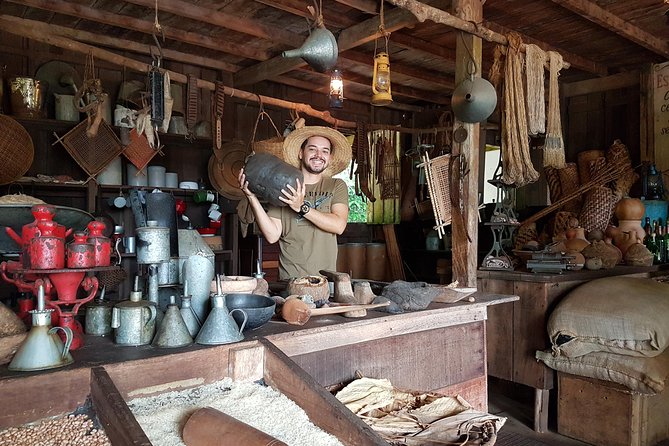
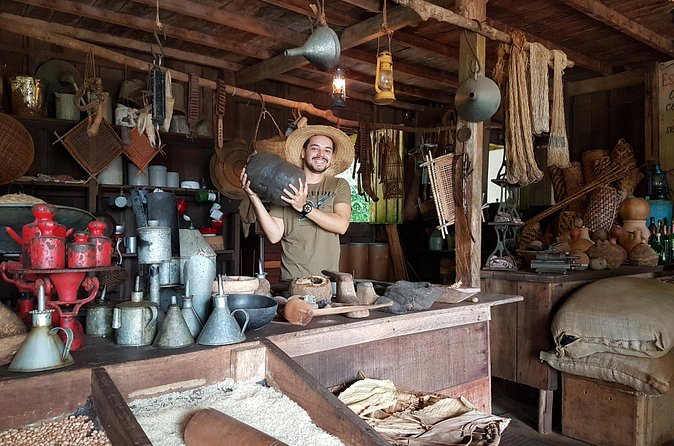
The first part of the site visit focuses on the work of rubber production. You see the large tent, where tools used in rubber making were kept. This is an important stop because it places the equipment in the setting where it was used, rather than separating tools from the daily routine they supported.
You also visit the chapel and the flour warehouse. These buildings show that the plantation was more than a production site. It needed places for worship, food storage, work, and everyday life. The flour warehouse is especially helpful for understanding how remote communities depended on stored supplies.
The visit then moves toward the area where rubber was loaded onto boats and sent out into the wider world. That detail gives the trade a clear sequence: latex was collected in the forest, processed at the settlement, stored, and then moved by river.
I would pay close attention here to the guide’s explanation. The English-speaking guide has been praised for explaining the site well, and this is the part of the tour where a good explanation makes a real difference. Without context, the buildings may look like simple plantation structures. With context, you can follow the chain from forest labor to international commerce.
The short jungle trail and rubber trees
A short trail leads into the forest to see rubber trees and the collection process. This is one of the strongest parts of the outing because it shows the work at its source.
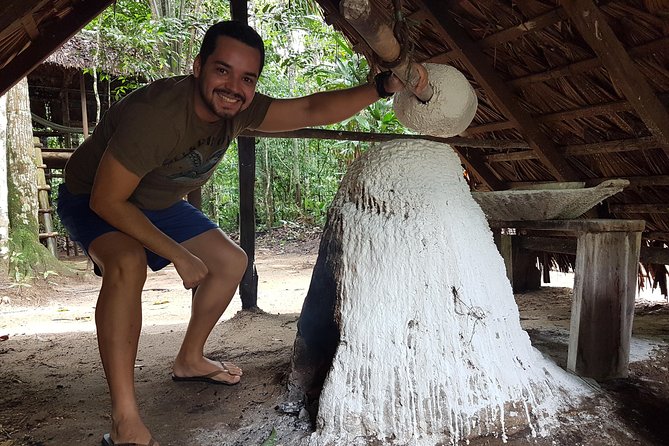
You can witness how the trees were tapped and where the latex was gathered. The tour also takes you to the place where rubber balls were positioned to begin the smoking process. That step helps explain how liquid latex became the dense material needed for transport and later use.
I like this part because it turns an abstract industrial story into a sequence you can picture. A worker had to reach the trees, collect the latex, form it, and prepare it for smoking. The material did not simply appear in a warehouse ready for export.
The forest walk is described as short, so you should not expect a long trek. That makes it manageable for most people, and the additional information says most participants can take part. Still, you are walking on a trail rather than remaining inside buildings, so sensible footwear is a good idea even though no formal dress requirement is provided.
The guide is also important here. The process of collecting latex can be easy to miss if you are moving quickly. Ask questions if you want to understand how the tree, the collection container, and the smoking area fit together.
A few more Manaus days to weigh up
- From Manaus: One-Day Amazon Jungle Experience
★ 4.8 · 408 reviews - Manaus: Full-Day Tour on the Amazon River
★ 4.2 · 362 reviews - Indian Village and Meeting of the Waters Tour
★ 4.5 · 241 reviews - A Whole Day in the Jungle
★ 5.0 · 155 reviews
The rubber master’s house and workers’ homes
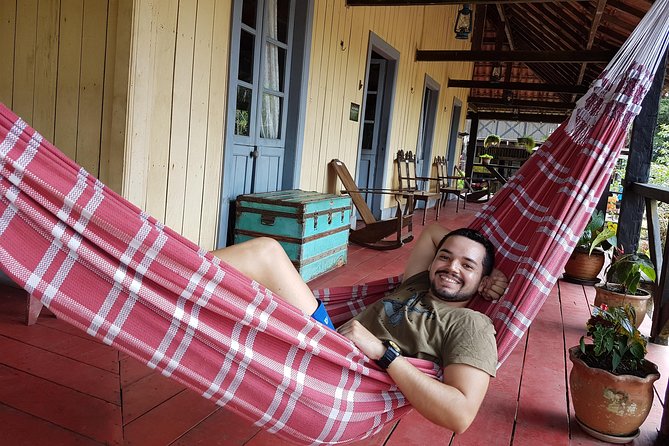
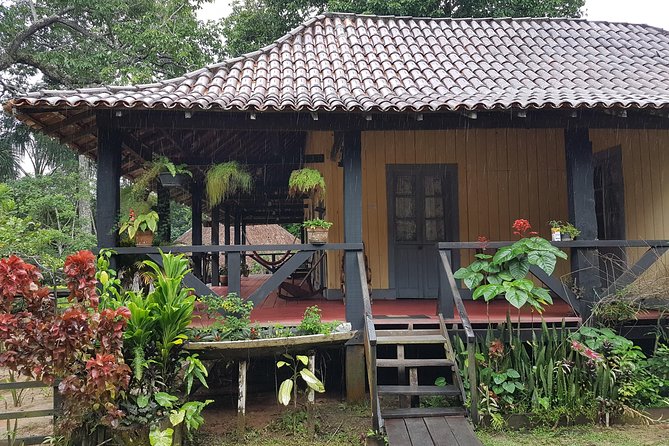
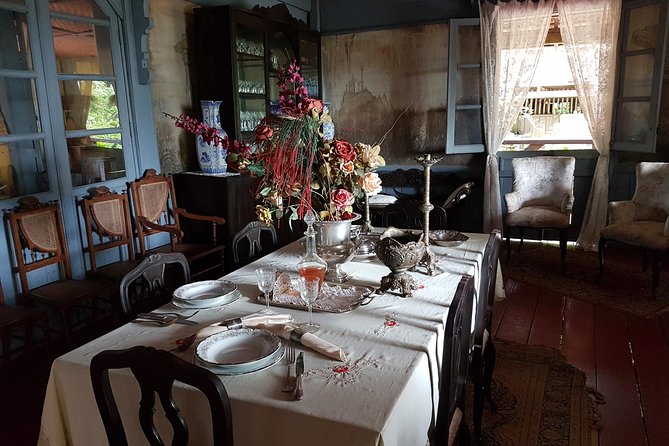
The social contrast at Vila Paraíso is perhaps the most memorable part of the site. You visit the opulent house of the rubber master, then see the modest homes where extraction employees lived.
That contrast tells you more than a list of dates could. The rubber boom created wealth for plantation owners and commercial interests, while the people doing the daily extraction lived with far fewer comforts. One rating described the site as a useful way to understand how seringueiros were subjected to slavery-like conditions during the rubber rush.
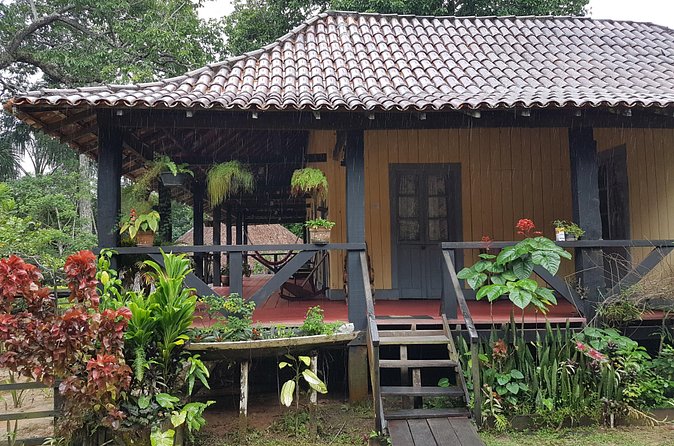
The tour details describe the employee homes as a portrayal of the life and habits of the old extraction era. I would treat the buildings as an interpretation of plantation life rather than assume every object or arrangement is untouched from the past. The value comes from seeing the scale and difference between the residences.
The rubber master’s house offers a look at power and wealth. The workers’ homes give you a sense of the limited domestic space available to the people whose labor supported the trade. Together, these stops keep the visit from becoming a nostalgic story about a prosperous era.
For me, this is where the tour earns its place in a Manaus itinerary. You gain a more balanced view of rubber production, one that includes both commercial success and human cost.
Tupé Beach and the possible swim
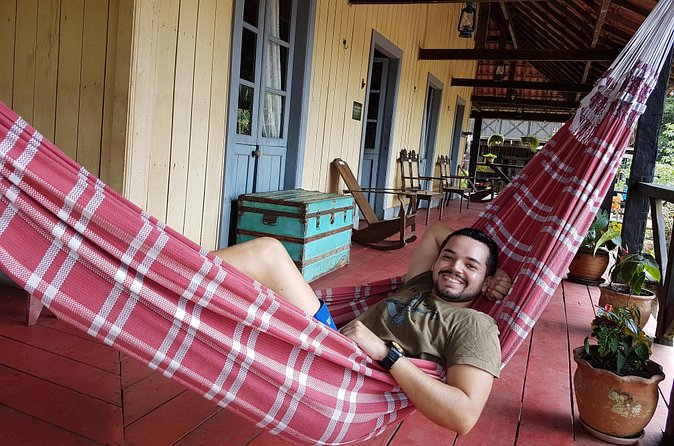
On the way back to Manaus, the tour makes a brief stop at Tupé Beach. If time permits, you may be able to swim.
This is a pleasant addition after the plantation visit, especially in a warm climate. It also breaks up the return journey and gives you a chance to see a different river setting. But you should not book the tour primarily for swimming. The stop is brief, and the possibility depends on the available time.
Bring the right expectations. Tupé Beach is a bonus, not the central attraction. The confirmed focus is Vila Paraíso and its rubber-era buildings. If the schedule runs late or the group needs to return on time, the swim may not happen.
Drinks are not included, although alcoholic drinks can be purchased. Other drinks are also listed as not included, so plan to budget for anything you want during the outing. The supplied information does not specify food service, so I would not count on a meal being part of the tour.
Timing, group size, and the real cost
The price is $89.99 per person. That is not a bargain city walk, but it includes hotel pickup and drop-off, a local guide, admission to the museum site, the boat-based access, and the wider half-day outing.
I think the price makes the most sense for someone who wants an organized trip from Manaus. Reaching Vila Paraíso requires boat transport, and arranging the route, site entry, and return independently may not be simple. The fee also buys convenience, particularly for visitors staying in a Manaus hotel and wanting an English-language guide.
The timing needs clarification. The summary calls the experience approximately three hours, while the detailed plan lists four hours and estimates hotel arrival at 1:00pm after a 9:00am start. I would plan for about four hours rather than schedule a tight early afternoon appointment.
The small-group limit of 15 is another plus. A group of that size should make it easier to hear the guide and move through the buildings without the feel of a large coach excursion. The actual pace will still depend on the group and boat schedule.
The tour is offered in English, which is useful because the social and production details deserve explanation. Confirmation is provided when you book, and free cancellation is available until 24 hours before the start time. Changes or cancellations inside that window are not accepted for a refund.
Who will get the most from this outing
I would choose this tour if you are interested in the labor behind historic industries, plantation life, or the connection between Manaus and the surrounding river world. It suits anyone who prefers seeing a process and a place rather than only visiting a conventional museum.
It is also a good fit if you want a compact excursion. The trip combines transport, a guided cultural site, a short forest walk, and a possible swim without taking up a full day.
Families can take part, but children must be accompanied by an adult. A child rate applies only when the child shares with two paying adults. Since the experience includes a boat trip and a trail, parents should consider how comfortably their children handle a structured outing, although the information says most people can participate.
I would hesitate if your schedule in Manaus is very short or if you dislike long transfers for a relatively brief site visit. One direct criticism of the experience was that the distance was not made clear enough. That is the most useful warning here: confirm that you are happy with the travel time before booking.
I would also hesitate if you want a guaranteed swim. Tupé Beach is time permitting, and the history visit remains the main purpose.
Should you book the Rubber Museum from Manaus?
Book it if you want a grounded look at the rubber trade, especially the difference between the rubber master’s comfort and the workers’ modest lives. The English-speaking guide, included admission, hotel transport, and small maximum group help make the $89.99 fee reasonable.
Skip it if you want a fast museum visit close to Manaus. Vila Paraíso is reached only by boat, and the journey is a major part of the day. Go with the right frame of mind: this is a plantation history excursion with a possible beach stop, not simply a museum ticket.
For the best experience, allow four hours, keep your afternoon flexible, and ask for the full pickup and boat timing before departure. If the history of seringueiros matters to you, this is one of the more direct ways to see how the rubber boom worked beyond Manaus’s grand city center.
FAQ
Where does the Rubber Museum tour begin?
The tour begins with hotel pickup in Manaus at 9:00am. You must tell the operator which hotel you want to use for pickup.
How long does the experience last?
The tour is described as approximately three hours, but the detailed schedule indicates about four hours, with an estimated return to your hotel at 1:00pm.
How do you reach Vila Paraíso?
Vila Paraíso can only be reached by boat. The boat transfer is part of the route from Manaus to the rubber plantation site.
Is hotel transportation included?
Yes. Local hotel pickup and drop-off are included.
Is admission to the Rubber Museum included?
Yes. Admission to Museu do Seringal Vila Paraíso is included.
Is the tour offered in English?
Yes. The experience is offered in English, with a local guide included.
What will I see at Vila Paraíso?
You will see the large tent for rubber-making tools, the chapel, the flour warehouse, the rubber-loading area, the smoking area, rubber trees, the rubber master’s house, and the modest homes of extraction employees.
Can I swim at Tupé Beach?
You might be able to swim at Tupé Beach if time permits. The stop and swimming opportunity are not guaranteed.
Are drinks included?
No. Drinks are not included. Alcoholic drinks are available to purchase.
What is the cancellation policy?
You can cancel at least 24 hours before the local start time for a full refund. Cancellations or changes made less than 24 hours before the start time are not accepted for a refund.
Newest reviews from around Manaus
- Walking Tours in Manaus★ 3.5 · 16 reviews
- 4-day Amazon River Boat Tour From Manaus★ 5.0 · 10 reviews
- Amazon Safari Tour in Manaus (Shared)★ 5.0 · 3 reviews
- Tree Climbing in the Amazon★ 4.5 · 6 reviews
- Tucandeira Ants Indigenous Ritual★ 4.5 · 4 reviews
- Transfers from the airport to any place in Manaus City★ 4.0 · 27 reviews
- 24-hour Hotel Transfer to Manaus Airport★ 5.0 · 24 reviews
- Private Tour Waterfalls Iracema & Asframa President Figueiredo★ 5.0 · 3 reviews
Museums, compared.
Ticket MAI – Museum of Indigenous Art – Curitiba
Read our review →
Combo: Platform Entrance, Abusado Adventure, Ferro Passar Museum
Read our review →
Petrópolis Day Trip from Rio de Janeiro including Imperial Museum and Crystal Palace
Read our review →
Museum of Tomorrow, AquaRio & Olympic Boulevard in Rio de Janeiro
Read our review →
7-Hour Shared Group Santos Tour : Mont Serrat, Coffee Museum and Sightseeing
Read our review →
Olympic Boulevard, Museum of Tomorrow & Historical Rio
Read our review →
Olympic Boulevard, AquaRio and Museum of Tomorrow Tour
Read our review →Browse the lists this tour appears in