
Reviewed · SAMBA & CARNIVAL SHOWS
Historical Downtown and Lapa – Walking Tour
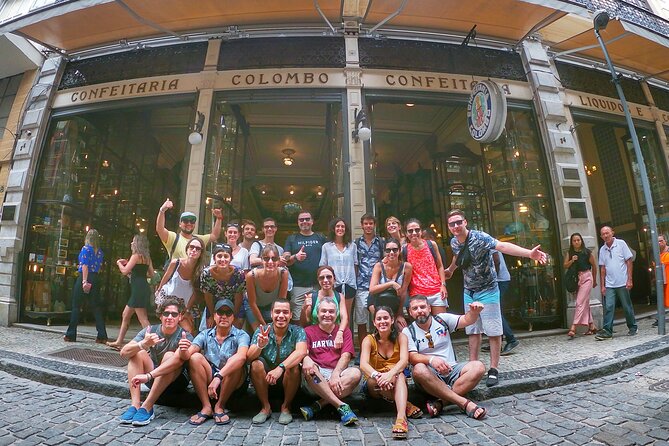
Rio’s story begins far from the beach. This three-hour walk takes you through Centro and Lapa, where grand public buildings, political landmarks, squares, markets, and colorful street art explain how Brazil’s capital grew and changed. I like the close-up look at Rio’s past and the chance to ask direct questions about Brazilian politics. I also like the practical advice guides such as Rafael and Juliana offer about food and other places to visit.
The main consideration is the walking itself. The route can cover about three miles, and sunny weather may make the pace feel harder. There is also an important pricing detail: the advertised experience is $40 per person, while some sessions have operated as free walking tours supported by tips. Check the exact option you book, and confirm that your language and departure are running.
In This Review
- Key points to know before you go
- Starting beneath Rio’s grand civic buildings
- Biblioteca Nacional and the value of looking up
- Museu Nacional de Belas Artes and national memory
- Avenida Rio Branco, where the city opens up
- Selarón Steps and the visual change into Lapa
- Praça XV and a market-side finish
- A history tour with room for real questions
- Is $40 a fair price for three hours?
- Who will enjoy this walk most?
- My verdict on Rio’s historical center walk
- FAQ
- How long does the Historical Downtown and Lapa Walking Tour last?
- How much does the tour cost?
- Where does the tour start?
- Where does the tour finish?
- What places are included on the route?
- Are food and drinks included?
- Is hotel pickup and drop-off provided?
- Can I cancel for a full refund?
Key points to know before you go
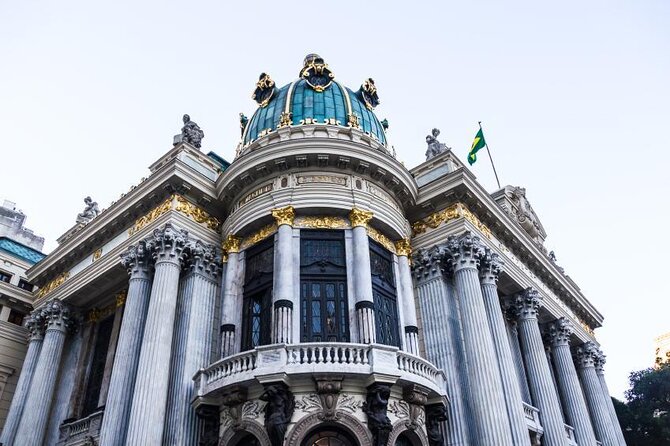
- Start at Praça Floriano: Meet near the Theatro Municipal in central Rio, a useful location for reaching the tour by public transport.
- Three hours on foot: Expect a steady walk through Centro and Lapa, with some time for photos, questions, and a short break.
- History is the main event: The guide focuses on Rio’s political and cultural past rather than only pointing out attractive buildings.
- Guides make a difference: Rafael has been praised for clear historical explanations, while Juliana has led energetic bilingual tours in English and Portuguese.
- Finish near Praça XV: The route ends at Feira da Praça XV, where the market can add a local, informal finish, though purchases are not included.
- Watch the minimum group rule: English departures have sometimes been cancelled when fewer than three people booked, so a backup plan is sensible if your time in Rio is tight.
Starting beneath Rio’s grand civic buildings
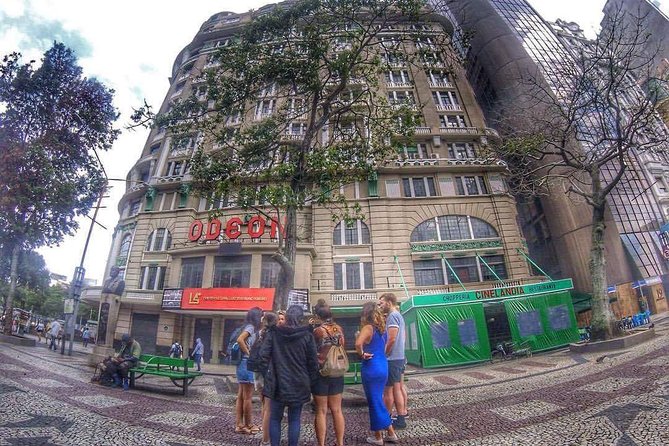
The meeting point is Praça Floriano, 1, in Centro, near the Theatro Municipal. This is a practical beginning because it places you among some of Rio’s most important public buildings before the walk even gets going. Look for the tour meeting arrangement described in your booking details, and allow enough time to reach central Rio by public transport.
You are not starting in the postcard version of the city. There is no Copacabana beach view here, and that is the point. Centro shows you the city as a place of government, art, commerce, protest, religion, and public memory.
The guide’s commentary is central to the experience. Rafael has been singled out for making Brazilian history clear and lively, with enough detail to answer questions without turning the outing into a dry lecture. Juliana has also led a high-energy tour, speaking in both English and Portuguese and adding personal observations about life in Rio.
I would tell you to ask questions early. This walk is especially useful if you want to understand Brazil’s political history, not simply memorize dates. The guides have handled questions about the country and the city directly, and the smaller groups described in some sessions made conversation easier.
The maximum group size is 20 people. That is large enough to provide a social feel, but small enough for a guide to keep the group together in city streets. Some departures have been much smaller, with one described group of five. A small group usually makes it easier to hear the commentary and ask for recommendations.
More History Tours in Rio de Janeiro
- Rio de Janeiro Historical Center Walking Tour
★ 4.5 · 336 reviews - Private Walking and Cultural Tour Rocinha-Rio de Janeiro
★ 5.0 · 239 reviews - Discover Rio Little Africa: A Cultural and Historical Journey
★ 5.0 · 238 reviews
Biblioteca Nacional and the value of looking up
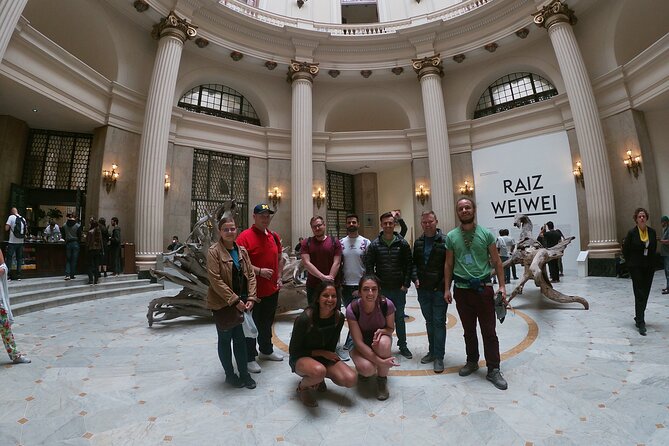
The first named stop is the Biblioteca Nacional, with about 25 minutes scheduled there. The visit is listed as external, so you should expect the guide to discuss and point out the building from outside rather than assume a full indoor library visit. The booking information also lists admission as included, which is a detail worth clarifying if entering the building matters to you.
This stop gives the tour a strong start because it introduces Rio through a major cultural institution. The guide can explain why the building matters within Brazil’s public and intellectual life, while you take in the architecture at street level. A walking tour earns its keep when the guide connects the building in front of you with the larger story of the country.
You will have time for photos, but 25 minutes is not an invitation to linger indefinitely. Keep your attention on the guide, especially if the group is standing near a busy road or public square. The central area can be active, and a moving tour works best when you stay close.
Museu Nacional de Belas Artes and national memory
The route then reaches the Museu Nacional de Belas Artes, with roughly 15 minutes planned. The museum is listed as an external stop, so treat this as an outside explanation and photo opportunity unless your chosen tour option says otherwise. Admission is shown as included, but the stop description does not promise that the group will spend time inside the galleries.
Nearby, the National Monument to the Dead of the Second World War adds another layer of public memory. Its presence shifts the tone from grand civic architecture to remembrance. This is one reason a guide helps: without context, you might see a monument and move on. With explanation, you can place it within Brazil’s relationship to war, national identity, and collective memory.
The short timing here is both useful and limiting. It keeps the walk moving, but it does not allow a proper museum visit. If Brazilian art is a priority, you may want to return independently. For a three-hour historical walk, though, an exterior introduction is a reasonable trade.
Avenida Rio Branco, where the city opens up
Avenida Rio Branco receives about 20 minutes of walking time. This broad central avenue helps you read the shape of old Rio. Instead of seeing isolated buildings as separate sights, you begin to understand how streets, civic projects, and public spaces changed the center over time.
This is a good section for asking the guide to connect architecture with politics. The tour is designed for people who want to discuss how Brazil developed, and Avenida Rio Branco provides room for those questions. Rafael’s approach has been described as more like a lively history class than a simple sightseeing commentary.
You also get a useful change of pace here. The museums and monuments ask you to stop and listen. The avenue lets you walk, look around, and absorb the center as a functioning part of Rio. I like that balance. A tour made entirely of formal stops can feel stiff, while a route with walking time gives you a better sense of the city’s scale.
The practical drawback is exposure to the weather. One participant estimated a walk of about three miles at an average pace and felt that cooler conditions made it more comfortable. You should bring water, wear comfortable shoes, and be ready for sun. A short drink refill and toilet break may be possible during the tour, but do not treat it as a scheduled series of long rests.
More Walking Tours in Rio de Janeiro
- Rio de Janeiro: Rocinha Favela Walking Tour with Local Guide
★ 4.8 · 3,052 reviews - Rio De Janeiro: Half-Day Rocinha Favela Walking Tour
★ 4.7 · 2,272 reviews - 3 Hour Rocinha Favela Walking Tour with a Local Guide
★ 5.0 · 833 reviews - Favela Tour Rio de Janeiro – Vidigal Walking Tour by Russo Guide
★ 5.0 · 377 reviews
Selarón Steps and the visual change into Lapa
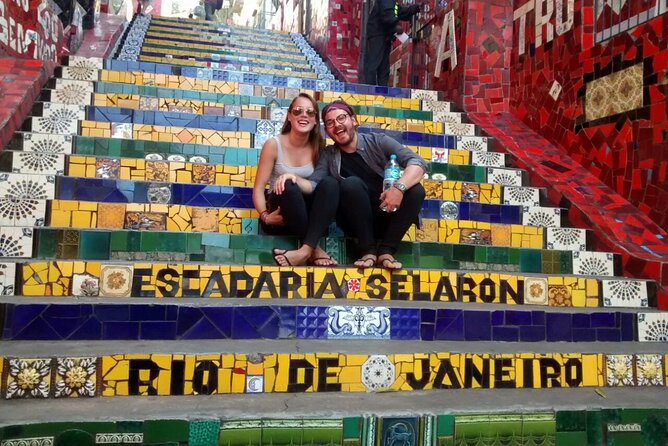
Escadaria Selarón is one of the route’s most memorable photo stops. The colorful staircase gives the walk a sharp visual change after the formal buildings and monuments of Centro. It is also a place where the tour’s historical and cultural themes meet public art.
The steps are not merely a quick backdrop. They help show the creative side of Rio and the way a public staircase can become part of the city’s identity. Your guide can add context and point out details you might otherwise miss. One guide-led visit finished at the steps, giving the group a strong final image of the city.
Take care on the stairs and keep the group’s timing in mind. A popular photo spot can slow a walking tour quickly, especially when several people want individual pictures. You will have opportunities to take photos, but the guide still needs to keep the route moving.
The route references Lapa and the Republic, though the exact timing for each is not fully specified. That means you should think of the tour as a connected walk through central districts rather than a string of long interior visits. The reward is the connection between places. You see how political history, public buildings, street life, and art occupy the same part of Rio.
Praça XV and a market-side finish
The tour ends at Praça Quinze de Novembro, also called Praça XV, in Centro. The nearby Feira da Praça XV is listed as an external stop and does not include purchases, food, or drinks. If the market is open during your visit, it can give the final part of the tour a more informal feel.
One Saturday outing benefited from open markets along the route. That detail matters because the atmosphere can change by day. A market adds color and movement, while a quieter day may put more focus on the buildings and the guide’s commentary.
The ending is well placed for continuing your day. You can ask the guide for suggestions about where to eat or what to see next, something Rafael and other guides have done during the walk. Since hotel drop-off is not included unless you select an appropriate option, plan your onward transport from Praça XV rather than expecting a ride back.
I like finishing at a public square instead of returning you to the starting point. It leaves you in a different part of central Rio and gives the walk a sense of progress. The tradeoff is that you need to organize your next step yourself.
A history tour with room for real questions
The strongest feature here is the guide, not a ticketed attraction. The buildings and public spaces are worthwhile, but the experience depends on the person explaining them. Rafael has been praised for his historical command, friendly manner, and ability to make people feel safe while walking through the center. Juliana has been described as fun, energetic, and easy to chat with.
That warmth matters when the subject turns political. You can ask about Brazil’s past and present without feeling as if you are interrupting a rehearsed script. The tour works best when you treat it as a conversation with structure, not a performance where you only listen.
The language arrangement may vary. The tour may be operated by a multilingual guide, and Juliana has conducted a session in English and Portuguese. If you need English, confirm the language at booking. There is a record of English tours being cancelled a few hours before departure when fewer than three people were booked. That is a serious issue if you have only one day in Rio.
The operator is Rio by Foot Tours. The maximum group size is 20, and most people can take part, though children must be accompanied by an adult. The route is near public transportation, which helps at both the beginning and end.
Is $40 a fair price for three hours?
At $40 per person, this is not the cheapest way to see central Rio. The value depends on what is included in your specific booking. The advertised option includes all activities, but food and drinks are extra, and hotel pickup and drop-off are not included unless selected.
For a visitor who wants context, the price can make sense. You are paying for three hours of guiding, local explanations, route planning, and the chance to ask questions about Brazilian history. Those are useful services in a city where a building’s importance is not always obvious from its façade.
Still, the free walking tour language connected with some departures creates confusion. In that format, there is no fixed charge and you tip at the end if you feel the guide earned it. The supplied price of $40 suggests that the product being sold may be a paid version or a different booking option. I would check the final price, payment terms, language, and minimum group requirement before committing.
If your main goal is fast sightseeing with indoor museum time, this may not be your best use of money. If you want a structured introduction to Rio’s center and prefer to learn while walking, it offers solid value, especially with a strong guide.
Who will enjoy this walk most?
I would choose this tour for a first visit focused on more than beaches and famous viewpoints. It suits history buffs, curious walkers, and anyone who wants to understand Rio’s political and cultural character. It also works well for repeat visitors who have already seen the main postcard sights.
Families can join, provided children are accompanied by an adult. The three-hour duration and steady pace may suit older children, but you should judge your group’s comfort with walking and sun. People who dislike extended time on foot should choose another format.
It is also a good option for visitors on a budget, but only after checking the price structure. Some sessions have been described as free and tip-based, while the experience details give a $40 price. That difference is too important to ignore.
I would be cautious if you are visiting Rio from a cruise ship with a tight schedule. The policy says you will not receive a refund if you miss the activity because your ship arrives late or does not arrive. The cancellation terms allow a full refund when you cancel at least 24 hours before the start, but changes or cancellations inside that window are not accepted.
My verdict on Rio’s historical center walk
Book it if you want a guided history lesson on foot, especially one that leaves room for questions and local suggestions. The route gives you a useful counterpoint to Rio’s beaches, with the Biblioteca Nacional, Museu Nacional de Belas Artes, Avenida Rio Branco, Selarón Steps, public monuments, central squares, and Praça XV forming a clear story of the city.
Before booking, confirm four things: the exact $40 price, the operating language, the minimum group requirement, and whether any listed admission means entry or an exterior explanation. If your schedule is flexible, those details are manageable. If you have only a few hours in Rio, arrange a backup plan in case the English departure is cancelled.
The best reason to choose this walk is the chance to see Centro with a guide who can make the city’s political history personal and understandable. The biggest weakness is the uncertainty around some booking arrangements and the physical demands of a sunny three-hour route. For an interested, reasonably fit walker, it is a worthwhile way to meet the less polished and more revealing side of Rio.
FAQ
How long does the Historical Downtown and Lapa Walking Tour last?
The tour lasts approximately three hours.
How much does the tour cost?
The listed price is $40 per person. Some departures have operated as free walking tours supported by optional tips, so confirm the exact booking option and final price before paying.
Where does the tour start?
The meeting point is Praça Floriano, 1, Centro, Rio de Janeiro, near the Theatro Municipal.
Where does the tour finish?
The tour ends at Praça Quinze de Novembro, also known as Praça XV, in Centro.
What places are included on the route?
The route includes the Biblioteca Nacional, Museu Nacional de Belas Artes, National Monument to the Dead of the Second World War, Avenida Rio Branco, Escadaria Selarón, the Republic area, and Feira da Praça XV.
Are food and drinks included?
No. Food and drinks are not included.
Is hotel pickup and drop-off provided?
Hotel pickup and drop-off are not included unless you select an option that provides them.
Can I cancel for a full refund?
Yes, if you cancel at least 24 hours before the experience start time. Cancellations or changes made less than 24 hours before the start are not accepted for a refund.
Other Samba Nights Worth Staying Up For
- Rio de Janeiro: Beginner Samba Lesson in Ipanema
★ 4.9 · 1,071 reviews - Rio: Pub Crawl in Lapa with Cachaça Tasting and Live Samba
★ 4.7 · 881 reviews - Rio: Carnival Backstage Tour at Samba City with Cocktail
★ 4.6 · 520 reviews - Hop-ON Hop-OFF Sightseeing Bus in Rio de Janeiro – Rio Samba Bus
★ 3.5 · 457 reviews
Newest reviews from around Rio de Janeiro
- Hang gliding flight in Rio de Janeiro★ 5.0 · 6 reviews
- Rio de Janeiro: Zip Lining and Canopy Tree Tour★ 3.3 · 6 reviews
- Vidigal Favela Tour★ 4.4 · 26 reviews
- Rio de Janeiro: Attend a Vasco da Gama game with local guide★ 4.8 · 9 reviews
- Unforgettable Boat Party★ 5.0 · 3 reviews
- Parapente Rio de Janeiro★ 5.0 · 4 reviews
- Rio de Janeiro Private Tour with Cruise Terminal Pick-up★ 5.0 · 2 reviews
- Wild Waters: Rio Whitewater Rafting Adventure Tour★ 5.0 · 13 reviews
Samba & Carnival Shows, compared.


Pub Crawl in Lapa with Cachaça Tasting and Live Samba
Read our review →
Carnival Backstage Tour at Samba City with Cocktail
Read our review →
Hop-ON Hop-OFF Sightseeing Bus in Rio de Janeiro – Rio Samba Bus
Read our review →
Santa Teresa, Lapa, and Cinelândia with Tram Ride and Selarón Steps
Read our review →
Carnaval Experience: Backstage Tour at Samba City with Cocktail
Read our review →

Browse the lists this tour appears in