
Reviewed · FOOD TOURS IN RIO DE JANEIRO
Food Tour Experience in Rio de Janeiro – Private Tour
Rio tastes better one bite at a time. This private Rio de Janeiro food tour pairs local eating with a moving tour of the city, from farmers markets and old taverns to Santa Teresa, Lapa, and the revitalized port area. I like the way the guide handles ordering, and I like that the route gives first-time visitors a useful sense of Rio beyond Copacabana and Ipanema.
The air-conditioned vehicle matters in Rio’s heat, especially during a five- to six-hour outing. The main drawback is that the itinerary changes with the farmers market schedule, and the long list of possible sights means you should not expect a full visit inside every museum or church.
In This Review
- Key points at a glance
- Why this food tour feels different
- The farmers market sets the day
- Fish, snacks, and a cold local beer
- Santa Teresa brings food, art, and hilltop views
- Lapa and the historic center between bites
- Colonial churches and old Rio architecture
- From Saara to Confeitaria Colombo
- The port area reveals another Rio
- A final taste with a view
- What $175 buys you
- Who should book this Rio food tour?
- FAQ
- How long does the private Rio food tour last?
- What is the price?
- Is pickup included?
- Is the tour conducted in English?
- How large can the group be?
- Does the itinerary stay the same every day?
- What foods might I try?
- Does the tour include the Selarón Steps?
- Can I cancel for a full refund?
- Should you book it?
Key points at a glance
- Local food beyond the standard tourist menu: Try market goods, tapioca pizza, crab stew, stuffed shrimp, pão de queijo, açaí, caipirinhas, and small bar snacks.
- A private cultural outing: Your guide can adjust the pace and explain Rio’s food, art, architecture, and daily life as you move through several neighborhoods.
- The market location changes: Farmers markets take place in different neighborhoods on different days, so the exact route is not fixed.
- Strong guide involvement: Vicente and Lully have been praised for speaking English, Spanish, and Portuguese, handling food orders, and answering questions about Rio.
- More than a meal: The route may include Selarón Steps, Santa Teresa, Lapa, the historic center, the port area, and the Kobra mural.
- A substantial half-day price: At $175 per person, the value depends on how much you want a private driver-guide, multiple tastings, and sightseeing in one outing.
Why this food tour feels different
Many Rio food tours focus on one neighborhood or a set menu. This one is closer to a guided food-and-city sampler. You may begin at a farmers market, continue to a fish market or local restaurant, stop at a traditional bar, and finish with a view over the city or bay.
That variety is the tour’s main appeal. You are not simply sitting down for lunch. You are learning how food fits into Rio’s neighborhoods, immigrant traditions, street life, and social habits. The route can include old churches, colonial structures, public squares, art studios, museums, and modern port projects between tastings.
I especially like this format for a first visit. Rio can feel scattered on a map, with the beaches, hills, old center, Santa Teresa, and port area all offering a different side of the city. A private vehicle helps connect those pieces without asking you to figure out several taxi or transit rides on your own.
The private setup also helps with the language barrier. The guide does the ordering, explains unfamiliar dishes, and can answer questions as they come up. That is useful when a market stall has no English menu or when you want to know what a particular snack contains.
More Food Tours in Rio de Janeiro
- Rio: Pub Crawl in Lapa with Cachaça Tasting and Live Samba
★ 4.7 · 881 reviews - Sunset Boat Tour with Beer, Water, Soda and Snacks included
★ 5.0 · 227 reviews - 3-Hour Tasting Session in Rio with 33 Foods Brazilians Love
★ 5.0 · 220 reviews
The farmers market sets the day
The market is not held in one permanent location. Each day, farmers markets take place in a different neighborhood, so your first stop depends on the date of your tour.
That change is worth understanding before you book. It keeps the outing tied to local daily life, but it also means the itinerary is not a rigid checklist. You might see a market in Copacabana or Ipanema, among the named possibilities, rather than following the same route every day.
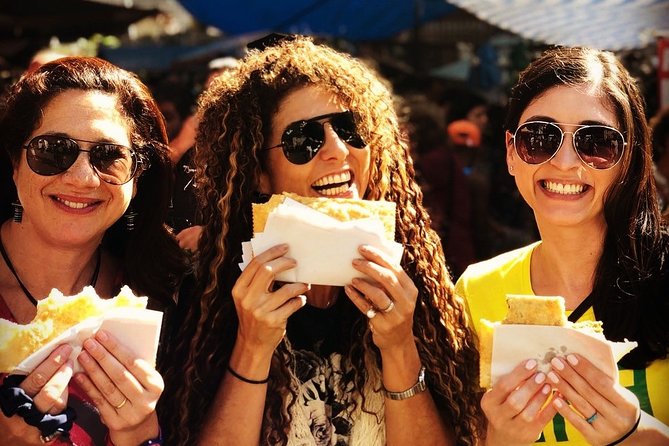
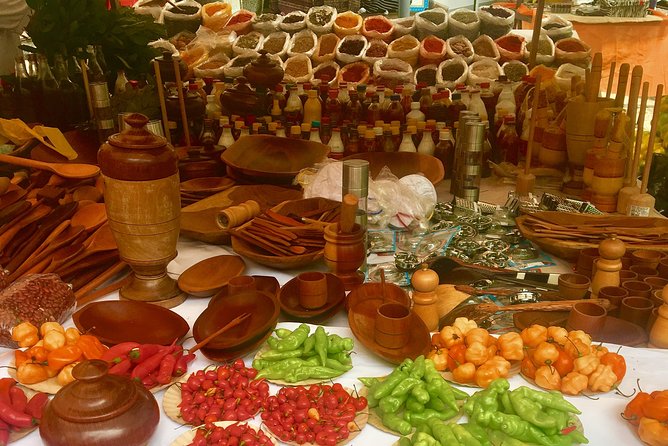
At the market, you can expect a chance to see and taste products that are easy to miss on a standard sightseeing day. One detailed account described artisanal cheese, coconut sweets, and tapioca pizza. These are the kinds of foods that make the market stop worthwhile: small portions, unfamiliar textures, and direct contact with the way Rio shops and eats.
A market is also a good place to ask questions. You can learn how a dish is prepared, which ingredients are common in Brazil, and how sweet or savory snacks fit into the local day. Since the exact market changes, food choices can vary.
Fish, snacks, and a cold local beer
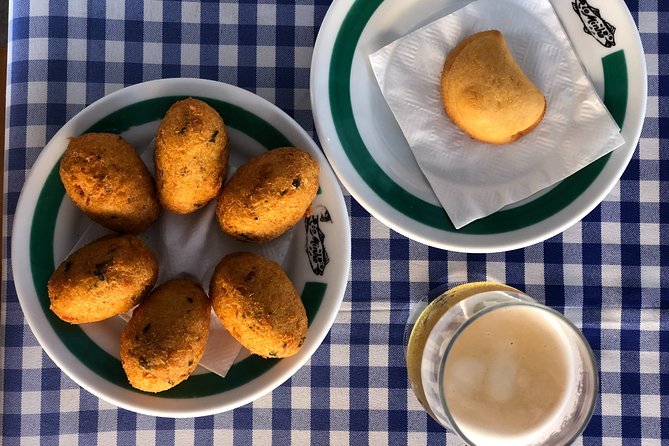
One of the food-focused stops may be a fish market or seafood restaurant. A past route included crab stew, cheese-stuffed shrimp, and local draft beer. Those dishes give you a more substantial taste of Brazilian coastal cooking than a quick pastry or fruit sample.
The seafood stop may not suit every diet, so tell the operator about allergies and restrictions before the tour. This is especially important because the experience includes several shared food settings and the exact menu is not fixed in the supplied details.
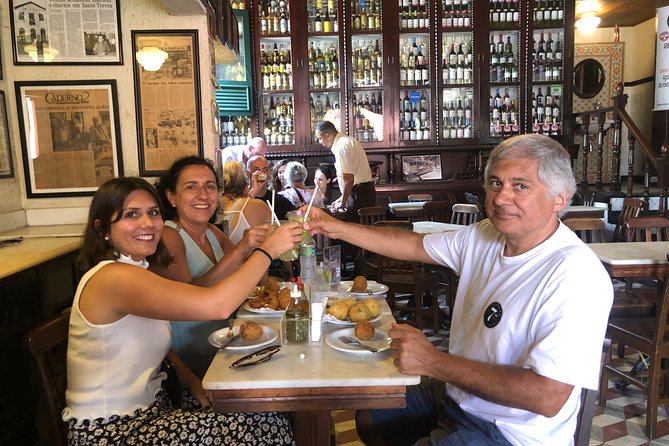
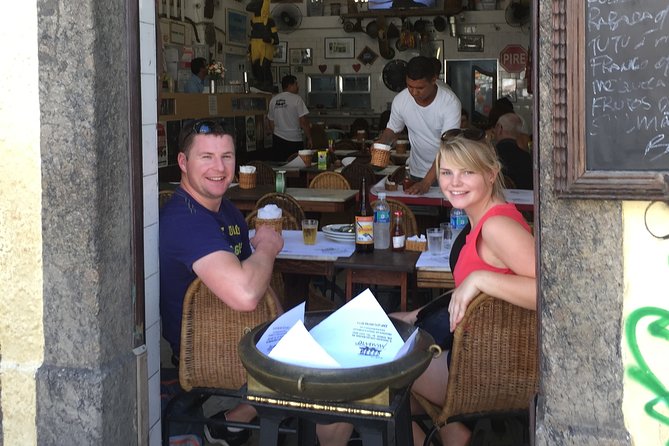
The tour also includes bar food. A highlight for one route was a caipirinha at a more than 100-year-old tavern, served with a bolinho. A bolinho is a small fried snack, and it gives you a simple way to experience the Brazilian habit of pairing a drink with a savory bite.
I like this part of the tour because it explains the social side of eating. The food is not treated as a list of national specialties. You get a sense of how a drink, a snack, and conversation fit together in an old neighborhood bar.
Alcohol is part of at least one described route, so you should mention any preferences to your guide. The tour includes transportation, but you should still pace yourself during a long day of tasting.
Santa Teresa brings food, art, and hilltop views
Santa Teresa is both an arts district and a food center. Its studios and artists have earned it comparisons with Montmartre, and the route may include a walk through its streets, photo stops, and views toward Christ the Redeemer.
This is one of the best transitions in the day. You move from market stalls and seafood into a neighborhood where the setting matters as much as the meal. The hills give Santa Teresa a different feel from the beach districts, while the art connection adds a creative layer to the food tour.
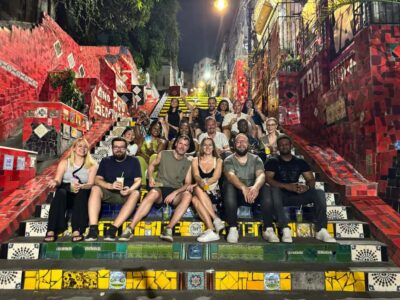
The listed itinerary allows about 30 minutes at Selarón Steps, with admission included. The staircase is covered with colorful tiles from around the world and is one of Rio’s most recognizable public artworks.
There is also a personal link here. Guide Vicente worked with artist Jorge Selarón and contributed more than 100 tiles to the project. That detail gives the stop extra meaning. Instead of only taking photos, you may hear how the staircase developed and how local people connected with the artwork.
The 30-minute timing is enough for photos and a short explanation, but not a long neighborhood walk. If you want an extended visit to Santa Teresa or time at every overlook, ask how the day’s route will be paced.
Same patch of Brazil, a completely different sort of day:
- Rio de Janeiro: 6-Stop Highlights of Rio with Lunch
★ 4.4 · 5,157 reviews - Christ the Redeemer Entry Ticket by Corcovado Train
★ 4.4 · 4,476 reviews - Rio’s City Tour – Tickets for Christ, Sugar Loaf & Lunch included
★ 5.0 · 4,389 reviews - Full Day: Christ Redeemer, Sugarloaf, City Tour & Barbecue Lunch
★ 4.5 · 3,142 reviews
Lapa and the historic center between bites
The route can pass through Lapa, known for the Carioca Aqueduct, usually called the Lapa Arches. Built in the mid-18th century, the aqueduct once carried fresh water from the Carioca River to the city. Its colonial design is a reminder that Rio’s practical infrastructure can also be one of its major photo subjects.
Nearby, the tour may bring you through several important central sites. Cinelândia, officially Praça Floriano Peixoto, was once a center of Brazil’s political and cultural life. The area also includes the Theatro Municipal, whose architects looked to Paris’s Opéra Garnier and imported European materials for its construction.
The itinerary also names the National Museum of Fine Arts and the National Library. The art museum holds major Brazilian works from the 19th and 20th centuries, along with prints and paintings by artists such as Eugène Boudin. The National Library, founded more than 200 years ago, holds about nine million items and is one of the world’s major national libraries.
These sites help put the food in context. Rio’s eating traditions developed in a city shaped by Portuguese rule, African heritage, immigration, trade, religion, and political change. You may only see the buildings from outside, but the guide’s explanation can connect them to the neighborhoods around them.
The historic center also includes the Royal Portuguese Reading Room, a striking neomanuelino building with more than 350,000 volumes. Its facade was carved in Lisbon and shipped to Rio. It is a quick but memorable architectural stop if the day’s schedule allows.
Colonial churches and old Rio architecture
The itinerary includes several religious buildings, although the exact amount of interior time may vary. The Candelária Church combines Portuguese colonial Baroque features with later Neoclassical and Neo-Renaissance details.
The church of São Francisco da Penitência is another major architectural stop. Its gilded wood decoration, created between 1700 and 1737, is among Brazil’s finest Baroque work. A small museum at the entrance contains statues carried through the streets during the Ash Wednesday procession.
The Santo Antônio Monastery offers a quieter contrast. Inside, you may see a carved and gilded apse and a painted ceiling. The monastery sits above Largo da Carioca and has a calm interior despite its central location.
Rio Cathedral is very different from these older churches. The huge concrete cone, built between 1964 and 1976, can hold about 20,000 people. Its four large stained-glass windows slope from the roof toward the base, filling the bare interior with color.
I like having these buildings woven into a food route because the day does not reduce Rio to beaches and cocktails. The tradeoff is time. This is not a dedicated church or museum tour, so treat the buildings as meaningful glimpses rather than complete visits.
From Saara to Confeitaria Colombo
Saara is an open-air shopping area made up of streets around Alfândega Street. Its stores serve the popular market, and the neighborhood grew from small family businesses opened by immigrants in the late 19th century.
This is a practical, everyday part of central Rio. You see a commercial district used by residents, not a polished attraction designed only for sightseeing. The original architecture still survives in parts of the area.
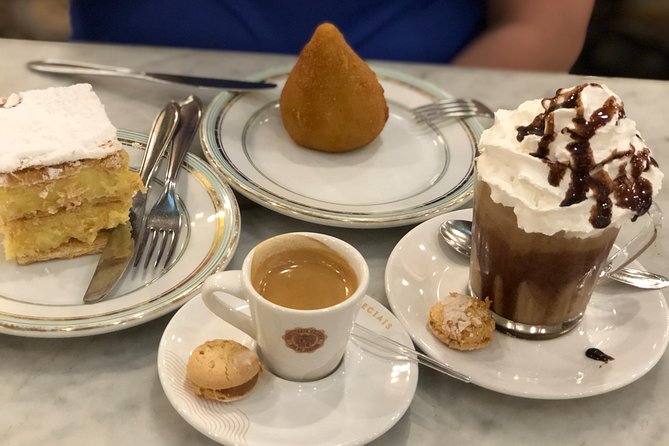
Confeitaria Colombo offers a more formal change of mood. The late-19th-century cafe has stained glass, brocaded mirrors, and marble counters. Its desserts include pastel de nata, the Portuguese custard tart.
You may come here for coffee or a sweet rather than a full meal. The stop works well because it links Rio’s Portuguese influence with the city’s long cafe tradition. It is also a good place to slow down after several busy central sights.
The itinerary can include Centro Cultural Correios, a former administrative and postal building now used for cultural events. Exhibitions, theater, video, music, and art programs take place there. Casa França-Brasil, a former customs house in a Neoclassical building from 1820, may also be included, with small exhibitions and occasional concerts.
The port area reveals another Rio
The port section brings together public spaces, museums, street art, and difficult history. Praça Mauá is the center of the modern port area, with the Rio Art Museum, Museum of Tomorrow, and the old A Noite building nearby.
The Museum of Tomorrow looks at sustainability and the challenges facing humanity in the coming decades. The Rio Art Museum focuses on the city’s social fabric, conflicts, symbols, and changing identity through historical and contemporary art.
You may not have time to explore both museums fully. If entrance visits are important to you, ask in advance how much time the tour normally allows. The value here is often the broader view of the port district, not a full museum program.
The Kobra mural in Gamboa is one of the route’s most photogenic stops. Created by Eduardo Kobra, the 2,500-square-meter panel uses the Olympic rings and represents the five continents. It has been recognized by Guinness World Records as one of the largest graffiti panels in the world.
The port route also includes Valongo Wharf, an archaeological site tied to the history of the Atlantic slave trade. Discovered during port renewal work, the wharf revealed objects linked to people from Congo, Angola, and Mozambique. It became a UNESCO World Heritage Site in 2017.
This is an important reason to value the sightseeing side of the tour. Food in Rio cannot be separated from the movement of people, goods, and cultures through the port. The guide can help you understand that connection without turning the day into a formal lecture.
A final taste with a view
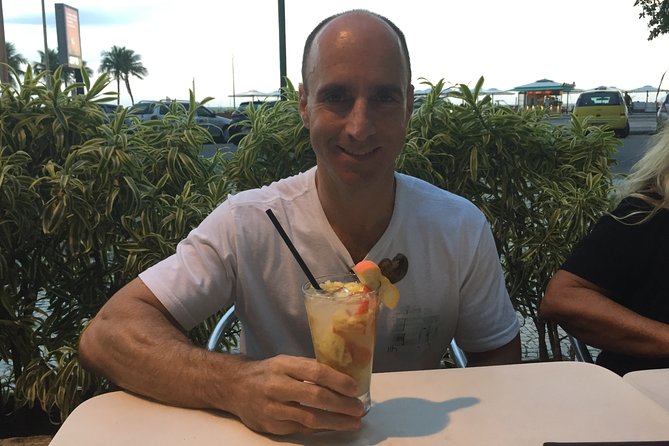
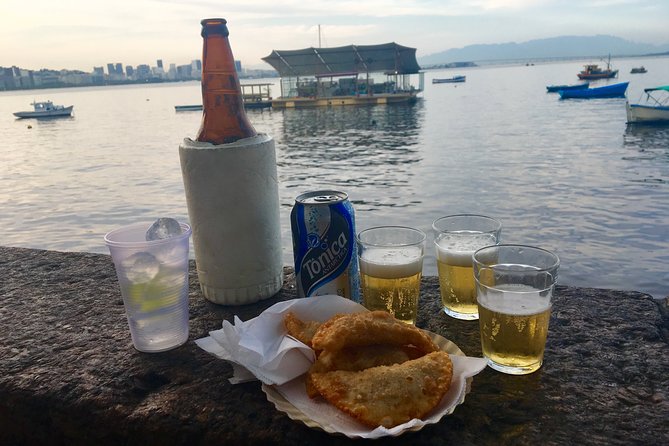
A described route finished with açaí, a traditional Amazonian food, followed by eating and drinking near the bay with local people nearby. The location was informal, with the group perched on a wall and looking out over the water.
That kind of ending fits the tour. It is less polished than a restaurant dining room, but it can feel more connected to the city. You finish with food, a drink, a view, and the chance to laugh with your guide rather than simply checking off one final attraction.
The exact final stop can change, so consider the account as an example rather than a promise. The strongest days seem to combine several small tastings with enough time for conversation and city views.
What $175 buys you
At $175 per person, this is not a cheap way to grab lunch. You are paying for a private tour, pickup, an English-speaking guide, transportation in air-conditioned comfort, food and drink stops, ordering help, and a broad route through Rio.
The value is strongest if you want one efficient introduction to the city. A first-time visitor could spend several days learning where the center, Santa Teresa, Lapa, and the port area fit. This tour connects them in five to six hours.
The price is less attractive if you mainly want a large meal or a fixed list of famous dishes. Since the route changes and the food selection depends on the market and open businesses, you should book for variety and guidance rather than a guaranteed menu.
Group discounts may be available, and the maximum group size is 15 people. Even with a private booking, confirm what private means for your reservation and how many people will be in the vehicle.
The tour is commonly booked about 33 days ahead, which suggests you should reserve before your trip if your schedule is tight. Confirmation is provided at booking, pickup is offered, and mobile tickets are accepted.
Who should book this Rio food tour?
I would choose this outing for a first visit, especially if you want food to guide your introduction to Rio. It suits curious eaters who like trying small portions, asking questions, seeing several districts, and letting a local guide handle the practical details.
It is also a good fit for families or small groups that want a private pace. One detailed account described an 18-year-old joining the day, with plenty of food and walking by the end. A moderate level of physical fitness is required, since markets, steps, streets, and sightseeing stops are part of the route.
You should be comfortable with an itinerary that can change. The farmers market location varies, restaurants and bars may differ, and some listed landmarks may be photo stops rather than extended visits.
Tell Rio Alternative Tour about food allergies and dietary restrictions before you go. The cancellation policy allows a full refund if you cancel at least 24 hours before the start time. Changes or cancellations inside that window are not accepted for a refund.
FAQ
How long does the private Rio food tour last?
The tour lasts approximately five to six hours.
What is the price?
The listed price is $175 per person. Group discounts may be available.
Is pickup included?
Pickup is offered.
Is the tour conducted in English?
Yes. The tour is offered in English. The guides named in the supplied details, Vicente and Lully, also speak Spanish and Portuguese.
How large can the group be?
The maximum group size is 15 people.
Does the itinerary stay the same every day?
No. The farmers market takes place in a different neighborhood each day, so the route changes somewhat.
What foods might I try?
Possible foods include artisanal cheese, coconut treats, tapioca pizza, crab stew, cheese-stuffed shrimp, bolinho, pão de queijo, açaí, pastel de nata, and caipirinhas. The exact selection can vary.
Does the tour include the Selarón Steps?
Yes. The itinerary includes Selarón Steps, with about 30 minutes listed and admission included.
Can I cancel for a full refund?
Yes, if you cancel at least 24 hours before the experience start time. Cancellations or changes made less than 24 hours before the start time are not refunded or accepted.
Should you book it?
Book this tour if you want Rio’s food, neighborhoods, art, and history in one well-organized half-day. Its best features are the guide-led ordering, the varied tastings, the air-conditioned transport, and the chance to see places such as Santa Teresa, Lapa, the historic center, and the port without arranging each piece yourself.
Skip it if you want a fixed restaurant menu, a slow museum day, or a budget food walk. For everyone else, $175 buys a broad and personal introduction, with enough local flavor to help you choose where to eat and explore for the rest of your stay.
Newest reviews from around Rio de Janeiro
- Hang gliding flight in Rio de Janeiro★ 5.0 · 6 reviews
- Rio de Janeiro: Zip Lining and Canopy Tree Tour★ 3.3 · 6 reviews
- Vidigal Favela Tour★ 4.4 · 26 reviews
- Rio de Janeiro: Attend a Vasco da Gama game with local guide★ 4.8 · 9 reviews
- Unforgettable Boat Party★ 5.0 · 3 reviews
- Parapente Rio de Janeiro★ 5.0 · 4 reviews
- Rio de Janeiro Private Tour with Cruise Terminal Pick-up★ 5.0 · 2 reviews
- Wild Waters: Rio Whitewater Rafting Adventure Tour★ 5.0 · 13 reviews
Food Tours in Rio de Janeiro, compared.
Pub Crawl in Lapa with Cachaça Tasting and Live Samba
Read our review →
Sunset Boat Tour with Beer, Water, Soda and Snacks included
Read our review →
3-Hour Tasting Session in Rio with 33 Foods Brazilians Love
Read our review →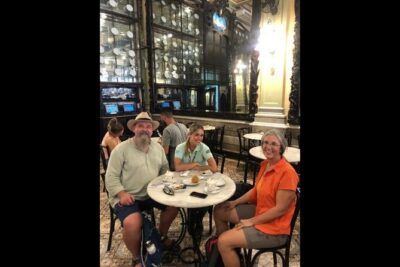
Rio Gastronomy: Culture & History Through The Art Of Food – Walking Group Tour
Read our review →
Petropolis The Imperial City with Beer tour and Lunch
Read our review →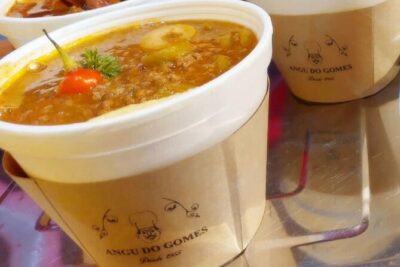
Food Tour Rio de Janeiro – The Best Typical Brazilian Dishes
Read our review →
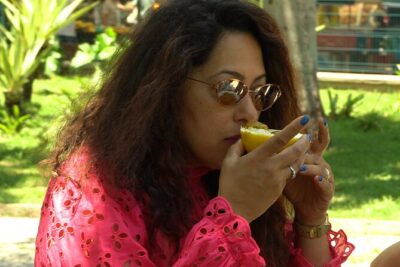
Guided Market Fruit Tasting in Rio with 15+ Exotic Flavors
Read our review →Browse the lists this tour appears in