
Reviewed · HISTORICAL TOURS
Florianopolis Walking Tour – History, Art and Gastronomy
History becomes a walkable meal. This two-hour Florianopolis tour links old civic buildings, Black heritage, samba culture, and the Public Market, with historian Isaac guiding the story. I especially like the small maximum of 15 people and the way the route mixes major sights with everyday food culture. You also get a city map with local recommendations, a useful extra when you are just getting oriented.
The main consideration is pace. Eight stops in about two hours leaves little time for long visits, and food and drinks cost extra. If you want a slow museum visit or a full meal, you will need to continue exploring after the walk. Still, at $17.64 per person, this is a strong-value introduction to central Florianopolis.
In This Review
- Five good reasons to take this Florianopolis walk
- Starting at Largo da Alfandega with a practical welcome
- Memorial Miramar and the vanished waterfront
- Bar do Noel brings samba and feijoada into the story
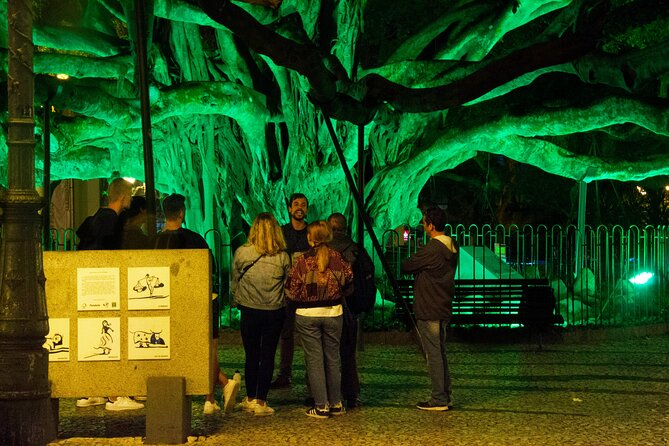
- Praça XV and the enormous fig tree
- Palacio Cruz e Sousa and a museum connection
- Teatro Alvaro de Carvalho and a difficult chapter
- The Church of Our Lady of the Rosary and Saint Benedict
- Mercado Publico, where the history turns practical
- What the guide adds to the short format
- Is $17.64 a fair price?
- Who will enjoy this walk most?
- Should you book the Florianopolis Walking Tour?
- FAQ
- How long does the Florianopolis Walking Tour last?
- What is the price per person?
- Where does the tour begin?
- Where does the tour end?
- Is food included in the tour?
- Are alcoholic drinks included?
- What is the maximum group size?
- Are rain coats provided?
- Can I cancel for a full refund?
Five good reasons to take this Florianopolis walk
- A trained historian leads the route, giving the buildings and public spaces social context rather than only dates and names.
- The tour connects slavery, Indigenous land, and Black community history to the city’s past.
- The Public Market is the finale, with restaurants, fish, groceries, and souvenir shops.
- Bar do Noel adds local music and food culture, including samba and feijoada.
- A small group capped at 15 people makes questions and discussion easier.
- Rain coats and a city map are included, while drinks and food are paid separately.
Starting at Largo da Alfandega with a practical welcome
The meeting point is outside Café Bar do Largo da Alfândega at Largo da Alfândega, 142, in Centro. This is a sensible place to begin because you can get coffee or water and use the restroom before setting off. You are not being asked to meet on a random street corner with no support.
The first stop lasts about 10 minutes, and admission is free. That timing suggests an introduction to the central area rather than a formal café visit. I would arrive with enough time to find the café, especially if you do not know central Florianopolis yet.
The guide provides a map with local recommendations. That matters more than it may sound. A short city walk can show you what to see, but a good local map helps you decide where to eat, drink, and return later. The guide also carries rain coats in case of wet weather, though the experience itself requires good weather and can be rescheduled or refunded if conditions are poor.
More Walking Tours in Florianopolis:
- Florianopolis: Walking Tour – History, Art and Gastronomy
★ 5.0 · 21 reviews - Private Walking Tour in Florianopolis with Local Bar Hop
★ 5.0 · 9 reviews - A walk through the center of Floripa
★ 4.5 · 9 reviews
Memorial Miramar and the vanished waterfront
The five-minute stop at Memorial Miramar recalls one of the city’s old piers and a popular bar. It is a brief visit, but it gives the walk a useful change of scale. You are not only looking at surviving colonial or civic buildings. You are also hearing about places that once shaped social life and are no longer part of the waterfront in the same way.
This is the sort of stop that works best with a good storyteller. The memorial may not demand much time on its own, but the guide’s explanation can connect the old pier, leisure, and the changing center of the city. Isaac is described as a trained historian who tells the story in an easy, engaging way. That is important here, since a short stop needs context to feel worthwhile.
Do not expect a large museum visit. You are stopping, listening, and moving on. If you prefer a tour built around extended time at each site, this route may feel brisk.
Bar do Noel brings samba and feijoada into the story
Bar do Noel is known downtown for live samba and feijoada. The stop lasts about five minutes, so it is best understood as a cultural introduction rather than a scheduled concert or meal. You get a sense of the place and learn why it matters to local food and music culture.
Feijoada is one of Brazil’s best-known dishes, and samba gives this part of the walk a strong social note. The route is not treating Florianopolis as a set of polished façades. It also points you toward the bars where people gather, eat, listen, and spend time.
Food and drinks are not included. A pint averages about $4, so you should bring extra money if you want to stop for a drink later. The tour price covers the guiding and the walk, not a tasting menu. That keeps the base cost low, but it also means you should not book expecting lunch to be part of the experience.
Praça XV and the enormous fig tree
The city’s main square receives about 20 minutes, making it one of the longer stops. Its focal point is a gigantic fig tree, a memorable natural landmark in the middle of the historic center.
This is a good place for the tour to slow down. Public squares tell you how a city is organized, and the tree gives you an easy visual anchor while the guide explains Florianopolis around it. I like that the route gives this square more time than the five-minute stops. You have room to look around, ask questions, and take in the setting instead of simply checking off another address.
The square is also a useful orientation point. After the walk, you can recognize it on your own and use it as a reference when returning to the center. No admission fee is required for the stop.
More History Tours in Florianopolis:
- Germanic Route – Cultural and historical in Ilhota, Blumenau and Pomerode
★ 4.5 · 67 reviews - Florianópolis: Historical Center, Beach & Nature Tour
★ 3.3 · 25 reviews - Florianopolis Bike Tour: Photography, History & Street Food
★ 5.0 · 18 reviews - Historic Florianópolis Tour with Beach
★ 4.0 · 4 reviews
Palacio Cruz e Sousa and a museum connection
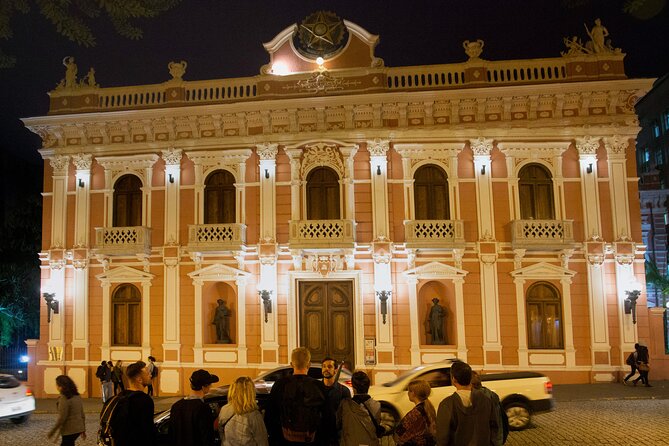
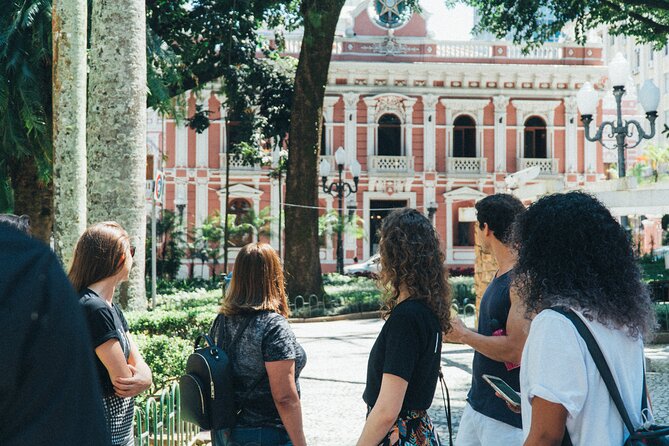
The 10-minute visit to Palacio Cruz e Sousa covers the former Governor’s Palace and the Cruz e Sousa Museum. The building offers a direct link between political power and cultural memory.
The tour does not promise a long interior visit, so you should think of this as a guided introduction. The guide can help explain who Cruz e Sousa was and why the museum belongs in a city history walk. The supplied comments describe the tour as especially useful for understanding Florianopolis and its connection with slavery in Brazil. That wider frame gives this stop more weight than a quick look at an attractive government building.
If you are interested in art, literature, or the way cities remember difficult parts of their past, this should be one of the more useful stops. If you want time to study museum displays, plan to return separately. Ten minutes is enough for orientation, not a full museum visit.
Teatro Alvaro de Carvalho and a difficult chapter
Teatro Alvaro de Carvalho, often called TAC, is next. The theater was used as a prison for Federalist rebels in 1894, adding a sharp political turn to the route.
That detail changes how you see the building. A theater is usually associated with performance, leisure, and public culture. Knowing that it also held prisoners reminds you that civic spaces can carry several layers of memory, some far less comfortable than others.
The stop lasts about 10 minutes. The value here comes from the explanation rather than a long performance or backstage visit. Isaac’s approach, as described in the supplied comments, gives attention to political and social context without making the walk feel like a lecture. That balance suits the short format.
The Church of Our Lady of the Rosary and Saint Benedict
This church was built by the Black community for the Black community. It is one of the most important stops for anyone who wants more than a surface-level account of Florianopolis.
The church gives the tour a clear social focus. Instead of presenting the city only through governors, theaters, and official squares, the route recognizes the people who built community under unequal conditions. The comments about the tour specifically praise its treatment of slavery in Brazil and its acknowledgment of Indigenous lands. Those subjects are essential to understanding the city, and they make the walk more thoughtful than a simple architecture circuit.
The visit lasts about 10 minutes and admission is free. You may find the stop especially meaningful if you care about Black history, public memory, or the relationship between religion and community life. The short time means the guide has to select key points, but that can be a benefit if you prefer a clear overview rather than a long academic talk.
Mercado Publico, where the history turns practical
The final stop is the Public Market, with about 30 minutes set aside. This is the longest stop on the route, and it is a smart place to finish because you can turn the tour’s cultural themes into practical plans for the rest of your stay.
Inside, you will find local restaurants, souvenir shops, fish, and groceries. The market is not presented only as a place to take photos. It is also somewhere to eat, browse, and see the daily food economy of the city. The guide’s recommendations can help you decide where to return, especially if you are unsure how to approach local dishes or market stalls.
You pay for any food or drinks yourself. Since the average pint costs around $4, the market can be a modest add-on, but your total spending depends on what you choose. Thirty minutes is enough to get an overview and perhaps make a purchase. It may not be enough for a relaxed meal if the market is busy, so keep your expectations practical.
Ending here also helps with orientation. You finish in a useful central location rather than at the same café where you began. The exact end point is described as different from the start, with the Public Market serving as the final stop.
What the guide adds to the short format
A two-hour walk succeeds or fails on the guide. Isaac receives especially strong praise for telling Florianopolis history in a clear, engaging way. The most useful quality is not simply knowing dates. It is the ability to connect buildings, slavery, Indigenous land, Black community life, politics, music, and food without exhausting you.
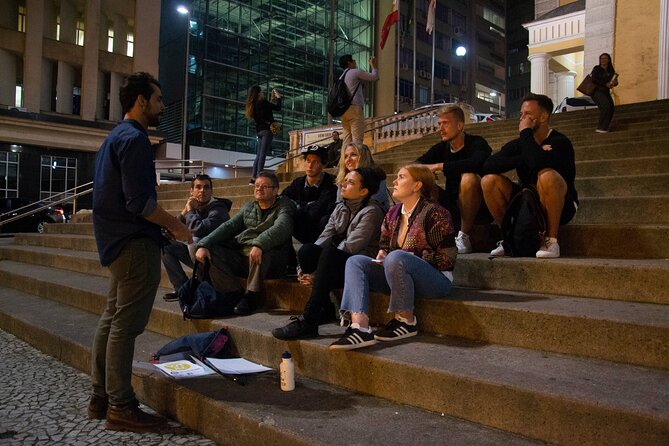
The walk is also built for conversation. With a maximum of 15 people, you have a better chance to ask questions than you would on a large coach outing. A small group can make the history feel more personal, especially at the church and the former prison site.
The route is described as well paced and suitable for people who love history but do not want an exhausting lecture. That sounds right for the schedule: most stops last 5 or 10 minutes, with longer pauses at Praça XV and the Public Market. You should expect a steady city walk with frequent stops, not a slow photography tour.
Is $17.64 a fair price?
At $17.64, I see this as an orientation tour with strong value. You receive about two hours of guiding, a compact route through major central sites, a local map, and rain protection when needed. Every listed stop has free admission, so the price is mainly paying for the guide’s time, interpretation, and local advice.
The value is highest if you are new to Florianopolis and want to understand the center before exploring on your own. The map and food recommendations add usefulness beyond the two-hour walk. The tour can also prevent a common city-break mistake: seeing attractive buildings without understanding how they fit together.
The value is lower if you want included food, alcohol, museum tickets, or a long stop inside each building. Nothing is included beyond the walking experience and the listed extras. Bring money for anything you eat or drink, with a pint averaging around $4.
Who will enjoy this walk most?
I would choose this tour for a first visit, especially if you like history, local food, and social context. It suits curious visitors who want a readable introduction to the city rather than a dense academic presentation.
It is also a good match for anyone interested in Brazil’s relationship with slavery, Black community history, and the memory of political conflict. The church, Palacio Cruz e Sousa, and TAC give the route substance, while Bar do Noel and the Public Market keep it connected to present-day life.
You may want a different activity if your main goal is beach scenery, a long restaurant meal, or extensive museum time. This is a central-city history walk. It does not replace a full day of sightseeing, but it can make the rest of your time more informed and easier to plan.
Most people can participate, and service animals are allowed. The meeting point is near public transportation. Confirmation is provided at booking, and free cancellation is available up to 24 hours before the start time. If poor weather cancels the walk, you are offered another date or a full refund. A minimum group size is required, so a cancellation for that reason also brings the choice of another date, another experience, or a full refund.
Should you book the Florianopolis Walking Tour?
Book it if you want a short, affordable introduction led by a historian, with honest attention to social history and local culture. Isaac’s storytelling, the small group, and the market finish are the strongest reasons to choose it.
I would book it early in your stay, then use the map and recommendations to plan meals and return visits. Do not book it expecting a tasting tour or a full museum circuit. For $17.64, it gives you something more useful: a clear sense of how central Florianopolis fits together, and several good leads for what to do next.
FAQ
How long does the Florianopolis Walking Tour last?
The tour lasts approximately two hours.
What is the price per person?
The listed price is $17.64 per person.
Where does the tour begin?
It begins outside Café Bar do Largo da Alfândega at Largo da Alfândega, 142, Centro, Florianópolis, SC 88010-110, Brazil.
Where does the tour end?
The activity ends at a different location from the meeting point. The final listed stop is Mercado Publico de Florianopolis.
Is food included in the tour?
No. Food and drinks are not included. The Public Market has restaurants, fish, groceries, and other places where you can buy food.
Are alcoholic drinks included?
No. Alcoholic beverages are not included. The average price for a pint is around $4.
What is the maximum group size?
The tour has a maximum of 15 participants.
Are rain coats provided?
Yes. Rain coats are provided in case of rain, although the experience requires good weather and may be canceled if conditions are poor.
Can I cancel for a full refund?
Yes. You can cancel at least 24 hours before the experience start time for a full refund. Changes or cancellations made less than 24 hours before the start time are not accepted for a refund.
Newest reviews from around Florianopolis
- Private Tour: Itajai and Camboriu★ 4.5 · 8 reviews
- Bombinhas + Snorkel by Zimbros Ecotour★ 5.0 · 2 reviews
- Beto Carrero Transfer – Bombinhas Exit★ 5.0 · 9 reviews
- Breath Experience★ 5.0 · 39 reviews
- Beer Tasting Experience★ 5.0 · 35 reviews
- Whale Watching – Whale watching from land★ 5.0 · 24 reviews
- Secret Island Adventure: Gravata Trail, Floripa★ 5.0 · 3 reviews
- Sandboard Experience by Adrenailha★ 4.5 · 18 reviews
Historical Tours, compared.


Private Walking and Cultural Tour Rocinha-Rio de Janeiro
Read our review →
Discover Rio Little Africa: A Cultural and Historical Journey
Read our review →

Scenic Train ride to historical cities of Morretes and Antonina
Read our review →
Browse the lists this tour appears in