
Reviewed · WATERFALL TOURS
Cachoeira Countryside Flavor Private Tour from Salvador
The countryside tells Bahia’s story differently. This private day trip from Salvador links Cachoeira’s colonial streets with Santo Amaro-area food, tobacco, religious traditions, and farm cooking. You get far more than a quick photo stop: the day explains how rural life, Afro-Brazilian culture, independence-era politics, and local craft fit together.
I especially like the farm lunch with panoramic views and the visit to the Danneman or Talvis cigar factory, where you can watch cigars being made by hand. The biggest consideration is timing: several churches, museums, and historic buildings open only when local staff are available, so some visits may remain outside-only.
The approximately 10-hour outing costs $220 per person and requires at least two people. That price covers private transport, hotel pickup and drop-off, a professional guide, an air-conditioned vehicle, and buffet lunch. It is a strong choice if you want personal attention and a broad look at the Recôncavo Baiano rather than another day inside Salvador.
In This Review
- Key points to know before you book
- Why Cachoeira makes a worthwhile day trip from Salvador
- Starting among Santo Amaro’s market flavors
- Rosário Church and the limits of local schedules
- Seeing tobacco become a handmade cigar
- A short stop for Roque Pinto liqueur
- Fazenda Santa Cruz and a long Bahia lunch
- Casa de Câmara e Cadeia and Brazil’s independence story
- Carmo’s convent and a church still under restoration
- The Good Death Sisterhood and Afro-Catholic tradition
- Hansen Bahia’s woodcut art
- Is $220 per person a fair price?
- Who will enjoy this private countryside day
- Should you book the Cachoeira countryside tour?
- FAQ
- How long does the Cachoeira countryside tour last?
- What is included in the tour price?
- Is the tour private?
- How many people are required to book?
- Is entrance to Rosário Church included?
- Is the cigar-making activity included?
- What happens if the weather is poor or the minimum group size is not met?
Key points to know before you book
- Santo Amaro and Cachoeira in one day: The route gives you a useful taste of two important towns in Bahia’s countryside, with markets, churches, squares, and local businesses.
- A real tobacco-making demonstration: At Leite E Alves, also associated with Danneman or Talvis cigars, you can watch the process from tobacco work to finished cigar tasting.
- Farm cooking with a view: Lunch at Fazenda Santa Cruz is a buffet meal overlooking Cachoeira. If the farm is closed, lunch moves to the Carmo convent in town.
- Access can change during the day: Entry to several buildings depends on city hall or foundation staff schedules, which are described as irregular.
- A private vehicle and guide: Your group travels alone, with hotel pickup and drop-off included. Past service has included guides named Wilson and Misael.
- Extra costs are modest but real: Alcoholic drinks are not included. The Rosário Church entrance is listed at R$10, and making your own cigar costs R$75.
Why Cachoeira makes a worthwhile day trip from Salvador
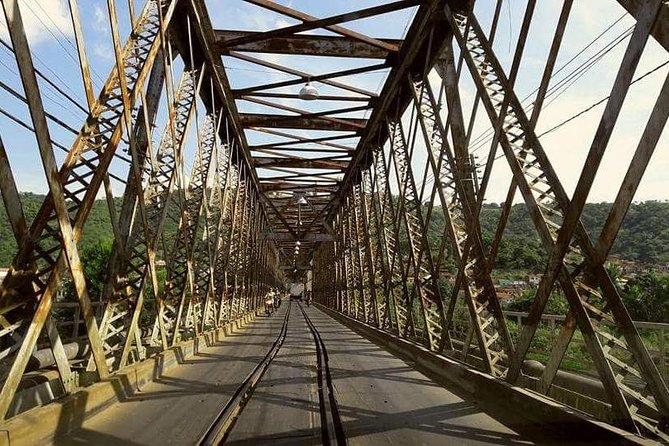
Salvador is Bahia’s grand front door, but the Recôncavo gives you a different view of the state. This countryside around the Bay of All Saints is tied to sugar, tobacco, colonial trade, African cultural traditions, and Brazil’s political past. Cachoeira brings many of those threads together in a compact historic center.
The town is recognized as a UNESCO World Heritage-listed place, and its appeal comes from the streets rather than one single monument. Cobblestones, colonial façades, churches, public buildings, and the river setting create a slower rhythm than Salvador. I like that this tour does not treat Cachoeira as a backdrop only. It adds food, drink, craft, and personal stories.
You spend about 10 hours on the road and in the towns, so this is a full day. The private format matters here. You can ask your guide to explain a church façade, a religious tradition, or an unfamiliar food without waiting for a large group to catch up.
Past outings have included Wilson, who led a detailed discussion of Brazil’s difficult and remarkable past, and Misael, who was praised for keeping conversation moving across many subjects. The driver also received strong praise for safe, capable service. Your guide may be different, but the private setup gives you a better chance to shape the conversation.
More Waterfall Tours in Salvador da Bahia:
- Rio de Janeiro Tijuca Rainforest Hike with Waterfalls and Caves
★ 5.0 · 1,082 reviews - Rio: Tijuca Forest Small Group Hike to Caves and Waterfalls
★ 4.9 · 536 reviews - Paraty: Jungle Waterfalls and Cachaça Distillery Jeep Tour
★ 4.7 · 491 reviews
Starting among Santo Amaro’s market flavors
The first section takes you through Santo Amaro, beginning with a walking route over cobblestone streets. The food market is an excellent early stop because it gives you something concrete to taste while your guide explains the area.
You can sample local fruit, special cheese, and sweets made with banana and guava. These are small tastes, not a full meal, but they help you notice the everyday side of Bahia. I would take this part slowly and ask about ingredients, preparation, and which products are made locally.
The route includes a look at the Church of Humildes from outside. There is no interior access listed for this stop. That may disappoint anyone expecting a church tour, but the exterior still adds another piece to the town’s religious and architectural story.
You then continue toward the main square for photographs of the Matriz Church and the Casa de Câmara e Cadeia, once a government and prison building. The first walk lasts about 1 hour and 30 minutes, which gives you time to look around instead of racing from one façade to the next.
Comfortable shoes are a sensible choice. The route includes cobblestones and walking, and the day combines several short visits with longer stretches on foot.
Rosário Church and the limits of local schedules
Nossa Senhora do Rosário Church receives a separate stop, though the visit is brief. You pause outside for photographs, with possible interior access depending on the daily schedule of city hall employees. The published entrance charge is R$10 per person if that access is available.
This uncertainty is important. The tour includes the church in the route, but it cannot guarantee that the doors will be open. You should think of the building as a sure exterior sight and a possible interior visit.
That arrangement applies to more than Rosário. Local public buildings and cultural sites do not always operate on a fixed tourist timetable. It is part of the tradeoff of visiting a smaller historic town: you get a less packaged experience, but access can be unpredictable.
Seeing tobacco become a handmade cigar
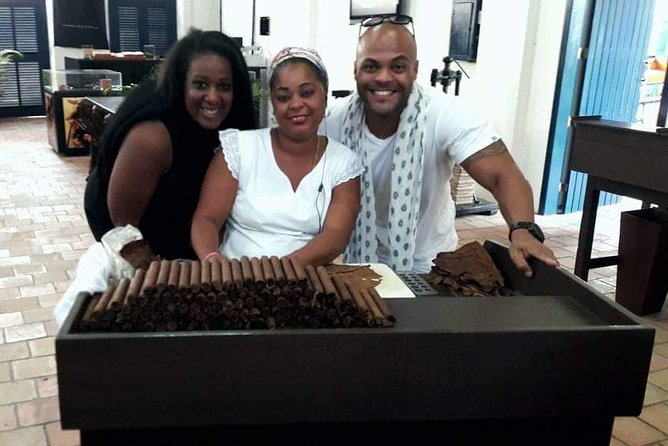
The cigar factory is one of the most distinctive parts of the day. At Leite E Alves, connected with Danneman or Talvis cigars, you see the production process step by step and watch a hand maker work with the tobacco.
The Recôncavo is known for tobacco growing, and the factory visit gives that reputation a practical face. Instead of simply hearing that tobacco matters to the region, you see how the finished product is assembled. The visit lasts about 30 minutes, so it is focused rather than drawn out.
You can taste ready cigars, and you may also try making your own. That hands-on activity costs R$75 per person and is optional. If you are curious about craft work, it may be a fun extra. If you do not smoke or have no interest in cigar making, you can simply watch the demonstration and move on.
This stop also adds balance to the historic sightseeing. Churches and government buildings tell you about institutions. The factory shows a living local trade and the value of manual skill.
A few more Salvador da Bahia days to weigh up
- Round trip transfer, Salvador, Bahia, Brazil
★ 5.0 · 228 reviews - Salvador City Tour – Discover Brazil’s First Capital En, It, Es
★ 5.0 · 217 reviews - Cooking class in Salvador, an authentic dinning experience
★ 5.0 · 132 reviews - Tour to the Frades Islands and Itaparica, from Salvador – Ba
★ 4.0 · 130 reviews
A short stop for Roque Pinto liqueur
Next comes Licor Roque Pinto, where you can taste one of the Recôncavo Baiano’s traditional liqueurs. The tasting lasts about 20 minutes and offers a quick introduction to another local product.
Alcoholic drinks are not included in the tour price, so check what is covered before ordering anything beyond the tasting. This is a brief stop, but it breaks up the walking and connects the day’s food theme with regional production.
If you prefer not to drink, you can still use the visit to learn about the liqueur and the way local specialties are presented. The tour does not require you to purchase alcohol.
Fazenda Santa Cruz and a long Bahia lunch
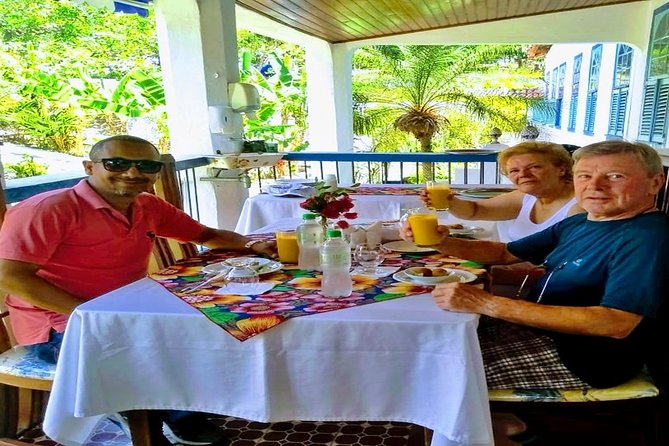
Lunch at Restaurante Fazenda Santa Cruz is meant to be one of the day’s main pauses. You eat a buffet meal at a farm in the region, with a panoramic view across Cachoeira. The stop lasts about 1 hour and 30 minutes, so you have time to sit down properly rather than squeeze in a rushed plate between monuments.
I like this choice because it shifts the focus from colonial town streets to country life. A farm meal gives you a better sense of the setting around Cachoeira, and the buffet format lets you sample several dishes without choosing a single unfamiliar item.
The farm is not guaranteed to be open. When it is closed, lunch takes place at the Catholic Carmo convent in Cachoeira. The meal remains included, but the setting changes. If the farm view is important to you, keep that possibility in mind.
The supplied tour information does not list individual dishes, so I would not book this expecting a specific regional menu. Instead, consider it a convenient included lunch with a strong setting when Fazenda Santa Cruz is operating.
Casa de Câmara e Cadeia and Brazil’s independence story
Back in Cachoeira, the Casa de Câmara e Cadeia provides one of the day’s most useful historical stops. This colonial-style building once served as the seat of legal government in Bahia when the region was still a province. It was also connected with the acclaim of Dom Pedro I as Regent and Defender of Brazil in 1822.
Today, the building houses a museum and gallery on the ground floor, including the original cells. That combination of civic rooms and prison spaces makes the visit easy to understand. You are not just looking at a pretty colonial façade. You can see how government and confinement operated under the same roof.
Interior access depends on city hall employees’ schedules. If the building is open, allow about 20 minutes. If it is closed, your guide can still explain the exterior and its place in the town’s political story.
This is one of the stops where a good guide makes a real difference. Wilson’s approach, for example, was praised for connecting Brazil’s difficult past with personal memories and clear explanation. The subject is not simple, and the value comes from having someone put the pieces in order.
Carmo’s convent and a church still under restoration
The Igreja da Ordem Terceira do Carmo dates to 1691, making it nearly as old as the Carmo convent beside it. The tour walks through the square and along the cobblestones, stopping for photographs.
At present, the building is still under restoration, so the interior is not part of the regular visit. Once restoration is complete, interior access may cost R$10 per person. That means you should treat this as an exterior architecture stop for now.
The Carmo complex still matters even without an interior visit. Its age, position in the square, and connection to the convent help explain how religious institutions shaped colonial Cachoeira. If the farm restaurant is closed, the convent may also become the setting for lunch, which gives you extra context for the building.
The Good Death Sisterhood and Afro-Catholic tradition
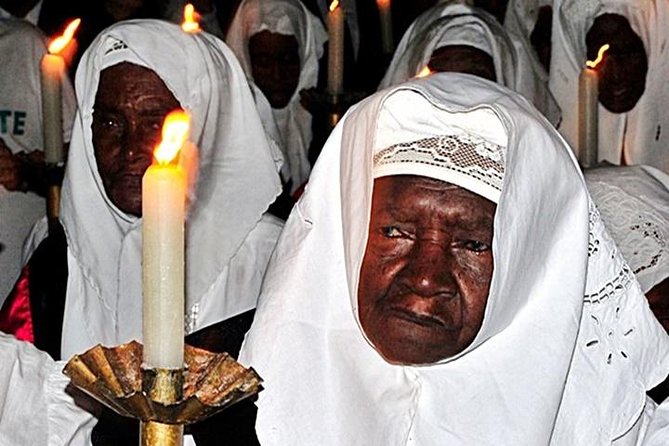
The Memorial of the Brotherhood of Our Lady of the Good Death is one of the most meaningful stops on the route. This Afro-Catholic confraternity consists only of Black women and has preserved beliefs and traditions across centuries.
The visit lasts about 40 minutes, and admission is included. More important than the length is the subject. The memorial helps you see religious life in Bahia as a place of African continuity, community strength, and cultural preservation, not only as a collection of European churches.
This stop gives the tour emotional and cultural weight. You move beyond colonial architecture and official history to learn about women who maintained a distinctive sisterhood within a Catholic setting. I would give your guide room to explain the traditions carefully, since the topic deserves more than a quick photograph.
Hansen Bahia’s woodcut art
The Hansen Bahia Museum was created in 1975 to preserve and present the work of an artist devoted to woodcut printing and Bahia. Its foundation also carries out museum and social work with the local community.
The planned visit lasts about 20 minutes. Interior access depends on the foundation’s staff schedule, so you may see the building from outside if it is closed. If it is open, the short visit can provide a useful artistic counterpoint to the churches, market, and cigar factory.
The museum’s focus on woodcutting also suits the day’s wider theme of handwork. You have already watched tobacco being shaped by hand, and here you encounter an artist’s work in another tactile medium.
Is $220 per person a fair price?
At $220 per person, this is not a budget day trip. But the comparison is not simply between this price and a cheap shared bus. You are paying for a private vehicle, hotel pickup and drop-off, an air-conditioned ride, a professional guide, and lunch. Only your group participates.
The value is strongest for two or more people who want flexibility, personal explanation, and a full countryside day without arranging separate transport. A private tour also makes the long schedule easier to manage. You are not sharing every stop with a large group or following a guide holding a flag.
The value is weaker if you mainly want guaranteed interior access. Several buildings depend on local staff, and one church is under restoration. You are paying for the route, transport, guide, and context, not a promise that every door will open.
The price also excludes alcoholic beverages, the R$10 Rosário entrance when applicable, the possible R$10 Carmo entrance after restoration, and the R$75 cigar-making activity. These are optional or small additions, but you should budget for them.
Who will enjoy this private countryside day
I would recommend this experience if you want to:
- See rural Bahia as well as Salvador
- Combine food, architecture, tobacco, art, and religious culture
- Travel in a private vehicle with hotel pickup and drop-off
- Ask detailed questions and keep conversation personal
- Spend a full day outside the city in a small group
- Visit places that feel connected to local life rather than only major tourist sites
It may not suit you if you want a relaxed half-day outing, guaranteed museum entry, or a tour centered only on grand interiors. The itinerary has many stops, and the schedule is full. The walking is manageable for most people, but cobblestones and a 10-hour day require reasonable stamina.
The tour requires a minimum of two people per booking, and most people can participate. It is near public transportation, though the included private pickup makes that less important for the scheduled day.
Should you book the Cachoeira countryside tour?
Book it if you want Salvador to be your starting point, not your entire Bahia experience. The best parts are the combination of Cachoeira’s colonial center, Santo Amaro’s market, the cigar workshop, the farm lunch, and the Good Death memorial. Those stops give the day more range than a standard historic-town excursion.
Go in with flexible expectations about opening hours. If you can accept an occasional exterior-only visit, the tour offers strong value through its private transport, thoughtful route, included lunch, and guide-led context.
For a first look at the Recôncavo Baiano, I would choose this over a simple drive through the countryside. It brings you close to food, faith, craft, and history, while still getting you back to Salvador after a long but worthwhile day.
FAQ
How long does the Cachoeira countryside tour last?
The tour lasts approximately 10 hours.
What is included in the tour price?
The price includes buffet lunch, a professional guide, hotel pickup and drop-off, an air-conditioned vehicle, and private transportation.
Is the tour private?
Yes. Only your group participates in the activity.
How many people are required to book?
A minimum of two people per booking is required.
Is entrance to Rosário Church included?
The listed entrance fee for Igreja do Rosário is R$10 per person and is not included. Interior access also depends on the local city hall employees’ schedule.
Is the cigar-making activity included?
No. You can watch the cigar-making process and taste ready cigars, but making your own cigar costs R$75 per person.
What happens if the weather is poor or the minimum group size is not met?
If poor weather or an insufficient number of participants causes cancellation, you will be offered another date or experience, or a full refund. Free cancellation is available when you cancel at least 24 hours before the start time.
Newest reviews from around Salvador da Bahia
- Transfer North-Ba Coast and Salvador Airport★ 5.0 · 25 reviews
- Curated Nightlife Experience in the Heart of the City★ 3.5 · 5 reviews
- One-Way Private Transfer to Boipeba Island★ 5.0 · 21 reviews
- Transfer Costa do Sauipe – Private★ 5.0 · 2 reviews
- Ilhas Maravilhas Frades and Itaparica Full Day Tour, Salvador, Bahia, Brazil★ 3.5 · 13 reviews
- Transfer Salvador to Barra Grande Round Trip★ 5.0 · 3 reviews
- Hotel Vila Galé Mares – Transfers In / Out★ 5.0 · 29 reviews
- Salvador de Bahia: Private Round-Trip Airport–Hotel Transfer★ 4.5 · 25 reviews
Waterfall Tours, compared.

Rio de Janeiro Tijuca Rainforest Hike with Waterfalls and Caves
Read our review →
Tijuca Forest Small Group Hike to Caves and Waterfalls
Read our review →
Jungle Waterfalls and Cachaça Distillery Jeep Tour
Read our review →
Guided Expedition with Canoeing and Waterfalls in Iguaçu
Read our review →
Iguassu Waterfalls: 1 Day Tour Brazil and Argentina’s sides
Read our review →
Hike through Secret Waterfalls in Foz do Iguaçu (Part-time – Morning)
Read our review →
Jeep Tour to waterfalls and stills BY PARATY TOURS
Read our review →
Full Day Hike through Secret Waterfalls in Foz do Iguaçu
Read our review →Browse the lists this tour appears in