
Reviewed · TIJUCA FOREST TOURS
Rio: Tijuca Forest Small Group Hike to Caves and Waterfalls
Rio’s rainforest is closer than you think. This six-hour Tijuca Forest outing gives you a solid half-day of nature, history, caves, waterfalls, and old plantation sites without taking you far from the city. I especially like the small-group format and the way guides such as Vini, Riccardo, Tito, and Luiza add lessons about Brazil, Rio, geology, plants, and wildlife as you walk.
The waterfall shower at Cascata da Baronesa is the obvious reward, but the old coffee-farm trails, Mayrink Chapel, suspension bridge, and Morcego’s Grotto give the hike more substance than a simple forest stroll. The main caution is fitness: 6.2 kilometers and 448 meters of elevation gain can feel tougher than the distance suggests, and the van may feel cramped for taller people.
In This Review
- Key points to know before you book
- Why this Tijuca Forest hike is worth your time
- Hotel pickup from Rio’s South Zone
- Cascatinha Taunay and the park’s first stories
- Mayrink Chapel and the coffee-plantation past
- The suspension bridge and Eucalyptus Forest
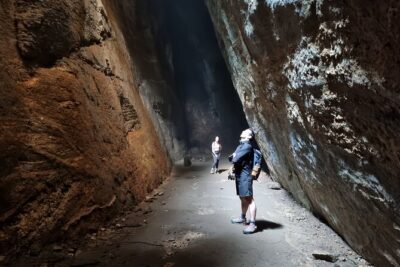
- Morcego’s Grotto, Brazil’s large gneiss cave
- Baronesa Cascade and the best cooling stop
- Old residences, fountains, and views on the return
- How hard is the 6.2-kilometer hike?
- Small groups, language, and guide quality
- Is $69 a fair price?
- Who should book this Tijuca Forest experience?
- Final verdict: a strong half-day choice in Rio
- FAQ
- How long does the Tijuca Forest hike last?
- How far is the hike?
- Is the hike difficult?
- Can I swim or shower at a waterfall?
- Is hotel pickup included?
- What happens if my hotel is not on the pickup list?
- What language is the tour conducted in?
- What should I bring?
Key points to know before you book
- A 6.2-kilometer rainforest circuit: Expect about two and a half to three hours of walking on rough, sometimes steep trails.
- Cascatinha Taunay is the park’s largest waterfall: It is an early scenic stop, while Baronesa Cascade provides the chance to cool off under falling water.
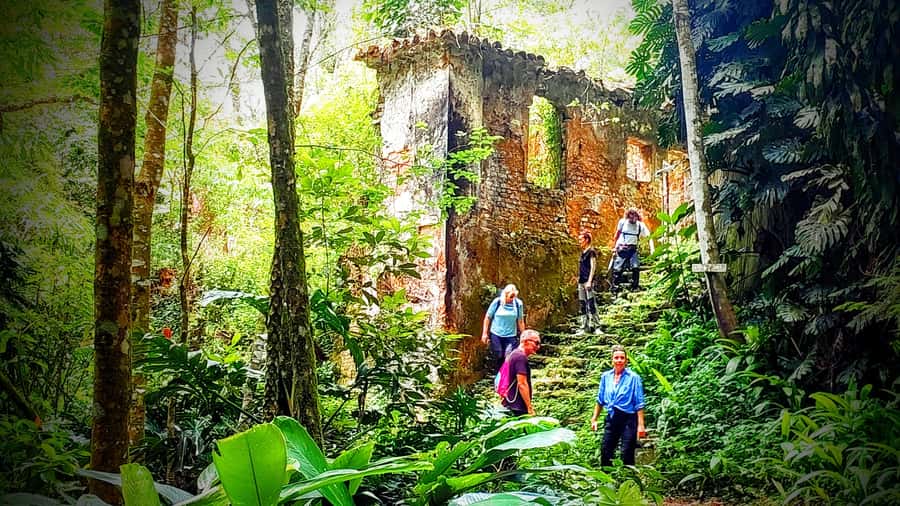
- The forest is also a history lesson: Nineteenth-century coffee plantations, an old chapel, a former residence, and a slave cemetery are part of the route.
- Morcego’s Grotto is a real highlight: This large gneiss cave adds a change of mood and terrain to the hike.
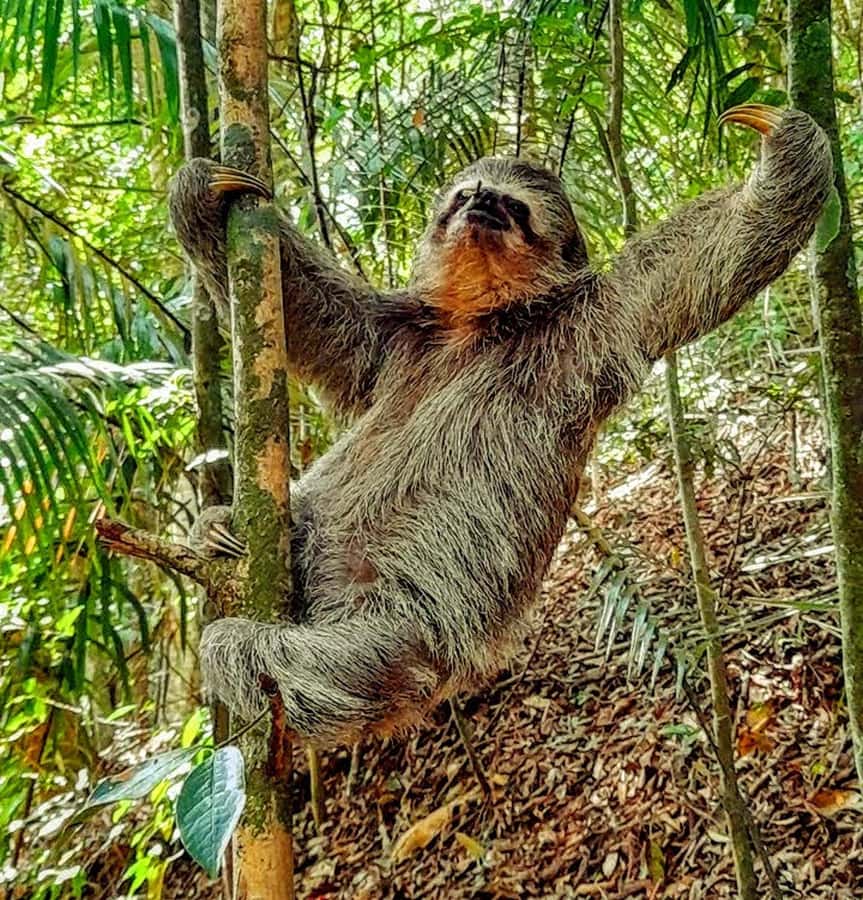
- Wildlife sightings are not guaranteed: You might see monkeys, coatis, sloths, or birds, but some outings see no animals at all.
- Pickup is convenient but limited: Hotel transport covers designated addresses in Rio’s South Zone, with a nearby meeting point if your hotel is not served.
Why this Tijuca Forest hike is worth your time
Tijuca National Park gives you something unusual in Rio: a chance to trade traffic and apartment blocks for damp forest, birdsong, rock walls, and shaded trails without committing to a full-day trip outside the city. The park is known as the world’s largest replanted urban forest, and this route helps explain why that matters.
The forest was not always forest. Coffee plantations once occupied parts of the area, and nineteenth-century paths, ruins, fountains, and buildings still point to that earlier period. A good guide connects those fragments to Brazil’s environmental and social history, so the walk becomes more than a series of pretty stops.
That guiding is central to the experience. Vini has been praised for covering Brazil’s political, social, and cultural life alongside flora, fauna, geography, and geology. Luiza’s background in botany gives her a useful angle on the ecosystem, while Riccardo, Tito, Pietro, Renata, Gustavo, and others are described as warm, attentive, and easy to understand in English.
The tour has earned a 4.9 rating from 536 reviews, and the praise is remarkably consistent about the guides. That does not mean every stop will astonish you. A few people found the caves and waterfalls less dramatic than expected, especially when other visitors were present. But if you value explanation, access to lesser-known corners, and a well-organized walk, the guide can make the difference.
More Hiking Tours in Rio de Janeiro
- Rio de Janeiro Tijuca Rainforest Hike with Waterfalls and Caves
★ 5.0 · 1,082 reviews - Explore the Best of Tijuca Forest – Hike to Peaks, Caves & Falls
★ 5.0 · 713 reviews - Pedra da Gávea hike, your best experience in Rio
★ 5.0 · 476 reviews
Hotel pickup from Rio’s South Zone
Pickup and drop-off are offered from designated hotels and hostels in Copacabana, Ipanema, Leblon, Leme, Flamengo, Santa Teresa, Gloria, Catete, Urca, and Praia de Botafogo. The long list of pickup addresses includes major hotels, hostels, and budget properties, but you should confirm your exact address before booking.
This matters because Tijuca Forest is not a simple place to reach and explore on your own, especially if you are unfamiliar with Rio’s roads and trail entrances. The included transport removes that worry and gives you more time on the trail rather than arranging taxis at both ends.
Pickup has generally been punctual, though one useful improvement would be clearer vehicle information in advance, such as the model, license plate, or driver details. One person also found the van tight, particularly for taller men. The transfer is short enough that this is not a major flaw, but it is worth keeping in mind if you need extra legroom.
If your accommodation is outside the listed areas, transport is not included. A nearby meeting point may be offered when your address is not directly served. Food, drinks, and water are also your responsibility.
Cascatinha Taunay and the park’s first stories
The circuit begins around Cascatinha Taunay, the largest waterfall in Tijuca National Park. The stop is brief, around 15 minutes, but it gives you an immediate sense of the forest’s scale and the power of water moving through the park.
A guide-led introduction to Tijuca National Park follows. This is where the broader story begins: the park’s replanted forest, its connection to the city, and the way human activity shaped the area. Since much of the route is shaded, the forest can provide a welcome break from Rio’s heat, though humidity and wet ground are still part of the deal.
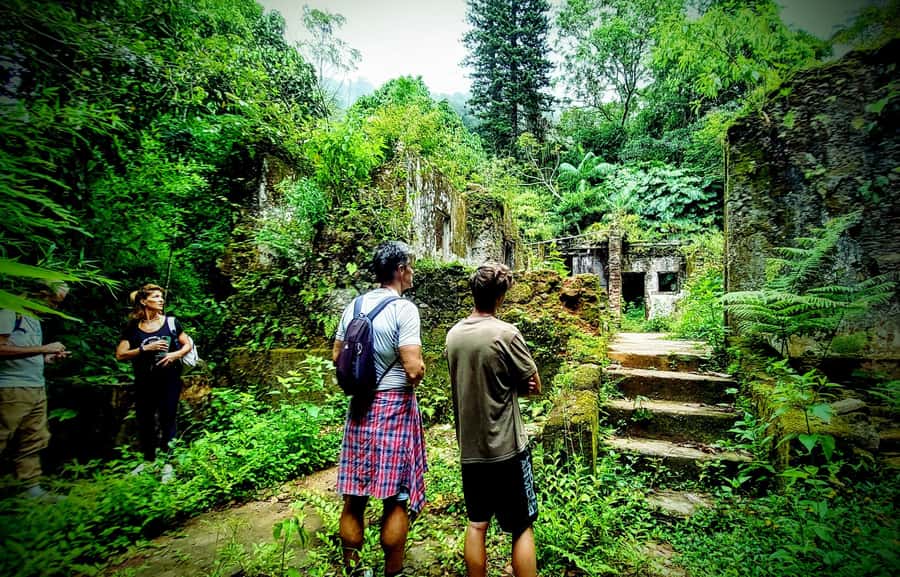
The trail follows paths dating from the nineteenth century. You will not simply be walking through untouched wilderness. You are walking through a place shaped by plantations, managers, workers, restoration, and modern conservation.
Mayrink Chapel and the coffee-plantation past
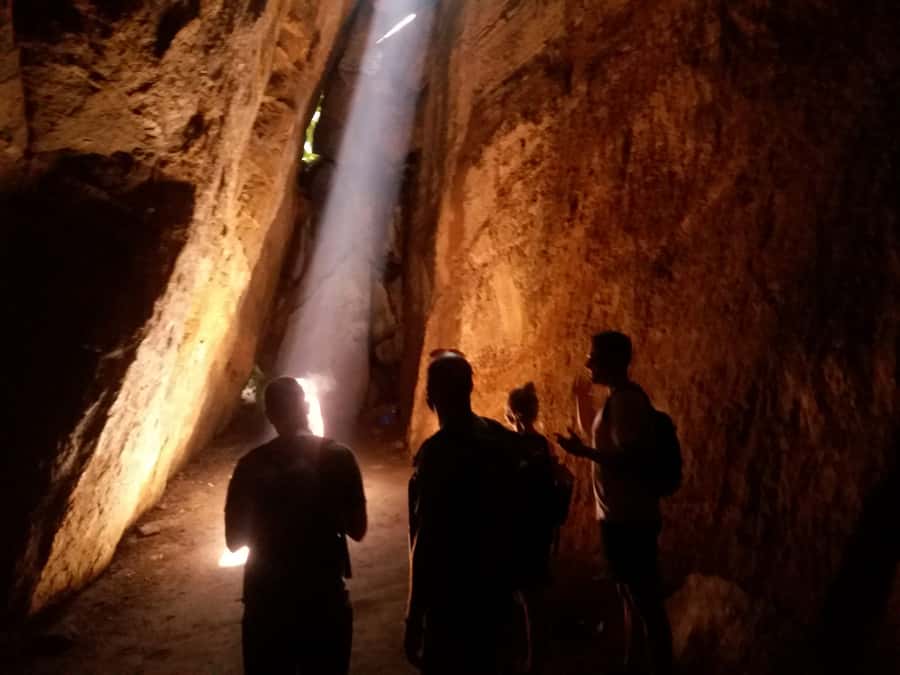
Capela Mayrink dates from 1850 and makes a short photo stop. Its size and setting give it a different feel from the surrounding forest, and it helps show how developed this area once was.
The chapel is one of the route’s quieter points, but it rewards attention. This is a good moment to ask your guide about the former coffee plantations and the people who worked them. The tour description specifically identifies an old slave cemetery in the Eucalyptus Forest, so the past here is not only about grand buildings and plantation owners.
After the chapel, the walk continues through Tijuca’s rough terrain. The forest is usually the main attraction, with plants, trees, rock formations, and the changing sound of water. You should not expect a zoo-like procession of animals. Sightings vary. Some outings have included capuchin monkeys, coatis, and a sloth seen from the vehicle, while others have seen no wildlife at all.
That unpredictability is normal for a forest walk. You get the best chance by moving quietly, listening to the guide, and treating animals as a bonus rather than the main reason to book.
More Waterfall Tours in Rio de Janeiro
- Rio: Tijuca Forest & Horto Waterfalls Circuit Tour
★ 4.7 · 99 reviews - Hiking in the Tijuca Forest : Waterfalls and Caves
★ 5.0 · 72 reviews - Garganta do Céu and Waterfall hike in Pedra da Gávea
★ 5.0 · 71 reviews - Rio de Janeiro: Tijuca Forest Waterfall of Souls Hike
★ 4.5 · 24 reviews
The suspension bridge and Eucalyptus Forest
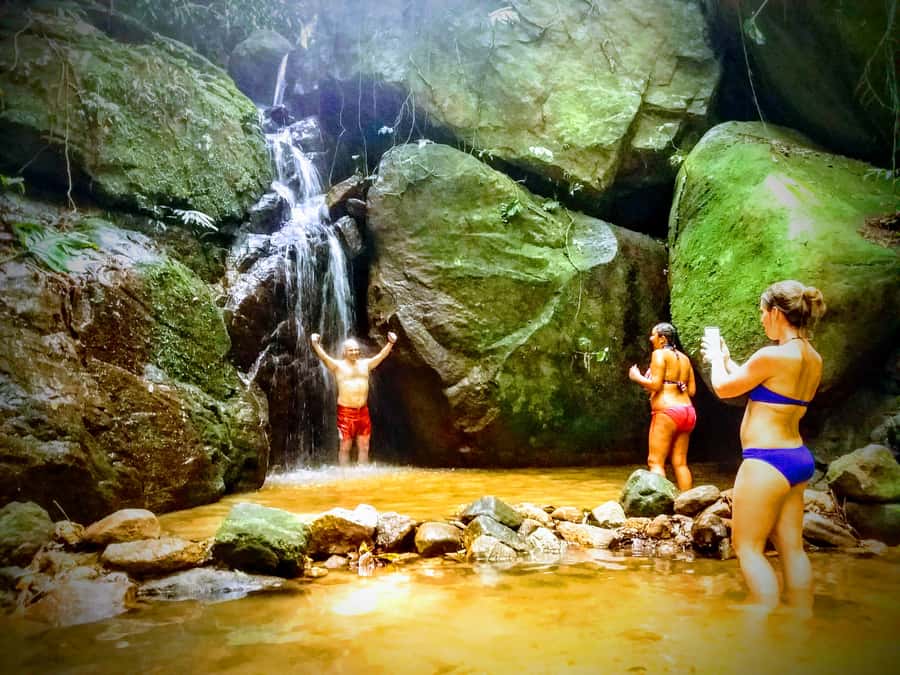
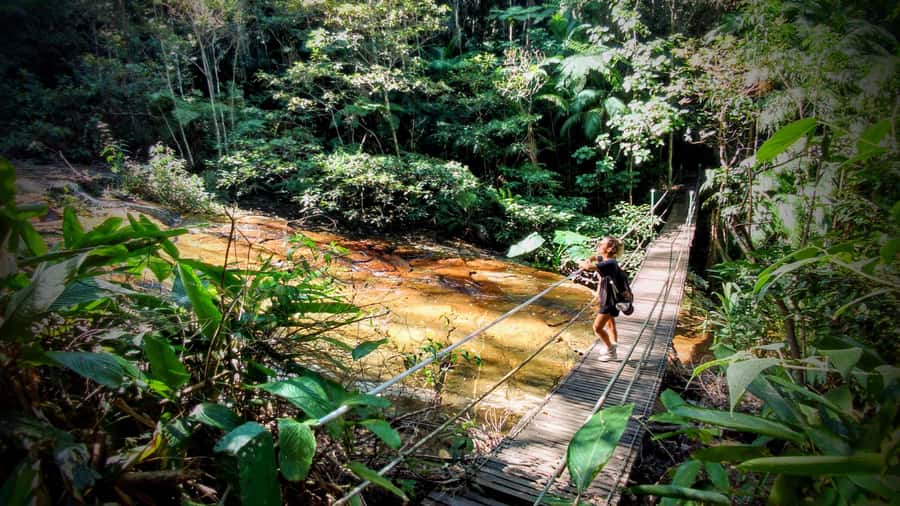
Cova da Onça Suspension Bridge is a short hiking stop, but it adds a little movement and adventure to the day. It is not the sole reason to choose this route, yet it breaks up the walking and gives you another way to experience the forest.
The nearby Eucalyptus Forest carries more historical weight because it contains an old slave cemetery. A guide can help you understand why the site matters and keep the focus from drifting into a superficial photo opportunity.
The tour also includes several short photo stops and a secret stop. The exact character of these pauses can depend on trail conditions, weather, and the guide’s judgment. That flexibility is useful in a small group, since the day can adapt to the pace and interests of the people walking.
Morcego’s Grotto, Brazil’s large gneiss cave
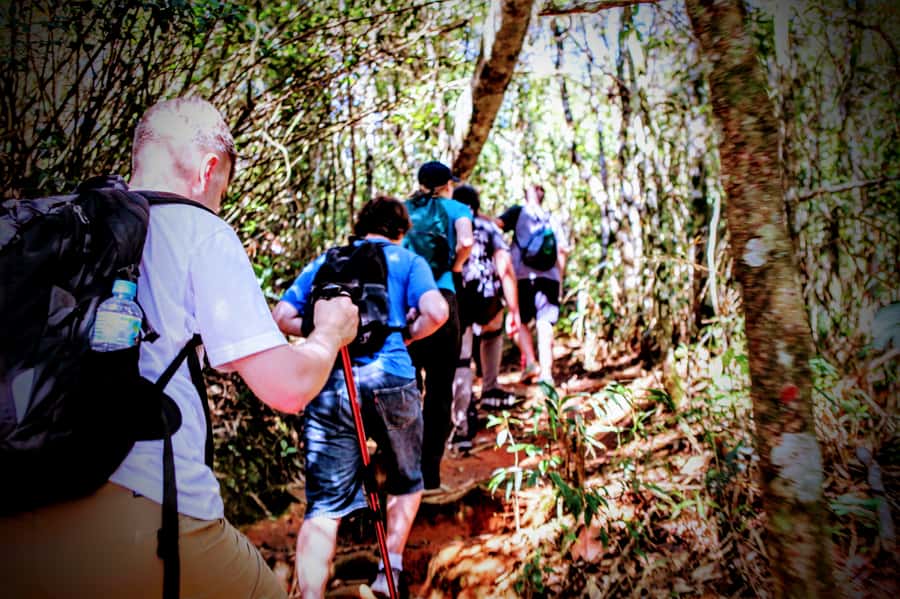
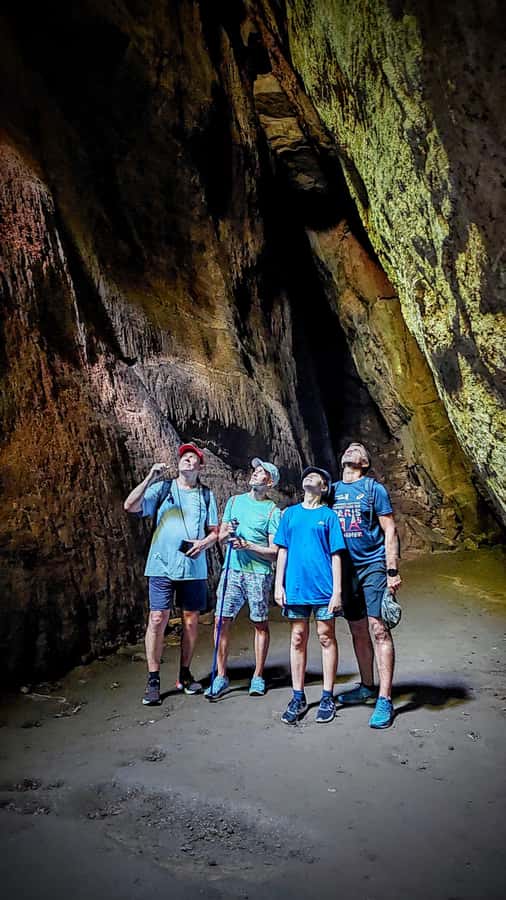
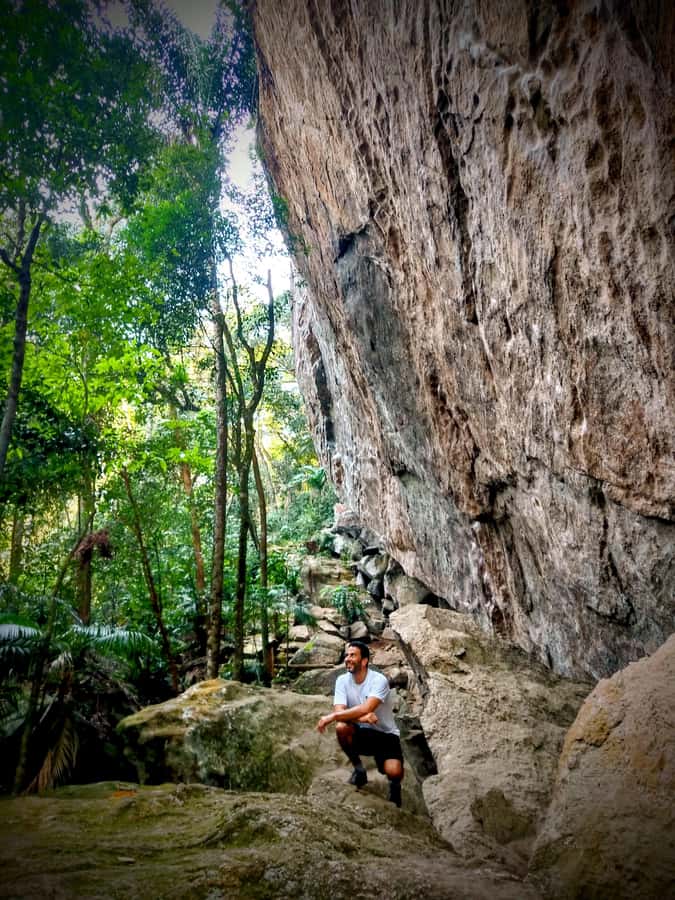
Morcego’s Grotto, also called the Bat Cave, is one of the route’s most distinctive stops. It is described as the largest gneiss cave in Brazil, and entering it changes the experience from a forest walk to a short underground exploration.
The cave is not a polished attraction with a long walkway or dramatic lighting. You are visiting a natural formation, so sensible footwear matters. Sports shoes with a good grip are required in spirit if not in those exact words, and bare feet are not allowed.
Do not count on seeing bats. Some may be resting inside, and you should not disturb them for a photograph. The cave is valuable because of its rock, coolness, and sense of contrast, not because wildlife is guaranteed.
For some people, this will be the most memorable part of the route. Others may find it modest. Your enjoyment will depend on how much you like natural geology and small moments of discovery rather than major spectacle.
Baronesa Cascade and the best cooling stop
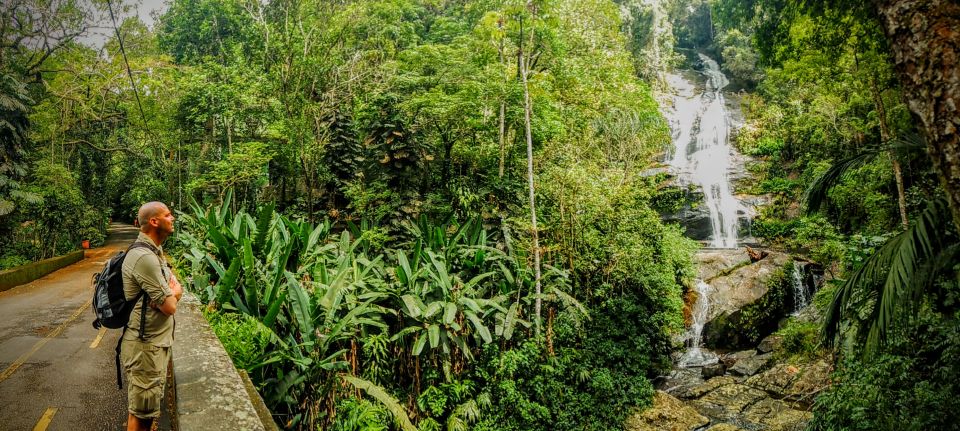
The route eventually reaches Cascata da Baronesa, where you can cool off under the waterfall. This is the tour’s most practical pleasure, especially on a warm or humid Rio day.
Bring swimwear or clothing that can get wet, though the formal packing guidance simply calls for sportswear. You will want a towel or a way to manage wet clothes afterward, but that item is not specifically listed among the included supplies, so plan accordingly.
The waterfall is not a luxury swimming facility. It is a natural stop within a hike, and conditions can vary with rainfall. Still, the chance to stand under the falling water makes the climb feel worthwhile and gives the outing a clear finish before the walk back.
One person described the forest as cooler because much of the hike is shaded. That does not remove the need for sunscreen, water, and insect repellent. Rain is also possible. A guide named Tito once supplied ponchos when the group was caught in wet weather, but you should still pack for changing conditions rather than rely on borrowed gear.
Old residences, fountains, and views on the return
The return route passes the former residence of Barão d’Escragnolle, once one of the park’s managers. The building is now associated with Esquilos restaurant, giving you another look at how the forest’s older structures have been reused.
The Wallace Fountain adds a curious European note. It includes a sculpture representing goodness, charity, sobriety, and simplicity. English philanthropist Richard Wallace gave the fountain to Brazil, and it was produced in France in 1870.
This detail may seem far removed from rainforest ecology, but that is part of the charm of the route. Tijuca is not a single-theme attraction. It brings together colonial and imperial-era history, plantation remains, environmental restoration, public art, geology, and living forest.
Mirante da Palmira and another viewpoint provide scenic pauses along the way. The route information does not promise famous postcard views from every stop, so keep your expectations sensible. The main visual pleasure is the forest itself, with occasional outlooks and open areas breaking up the shaded trail.
How hard is the 6.2-kilometer hike?
The hike is rated moderate, with roughly 448 meters of elevation gain and two and a half to three hours on foot. The total activity lasts six hours because that includes pickup, driving, stops, explanations, and time at the sites.
The distance is manageable for anyone with good basic fitness, but the elevation makes the route more demanding than a flat city walk. You will go uphill and downhill on rough rainforest ground. One person found it closer to easy, while another nearly gave up during a steep section. Both reactions can be true because fitness, heat, rain, pace, and group rhythm change the feel of the walk.
You do not need to be an experienced mountain hiker, but you should be comfortable walking for several hours and handling a steep climb. The guides generally set a supportive pace. Diana, who found the hike harder than expected, said Tito and the group helped her finish, which points to the value of the small-group setting.
Wear sports shoes, light sportswear, and a daypack. Carry enough water and snacks because food and drinks are not included. Sunscreen and insect repellent belong in the same bag.
The tour is not suitable for wheelchair users or people with heart problems. Pets, luggage, large bags, alcohol, drugs, and bare feet are not allowed.
Small groups, language, and guide quality
Private and small-group options are available, and the usual format is designed to keep the group limited. One outing had five people, while another had only two. That scale makes it easier to ask questions, stop for plants, and receive help on steep or slippery sections.
The guide speaks English and Portuguese. This is especially useful in Tijuca because the value of the outing comes partly from interpretation. You learn not only what a plant or rock is, but how the park connects to Rio and Brazil.
The strongest praise is directed at the human side of the tour. Pietro is described as prepared and entertaining. Riccardo is repeatedly praised for humor and energy. Renata is noted for taking care of group needs and even helping with photographs. Gustavo is appreciated for his relaxed pace and explanations of trees, animals, and plants.
Guide quality can never be guaranteed by a name on a page, but the repeated pattern is encouraging. You are paying for access to a forest route, yet you are also paying for someone who can make the surroundings intelligible.
Is $69 a fair price?
At $69 per person, the tour offers six hours, bilingual guiding, insurance, and transport from designated South Zone hotels. That is a reasonable package for Rio, particularly if you would otherwise need to arrange transport and find the trail route yourself.
The value is strongest when you want context and a structured day. A self-guided visit might cost less, but it would not provide the same explanations about the replanted forest, coffee plantations, caves, geology, or Brazil’s past. You would also need to manage transport and navigation.
The price feels less compelling if you mainly want a dramatic waterfall or guaranteed animal sightings. Some people found the waterfalls and cave fairly modest, and animals may not appear. In that case, your satisfaction will depend on enjoying the full mix of nature and history rather than checking off one major spectacle.
Free cancellation up to 24 hours before the start and the option to reserve now and pay later add useful flexibility. You will need to provide your full name, birth date, and passport number for insurance.
Who should book this Tijuca Forest experience?
I would choose this tour if you want an active break from Rio’s beaches and city streets, especially if you have only half a day for the forest. It suits people who enjoy a moderate walk, small groups, local history, plants, rock formations, and the chance to get wet under a waterfall.
It is also a good choice if you are uneasy about navigating Rio’s forest roads and trails alone. Hotel pickup, a bilingual guide, and insurance simplify the day.
I would hesitate if you have limited mobility, heart problems, dislike uneven ground, or want a relaxed sightseeing trip with almost no exertion. I would also avoid booking it solely for wildlife. The forest may reward you with monkeys, coatis, or a sloth, but it may just as easily offer plants, water, rock, and silence.
Final verdict: a strong half-day choice in Rio
You should book the Tijuca Forest Small Group Hike to Caves and Waterfalls if you want more than a quick overlook and prefer a guide who explains what you are seeing. The best parts are the mix of old plantation routes, Mayrink Chapel, Morcego’s Grotto, the historical sites, and the waterfall shower at Baronesa Cascade.
Go prepared for a real hike, not a stroll. Bring water, snacks, sunscreen, insect repellent, sturdy shoes, and clothes that can handle rain or a waterfall. If that sounds like your kind of Rio day, $69 is good value for a well-supported introduction to one of the city’s most unusual natural spaces.
FAQ
How long does the Tijuca Forest hike last?
The full activity lasts about six hours, including transportation, guided stops, and the hike. The walking portion takes approximately two and a half to three hours.
How far is the hike?
The circuit covers 6.2 kilometers, or about 3.8 miles, with approximately 448 meters, or 1,469 feet, of elevation gain.
Is the hike difficult?
It is rated moderate and requires good fitness for rough rainforest terrain, uphill sections, and downhill walking. Some people find it fairly easy, while others find the steep section demanding.
Can I swim or shower at a waterfall?
The route includes time at Cascata da Baronesa, where you can cool off under the waterfall. Bring clothing suitable for getting wet.
Is hotel pickup included?
Pickup and drop-off are included from designated hotels and hostels in Rio’s South Zone. Covered areas include Copacabana, Ipanema, Leblon, Leme, Flamengo, Santa Teresa, Gloria, Catete, Urca, and Praia de Botafogo.
What happens if my hotel is not on the pickup list?
You may be given a nearby meeting point. You should check with the local supplier to confirm whether pickup is possible from your address.
What language is the tour conducted in?
The tour is offered with a bilingual guide in English and Portuguese.
What should I bring?
Bring food, snacks, plenty of water, sunscreen, insect repellent, sports shoes, sportswear, and a daypack. Large bags and luggage are not allowed.
Other Trips into the Tijuca Forest
- Rio de Janeiro: Christ, Selaron Steps, and Tijuca Park Tour
★ 4.7 · 857 reviews - Rio de Janeiro: Guided Jeep Tour through Tijuca Rainforest
★ 4.3 · 740 reviews - Jeep Adventure: Guided Tour through Tijuca Rain Forest
★ 4.0 · 554 reviews - Rio: Half-Day Jeep Tour at Floresta da Tijuca
★ 4.5 · 353 reviews
Newest reviews from around Rio De Janeiro
- Cidade do Samba Behind-the-Scenes Carnival Tour in Rio de Janeiro★ 4.0 · 5 reviews
- PRIVATE TOUR – Christ the Redeemer and Sugar Loaf★ 4.5 · 9 reviews
- Christ Statue and Sugarloaf Private Tour with a Photographer★ 5.0 · 9 reviews
- Christ the Redeemer Trail x Lage Park★ 5.0 · 7 reviews
- Christ the Redeemer and City Tour★ 5.0 · 20 reviews
- Christ the Redeemer, Selaron Steps and Santa Teresa Half-day Tour★ 4.5 · 15 reviews
- Christ the Redeemer Adventure★ 5.0 · 12 reviews
- Private Tour of Christ the Redeemer in Rio de Janeiro★ 5.0 · 2 reviews
Tijuca Forest Tours, compared.
Rio de Janeiro Tijuca Rainforest Hike with Waterfalls and Caves
Read our review →
Explore the Best of Tijuca Forest – Hike to Peaks, Caves & Falls
Read our review →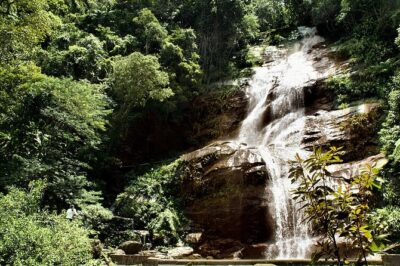
Jeep Adventure: Guided Tour through Tijuca Rain Forest
Read our review →

Tijuca Forest Half-Day Hike (Small Group or Private)
Read our review →Browse the lists this tour appears in