
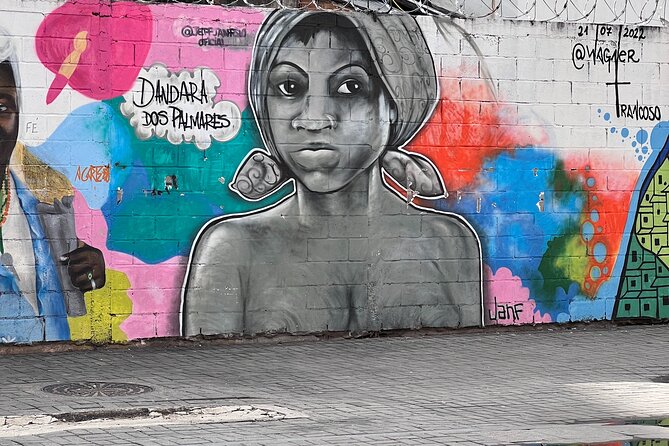
Reviewed · HISTORICAL TOURS
Afro-Brazilian History & Immersion Walking Tour
Carnival has a story behind the glitter. This private Rio tour connects Cidade do Samba, Afro-Brazilian museums, the former slave port at Cais do Valongo, and the music-filled Pedra do Sal in one thoughtful half-day walk. I like the clear focus on Black Brazilian culture, and I like that the route links major sites in the Saúde and Santo Cristo districts rather than treating each place as an isolated stop.
The included Carnival Factory visit and museum admission add real value to the $95 price. The tour also includes a caipirinha, which gives the day a pleasant Brazilian finish. The main consideration is physical: you will spend much of four to five hours walking, and the route includes several changes of location with little time for lingering at each stop.
Guides connected with Janeiro Tour & Travel, including Dandara, Gustavo, Patrick, and Dindara on related Rio experiences, have been praised for their friendly manner, local knowledge, and ability to explain social history clearly. Still, because this is a private experience, your exact guide matters. I would confirm the guide’s name and the walking pace before booking.
In This Review
- Key points to know before booking
- Why this route matters in Rio
- Starting at Cidade do Samba in Santo Cristo
- MUHCAB and the work of telling a difficult story
- Instituto Pretos Novos and the human cost of the slave trade
- Cais do Valongo, a crucial waterfront site
- Pedra do Sal brings the story into the present
- What the private format adds
- Is $95 a fair price?
- Who will enjoy this walk most?
- Practical planning for the day
- Should you book the Afro-Brazilian History & Immersion Walking Tour?
- FAQ
- How long does the tour last?
- Where does the tour begin?
- Where does the tour end?
- Is the tour private?
- What is included in the price?
- Is transportation included?
- Are snacks included?
- What happens if the weather is poor?
Key points to know before booking
- Carnival backstage access: Spend about two hours at Cidade do Samba learning how Rio’s famous Carnival takes shape behind the parade.
- A focused Afro-Brazilian route: The day links MUHCAB, Instituto Pretos Novos, Cais do Valongo, and Pedra do Sal.
- Private guiding: Only your group participates, so you can ask questions and request a reasonable pace.
- Good value at $95: Carnival admission, museum entry, guidance, and one caipirinha are included.
- A mostly walking experience: Private transportation and snacks are not included, and the route takes about four to five hours.
- A strong guide can make the difference: Dandara and other Janeiro Tour & Travel guides have earned praise for warmth, clear explanations, and local insight.
Why this route matters in Rio
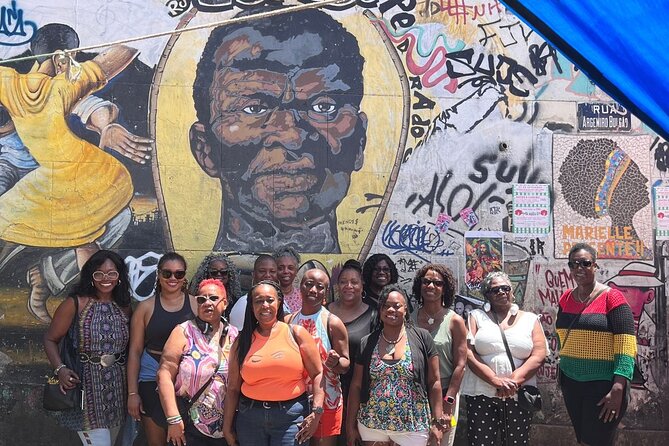
Rio’s Afro-Brazilian story is not confined to one museum. It is spread across streets, waterfront sites, religious traditions, music, Carnival, and the daily life of the city. This tour works because it ties those pieces together on foot.
You begin at Cidade do Samba, where Carnival becomes more than a parade watched on television. You then move through museums and archaeological memory sites before finishing at Pedra do Sal, a place strongly associated with Afro-Brazilian music and culture. The route gives you a chance to see how history continues into the present.
I especially like the order. Cidade do Samba provides the color and energy of contemporary Carnival. MUHCAB and Instituto Pretos Novos add historical weight. Cais do Valongo brings the story to a former arrival point for enslaved Africans. Pedra do Sal then shows how music, community, and cultural memory remain part of Rio’s public life.
That progression helps you understand that Afro-Brazilian culture is not a decorative extra in Rio. It is central to the city’s identity.
More History Tours in Rio de Janeiro
- Rio de Janeiro Historical Center Walking Tour
★ 4.5 · 336 reviews - Private Walking and Cultural Tour Rocinha-Rio de Janeiro
★ 5.0 · 239 reviews - Discover Rio Little Africa: A Cultural and Historical Journey
★ 5.0 · 238 reviews
Starting at Cidade do Samba in Santo Cristo
The tour begins at R. Rivadávia Corrêa, 60, in Santo Cristo. This is the address for Cidade do Samba, also called the Carnival Factory. You receive admission here, and this first stop lasts about two hours, making it the longest part of the experience.
That amount of time matters. A quick photo stop would give you only the surface of Carnival. Two hours allows your guide to explain how the parade is created and what happens behind the scenes before the costumes, floats, music, and dancers reach the Sambadrome.
The tour’s focus is the history of Carnival and the backstage work involved. You should expect this to be the most production-oriented section of the day, with attention on the people and processes that make the spectacle possible.
For me, this is a smart opening. Carnival is one of Rio’s most famous cultural exports, but it can be easy to experience it only as a dazzling show. A guided visit to the factory gives you a better sense of the planning and labor behind it.
You also receive one caipirinha during the experience. That is a small inclusion, but it fits the setting and gives the day a distinctly Brazilian touch. Snacks are not included, so eat beforehand or plan accordingly. The provided information does not specify a meal break.
The two-hour visit may be the part you enjoy most if you like costumes, performance, design, and cultural traditions. If you prefer archaeology or quiet museum time, the later stops may appeal more.
MUHCAB and the work of telling a difficult story
From Cidade do Samba, the group continues on foot to MUHCAB, the Museum of Afro-Brazilian History and Culture. The museum visit lasts about 30 minutes, with admission included.
Thirty minutes is enough for a guided introduction, but it is not a long museum session. I would approach MUHCAB as a concentrated stop where your guide helps you understand the main themes rather than as a place to inspect every display at leisure.
That short visit can be useful because the walking route has several important sites. Instead of spending the entire day inside one museum, you get a series of connected encounters. The guide’s explanation becomes especially important here, since the meaning of an exhibit may extend into the streets you visit next.
The museum gives the tour a formal setting for discussing Afro-Brazilian history and culture. It also helps connect the creative world of Carnival with the larger story of Black life in Brazil.
If you have limited time in Rio, this approach has an advantage. You will not spend hours moving between distant museums. Instead, the route keeps you in one historic part of the city and builds its subject step by step.
Instituto Pretos Novos and the human cost of the slave trade
The next walk takes you to Instituto de Pesquisa e Memória Pretos Novos, commonly known as IPN. The visit lasts about 20 minutes, and admission is included.
This is likely to be one of the most emotionally serious parts of the tour. The institute is connected to the memory of Africans who died after being brought to Rio as enslaved people. The short visit places the subject of slavery at the center of the route rather than leaving it as a footnote.
You should be prepared for a quieter and more difficult stop than Cidade do Samba. The contrast is important. Rio’s Carnival traditions are powerful, but they exist alongside a history of forced migration, exploitation, and loss.
Twenty minutes may sound brief, yet a guide can use that time to establish the site’s importance and explain how it fits into Rio’s development. I would listen closely and ask questions here. The value is less about seeing a large number of displays and more about understanding why this place matters.
This is also where the tour’s private format helps. With only your group present, you can pause for clarification or ask about subjects that deserve more explanation. A private guide cannot turn a 20-minute stop into a full seminar, but the conversation can be more personal and focused.
More Walking Tours in Rio de Janeiro
- Rio de Janeiro: Rocinha Favela Walking Tour with Local Guide
★ 4.8 · 3,052 reviews - Rio De Janeiro: Half-Day Rocinha Favela Walking Tour
★ 4.7 · 2,272 reviews - 3 Hour Rocinha Favela Walking Tour with a Local Guide
★ 5.0 · 833 reviews - Favela Tour Rio de Janeiro – Vidigal Walking Tour by Russo Guide
★ 5.0 · 377 reviews
Cais do Valongo, a crucial waterfront site
The route then continues to Cais do Valongo. The walk and stop take about 20 minutes, and admission is not included.
The tour positions Cais do Valongo as a key part of the Afro-Brazilian story. This waterfront site was connected to the arrival of enslaved Africans in Rio, making it one of the most important places on the route.
The stop is valuable because it places history in the actual urban setting where it unfolded. You are not only looking at displays or listening to a timeline. You are standing in a part of the city tied directly to the forced movement of people and the growth of Rio.
Because admission is not included, you should clarify what that means for the day. The supplied details do not state an extra ticket price or a separate indoor visit. The tour description simply identifies Cais do Valongo as a stop with admission not included, so ask the operator whether you will view the site from the public area or whether an optional fee may apply.
I would also keep your expectations realistic. The stop lasts around 20 minutes, so this is a focused introduction, not a lengthy archaeological visit. Its strength is the guide’s context and the site’s location within the walking route.
Pedra do Sal brings the story into the present
The final stop is Pedra do Sal, reached by another walk of about 20 minutes. Admission is free, and the experience ends at Largo São Francisco da Prainha in Saúde.
Pedra do Sal gives the tour a fitting closing point. After Carnival, museum collections, and sites linked to slavery, you reach a place associated with Afro-Brazilian community and music. The route shifts from formal interpretation to living cultural expression.
The stop is not presented as a performance or scheduled concert, so you should not book expecting a particular show. Its value is the setting and the chance to understand why this area matters in Rio’s cultural life.
Ending at Largo São Francisco da Prainha also gives you a practical advantage. You finish in a central area rather than returning to the starting point in Santo Cristo. You can continue exploring from there, though the tour does not include onward transportation.
The route is built around walking, not sightseeing from a vehicle. That means you see how the neighborhoods connect, but you also need comfortable shoes and enough energy for several hours outside.
What the private format adds
This is a private tour, meaning only your group participates. That is a strong feature for a subject that can prompt thoughtful questions and personal reactions.
You can ask your guide to spend more time on Carnival, slavery, museum displays, or modern Afro-Brazilian culture. You may also be able to adjust the pace within reason. The supplied information says most people can participate, but it does not promise a fully accessible route or describe the surfaces, stairs, or rest facilities.
The guide’s style may shape your experience more than any single stop. Dandara has been praised for easy communication, warmth, clear explanations of Brazilian history and social structures, and helping people feel safe on other Rio tours. Gustavo has also been praised for positive energy and strong area knowledge, while Patrick and Dindara have been associated with friendly guidance on a favela experience.
Those comments concern related tours rather than a guaranteed guide assignment for this exact route, so I would not assume a particular person will lead your walk. Still, they suggest what to look for: a guide who can explain difficult history without turning the visit into a lecture, and who can connect the past to Rio today.
Is $95 a fair price?
At $95 per person, this is not the cheapest way to walk through Rio. The price makes more sense when you add up what is included: guidance, admission to Cidade do Samba, museum entry, and one caipirinha.
You are also paying for a private experience rather than joining a large group. That can be good value if you are traveling with several people, since the guide’s attention stays with your party. For a solo visitor or couple, the cost is harder to justify unless this subject is a major priority.
The tour lasts roughly four to five hours. The listed stops account for about three and a half hours, including the two-hour Carnival visit, the 30-minute museum stop, and three 20-minute visits or walks. The remaining time likely allows for transitions and conversation, but the exact balance may vary.
Private transportation and snacks are not included. The meeting point is near public transportation, which helps keep your own costs down, but you must arrange your way to Santo Cristo and from Saúde afterward.
I see the best value here in the route design and the private guide, not in the drink or ticket alone. If you tried to visit these places separately, you might lose the connections between them. This experience gives you a single thread to follow.
Who will enjoy this walk most?
I would recommend it to you if you want Rio’s cultural story to extend beyond beaches, viewpoints, and Carnival as a party. It suits people who care about Brazil’s African roots, the history of slavery, museums, and the way music and community shape a city.
It is also a good choice if you prefer a private guide who can answer questions as you go. The route may suit first-time visitors who want historical context, as well as returning visitors who have already seen Rio’s famous postcard sights.
You should think twice if you dislike walking, need long rest periods, or want a relaxed day with few scheduled stops. The tour moves through five locations and includes several walks. It is also not designed as a food tour, and snacks are not supplied.
If you want extensive time at each museum, this may feel rushed. MUHCAB and IPN receive about 30 and 20 minutes respectively, while Cidade do Samba receives the largest share of the day.
Practical planning for the day
The stated operating window is 10:00 AM to 2:30 PM, Monday through Sunday, and the experience requires good weather. Wear comfortable shoes and bring water, since the route is on foot and snacks are not included.
Confirmation is provided at booking. The meeting point is R. Rivadávia Corrêa, 60, Santo Cristo, Rio de Janeiro. The experience ends at Largo São Francisco da Prainha, Saúde, so allow time for your return journey or next activity.
The tour offers free cancellation with a full refund if you cancel at least 24 hours before the start time. Cancellations or changes made within 24 hours are not accepted for a refund. If poor weather forces cancellation, you can choose another date or receive a full refund.
Should you book the Afro-Brazilian History & Immersion Walking Tour?
Book it if you want a serious, place-based look at Rio’s Black history and culture, with Carnival as the doorway rather than the whole story. The combination of Cidade do Samba, MUHCAB, IPN, Cais do Valongo, and Pedra do Sal gives the half-day a clear purpose.
I would book this especially for a small private group that values conversation and can handle several hours of walking. Before paying, confirm your guide, ask how Cais do Valongo will be handled, and check whether the pace suits your group.
Skip it if you want a longer museum visit, a food-focused outing, or a tour with included transportation. For the right audience, though, $95 buys more than a checklist of sights. It gives you a connected way to understand how African heritage, painful history, Carnival, and modern Rio meet in the same neighborhoods.
FAQ
How long does the tour last?
The experience lasts approximately four to five hours.
Where does the tour begin?
It begins at R. Rivadávia Corrêa, 60, Santo Cristo, Rio de Janeiro, Brazil.
Where does the tour end?
The tour ends at Largo São Francisco da Prainha in Saúde, Rio de Janeiro.
Is the tour private?
Yes. Only your group participates in this private activity.
What is included in the price?
Guidance, a ticket to Cidade do Samba, one caipirinha, and entrance to the museum are included.
Is transportation included?
No. Private transportation is not included. The meeting point is near public transportation.
Are snacks included?
No. Snacks are not included.
What happens if the weather is poor?
The experience requires good weather. If it is canceled because of poor weather, you will be offered another date or a full refund.
Newest reviews from around Rio de Janeiro
- Hang gliding flight in Rio de Janeiro★ 5.0 · 6 reviews
- Rio de Janeiro: Zip Lining and Canopy Tree Tour★ 3.3 · 6 reviews
- Vidigal Favela Tour★ 4.4 · 26 reviews
- Rio de Janeiro: Attend a Vasco da Gama game with local guide★ 4.8 · 9 reviews
- Unforgettable Boat Party★ 5.0 · 3 reviews
- Parapente Rio de Janeiro★ 5.0 · 4 reviews
- Rio de Janeiro Private Tour with Cruise Terminal Pick-up★ 5.0 · 2 reviews
- Wild Waters: Rio Whitewater Rafting Adventure Tour★ 5.0 · 13 reviews
Historical Tours, compared.


Private Walking and Cultural Tour Rocinha-Rio de Janeiro
Read our review →
Discover Rio Little Africa: A Cultural and Historical Journey
Read our review →

Scenic Train ride to historical cities of Morretes and Antonina
Read our review →
Browse the lists this tour appears in