
Reviewed · HISTORICAL TOURS
African Heritage and Docks Walking Tour
Rio’s past is closer than it looks. This private 2.5-hour walk links the old port, Afro-Brazilian culture, and places many first-time visitors miss, from Boulevard Olímpico to Valongo Wharf. I especially like the focused historical theme and the chance to hear the story in English from one guide rather than move through a large group. I also like the route’s clear ending at Cais do Valongo, where the meaning of the old port comes into sharp focus.
The main drawback is that this is a walking tour with no transportation, food, or drinks included. The $49.05 price is fair for a private experience, but it makes the most sense if you care about history and local culture, not just postcard views. The stop at Instituto dos Pretos Novos is optional and costs extra.
In This Review
- Key points to know before you book
- Why this walk adds something different to Rio
- Starting at Praça XV in central Rio
- Boulevard Olímpico and the modern port
- Mauá Square beside two major museums
- Igreja de São Francisco da Prainha and the buried beach
- Pedra do Sal and the roots of cultural traditions
- Cais do Valongo, the walk’s most serious stop
- What $49.05 buys you
- Timing, walking, and who should book
- Should you book this Rio walking tour?
- FAQ
- How long does the African Heritage and Docks Walking Tour last?
- Where does the tour begin?
- Where does the tour end?
- Is transportation included?
- Is food or drink included?
- Is the tour private?
- Is the tour offered in English?
- Can I cancel for a full refund?
Key points to know before you book
- A private route through Rio’s old port: Your group participates alone, allowing the guide to shape the conversation around your questions and interests.
- A serious look at Afro-Brazilian heritage: The walk connects historic sites with Carnaval, African religions, and the forced arrival of enslaved Africans.
- Five distinct stops in about 2.5 hours: You move from Praça XV through Boulevard Olímpico, Mauá Square, Prainha, Pedra do Sal, and Cais do Valongo.
- The route ends at Valongo Wharf: This is the last disembarkation wharf for enslaved Africans in Rio, giving the walk a weighty final stop.
- Guide Rômulo receives strong praise: His pride in Rio and engaging presentation are repeatedly singled out in the available feedback.
- Simple logistics, flexible cancellation: The tour is offered in English, confirmation arrives at booking, and cancellation is free up to 24 hours before departure.
Why this walk adds something different to Rio
Many Rio tours focus on beaches, mountain views, famous statues, and samba as entertainment. This walk takes another route. It asks you to look at Rio through the people and places that shaped its society, especially the African influence that remains central to Brazilian culture.
That matters because the old port is not just a backdrop for modern museums and public art. It was a working part of colonial Rio, and its streets connect to the forced movement of Africans, the growth of Afro-Brazilian religious traditions, and the development of Carnaval.
I like the way the route joins these subjects together rather than treating them as separate facts. Boulevard Olímpico brings you into the modern city. Pedra do Sal and Igreja de São Francisco da Prainha move you toward community traditions. Cais do Valongo closes the walk with a site of historic pain and memory.
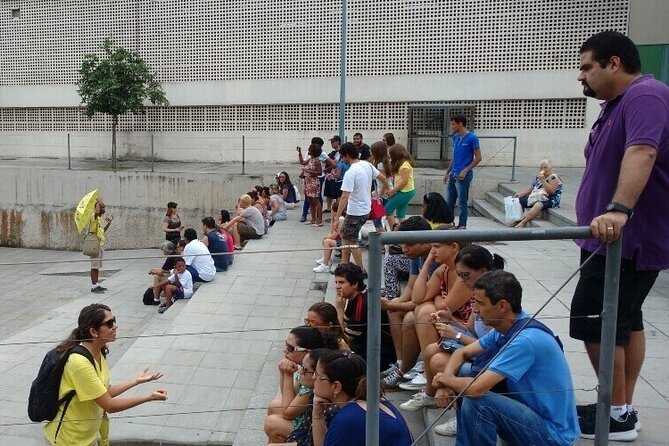
The experience is private, so you do not have to compete with a busload of people for the guide’s attention. That can make a real difference on a history walk. You can pause, ask for clarification, or spend more time on a subject that matters to you.
The guide is a key part of the experience. Rômulo is praised for his strong pride in Rio and for presenting the material with feeling. If he leads your group, you may get the sort of personal connection that turns a list of dates and sites into a clearer understanding of the city.
More History Tours in Rio de Janeiro
- Rio de Janeiro Historical Center Walking Tour
★ 4.5 · 336 reviews - Private Walking and Cultural Tour Rocinha-Rio de Janeiro
★ 5.0 · 239 reviews - Discover Rio Little Africa: A Cultural and Historical Journey
★ 5.0 · 238 reviews
Starting at Praça XV in central Rio
The meeting point is Estátua do General Osório at Praça Quinze de Novembro, in Centro. This gives the walk a practical starting point in central Rio, rather than asking you to meet at a distant attraction.
The tour then heads toward the port area. Since transportation is not included, plan your route to Praça XV before the start time. The experience is near public transportation, and confirmation is sent when you book, so you should have the basic information needed to reach the meeting point.
A private tour also means the pace may feel less rigid than a large scheduled group. Still, the time is limited to about two and a half hours, so you should expect a steady walk with brief stops rather than a slow, unstructured wander.
Wear comfortable shoes and carry water. Food and drinks are not included, and there is no promise of a meal break. That is not a serious problem for a 2.5-hour tour, but it is worth handling before you arrive.
Boulevard Olímpico and the modern port
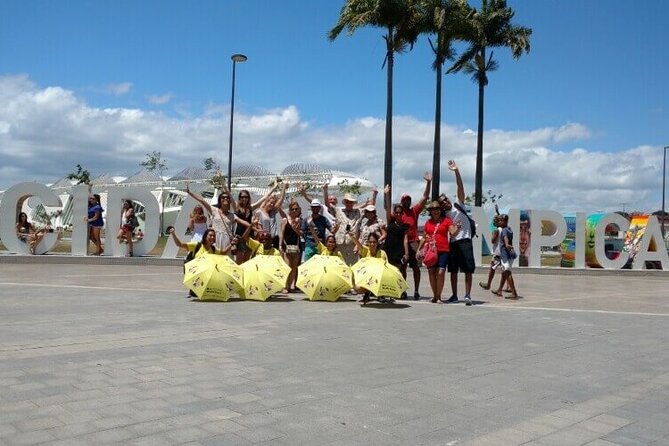
The first major stop is Boulevard Olímpico, a corridor created for the Olympics in the old port area. The site gives you a useful contrast: a modern public project placed over an area with much older colonial connections.
You can expect about 30 minutes here, making it the longest stop on the route. Admission is free. That extra time suggests the guide will use the area to explain how the port changed and how modern Rio now presents this part of the city.
I like this opening because it prevents the tour from becoming a string of isolated monuments. You first see the port as a contemporary urban space, then learn to read what existed before it. The old and new versions of Rio share the same ground.
Boulevard Olímpico may not satisfy you if you want untouched historic streets or ornate colonial buildings at every turn. Its appeal is the connection between redevelopment and memory. You are looking at a place shaped by major public investment, while the guide draws attention to the older stories beneath that renewal.
Mauá Square beside two major museums
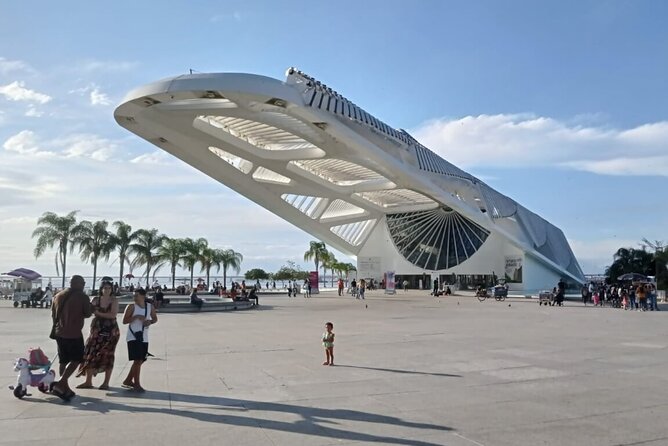
The route continues to Mauá Square, next to the port. The Museum of Tomorrow and the Rio Art Museum are located here, giving you a strong visual reminder of how the area has been reworked for public use.
The stop lasts about 20 minutes and is free. The tour does not include admission to either museum, so you should not expect an indoor museum visit as part of the walk. Instead, the square works as an outdoor point for understanding the port district.
This is a useful stop for visitors who want more than a narrow history lesson. Rio’s past, present, and future meet around the square. The nearby museums represent the city’s cultural ambitions, while the port itself points to the older commercial and social forces that helped shape Rio.
If you plan to visit the Museum of Tomorrow or the Rio Art Museum separately, this walk can help you place them within the district. Just leave extra time in your day and arrange separate tickets if needed. The walking tour itself keeps moving.
More Walking Tours in Rio de Janeiro
- Rio de Janeiro: Rocinha Favela Walking Tour with Local Guide
★ 4.8 · 3,052 reviews - Rio De Janeiro: Half-Day Rocinha Favela Walking Tour
★ 4.7 · 2,272 reviews - 3 Hour Rocinha Favela Walking Tour with a Local Guide
★ 5.0 · 833 reviews - Favela Tour Rio de Janeiro – Vidigal Walking Tour by Russo Guide
★ 5.0 · 377 reviews
Igreja de São Francisco da Prainha and the buried beach
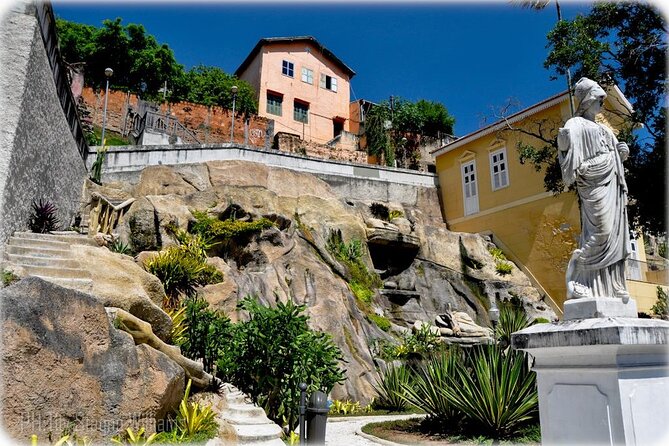
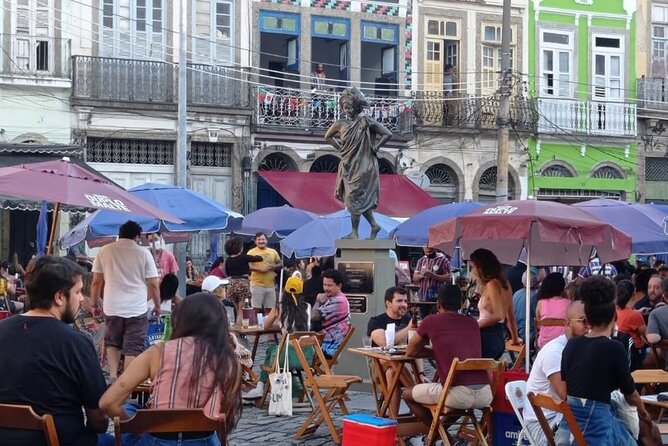
At Igreja de São Francisco da Prainha, the route enters an area connected to a former beach that was buried. Today, the area is known for local bars, creating another sharp shift from the large public spaces of the Olympic corridor and Mauá Square.
The stop lasts about 20 minutes. Admission is free, and the value comes from the guide’s explanation of how the physical city changed. A buried beach is the kind of detail that helps you understand Rio as a city repeatedly reshaped by construction, port activity, and changing patterns of urban life.
I like this stop because it gives the tour a human scale. You are not only looking at grand public projects or formal monuments. You are also seeing a local area tied to everyday social life, with bars and neighborhood activity around a historic church.
The stop may feel less dramatic than Cais do Valongo, especially if you are judging each place by visual impact alone. Its importance is more subtle. Listen for the connection between the former shoreline, the present neighborhood, and the local traditions that took root here.
Pedra do Sal and the roots of cultural traditions
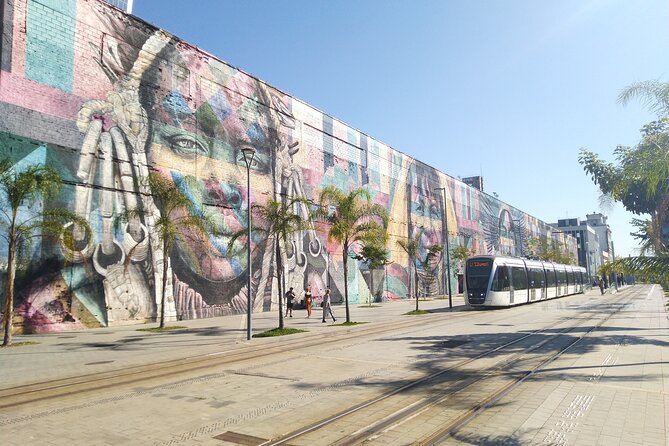
Pedra do Sal is one of the most important stops for understanding the tour’s African heritage theme. The site is linked with the spread of Carnaval and some African religions, giving the guide a chance to discuss culture as a living force rather than a museum subject.
You spend about 15 minutes here. That is the shortest scheduled stop, so the guide will need to make the explanation count. I would pay close attention and ask questions if you want more detail, since this may be one of the places where a private group has a clear advantage.
Pedra do Sal helps explain why music, celebration, belief, and community are so important to Rio’s identity. The stop is not presented as a detached lesson about the past. It connects historical African influence with traditions that continued to shape Brazilian life.
The short timing is the main limitation. Fifteen minutes can feel quick at a site with this much cultural weight. If you are especially interested in Afro-Brazilian religion or Carnaval, tell the guide at the start so the conversation can make room for your priorities.
Cais do Valongo, the walk’s most serious stop
The final stop is Cais do Valongo, also called Valongo Wharf, on Avenida Barão de Tefé in Saúde. This was the last wharf where enslaved Africans disembarked in Rio. The walk ends here, and that is an effective choice.
You spend about 20 minutes at the site. The wharf’s opening hours are listed as Monday through Saturday from 9:30 a.m. to 1:30 p.m., for the period from August 1, 2025, through July 31, 2026. The tour data does not state that an indoor visit or admission is included, so confirm the exact plan if you want to visit beyond the outdoor stop.
Cais do Valongo changes the tone of the tour. Earlier locations show how African culture shaped Rio, but this place forces you to confront the violence behind that history. It is not a light sightseeing stop, and I would not treat it as one.
The location also makes the route feel complete. You begin in central Rio, pass through the redeveloped port, and finish at the site most directly tied to the forced arrival of Africans. The ending leaves you with a clearer sense of why African heritage is not a side topic in Brazilian history.
An optional visit to Instituto dos Pretos Novos can add another layer to the subject, but it is not included in the $49.05 price. Tickets cost extra. If you want that addition, ask the tour provider about availability and timing before you book.
What $49.05 buys you
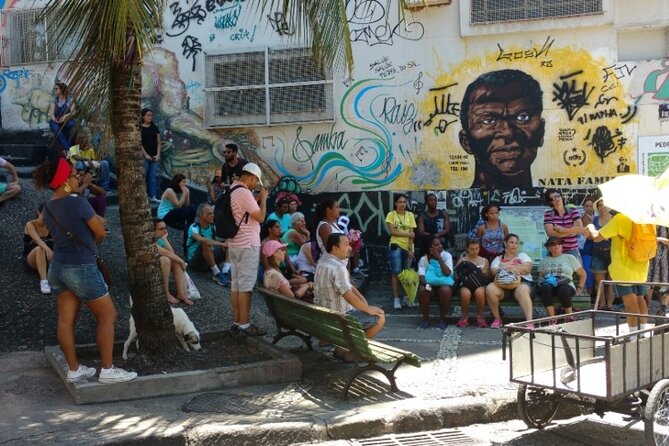
At $49.05 per person, this is not the cheapest way to see Rio’s port district. But the comparison is not simply private guide versus free public spaces. You are paying for a guide who connects five locations into one story and gives your group a more personal format.
The value is strongest when two or more people share the experience and actively ask questions. A private tour can be especially useful for families, couples, or friends who want to discuss difficult history at their own pace.
Group discounts may improve the price for larger parties. Since the activity is private, check the final cost for your group before booking. The advertised per-person price is a useful starting point, but your actual value depends on party size and how much you use the guide’s attention.
I would not book this mainly for free entry to the stops. The sites themselves do not require admission as listed, so the fee pays for interpretation, route planning, and the private format. If you prefer to walk independently and read about each place on your phone, you could spend less.
If you want context, conversation, and a focused introduction to Rio’s African heritage, the price is easier to justify. The available rating is 4.4 from seven reviews, and the strongest praise focuses on Rômulo’s presentation and personal pride in Rio. That is exactly the kind of quality that matters most on a tour built around historical interpretation.
Timing, walking, and who should book
The full experience lasts about 2 hours and 30 minutes. It is offered in English and uses a mobile ticket, which keeps the booking process simple.
There is no transportation between stops. You should be prepared to walk from Praça XV through the port district to Cais do Valongo. The route is best for people who want to see several areas on foot and are comfortable spending the full tour outdoors or moving between stops.
Most people can participate, and service animals are allowed. The tour is near public transportation, but the supplied details do not specify the amount of walking, surface conditions, or step-free access at every point. If you have mobility concerns, ask RFWTour before booking.
This experience suits you best if you:
- Want a focused introduction to Afro-Brazilian culture and history.
- Prefer a private guide to a large scheduled group.
- Have already seen Rio’s main postcard sights and want a different side of the city.
- Care more about context than entering lots of attractions.
- Can handle a 2.5-hour walking route without included food or transport.
It may not suit you if you want beach time, panoramic views, or a relaxed café-based outing. The subject is serious, and the final stop deals with the forced arrival of enslaved Africans. Go with the right frame of mind.
Free cancellation is available up to 24 hours before the start time for a full refund. Changes or cancellations made less than 24 hours before the start are not accepted for a refund, so keep the local cutoff time in mind.
Should you book this Rio walking tour?
I would book this tour if you want Rio explained through its African heritage, not just photographed. The strongest reasons are the private format, the route through five connected sites, and the chance to hear the story from a guide such as Rômulo, whose pride in the city comes through clearly.
The best use of your money is to treat the tour as a guided history experience, not as a paid way to enter free attractions. Ask questions, tell the guide what interests you, and consider the optional Instituto dos Pretos Novos visit if you want more time with the subject.
Skip it if you need transportation, refreshments, or a short sightseeing loop with little historical discussion. For the right audience, though, this is a thoughtful way to see a part of Rio that many itineraries leave out.
FAQ
How long does the African Heritage and Docks Walking Tour last?
The tour lasts approximately 2 hours and 30 minutes.
Where does the tour begin?
It begins at the Estátua do General Osório in Praça Quinze de Novembro, Centro, Rio de Janeiro.
Where does the tour end?
The walk ends at Cais do Valongo on Avenida Barão de Tefé in Saúde, Rio de Janeiro.
Is transportation included?
No. Transportation between the meeting point and the stops is not included.
Is food or drink included?
No. Food and drinks are not included in the tour price.
Is the tour private?
Yes. Only your group participates in the private tour or activity.
Is the tour offered in English?
Yes. The experience is offered in English.
Can I cancel for a full refund?
Yes. You can cancel up to 24 hours before the experience start time for a full refund. Cancellations or changes made less than 24 hours before the start are not refunded or accepted.
Newest reviews from around Rio de Janeiro
- PRIVATE TOUR – Christ the Redeemer and Sugar Loaf★ 4.5 · 9 reviews
- Christ Statue and Sugarloaf Private Tour with a Photographer★ 5.0 · 9 reviews
- Cidade do Samba Behind-the-Scenes Carnival Tour in Rio de Janeiro★ 4.0 · 5 reviews
- Christ the Redeemer Trail x Lage Park★ 5.0 · 7 reviews
- Christ the Redeemer and City Tour★ 5.0 · 20 reviews
- Christ the Redeemer, Selaron Steps and Santa Teresa Half-day Tour★ 4.5 · 15 reviews
- Christ the Redeemer Adventure★ 5.0 · 12 reviews
- Private Tour of Christ the Redeemer in Rio de Janeiro★ 5.0 · 2 reviews
Historical Tours, compared.


Private Walking and Cultural Tour Rocinha-Rio de Janeiro
Read our review →
Discover Rio Little Africa: A Cultural and Historical Journey
Read our review →

Scenic Train ride to historical cities of Morretes and Antonina
Read our review →
Browse the lists this tour appears in