

Reviewed · SANTA TERESA & SELARóN STEPS TOURS
Walking in Santa Teresa
Rio’s most characterful streets are uphill. This private 2-hour-15-minute walking tour takes you through Santa Teresa, a hillside neighborhood known for stone lanes, old imperial buildings, yellow trams, art, and a strong bohemian spirit. You finish at the famous Selarón Steps, with city views and plenty of cultural context along the way.
I like the way the route connects several sides of Santa Teresa: its architecture, its artists, and its social history. I also like that the walk includes Christ the Redeemer views, a stop at the century-old Bar do Gomez, and the large urban art murals that give the neighborhood its visual punch. The main consideration is the price, $100 per person, which makes the tour easier to justify for a private group than for a solo visitor.
The pace should suit you if you have moderate physical fitness and can handle hills and uneven stone streets. A useful timing tip comes from the experience itself: if you want to ride Santa Teresa’s yellow tram, try to do that before the 3 p.m. walking tour, since the tram may not be part of the walk at that hour.
In This Review
- Five things to know before walking Santa Teresa
- Starting at Cine Santa Teresa on the stone streets
- Views of Christ the Redeemer and Rio’s center
- Imperial houses, palaces, and the yellow tram
- A pause at Bar do Gomez
- Murals, political expression, and Santa Teresa today
- Finishing at the Selarón Steps in Lapa
- Is $100 per person a fair price?
- Who will enjoy this walk most?
- Should you book Walking in Santa Teresa?
- FAQ
- Where does the Walking in Santa Teresa tour begin?
- Where does the tour end?
- How long does the experience last?
- Is the tour offered in English?
- Is this a private tour?
- Is food included?
- Can I cancel for a full refund?
Five things to know before walking Santa Teresa
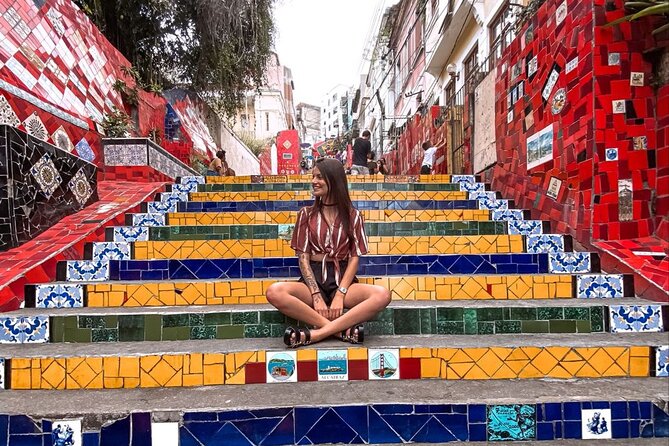
- The route ends at Selarón Steps: You finish at one of Rio’s most recognizable works of public art, where Santa Teresa meets Lapa.
- It is a private tour: Only your group participates, so the guide can keep the walk focused on your interests.
- The neighborhood mixes old and new: Imperial houses and palaces share the streets with murals, graffiti, flags, and other signs of present-day political expression.
- Bar do Gomez adds local flavor: This historic meeting place is part of the route, though lunch and food costs are not included.
- The walk is uphill and outdoors: Moderate physical fitness is advised, and the experience depends on good weather.
- English is offered: Confirmation arrives at booking, and mobile tickets make the meeting details easy to carry.
Starting at Cine Santa Teresa on the stone streets

The walk begins outside Cine Santa Teresa at Rua Paschoal Carlos Magno, 136. That gives you a clear landmark in the neighborhood rather than a vague street corner. From there, the route moves into Santa Teresa’s stone-paved streets and begins with the area’s story.
Santa Teresa’s bohemian identity is tied to a wave of artists who moved into the neighborhood during the 1960s. That detail helps explain why the district feels different from the grand avenues and beach districts elsewhere in Rio. The appeal is not only old architecture. It is the way creative work became part of daily street life.
I like starting on foot here because the neighborhood is best understood at walking speed. You can look at façades, notice small shops, and see how art appears directly on walls rather than being confined to a museum. The tradeoff is simple: stone streets and hills require more effort than a sightseeing bus, so comfortable shoes matter.
The tour is offered in English, which is useful when the guide is explaining more than dates and building names. The strongest parts of Santa Teresa are tied to context: why artists came, how the neighborhood changed, and what its political signs and murals mean today.
One useful point to keep in mind is that the tour description gives the main themes but not a fixed list of every street or building. The exact sequence may vary, while the stated route remains centered on Santa Teresa’s stone lanes, old architecture, views, art, and Selarón Steps.
More Walking Tours in Rio de Janeiro
- Rio de Janeiro: Rocinha Favela Walking Tour with Local Guide
★ 4.8 · 3,052 reviews - Rio De Janeiro: Half-Day Rocinha Favela Walking Tour
★ 4.7 · 2,272 reviews - 3 Hour Rocinha Favela Walking Tour with a Local Guide
★ 5.0 · 833 reviews
Views of Christ the Redeemer and Rio’s center
Santa Teresa’s hillside position creates one of the best reasons to take this walk. Along the route, you get privileged views toward Christ the Redeemer and Rio’s city center. These views help you understand the neighborhood’s location, not just photograph it.
The lookout points are especially valuable because Santa Teresa can otherwise feel like a self-contained village above the city. From higher ground, you see its connection to the wider urban area. The view turns the neighborhood from a collection of pretty streets into part of Rio’s larger story.
The route does not present these views as a separate lookout excursion, so you should think of them as moments that appear during the walk. That is part of the charm, but it also means the experience is not built around a long stop at one panoramic platform. If your main goal is a dedicated Christ the Redeemer visit, this tour is not a substitute for that attraction.
For me, the mix of walking and viewpoints is a sensible use of two hours. You see Rio from above, then continue into the neighborhood rather than spending the whole time taking pictures. Bring sun protection for an afternoon departure, since one account of the tour noted that the walk began at 3 p.m. and still involved time in the sun.
Imperial houses, palaces, and the yellow tram
Santa Teresa’s architecture gives the middle of the walk its sense of place. You pass imperial houses and palaces, then watch for the yellow trams that have become closely linked with the district. The combination creates a scene that feels far removed from Rio’s modern traffic corridors.
The tram is an important practical detail. The walking experience does not include private transportation, and the route is on foot. The yellow tram may pass during the walk, but it is not guaranteed as a ride, especially for a 3 p.m. start. If riding it matters to you, plan to use it first and then meet the guide.
That advice also helps you avoid an easy disappointment. A tour that includes views of a tram is not the same as a tram excursion. Santa Teresa is best approached with the expectation that you will walk through the tram district and learn about its role, not necessarily board one.
The old houses and palaces are more rewarding when you take time to connect them with the neighborhood’s later artistic life. Santa Teresa is not presented as a preserved historical quarter frozen in one period. Its older buildings form the backdrop for artists, shopkeepers, residents, and public art.
A pause at Bar do Gomez
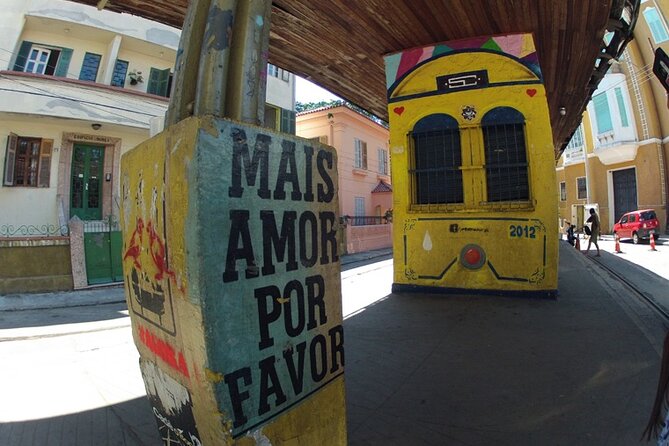
The route reaches Bar do Gomez, a local meeting point with about a century of history. This stop gives the tour a more everyday side. Rather than seeing Santa Teresa only through grand buildings and famous views, you get a place associated with local social life.
The bar is also where the walking tour can become a small food experience, but you should budget separately. Lunch is not included, and all food or drink purchases would be your responsibility. One account specifically praised the bar for beer and pastel pastries, so you might choose to order something if time and the guide’s schedule allow.
I like this stop because it gives the neighborhood a human scale. Architecture can tell you how a place looked, while a long-running bar suggests where people have gathered, talked, and maintained local routines. The tour information does not promise a meal or tasting, so you should treat Bar do Gomez as a stop with an optional purchase rather than an included dining event.
This is also a good place to ask questions. Since the activity is private, your group can focus on Santa Teresa, Rio’s past, or practical recommendations for the rest of your stay. The guide has been praised for being friendly, clear, and attentive, and Fernanda is one guide named in the feedback.
Other wanders through Santa Teresa and the tiled steps:
- Rio’s Full Day: Selarón Steps, Christ & Sugarloaf – Tickets & Lunch Included
★ 5.0 · 2,724 reviews - Rio: Christ the Redeemer, Sugarloaf, Selaron & BBQ Lunch
★ 4.5 · 2,428 reviews - Rio’s Best_Corcovado, Sugar Loaf, Selaron, Cathedral and more
★ 5.0 · 864 reviews - Rio de Janeiro: Christ, Selaron Steps, and Tijuca Park Tour
★ 4.7 · 857 reviews
Murals, political expression, and Santa Teresa today

The art portion is one of the strongest reasons to choose this experience. Santa Teresa is full of artists, and the route includes the area’s main urban art murals. You see public art in the streets where it belongs, alongside flags, graffiti, and other graphic expressions.
The important point is that these walls are not only decorative. Political and social messages appear block by block, and they deserve explanation in their historical setting. The tour has been praised for discussing culture, politics, art, slavery, samba, Little Africa, and Pedra do Sal, although the amount of political detail may depend on the guide and the questions your group asks.
If you want more from this part of the walk, ask directly about the symbols and messages you see. That is one advantage of a private activity. You can request more time for urban art or ask how current political expression connects with the neighborhood’s past.
The art is also a useful counterpoint to the imperial houses. Santa Teresa is not simply pretty old Rio. Its identity includes resistance, cultural change, and the ongoing use of public space. That mix is what makes the walk more than an architecture stroll.
Finishing at the Selarón Steps in Lapa
The final destination is Escadaria Selarón, also called the Selarón Steps, on Rua Manuel Carneiro. This tiled staircase links Santa Teresa with Lapa and provides a strong ending because it gathers the tour’s main themes in one place: art, neighborhood connections, public space, and Rio’s visual energy.
The steps are the work of Chilean artist Jorge Selarón, a widely recognized part of Rio’s public art scene. The supplied tour details identify the staircase as a wonderful work of art but do not promise a guided tour of every tile or a particular amount of time there. Expect it to be the finishing point rather than a long separate excursion.
Ending in Lapa is practical if you plan to continue exploring central Rio afterward. It also means you do not return to the starting point, so think about your next move before setting out. The start is at Cine Santa Teresa, while the end is at the Selarón Steps.
I like this point-to-point design. You keep moving through the neighborhood instead of retracing your route. The only drawback is that anyone who needs to return to the starting area will have to arrange that separately, since private transportation is not included.
Is $100 per person a fair price?

At $100 per person, this is not a bargain-priced city stroll. Its value depends heavily on your group size and how much you want personal attention. Since the tour is private and group discounts are available, the cost may make more sense when shared by several people than when paid by one person alone.
The price includes all fees and taxes, so you do not need to calculate an additional tour charge. It does not include lunch, drinks, or private transportation. A possible purchase at Bar do Gomez would be extra, as would any transportation you arrange before or after the walk.
For the money, you are paying for a focused route and a guide who can explain Santa Teresa in English. You are not paying for entrance tickets, a meal, or a vehicle. I would choose it if I wanted a short, organized introduction to the neighborhood and valued a private guide over a self-guided walk.
If you are comfortable researching the streets yourself, you could spend less by walking Santa Teresa independently. The tour earns its price through explanation and structure, especially if you want help connecting architecture, public art, politics, and Rio’s wider past.
Who will enjoy this walk most?

I would recommend it to first-time visitors who want a different side of Rio beyond beaches and major monuments. It also suits repeat visitors who have already seen the central sights and want a neighborhood walk with art, architecture, and local stories.
The private format works well for couples, families, and small groups with shared interests. You can ask for more background on urban art, political expression, samba, slavery, or the history of Rio. The English option makes it easier to follow those discussions without relying on translation.
You should be ready for a moderate physical outing. The route uses stone streets and a hillside neighborhood, and the tour lasts about two hours and fifteen minutes. It is not the best choice if you want a seated sightseeing experience or if hills and uneven paving are difficult for you.
Service animals are allowed, and the meeting point is near public transportation. The experience requires good weather, and it may also require a minimum number of participants. If poor weather or an unmet minimum causes cancellation, you are offered another date or a full refund.
Should you book Walking in Santa Teresa?
Book this tour if you want Santa Teresa explained as a living neighborhood rather than simply photographed as a pretty hillside. The best reasons are the private format, the English guide, the views of Christ the Redeemer and central Rio, the stop at Bar do Gomez, and the route through urban murals to the Selarón Steps.
I would hesitate only if the $100 price feels high for a walking tour, or if you mainly want to ride the yellow tram. In that case, use the tram before the tour and treat the walk as the history, art, and architecture portion of your day.
For a small group that values context and an easy point-to-point route, this is a strong way to spend an afternoon in Rio. The 4.8 rating and 100 percent recommendation support that choice, but the real test is whether you want a guided neighborhood experience rather than a checklist of major sights.
FAQ
Where does the Walking in Santa Teresa tour begin?
The tour begins at Cine Santa Teresa, Rua Paschoal Carlos Magno, 136, Santa Teresa, Rio de Janeiro, Brazil.
Where does the tour end?
The walk ends at Escadaria Selarón on Rua Manuel Carneiro, Santa Teresa, near the connection with Lapa.
How long does the experience last?
The tour lasts approximately 2 hours and 15 minutes.
Is the tour offered in English?
Yes. English is one of the available tour languages.
Is this a private tour?
Yes. Only your group participates in the activity.
Is food included?
No. Lunch is not included. Any food or drinks purchased during the stop at Bar do Gomez are also separate.
Can I cancel for a full refund?
Yes, if you cancel at least 24 hours before the experience start time. Cancellations made less than 24 hours in advance are not refunded, and changes within that period are not accepted.
Newest reviews from around Rio de Janeiro
- Rio de Janeiro: Zip Lining and Canopy Tree Tour★ 3.3 · 6 reviews
- Hang gliding flight in Rio de Janeiro★ 5.0 · 6 reviews
- Vidigal Favela Tour★ 4.4 · 26 reviews
- Rio de Janeiro: Attend a Vasco da Gama game with local guide★ 4.8 · 9 reviews
- Unforgettable Boat Party★ 5.0 · 3 reviews
- Parapente Rio de Janeiro★ 5.0 · 4 reviews
- Rio de Janeiro Private Tour with Cruise Terminal Pick-up★ 5.0 · 2 reviews
- Wild Waters: Rio Whitewater Rafting Adventure Tour★ 5.0 · 13 reviews
Santa Teresa & Selarón Steps Tours, compared.

Rio’s Full Day: Selarón Steps, Christ & Sugarloaf – Tickets & Lunch Included
Read our review →
Christ the Redeemer, Sugarloaf, Selaron & BBQ Lunch
Read our review →
Rio’s Best_Corcovado, Sugar Loaf, Selaron, Cathedral and more
Read our review →

Full Day in Rio: Christ by Train, Sugarloaf, Selarón & Barbecue
Read our review →
Half-Day Tour: Christ the Redeemer, Selarón & Sunset at Sugarloaf
Read our review →

Santa Teresa, Lapa, and Cinelândia with Tram Ride and Selarón Steps
Read our review →Browse the lists this tour appears in