
Reviewed · FAVELA TOURS
Rocinha Tour with Local Guide: The Biggest Favela DA Latin America
Feel Rio beyond the postcard. This three-and-a-half-hour Rocinha tour gives you a local guide, a motor taxi ride up the hill, alley walks, viewpoints, and a closer look at daily life in Latin America’s largest favela. I like the local perspective and the chance to see Rocinha beyond common stereotypes. I also like that the tour includes local motor taxi transport, which makes the climb part of the experience rather than a dull transfer.
The main consideration is that Rocinha is a working community, not a themed attraction. Streets can be crowded, the motor taxi ride may feel exciting or uncomfortable, and the tour asks you to observe with care. The price is $74.30 per person, so you should want context and conversation, not simply a quick photo stop.
In This Review
- Key points before you book
- Why Rocinha changes your view of Rio
- Meeting at São Conrado and starting with the climb
- Walking Rocinha’s main road and side streets
- Viewpoints with Rio spread below
- Social projects and the human side of Rocinha
- What $74.30 buys you
- Who will enjoy this experience most
- Timing, weather, and simple preparation
- Should you book the Rocinha tour?
- FAQ
- Where does the Rocinha tour begin?
- Where does the tour finish?
- How long does the tour last?
- Is motor taxi transportation included?
- Is bottled water included?
- What happens if the tour is canceled because of weather?
Key points before you book
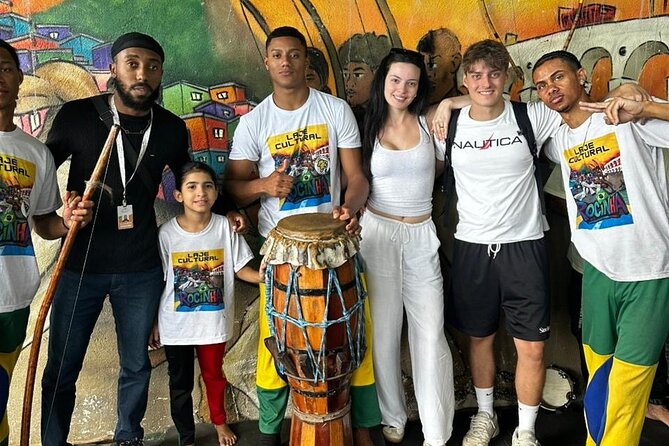
- A resident guide leads the experience: Rodrigo created the tour as a local guide and Rio resident, while guide names in the feedback include Ronaldo and Robinson.
- The motor taxi ride is part of the tour: You ride from the lower meeting area toward the top of Rocinha using local public transport.
- You see Rocinha on foot: The route includes alleys, the main road, viewpoints, and areas connected to local social projects.
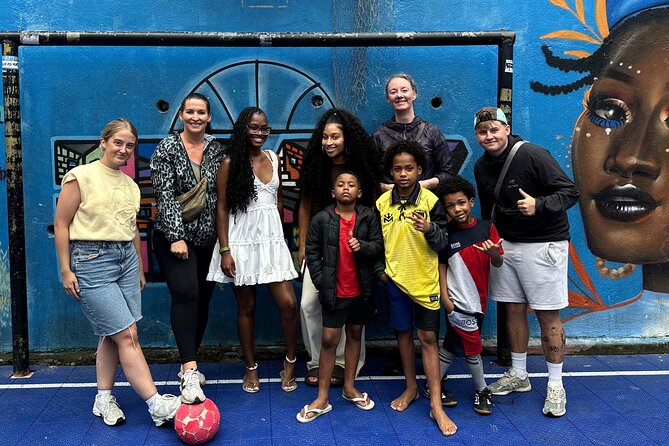
- The tour is small enough for conversation: The maximum group size is 15 people.
- The price covers entry and transport: You pay $74.30, with the favela entrance and local motor taxi included. Water is extra.
- The experience returns to São Conrado: You meet and finish near the São Conrado Metro station, Exit Estrada da Gávea.
Why Rocinha changes your view of Rio
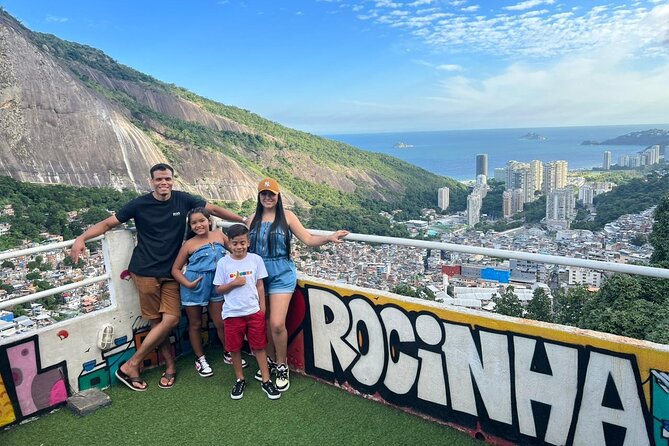
Rio is easy to admire from above. Sugarloaf Mountain, Christ the Redeemer, and the beaches give you the polished version of the city. Rocinha adds a more complicated view, one shaped by crowded streets, steep hills, local businesses, strong community life, and sharp contrasts with the wealthy neighborhoods nearby.
I like this tour because it does not treat Rocinha as a strange object to inspect from a vehicle. The stated aim is to explain the community’s history, social contrasts, culture, and daily workings through a local guide. That matters here. Without context, a walk through unfamiliar streets can become little more than a series of snapshots.
The guide’s role is central. Rodrigo says he created the experience to show the human and cultural side of Rocinha. The feedback also points to guides such as Ronaldo, who explained the area in detail, and Robinson, who led a Morro Dois Irmãos trail and helped with photographs and videos. Guide assignments may vary, but the clear strength is the local connection.
You should arrive ready to listen. This is not a standard sightseeing loop with a fixed set of monuments. The value comes from the explanations, the route through the community, and the chance to ask questions as you go.
Other favela walks led by people who live there:
- Rio de Janeiro: Rocinha Favela Walking Tour with Local Guide
★ 4.8 · 3,052 reviews - Rio De Janeiro: Half-Day Rocinha Favela Walking Tour
★ 4.7 · 2,272 reviews - 3 Hour Rocinha Favela Walking Tour with a Local Guide
★ 5.0 · 833 reviews
Meeting at São Conrado and starting with the climb
The tour begins at Metrô São Conrado, at the Estrada da Gávea exit. This is a useful meeting point because it is near public transportation, and you do not need to arrange a separate ride into the neighborhood.
The opening meeting lasts about five minutes. Your guide introduces the plan and explains what you are about to see. That short briefing is important because it sets the tone for respectful conduct and helps you understand the difference between passing through a neighborhood and entering someone’s home area.
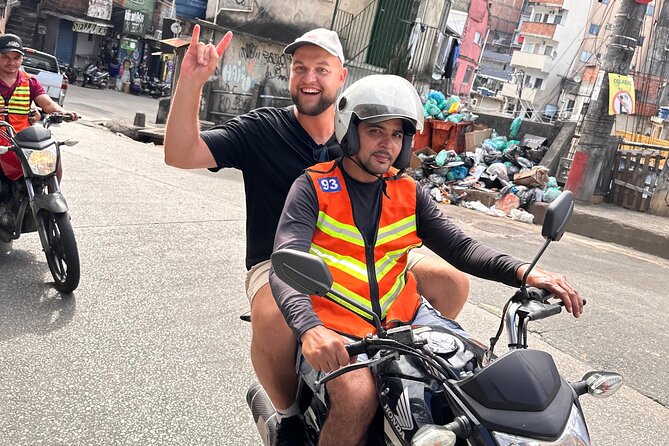
From there, the tour uses a local motor taxi to reach the upper part of Rocinha. This is included in the price, and it gives the outing an immediate sense of movement. Instead of beginning with a long uphill walk, you ride through the main route and get an early look at local street life.
I would treat the motor taxi as practical transport first and a memorable extra second. The supplied details describe it as exciting, but conditions can vary. If you dislike motorbikes or feel uneasy on steep roads, this part may be the biggest question mark for you. The information does not state whether helmets or alternate transport are available, so ask before booking if that matters.
The ride also helps you cover more ground during a short tour. With only about three and a half hours, using local transport leaves more time for stops, explanations, and walking through the community.
Walking Rocinha’s main road and side streets

After reaching the upper area, you spend about three hours exploring Rocinha with the guide. The route includes the main road and smaller alleys, giving you two different views of the community.
The main road offers the clearest sense of movement and commerce. You can expect to see the everyday rhythm of people getting to work, shopping, meeting friends, and moving through the neighborhood. The tour description places emphasis on daily life, so the point is not only to look at the buildings. It is to understand how the community functions.
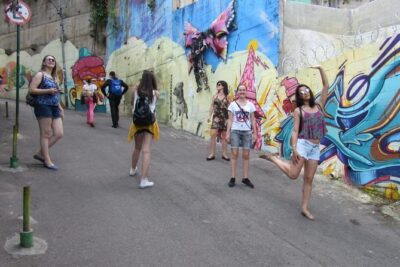
The alleys provide a closer, more intimate view. Here, your guide can explain how the built environment works within the favela and point out contrasts that you might miss on your own. The route is likely to involve uneven surfaces and steep sections, since Rocinha is built on a hillside. The activity information says most people can participate, but it does not promise a flat or easy walk. Wear shoes you can comfortably use for several hours.
This is also the part where respectful behavior matters most. Ask before photographing people, homes, businesses, or social activities. Keep your camera from becoming the main event. The tour is designed to move beyond stereotypes, and your conduct should support that goal.
The feedback gives this portion particular weight. One person described the guide as taking the group through different areas while maintaining a clear narrative. Another said the experience created a new appreciation for the diversity within Rocinha. Those details suggest that the tour works best when you pay attention to the explanation rather than rushing from one viewpoint to the next.
Viewpoints with Rio spread below
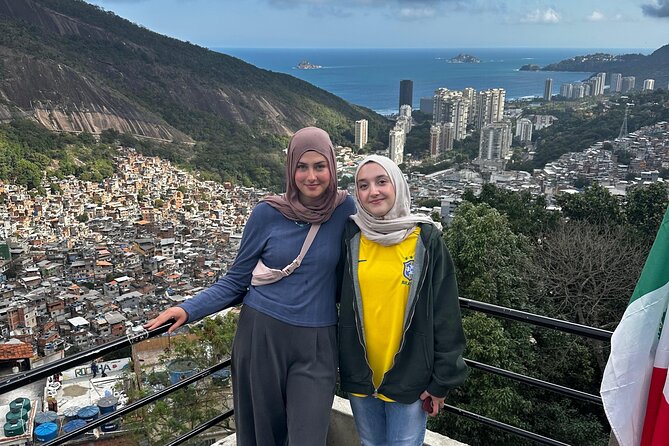
The tour includes viewpoints with wide views over Rio de Janeiro. These stops provide the visual payoff, but they also help explain Rocinha’s location and its relationship to the rest of the city.
From higher ground, you can see how quickly the urban scene changes. The viewpoint is not just a photo stop. It gives you a chance to consider the contrast between Rocinha, the surrounding hills, and the more affluent parts of Rio. Your guide can connect that view to the social and economic differences discussed during the walk.
You should have several opportunities for photographs, and the experience specifically highlights the views as a good setting for memorable pictures. Still, I would keep expectations practical. The supplied information does not identify the exact viewpoints or promise a particular view of Christ the Redeemer, Sugarloaf, or the beach. Weather also affects visibility, which is why the tour requires good conditions.
The viewpoints may be the easiest sections for a mixed group. You can pause, take in the city, and let the guide answer questions. If you are booking mainly for photography, ask which views are normally included on the day. If you are booking to understand Rio better, these stops work best as visual context for the conversation.
A few more Rio de Janeiro days to weigh up
- Rio de Janeiro: 6-Stop Highlights of Rio with Lunch
★ 4.4 · 5,157 reviews - Christ the Redeemer Entry Ticket by Corcovado Train
★ 4.4 · 4,476 reviews - Rio’s City Tour – Tickets for Christ, Sugar Loaf & Lunch included
★ 5.0 · 4,389 reviews - Full Day: Christ Redeemer, Sugarloaf, City Tour & Barbecue Lunch
★ 4.5 · 3,142 reviews
Social projects and the human side of Rocinha
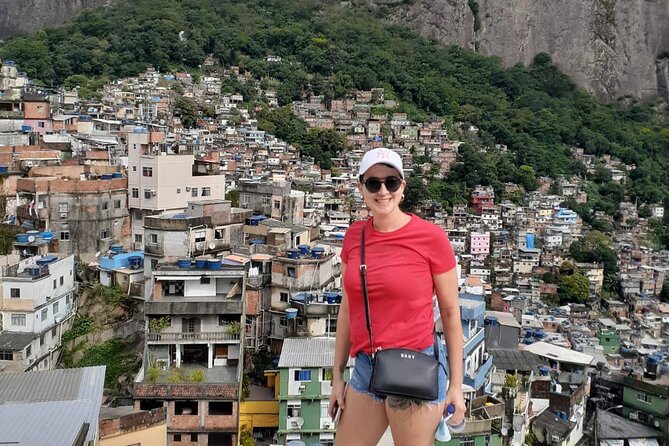
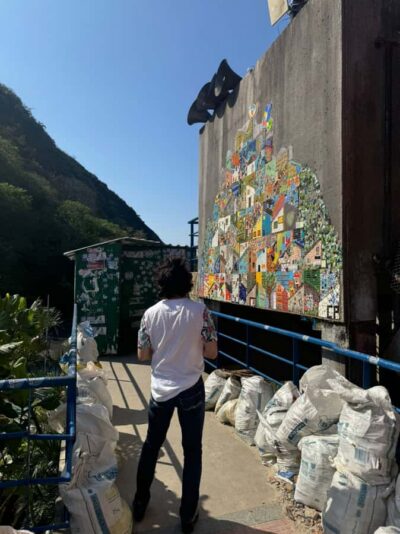
A major feature of the experience is the chance to learn about social projects in the community. The details do not name specific organizations or promise a formal visit inside a particular project, so you should not expect a guaranteed workshop or scheduled meeting. The clear aim is to help you understand community efforts and the way local life operates.
I see this as one of the tour’s strongest features. A favela visit can easily become shallow if it focuses only on narrow streets and dramatic views. Social projects add a different layer. They show that Rocinha is also a place where people organize, work, support one another, and shape their own community.
The guide’s local background makes this section more useful. A resident can explain the area in ordinary terms and respond to questions with more immediate knowledge of the place. That does not mean every subject will be covered in equal depth, but it gives the tour a human frame.
Your role is to remain open and measured. You may hear about contrasts or challenges that are difficult to reduce to a simple tourist story. The tour promises a safe and respectful experience, but you should still follow the guide’s instructions and avoid wandering away from the group.
What $74.30 buys you
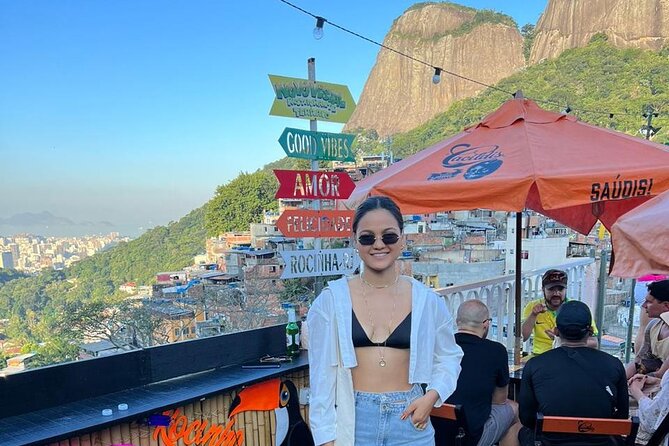
At $74.30 per person, this is not Rio’s cheapest neighborhood walk. The included items are the entrance fee and local motor taxi transportation. Bottled water is not included, so bring water or buy it during the tour, which also supports local trade.
The price makes more sense if you value the guide’s time and local explanation. You are paying for a small-group experience capped at 15 people, transport up the hill, a planned route, viewpoint stops, and discussion of the community’s culture and social projects. You are not paying for a museum ticket or a long list of formal attractions.
I would compare it with the cost of visiting Rocinha independently. Going alone might seem cheaper, but you would lose the local interpretation that gives the visit meaning, and you might not know which routes or viewpoints are appropriate. This tour provides structure and a guide who can explain what you are seeing.
Group discounts may reduce the cost if you are traveling with others. The experience is offered in English, which makes it easier to follow the explanations if you do not speak Portuguese. Confirmation is provided at booking, and the tour runs Monday through Sunday from 8:00 a.m. to 4:00 p.m. during the listed operating period.
The tour is often booked about 12 days ahead. That is a useful planning clue, especially if you have limited time in Rio or need a particular day. The maximum group size of 15 is not private-tour territory, but it is still more manageable than a large coach group.
Who will enjoy this experience most
I would choose this tour if you want to understand Rio through its people and neighborhoods, not only through famous landmarks. It suits visitors who enjoy walking, asking questions, and seeing how a community works in daily life.
It is also a good fit if you are curious about social contrasts and want a guided introduction rather than an unstructured visit. The local guide is the main reason to book. The route, motor taxi, and views support that central purpose.
You may want to skip it if you prefer polished attractions, quiet paths, or a tightly scripted sightseeing tour. The experience takes place in an active community, and the motor taxi ride and alley walking may not suit everyone.
The tour is described as suitable for most people, but the details do not give a specific accessibility rating. If you need step-free routes, have trouble with steep streets, or need an alternative to the motor taxi, contact the operator before paying.
Timing, weather, and simple preparation
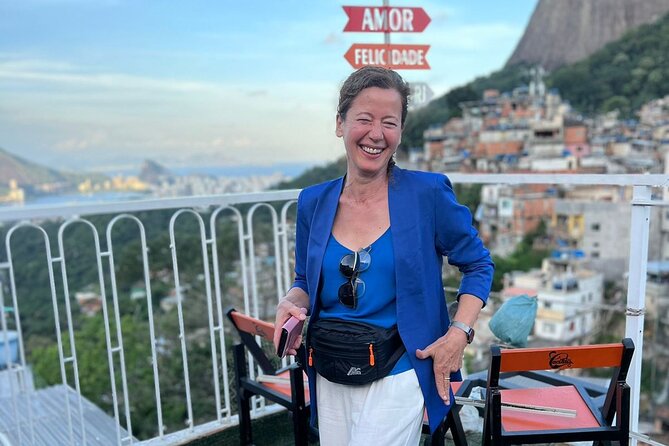
Plan on about three and a half hours from meeting back at the starting point. Because the tour returns to the São Conrado meeting point, you can schedule another activity afterward, but leave a little breathing room rather than booking something immediately.
Bring water, since it is not supplied. Buying a bottle locally is encouraged as a way to support the local economy. Comfortable walking shoes are sensible, and light clothing suited to Rio’s weather will make the route easier.
The experience requires good weather. If poor conditions cancel the tour, you can choose another date or receive a full refund. The same applies if the minimum number of participants is not met. You can cancel for a full refund up to 24 hours before the start time, but changes or cancellations inside that window are not accepted.
The published rating is 5 out of 5 from four reviews. The strongest praise centers on clear explanations, local guidance, feeling comfortable during the outing, and learning about different parts of Rocinha. One person specifically praised the guide’s willingness to take time with explanations, while another highlighted the sense of safety and comfort during the Morro Dois Irmãos outing with Robinson.
That is a small sample, so I would not treat it as proof that every departure will be identical. Still, the pattern is useful: the human connection and the guide’s narration matter more than any single photo stop.
Should you book the Rocinha tour?
Book it if you want a respectful, guided look at Rocinha and are willing to meet the community on its own terms. The local guide, included motor taxi, small maximum group, viewpoints, and social-project context give the $74.30 price a reasonable basis.
I would not book it solely to collect dramatic photographs. You will get photo opportunities, but the best part is the explanation of what you are seeing. Bring water, wear practical shoes, follow the guide’s lead, and allow the community to be more than a backdrop.
For a first visit to Rio, this tour adds context that the usual landmark circuit cannot provide. It is most valuable to you if curiosity matters as much as sightseeing.
FAQ
Where does the Rocinha tour begin?
It begins at Metrô São Conrado, at the Estrada da Gávea exit in São Conrado, Rio de Janeiro.
Where does the tour finish?
The activity ends back at the same meeting point near Metrô São Conrado.
How long does the tour last?
The tour lasts approximately three hours and 30 minutes.
Is motor taxi transportation included?
Yes. Local motor taxi transportation and the entrance fee to the favela are included in the price.
Is bottled water included?
No. You should bring water or buy it during the tour. Purchasing locally helps support local trade.
What happens if the tour is canceled because of weather?
If poor weather causes a cancellation, you will be offered a different date or a full refund.
Newest reviews from around Rio de Janeiro
- Hang gliding flight in Rio de Janeiro★ 5.0 · 6 reviews
- Rio de Janeiro: Zip Lining and Canopy Tree Tour★ 3.3 · 6 reviews
- Vidigal Favela Tour★ 4.4 · 26 reviews
- Rio de Janeiro: Attend a Vasco da Gama game with local guide★ 4.8 · 9 reviews
- Unforgettable Boat Party★ 5.0 · 3 reviews
- Parapente Rio de Janeiro★ 5.0 · 4 reviews
- Rio de Janeiro Private Tour with Cruise Terminal Pick-up★ 5.0 · 2 reviews
- Yoga By the Barra da Tijuca Beach★ 5.0 · 3 reviews
Favela Tours, compared.



3 Hour Rocinha Favela Walking Tour with a Local Guide
Read our review →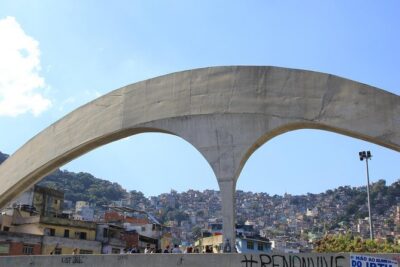

Favela Tour Rio de Janeiro – Vidigal Walking Tour by Russo Guide
Read our review →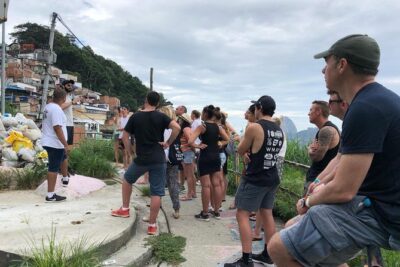
Browse the lists this tour appears in