
Reviewed · SANTA TERESA & SELARóN STEPS TOURS
Rio Santa Teresa and Lapa Samba Tour
Rio’s best nights often begin with a small plate. This four-hour tour links Santa Teresa’s old streets and traditional bars with Lapa’s samba rooms, giving you food, music, and Brazilian culture in one evening. I like the focus on locally loved places rather than a standard nightlife circuit, and I like that guides such as Damiana and Alberto add context about history, art, music, and religion. The main caution is the price: at $225 per person, this is a serious spend for four hours, especially since drinks and some food details may need confirmation.
The route also involves walking downhill through Santa Teresa and between venues, so comfortable shoes matter. The tour is advertised as a small group of up to nine, although the booking information also gives a maximum of 15, so I would confirm the expected group size before paying.
In This Review
- Key points to know before booking
- Why Santa Teresa is the right place to begin
- Skewers and culture at Armazém São Joaquim
- Caldinho de feijão at Bar do Mineiro
- Bar do Gomes and Santa Teresa’s 1919 tavern tradition
- Afro-Brazilian identity at Agô Bar da Encruza
- Walking down to Lapa
- Samba, forró, and cocktails at Leviano Bar
- Live samba at Beco do Rato
- What the guides add to the evening
- Is $225 a fair price?
- Who should book this Rio night tour?
- Final verdict: a strong cultural night, at a premium price
- FAQ
- Where does the Rio Santa Teresa and Lapa Samba Tour begin?
- Where does the tour end?
- How long does the tour last?
- What language is the tour offered in?
- How many people can join the tour?
- What food is included during the tour?
- Will the tour include samba music?
- Can I cancel for a full refund?
Key points to know before booking
- Four traditional Santa Teresa stops: Taste skewers, bean broth, codfish, beef jerky, and other Brazilian bar food.
- Afro-Brazilian culture at Agô: This newer bar honors Afro-Brazilian religious traditions through its decoration, food, and drinks.
- Two Lapa music venues: Leviano brings samba, forró, and occasional acrobatic performances, while Beco do Rato focuses on live music and samba.
- A guide-led cultural walk: Damiana and Alberto are praised for explaining Rio’s history, art, music, and religions in an engaging way.
- A short but busy evening: The route covers several venues in roughly four hours, with walking between stops.
- A premium price: The $225 fee may make sense if you want a guided introduction to Rio nightlife, but it is not a cheap bar crawl.
Why Santa Teresa is the right place to begin
Santa Teresa feels different from Rio’s beach districts. Its old buildings, hillside streets, and traditional yellow cable car give the neighborhood a slower, more residential character. The area is also known for food, with choices ranging from upscale cooking and German dishes to northeastern Brazilian specialties and simple Carioca bars.
This tour chooses the simple side of Santa Teresa. That is a good decision for an evening focused on local life. Instead of sending you from one polished restaurant to another, the route uses old taverns and neighborhood bars where cold beer, small plates, and conversation are part of the experience.
You meet at Cine Santa Teresa on Rua Paschoal Carlos Magno. From there, expect a walking route through the neighborhood, with a later descent toward Lapa. The tour is not built around famous viewpoints or major monuments, so it suits you best if food, music, and neighborhood character matter more than checking off landmarks.
Other wanders through Santa Teresa and the tiled steps:
- Rio’s Full Day: Selarón Steps, Christ & Sugarloaf – Tickets & Lunch Included
★ 5.0 · 2,724 reviews - Rio: Christ the Redeemer, Sugarloaf, Selaron & BBQ Lunch
★ 4.5 · 2,428 reviews - Rio’s Best_Corcovado, Sugar Loaf, Selaron, Cathedral and more
★ 5.0 · 864 reviews
Skewers and culture at Armazém São Joaquim

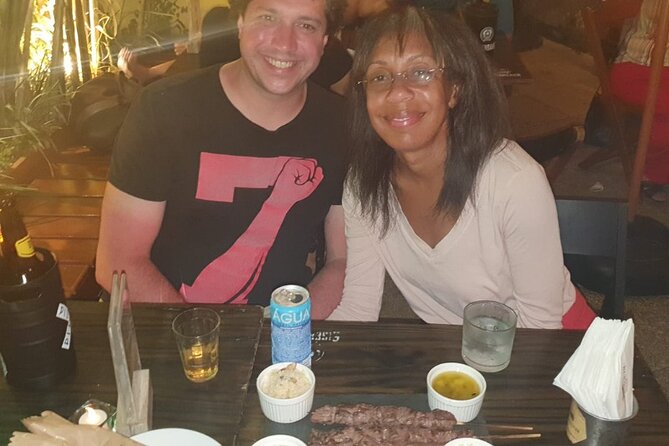
The first food stop is Armazém São Joaquim, located in an old Santa Teresa townhouse. The space combines a traditional tavern with cultural activity. Its program includes workshops, photography, poetry, philosophy, theater, acoustic music, and literary events.
You will try one of the house’s skewers, with a noble beef option prepared rare, medium rare, or well done. That choice is useful if you prefer your meat cooked a certain way, although the tour information specifically highlights the beef skewer rather than a full menu of alternatives.
The stop is scheduled for about an hour, making it one of the longer visits in Santa Teresa. I like this opening because it gives you a gentle start. You can get familiar with the guide, hear about the neighborhood, and begin with a straightforward Brazilian bar snack rather than a complicated tasting menu.
The setting is as important as the food. Armazém São Joaquim helps show how Santa Teresa’s old buildings continue to serve as social and cultural spaces. You are not simply stopping for a bite, you are seeing how food, art, and neighborhood life overlap in Rio.
Caldinho de feijão at Bar do Mineiro
Next comes Bar do Mineiro, one of Santa Teresa’s classic Carioca bars. Its old tiled walls, simple furnishings, snacks, and cold beer create the kind of low-key setting this tour promises.
The featured bite is caldinho de feijão, a seasoned bean broth served in a cup or bowl. It is a familiar Brazilian bar food, especially popular as a small late-night serving. The broth is filling without being a full meal, and it gives you a taste of everyday Brazilian cooking rather than restaurant-style fare.
I would pay attention here to the guide’s explanation of how bar food fits into Rio’s social life. A cup of bean broth may sound modest, but that is part of the point. The tour uses ordinary foods to introduce you to the way Cariocas eat and drink during an evening out.
Bar do Mineiro can attract both locals and tourists, so it may feel busier than the first stop. That is not necessarily a flaw, but you should not expect a quiet private tasting. The appeal is the atmosphere, not luxury or polished service.
Bar do Gomes and Santa Teresa’s 1919 tavern tradition
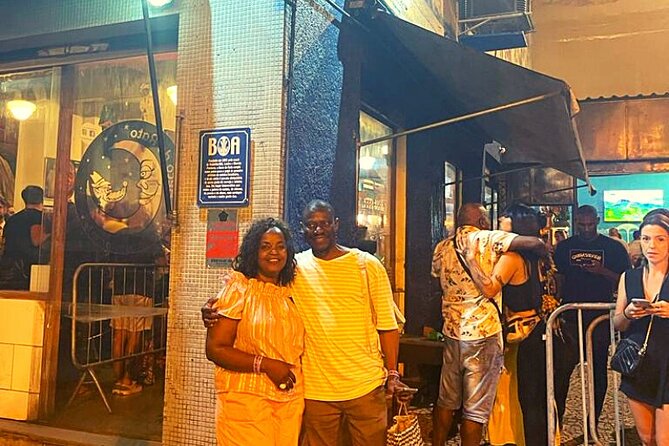
The route then takes you about 10 minutes on foot to Armazém de São Thiago, better known as Bar do Gomes. The walk itself is part of the experience, taking you farther from the center of Santa Teresa and through streets that feel like a step back in time.
Bar do Gomes has occupied the same corner since 1919. Its 1920s-style gallery and retro interior give the place a strong sense of continuity, and the city recognized it as cultural heritage in 2011.
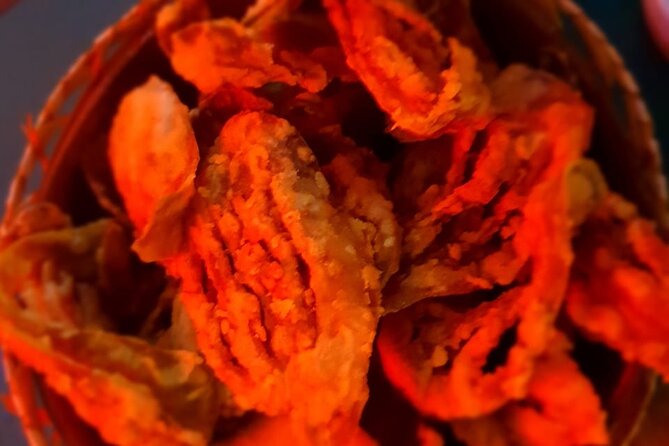
The food here includes a beef jerky and gorgonzola ball, along with a codfish ball. These are compact bar snacks, easy to share and well suited to a route with several stops. The tour also recommends trying the caipirinha, Brazil’s famous lime-based cocktail.
You should keep your evening pace in mind. By this point, you may have eaten at several venues, and the tour continues into Lapa. If you drink alcohol at each stop, moderation is wise. The food helps, but this is still a moving bar route rather than a single relaxed dinner.
Other samba nights worth staying up for:
- Rio de Janeiro: Beginner Samba Lesson in Ipanema
★ 4.9 · 1,071 reviews - Rio: Pub Crawl in Lapa with Cachaça Tasting and Live Samba
★ 4.7 · 881 reviews - Rio: Carnival Backstage Tour at Samba City with Cocktail
★ 4.6 · 520 reviews - Hop-ON Hop-OFF Sightseeing Bus in Rio de Janeiro – Rio Samba Bus
★ 3.5 · 457 reviews
Afro-Brazilian identity at Agô Bar da Encruza

Agô Bar da Encruza is the most distinctive cultural stop in Santa Teresa. It is one of the newer bars on the route and is centered on religions of African origin. The word agô refers to asking permission to enter, leave, or pass through in Yoruba religious settings.
The bar’s decoration, menu, crafted drinks, and appetizers honor terreiros, the temples associated with Afro-Brazilian religions. The idea is not just visual decoration. The space presents Black cultural identity as a central part of Rio’s food and nightlife.
This stop lasts about 30 minutes, so it is shorter than the visits at Armazém São Joaquim and Bar do Gomes. That makes sense in the schedule, since the tour has several more venues ahead. It also means you should treat Agô as a focused introduction rather than a long meal.
I consider this one of the tour’s most valuable elements. Many nightlife outings show Rio through music and alcohol but skip the cultural forces behind them. Agô gives your guide a chance to explain Afro-Brazilian traditions, and that context can make the samba portion of the night more meaningful.
Walking down to Lapa
After Santa Teresa, the route heads downhill to Lapa. The two neighborhoods are closely linked by their bohemian character, but they offer different experiences. Santa Teresa feels more like a hillside neighborhood of old houses and local bars, while Lapa is better known for nightlife, music, and late-evening crowds.
The final meeting point is Beco do Rato on Rua Joaquim Silva in Lapa. Since the tour ends there, you do not need to return to Santa Teresa with the group. That is useful if you plan to continue your evening in Lapa, though you should make your own arrangements afterward.
The itinerary involves walking and a number of stops in a short period. If you want a slow evening with long conversations at one table, this may feel rushed. If you want a guided introduction that keeps moving, the pace is a benefit.
Samba, forró, and cocktails at Leviano Bar

Leviano Bar offers a broad mix of entertainment. Depending on the evening, you may encounter samba, forró, and acrobatic performances. The venue also has views of the Arcos da Lapa and the city cathedral, giving the stop a visual connection to one of Rio’s best-known nightlife areas.
Food includes meals, snacks, and sweets, while the drinks are prepared by bartenders who make a show of the process. The house highlights cocktails with names such as Sexy Delícia and Amante.
This stop adds variety to the route. Santa Teresa is primarily about old bars and neighborhood character, while Leviano brings a more performance-focused nightlife setting. You get a chance to hear different Brazilian music styles rather than treating samba as the country’s only sound.
The exact music program can vary by night. That matters if you are booking mainly for a specific band or performance. The tour promises a suitable music stop, but it does not provide a fixed act or schedule in the supplied details.
Live samba at Beco do Rato
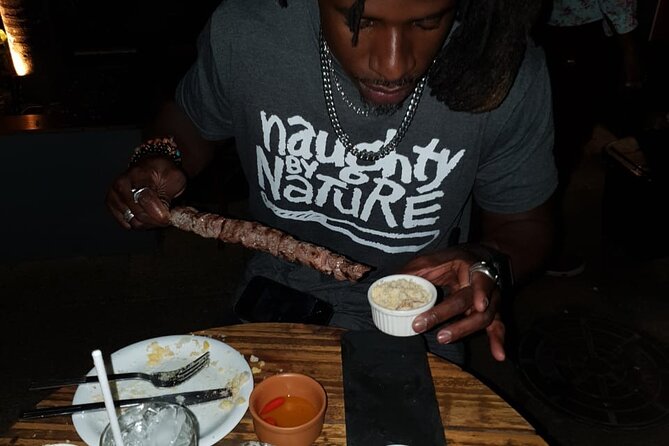
The tour ends at Beco do Rato, located between Lapa and Gloria and close to the Selarón Steps. The bar has operated since 2005 and was created in a previously neglected space. It began as a beverage warehouse before becoming a bar and helping bring activity back to the area.
Beco do Rato is associated with good music, cold beer, snacks, and samba. Its owner, Marcio Pacheco, is also connected with Samba Luzia, described as one of Rio’s best samba circles. His devotion to São Jorge is another small detail that reflects the links between music, faith, and neighborhood identity.
The final stop is scheduled for about an hour. That gives you more time to settle into the music instead of simply arriving, taking a bite, and leaving. The tour ends at Beco do Rato, a restaurant and samba club, so you may be able to continue the night there after the guided portion.
This is probably the strongest finish for the route. You have already learned about Santa Teresa, sampled bar food, visited an Afro-centric venue, and seen Lapa’s nightlife. Beco do Rato brings those threads together through live samba.
What the guides add to the evening
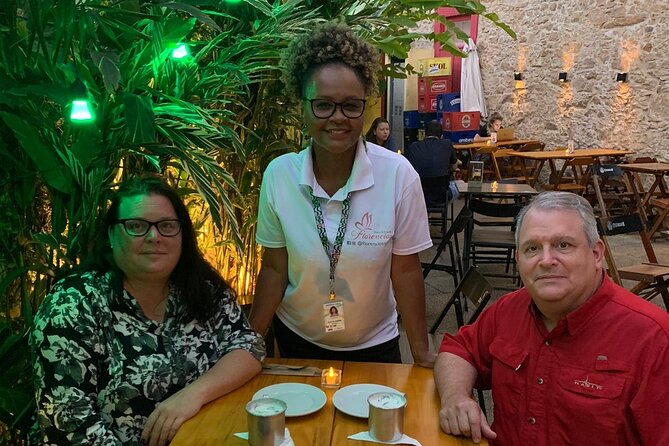
The guide is central to the value of this experience. Damiana is praised for explaining Brazilian history, music, art, and religions, while Alberto is described as an excellent guide who helped make the experience engaging. The company name also appears in connection with guides Damiana and Florencio.
That range matters. Without explanation, a bar route can become a sequence of snacks and drinks. With a strong guide, you can understand why Santa Teresa developed its artistic identity, how Lapa became a nightlife center, and why Afro-Brazilian traditions matter to Rio’s music and food.
The best moments may come between stops. The walking sections give you time to ask questions and see how the neighborhoods change. One especially useful feature is the willingness to find samba in places mainly known to locals, including on a Monday. Still, music schedules can change, so I would treat that as a strength of the guide rather than a guarantee of one exact show.
Is $225 a fair price?
At $225 per person, this is not a budget food walk. The fee has to cover a guide, several venue visits, food, organization, and access to nightlife in two neighborhoods. The small-group format also adds value, especially if the group really is capped at nine.
The price makes more sense for you if:
- You are new to Rio nightlife and want someone else to handle the evening plan.
- You want cultural explanations, not only food and music.
- You prefer locally focused bars over a large organized party.
- You value a guide who can adjust the route to find samba on a less active night.
The price is harder to justify if you already know Santa Teresa and Lapa, speak Portuguese comfortably, or mainly want to buy your own drinks at one samba club. You should also confirm exactly what the fee includes, since the details identify included admission at some stops but do not provide a full breakdown of food and drinks.
The small group is a major selling point, but the information gives two different limits: nine people in the tour description and 15 in the additional details. Ask for clarification. Group size affects how easily you can hear the guide, move between bars, and get a seat.
Who should book this Rio night tour?
I would recommend it to first-time visitors who want a structured introduction to Rio’s food, music, and neighborhood culture. It is also a good fit for solo visitors, since the guide provides company and removes some of the uncertainty involved in choosing unfamiliar bars at night.
You should be comfortable walking, changing venues, and eating small portions over several hours. This is not the best choice for anyone seeking a formal dinner, a fixed concert, or a quiet evening.
The experience also suits people who want more than postcard Rio. You will not spend the night only at famous viewpoints. Instead, you will visit old taverns, a bar centered on Afro-Brazilian traditions, and music venues connected with local samba culture.
Booking is flexible in one useful way: cancellation is free up to 24 hours before the start time for a full refund. The tour can also be changed or refunded if poor weather prevents it from operating or if the minimum number of participants is not reached.
Final verdict: a strong cultural night, at a premium price
I would book this tour if I wanted help finding Rio’s music and bar culture without spending hours planning the route myself. The strongest features are the knowledgeable guide, the mix of food stops, the Agô visit, and the chance to hear samba in places beyond the most obvious tourist venues.
The $225 price means you should compare it with the cost of arranging your own evening. If you value personal guidance and cultural context, the fee may be worthwhile. If you mainly want samba and a drink, you can likely spend less by choosing one Lapa venue on your own.
Before booking, confirm the group limit, what food and drinks are included, and the music plans for your date. If those details suit you, this is a lively, thoughtful way to connect Santa Teresa’s old taverns with Lapa’s samba nights.
FAQ
Where does the Rio Santa Teresa and Lapa Samba Tour begin?
The tour begins at Cine Santa Teresa, Rua Paschoal Carlos Magno, 136, Santa Teresa, Rio de Janeiro.
Where does the tour end?
The tour ends at Beco do Rato, Rua Joaquim Silva, 11, in Lapa. The venue is a restaurant and samba club.
How long does the tour last?
The experience lasts approximately four hours.
What language is the tour offered in?
The tour is offered in English.
How many people can join the tour?
The tour is described as a small group capped at nine people, but the additional information gives a maximum of 15. Confirm the expected group size when booking.
What food is included during the tour?
The stops feature a beef skewer, bean broth, beef jerky with gorgonzola, and a codfish ball. The information does not provide a complete list of included drinks.
Will the tour include samba music?
The route includes music venues in Lapa. Leviano Bar offers samba, forró, and possible acrobatic shows, while Beco do Rato is associated with live music and samba.
Can I cancel for a full refund?
Yes. You can cancel at least 24 hours before the start time for a full refund. Cancellations or changes made less than 24 hours in advance are not accepted for a refund.
Newest reviews from around Rio de Janeiro
- Hang gliding flight in Rio de Janeiro★ 5.0 · 6 reviews
- Rio de Janeiro: Zip Lining and Canopy Tree Tour★ 3.3 · 6 reviews
- Vidigal Favela Tour★ 4.4 · 26 reviews
- Unforgettable Boat Party★ 5.0 · 3 reviews
- Rio de Janeiro: Attend a Vasco da Gama game with local guide★ 4.8 · 9 reviews
- Parapente Rio de Janeiro★ 5.0 · 4 reviews
- Rio de Janeiro Private Tour with Cruise Terminal Pick-up★ 5.0 · 2 reviews
- Wild Waters: Rio Whitewater Rafting Adventure Tour★ 5.0 · 13 reviews
Santa Teresa & Selarón Steps Tours, compared.

Rio’s Full Day: Selarón Steps, Christ & Sugarloaf – Tickets & Lunch Included
Read our review →
Christ the Redeemer, Sugarloaf, Selaron & BBQ Lunch
Read our review →
Rio’s Best_Corcovado, Sugar Loaf, Selaron, Cathedral and more
Read our review →
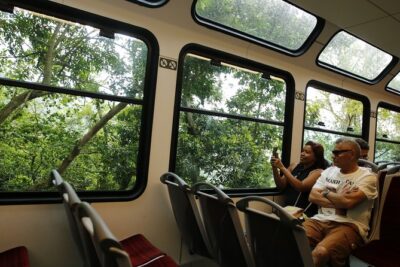
Full Day in Rio: Christ by Train, Sugarloaf, Selarón & Barbecue
Read our review →
Half-Day Tour: Christ the Redeemer, Selarón & Sunset at Sugarloaf
Read our review →

Santa Teresa, Lapa, and Cinelândia with Tram Ride and Selarón Steps
Read our review →Browse the lists this tour appears in