
Reviewed · FAVELA TOURS
Rio de Janeiro: the biggest favela tour in Rio, lest go!
Rio’s best views may come with a climb. This experience takes you from the meeting point near Copacabana into one of Rio’s largest favelas, where you’ll see painted walls, a local food and arts market, a resident’s home, and hilltop views toward Ipanema, Leblon, Christ the Redeemer, Copacabana, and Sugarloaf Mountain. I especially like the resident-led approach and the chance to meet people through coffee, art, music, or football rather than simply looking at the community from outside. The other strong point is the wide city panorama, which gives the uphill walk a clear reward.
The main drawback is the physical effort. There are many steps, and the route is not a gentle stroll. You’ll also need extra cash for the local guide fee, food and drinks, and the optional motorcycle ride. The advertised duration is listed as three days, but the timed route describes a much shorter outing, so check the exact departure schedule before booking.
In This Review
- Key things to know before you go
- Starting near Copacabana at Rua Sá Ferreira, 38
- Motorcycle option from the lower entrance
- Market stalls, painted walls, and local creativity
- Coffee inside a local home
- The climb to the hilltop panorama
- Football, music, drinks, and the final stop
- How the $80 price measures up
- What the strongest praise tells you
- Practical preparation for a respectful visit
- Who should choose this favela tour?
- Should you book it?
- FAQ
- Where is the meeting point?
- Does the tour include hotel pickup?
- How much does the experience cost?
- Is the motorcycle ride included?
- Is a guide payment required?
- What should I wear?
- Which languages are available?
- Is cancellation allowed?
Key things to know before you go
- Local guide Jefferson has earned strong praise: His friendly, personal style helps turn a potentially awkward visit into a respectful introduction to daily life.
- The route includes serious uphill walking: Comfortable sports shoes and breathable clothing matter here.
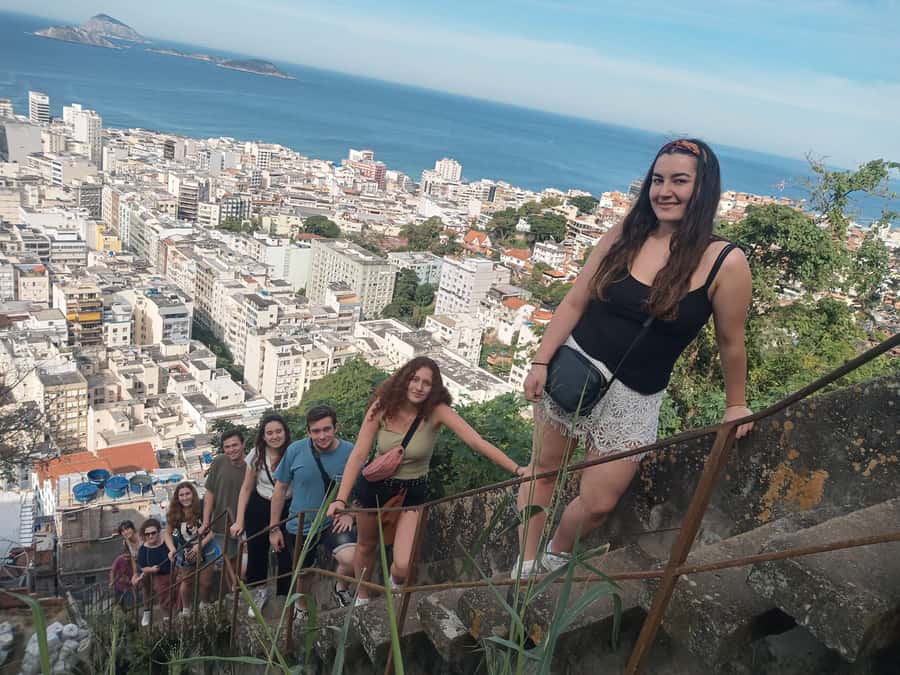
- The views cover much of Rio: From the hilltop, you may see Ipanema, Leblon, Flamengo Club, Rodrigo de Freitas Lagoon, Christ the Redeemer, jungle, Copacabana Beach, and Sugarloaf Mountain.
- Coffee brings the visit into a home setting: This is a simple but meaningful part of the experience, and coffee is included.
- Motorcycle transport is optional: The description gives both five and fifteen minutes for this segment, so confirm the precise arrangement.
- Bring cash: A $10 payment for the local guide is listed separately, and food, drinks, gratuities, and motorcycle transport are not included.
Starting near Copacabana at Rua Sá Ferreira, 38
The meeting point is at the corner of Avenida Nossa Senhora de Copacabana and Rua Sá Ferreira, with the exact address given as Rua Sá Ferreira, 38. This is a practical place to meet because it is close to the famous Copacabana area, but you should arrive ready to leave the broad beachfront setting behind.
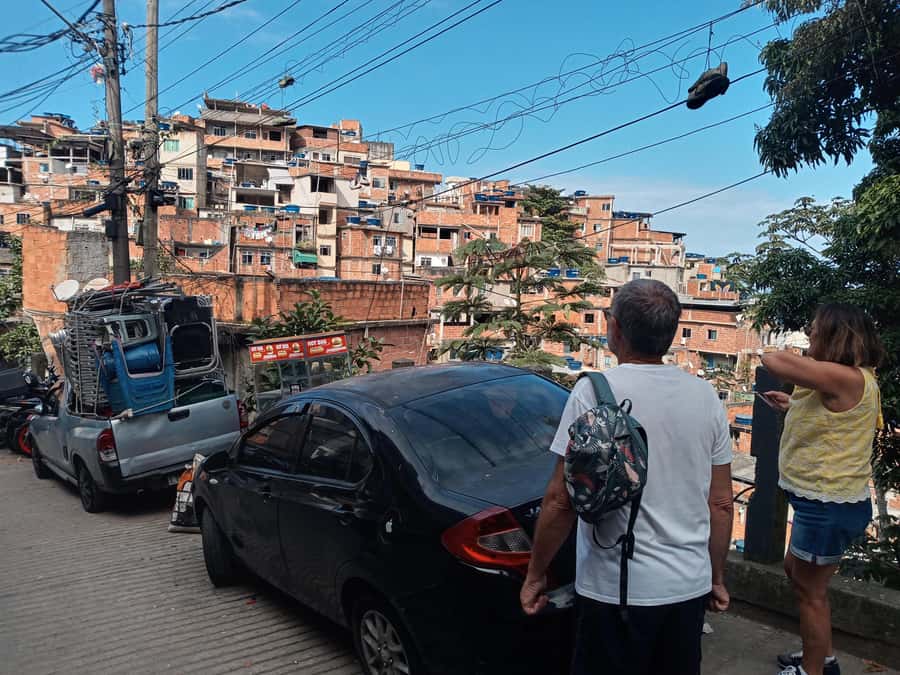
The tour begins at the bottom of the favela. Your guide gives an introduction to its history and explains how to behave respectfully inside the community. That briefing is not filler. In a place where homes, shops, art projects, and public paths are closely connected, knowing when to ask before taking a photo is part of being a decent visitor.
You are not being invited to treat the favela as a theme park. The purpose is to meet local people, hear about the community, and see daily life with context. That makes the guide’s role especially important. Jefferson is named in several of the strongest comments about the experience, and his connection to the area appears to be a major reason the tour feels personal rather than staged.
Other favela walks led by people who live there:
- Rio de Janeiro: Rocinha Favela Walking Tour with Local Guide
★ 4.8 · 3,052 reviews - Rio De Janeiro: Half-Day Rocinha Favela Walking Tour
★ 4.7 · 2,272 reviews - 3 Hour Rocinha Favela Walking Tour with a Local Guide
★ 5.0 · 833 reviews
Motorcycle option from the lower entrance
A motorcycle ride can take you from the lower part of the favela toward the middle. One description gives the ride as five minutes straight to the center, while the itinerary lists fifteen minutes for the scooter segment. That difference is worth clearing up before you set out.
The ride is optional and costs extra. It may appeal if you want to save some energy for the walking route, but it is not the heart of the experience. You should also be comfortable with the idea of riding a motorcycle in a dense urban setting. If not, walking remains the straightforward choice.
Do not assume the motorcycle fee is part of the $80 price. It is specifically listed among the items not included. The same applies to the $10 local guide payment, food, drinks, and gratuities. The included coffee break and meeting point add some value, but you should budget beyond the advertised price.
Market stalls, painted walls, and local creativity

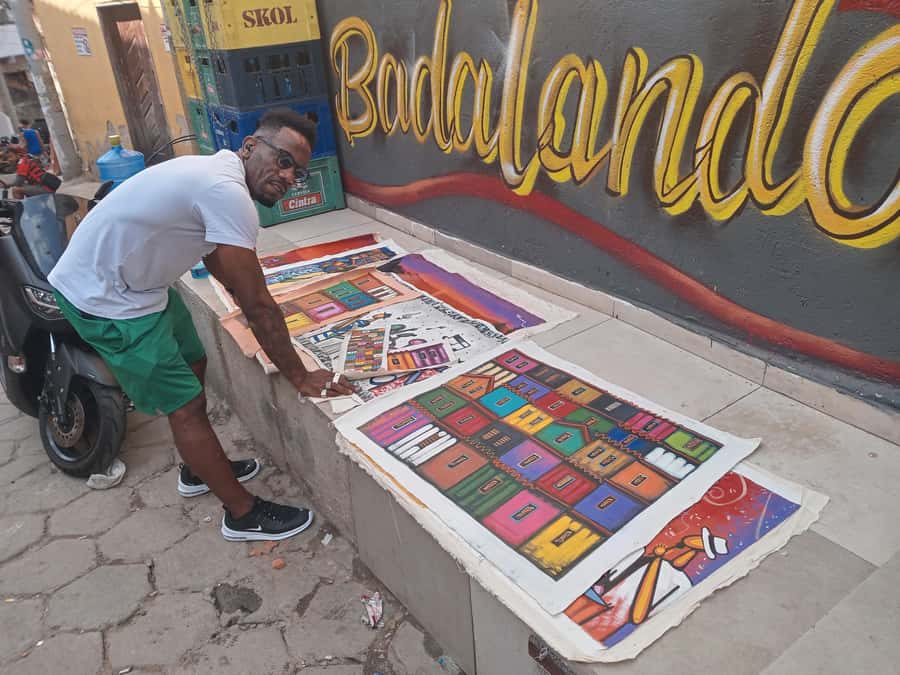
Once inside, the route moves through local streets and stops at a market selling food and arts. This is one of the better parts of the plan for anyone who likes to photograph everyday scenes rather than only famous monuments.
Ask before photographing people, stalls, or private spaces. Your guide can help you understand what is appropriate. The market is also a chance to buy something directly from local artists, although the tour details do not specify what goods are available or how much they cost.
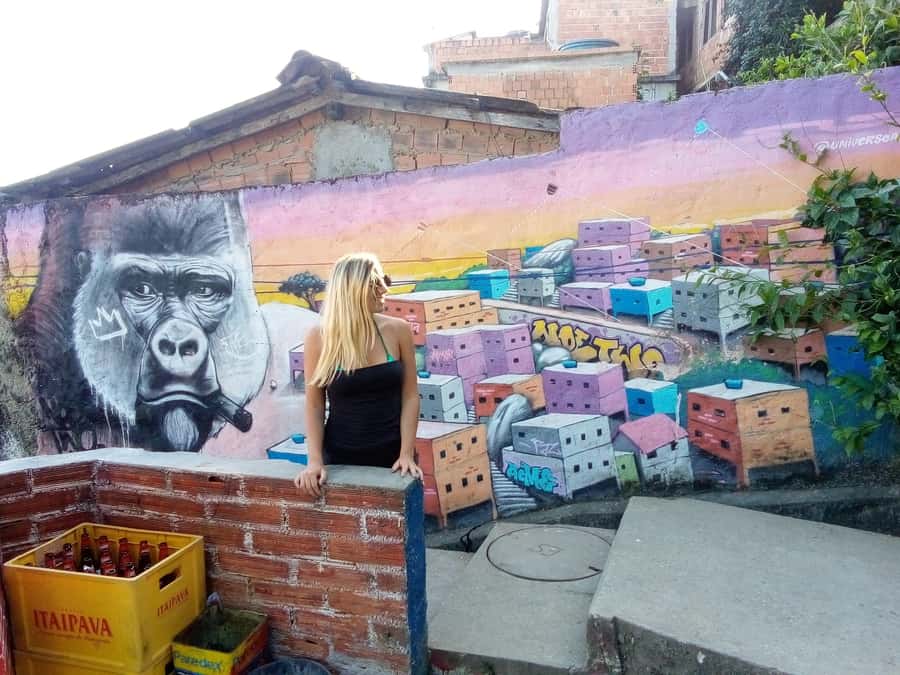
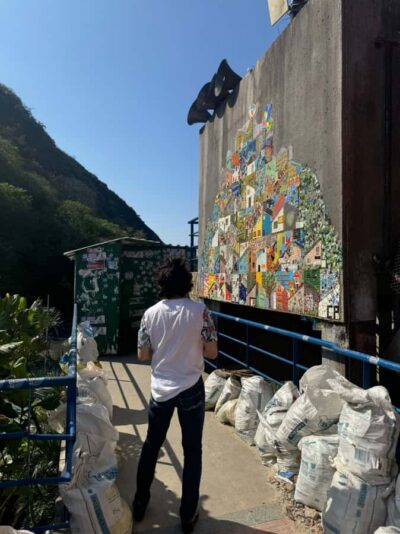
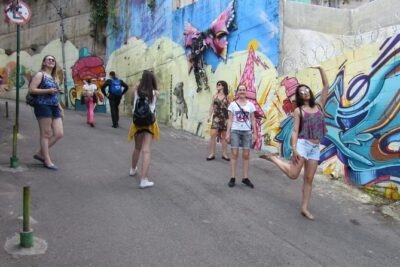
The walls covered in graffiti and murals give the walk a second layer. The paintings are not treated as decoration alone. You’ll hear the stories and passions connected with the community, and the art helps show how residents use public space to express identity and hope.
A gallery visit adds more substance. It belongs to a well-known local artist who teaches children how to paint and build a better life. This is a valuable stop because it shifts the focus from poverty and danger toward skill, education, and local effort. You get to see how art can serve as both a creative outlet and a way to support young people.
Coffee inside a local home
The coffee break is a small feature, but I consider it one of the tour’s most useful details. You are invited into a local house for coffee, giving you a chance to see an ordinary domestic setting rather than only streets and viewpoints.
That visit should be approached with humility. You are entering someone’s home, so listen to your guide, ask before taking photos, and avoid treating the space as a display. The coffee is included, but other food and drinks are not.
This stop also helps explain why a resident guide matters. A guide who knows the people and the area can make introductions naturally. Several high-scoring comments describe the guide as friendly and welcoming, with one person saying Jefferson became a friend during the outing. That kind of connection cannot be guaranteed, but the format gives it room to happen.
A few more Rio De Janeiro days to weigh up
- Rio de Janeiro: 6-Stop Highlights of Rio with Lunch
★ 4.4 · 5,157 reviews - Christ the Redeemer Entry Ticket by Corcovado Train
★ 4.4 · 4,476 reviews - Rio’s City Tour – Tickets for Christ, Sugar Loaf & Lunch included
★ 5.0 · 4,389 reviews - Full Day: Christ Redeemer, Sugarloaf, City Tour & Barbecue Lunch
★ 4.5 · 3,142 reviews
The climb to the hilltop panorama
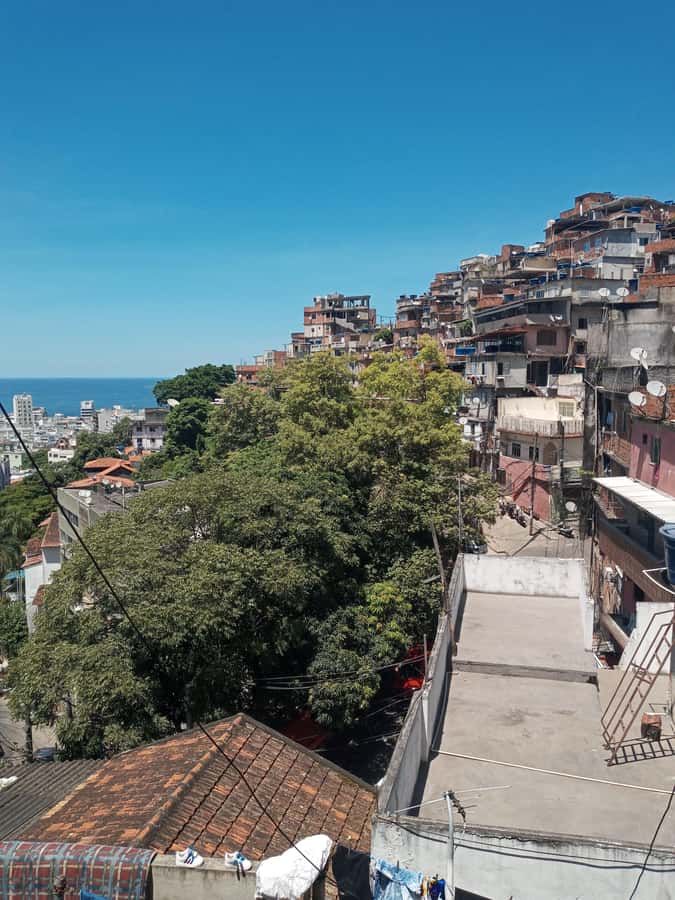
The main physical test comes with the climb. The route includes many steps, and the walk leads upward through the favela toward a high point. Wear sports shoes with a secure grip, and choose breathable clothing because Rio can be hot.
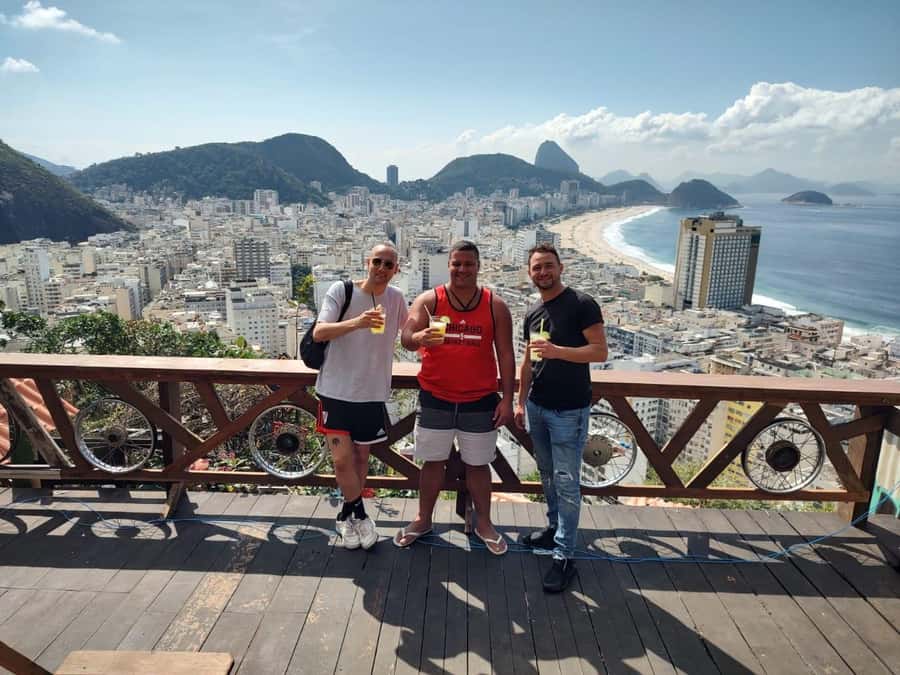
The reward is a remarkable spread of city views. From the top, the route may look toward Ipanema and Leblon, Flamengo Club, Rodrigo de Freitas Lagoon, Christ the Redeemer, and the surrounding jungle. You’ll also get views of Copacabana Beach and Sugarloaf Mountain.
This is not the same kind of lookout as a polished city attraction. The appeal comes from seeing Rio’s famous districts from a residential hillside where the streets below are part of someone’s daily routine. I like that contrast. It gives you a better sense of how close Rio’s postcard beaches, forests, lagoons, and hillside communities are to one another.
The climb can still be tiring. If you have trouble with steep walking or many steps, this may not be the right activity. Pregnant women are specifically listed as unsuitable for the tour. No other medical restrictions are provided, so you should judge your own comfort honestly.
Football, music, drinks, and the final stop

Playing football with local people is offered as an option. This could be a natural way to meet residents if a game is available and you feel comfortable joining. It is not required, and you should not expect it to be the central feature of every departure.
At the top, the experience may finish with drinks, appetizers, and Brazilian music. The description presents this as a relaxed ending, with sunset listed among the possible activities. Food and drinks cost extra, so carry enough cash if you want to stay for that part.
The route finishes back at Rua Sá Ferreira, 38. That return to the original meeting point is handy because you do not need to arrange a separate pickup from the hillside. Hotel pickup and drop-off are not included, so you must make your own way to and from the starting corner.
How the $80 price measures up
At $80 per person, this is not the cheapest way to see Rio. You are paying for a guided community visit, local introductions, a market stop, street art, a gallery, a home coffee break, and a long uphill route with broad views. The value depends on whether you want contact and context rather than a quick photo stop.
I think the price is easier to justify for people who want a resident-led experience. The guide’s local knowledge, language ability, and introductions are central to the day. English, Portuguese, and Spanish are offered, which makes the tour accessible to a wider range of visitors.
Still, the extras add up. Plan for the $10 guide payment in cash, along with any motorcycle ride, food, drinks, and gratuities. The included coffee is welcome, but this is not an all-inclusive outing.
There is also a planning oddity. The activity information says the experience is valid for three days and gives a duration of three days, while the route itself lists a fifteen-minute scooter segment, three hours for the main visit, and one hour for the final refreshments. That reads more like a several-hour activity than a three-day tour. Confirm the actual start time, end time, and route before paying.
What the strongest praise tells you
The most repeated positive theme is the guide. Jefferson is singled out for his warm manner, local connection, and ability to explain the community. That matters here more than a polished vehicle or a long list of stops.
Another strong point is the feeling of safety and welcome. One visitor arrived worried about being seen as an intrusive outsider, then found the visit respectful and comfortable. That does not mean you can ignore local rules or act casually with a camera. It means the guide appears to help you enter with the right attitude.
The tour also receives praise for showing a side of Rio that many people miss. It challenges the simple idea that favelas are only dangerous places. At the same time, you should not swing to the opposite extreme and pretend the community has no difficulties. The best approach is to listen, observe, and let the local guide provide the context.
The physical side comes through clearly as well. Comfortable shoes are not a minor suggestion. The steps and hill climb are a real part of the experience, and the views are the payoff.
Practical preparation for a respectful visit
Wear light, breathable clothes and sports shoes. You should be prepared for walking, steps, and a climb rather than a flat city tour.
Bring cash. You may need it for the $10 guide payment, the optional motorcycle ride, food, drinks, and gratuities. The tour includes a coffee break, but it does not include meals or beverages beyond that stated inclusion.
Keep your camera ready for the market, murals, gallery, and views, but use it thoughtfully. Ask before photographing residents, artists, children, or inside the home. Your guide’s instructions are part of the experience, not an obstacle to it.
Languages offered are English, Portuguese, and Spanish. Free cancellation is available up to 24 hours before the activity for a full refund, and you can reserve now and pay later. Those policies make the booking easier to adjust, especially because the timing information needs clarification.
Who should choose this favela tour?
I would recommend it to you if you want an active, people-focused introduction to Rio. It suits visitors who enjoy walking, photography, street art, city views, local food, and conversations more than formal museum visits.
It is also a good match if you want to see Rio beyond Copacabana’s sand and Ipanema’s polished streets. The combination of a home coffee visit, market, gallery, and local guide gives the tour more human depth than a lookout-only excursion.
I would think twice if you dislike steep steps, hot-weather walking, motorcycles, or informal social situations. This is not a neat, scripted sightseeing ride. The schedule includes optional elements, and the experience may depend on what is happening in the community that day.
Should you book it?
Book this experience if you want a resident-guided look at Rio’s favela life and are willing to walk uphill, follow local etiquette, and pay for a few extras. The strongest reasons to go are Jefferson’s personal guiding style, the art and community projects, the home coffee stop, and the sweeping views from above.
Skip it if you need a fully packaged tour with hotel transport, fixed inclusions, and no physical strain. Before booking, confirm the confusing duration details and the exact motorcycle timing. For an active visitor seeking a more personal side of Rio, this can be a memorable and worthwhile choice.
FAQ
Where is the meeting point?
The meeting point is at Rua Sá Ferreira, 38, on the corner of Avenida Nossa Senhora de Copacabana and Rua Sá Ferreira.
Does the tour include hotel pickup?
No. Hotel pickup and drop-off are not included. You need to reach the meeting point yourself and return there after the tour.
How much does the experience cost?
The listed price is $80 per person.
Is the motorcycle ride included?
No. The motorcycle taxi is optional and not included in the price. The supplied details describe the ride as either five or fifteen minutes, so confirm the exact arrangement before going.
Is a guide payment required?
Yes. You should bring cash for the listed $10 local guide payment.
What should I wear?
Wear breathable clothing and sports shoes. The route includes many steps and a climb to the top of the hill.
Which languages are available?
Live guiding is available in English, Portuguese, and Spanish.
Is cancellation allowed?
Yes. You can cancel up to 24 hours in advance for a full refund. You can also reserve now and pay later.
Newest reviews from around Rio De Janeiro
- PRIVATE TOUR – Christ the Redeemer and Sugar Loaf★ 4.5 · 9 reviews
- Christ Statue and Sugarloaf Private Tour with a Photographer★ 5.0 · 9 reviews
- Cidade do Samba Behind-the-Scenes Carnival Tour in Rio de Janeiro★ 4.0 · 5 reviews
- Christ the Redeemer Trail x Lage Park★ 5.0 · 7 reviews
- Christ the Redeemer and City Tour★ 5.0 · 20 reviews
- Christ the Redeemer, Selaron Steps and Santa Teresa Half-day Tour★ 4.5 · 15 reviews
- Christ the Redeemer Adventure★ 5.0 · 12 reviews
- Private Tour of Christ the Redeemer in Rio de Janeiro★ 5.0 · 2 reviews
Favela Tours, compared.



3 Hour Rocinha Favela Walking Tour with a Local Guide
Read our review →

Favela Tour Rio de Janeiro – Vidigal Walking Tour by Russo Guide
Read our review →
Browse the lists this tour appears in